Copper-zinc concentrate drying
Even after filtration, copper-zinc concentrates from flotation retain a moisture content of 12%–18%. However, copper flash smelting typically requires an input moisture level of ≤8%, while fluid-bed roasting for zinc concentrates requires ≤6%–8%; additionally, maritime transport is subject to Transportable Moisture Limit (TML) regulations. For every percentage point of excess moisture, both smelting energy consumption and metal losses via flue gas increase, while winter transport risks freezing and logistical delays. Consequently, drying copper-zinc concentrates is essential. Baichy Heavy Industry employs a low-temperature co-current rotary drying process to stabilize concentrate moisture at 6%–8%. Coupled with high-efficiency dust removal, this method limits metal loss during drying to below 0.5%, effectively securing the "last mile" between mineral processing and smelting.
I. Overview: Concentrate Drying as the "Last Mile" Between Mineral Processing and Smelting
Copper-zinc concentrates produced by processing plants retain 12%–18% moisture after thickening and filtration, necessitating compliance with three critical requirements. **Smelting:** Copper flash smelting is sensitive to moisture; high input moisture drives up fuel and oxygen consumption. Fluid-bed roasting for zinc concentrates is even more demanding, as excessive moisture impairs fluidization and causes bed agglomeration. **Transport:** Shipping high-moisture concentrates is restricted by the IMSBC Code’s Transportable Moisture Limit (TML); exceeding this threshold poses a risk of cargo liquefaction in the hold. In winter rail transport, higher moisture leads to severe freezing, exponentially increasing unloading costs. **Storage:** The combination of moisture and sulfur in sulfide concentrates leads to slow, exothermic oxidation; improper stockpiling can trigger spontaneous combustion. Concentrate drying is the critical process designed to simultaneously meet these three requirements—smelting input standards, safe storage and transport, and prevention of freezing and spontaneous combustion—serving as the final piece of the dewatering puzzle for polymetallic processing plants.
II. Copper Concentrate and Zinc Concentrate: One Drying Line, Two Operational Modes
1. Copper Concentrate: Preventing Oxidation and Controlling Material Temperature Are Top Priorities
Copper concentrate often contains 20%–30% sulfur. If the process temperature spirals out of control, the exothermic oxidation of sulfides can trigger a chain reaction; in mild cases, the concentrate discolors and its grade drops, while in severe cases, localized overheating inside the drum leads to spontaneous combustion. Consequently, co-current rotary dryers are generally used for copper concentrate: high-temperature hot air flows in the same direction as the wet material, and heat is rapidly absorbed by evaporating moisture. This keeps the material discharge temperature below 90°C, effectively eliminating the conditions that foster sulfide oxidation at the source.
2. Zinc Concentrate: Paving the Way for Fluidization in Fluidized-Bed Roasting
Zinc concentrate features fine particle sizes and dense filter cakes; standard equipment often results in material that is "dry on the outside but wet on the inside." Rotary dryers utilize lifters to continuously shower the material, creating a curtain that ensures fine-grained concentrate makes full contact with the hot air, stabilizing discharge moisture at 6%–8%. Moisture uniformity is critical for the continuous operation of the fluidized-bed roaster; the true value of the drying process lies in this consistency—fluctuations are far more detrimental to furnace conditions than the absolute moisture value itself.
3. Mixed Copper-Zinc Concentrate: Unified Design Based on the Most Demanding Specifications
Polymetallic processing plants often produce mixed copper-zinc concentrates or complex concentrates containing lead and silver. Drying systems are designed—regarding drum specifications and dust collection—based on the material stream with the highest sulfur content and finest particle size. This allows for switching between materials without changing the machine itself; simply adjusting the air temperature and throughput enables the transition, making this the most common multi-use configuration for copper-zinc concentrate drying lines.
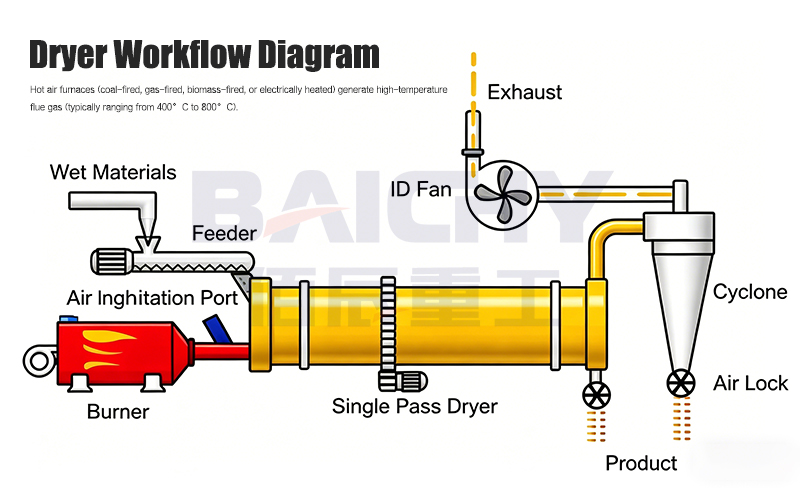
Working principle of the single-drum dryer
III. Five Major Advantages of Rotary Dryers for Drying Sulfide Ore Concentrates
Co-current flow and low temperatures prevent oxidation and spontaneous combustion: Hot air enters the drum at 500°C–700°C while the material discharge temperature remains ≤90°C. Interlocked alarm systems monitoring temperature and CO concentration transform the most dangerous risk—ignition—into a standard monitoring parameter.
Customized Material-Lifting Flights: Concentrate filter cakes are sticky when wet and prone to dusting when dry; Baichy designs flight shapes and configurations based on material samples—breaking up clumps in the feed section, intensifying turnover in the middle section, and controlling airflow velocity at the discharge end to prevent the entrainment of fines.
Dust Recovery and Metal Retention: A two-stage recovery system (cyclone plus bag filter) achieves a recovery rate of ≥99%, capturing all concentrate fines carried by the airflow and limiting metal loss during drying to ≤0.5%. Based on an annual output of 50,000 tons of concentrate, the value recovered annually far exceeds the initial investment in the dust collection equipment.
Thermal Efficiency and Fuel Flexibility: Heat sources can include coal-fired hot-blast stoves, natural gas, heavy oil, or waste heat flue gas; rotational speed and air temperature are regulated in tandem, allowing the system to easily handle moisture fluctuations of 12%–18% in the incoming material.
Freeze Protection and Maritime Transport Compatibility: Discharge moisture can be reduced to 5%–6%, and the system features heat tracing and insulation, ensuring safe moisture levels for transport and ship loading in mining areas with temperatures as low as -30°C.
IV. Key Process Parameters for Copper and Zinc Concentrate Drying
| Process Parameter | Copper Concentrate Conditions | Zinc Concentrate Conditions | Mixed Cu-Zn Concentrate |
|---|---|---|---|
| Feed Moisture Content (Post-filtration) | 12%–18% | 12%–17% | 13%–18% |
| Target Discharge Moisture Content | 6%–8% (adjustable to 5%) |
6%–8% (for fluid-bed roasting feed) |
6%–8% |
| Hot Air Inlet Temperature | 500°C–700°C (co-current) |
500°C–650°C (co-current) |
550°C–700°C |
| Material Discharge Temperature | ≤90°C | ≤90°C | ≤90°C |
| Gas Velocity Inside Drum | 2–3.5 m/s | 2–3 m/s (to prevent fines entrainment) |
2–3.5 m/s |
| Material Residence Time | 20–40 min | 25–45 min | 20–40 min |
| Safety Interlocks | Temperature + CO alarms | Temperature interlock | Temperature + CO alarms |
| Dust Recovery Rate | ≥99% | ≥99% | ≥99% |
Parameter Interpretation (Value-focused): Each column in the table above answers the same question: "Can this process dry my concentrate safely?" Co-current flow and a material temperature of ≤90°C address the risk of fire; the 6%–8% discharge moisture level ensures acceptance by smelters and cargo holds; and the ≥99% recovery rate accounts for the metal particles. Meeting these three standards transforms the drying stage from a source of risk into a safeguard for profitability.
V. Application Scenarios and Typical Case Studies
Typical Scenarios: Concentrate dewatering workshops at copper-zinc polymetallic processing plants; moisture conditioning for smelter feed; pre-treatment for port and rail transport; anti-freeze drying for winter transport in alpine mining areas; and safe handling/storage of sulfur-bearing composite concentrates.
Case Study A (Preventing Spontaneous Combustion in High-Sulfur Copper Concentrate): A copper-zinc processing plant handled copper concentrate with a sulfur content of approximately 25% and an initial moisture content of 16%; the plant had previously suffered losses due to spontaneous combustion during stockpiling. Following the retrofit to a concurrent-flow rotary drying line, the discharge moisture content stabilized at 7%, and the material outlet temperature remained at or below 85°C throughout the process; the system operated for two years without thermal alarms, and the risk of spontaneous combustion was eliminated due to the simultaneous reduction in both moisture and temperature.
Case B (Feedstock for zinc concentrate fluidized-bed roasting): At a zinc smelting facility, the original drying line produced material with moisture content fluctuating between 7% and 11%, causing frequent shutdowns due to agglomeration in the fluidized bed. After installing the Baichy rotary drying system and optimizing the lifting flights to enhance material turnover, the moisture content stabilized at 6%–7%, and the continuous operating cycle of the roaster extended from 21 days to over 40 days.
Case C (Winter rail transport from a frigid mining area): A processing plant located in a mining area experiencing temperatures as low as -25°C faced severe freezing issues when shipping copper concentrate by rail in winter; at an initial moisture content of 10%, the material froze solid in the railcars, requiring crushing equipment for unloading. After the drying system reduced the moisture content to 6% and an insulation system was added at the discharge point, the incidence of freezing dropped by approximately 80%, restoring winter transport efficiency to levels comparable to the warm season.
VI. Recommended Equipment from Baichy Heavy Industry
| Series | Representative Model | Reference Capacity (Wet Basis) | Suitable Application |
|---|---|---|---|
| Single-cylinder rotary dryer | φ1.5×12m | 5–10 t/h | Concentrate drying for small-scale beneficiation plants (300–500 t/day throughput) |
| Single-cylinder rotary dryer | φ2.2×18m | 20–40 t/h | Medium-scale copper/zinc beneficiation plants and smelter auxiliary units |
| Single-cylinder rotary dryer | φ3.0×20m | 60–120 t/h | Centralized drying for large-scale beneficiation plants and smelters |
| Single-cylinder rotary dryer | φ3.6×25m | 120–200 t/h | Ultra-large production lines; shared use across multiple concentrate streams |
| Three-cylinder rotary dryer | Φ2.0×4m – Φ4.0×10m | 8–100 t/h | Retrofit projects with site space constraints |
Selection Tip: If feed moisture is at the high end of the range, select the next larger model size (throughput for high-moisture feed drops by 20–30% compared to drier feed). For high-sulfur content, confirm configurations for co-current flow and low-temperature control. Free drying tests are available for 5–10 kg concentrate samples; moisture curves and complete process solutions are delivered within 5 working days.
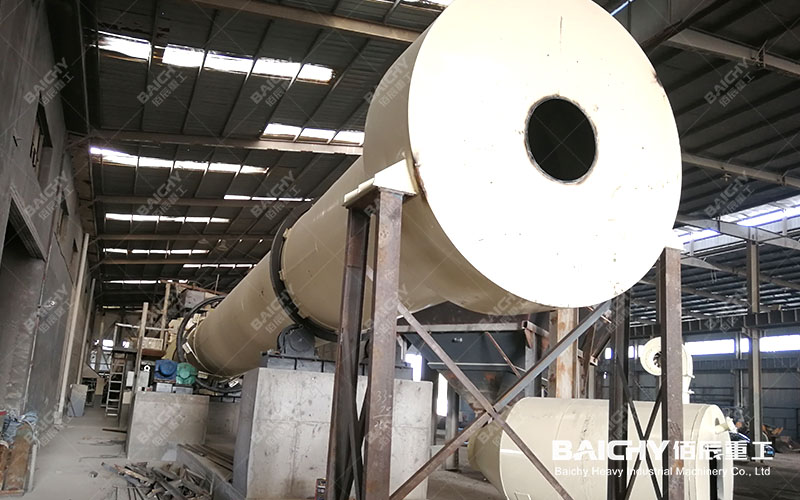
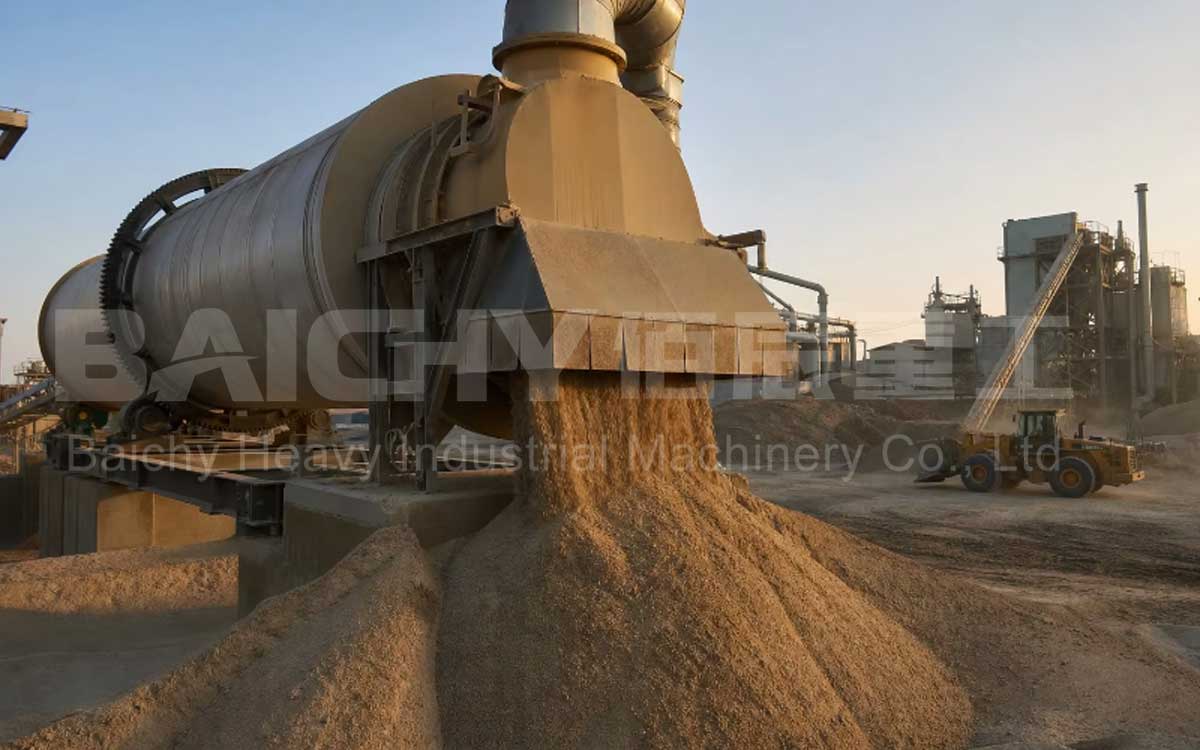
Single-drum dryer at a customer site
FAQ
Q1: What is the appropriate target moisture level for drying copper and zinc concentrates?
A: It depends on downstream requirements: Copper concentrate for flash smelting is typically controlled at 6–8%; zinc concentrate for fluid-bed roasting is controlled at 6–8% with minimal fluctuation; for winter transport or ocean shipping, moisture may be further reduced to 5–6% to meet anti-freezing and safe transport moisture limits. Lower moisture levels increase energy consumption; the optimal moisture level should be calculated based on the smelting process and transport method rather than blindly pursuing the lowest possible moisture.
Q2: Will the concentrate catch fire during rotary drying if the sulfur content is high?
A: There is a risk, but it can be eliminated through process design: use a co-current flow configuration to rapidly cool the hot air at the feed inlet, keep the material discharge temperature below 90°C, and implement an interlocking system based on temperature and CO concentration. The spontaneous combustion of sulfides requires a combination of high temperatures, oxygen-rich conditions, and heat accumulation; a low-temperature co-current design effectively eliminates all three factors, which is the primary reason co-current flow—rather than counter-current flow—is selected for drying sulfide ore concentrates.
Q3: Should co-current or counter-current flow be used for drying copper concentrate?
A: Co-current flow is recommended for sulfide-bearing concentrates. While counter-current flow offers slightly higher thermal efficiency, the discharge end is exposed to the hottest air, making it difficult to keep the material temperature low and significantly increasing the risk of sulfide oxidation; co-current flow sacrifices a small amount of thermal efficiency to ensure controllable material temperatures throughout the process and inherent safety. Counter-current flow options may be evaluated separately for oxidized ore concentrates or materials that are not temperature-sensitive.
Baichy Heavy Industry
Baichy Heavy Industry is a high-tech mining equipment company integrating R&D, manufacturing, sales, and after-sales service. Focusing on crushing, grinding, and mineral processing equipment, we provide professional solutions to our customers. We are ISO9001:2015 、certified, and our products include mobile crushing palnts, crawler crushing plant, construction waste crushing plants, jaw crushers, sand making machines, cone crushers, fine crushers, grinding mills, ball mills, etc., all with reliable performance to meet diverse project needs.
Baichy Heavy Industry – Your Trusted Partner
To ensure optimal performance of your equipment, Baichy Heavy Industry offers:
- Professional on-site installation guidance
- Comprehensive operator training
- 24/7 technical support & maintenance services
Our complete after-sales service system guarantees long-term, stable operation of your machinery with minimal downtime.
Protect Your Rights – Only Use Official Channels
To avoid scams and ensure authentic support, contact us exclusively through:
• Official Website: www.baichychina.com
• WhatsApp: +8615093222637
• Email: [email protected]
Your satisfaction is our priority – expect prompt, professional service every time.
(Note: Beware of unauthorized third parties claiming to represent Baichy. Always verify through official contacts.)