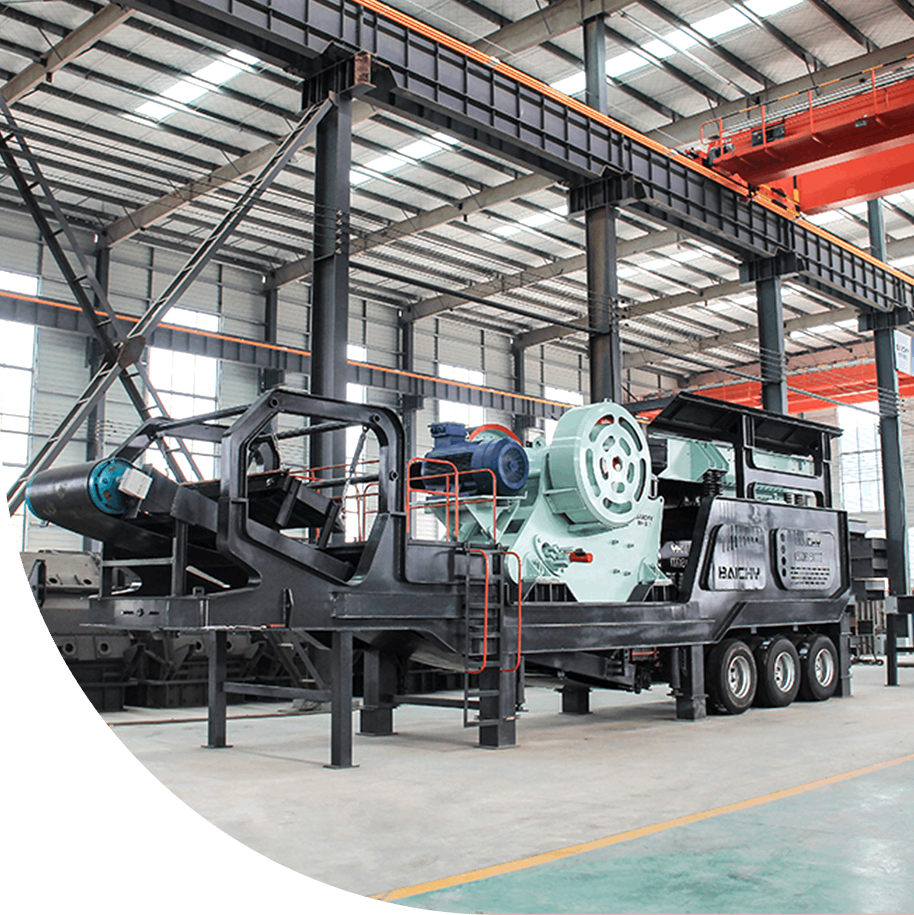


Crushing Granite with Hammer Crushers
While using a hammer crusher for granite is feasible, the operational boundaries must be clearly defined. Weathered and semi-weathered granite (Mohs hardness 4–5) represents an ideal application, allowing for single-stage reduction to ≤15mm at the lowest cost per ton. Conversely, fresh, dense granite (Mohs 6–7) causes excessive wear; in such cases, a two-stage "jaw crusher plus cone crusher" setup is preferable, or a PCK reversible hammer crusher equipped with high-chrome alloy hammers should be used exclusively for the fine crushing stage.
I. Overview: Three Operational Boundaries for Hammer Crushers in Granite Processing
Granite is a quintessential hard, abrasive rock—characterized by a compressive strength of 100–250 MPa, Mohs hardness of 6–7, and quartz content of 20–40%—with its abrasiveness directly determining the service life of the crusher's hammers. Hammer crushers operate by using a high-speed rotor to drive hammers that impact the material, with discharge size controlled by bottom grate bars; they offer a reduction ratio of 10–25 and handle both medium and fine crushing in a single unit. However, the impact-based crushing method causes "uniform and continuous" wear on components when processing hard materials—the harder the material, the faster the hammers and grate bars wear down.
Consequently, the suitability of using hammer crushers for granite is defined by three key boundaries:
• Hardness Boundary: Weathered and semi-weathered granite (Mohs ≤5) is a safe choice, enabling single-stage reduction with low wear-part costs per ton;
• Crushing Stage Boundary: For fresh granite, hammer crushers should only be considered for the secondary fine-crushing stage (feed size ≤60mm) and must be equipped with high-chrome alloy hammers;
• Cost Boundary: Based on the cost of wear parts (hammers) per ton of output, if the cost exceeds $0.12/ton, the system should immediately switch to a cone crusher configuration.
By clearly defining these three boundaries, the use of hammer crushers for granite shifts from a debate over mere feasibility to an engineering decision regarding the most cost-effective operating conditions.
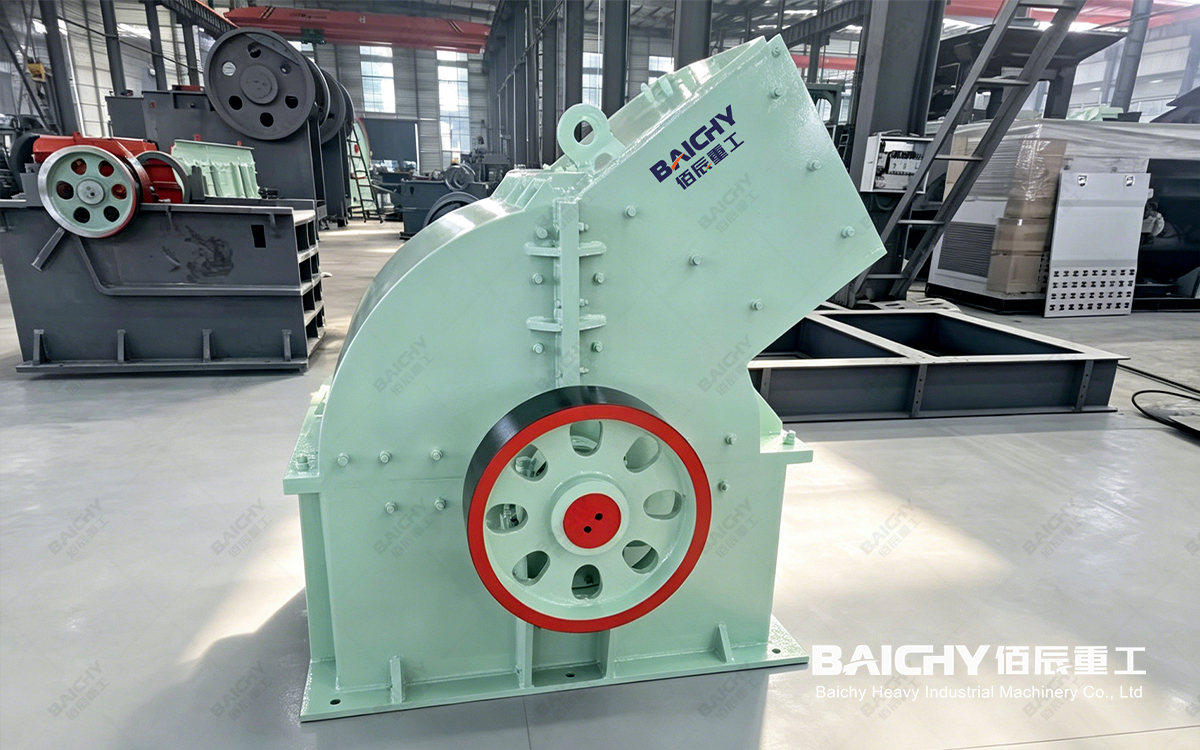
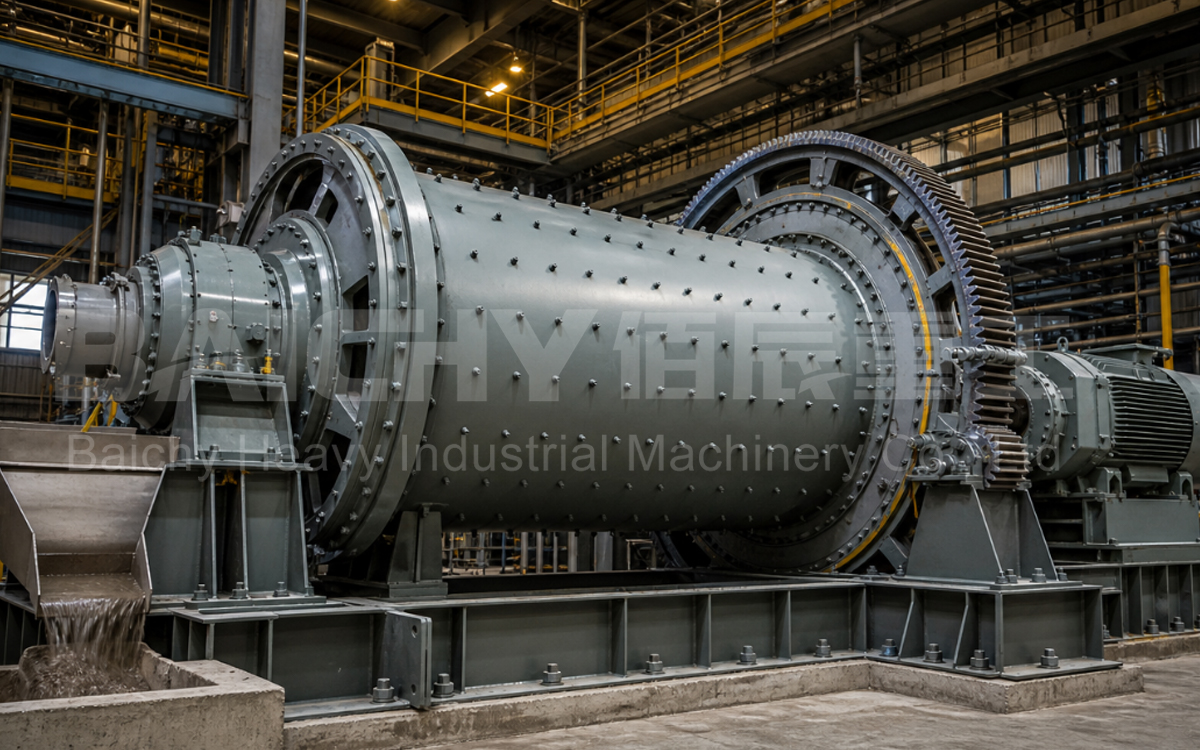
granite sand-making equipment
II. Application Scenarios: Three Granite Processing Conditions Ideally Suited for Hammer Crushers
1. Crushing Weathered and Semi-weathered Granite
In regions such as the southeastern coast of China, Southeast Asia, Brazil, and India, granite weathering crusts often reach thicknesses of 5–20 meters. Upon weathering, the Mohs hardness drops to 4–5 and jointing becomes well-developed, creating optimal conditions for hammer crushers: high reduction ratios and moderate fines generation. A single set of high-chromium hammer heads offers a service life of 600–1,000 hours, with wear-part costs ranging from $0.03 to $0.06 per ton. Mines using hammer crushers for this application can produce 0–20mm aggregate in a single pass, eliminating the need for secondary cone crushing and screening stages, thereby reducing primary equipment investment by approximately 30%.
2. Secondary Fine Crushing and Manufactured Sand Production
After fresh granite undergoes primary crushing in a jaw crusher to ≤60mm, a PCK reversible hammer crusher is used for fine crushing to 0–10mm, suitable for direct sand production or mill feed. Features such as double-sided hammer heads, counter-rotating blockage clearing, and high-chromium alloy composition extend hammer life by 40–60% compared to standard hammer crushers. The 0–5mm fraction accounts for 35–45% of the output; when combined with a sand-shaping machine, the product meets standards for sand used in C30 or higher-grade concrete.
3. Recovery of Screen Undersize and Crushed Stone Fines
Screen undersize (crushed stone fines below 5–10mm) and stone processing waste—characterized by low hardness and small particle size—can be directly re-crushed using small PC-series hammer crushers into 0–5mm manufactured sand or void-filling material. With an investment payback period typically under eight months, this offers a low-barrier solution for granite mining operations to turn waste into value.
III. Core Specifications: PC Series Hammer Crusher (Granite Application)
Rated capacities are based on limestone (approx. 1.6 t/m³); capacities for granite are adjusted for hardness: weathered granite ×0.6–0.75, semi-weathered granite ×0.5–0.6, and fresh granite ×0.35–0.5.
| Model | Rotor Dimensions | Feed Size | Output Size | Limestone Capacity (Baseline) | Weathered Granite Capacity (Converted) | Motor Power | Machine Weight |
|---|---|---|---|---|---|---|---|
| PC400×300 | φ400×300 | ≤100 mm | ≤15 mm | 5–10 t/h | 3–7 t/h | 11 kW | 0.8 t |
| PC600×400 | φ600×400 | ≤120 mm | ≤15 mm | 10–22 t/h | 6–15 t/h | 22 kW | 1.5 t |
| PC800×600 | φ800×600 | ≤150 mm | ≤20 mm | 20–45 t/h | 12–30 t/h | 55 kW | 4.2 t |
| PC1000×800 | φ1000×800 | ≤200 mm | ≤20 mm | 40–80 t/h | 25–55 t/h | 110 kW | 7.0 t |
| PC1200×1000 | φ1200×1000 | ≤250 mm | ≤20 mm | 80–150 t/h | 50–100 t/h | 160 kW | 12 t |
产能以石灰石(密度 ≈ 1.6 t/m³)为基准;花岗岩按硬度折算:风化花岗岩 ×0.6–0.75,半风化 ×0.5–0.6,新鲜花岗岩 ×0.35–0.5。询盘时提供花岗岩莫氏硬度、风化程度与最大给料粒度,可获得准确产能与锤头寿命预估。
Quick Selection Guide: For a daily processing capacity of 100–300 tons of weathered granite, choose PC600×400 or PC800×600; for 300–800 tons, choose PC1000×800; for over 800 tons, choose PC1200×1000. For the fine crushing stage of fresh granite, select the PCK reversible model and budget for high-chromium hammers. Providing the granite's Mohs hardness, weathering degree, and maximum feed size during your inquiry will allow for accurate estimates of production capacity and hammer service life.
IV. Equipment Advantages: Turning Specifications into Profit
1. Single-stage shaping; eliminates the need for an additional production line. A hammer crusher is used to crush weathered granite with a reduction ratio of 10–25, replacing the traditional two-stage setup (secondary and tertiary crushing) with a single unit. For a 100 t/h production line, this reduces initial investment in the crushing stage by approximately 25–30% and eliminates the need for intermediate surge bins, connecting conveyors, and a secondary dust collection system.
2. The output particle size is adjustable, allowing a single machine to produce multiple specifications. Output size can be switched simply by changing the grate bar aperture—≤15 mm for ball mill feed, ≤20 mm for aggregate screening, or ≤10 mm for sand-making lines—without modifying the main machine structure.
3. High-chromium hammers offer a controllable service life. When processing granite, high-chromium alloy hammers (Cr20+) last 40–60% longer than standard manganese steel hammers; this lifespan can be doubled again by utilizing the reversible design. Hammers and grate bars are the only major wear parts, with wear-part costs controllable at $0.03–0.06 per ton when processing weathered rock.
4. Maintenance requirements are minimal. The system operates without a complex hydraulic lubrication station; the housing opens hydraulically, and hammers are replaced inpidually via a modular design. A single replacement takes about 30 minutes and can be performed by a standard mechanic, making it ideal for localized maintenance in overseas projects.
Hammer Head Service Life Reference (Granite Application)
| Material | Mohs Hardness | Service Life (Per Set) | Wear Part Cost (per Ton) | Recommended Solution |
|---|---|---|---|---|
| Weathered Granite | 4–5 | 600–1,000 h | $0.03–0.06 | PC Series, Standard High-Chromium Hammer |
| Semi-weathered Granite | 5–6 | 300–500 h | $0.06–0.10 | PCK Reversible Series, High-Chromium Hammer |
| Fresh Granite | 6–7 | 100–200 h | >$0.12 | Not recommended; switch to cone crusher |
锤头寿命以单套锤头连续运行为基准;花岗岩风化程度越高、石英含量越低,锤头寿命越长。新鲜花岗岩(莫氏 6–7)吨耗件成本超 $0.12,建议改用颚破+圆锥破方案。
V. Application Cases: Data-Driven Results
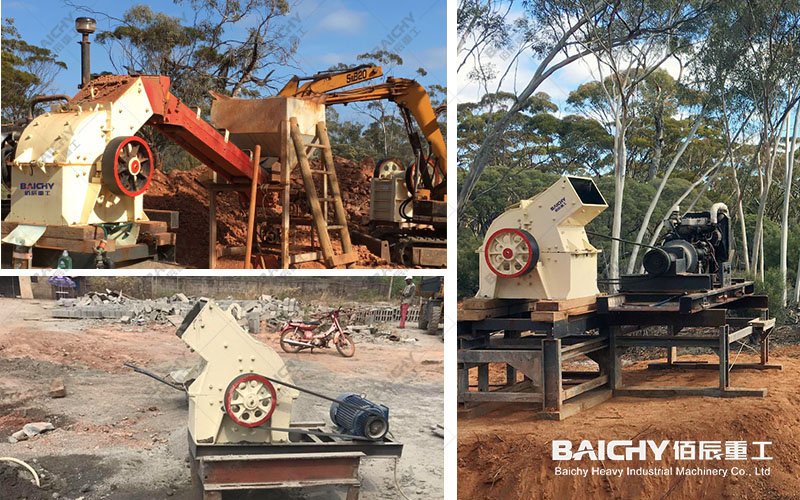
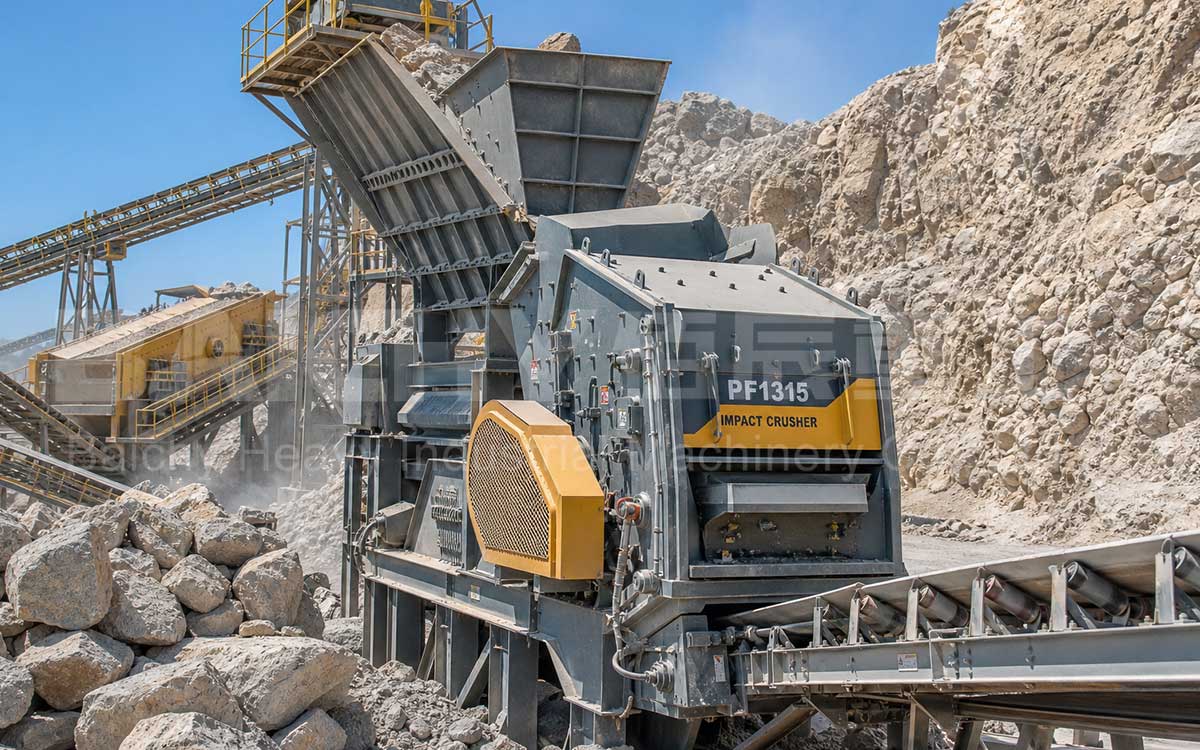
fine granite crushing
Case 1: Weathered Granite Aggregate Line in Southeast Asia (80 t/h)
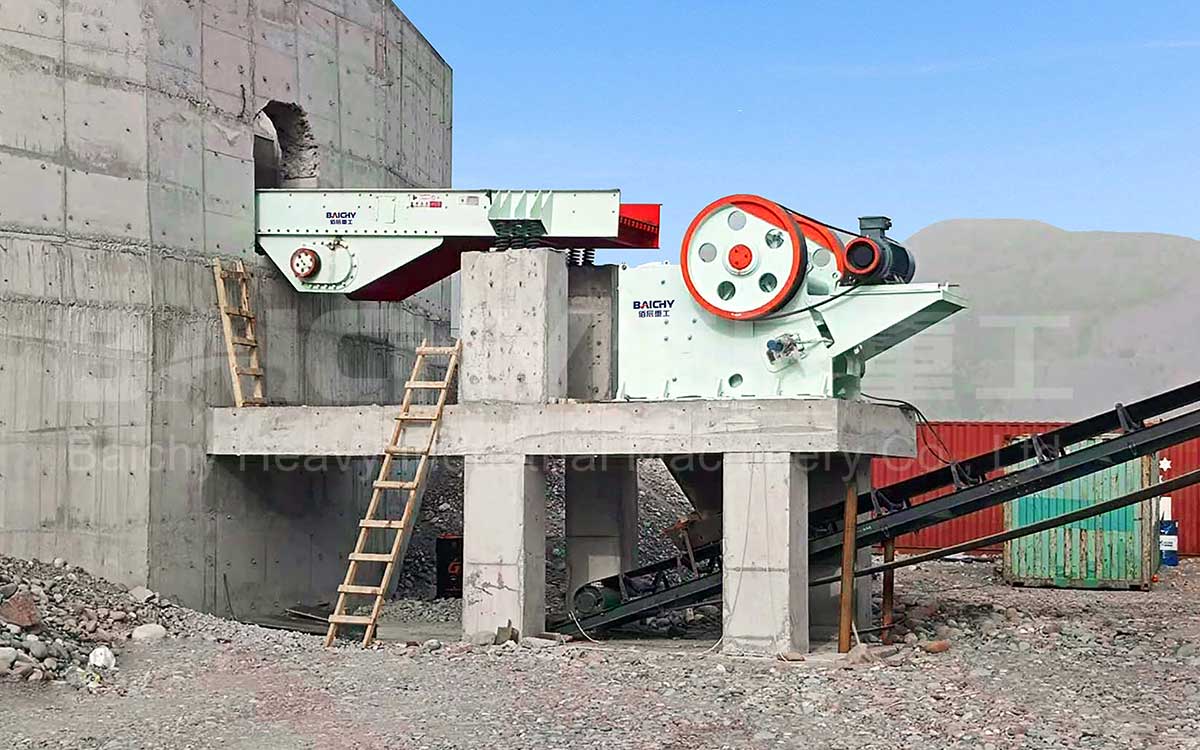
Configuration: ZSW Feeder → PE750×1060 Jaw Crusher → PC1000×800 Hammer Crusher → YK Vibrating Screen
Operational Performance: 90% pass rate for output ≤20mm; 18% proportion of 0–5mm fines (recycled as manufactured sand)
Benefits: Crushing stage investment reduced by 30% compared to "Jaw + Cone" setup; power consumption of 1.8 kWh/ton; equipment investment recovered in 18 months
Case 2: Granite Fine Crushing & Sand Making Line (50 t/h)
Configuration: PE600×900 Jaw Crusher → PCK Reversible Hammer Crusher (High-Chromium Hammer) → Sand Shaping Machine → Sand Washer
Operational Performance: Output 0–10mm; 40% proportion of 0–5mm fraction; manufactured sand crushing value meets standards
Benefits: Hammer service life of 450 hours (semi-weathered rock)—a 50% increase over standard hammers; annual wear part costs reduced by approximately 40%
VI. Recommended Related Equipment
Hammer crushers processing granite require the following equipment to form a complete production line:
| Process | Recommended Equipment | Selection Rationale |
|---|---|---|
| Feeding | ZSW Vibrating Feeder | Uniform feeding prevents impact damage to the rotor, extending hammer lifespan by 20–30%. |
| Coarse Crushing | PE Series Jaw Crusher | Fresh granite is first coarsely crushed to ≤60mm before entering the hammer crusher for fine crushing. |
| Medium/Fine Crushing (Core) | PC/PCK Series Hammer Crusher | The primary equipment for this application; enables single-stage shaping of weathered rock and features a reversible function for clearing blockages in the fine crushing stage. |
| Screening | YK Vibrating Screen | Product grading and closed-loop circulation to increase the yield of qualified finished products. |
| Shaping & Sand Making | Sand Making Machine / VSI | Improves the shape of 0–5mm particles to meet concrete sand standards. |
| Iron Removal | Suspended Iron Remover | Captures iron contaminants to protect hammers and grate bars. |
表中"Medium/Fine Crushing (Core)"为本产线核心设备;具体配置按花岗岩硬度、目标产能与成品要求调整,可提供免费工艺设计与选型方案。
VII. FAQ
Q1: Can a hammer crusher handle granite, given its high hardness? Won't the hammers wear out too quickly?
A: It depends on the degree of weathering. Weathered or semi-weathered granite (Mohs hardness 4–5) is ideal for hammer crushers; a set of high-chromium hammers lasts 600–1,000 hours, with a wear-part cost of 0.03–0.06 per ton. Standard hammer crushers are not recommended for fresh, dense granite (Mohs 6–7), as hammer life drops to just 100–200 hours and wear costs exceed 0.12 per ton; a jaw crusher plus cone crusher combination is preferable. When in doubt, sending 5–10 kg of ore samples for crushing tests is the most cost-effective way to verify suitability.
Q2: How do I choose between a hammer crusher and a cone crusher for granite?
A: Choose based on hardness and the crushing stage. For weathered granite or aggregate lines with feed sizes ≤300mm, choose a hammer crusher: it offers single-stage shaping, ~30% lower investment costs, and simple maintenance. For fresh granite or applications requiring superior particle shape, choose a cone crusher: it offers better wear economics and better particle shape. A compromise solution is the "Jaw Crusher + PCK Reversible Hammer Crusher" setup for the fine crushing/sand-making stage, using high-chromium hammers to control wear costs. There is only one criterion: calculate the cost of hammerhead wear parts into the total cost per ton, and choose the option with the lower figure.
Q3: Can a hammer crusher be used directly for granite sand making? Will it produce excessive amounts of fines?
A: Yes, though a two-stage setup—combining a hammer crusher with a dedicated sand-making machine—is recommended. When a hammer crusher is used for fine crushing of granite, the 0–10mm and 0–5mm fractions account for 35–45% of the output; the fines content is moderate and the particle size distribution is continuous, making the material suitable as direct feedstock for manufactured sand. If the concrete sand requires specific particle shapes and gradations, passing the material through a sand-making machine for shaping and a sand washer for desliming will ensure compliance with standards. If the feed material is weathered granite, the PC series can be used for single-stage shaping followed by direct screening and the re-blending of fines, resulting in a more streamlined process.
Baichy Heavy Industry
Baichy Heavy Industry is a high-tech mining equipment company integrating R&D, manufacturing, sales, and after-sales service. Focusing on crushing, grinding, and mineral processing equipment, we provide professional solutions to our customers. We are ISO9001:2015 、certified, and our products include mobile crushing palnts, crawler crushing plant, construction waste crushing plants, jaw crushers, sand making machines, cone crushers, fine crushers, grinding mills, ball mills, etc., all with reliable performance to meet diverse project needs.
Baichy Heavy Industry – Your Trusted Partner
To ensure optimal performance of your equipment, Baichy Heavy Industry offers:
- Professional on-site installation guidance
- Comprehensive operator training
- 24/7 technical support & maintenance services
Our complete after-sales service system guarantees long-term, stable operation of your machinery with minimal downtime.
Protect Your Rights – Only Use Official Channels
To avoid scams and ensure authentic support, contact us exclusively through:
• Official Website: www.baichychina.com
• WhatsApp: +8615093222637
• Email: [email protected]
Your satisfaction is our priority – expect prompt, professional service every time.
(Note: Beware of unauthorized third parties claiming to represent Baichy. Always verify through official contacts.)