Hammer crusher
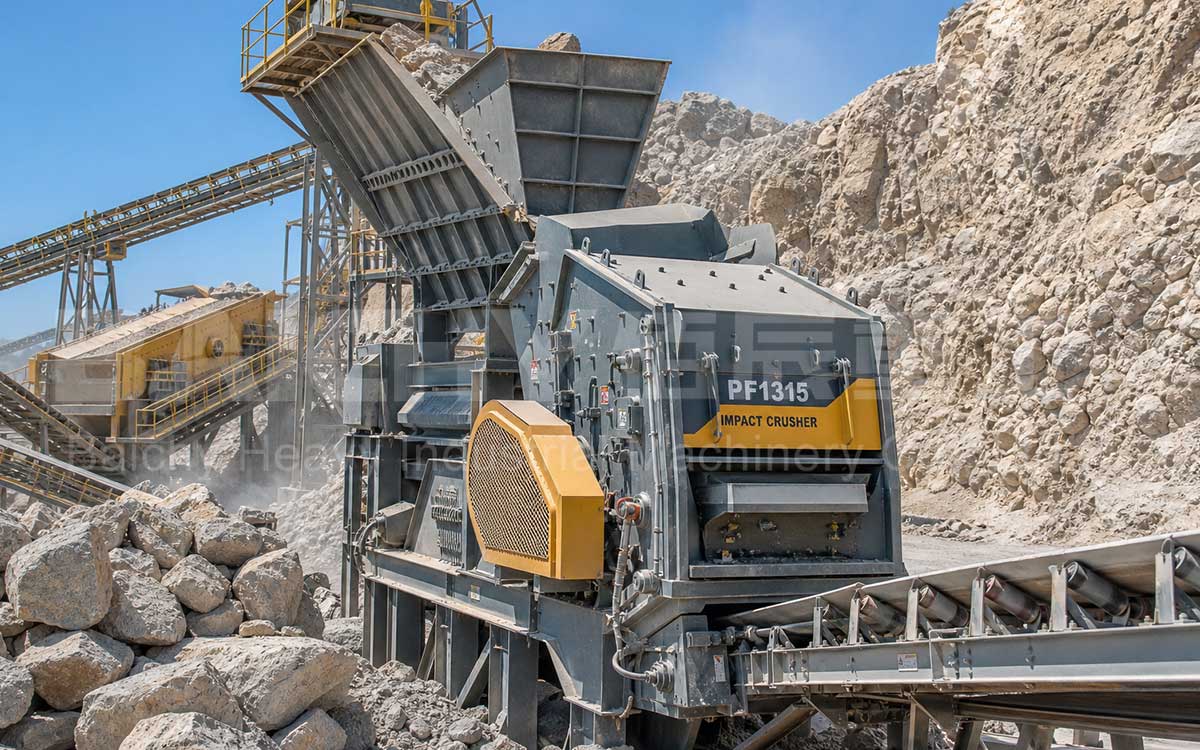
The hammer crusher is the medium-to-fine crushing equipment offering the lowest investment and operating costs per ton for limestone processing. It combines the "medium crushing" and "fine crushing" stages into a single machine, reducing raw limestone (≤300mm) to a finished product (≤20mm) in one pass, with over 85% of the output meeting standards for aggregates and mill feed.
I. Overview: Why the Hammer Crusher is the Top Choice for Limestone Crushing
Limestone (compressive strength: 50–150 MPa; density: approx. 1.5–1.6 t/m³) is a typical medium-hard, brittle material that falls perfectly within the optimal operating range for the hammer crusher's "impact crushing and single-stage shaping" capabilities. Compared to the traditional two-stage "jaw crusher + impact crusher" process, a single hammer crusher handles both medium and fine crushing with a reduction ratio of 10–25. This results in approximately 25–30% lower initial investment for the crushing stage and 15–20% lower electricity consumption per ton. For budget-conscious cement plants, aggregate production lines, and manufactured sand facilities, the hammer crusher is not merely an alternative—it is the most cost-effective solution.
II. Application Scenarios: Hammer Crushers in Four Typical Limestone Processing Lines
1. Cement Raw Material Crushing
Limestone entering cement plants often arrives in chunks of 500–800mm. After primary crushing by a jaw crusher, the hammer crusher reduces the material to ≤20mm for direct feeding into the raw meal mill. Replacing the secondary crushing stage with a single hammer crusher eliminates the need for an extra crushing line and associated dust collection and conveying systems, reducing the total plant footprint by approximately 30%.
2. Construction Aggregates and Manufactured Sand
In limestone aggregate lines, the hammer crusher serves as the primary unit for medium and fine crushing. It yields a high proportion of 5–20mm product with minimal flaky particles, allowing for direct screening into three aggregate grades: 0–5mm, 5–10mm, and 10–20mm. The fines fraction (≤5mm) accounts for 15–25% of the output and can be processed further in a sand-making machine.
3. Preparation of Limestone Powder for Desulfurization
Limestone powder for power plant desulfurization requires a fineness of 250 mesh and a CaCO₃ content of ≥90%. Limestone is crushed to ≤15 mm by a hammer crusher before being fed into a Raymond mill or ball mill; stable mill feeding increases hourly throughput by 20–30% and significantly reduces electricity consumption per ton.
4. Calcium Oxide (Quicklime) Production Line
Rotary kiln calcination requires graded stone (5–40 mm). After crushing by a hammer crusher, the limestone undergoes vibrating screening; fines are returned for re-crushing to ensure stable kiln conditions and continuous production capacity.
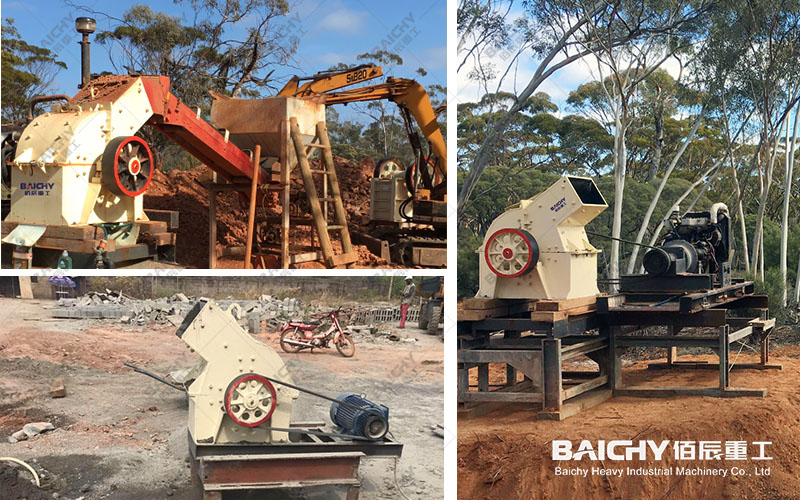
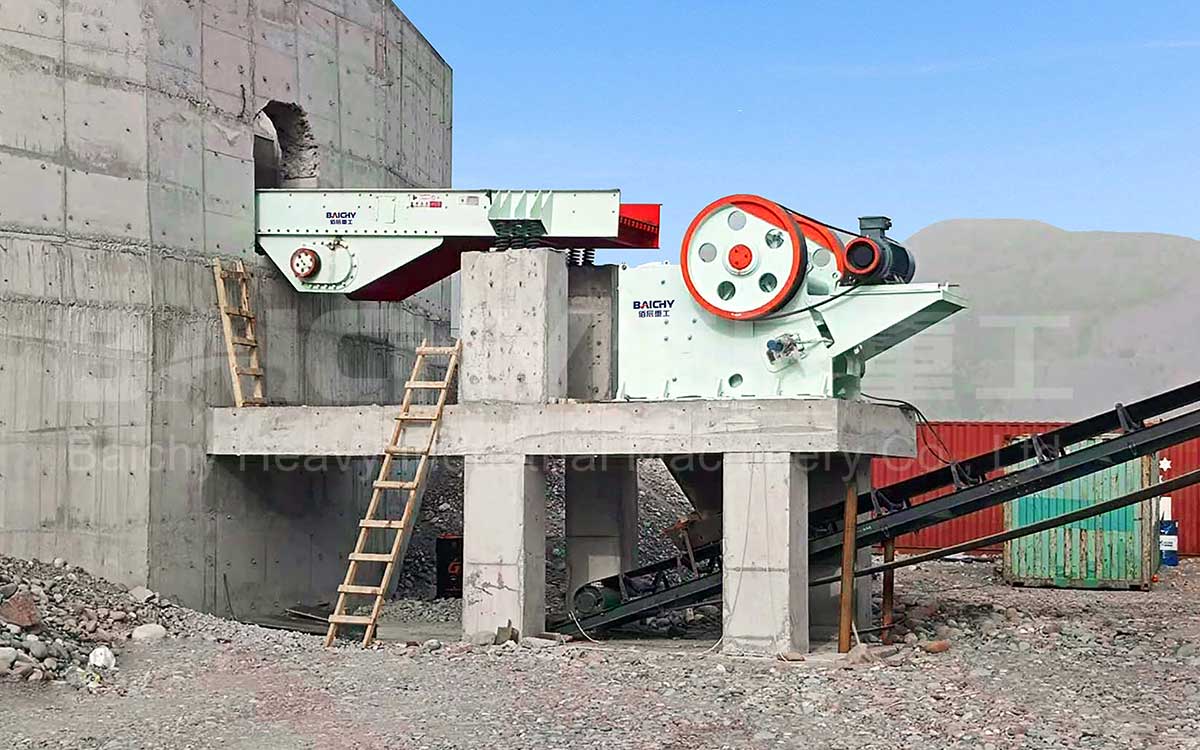
Customer site featuring a PC hammer crusher
III. Key Parameter Table: PC Series Hammer Crusher (Based on Limestone)
Capacity figures are based on medium-hardness limestone (density approx. 1.6 t/m³); if moisture content exceeds 8%, capacity should be adjusted by a factor of 0.7–0.85, and pre-screening is recommended. Model Rotor Dimensions Feed Size Output Size Capacity Motor Power Machine Weight
| 型号 | 转子尺寸 | 进料粒度 | 出料粒度 | 产能 | 电机功率 | 整机重量 |
|---|---|---|---|---|---|---|
| PC400×300 | φ400×300 | ≤100 mm | ≤15 mm | 5–10 t/h | 11 kW | 0.8 t |
| PC600×400 | φ600×400 | ≤120 mm | ≤15 mm | 10–25 t/h | 22 kW | 1.5 t |
| PC800×600 | φ800×600 | ≤150 mm | ≤20 mm | 20–50 t/h | 55 kW | 4.2 t |
| PC1000×800 | φ1000×800 | ≤200 mm | ≤20 mm | 40–90 t/h | 110 kW | 7.0 t |
| PC1200×1000 | φ1200×1000 | ≤250 mm | ≤20 mm | 80–150 t/h | 160 kW | 12 t |
Quick Selection Guide: For a daily throughput of 100–200 tons, choose PC600×400; 200–500 tons, choose PC800×600; 500–1000 tons, choose PC1000×800; over 1000 tons, choose PC1200×1000. A 20% capacity margin is recommended to accommodate fluctuations in moisture content. Providing the limestone's Mohs hardness and moisture content during your inquiry will allow for accurate estimates of capacity and hammer service life.
IV. Equipment Advantages: Turning Specifications into Profit
1. Single-stage shaping; eliminates the need for an extra production line. The hammer crusher offers a limestone reduction ratio of 10–25, allowing a single unit to replace the traditional two-stage setup (secondary and tertiary crushing). Based on a 100 t/h production line, this reduces initial investment in the crushing section by approximately 25–30% while eliminating the need for intermediate storage bins, additional conveyor belts, and a second dust collection system. Adjustable discharge size; one machine supports multiple specifications. Discharge size can be switched simply by changing grate bars with different aperture sizes—≤15mm for raw meal grinding, ≤20mm for aggregate screening, and ≤25mm for sand-making machines—without modifying the main machine structure.
2. Low specific power consumption and wear costs. Limestone has low hardness; high-chrome alloy hammers offer a service life of 800–1,500 hours per set, with wear-part costs of approximately $0.03–0.06 per ton. Combined with a high crushing ratio and specific power consumption of only 1.2–2.0 kWh per ton, the total processing cost per ton is significantly lower than that of two-stage crushing systems.
3. Low maintenance requirements. The system eliminates the need for hydraulic lubrication stations; the housing opens hydraulically, and hammers feature a modular design allowing for inpidual replacement. A single replacement takes about 30 minutes and can be performed by a standard fitter, making it ideal for localized maintenance in overseas projects.
V. Application Cases: Data-Driven Results
Case 1: Limestone Crushing Section for a Cement Plant in the Middle East (100 t/h)
Configuration: PE750×1060 Jaw Crusher → PC1000×800 Hammer Crusher → Raw Meal Mill
Operational Performance: 92% pass rate for output ≤20mm; raw meal mill hourly output increased by 22%; electricity consumption reduced to 1.6 kWh/ton.
Benefits: Crushing section investment reduced by 28% compared to the original dual-line plan; payback period of approximately 14 months.
Case 2: Manufactured Sand Production Line in Southeast Asia (60 t/h)
Configuration: ZSW Feeder → PE600×900 Jaw Crusher → PC800×600 Hammer Crusher → YK Vibrating Screen → Sand Washer
Operational Performance: 38% yield of 0–5mm fraction; flake content <8%; stable manufactured sand gradation.
Benefits: Processing cost per ton is 40% lower than purchasing river sand; full equipment investment recovered in 18 months.
VI. Recommended Ancillary Equipment
To form a complete production line for crushing limestone with a hammer crusher, the following equipment is required:
ZSW Vibrating Feeder: Ensures uniform feeding, prevents impact damage to the rotor, and extends hammer lifespan.
PE Jaw Crusher: Performs primary crushing on large limestone blocks (>300mm) before they enter the hammer crusher.
YK Vibrating Screen: Handles output grading and closed-circuit circulation to improve the pass rate of the final product.
Sand Washer / Fine Sand Recovery Machine: Complements the aggregate line by recovering 0.075–3mm fine sand.
Raymond Mill / Ball Mill: Processes the crusher output (≤15mm) to produce limestone powder.
Suspended Magnetic Separator: Captures iron contaminants to protect hammers and grate bars.
VII. FAQ
Q1: Will the hammer crusher clog when processing limestone with high moisture content?
A: Yes. If limestone moisture exceeds 10%, fines tend to stick to the grate bars, causing a 20–30% drop in production capacity. Solution: Add a pre-screening stage at the feed end to remove soil, or increase the grate bar spacing by 2–3 mm; the Baichy PCK reversible hammer crusher supports automatic blockage clearing via reverse rotation, making it suitable for high-moisture conditions.
Q2: How hard a limestone can the hammer crusher handle?
A: The PC series is suitable for medium-hard limestone with a compressive strength of ≤150 MPa; dolomitic limestone (Mohs hardness 4–5) can also be crushed effectively, with a hammer lifespan of approximately 800–1,200 hours. If the material has high silica content or contains flint nodules, using Cr20 high-chromium hammers or switching to an impact crusher is recommended.
Q3: How do I choose between the PC series and the PCZ heavy-duty hammer crusher?
A: Choose the PC series for feed sizes ≤300 mm (single-stage medium-to-fine crushing); choose the PCZ heavy-duty hammer crusher for large raw ore feed sizes of 300–1,200 mm (combining primary and secondary crushing in a single unit). Both can achieve a product size of ≤20 mm; the PCZ eliminates the need for a primary jaw crusher but results in higher hammer wear, so economic viability should be calculated based on the limestone's hardness.
Baichy Heavy Industry
Baichy Heavy Industry is a high-tech mining equipment company integrating R&D, manufacturing, sales, and after-sales service. Focusing on crushing, grinding, and mineral processing equipment, we provide professional solutions to our customers. We are ISO9001:2015 、certified, and our products include mobile crushing palnts, crawler crushing plant, construction waste crushing plants, jaw crushers, sand making machines, cone crushers, fine crushers, grinding mills, ball mills, etc., all with reliable performance to meet diverse project needs.
Baichy Heavy Industry – Your Trusted Partner
To ensure optimal performance of your equipment, Baichy Heavy Industry offers:
- Professional on-site installation guidance
- Comprehensive operator training
- 24/7 technical support & maintenance services
Our complete after-sales service system guarantees long-term, stable operation of your machinery with minimal downtime.
Protect Your Rights – Only Use Official Channels
To avoid scams and ensure authentic support, contact us exclusively through:
• Official Website: www.baichychina.com
• WhatsApp: +8615093222637
• Email: [email protected]
Your satisfaction is our priority – expect prompt, professional service every time.
(Note: Beware of unauthorized third parties claiming to represent Baichy. Always verify through official contacts.)