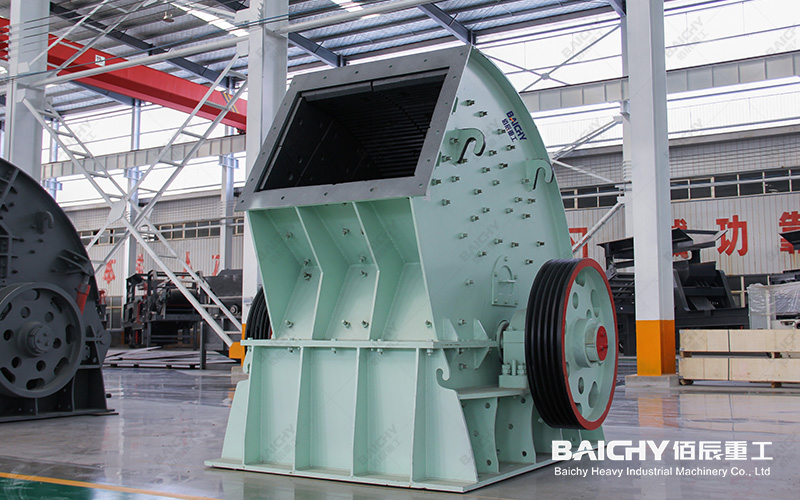
coal hammer crusher
Coal is a brittle material characterized by low-to-medium hardness, friability, and significant fluctuations in moisture content. Thanks to three key features—single-stage size reduction, uniform output granularity, and strong adaptability to high-moisture materials—hammer crushers have become the mainstream equipment for coal crushing in power plants, coal preparation plants, and coking enterprises worldwide. This article provides comprehensive recommendations for selecting hammer crushers for coal applications, covering four dimensions: application scenarios, equipment advantages, core parameters, and practical case studies. The PCZ ring hammer crusher stands out as the top recommended solution for coal crushing.
I. Why Hammer Crushers Are the Preferred Choice for Coal Crushing
1. Characteristics of Coal and Crushing Challenges
Coal has a Mohs hardness of only 1–3, far lower than that of granite or iron ore, yet crushing it presents significant challenges: first, coal often contains hard impurities like gangue and pyrite, which exert heavy impact loads on wear parts such as hammer heads; second, raw coal moisture content ranges from 8% to 20%, making wet coal prone to sticking and clogging the crushing chamber; third, output size requirements are stringent—circulating fluidized bed (CFB) boilers in power plants require a feed size of ≤10 mm, while coal preparation plants require the crushing process to minimize coal dust generation to prevent the loss of clean coal.
2. Working Principle and Adaptability of Hammer Crushers
Hammer crushers utilize high-speed rotating hammers to impact and crush material. The material undergoes repeated collisions between the hammers, liner plates, and grate bars until it is reduced to a size smaller than the grate gaps and discharged. This combined "impact and grinding" crushing principle makes the machine naturally suited for brittle materials like coal: a single unit can reduce raw coal (≤350 mm) to under 30 mm in one pass, eliminating the need for a two-stage "jaw crusher plus impact crusher" setup. This results in the shortest process flow, the smallest footprint, and the lowest investment cost.
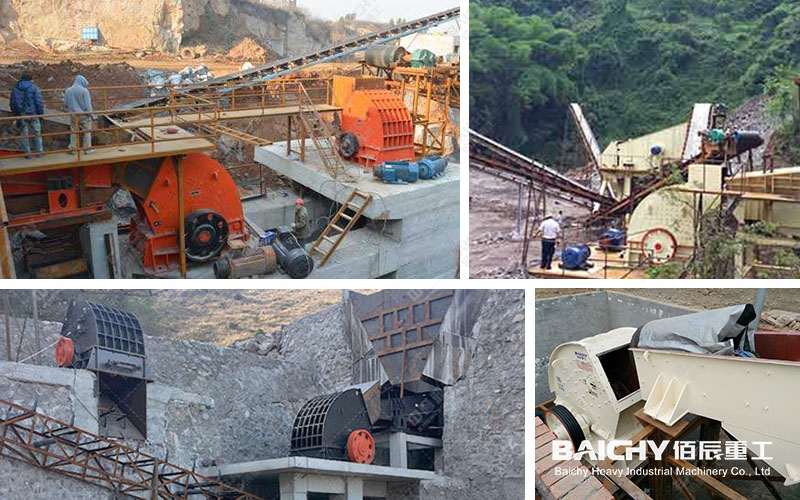
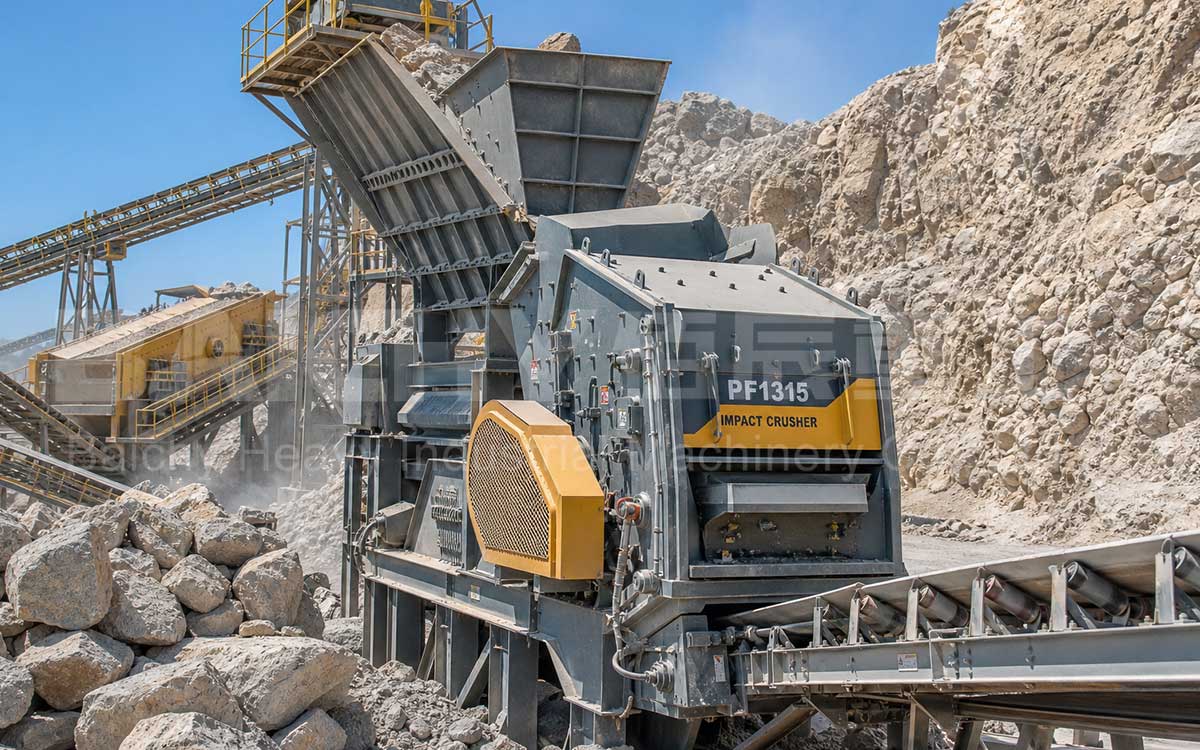
Customer site featuring a heavy-duty hammer crusher
II. Typical Application Scenarios for Coal Hammer Crushers
1. Coal Crushing for Power Plants and Heating Stations
Circulating fluidized bed (CFB) boilers impose strict limits on coal feed size. Coal hammer crushers are typically installed directly on coal conveyor trestles to crush raw coal before delivering it to the coal bunkers located in front of the boilers. Mainstream power plants—both domestic and international—frequently utilize PCZ series ring-hammer crushers, with single-unit capacities ranging from 80 to 300 t/h.
2. Coal Washing Plants and Preparation Processes
Both dense-medium and jigging coal preparation processes require uniform feed particle sizes; excessive pulverization leads directly to clean coal loss. With a high reduction ratio and low over-pulverization rates (producing over 30% less coal dust than standard hammer crushers), ring-hammer crushers are the preferred choice for the crushing stage in coal washing plants.
3. Crushing Raw Materials for Coking and Coal Chemicals
Coking coal blending and gasifier feeding require consistent particle sizes over the long term. PCK reversible hammer crushers enable bidirectional crushing and double the service life of hammer heads, making them ideal for the high-intensity, continuous operations found in coking plants.
4. Comprehensive Utilization of Coal Gangue and Low-Grade Coal
For resource recovery projects—such as brick manufacturing from coal gangue or re-blending coal slime—the 2PC double-stage hammer crusher is commonly used to crush gangue to under 10mm in a single pass. Replacing a two-stage crushing setup with a single unit significantly reduces civil engineering and equipment investment costs.
III. Core Advantages of Coal Hammer Crushers
1. Single-Stage Crushing Simplifies Process Flow
Taking the PCZ-1212 model as an example: it accepts feed sizes up to 350mm and produces output sizes of 30mm or less, achieving a reduction ratio exceeding 12:1. A single unit replaces the traditional "jaw crusher plus impact crusher" combination, reducing civil engineering investment by approximately 40% and lowering system power consumption by 20%–25%.
2. Uniform, Controllable Output Size with Low Over-Pulverization
Output particle size can be flexibly adjusted between 5mm and 30mm by swapping grate bars with different slot widths; the clearance between hammer heads and grate bars is adjustable, ensuring long-term output consistency. The ring-hammer design significantly reduces over-pulverization—based on an annual processing volume of 500,000 tons, a 5-percentage-point reduction in the coal dust rate allows for the recovery of an additional 25,000 tons of usable coal. \
3. Strong adaptability to high-moisture, sticky materials
The grate bars feature a self-cleaning design for the screen gaps; combined with an adjustable gap setting, the machine ensures continuous, stable operation with wet coal containing up to 15% moisture. An iron remover is installed at the feed inlet to effectively protect the hammer heads from damage caused by metal debris.
4. Low maintenance costs and high spare part interchangeability
The hammer heads are made of high-manganese steel; they can be flipped over after one side wears down, effectively doubling their service life. The grate bars and liner plates are standardized parts with high interchangeability, minimizing spare part inventory requirements. The machine features a compact structure with ample space for maintenance, allowing a full set of hammer heads to be replaced in just 4–6 hours.

hammer crusher for coal crushing
IV. PCZ Ring Hammer Crusher Core Specifications Table
| Model | Rotor Diameter × Length (mm) | Feed Size (mm) | Discharge Size (mm) | Capacity (t/h) | Motor Power (kW) |
|---|---|---|---|---|---|
| PCZ-0402 | 400×200 | ≤200 | ≤30 | 8-12 | 11 |
| PCZ-0606 | 600×600 | ≤200 | ≤30 | 22-30 | 30 |
| PCZ-0808 | 800×800 | ≤250 | ≤30 | 50-60 | 75 |
| PCZ-1010 | 1000×1000 | ≤300 | ≤30 | 80-100 | 132 |
| PCZ-1212 | 1200×1200 | ≤350 | ≤30 | 120-150 | 220 |
| PCZ-1616 | 1600×1600 | ≤350 | ≤30 | 200-300 | 450 |
Note: Capacity ratings are based on medium-hard raw coal with a moisture content of ≤10%. Actual capacity is influenced by coal quality, moisture content, and feed uniformity; please refer to the specific technical proposal for calculations.
V. Recommended Equipment and Selection Advice
Recommendation 1: PCZ Series Ring Hammer Crusher (Primary choice for coal crushing)
The ring hammer structure is specifically designed for brittle materials like coal and coke. It features a low over-crushing rate and high capacity, covering a full range from 8 to 300 t/h; it is standard equipment for power plants, coal preparation plants, and coal mines.
Recommendation 2: PC Series Hammer Crusher (General-purpose)
Suitable for small coal mines, coal powder preparation lines in cement plants, and mobile crushing stations. It features a simple structure and cost-effective pricing, with a capacity of 5–80 t/h.
Recommendation 3: 2PC Two-Stage Hammer Crusher (Specialized for coal gangue)
Performs two stages of crushing in a single pass; coal gangue with an input size of ≤500 mm can be crushed directly to under 10 mm. Ideal for comprehensive utilization projects such as coal gangue brick making.
Quick-Reference Selection Chart
| Operational Requirement | Recommended Model | Reason for Selection |
|---|---|---|
| Power plant coal feeding, capacity >100 t/h | PCH-1010 / PCH-1212 | Output size ≤30 mm; single-stage processing |
| Coal prep plant clean coal protection | PCH Series | Low over-crushing rate; high clean coal recovery rate |
| Small/mobile station integration | PC-800×600 | Simple structure; compact footprint; high cost-performance ratio |
| Coal gangue brick making | 2PC Two-Stage Hammer Crusher | Crushes to <10 mm in a single pass |
VI. Relevant Case Studies
Case Study 1: Coal Crushing Project for a Power Plant in Kalimantan, Indonesia
A 2×135 MW coal-fired power plant's coal handling system originally used a two-stage crushing process involving a jaw crusher and an impact crusher, resulting in high dust levels and high power consumption. After switching to the PCZ-1212 ring hammer crusher, the output particle size stabilized at under 25 mm—fully meeting the coal feed requirements for the CFB boiler. System power consumption dropped by 22%, the civil engineering footprint was reduced by 40%, and annual electricity costs were saved by approximately 180,000 RMB.
Case Study 2: Coal Gangue Processing Line at a Coal Washing Plant in Mongolia
This facility processes 300,000 tons of coal gangue annually. It utilizes a 2PC two-stage hammer crusher to reduce gangue (with an initial size of ≤400mm) to under 10mm in a single pass, preparing the material for brick manufacturing. The equipment operates continuously for over 8,000 hours, with an average hammer lifespan of 1,200 hours. Crushing costs are kept under $1.20 per ton, making it a local demonstration project for the comprehensive utilization of coal gangue.
VII. Frequently Asked Questions (FAQ)
Q1: Should a hammer crusher or a jaw crusher be used for coal?
When the raw coal size is ≤350mm and the target output size is ≤30mm, a single hammer crusher suffices, offering the shortest process flow and lowest investment cost. A primary jaw crusher is required only if the material has a high gangue content or oversized particles (>500mm). For coal, the hammer crusher offers the optimal balance of efficiency and cost.
Q2: Will the hammer crusher clog if the coal has high moisture content?
The PCZ ring hammer crusher features a self-cleaning grate bar and adjustable hammer gap design, allowing for stable, continuous operation with moisture content up to 15%. If moisture exceeds 15% or there are significant sticky impurities, adding a vibrating screen or a drying pre-treatment stage upstream is recommended, along with installing an iron remover at the feed inlet.
Q3: How do I select the right coal hammer crusher model based on production capacity?
First, determine the target output particle size (5–30mm) and the required hourly capacity, then select the model using the parameter table: choose PCZ-0808 for 50–60 t/h, PCZ-1010 for 80–100 t/h, and PCZ-1212 for 120–150 t/h. If the coal is damp or has a high gangue content, it is recommended to select the next larger model and allow for a 15% capacity margin.
Baichy Heavy Industry
Baichy Heavy Industry is a high-tech mining equipment company integrating R&D, manufacturing, sales, and after-sales service. Focusing on crushing, grinding, and mineral processing equipment, we provide professional solutions to our customers. We are ISO9001:2015 、certified, and our products include mobile crushing palnts, crawler crushing plant, construction waste crushing plants, jaw crushers, sand making machines, cone crushers, fine crushers, grinding mills, ball mills, etc., all with reliable performance to meet diverse project needs.
Baichy Heavy Industry – Your Trusted Partner
To ensure optimal performance of your equipment, Baichy Heavy Industry offers:
- Professional on-site installation guidance
- Comprehensive operator training
- 24/7 technical support & maintenance services
Our complete after-sales service system guarantees long-term, stable operation of your machinery with minimal downtime.
Protect Your Rights – Only Use Official Channels
To avoid scams and ensure authentic support, contact us exclusively through:
• Official Website: www.baichychina.com
• WhatsApp: +8615093222637
• Email: [email protected]
Your satisfaction is our priority – expect prompt, professional service every time.
(Note: Beware of unauthorized third parties claiming to represent Baichy. Always verify through official contacts.)