
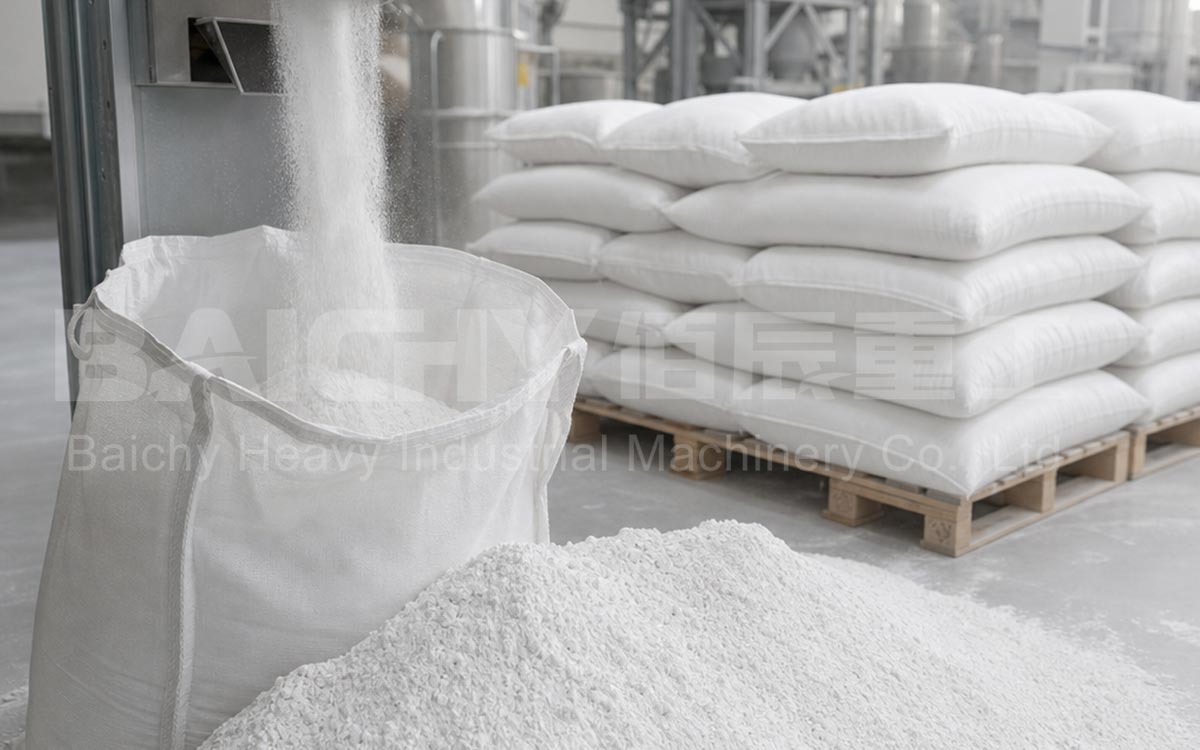
Image of packaged finished gypsum products
The key to selecting a gypsum grinding mill lies not in whether it *can* grind the material finely, but in aligning the mill's operating conditions with gypsum's three distinct material properties: ease of grinding, moisture sensitivity, and heat sensitivity.
Gypsum has a Mohs hardness of only 1.5–2 and a Bond Work Index of approximately 8 kWh/t (compared to 11–13 for limestone). At the same fineness, its electricity consumption per ton is 20%–30% lower than that of calcium carbonate, and the wear costs for grinding rollers and rings are less than one-third of those incurred when processing calcium carbonate. However, surface moisture exceeding 5% causes the material to clog the grinding rollers, while grinding chamber temperatures above 150°C trigger premature dehydration of the gypsum crystals, directly destroying the setting properties of the resulting construction-grade gypsum powder.
A fineness of 200 mesh (75μm) is the standard particle size range shared by cement retarders, plastering gypsum, and gypsum board core materials. The Baichy YGM series offers a single-unit capacity of approximately 0.8–15 t/h at this specification, making it a cost-effective choice for most new gypsum powder production lines.
The global gypsum market is estimated at 338 million tons in 2025 and is projected to grow at a compound annual growth rate (CAGR) of 5.5%, reaching 442 million tons by 2030 (Mordor Intelligence, 2025). As demand rises, the consequences of selecting the wrong equipment configuration will be significantly amplified across the entire production line over the long term.
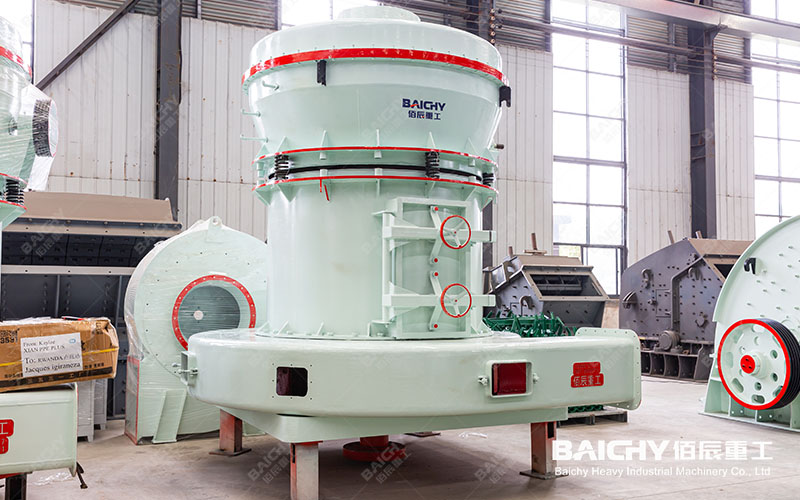
Gypsum grinding mill
I. Understanding Three Key Figures Before Grinding Gypsum: Material Baselines Determine Operating Conditions
Unlike grinding granite or iron ore, where equipment selection is primarily dictated by hardness, the real challenge in gypsum grinding lies in three easily underestimated figures: low hardness implies lower wear costs; low density requires capacity adjustments; and heat sensitivity necessitates strict control of the grinding chamber temperature. Only by fully grasping these three figures can one meaningfully evaluate equipment specifications.
| Material Parameter | Typical Value | Implication for Mill Operation |
|---|---|---|
| Mohs Hardness | 1.5–2 | Soft and brittle, low abrasiveness; long service life for grinding rollers and rings; no need for heavy-duty wear-resistant design. |
| Bulk Density | 1.3–1.5 t/m³ | Production capacity must be adjusted based on volume; tonnage capacity is approximately 85%–95% of the limestone baseline. |
| Bond Work Index | ≈8 kWh/t | Easy-to-grind material; specific energy consumption (per tonne) for the same fineness is 20%–30% lower than that of limestone. |
| Natural Ore Surface Moisture | 3%–5% | Can be fed directly into the mill; hot air circulation within the mill provides inherent drying capability. |
| FGD Desulfurization Gypsum Moisture | 10%–15% | Must be dried before entering the mill; already in fine powder form, eliminating the need for a crushing stage. |
| Phase Transition Temperature | ≈150°C | Mill chamber temperature must be controlled to prevent “over-calcination” inside the mill. (loss of 1.5 molecules of crystal water) |
Note on Material Specifications: The above figures represent typical industry ranges for natural gypsum (calcium sulfate dihydrate, CaSO₄·2H₂O) and power plant desulfurization gypsum (FGD). If the customer intends to produce hemihydrate construction gypsum (β-calcium sulfate hemihydrate), a calcination step at 150–180°C is required either before or after grinding; Baichy can supply the complete production line.
II. Three Critical Factors in Operational Design: Moisture, Temperature, and Fineness
The operational design of a gypsum mill is essentially about finding a balance among three critical factors: moisture (determines continuous operation capability), temperature (determines the product's chemical properties), and fineness (determines the market price tier). If any one of these factors is uncontrolled, the main unit's performance specifications become meaningless, resulting in unproductive operation.
Moisture Factor: Surface moisture >5% causes clogging/paste formation; >10% requires pre-drying.
After mining and stockpiling, natural gypsum ore typically has a surface moisture content of 3%–5%, allowing for direct feeding into the mill—the hot air circulating within the grinding chamber provides inherent drying capability. However, if surface moisture exceeds 5%, fine powder adheres to the grinding rollers and clogs the classifier blades and air ducts, causing a sharp drop in yield and fluctuating motor current; forcing operation only leads to frequent shutdowns for cleaning. FGD desulfurization gypsum typically has a free moisture content of 10%–15%; before entering the mill, it must be dried to within specifications using a rotary or triple-pass dryer. The criterion is simple: specifying the feed moisture content in the technical agreement saves a great deal of trouble compared to arguing over it during final acceptance.
Temperature Control: Mill chamber maintained at 60–100°C; never approaching 150°C
This is a unique design feature distinguishing gypsum grinding from that of inert materials like calcium carbonate or calcite. Gypsum begins to lose 1.5 molecules of crystal water to form hemihydrate gypsum at approximately 150°C; if the chamber temperature runs out of control, the gypsum becomes "over-calcined" inside the mill, causing the initial setting time of the finished product to drift—a critical flaw that can lead to the immediate loss of supplier qualification for cement plants and gypsum board manufacturers who accept goods based on batch testing. Therefore, the Baichy YGM series calibrates the linkage between hot air temperature and induced draft volume specifically for gypsum processing conditions, maintaining a standard operating window of 60–100°C. During high summer temperatures or restarts after prolonged shutdowns, the system performs a no-load, low-speed warm-up before feeding material.
Fineness Control: Built-in classifier adjustable from 80–400 mesh via VFD; fineness dictates price
A 200-mesh sieve residue is the acceptance benchmark for cement retarder powder; plastering gypsum and putty require uniform particle size distribution; while filler-grade gypsum powder exceeding 600 mesh (for plastics, papermaking, and coatings) is valued for D97 stability. The YGM series features a built-in VFD-controlled turbine classifier, allowing continuous adjustment between 80 and 400 mesh without stopping the machine. One can produce 200-mesh cement retarder powder in the morning and switch to 180-mesh plastering powder in the afternoon simply by adjusting parameters on the control panel. A single production line covers multiple price tiers and hedges against seasonal demand fluctuations—this is the logic of maximizing capacity utilization through "one machine, multiple products." III. Core Specifications: YGM Series Capacity Chart (200-Mesh Basis)
The table below lists typical specifications for Baichy’s YGM series gypsum grinding mills operating with gypsum; capacities are rated based on a fineness of 200 mesh (75μm, sieve residue ≤5%). Actual capacity varies depending on feed particle size, moisture content, and target fineness.
Baichy provides free material grinding tests prior to contract signing to establish guaranteed capacity figures based on test data.
| Model | Number of Rollers | Max. Feed Size | Product Fineness | Typical Capacity (200 Mesh) (t/h) | Main Motor Power (kW) |
|---|---|---|---|---|---|
| YGM83 | 3 Rollers | ≤ 20 mm | 80–425 Mesh | 0.8 – 2.5 | 37 |
| YGM95 | 4 Rollers | ≤ 25 mm | 80–425 Mesh | 2 – 5 | 75 |
| YGM130 | 5 Rollers | ≤ 30 mm | 80–425 Mesh | 5 – 10 | 110 |
| YGM160 | 6 Rollers | ≤ 35 mm | 80–425 Mesh | 8 – 15 | 132 |
Note 1: Capacities are rated for gypsum (bulk density 1.3–1.5 t/m³), adjusted to approximately 85%–95% of the limestone baseline (1.6 t/m³). Gypsum is easier to grind, resulting in lower specific energy consumption (kWh/t) for the same fineness; final specifications are determined by the technical agreement following material testing.
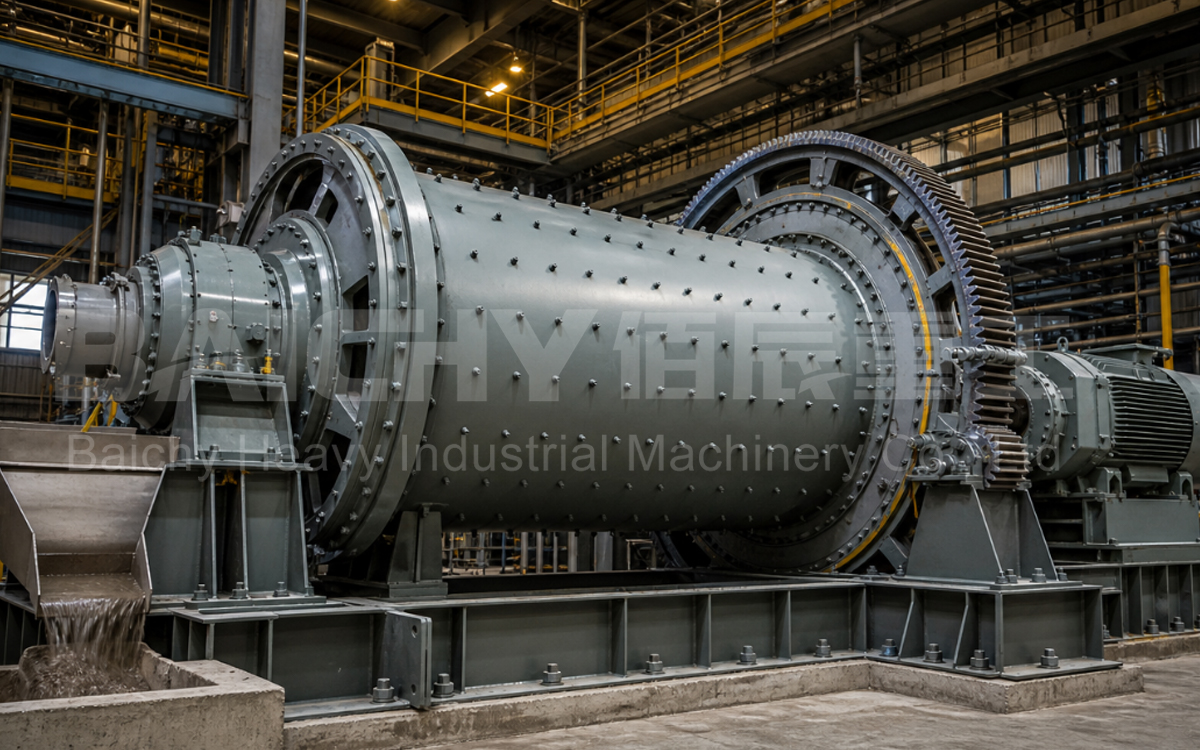
Note 2: For large-scale gypsum board raw material lines exceeding 15 t/h, a dry ball mill (integrated grinding and calcination) may be selected; for filler-grade gypsum powder exceeding 600 mesh, the HGM ultrafine mill is recommended; for budget-sensitive projects under 3 t/h, smaller 4R/5R Raymond mill models are available.
IV. From Ore to Powder: Equipment Sequence for a Gypsum Grinding Line
Beyond the main mill unit, a fully operational gypsum grinding line requires a complete set of auxiliary equipment. Baichy delivers complete production lines following this standard sequence:
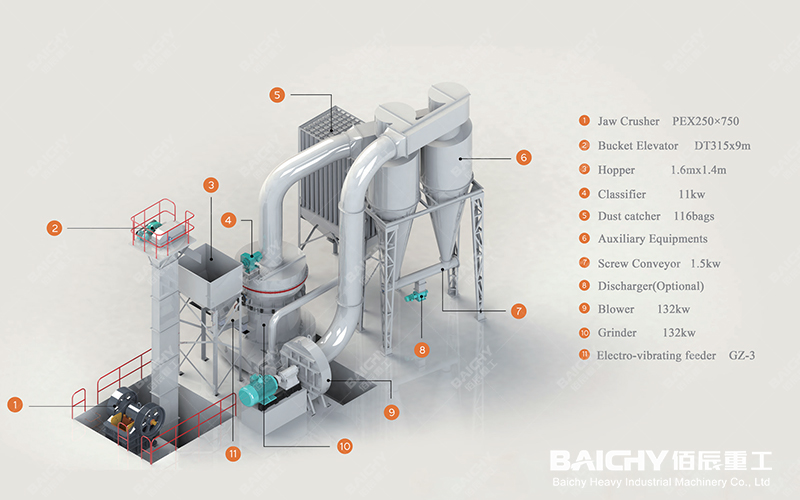
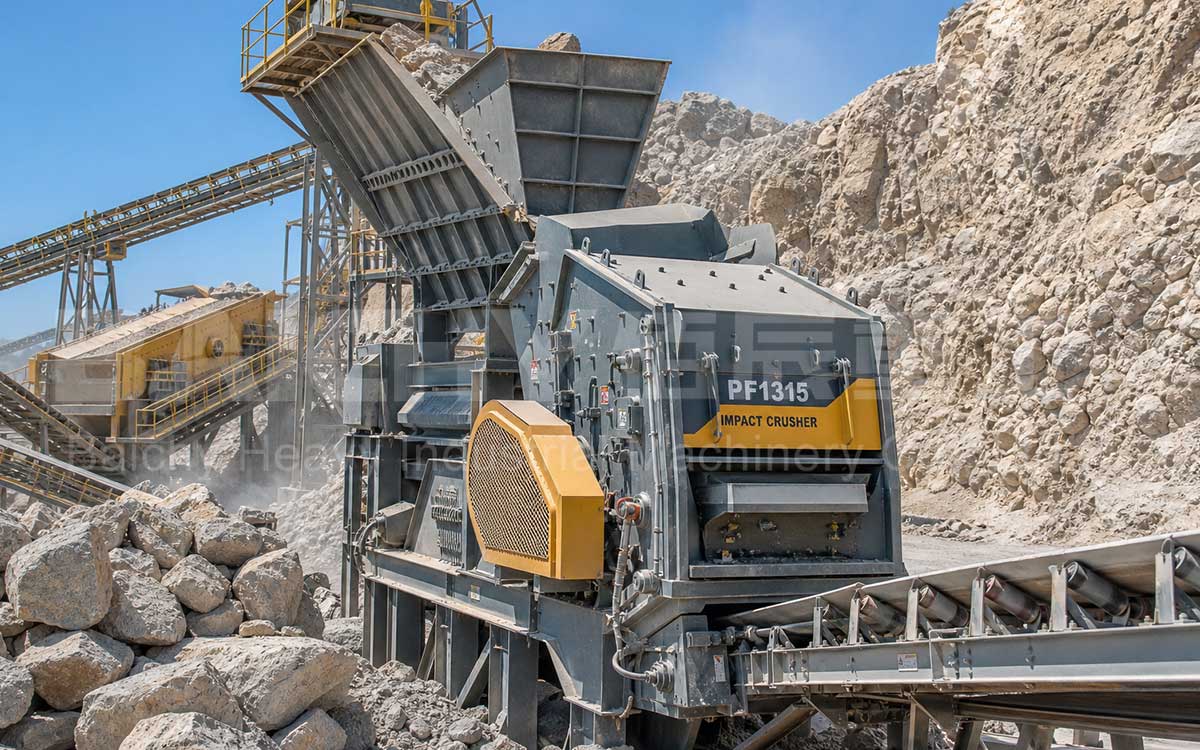
Schematic diagram of the gypsum powder production line process
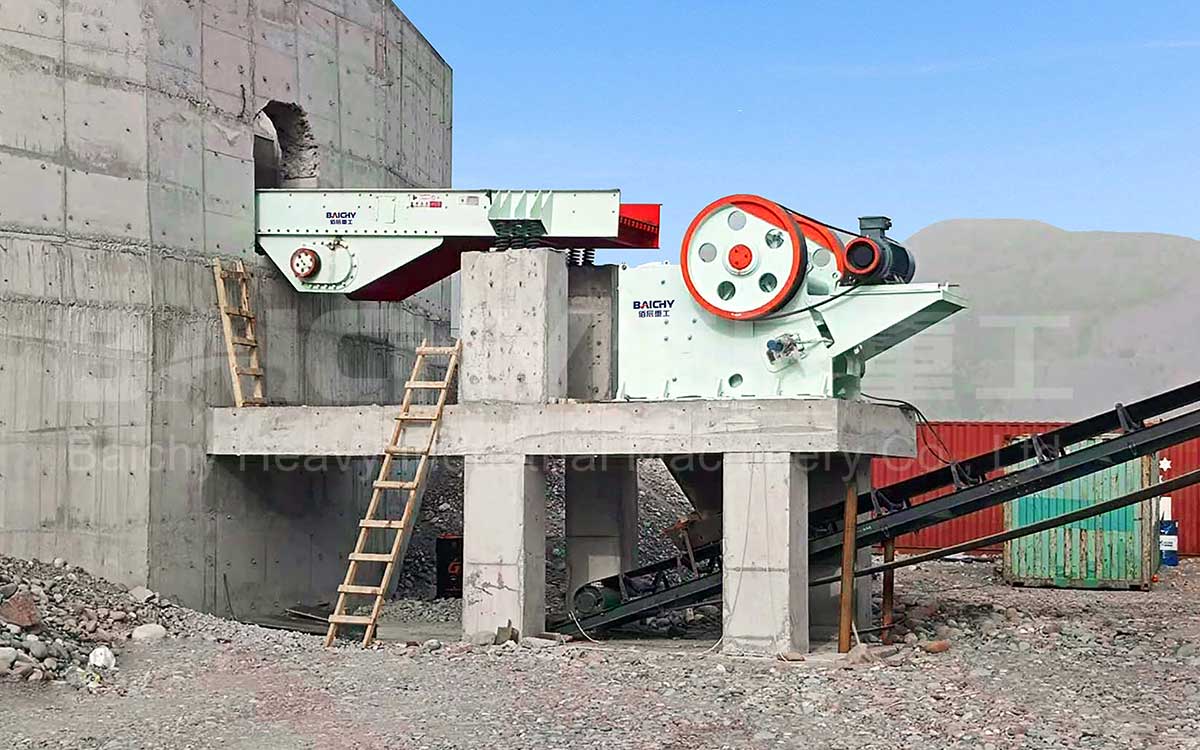
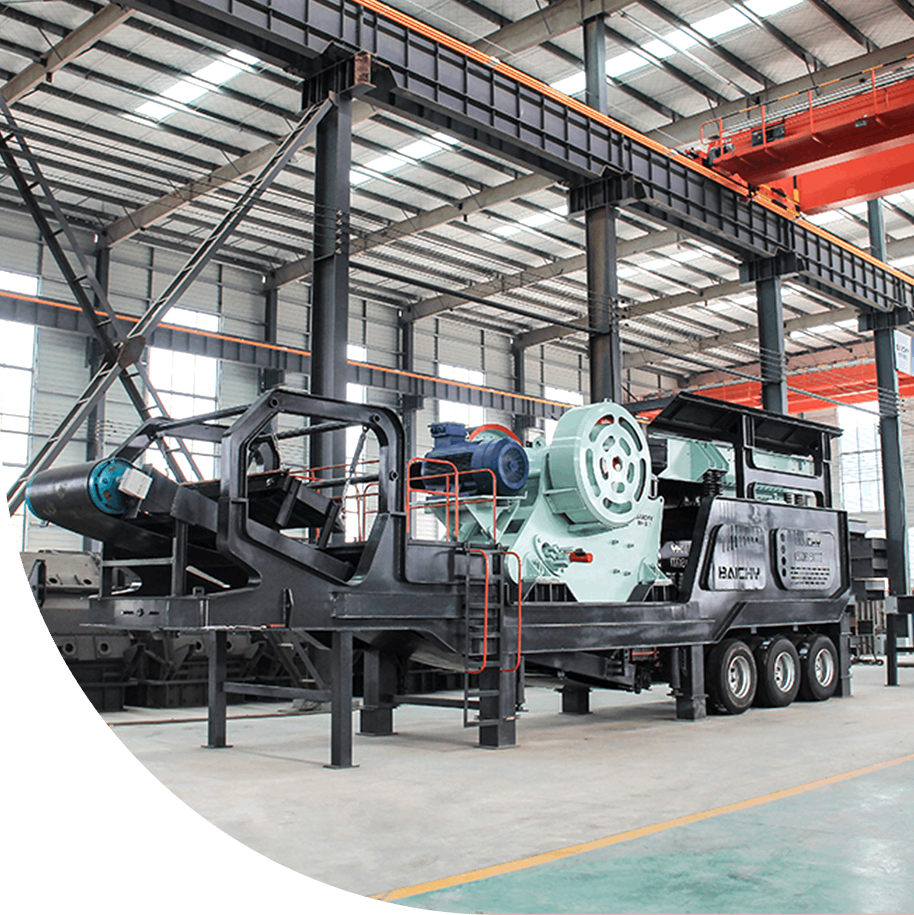
Jaw Crusher (lump ore: ≤210mm → ≤30mm) → Bucket Elevator + Storage Bin → Quantitative Feeder → YGM Main Grinding Unit (with built-in classifier) → Cyclone Collector → Pulse Bag Dust Collector → Finished Product Conveying & Packaging
Three specific components are most frequently omitted from "low-price quotations":
• First, the quantitative feeder—without a stable feed rate into the mill, both product fineness and motor current will fluctuate.
• Second, the pulse bag dust collector**—gypsum powder is fine and prone to dusting; negative-pressure dust collection is not only an environmental compliance requirement but also a means to recover finished powder, effectively representing "hidden" production capacity.
• Third, the variable-frequency classifier—without it, fineness adjustments can only be made by stopping the machine to swap parts. Discovering missing components only upon delivery delays the entire commissioning schedule.
V. Three Ways to Sell the Same 200-Mesh Production Line: Market Segmentation Determines Gross Profit
Gypsum powder is not a monolithic commodity; "200-mesh" is merely a starting point for particle size, while acceptance standards and prices per ton vary drastically depending on the end-use application. Even with identical equipment, the customer segment served determines the production line's gross profit structure.
| End-Use Application | Common Fineness | Recommended Mill | Key Acceptance Indicators |
|---|---|---|---|
| Cement Retarder Powder (3%–5% dosage) | 80–200 mesh | YGM Raymond Mill | Stable batch sieve residue; controllable setting time |
| Plastering Gypsum / Putty Powder | 200 mesh | YGM Raymond Mill | Uniform particle size; stable initial setting time |
| Paper-Faced Gypsum Board Core Material | 200–325 mesh | Dry Ball Mill (calcining & grinding integrated) or YGM | High capacity; low moisture content; batch consistency |
| Fillers for Plastics / Paper / Coatings | >600 mesh | HGM Ultrafine Mill | Stable D97 value; premium pricing for fineness |
FGD (Flue Gas Desulfurization) gypsum deserves special mention: In 2023, China generated approximately 158 million tons of desulfurization gypsum with a comprehensive utilization rate of about 80%; the resource recovery of this by-product represents a clear growth market. For power plants and plasterboard manufacturers, transforming desulfurization gypsum—via drying, calcining, and grinding—into board core material effectively turns waste into a secondary profit stream. The grinding stage of this process is precisely where the YGM mill and dry ball mill excel.
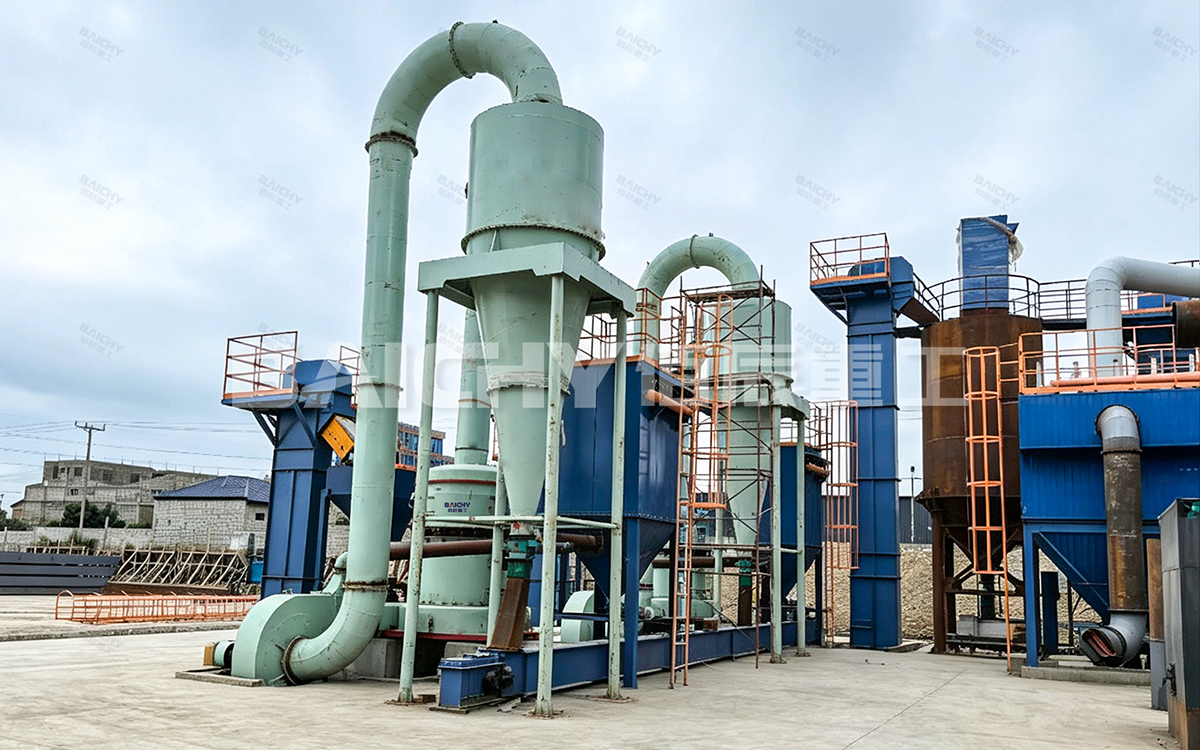
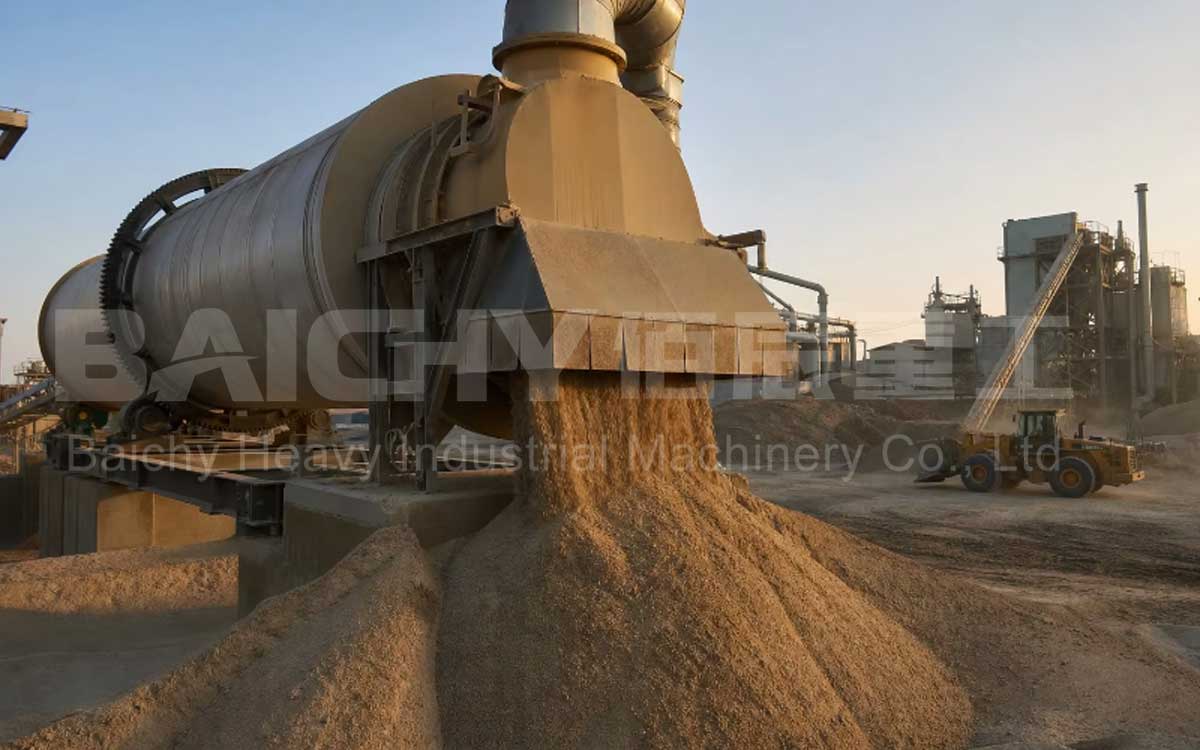
Gypsum Grinding Plant Site
VI. FAQ (Frequently Asked Questions)
Q1: What is the relationship between gypsum powder mills, gypsum grinding mills, and Raymond mills?
A1: In the industry, these terms are often used interchangeably to refer to the same category of equipment: mills that process gypsum ore lumps or by-product gypsum into powder. The Raymond mill (YGM) is the mainstream model, alongside dry ball mills and HGM ultrafine mills. Selection depends on two factors: fineness and production capacity. For 80–200 mesh output and small-to-medium capacity, the YGM Raymond mill is the top choice due to its lowest electricity consumption per ton and rapid investment payback. Dry ball mills are preferred for large production lines exceeding 15 t/h or for "integrated grinding and calcining" processes. HGM mills are selected for ultrafine filler powders exceeding 600 mesh. Regardless of the chosen route, Baichy delivers complete production lines to avoid issues where the main unit arrives but the system lacks necessary components.
Q2: Why is it necessary to specifically control the temperature inside the grinding chamber when grinding gypsum? Can the machine be restarted immediately after a summer shutdown?
A2: Gypsum loses its water of crystallization to form hemihydrate gypsum at approximately 150°C. If "over-calcination" occurs prematurely within the grinding chamber, the initial setting time of the finished product becomes uncontrollable, leading to rejection by cement plants or plasterboard manufacturers during batch inspection. Therefore, the grinding chamber temperature is typically maintained between 60°C and 100°C, with hot air temperature and induced draft volume adjusted in tandem. When restarting after high summer temperatures or a prolonged shutdown, the machine should first be warmed up at low speed without a load; feeding should only commence once the temperature returns to the optimal range to prevent high-temperature material from lingering in the mill and undergoing phase changes. This is a specific structural design feature distinguishing gypsum grinding from the processing of inert materials like calcium carbonate; Baichy’s YGM series features temperature control logic calibrated specifically for gypsum operating conditions.
Q3: Can the "10 t/h" capacity quoted by suppliers be trusted? How is the capacity for 200-mesh powder actually verified?
A3: A mill's nominal capacity is typically rated based on limestone/calcium carbonate (bulk density: 1.6 t/m³). Since gypsum has a lower bulk density (1.3–1.5 t/m³), its tonnage capacity—when adjusted for constant volumetric throughput—is approximately 85%–95% of the baseline rating (estimated). However, gypsum is easier to grind; consequently, the actual specific energy consumption (kWh per ton) for the same product fineness is 20%–30% lower. The most reliable approach is to send a 5–10 kg raw ore sample for free material testing, requiring the manufacturer to provide a report covering "dry basis," "feed moisture content," and "200-mesh sieve residue," and to stipulate the guaranteed capacity in the contract. Baichy bases its contractual capacity commitments on actual material test data rather than making empty promises regarding "nominal capacity."
Baichy Heavy Industry
Baichy Heavy Industry is a high-tech mining equipment company integrating R&D, manufacturing, sales, and after-sales service. Focusing on crushing, grinding, and mineral processing equipment, we provide professional solutions to our customers. We are ISO9001:2015 、certified, and our products include mobile crushing palnts, crawler crushing plant, construction waste crushing plants, jaw crushers, sand making machines, cone crushers, fine crushers, grinding mills, ball mills, etc., all with reliable performance to meet diverse project needs.
Baichy Heavy Industry – Your Trusted Partner
To ensure optimal performance of your equipment, Baichy Heavy Industry offers:
- Professional on-site installation guidance
- Comprehensive operator training
- 24/7 technical support & maintenance services
Our complete after-sales service system guarantees long-term, stable operation of your machinery with minimal downtime.
Protect Your Rights – Only Use Official Channels
To avoid scams and ensure authentic support, contact us exclusively through:
• Official Website: www.baichychina.com
• WhatsApp: +8615093222637
• Email: [email protected]
Your satisfaction is our priority – expect prompt, professional service every time.
(Note: Beware of unauthorized third parties claiming to represent Baichy. Always verify through official contacts.)