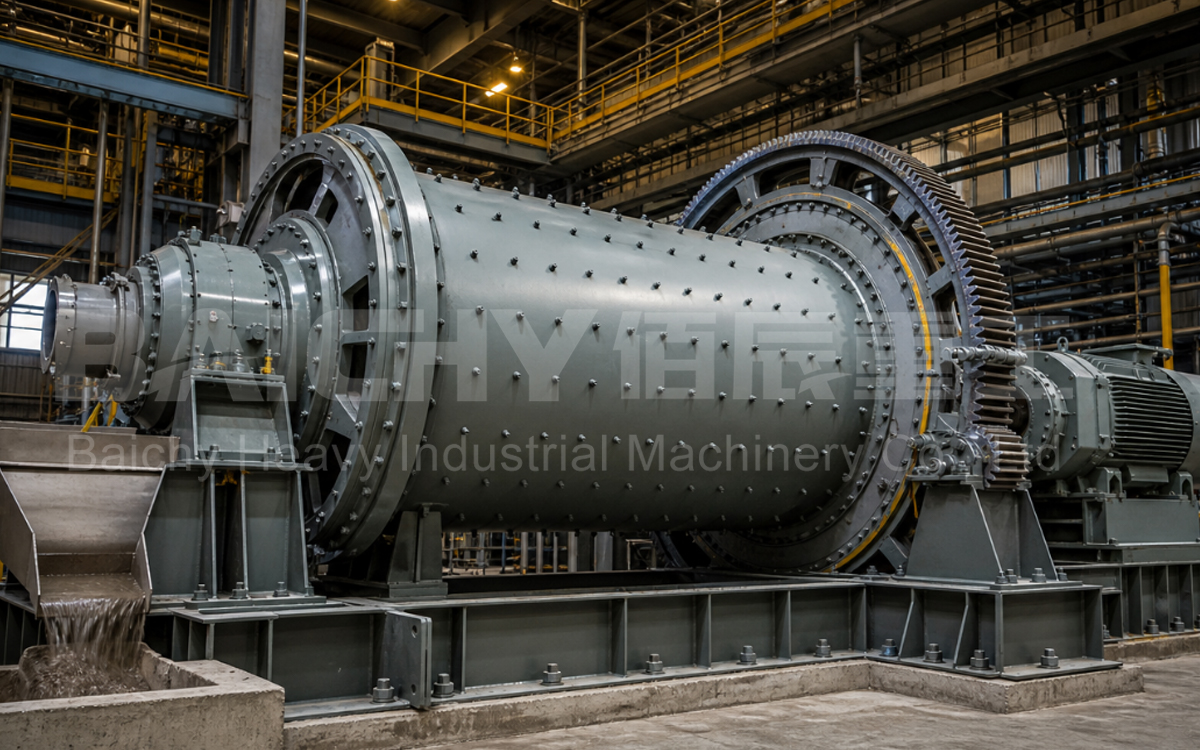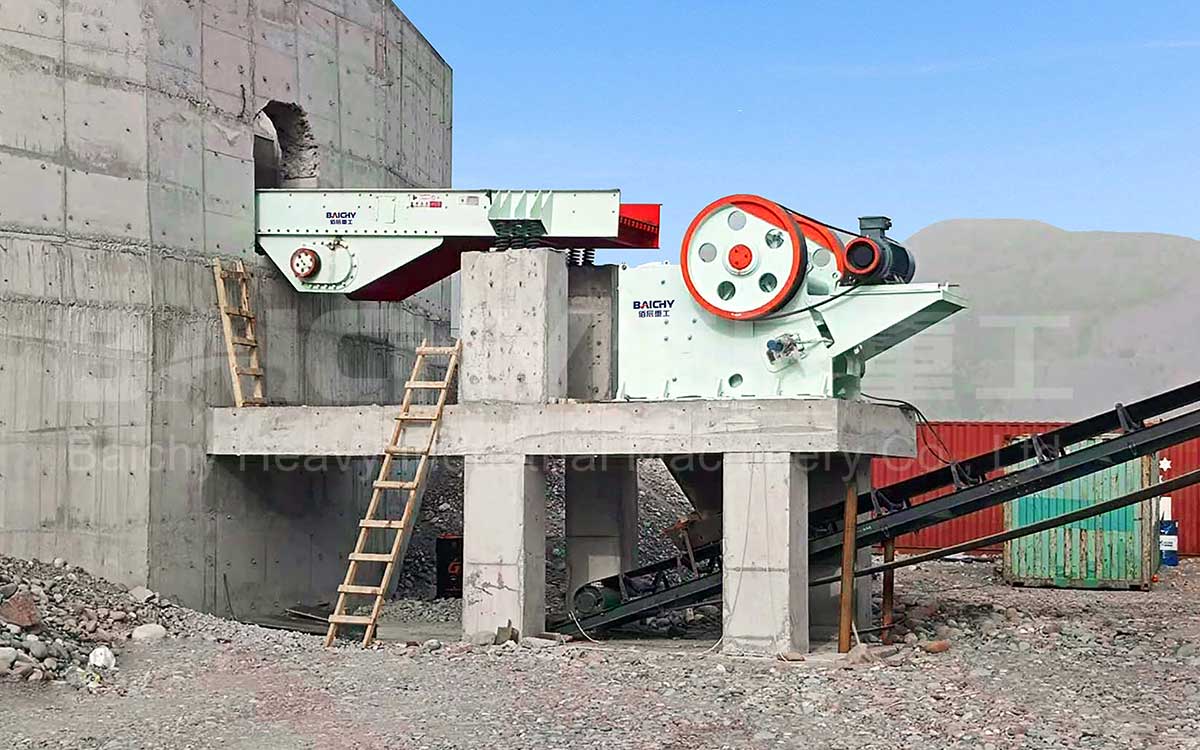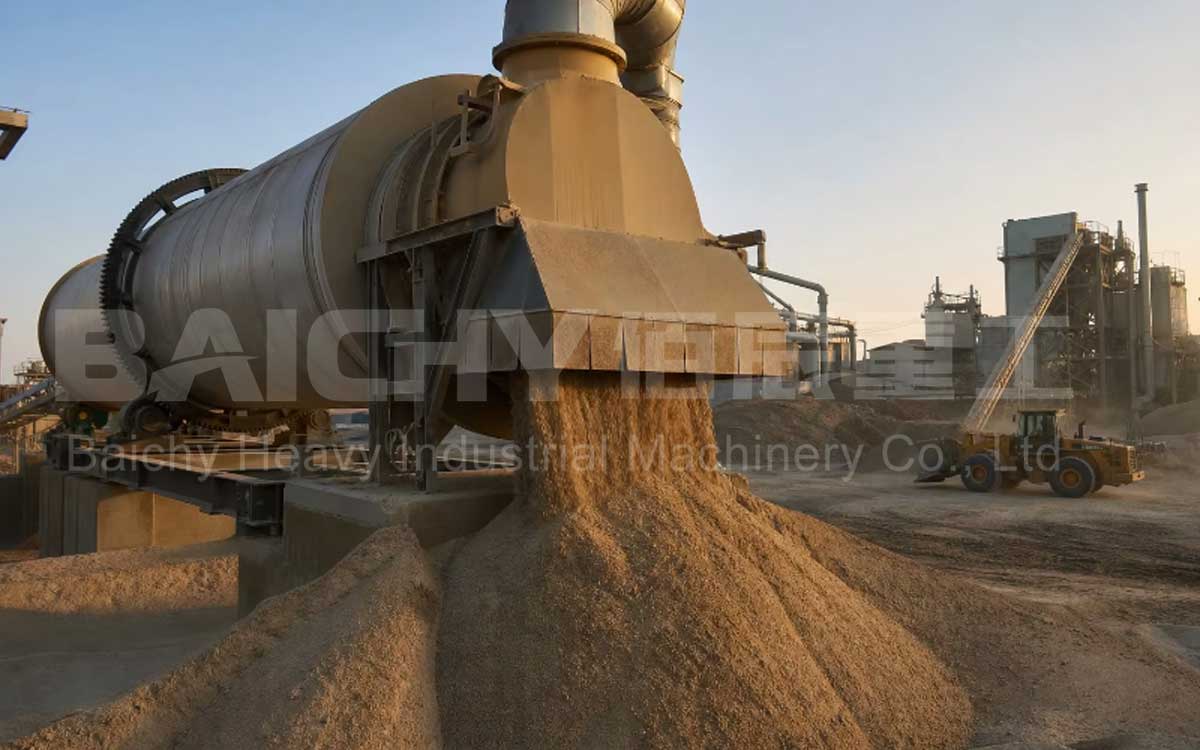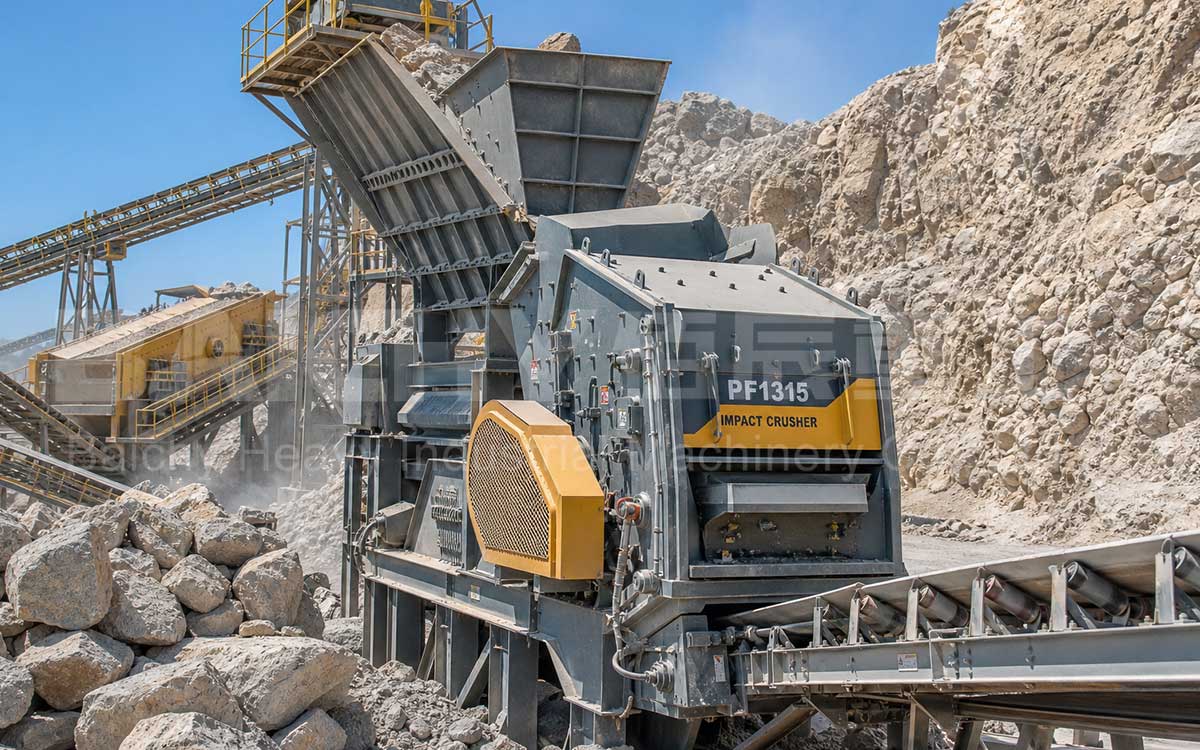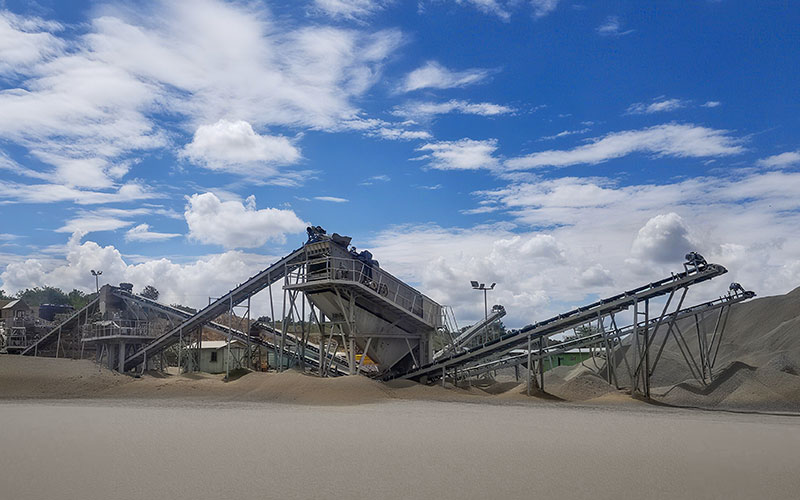
Customer site of a stationary crushing production line
Airport runways, highways, railways, and port projects share common requirements for aggregates: high strength, consistent particle shape, continuous supply, and the simultaneous delivery of multiple product varieties. These requirements align perfectly with the strengths of fixed crushing lines; while mobile stations struggle to meet contractual obligations for "all-weather continuous supply," fixed lines are naturally suited to the task thanks to stable process parameters and dedicated stockpiling areas for graded products.
I. What are the criteria for selecting a fixed crushing line?
The first step in selection is not choosing specific equipment, but deciding between a "fixed" or "mobile" setup. There are only three core variables:
| Decision Variable | Choose Fixed Line | Choose Mobile Station |
| Source Location | Owned quarry / long-term mining rights | Scattered sources / frequent site relocation |
| Operational Cycle | ≥ 18–24 months | ≤ 6–12 months |
| Target Capacity | ≥ 100 t/h (long-term stability) | Flexible / small-to-medium capacity |
| Product Varieties | 3–4 types (simultaneous grading & stockpiling) | Primarily 1–2 types |
| Supply Constraints | Supply contracts exist (e.g., airport/highway projects) | No long-term contracts |
| Cost-per-Ton Requirement | Lowest (depreciation spread over time) | Higher costs acceptable |
Quantitative Criteria: Taking a 200 t/h production line as an example, the initial investment for a fixed line is approximately 1.5–2 times that of a mobile station with the same capacity (including civil works, foundations, and electrical controls); however, the comprehensive cost per ton is 30–50% lower. Provided the annual operating time is ≥ 5,000 hours and continuous operation exceeds 24 months, the cumulative total cost of a fixed line becomes more economical than that of a mobile station. Conclusion: Quarries supporting airports or highways in Southeast Asia and supply stations for "giga-projects" in the Middle East should invariably be planned as fixed lines.
Counter-example: In multi-island markets like Luzon (Philippines) and the Indonesian archipelago—where local material sources are scattered and inpidual project cycles are short—mobile stations still hold a place. However, contract-based, regionalized quarries (utilizing the C90 fixed line model) are rapidly replacing mobile stations.
II. Five Major Subsystems of a Stationary Crushing Line
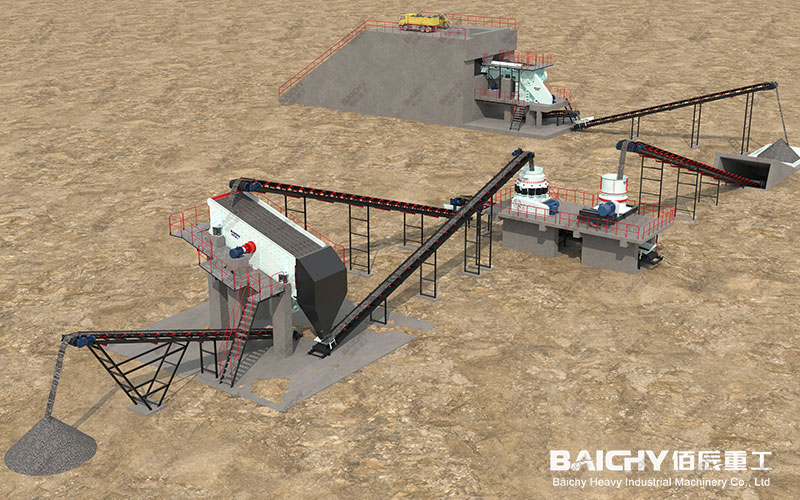
Stationary Crushing Production Line System
A complete stationary crushing line consists of five subsystems; a bottleneck in any single link will drag down the production capacity of the entire line:
【1. Feeding System】→ 【2. Crushing System】→ 【3. Screening System】→ 【4. Conveying & Stacking】→ 【5. Environmental Control】
Hopper + ZSW Feeder Primary → Secondary → Tertiary Crushing YK Circular Vibrating Screen Belt Conveyor + Finished Product Yard Dust Removal + Spraying + Electrical Control
(Incl. grizzly pre-screening) (2-3 stages in series) (Closed-circuit recirculation) (Segregated stockpiling) (PLC centralized control)
2.1 Feeding System: The First Gatekeeper of Production Capacity
| Equipment | Function | Selection Key Points |
| Raw Ore Hopper | Buffers material from blasting/loaders | The volume is designed based on 1.5 to 2 times the crusher's hourly processing capacity. |
| ZSW Grizzly Vibrating Feeder | Uniform feeding + pre-screening of fines | Adjustable grizzly bar spacing (typically 60–100 mm); fines and soil are screened out directly and bypass the crushing chamber |
Key Insight: The grizzly pre-screening capability of the ZSW directly determines the actual load on the primary crusher. Fines (≤80 mm) in raw ore typically account for 15–25%; screening this portion out reduces wear on the primary crusher's jaw plates and lowers power consumption by a corresponding 15–25%. This is a "free" method to boost capacity in stationary lines—an optimization that is often limited in mobile stations due to space constraints.
2.2 Crushing System: Three-Stage Configuration Logic
| Crushing Stage | Task | Equipment Options | Suitable Materials |
| Primary (Coarse) Crushing | Run-of-mine ore (≤600 mm) → ≤150 mm | PE Series Jaw Crusher / C Series European-style Jaw Crusher | All materials |
| Secondary (Medium) Crushing | ≤150 mm → Finished product grading | CS/PYB Cone Crusher (hard rock); PF Impact Crusher (medium-soft rock) | Material flow split based on hardness |
| Tertiary (Fine) Crushing/Shaping | Finished product grading → Particle shape optimization | VSI Vertical Shaft Impact Crusher; Double-roll Crusher | Sand making / Flaky & elongated particle correction |
2.3 Screening System: Determining Market Value
Core Equipment: YK Series Circular Vibrating Screen (single unit with 2 or 3 decks);
Golden Rule: Total screening area verified against a "single-deck load ≤ 8–10 t/h·m²" criterion. A 200–250 tph production line configured with three 2YK1860 units (total area 32.4 m²) results in a single-deck load of only 6–8 t/h·m², achieving >90% screening efficiency and a low material recirculation rate;
Closed-circuit Recirculation: Oversized material retained on the screen is conveyed back to the secondary/tertiary crushing stage via a return belt, creating a closed-loop cycle that ensures 100% compliance with particle size requirements—airport runway grade specifications (0–5/5–10/10–20/20–31.5 mm) require closed-circuit production.
2.4 Conveying and Stockpiling
Belt conveyors are selected based on the criterion: "discharge-end capacity ≥ crusher discharge capacity × 1.2"; finished product stockpiles are zoned by product type (at least 4 zones) to prevent mixing; an intermediate buffer bin (≥ 15 m³) is installed between the primary and secondary crushing stages to eliminate operational rhythm mismatches between the two stages.
2.5 Environmental Protection and Control
Stationary production lines should be equipped with bag-type dust collectors or spray-based dust suppression systems (focusing on crusher feed/discharge points and the screening tower);
Centralized electrical control cabinets with PLC systems, featuring one-touch start/stop and current-based interlocking—these are standard requirements for projects in Southeast Asia and the Middle East, and represent a key feature distinguishing stationary lines from mobile stations.
III. Core Equipment Selection Matrix (Based on Material and Capacity)
3.1 Material → Crushing Equipment Mapping
| Material | Compressive Strength | Abrasiveness | Primary Crushing | Secondary Crushing | Tertiary Crushing/Shaping |
| Granite/Basalt | 150-350 MPa | High | C/PE Series Jaw Crusher | CS Cone Crusher | VSI Shaping (Optional) |
| River Stone/Pebbles | 150-300 MPa | Extremely High | European-style Jaw Crusher (Deep Cavity) | CS Cone Crusher (Closed-circuit) | - |
| Andesite/Diabase | 150-250 MPa | Medium-High | PE/C Jaw Crusher | CS Cone Crusher | - |
| Limestone/Dolomite | 60-120 MPa | Low | PE Jaw Crusher | PF Impact Crusher / Two-stage Hammer Crusher | Impact Crusher (Shaping) |
| Quartzite/Silica | 200-350 MPa | Extremely High | PE Jaw Crusher | Double-roll Crusher | Double-roll / Rod Mill |
Golden Rules for Selection (Categorization by Hard/Medium-Soft/Brittle):
1. Hard Rock (>150 MPa): The cone crusher is the only economical option for secondary crushing. When processing granite, the service life of impact crusher blow bars is only 40–80 hours per set; the wear-part cost is 0.80–1.50/t, which is 2–3 times that of cone crusher liners (0.35–0.55/t). The notion that "impact crushers are cheaper" refers only to the initial purchase price; operating costs are actually higher.
2. Medium-soft rock (60–120 MPa, e.g., limestone): Impact crushers or hammer crushers are the standard choice. They offer 30–40% higher production capacity than cone crushers of the same specification and yield better product particle shape; common configurations for limestone lines in Saudi Arabia include "Jaw Crusher + PF Impact Crusher" or a two-stage hammer crusher setup.
3. Brittle/high-silica materials (silica stone, quartzite): Double-roll crushers are used for fine crushing. Silica sand processing requires minimal over-pulverization and uniform particle shape; the shear-and-compression mechanism of double-roll crushers is ideally suited for quartz-based materials (Reference: Saudi silica sand processing lines utilizing an integrated process of Jaw Crusher for primary crushing + Double-roll Crusher for fine crushing + sand washing and drying).
3.2 Production Capacity Tiers → Plant Configuration Matrix
Capacity Baseline: Limestone (density 1.6 t/m³) serves as the industry calibration standard; for hard rock (granite, 2.6–2.8 t/m³), capacity estimates should be adjusted downward by 20–30% for the same configuration.
| Capacity Range | Typical Configuration (Limestone Baseline) | Hard Rock Adjustment | Application Scenario |
| 50-100 t/h | ZSW380×95 + PE500×750 + PF1010 + 2YK1548 | Replace secondary crusher with CS75 cone | Township commercial concrete plants, small quarries |
| 30-60 t/h | ZSW380×95 + PE400×600 + PF1007 + 2YK1235 | Replace secondary crusher with CS75 cone | Micro/small quarries, self-use aggregate production |
| 100-200 t/h | ZSW490×110 + PE600×900 + PF1214 + 2YK1860 | Replace secondary crusher with CS160 cone | Regional aggregate suppliers |
| 200-300 t/h | ZSW1142 + C100 + 2×CS160 + 3×2YK1860 | Suitable as-is | Quarries supporting airports/expressways ⭐ |
| 350-600 t/h | ZSW1142 + PE900×1200/C106 + 2×CS220 + 4×3YK1860 | Suitable as-is | Large-scale mines, supply stations for mega-projects |
Why the 200-300 t/h range is the "sweet spot" in Southeast Asia and the Middle East:
• Inpidual supply contracts for airport and expressway projects in Southeast Asia typically range from 0.8 to 3 million tons/year, corresponding to a 200-250 t/h production line (based on 5,000 operating hours/year, yielding 1-1.25 million tons);
• Parallel configuration of two units (2×CS160) provides redundancy: if one unit undergoes medium-scale maintenance, the other maintains 60-70% capacity, ensuring no interruption to contract supply;
• Investment cost for this range (equipment + civil works... + electrical control system) is in the range of several million USD, falling within the decision-making authority of regional investors.
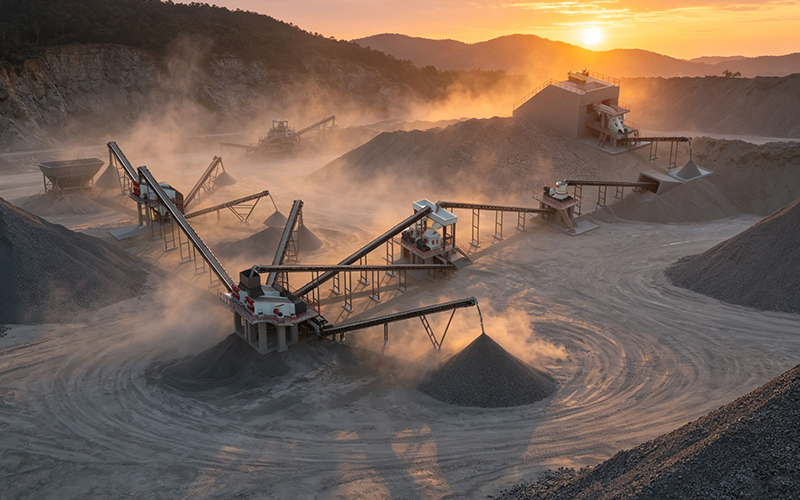
Hard Rock Crushing Plant
IV. FAQ
Q1: How should one choose between a fixed plant and a mobile station?
A: Ask yourself three questions: Is the material source fixed? Is the operational cycle ≥ 18–24 months? Is there a supply contract or a requirement to deliver 3–4 types of finished products simultaneously? If the answer to all three is "yes," choose a fixed plant. Quarrying operations supporting airports in Southeast Asia and material supply stations for "giga-projects" in the Middle East all fit the "fixed plant" profile.
Q2: Does the "200" in a 200 tph fixed plant refer to nominal capacity or stable capacity?
A: It depends on the material. Under conservative calculations for granite processing—using a C100 crusher with a CSS of 130 mm and a CS160 (coarse crushing chamber) with a CSS of 35 mm—200 tph represents the stable capacity; actual on-site measurements often show 220–250 tph. With the same configuration, limestone processing can reach 280–350 tph. When signing the contract, require the manufacturer to provide a guaranteed capacity based on the specific material and discharge settings.
Q3: What special modifications are needed for equipment operating in the 50°C high-temperature environment of the Middle East?
A: Motors must be rated for a 50°C ambient temperature (Class F insulation); electrical cabinets require air conditioning or ventilation; hydraulic and lubrication systems must be high-temperature compatible; and bearings should include temperature monitoring. Screening towers need to be enclosed to protect against wind and sand, with filtered air intakes. These specifications should be included in the configuration list during the planning phase, rather than modified after arriving on-site.
Q4: Saudi Arabia uses 60Hz power while Vietnam uses 50Hz; are the motors interchangeable?
A: They are not directly interchangeable. Different frequencies result in different motor speeds (at the same number of poles, the speed is 20% higher at 60Hz), and rated voltages differ as well (Saudi Arabia: 380V/60Hz; Vietnam: 380V/50Hz; Philippines: 220/440V/60Hz). Site power parameters must be confirmed before signing the contract so the manufacturer can customize the motors and electrical control systems to the specific frequency and voltage.