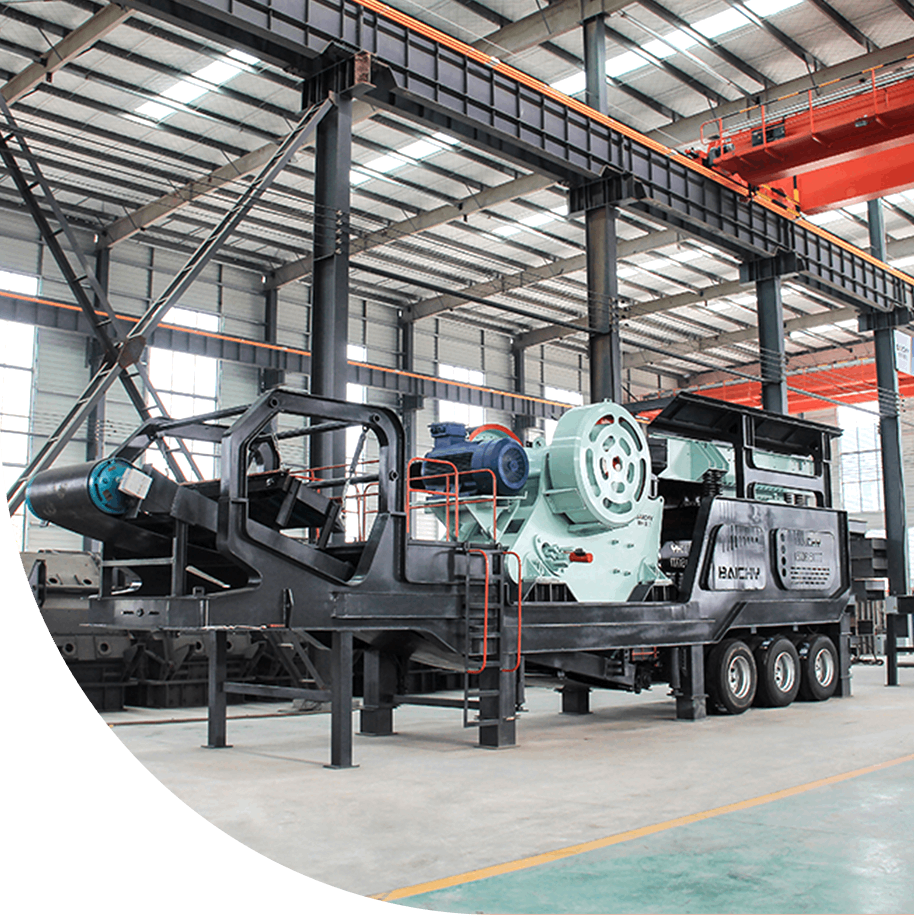


Single-drum dryer
When single-drum dryers are used for wet, sticky materials—such as sludge, clay, or coal slime—the primary cause of shutdowns is almost invariably material blockage (bridging at the inlet, caking and agglomeration inside the drum, or sludge accumulation at the discharge end and in dust extraction ducts) rather than insufficient thermal efficiency. The root cause lies in the high moisture content and surface tackiness of the feed material, which causes it to clump together immediately upon entering the drum. A widely recognized and effective solution is "back-mixing": blending a proportion of the dried finished product back into the wet feed to lower the mixture's moisture content below the critical threshold for agglomeration. By subsequently using a breaking device at the inlet to disintegrate any remaining clumps into loose material, the single-drum dryer can operate continuously at full capacity.
I. Overview: For wet, sticky materials, preventing "blockage" is more critical than the "drying" process itself.
Single-drum dryers rely on internal lifting flights to scoop up material and scatter it into a "curtain," facilitating direct heat exchange with hot air (700–800°C). While this technology is mature and reliable for loose granular materials—with standard models ranging from Φ1.2×12m to Φ3.2×25m—it struggles with materials like sludge (moisture >60%) or wet clay (moisture 20–40%). These materials fail to tumble properly; instead, they stick to the lifting flights, accumulating into ever-larger masses.
Blockages typically occur at three points:
① Bridging at the inlet, preventing material flow and halting production;
② Caking and agglomeration inside the drum, which breaks the material curtain, causes hot air to bypass the material (short-circuiting), and leads to drastic fluctuations in discharge moisture; and
③ Sludge accumulation at the discharge airlock valve and in dust extraction ducts, triggering pressure differential alarms and forcing a production shutdown. Under blockage conditions, heat consumption rises by 20–30%, and it is not uncommon for the drying cost per ton to double. Therefore, when selecting a single-drum dryer for wet, sticky materials, the primary question is not "what size drum to buy," but rather "how to design the feed system."
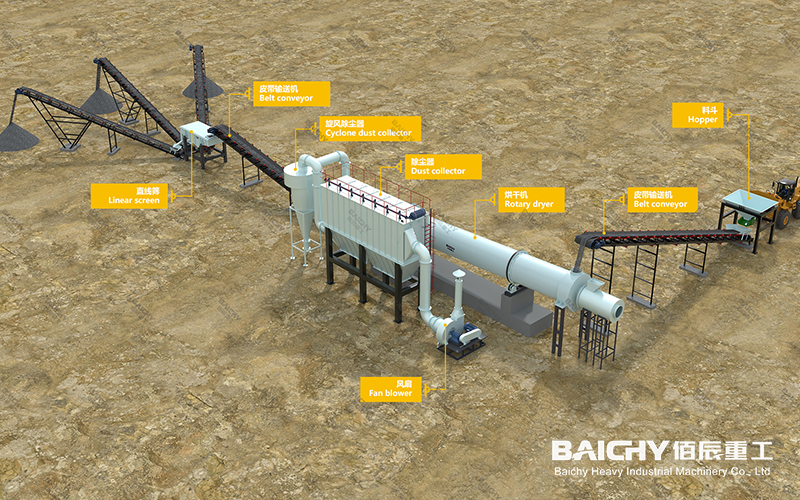
Process flow diagram of the single-drum dryer
II. Application Scenarios: Production lines requiring material breakup and back-mixing
| Scenario | Typical Moisture Content | Drying Objective |
|---|---|---|
| Municipal / industrial sludge drying (dewatered filter cake) | 55–85% | Volume reduction for landfilling or co-processing in cement kilns |
| Wet / sticky clay for ceramics, bricks, and refractories | 18–35% | Pre-drying to ≤10% before powder production |
| Coal slurry / flotation filter cake from coal prep plants | 25–40% | Quality improvement for co-firing or briquetting |
| Cohesive mineral powders (kaolin, bentonite, etc.) | 20–45% | Preventing agglomeration; maintaining whiteness or activity |
Determination Criteria: Production lines where incoming material moisture exceeds the material's critical agglomeration threshold (typically 25–40% for sticky materials) and enters as lumps or filter cakes should evaluate the single-drum dryer "breakup + back-mixing" solution. Materials that are naturally loose with moisture content below 15% (e.g., sand and gravel) do not require back-mixing and can utilize standard configurations.
III. Breakup Process: Transforming "dough-like" lumps into "loose material" at the feed end
The breakup process addresses the issue of material agglomeration and operates in two stages: external and internal. External pre-breakup utilizes a twin-shaft mixer or a toothed-roll crusher to shear and tear filter cakes into fragments smaller than 50mm while simultaneously forcing a mix with dry back-mixed material (serving a dual purpose). Internal breakup employs a chain-curtain assembly in the feed section; as the drum rotates, the chains continuously strike the material, preventing the wettest feed—which has the highest moisture content—from sticking to the drum walls or lifting flights immediately upon entry. Wet and dry materials are metered via conveyor belts and mixed prior to entering the drum, ensuring that moisture fluctuations do not disrupt internal operating conditions. It must be emphasized that breakup is not equivalent to drying: if sludge with 60% moisture is merely broken up without back-mixing, the fragments will immediately re-agglomerate upon entering the single-drum dryer.
IV. Dry Material Back-mixing: The Core Process for Eliminating Clogging Caused by Wet, Sticky Materials
Back-mixing Principle: Dried material is used to absorb free surface moisture from wet material, thereby reducing the mixture's average moisture content below the critical threshold for clumping. This ensures the material enters the dryer drum in a loose, tumble-ready state. The mixed moisture content is calculated based on a mass-weighted average:
Mixed Moisture Content = (Wet Material Moisture × Wet Material Mass + Dry Material Moisture × Dry Material Mass) &pide; (Wet Material Mass + Dry Material Mass)
Calculation Example: Wet sludge (60% moisture) is mixed with dry material (10% moisture) at a wet-to-dry ratio of 1:1.2. The mixed moisture content is (60% × 1 + 10% × 1.2) &pide; 2.2 ≈ 33%. This is below the typical critical clumping range for sludge (approx. 40–45%), ensuring the material remains loose upon entering the drum.
Implementation Key Points:
① The wet-to-dry back-mixing ratio typically ranges from 1:0.5 to 1:3; the wetter the incoming material, the higher the required ratio.
② The dry material source is a closed-loop recycle stream perted from the dryer discharge; large particles are screened out beforehand if necessary.
③ Heat Balance: Since the back-mixed material is already dry and imposes negligible evaporative load, the system's wet material processing capacity is not reduced by the back-mixing process.
④ Integrated Design: Half of the clogging issues originate outside the drum itself; the back-mixing hopper, mixer, chutes, and breakup devices must be systematically matched with the single-drum dryer, hot-blast stove, and dust collector, rather than being a haphazard assembly of inpidual machines.
Process Flow: Wet material hopper → Metering belt → Twin-shaft mixer (dry material back-mixing) → Drum inlet chain curtain (breakup) → Single-drum dryer body → Discharge persion: majority sent to storage or downstream processing; a small portion recycled back to the back-mixing hopper.
V. Reference Parameters for Wet, Sticky Material Processing
123465
* Nominal capacity figures are sourced from Baichy's official rotary dryer specifications; processing capacities for wet, sticky materials are estimates. These are calculated based on the evaporation load required to dry sludge from 60% to 30% moisture content—incorporating material breakup and back-mixing processes with an inlet air temperature of 700–800°C—resulting in approximately 20–25% of the nominal capacity. Processing capacity increases if the feed material has lower initial moisture or if the target final moisture content is higher. Final specifications are subject to the results of material drying tests; nominal nameplate capacity and actual operational capacity are calculated separately.
VI. Reference Table for Dry Material Back-mixing Ratios
| Material | Feed Moisture Content | Back-mixed Dry Material Moisture | Recommended Wet-to-Dry Ratio | Post-mixing Moisture (Approx.) |
|---|---|---|---|---|
| Municipal Sludge (Plate-and-frame Dewatering) | 55–65% | ≤10% | 1:1.0–1:1.5 | 30–35% |
| Municipal Sludge (Belt/Centrifuge Dewatering) | 75–85% | ≤10% | 1:2.0–1:3.0 | 30–35% |
| Wet Clay (Brick/Ceramic Raw Material) | 18–30% | ≤5% | 1:0.3–1:0.6 | 15–20% |
| Coal Slime (Filter-pressed) | 25–35% | ≤8% | 1:0.5–1:1.0 | 18–24% |
Mixing Objectives: Keep the mixed moisture content below the critical agglomeration point while avoiding excessive back-mixing. Insufficient back-mixing leads to recurring clogging, while excessive back-mixing wastes drum capacity; boundary values should be calibrated using test-drying data.
VII. Solution Advantages: Translating Parameters into Returns
Continuous Operation Rate (Throughput): Eliminating downtime caused by clogging allows the actual annual output of the same drum to increase by 30–60% (empirical range); this is the most direct return on the back-mixing solution.
15–25% Reduction in Specific Fuel Consumption: Material curtains remain unbroken, and hot air short-circuiting is eliminated. For a line processing 100 tons of wet-basis sludge daily, annual fuel savings can reach the magnitude of hundreds of thousands of RMB.
Stable Discharge Moisture: Fluctuations are narrowed to within ±2 percentage points, eliminating the need for rework in subsequent stages such as forming, metering, and blending.
Reduced Burden on Dust Removal and Maintenance: Less carry-over of wet fine dust extends filter bag lifespan; Baichy single-drum dryers come standard with anti-sticking internal components, replaceable pin-gear drives, and modular, quick-release lifting flights.
Versatility (One Machine, Multiple Materials): Switching materials requires only adjustments to the back-mixing ratio and inlet air temperature, making it suitable for production lines handling perse feedstocks.
VIII. Application Cases (Anonymized Data)
Municipal Sludge (60% → 30% moisture): A sludge line originally fed filter cake directly, requiring blockage clearance 2–3 times per shift and resulting in discharge moisture fluctuations of ±6 percentage points. After retrofitting the single-drum dryer to incorporate a 1:1.2 dry material back-mixing ratio and a chain curtain system, the continuous operation rate exceeded 90%, discharge moisture stabilized at 28–32%, and thermal energy consumption per ton dropped by approximately 20%.
Ceramic Plant Wet Clay (28% → ≤10%): Direct feeding of wet clay lumps caused material adhesion to the shell plates, limiting output to only half the design capacity. After adding a disintegrator and implementing a 1:0.5 back-mixing ratio, the system achieved 8 hours of continuous operation per shift without requiring blockage clearance, with discharge moisture at 8–10%, meeting powder production requirements.
Coal Preparation Plant Coal Slime (32% → 16%): Filter-pressed coal slime was fed into the single-drum dryer with a 1:0.8 back-mixing ratio. Shutdowns due to material blockages were eliminated, annual operating time increased by approximately 600 hours, and the calorific value of the co-fired fuel improved simultaneously.
IX. Recommended Equipment from Baichy Heavy Industry
The single-drum dryer serves as the core unit for the "disintegration + back-mixing" solution. Baichy offers a full range of dryers (from Φ1.2×12m to Φ3.2×25m) with customizable internal components and heat sources based on material properties.
Recommended system components include:
Twin-shaft disintegrator-mixer: Handles both wet material disintegration and dry material back-mixing; a dual-purpose unit that minimizes investment costs;
Chain curtain disintegration device: A secondary safeguard against adhesion in the dryer's feed section;
Hot blast stove (coal/gas/oil/biomass): Selected based on local fuel availability and emission standards;
Cyclone + Baghouse dust collector: Tail gas purification with anti-adhesion design for wet dust;
Metering belt and back-mixing hopper: Stable proportioning is critical to the success of the back-mixing process.
For sites with limited space processing conventional sand and gravel, Baichy’s three-drum dryer solution may be considered; however, the single-drum dryer combined with a back-mixing system remains the mainstream choice for production lines handling wet, sticky materials.
FAQ
Q1: What is the maximum moisture content for wet, sticky materials to be fed directly into a single-drum dryer?
A: The criterion is the material's physical state upon entry, not just its moisture content. Materials with <35% moisture that form loose granules after breaking up can be fed directly; those with 35–55% moisture require breaking up or mild back-mixing; filter cakes with >55–60% moisture require a combination of breaking up and back-mixing with dry material. Sending a 5–10 kg sample for a free trial run allows for the determination of the agglomeration threshold and feasible mixing ratios.
Q2: Does back-mixing dry material waste production capacity or consume excess fuel?
A: No. The back-mixed material is already dry and imposes almost no additional evaporative load; the total evaporation task remains unchanged. Instead, the material is distributed into a looser, more easily agitated form, actually improving gas-solid contact efficiency. The real benefit lies in continuous operation—eliminating downtime caused by clogging far outweighs the cost of processing the back-mixed material. Based on the example calculation mentioned earlier, at a wet-to-dry ratio of 1:1.2, the wet material feed rate remains constant, and the drum is still sized according to the wet material volume.
Q3: Can existing standard single-drum dryers be retrofitted with breaking and back-mixing systems?
A: Yes. Retrofitting involves adding a back-mixing hopper, a metering belt, and a twin-shaft mixer outside the drum, along with installing a chain curtain in the feed section and a material splitter for a closed-loop cycle at the discharge end; the investment cost is far lower than replacing the entire unit. We recommend conducting a trial run first to confirm that the mixed moisture content and residence time meet the target moisture levels before finalizing the retrofit specifications.
Baichy Heavy Industry
Baichy Heavy Industry is a high-tech mining equipment company integrating R&D, manufacturing, sales, and after-sales service. Focusing on crushing, grinding, and mineral processing equipment, we provide professional solutions to our customers. We are ISO9001:2015 、certified, and our products include mobile crushing palnts, crawler crushing plant, construction waste crushing plants, jaw crushers, sand making machines, cone crushers, fine crushers, grinding mills, ball mills, etc., all with reliable performance to meet diverse project needs.
Baichy Heavy Industry – Your Trusted Partner
To ensure optimal performance of your equipment, Baichy Heavy Industry offers:
- Professional on-site installation guidance
- Comprehensive operator training
- 24/7 technical support & maintenance services
Our complete after-sales service system guarantees long-term, stable operation of your machinery with minimal downtime.
Protect Your Rights – Only Use Official Channels
To avoid scams and ensure authentic support, contact us exclusively through:
• Official Website: www.baichychina.com
• WhatsApp: +8615093222637
• Email: [email protected]
Your satisfaction is our priority – expect prompt, professional service every time.
(Note: Beware of unauthorized third parties claiming to represent Baichy. Always verify through official contacts.)