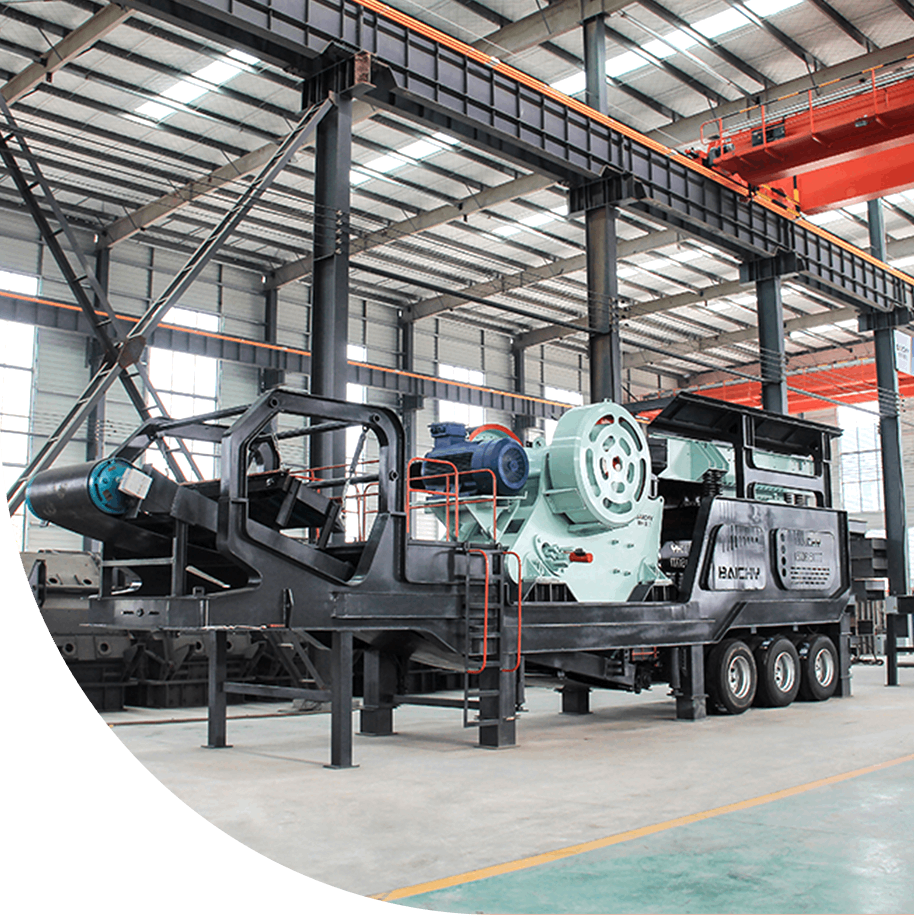

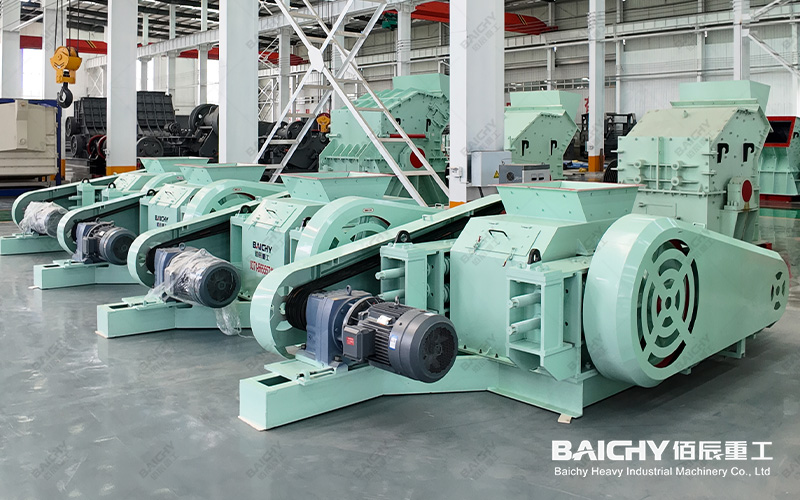
Double-Roll Crusher for Cement Raw Material Prep
Cement production depends on a stable supply of correctly sized raw materials. Limestone normally provides most of the calcium-bearing component, while marl, shale, and clay can help supply silica, alumina, and other corrective constituents. Before these materials enter proportioning, storage, and raw grinding systems, they often require reliable size reduction.
A double-roll crusher can be used for selected cement raw materials as a pre-crushing or intermediate crushing machine. Its two counter-rotating rolls compress and shear the feed as it passes through the adjustable gap. This crushing action can help reduce large lumps, control product size, and prepare materials for downstream conveying, blending, and grinding.
The correct application depends on the actual material properties. Limestone with high compressive strength or strong abrasiveness, wet sticky clay, and feed containing tramp metal may require special roll design, protection, or a different crushing arrangement. A practical selection process should therefore begin with material testing and clear process requirements.
Cement Raw Materials Suitable for Double-Roll Crushing
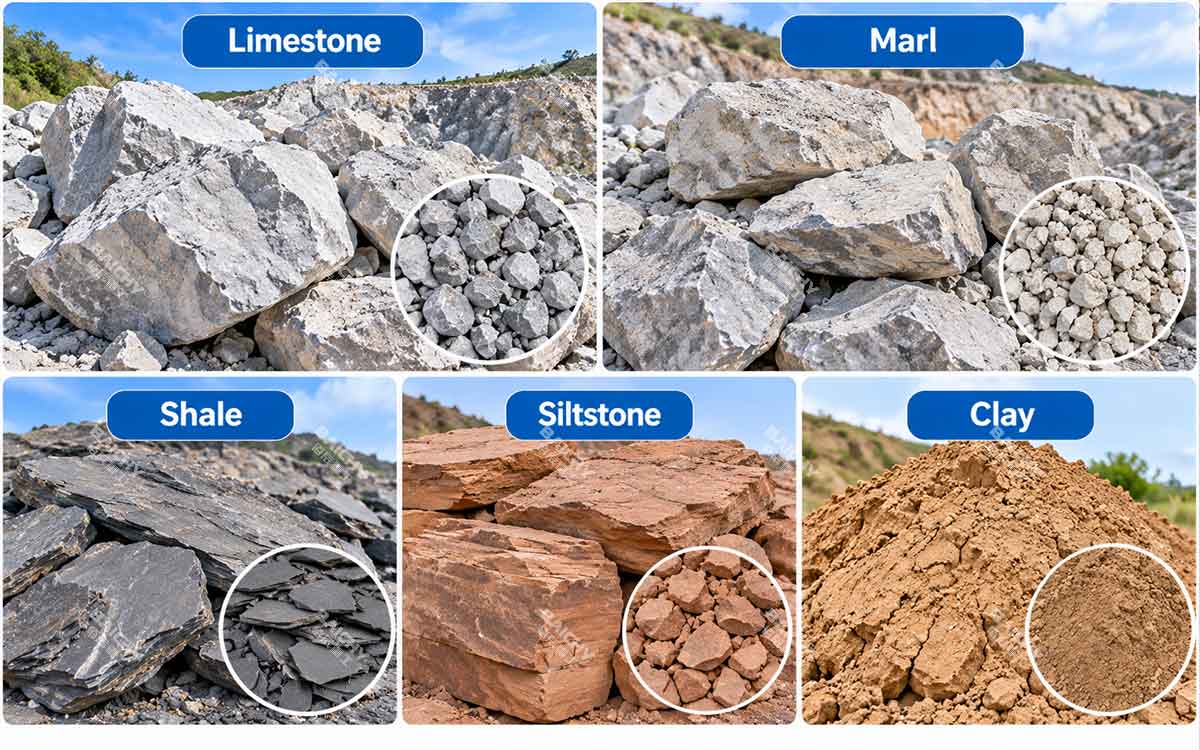
Limestone,-Marl,-Shale,-Shale,Clay-Crushing
Limestone
Limestone is the principal calcareous material in many cement plants. Quarry-run limestone may arrive in large lumps and must be reduced before it is conveyed to a stockpile, proportioning system, or raw mill. A double-roll crusher can be considered for limestone pre-crushing when the material strength, abrasiveness, feed size, and required product size are within the equipment's operating range.
The main objectives are to reduce oversize, provide a more consistent feed, and limit unnecessary fines. The selected roll surface and wear protection should match the limestone's hardness and abrasive content.
Marl
Marl is a naturally blended material containing both calcareous and clay-rich components. It is often softer and more friable than dense limestone, although its properties can vary considerably from one deposit to another. A double-roll crusher may help break down marl lumps while supporting a more uniform feed for proportioning and raw grinding.
Because marl can vary in moisture and composition, the crushing system should be designed around the expected operating range rather than a single laboratory sample.
Shale
Shale is a layered material commonly used as a source of silica and alumina. Its natural bedding planes may allow it to split efficiently under compression and shear. However, shale can also contain harder inclusions or arrive with variable moisture. The feed arrangement, roll profile, and discharge path should be selected to prevent unstable feeding and material build-up.
Clay
Clay is used to correct the chemical composition of the cement raw mix, but it is often the most challenging material in this group. Its moisture content and plasticity can change with weather and storage conditions. Wet, sticky clay may adhere to the roll surface or restrict discharge if the crusher is not designed for the application.
For clay, the plant should evaluate moisture variation, clay mineralogy, feed rate, roll design, and cleaning access. In some plants, clay is crushed separately and then proportioned with limestone and other corrective materials.
How a Double-Roll Crusher Works?
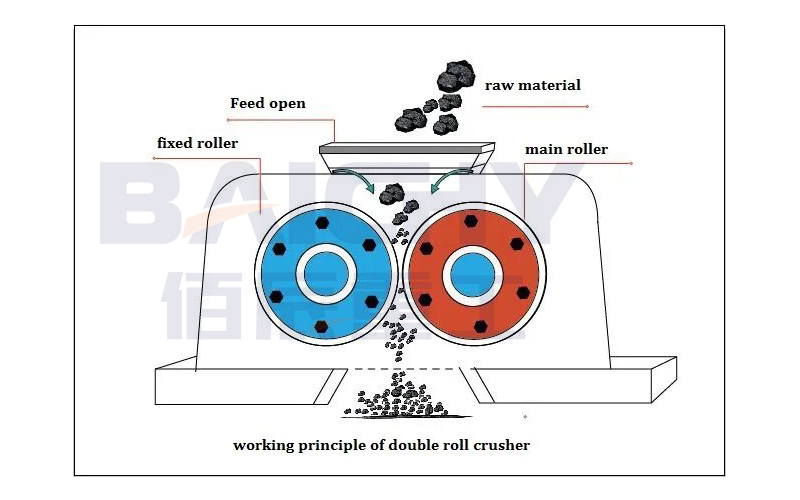
Working Principle and Structural Diagram of a Double-Roll Crusher
A double-roll crusher normally includes two parallel rolls, a drive system, bearings, a frame, a feed hopper, a discharge gap adjustment, and an overload protection arrangement. Depending on the application, the rolls may use smooth surfaces, toothed profiles, or specially hardened wear components.
During operation, the rolls rotate toward each other and draw the feed into the crushing zone. The material is subjected to compression, shear, and, in some cases, splitting along natural weaknesses. Particles smaller than the working gap pass through the discharge opening, while larger lumps continue to experience crushing forces until they are reduced or released through the protection system.
The roll gap is one of the main controls for product size. Roll speed, feed distribution, material strength, moisture, and surface condition also influence the final product. A stable and evenly distributed feed is important because surges can cause current fluctuations, uneven wear, and inconsistent discharge.
Application in Cement Raw Material Preparation
A typical preparation arrangement may include quarry extraction, a feeder, a double-roll crusher, an iron separator, a belt conveyor, a storage or preblending area, proportioning equipment, and a raw mill. The exact sequence depends on the plant layout and whether the materials are crushed together or handled separately.
Limestone pre-crushing
In a limestone pre-crushing duty, the double-roll crusher reduces large fragments before storage or grinding. This can make conveying and stockpile handling more stable and may reduce the instantaneous load on the raw grinding system. Where a narrow product-size range is required, the crusher can be combined with screening or additional classification equipment.
Separate or combined crushing
Limestone and marl may sometimes be processed in a combined stream when their physical properties and chemistry are compatible. Shale and clay can be treated separately when their moisture, plasticity, or feed behavior differs significantly from the main limestone stream. Separate crushing also gives the plant more control over proportioning and corrective-material dosing.
A combined arrangement should not be selected only for layout convenience. The plant must check whether the mixed feed can be handled consistently without sticky material coating the rolls or causing blockages at the discharge.
Preblending and grinding support
After crushing, the material may be sent to a stockpile or preblending system. A more consistent feed size can support steady proportioning and improve the operating conditions of the raw mill. Crushing does not replace raw grinding; its role is to prepare the feed so that downstream equipment can operate within its design range.
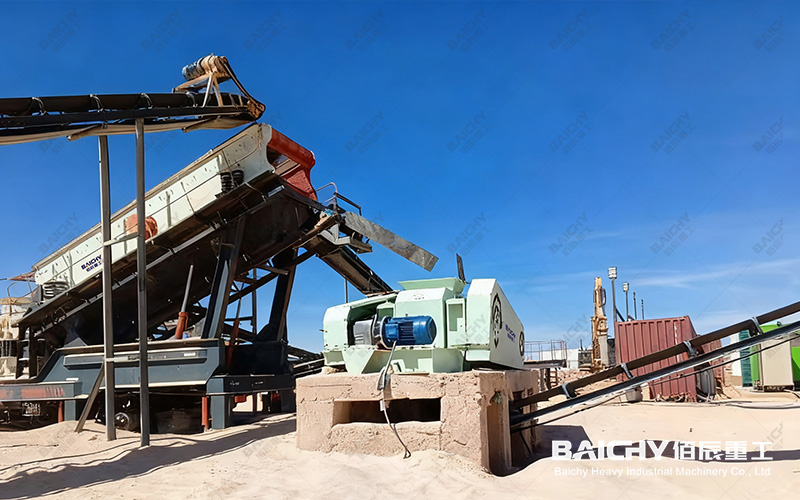
Customer site for a double-roll crusher
Key Benefits of the Equipment
Controlled product size
The adjustable roll gap allows the operator to influence the top size of the product. This is useful when the crushed material must meet a defined feed-size range for conveying, proportioning, or grinding.
Reduced over-crushing
Compression and shear can produce less unnecessary pulverization than some impact-based arrangements when the equipment is correctly selected and operated. Lower unwanted fines may support dust control and improve material handling, although the actual result depends on feed properties and operating conditions.
Compact layout
Double-roll crushers can fit into a relatively compact crushing station. This can be useful in transfer points, raw material buildings, and retrofit projects where available space is limited.
Adaptability to selected wet or layered materials
Compared with some fine-crushing arrangements, a properly configured double-roll crusher may be more suitable for certain moderately moist, layered, or friable materials. This does not mean that every wet clay application is trouble-free; moisture and stickiness must be verified before final selection.
Overload protection options
Spring or hydraulic protection can help the rolls respond to non-crushable objects or sudden overloads. An upstream magnetic separator, metal detector, or both may still be necessary where quarry and handling conditions create a risk of tramp metal.
Selection Checklist
The following information should be collected before choosing a double-roll crusher for a cement raw material system:
| Selection item | Why it matters | Example information to provide |
|---|---|---|
| Material type | Determines the likely crushing behavior | Limestone, marl, shale, or clay |
| Throughput | Defines crusher capacity and drive requirements | Required tonnes per hour and peak rate |
| Maximum feed size | Determines the roll dimensions and feed arrangement | Largest lump size in millimeters |
| Target product size | Influences roll gap and possible screening | Maximum or average discharge size |
| Moisture and stickiness | Helps assess build-up and blockage risk | Normal and seasonal moisture range |
| Strength and abrasiveness | Guides roll surface and wear protection | Test results or representative samples |
| Tramp metal risk | Determines protection and upstream separation needs | Quarry and conveying conditions |
| Operating pattern | Affects duty rating and maintenance planning | Hours per day and expected starts |
The supplier should also be informed about the downstream raw mill, conveyor limitations, storage method, and any space or access restrictions. If the raw material varies significantly across the year, the design should consider the full range of conditions rather than only the average value.
Recommended Plant Configuration
A basic preparation line may use a controlled feeder, double-roll crusher, belt conveyor, magnetic separator, dust collection system, and storage or preblending equipment. A vibrating or apron feeder can help maintain a steady flow, while a magnetic separator can remove ferrous objects before they reach the rolls.
For sticky clay, the feed hopper and discharge chute should be designed for cleaning and inspection. The system should include suitable access points and a safe procedure for clearing build-up. For abrasive limestone, replaceable wear parts and an inspection schedule can reduce unplanned downtime. For mixed raw materials, sampling points can help the plant monitor moisture, size distribution, and chemical consistency.
Screening may be added when the product-size specification is strict. In a large plant, separate crushing lines or parallel units may be considered to handle different materials or provide operational flexibility. The final arrangement should be based on process testing, capacity requirements, and total lifecycle cost rather than the crusher price alone.
Operation and Maintenance
Before start-up, operators should check lubrication, bearings, fasteners, roll alignment, gap settings, guards, and the condition of the feed and discharge areas. The crusher should not be started with a blocked discharge or excessive material accumulated in the hopper.
During operation, maintain an even feed and monitor motor current, bearing temperature, vibration, noise, and discharge size. A sudden change in power draw may indicate a feed surge, foreign object, roll wear, or material build-up. Regularly inspect the roll surface, bearings, seals, drive components, hydraulic or spring protection, and chute liners.
If the product becomes too coarse, check the roll gap, roll wear, feed size, and feed distribution. If the product becomes too fine, review the gap and operating conditions. If clay sticks to the rolls, investigate moisture, material temperature, feed rate, roll profile, and cleaning arrangements instead of simply increasing the drive load.
Double-Roll Crusher Compared with Other Options
A jaw crusher is commonly considered for primary crushing of larger and harder feed. A hammer crusher can provide impact-based reduction for suitable brittle materials, but sticky feed may create operational challenges. A double-roll crusher is often considered when the process requires controlled sizing, a compact arrangement, and compression-based crushing for selected medium-soft or moderately hard raw materials.
No single machine is suitable for every cement plant. High-strength, highly abrasive limestone may require a different primary or secondary crushing solution. Very wet clay may need separate handling or conditioning. The best choice is the one that matches the complete feed envelope, required capacity, product size, maintenance resources, and downstream process.
Conclusion
Double-roll crushers can support cement raw material preparation by reducing limestone, marl, shale, and selected clay feeds before storage, proportioning, or raw grinding. Their adjustable gap, compression-based crushing action, and compact layout make them a practical option for limestone pre-crushing and other controlled size-reduction duties.
The most reliable results come from matching the roll surface, overload protection, feeder, discharge design, and wear parts to the actual material. Before placing an order, confirm the maximum feed size, required throughput, target product size, moisture range, abrasiveness, and tramp-metal risk. A material test and process review can then determine whether a double-roll crusher is the right fit for the cement raw material line.
Frequently Asked Questions
1. Can a double-roll crusher crush limestone for cement production?
Yes. It can be used for limestone pre-crushing when the limestone's strength, abrasiveness, feed size, and required discharge size are within the machine's design range. Very hard or highly abrasive limestone may require a different crushing arrangement or specialized wear protection.
2. Is a double-roll crusher suitable for clay?
It can be suitable for selected clay applications, but moisture and stickiness are critical. Wet clay may stick to the rolls or block the discharge. The plant should evaluate seasonal moisture, feed rate, roll profile, cleaning access, and discharge design before selecting the equipment.
3. Can limestone and shale be crushed together?
They can sometimes be processed in one stream if their physical properties, moisture, and chemical-control requirements are compatible. If the materials behave differently or require separate proportioning, separate crushing and controlled blending may provide better process stability.
4. How is the product size adjusted?
The main adjustment is the working gap between the two rolls. Roll surface condition, speed, feed distribution, moisture, and material strength also affect the final size. The gap should be set according to the downstream conveying, proportioning, screening, or raw grinding requirements.
5. Should an iron separator be installed before the crusher?
Where quarry or handling conditions create a risk of steel or other ferrous objects entering the feed, an upstream magnetic separator and, where appropriate, a metal detector are recommended. Overload protection should be viewed as an additional safeguard, not a replacement for good feed preparation.

Baichy Heavy Industry
Baichy Heavy Industry is a high-tech mining equipment company integrating R&D, manufacturing, sales, and after-sales service. Focusing on crushing, grinding, and mineral processing equipment, we provide professional solutions to our customers. We are ISO9001:2015 Certified, and our products include mobile crushing palnts, crawler crushing plant, construction waste crushing plants, jaw crushers, sand making machines, cone crushers, fine crushers, grinding mills, ball mills, etc., all with reliable performance to meet diverse project needs.
Baichy Heavy Industry – Your Trusted Partner
To ensure optimal performance of your equipment, Baichy Heavy Industry offers:
- Professional on-site installation guidance
- Comprehensive operator training
- 24/7 technical support & maintenance services
Our complete after-sales service system guarantees long-term, stable operation of your machinery with minimal downtime.
Protect Your Rights – Only Use Official Channels
To avoid scams and ensure authentic support, contact us exclusively through:
• Official Website: www.baichychina.com
• WhatsApp: +8615093222637
• Email: [email protected]
Your satisfaction is our priority – expect prompt, professional service every time.
(Note: Beware of unauthorized third parties claiming to represent Baichy. Always verify through official contacts.)