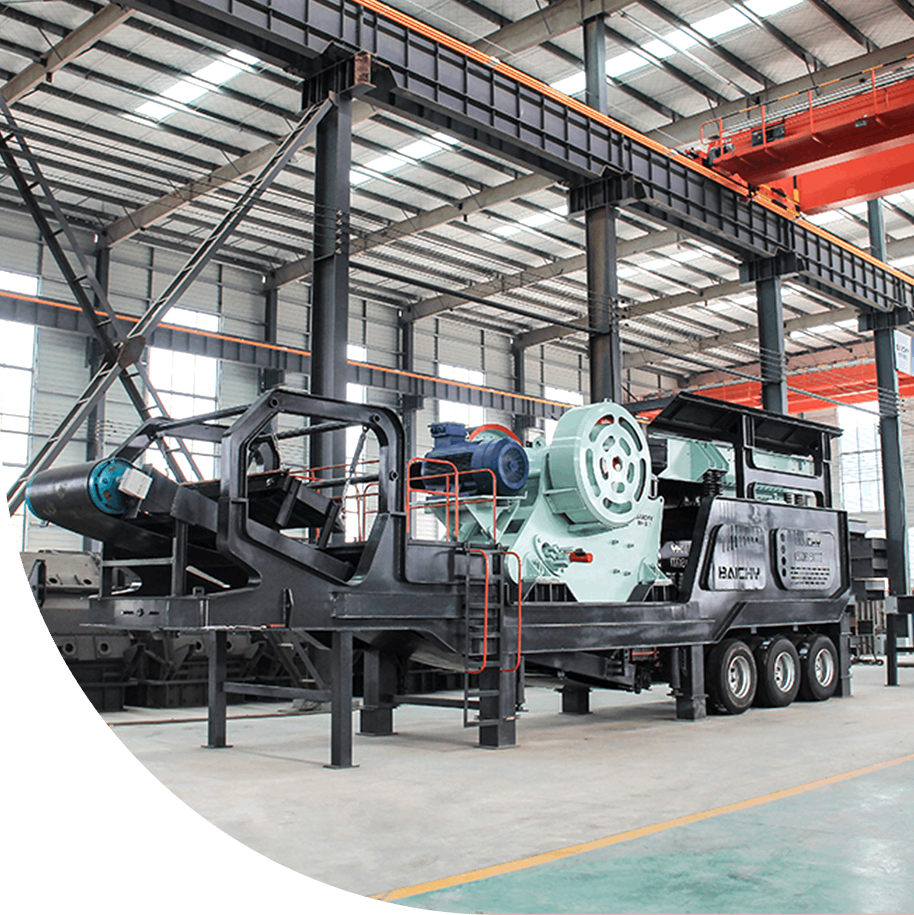

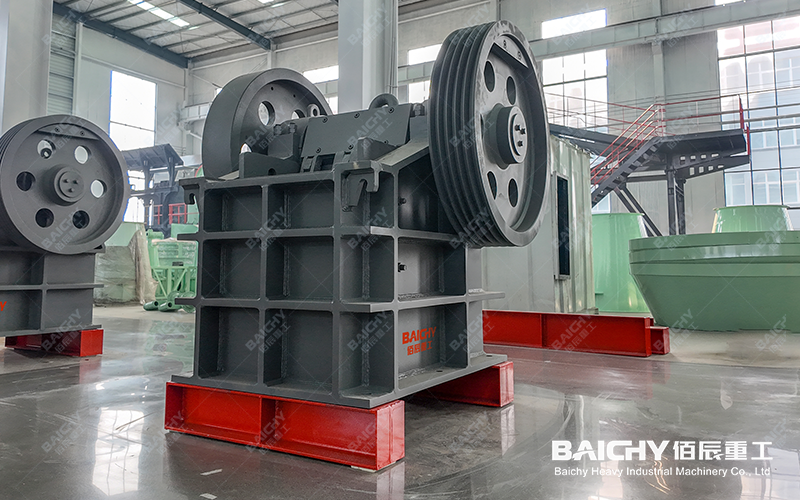
Best PE400x600 Jaw Crusher for Granite & Hard Rocks
Granite, basalt, and other hard rocks demand strong crushing equipment. The PE400x600 jaw crusher features a sturdy structure, high-manganese steel jaw plates, and strong crushing force, making it ideal for hard rock crushing.
In mining operations, infrastructure construction, and sand and aggregate production, the primary crushing of hard rocks—such as granite and basalt—invariably constitutes the first stage of the production line and stands as one of its most critical processes. The high hardness and strong abrasiveness characteristic of these rock types pose formidable challenges to the structural strength, wear resistance, and operational stability of crushing equipment. The PE400x600 Jaw Crusher is a classic model specifically engineered to meet these challenges; renowned for its exceptional reliability and powerful crushing force, it has become the preferred choice for processing hard rock materials. It serves not only as the starting point for the efficient operation of a production line but also as a guarantee of long-term, stable returns on investment.
Core Application Scenarios: Where is the PE400x600 Jaw Crusher Needed?
• Granite and Basalt Quarries: Acting as the core component of primary crushing, it reduces large blocks of blasted raw rock to medium-sized particles, thereby preparing the material for subsequent intermediate and fine crushing stages.
• Large-scale Infrastructure Projects: At aggregate processing bases for projects such as highways, railways, and dams, there is a constant need for a continuous and stable supply of high-quality coarse aggregates.
• Primary Crushing in Metal Mines: Prior to the mineral beneficiation process, it performs the initial crushing of mined ore to ensure the feed size meets the specific requirements of downstream grinding equipment.
• Crushing Concrete Blocks in Urban Construction Waste Recycling: Although not naturally occurring hard rock, high-strength reinforced concrete blocks present an equally rigorous test for crushing equipment; the robust structural design of the PE400x600 is more than capable of handling this demanding task.
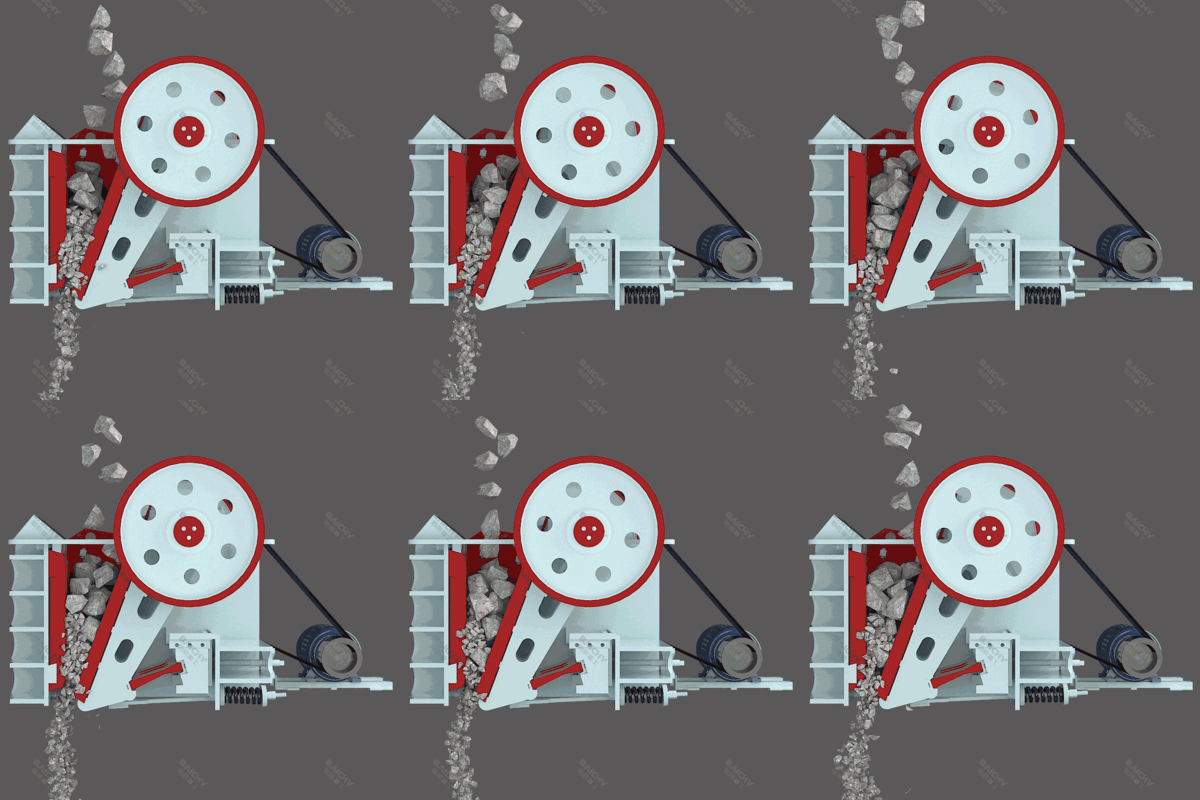
The jaw crusher employs the classic principle of curved-motion extrusion, utilizing the periodic movement of the movable jaw plate—approaching and receding from the stationary jaw plate—to achieve a combined crushing effect involving compression, splitting, and bending of the material.
Moving jaw swings backward → Discharge opening widens → Crushed material is discharged → New material enters
Moving jaw swings forward → Crushing chamber volume decreases → Jaw plates contact material → Fixed gripping
Key Advantages of the PE400x600 Jaw Crusher
1. Exceptional Structural Strength and Durability
The machine frame is fabricated from high-quality steel plates using a welding process that incorporates stress-relief treatment. This ensures that the frame remains free from deformation or cracking, even during continuous, high-load crushing of hard rock materials. The eccentric shaft is forged from high-strength alloy steel and undergoes precision machining, resulting in a load-bearing capacity that far exceeds the requirements of standard operating conditions.
2. Wear-Resistant Jaw Plates Designed Specifically for Hard Rock
Both the moving jaw and fixed jaw plates are manufactured from high-manganese steel (such as ZGMn13). Under the impact of powerful crushing forces, this material undergoes work hardening, resulting in a significant increase in surface hardness. This process creates a robust, wear-resistant layer that vastly extends the service life of the machine when crushing materials like granite and basalt, thereby reducing replacement frequency and maintenance costs.
3. Simple and Reliable Operation and Maintenance
The "V"-shaped crushing chamber design not only boosts throughput capacity but also minimizes the risk of clogging in the lower section. The toggle plate serves a dual function: it transmits power while also acting as a safety mechanism. In the event that uncrushable objects (such as iron blocks) enter the chamber, the toggle plate is designed to fracture first, thereby protecting the machine's core components from damage. The centralized lubrication system features fewer daily maintenance points, making routine upkeep both simple and convenient.
4. Excellent Crushing Ratio and Stable Discharge
With a feed opening measuring 400x600mm, the crusher accommodates a maximum feed size of up to 340mm. The discharge opening is adjustable within a range of 40–100mm, offering a high crushing ratio and ensuring uniform discharge granularity—conditions that are highly favorable for subsequent processing stages.
Key Technical Parameters: PE400x600 Jaw Crusher
| Parameter | Specific Specification/Data |
| Model | PE400x600 |
| Feed Opening Dimensions | 400mm x 600mm |
| Max. Feed Size | 340mm |
| Discharge Opening Adjustment Range | 40–100mm |
| Processing Capacity | 16–64 tons/hour |
| Eccentric Shaft Speed | 275 rpm |
| Main Motor Power | 30–37 kW |
| Equipment Weight (Approx.) | 6.5 tons |
Success Story Showcase
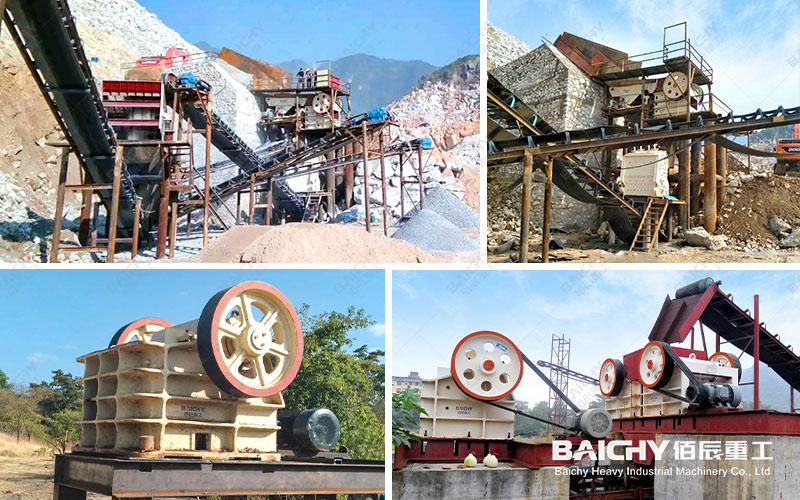
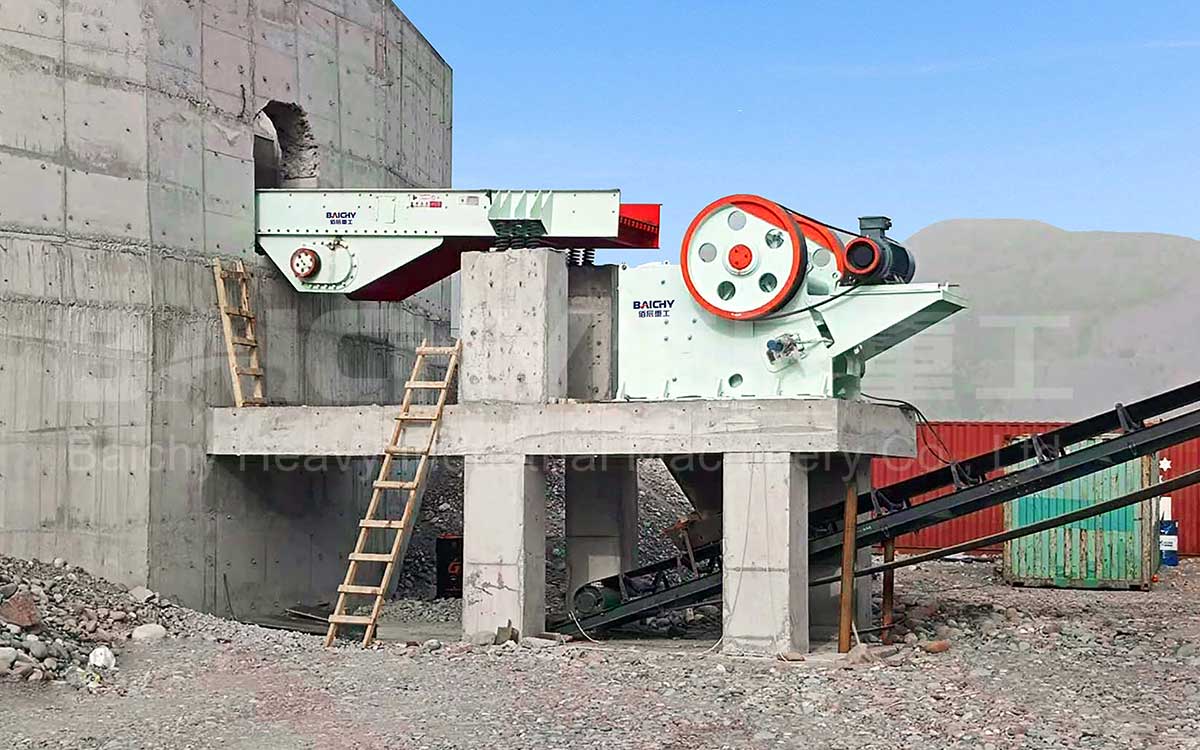
PE400x600 Jaw Crusher: On-site Operation
Case Study 1: A Large-Scale Granite Quarry in East China
The jaw crusher previously utilized at this quarry suffered from extremely rapid wear and frequent downtime. After upgrading to our company's PE400x600 jaw crusher, the service life of the high-manganese steel jaw plates increased by approximately 40% when crushing granite of equivalent hardness. Furthermore, the equipment's continuous operation rate exceeded 95%, and the average daily output remained stable at over 800 tons. The client also highly praised the uniformity of the discharged aggregate shape.
Case Study 2: Basalt Aggregate Production Line in Southeast Asia
A client required a primary crusher for a road construction material production line with an hourly output capacity of 200 tons. We recommended the PE400x600 to serve as the primary crushing unit. Operating in a harsh environment characterized by high humidity, heat, and dust, the equipment ran for three years without a single major mechanical failure. It required only routine replacement of wear parts; its exceptional reliability earned the client's long-term trust, leading to subsequent orders for additional equipment.
Recommended Related Equipment
A complete hard rock crushing production line requires not only high-quality primary crushing but also complementary, high-efficiency equipment for secondary/tertiary crushing and screening. We recommend the following:
1. Choice for Secondary Crushing: PYB1750 Spring Cone Crusher
◦ Serving as the secondary crusher, this unit processes the output from the PE400x600 to perform medium-to-fine crushing of hard rock. Its inter-particle crushing principle ensures excellent aggregate shape with low needle-like and flaky content, making it particularly suitable for meeting the stringent requirements of high-grade concrete aggregates.
2. Choice for Sand Making and Shaping: VSI1140 Vertical Shaft Impact Crusher
◦ If the production of manufactured sand is required, this equipment is the ideal choice. Utilizing either the "rock-on-rock" or "rock-on-iron" crushing principle, it effectively crushes and shapes materials such as granite and basalt into high-quality manufactured sand characterized by a rational gradation and rounded particle shape.
3. Choice for Screening: 3YK2460 Circular Vibrating Screen
◦ An efficient multi-layer screening device capable of precisely separating the crushed mixed materials into various size specifications (e.g., 0–5mm, 5–10mm, 10–20mm, 20–31.5mm). This ensures that the final product specifications are clearly defined, thereby meeting Perse market demands.
Frequently Asked Questions (FAQ)
Q1: When the PE400x600 jaw crusher is processing granite, approximately how often do the jaw plates need to be replaced?
A1: This depends on the specific hardness of the granite, its SiO2 content, and the intensity of production operations. Under normal operating conditions, a set of high-quality high-manganese steel jaw plates can process approximately 20,000 to 30,000 tons of material. It is recommended to regularly inspect the jaw plates for wear; if there is a noticeable decline in output or a significant increase in the product particle size, the plates should be adjusted or replaced promptly.
Q2: Can the equipment's discharge particle size be adjusted? How is this done?
A2: Yes, it can. The discharge size is adjusted by manipulating the adjustment mechanism to alter the position of the rear toggle plate seat. This action drives a wedge block, causing the adjustment seat to move forward or backward, thereby enabling either stepless (continuous) or stepped adjustment of the discharge opening. Once the adjustment is complete, it is essential to securely tighten the locking nuts. It is recommended that particle size adjustments be performed while the equipment is shut down.
Q3: What should be done if an uncrushable foreign object (such as a piece of iron) becomes jammed inside the crushing chamber?
A3: The PE400x600 is equipped with a mechanical overload protection device. If an uncrushable object enters the chamber, the toggle plate (acting as a safety fuse) will fracture first, thereby protecting other core components—such as the eccentric shaft and jaw plates—from damage. In such a situation, operations should be halted immediately to clear the material and foreign object from the crushing chamber; normal production can then resume after installing a new toggle plate.