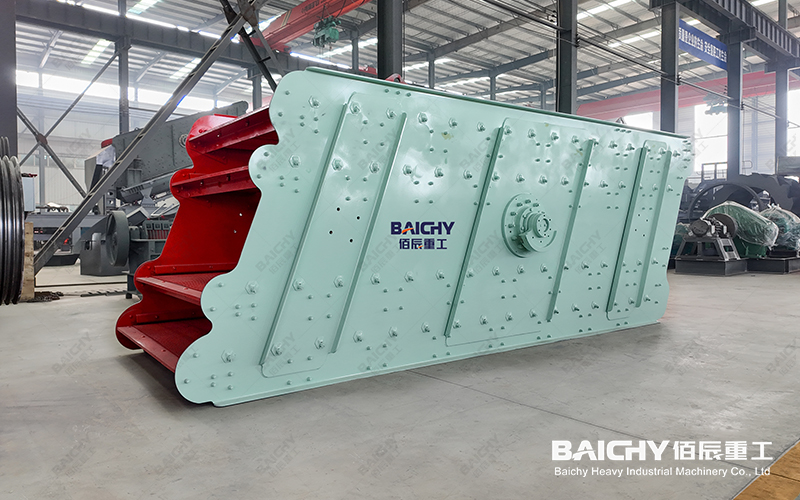
Vibrating screens for stone production lines
The standard configuration for a 30 tph aggregate production line includes the YK1237 series circular vibrating screen (1200×3700 mm). Choose the 2YK1237 (double-deck) for two finished product sizes; the 3YK1237 (triple-deck) for three sizes (0–5, 5–10, and 10–20 mm); or the 4YK1237 (quad-deck) if large aggregates (20–40 mm) are also required. With an official processing capacity of 30–100 t/h and a single-deck screening area of approximately 4.4 m², this series is the ideal entry-level model for 30 tph lines; if plans exist to expand capacity to over 80 tph in a second phase, one can directly upgrade to the 2YK1548.
I. 30 tph Aggregate Production Line: Why Screen Selection Determines Success
Production lines in the 30 tph class are commonly found in small quarries, highway sub-base projects, concrete batching plants, and railway ballast operations. The crushing section typically employs a two-stage process: a PE400×600 jaw crusher paired with an impact crusher, fine jaw crusher, or hammer crusher. A small production line does not imply low standards: factors such as silt content, flaky/elongated particle content, and gradation consistency directly determine whether the product passes client acceptance, and the vibrating screen serves as the "quality control checkpoint" for all crushed material.
If the selected vibrating screen is too small, wet material causes screen blinding and recirculating material piles up, forcing the crusher to reduce output or shut down; if it is too large, the initial investment and footprint are wasted. Therefore, selecting the screen size for a 30 tph line cannot be done based on guesswork or intuition; instead, follow a three-step process: "calculate feed rate — determine number of decks — match model." First, accurately calculate the screening load; next, determine the number of screen decks; finally, consult the parameter table to select the specific model.
II. Three-Step Selection Method: Configuring the Vibrating Screen for a 30 tph Line
① Calculate feed rate: Closed-circuit recirculating material must be included.
Screen feed rate = Finished product capacity × (1 + Recirculation rate). In a closed-circuit screening process, oversize material typically accounts for 20%–40% of the total feed; for a finished product output of 30 tph, the actual feed to the screen is approximately 36–45 t/h. Screen selection must be based on this actual load rather than the nominal capacity.
② Determine the number of product grades: The number of decks determines how many product grades are produced in a single pass.
A double-deck screen produces 2 product grades plus oversize material (recirculating load); a triple-deck screen produces 3 grades; and a four-deck screen produces 4 grades. The finer the product mix (e.g., 0–5mm manufactured sand, 5–10mm, 10–20mm), the greater the need for multi-deck screening to achieve separation in one pass, thereby avoiding the need for re-handling and repeated screening.
③ Consult the model comparison chart: The 1237 model is sufficient, while the 1548 model allows for future capacity expansion.
Below are the specifications for the YK series circular vibrating screens, verified against the official website (YK vibrating screen product page):
| Model | Screen Deck Dimensions (mm) | Number of Decks | Aperture Size (mm) | Max. Feed Size (mm) | Processing Capacity (t/h) | Motor Power (kW) |
|---|---|---|---|---|---|---|
| 2YK1237 | 3700×1200 | 2 | 3–50 | 200 | 30–100 | 7.5 |
| 3YK1237 | 3700×1200 | 3 | 3–50 | 200 | 30–100 | 11 |
| 4YK1237 | 3700×1200 | 4 | 3–50 | 200 | 30–100 | 11 |
| 2YK1548 | 4800×1500 | 2 | 3–100 | 400 | 30–275 | 15 |
| 3YK1548 | 4800×1500 | 3 | 3–100 | 400 | 30–275 | 18.5 |
Note: Processing capacity varies based on material specific gravity, moisture content, and aperture size; actual capacity should be determined through material testing. Motor power specifications are subject to the latest data on the official website.
Comparison shows: The actual screening load for the 30 tph line is approximately 40 t/h, placing it in the mid-range of the 1237 series (with a load factor of about 40%–60%); this ensures sufficient screening time and reasonable capacity headroom. The 1548 series has an upper limit of 275 t/h; opting for it is only worthwhile if there are plans to scale up production to over 80 tph.
III. Application Scenarios: Typical Operating Conditions for 30 tph Class Vibrating Screens
Small-scale aggregate plants / Highway base courses: Separates crushed stone into 0–5 mm, 5–16 mm, and 16–31.5 mm fractions for use in concrete and roadbed cushion layers; product combinations can be switched simply by changing screen apertures.
Railway ballast projects: Produces 20–40 mm cubical ballast; the top deck retains oversized material for return to the secondary crusher, ensuring 100% compliance with sleeper load-bearing gradation requirements.
Manufactured sand production lines: Screens material into 0–5 mm sand and 5–10 mm/10–20 mm small crushed stone (pea gravel); paired with a wheel-bucket sand washer for desliming, the product is ready for direct supply to concrete mixing plants.
Medium-hard materials (limestone, river pebbles, granite): The YK series comes standard with manganese steel or polyurethane screen media; suitable for 24-hour continuous operation with dry materials (moisture content <5%) and compatible with 50/60 Hz power grids.
IV. Core Advantages of the YK1237 Vibrating Screen: Robust Design for Lower Capacities
① Screen box assembly utilizes lockbolts (ring-groove rivets) and high-strength bolts rather than welding, offering superior fatigue and crack resistance for a long service life under continuous operation;
② Bearing housings feature labyrinth dust seals to extend bearing life; lubrication points are centralized, requiring only minutes for daily maintenance;
③ Compatible with manganese steel, polyurethane, or stainless steel screen media; anti-blinding bouncing balls can be installed for wet material processing, maintaining high screening efficiency even during the rainy season;
④ Amplitude is adjustable via eccentric blocks, allowing for flexible tuning based on material hardness. Profitability Insight: For a 30 tph production line operating 12 hours a day, 300 days a year, every 5% loss in screening efficiency results in a shortfall of approximately 5,000 tons of qualified material annually. Based on local average aggregate prices, this equates to a loss of tens of thousands of dollars in sales revenue. Choosing the right vibrating screen essentially means safeguarding a profit stream that is most easily overlooked in small-scale production lines.
V. Real-World Case Studies: On-site Performance of the YK1237 Series
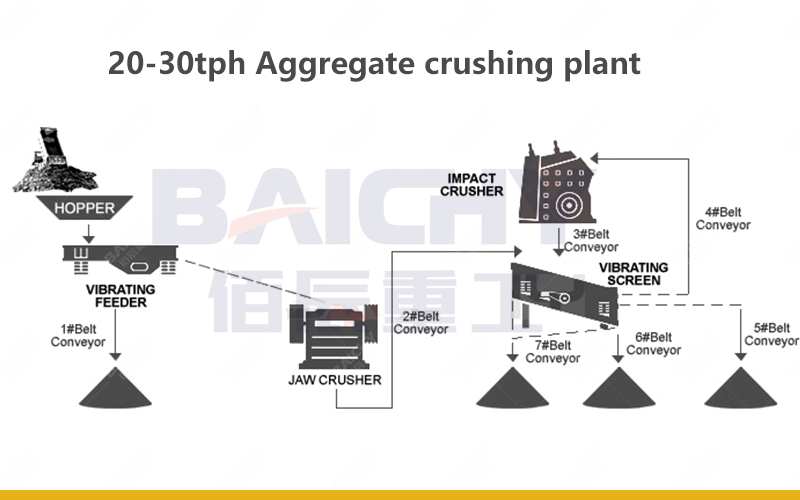
Vibrating Screen for a 30 TPH Aggregate Plant
Case Study 1: 50 tph Railway Ballast Line in Kenya (4YK1237).
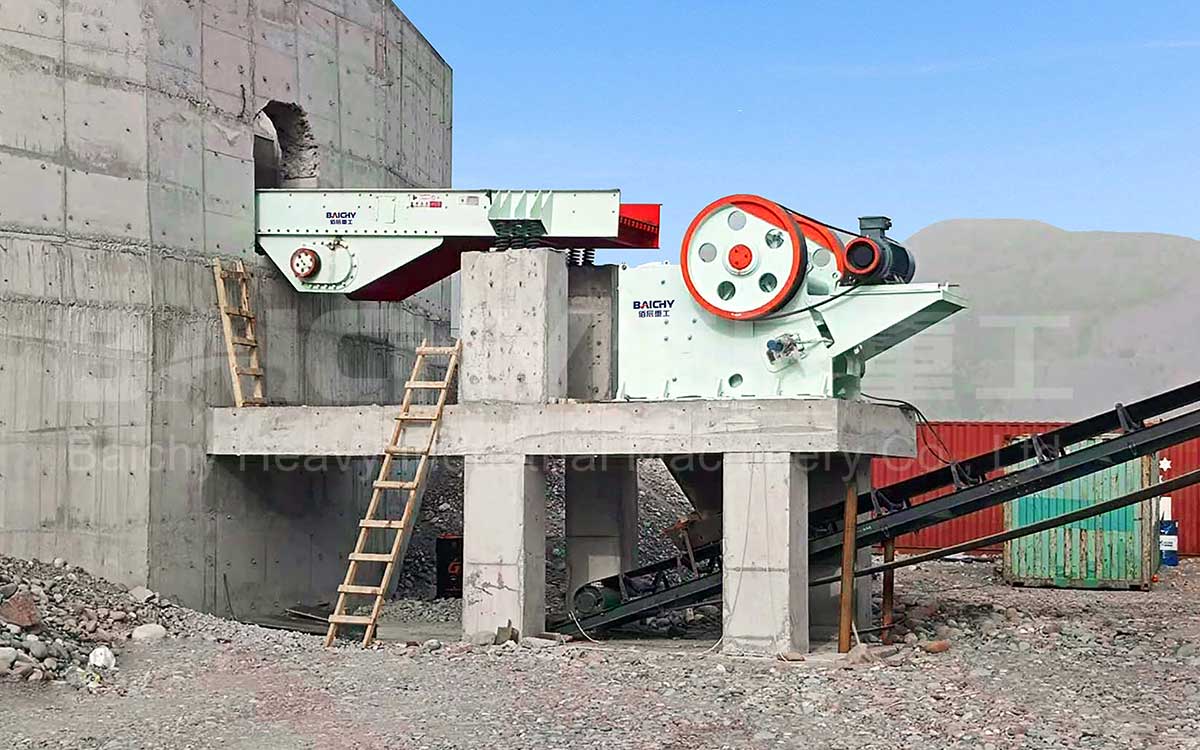
Configuration: ZSW6520 Vibrating Feeder → PE400×600 Jaw Crusher → PEX250×1200 Fine Jaw Crusher → 4YK1237 Four-deck Vibrating Screen (closed-circuit).
Actual capacity: 30–50 t/h. Produces four fractions in a single pass: 0–5mm, 5–10mm, 10–20mm, and 20–40mm. Oversized material from the top deck is returned to the fine jaw crusher; finished products fully meet railway ballast standards, while 0–5mm fine sand is sold as a by-product. View full case study
Case Study 2: 50 tph Dolomite Aggregate Line in the Philippines.
Standard two-stage configuration: Vibrating Feeder + Jaw Crusher + Impact Crusher + YK Vibrating Screen + Belt Conveyor. The screen consistently separates multiple grades of construction aggregates; the particles feature uniform shapes and low fines content, supplying local road construction projects. View production line solution
VI. Recommended Equipment: 30 tph Complete Configuration Solution
Hard Rock Solution (Granite / Basalt / Iron Ore): ZSW Vibrating Feeder → PE400×600 Jaw Crusher → PEX250×1200 Fine Jaw Crusher → 3YK1237 (three fractions) or 4YK1237 (four fractions, including 20–40mm) → Belt Conveyor discharge; screen-oversize material is returned to the fine jaw crusher for closed-circuit processing.
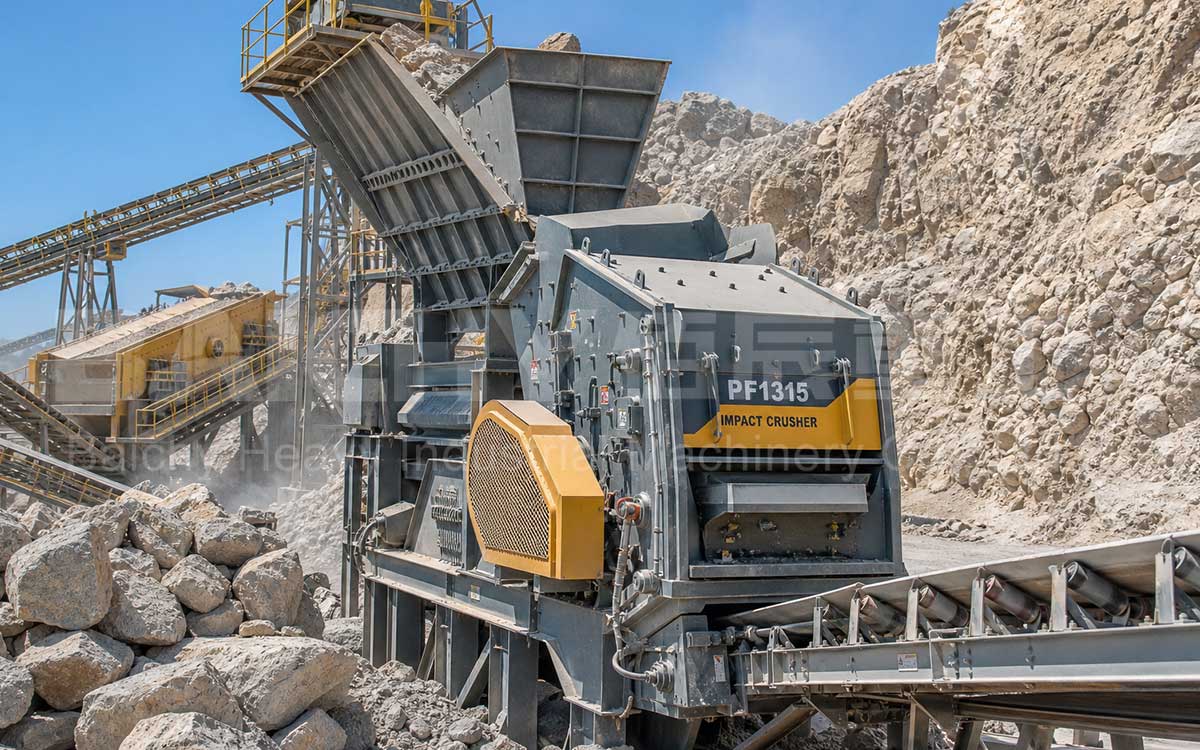
Soft Rock Configuration (Limestone / Shale / River Pebbles): ZSW Vibrating Feeder → PE400×600 Jaw Crusher → PF1007 Impact Crusher → 2YK1237 (2-deck) or 3YK1237 (3-deck) → Belt Conveyor Discharge. Based on the standard 40–60 tph configuration.
Wet Sand-Making Upgrade: Install an XSD wheel-type sand washer, dewatering screen, and fine sand recovery unit downstream of the vibrating screen; this reduces the clay content in the 0–5mm sand fraction to below 1%, making it ready for direct sale. Baichen offers EPC turnkey services, including civil engineering layout drawings, process flow charts, and budget estimates.
VII. FAQ (Frequently Asked Questions)
Q1: Should I choose a double-deck or triple-deck vibrating screen for a 30 tph aggregate production line?
A: It depends on the types and number of product grades required. If you only need two products—0–5mm manufactured sand and 5–20mm crushed stone—choose the 2YK1237 double-deck model. If you need three stable grades (0–5mm, 5–10mm, and 10–20mm) for a concrete mixing plant, choose the 3YK1237 triple-deck model. If you also require large aggregates (20–40mm for railway ballast or road base), choose the 4YK1237 four-deck model. Since a triple-deck screen adds only one extra screen mesh and support frame compared to a double-deck model—with little difference in investment cost—we recommend selecting the deck configuration based on your target product matrix from the start to avoid the need for future modifications.
Q2: Is it "overkill" (using equipment with excessive capacity) to pair a vibrating screen rated for 30–100 t/h with a 30 tph production line?
A: It is not wasteful. The 30 t/h figure represents the lower limit of the processing range, not the recommended operating load. In a closed-circuit system, the actual feed rate is approximately 36–45 t/h. Furthermore, throughput capacity drops significantly as screen aperture sizes decrease or moisture content increases; for instance, when screening 0–5mm fine sand, the effective capacity may be only 30%–40% of the equipment's upper limit. The 1237 is Baichen's smallest circular vibrating screen; operating at a load rate of 40%–60% places it in the optimal range for screening efficiency, ensuring thorough material passage while providing a buffer for fluctuations in raw material input.
Q3: How should oversize material (oversize returns) be handled? Is a closed-circuit setup mandatory?
A: A closed-circuit setup is strongly recommended. Oversize material is conveyed back to the secondary crusher (fine jaw crusher or impact crusher) for re-crushing; this circulation guarantees that 100% of the final product meets specifications without the need for manual sorting. The width of the return conveyor belt can be selected based on the volume of recirculated material. If an open-circuit coarse screening process is used instead, one must accept either the inclusion of some oversize material in the final product or the need for manual secondary sorting, both of which result in higher long-term costs.
Baichy Heavy Industry
Baichy Heavy Industry is a high-tech mining equipment company integrating R&D, manufacturing, sales, and after-sales service. Focusing on crushing, grinding, and mineral processing equipment, we provide professional solutions to our customers. We are ISO9001:2015 、certified, and our products include mobile crushing palnts, crawler crushing plant, construction waste crushing plants, jaw crushers, sand making machines, cone crushers, fine crushers, grinding mills, ball mills, etc., all with reliable performance to meet diverse project needs.
Baichy Heavy Industry – Your Trusted Partner
To ensure optimal performance of your equipment, Baichy Heavy Industry offers:
- Professional on-site installation guidance
- Comprehensive operator training
- 24/7 technical support & maintenance services
Our complete after-sales service system guarantees long-term, stable operation of your machinery with minimal downtime.
Protect Your Rights – Only Use Official Channels
To avoid scams and ensure authentic support, contact us exclusively through:
• Official Website: www.baichychina.com
• WhatsApp: +8615093222637
• Email: [email protected]
Your satisfaction is our priority – expect prompt, professional service every time.
(Note: Beware of unauthorized third parties claiming to represent Baichy. Always verify through official contacts.)