Flotation Machines
I. Overview of Flotation Machines: The Core Separation Equipment for "Turning Stone into Gold" in Mineral Processing Plants
The flotation machine is the core piece of equipment responsible for mineral separation within the processing workflow. It operates based on differences in the surface hydrophobicity of minerals: as the pulp is agitated by an impeller, air is drawn in to form bubbles; hydrophobic valuable mineral particles adhere to these bubbles and float to the surface, where they are skimmed off as concentrate, while hydrophilic gangue minerals remain in the pulp and are discharged as tailings. This process determines concentrate grade and metal recovery rates, directly impacting the processing plant's return on investment.
Take gold mining as an example: for ore with a head grade of 3 g/t, increasing the flotation recovery rate from 85% to 92% allows for the recovery of an additional ~0.21 grams of gold per tonne of raw ore. Based on an annual throughput of 100,000 tonnes and a gold price of $2,400/ounce, this results in an annual revenue increase of over $160,000. The difference between success and mediocrity—determined by the choice of flotation machine and process optimization—lies precisely in that 7-percentage-point gap in recovery.
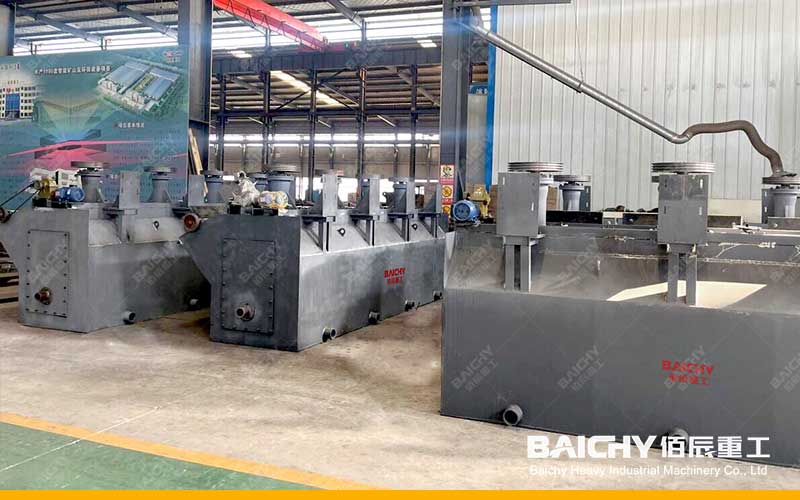
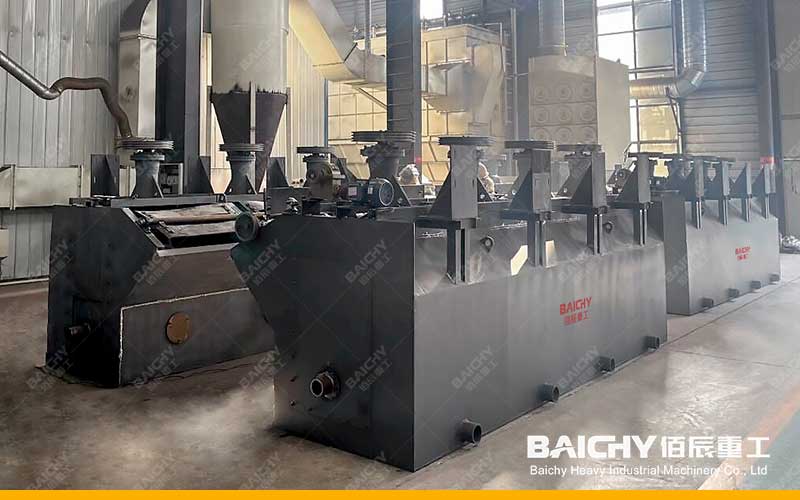
Baichy Heavy Industry’s SF series comprises self-aerating, mechanically agitated flotation machines. With effective cell volumes ranging from 0.37 to 16 m³ and capacities suitable for plants processing 50 to 2,000 tonnes per day (TPD), they are a mainstream choice for small-to-medium-sized gold, copper, and lead-zinc processing plants.

Display of Flotation Machine Structural Diagram
II. Key Application Scenarios for Flotation Machines
2.1 Gold Ore Flotation (Sulfide Ores / Gold-bearing Polymetallic Ores)
Suitable for gold-bearing pyrite, sulfide ores, and gold-copper associated ores. Typical workflows include "Crushing → Grinding → Flotation" or a combined "Flotation + Tailings Cyanidation" process. Liberated gold is rapidly recovered during roughing; the rougher concentrate undergoes regrinding followed by cleaning to upgrade the product, achieving flotation recovery rates of 90–96%. These machines are widely used in ASGM (Artisanal and Small-Scale Gold Mining) regions such as Sudan, South Africa, and Zimbabwe.
2.2 Copper Ore Flotation
Copper sulfide ores are processed using a flowsheet comprising one roughing, two cleaning, and two scavenging stages. This involves roughing in large-volume SF flotation cells combined with regrinding and re-flotation of middlings, achieving a concentrate copper grade of 20–28% and a recovery rate of 90–94%. Key markets include major copper-producing regions such as Chile, Zambia, and Indonesia.
2.3 Lead-Zinc Ore Flotation
Lead-zinc separation relies on a differential flotation process using lime to depress sphalerite and copper sulfate for activation. The flotation cells feature stable liquid levels and adjustable froth bed thickness, facilitating precise control during the cleaning stages; lead concentrate grades can reach 50–60%, and zinc concentrate grades 45–55%.
2.4 Other Minerals
The process is equally applicable to the flotation of molybdenum, nickel, fluorite, phosphate rock, graphite, and coal slime. The flotation cells accommodate a wide particle size range (0.074–0.5 mm), allowing a single production line to switch between different mineral types by adjusting grinding fineness and reagent regimes.

Flotation Machines: The Core of Mineral Separation and Recovery
III. Key Advantages of the SF Series Flotation Machine
| Advantage | Technical Description | Direct Value to the Processing Plant |
| Self-aspirating design | Impeller rotation creates negative pressure to draw in air; no blower required | Saves ~$8,000–$15,000 per line on blower and ducting investment; saves >$12,000 annually in electricity costs |
| Large impeller & high circulation rate | Pulp circulation rate reaches 2–3 times the tank volume per minute | Prevents settling of 0.3–0.5mm coarse particles; increases recovery rate by 3–5 percentage points |
| Stable liquid level | Upper-section air extraction; adjustable froth layer thickness (50–150mm) | Uniform and continuous froth skimming; minimal concentrate grade fluctuation; reduces losses from tank overflow |
| Wear-resistant design | High-chrome alloy or wear-resistant rubber impeller and stator | Impeller service life of 12–18 months; reduces wear-part costs by over 40% |
| Low power consumption | 20–30% lower power usage than forced-air (pneumatic) types of the same volume | Saves ~$12,000–$16,000 annually in electricity for a 500 TPD flotation line |
| Wide particle size adaptability | Feed particle size range: 0.074–0.5mm | Suitable for gold, copper, and lead-zinc ores; no equipment change needed when switching ore types |
3.1 SF Series Specification Table (Typical values; actual configuration prevails)
| Model | Effective Volume (m³) | Impeller Diameter (mm) | Processing Capacity (m³/min) | Motor Power (kW) | Applicable Scale |
| SF-0.37 | 0.37 | 386 | 0.2-0.4 | 1.5 | Laboratory / Cleaning operations |
| SF-0.7 | 0.7 | 450 | 0.3-0.9 | 3 | 50–100 TPD plant |
| SF-1.2 | 1.2 | 550 | 0.6-1.6 | 5.5 | 100–300 TPD plant |
| SF-2.8 | 2.8 | 650 | 1.5-3.5 | 11 | 300–800 TPD (Mainstream tank model) |
| SF-4 | 4.0 | 760 | 2.0-4.0 | 15 | 500–1200 TPD processing plant |
| SF-8 | 8.0 | 900 | 4.0-8.0 | 30 | Roughing for >1000 TPD plants |
| SF-16 | 16.0 | 1050 | 8.0-16.0 | 55 | Large-scale (2000 TPD class) processing plant |
IV. Real-world Case Study: 100 TPD Gold Flotation Line in Zimbabwe
Project Background: A gold mine in Zimbabwe with a run-of-mine grade of 4.2 g/t. The ore was primarily auriferous pyrite. Previously, the mine relied solely on manual gravity separation, resulting in a recovery rate of less than 60% and significant loss of fine-grained gold.
Solution: Baichy provided a complete process configuration—Jaw Crushing → Ball Milling → Spiral Classification → SF Flotation—comprising SF-1.2 (4 cells) for roughing, SF-0.7 (3 cells) for cleaning, and SF-1.2 (3 cells) for scavenging, along with supporting agitation tanks and reagent regime commissioning.
Operational Results:
Flotation recovery rate stabilized at 91–93%, an increase of over 30 percentage points compared to the original gravity separation process;
Concentrate grade reached 85–110 g/t, suitable for direct sale or further processing via cyanidation;
Equipment investment was approximately $120,000; based on a gold price of $2,400/ounce, the payback period is approximately 8 months.
This case demonstrates that for fine-grained disseminated gold ores, the recovery advantages of flotation machines are irreplaceable by gravity separation methods.
V. Recommended Auxiliary Equipment for Flotation Machines
A single flotation machine cannot operate in isolation; a complete flotation production line requires the following equipment working in tandem:
• Wet Ball Mill: Grinds ore to the required flotation fineness (65–75% passing -200 mesh), a prerequisite for effective flotation;
• Spiral Classifier: Operates in a closed circuit with the ball mill to ensure consistent overflow fineness;
• Agitation Tank: Thoroughly mixes and activates the pulp with reagents to enhance flotation efficiency;
• XCF/KYF Air-Inflated Flotation Machine: Optional for the cleaning stage in large-scale plants; features independently adjustable aeration rates;
• Thickener + Filter Press: Dewaters concentrate to produce transportable filter cake;
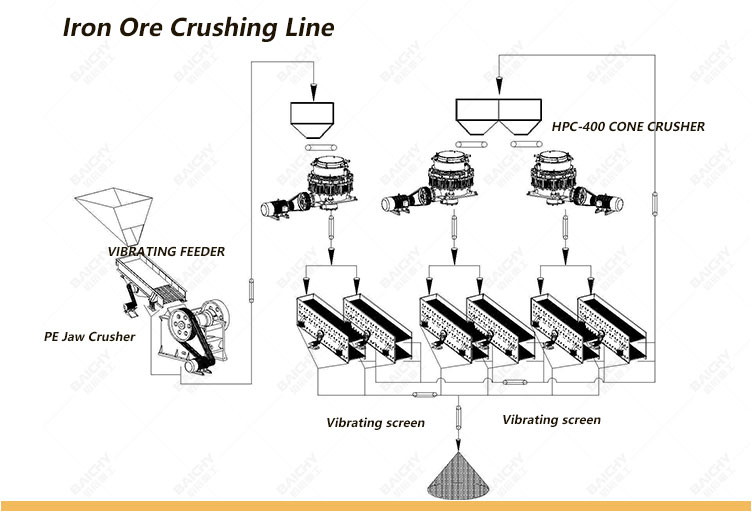
• Crushing and Feeding System: Jaw crusher and feeder ensure the correct feed size for the mill.
Baichy provides comprehensive EPC services covering the entire mineral processing workflow—from crushing and grinding to flotation and dewatering—enabling immediate production upon delivery.
VI. FAQ
Q1: How do I choose between flotation machines and gravity separation equipment (shaking tables, jigs)?
A: Gravity separation is suitable for minerals with coarser particle sizes and significant specific gravity differences (e.g., placer gold, coarse-grained gold); the equipment is simple and low-cost. Flotation is suitable for fine-grained disseminated sulfide ores, offering high recovery rates and strong adaptability. For fine-grained gold ore, flotation is recommended as the primary method, or a combined "gravity separation + flotation" process.
Q2: What is the difference between SF flotation machines and air-inflated (XCF/KYF) flotation machines?
A: SF machines rely on the impeller for self-suctioning air (no blower required), resulting in lower investment and power consumption; they are suitable for small-to-medium plants (under 500 TPD). XCF/KYF machines require an external blower for air supply and feature independently adjustable aeration rates, making them suitable for large-scale plants. Large production lines often utilize a combination of SF machines for roughing and air-inflated machines for cleaning.
Q3: What information is required for selecting a flotation machine?
A: We recommend providing details regarding the ore type and characteristics (metal species, oxidation rate, mineral dissemination size), daily processing capacity (TPD), target concentrate grade, and local power standards (50/60 Hz, voltage). Baichy offers complimentary ore analysis and beneficiation testing, and will provide a proposed configuration for the number of cells and the reagent scheme.

Baichy Heavy Industry
Baichy Heavy Industry is a high-tech mining equipment company integrating R&D, manufacturing, sales, and after-sales service. Focusing on crushing, grinding, and mineral processing equipment, we provide professional solutions to our customers. We are ISO9001:2015 、certified, and our products include mobile crushing palnts, crawler crushing plant, construction waste crushing plants, jaw crushers, sand making machines, cone crushers, fine crushers, grinding mills, ball mills, etc., all with reliable performance to meet diverse project needs.
Baichy Heavy Industry – Your Trusted Partner
To ensure optimal performance of your equipment, Baichy Heavy Industry offers:
- Professional on-site installation guidance
- Comprehensive operator training
- 24/7 technical support & maintenance services
Our complete after-sales service system guarantees long-term, stable operation of your machinery with minimal downtime.
Protect Your Rights – Only Use Official Channels
To avoid scams and ensure authentic support, contact us exclusively through:
• Official Website: www.baichychina.com
• WhatsApp: +8615093222637
• Email: [email protected]
Your satisfaction is our priority – expect prompt, professional service every time.
(Note: Beware of unauthorized third parties claiming to represent Baichy. Always verify through official contacts.)