

Raymond Mill for Coarse Powder Production
Coarse powder in the 30–200 mesh range is a high-demand specification for bulk markets such as agricultural lime, gypsum, and glass raw materials. The same Raymond mill used for fine powder production can also produce coarse powder: by simply lowering the classifier speed, production capacity increases by approximately 40%–100% compared to 325-mesh operations, while energy consumption per ton decreases. For powder processing plants that wish to avoid maintaining two separate production lines, this represents the solution with the lowest investment threshold.
I. Principles and Positioning of Raymond Mills for Coarse Powder Production
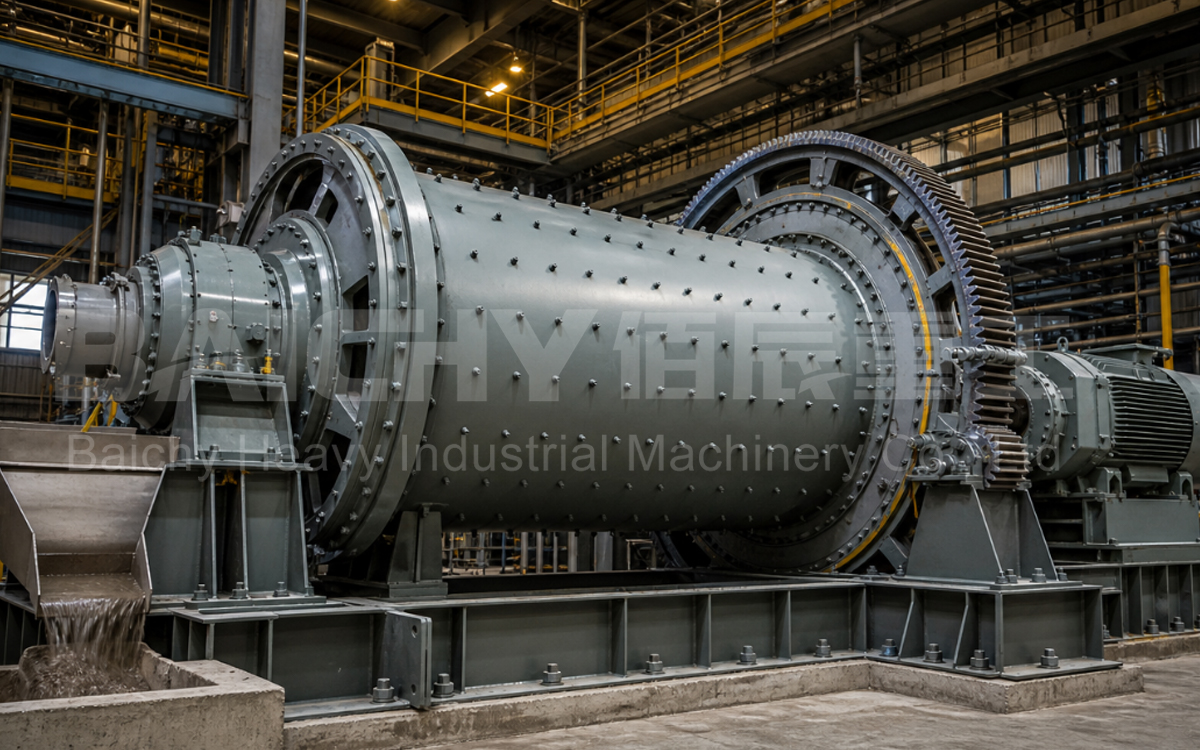
The Raymond mill (suspension roller mill) employs a dry grinding process based on "roller crushing + airflow classification." Material is repeatedly crushed between the grinding rollers and the grinding ring; fine powder is carried by the airflow into the classifier, where particles meeting the size requirements pass through the blades for collection, while coarse particles fall back for regrinding. The machine operates without screens; particle size is determined by classifier speed and airflow, allowing for a range spanning 30 to 325 mesh.
Producing coarse powder requires only three steps: lowering the classifier speed to allow for larger particle sizes, increasing the feed rate to approach maximum capacity, and adjusting airflow to prevent over-grinding. Both the R-series and YGM high-pressure series cover the full fineness range of 0.613–0.044 mm, with switching achieved through operational parameter adjustments rather than hardware modifications.
In summary: for projects targeting products finer than 600 mesh but with a primary sales focus on the 30–200 mesh range, the Raymond mill offers superior energy and space efficiency compared to ball mills, more stable particle sizing than hammer mills, and lower investment costs than ultrafine grinding mills.
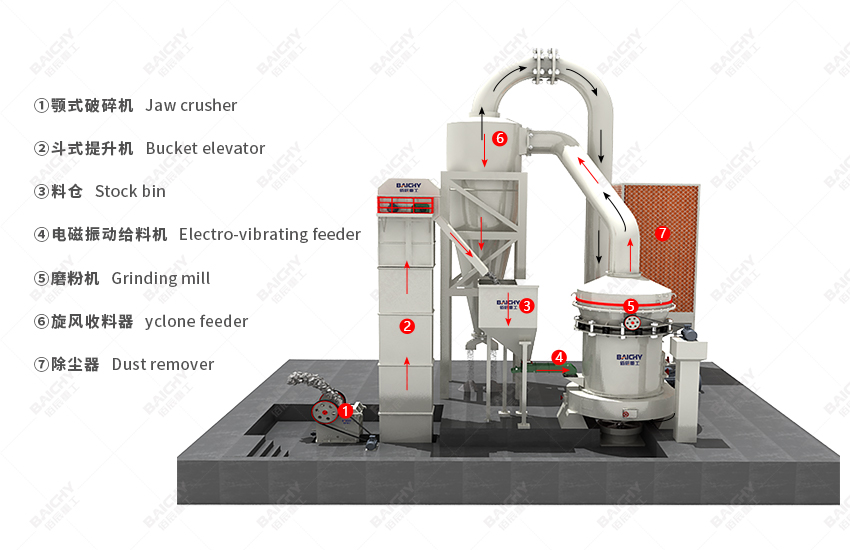
Raymond Mill Process Flowchart
II. Typical Application Scenarios for Coarse Powder Mills
2.1 Agricultural Lime (80–200 Mesh)
Neutralizing acidic soil typically requires 95% of the material to pass through a 100-mesh sieve—the "sweet spot" for coarse powder production. Agricultural markets such as Brazil and Vietnam demonstrate inelastic demand, pricing based on tonnage, and rapid return on investment.
2.2 Construction-grade gypsum powder (80–120 mesh)
Pre-grinding gypsum to 80–120 mesh prior to calcination improves calcination uniformity and the strength of the finished product; as gypsum is relatively soft and prone to adhesion, a closed-circuit air classification system is well-suited for this application.
2.3 Glass and ceramic raw materials (40–120 mesh)
Dolomite used in glass batch mixtures requires a particle size range of 0.1–1 mm; excessive fineness leads to agglomeration and poor fusibility, making "coarse powder" a strict process requirement. Feldspar and talc for ceramics fall into the same category.
2.4 Metallurgical auxiliaries and refractory materials (40–200 mesh)
For coarse dolomite and magnesite powders used in slag formation and casting materials, the YGM high-pressure series effectively processes medium-hard materials (Mohs hardness 4–6) and offers extended service life for wear parts.
| Application Scenario | Typical Materials | Common Specifications | Recommended Models | Downstream Uses |
|---|---|---|---|---|
| Agricultural Lime | Calcite, Dolomite | 80–200 mesh | YGM95 / YGM130 | Soil pH adjustment, calcium source for animal feed |
| Construction Gypsum | Natural gypsum, desulfurization gypsum | 80–120 mesh | 4R3016 / 5R4119 | Gypsum board, putty, mortar |
| Glass/Ceramic Raw Materials | Dolomite, Feldspar | 40–120 mesh | 4R3016 / YGM95 | Glass batch mix, ceramic bodies and glazes |
| Metallurgical Refractory Auxiliaries | Dolomite, Magnesite | 40–200 mesh | YGM130 / YGM160 | Slag-forming agents, castables |
III. Core Parameter Table: Model Selection Reference
| Model | Number of Rollers | Roller Dimensions (mm) | Feed Particle Size (mm) | Output Fineness (mm/mesh) | Capacity (t/h) | Main Motor (kW) |
|---|---|---|---|---|---|---|
| 3R2115 | 3 | 210×150 | ≤15 | 0.613–0.044 / 30–325 | 0.4–1 | 15 |
| 4R3016 | 4 | 300×160 | ≤25 | 0.613–0.044 / 30–325 | 1–4 | 30 |
| 5R4119 | 5 | 410×190 | ≤30 | 0.613–0.044 / 30–325 | 2.5–9.5 | 75 |
| YGM95 | 4 | 310×190 | ≤25 | 0.613–0.033 / 30–425 | 2.1–5.6 | 45 |
| YGM130 | 5 | 410×230 | ≤30 | 0.613–0.033 / 30–425 | 2.5–9.5 | 90 |
| YGM160 | 6 | 450×300 | ≤35 | 0.613–0.033 / 30–425 | 8–16 | 132 |
Reading Guide: The capacity range corresponds to the full spectrum of fineness (from coarse to fine); producing 120-mesh coarse powder approaches the machine's upper capacity limit, while output decreases when producing 325-mesh powder. For the 5R4119 model, the coarse powder setting yields approximately 8–9.5 t/h with a specific energy consumption of about 6–7 kWh/t—more than 30% lower than the consumption for 325-mesh powder (approx. 10.6 kWh/t). Actual capacity fluctuates based on material hardness and moisture content; specific figures are determined via sample testing prior to contract signing.
IV. Five Key Advantages of Raymond Mills for Coarse Powder Production
4.1 Dual-Mode Operation
Produce 100-mesh coarse powder to maximize volume during peak seasons, and switch to 325-mesh fine powder to protect profit margins during off-seasons—eliminating the need to purchase a separate machine for coarse powder.
4.2 Lower Specific Energy Consumption
Already 20%–30% more energy-efficient than ball mills of the same capacity, the machine offers even greater advantages in electricity-cost-sensitive markets when grinding coarse powder, due to reduced grinding energy requirements and higher material throughput.
4.3 No Screens, No Clogging
Coarse particles fall back onto the grinding disc via gravity; this results in a concentrated particle size distribution and minimal over-grinding, meeting the strict particle size requirements of the glass and ceramics industries.
4.4 Compact Footprint
The integrated vertical design occupies approximately 150 m², saving on factory building and foundation costs compared to ball mill lines of equivalent capacity—offering a clear CAPEX advantage for overseas projects.
4.5 Low Maintenance Requirements
The system lacks complex hydraulic components; roller and ring wear is minimal in coarse powder mode, extending service life to 10–22 months, and local technicians can master independent maintenance after just one week of training.
V. Typical Case Studies: Real-World Performance in Coarse Powder Production
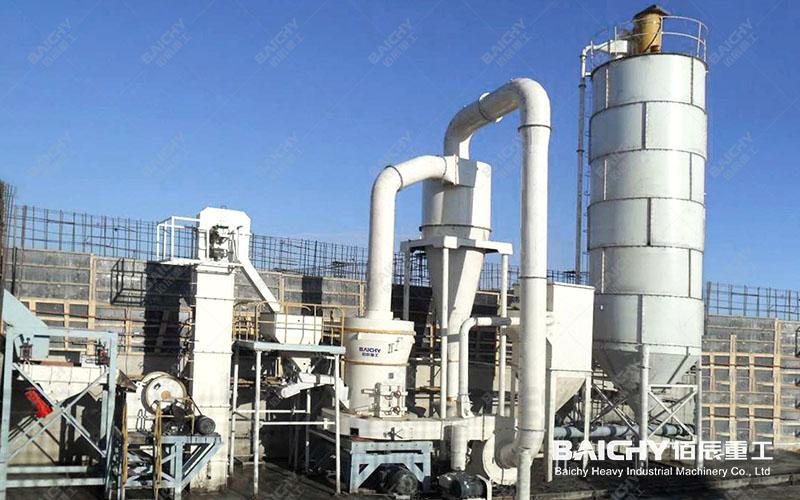
Coarse Powder Production Line
Case 1: Agricultural Lime in Brazil (YGM130) – Processing calcite into agricultural lime (95% passing 100 mesh). Hourly output in coarse powder mode is 8–9 tons; single-shift daily output is approx. 65–70 tons; investment payback period is approx. 10 months.
Case 2: Gypsum Pre-grinding in Egypt (5R4119) – Grinding natural gypsum to 120 mesh for calcination. Fineness fluctuation is within ±3%; replacement cycle for high-manganese steel roller rings is approx. 16 months.
Case 3: Dolomite for Glassmaking in Vietnam (YGM95) – Producing 40–80 mesh material; the proportion of qualified particle sizes remains stable above 90%; equipped with a pulse dust collector to meet environmental emission standards.
The above figures are based on engineering estimates for typical operating conditions; actual production capacity depends on specific material testing.
VI. Recommended Equipment and Upgrade Paths
• YGM High-Pressure Suspension Grinding Mill: Capable of producing both coarse and fine powders; the primary model for this application.
• R-Series Raymond Mill (4R3016/5R4119): Ideal for budget-conscious projects; rugged and durable.
• HGM Ultrafine Grinding Mill: Add this for future expansion into the 600–2500 mesh ultrafine powder range.
• Vertical Grinding Mill: Ultra-high capacity (over 36 t/h); offers 25%–35% energy savings compared to ball mills.
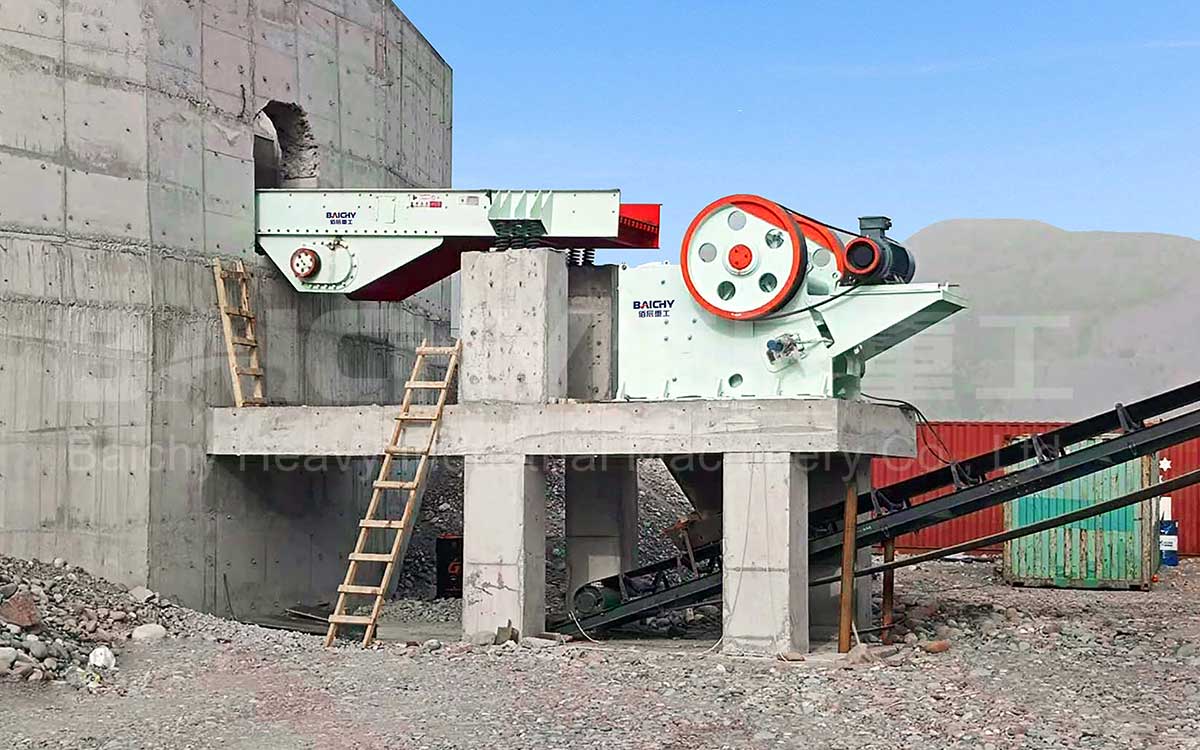
• Complete System Configuration: PE Jaw Crusher + Bucket Elevator + Feeder + Pulse Dust Collector + Electrical Control Cabinet; for materials with >6% moisture content, a dryer is required to prevent mill clogging.
VII. FAQ
Q1: What is the coarseness range of the Raymond Mill? Do I need to change parts to produce coarse powder?
The output range covers 0.613–0.044 mm (approx. 30–325 mesh); coarse powder production typically targets the 30–200 mesh range. No need to replace grinding rollers or rings; simply lower the classifier speed and increase the feed rate—the switch can be completed in minutes.
Q2: Should I choose a Raymond mill, hammer mill, or ball mill for coarse powder production?
Hammer mills produce a wide particle size distribution with a high proportion of fines. Ball mills are suitable for ultra-high capacity and wet grinding but require a large footprint and have high electricity consumption per ton. Raymond mills offer a concentrated particle size distribution, operate without screens (eliminating clogging issues), and cover a wide range of mesh sizes with a single unit; they represent the most cost-effective and balanced solution for 30–200 mesh coarse powder projects.
Q3: How can I obtain a capacity estimate and price quote tailored to my specific material and operating conditions?
Simply provide four key details: material name and Mohs hardness, target mesh size, required hourly output, and power grid voltage/frequency. Baichy engineers will calculate figures based on both nominal and actual operating capacities, providing a response within 30 minutes that includes the suitable model, equipment list, and price range.
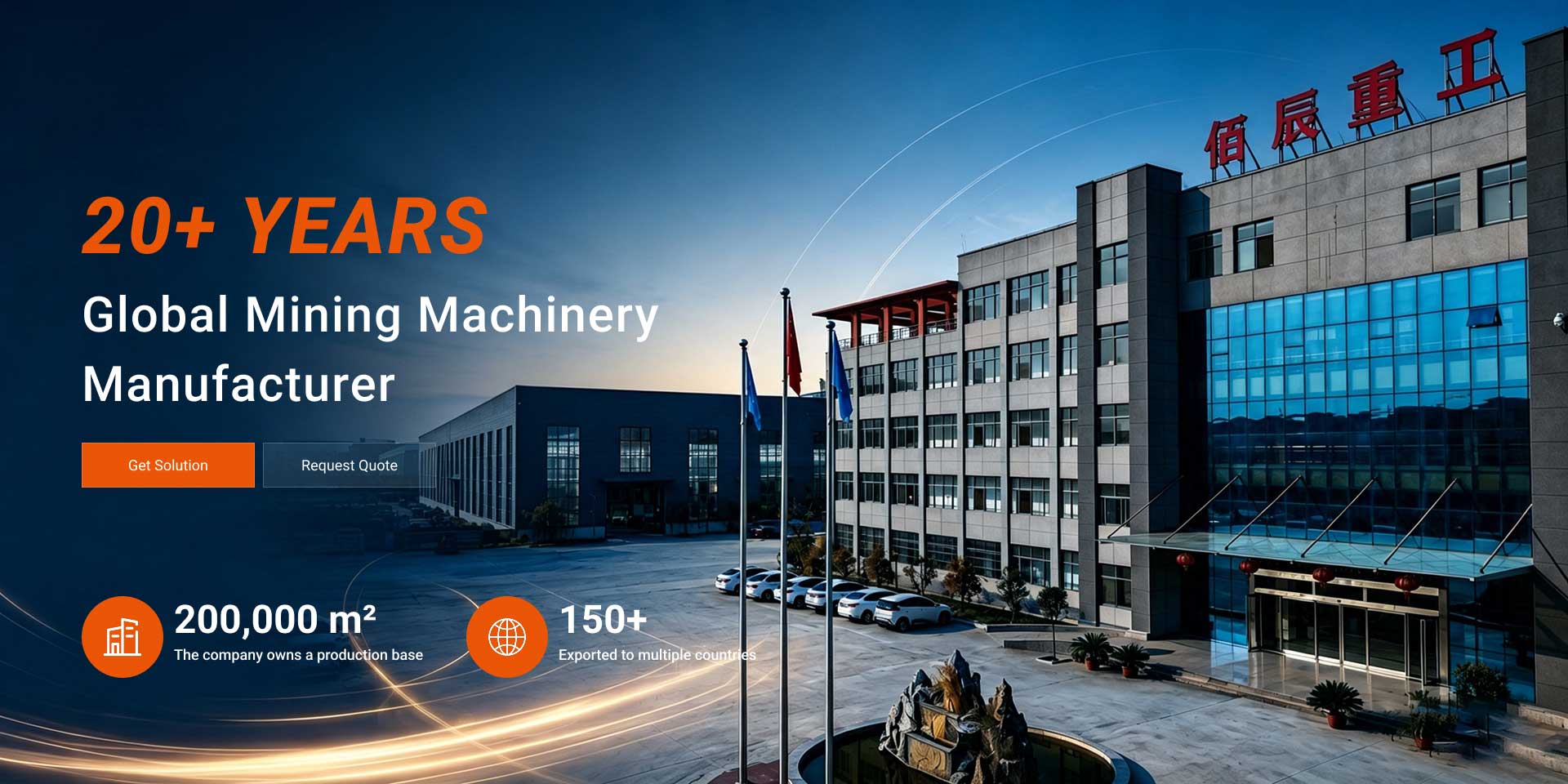
Baichy Heavy Industry
Baichy Heavy Industry is a high-tech mining equipment company integrating R&D, manufacturing, sales, and after-sales service. Focusing on crushing, grinding, and mineral processing equipment, we provide professional solutions to our customers. We are ISO9001:2015 、certified, and our products include mobile crushing palnts, crawler crushing plant, construction waste crushing plants, jaw crushers, sand making machines, cone crushers, fine crushers, grinding mills, ball mills, etc., all with reliable performance to meet diverse project needs.
Baichy Heavy Industry – Your Trusted Partner
To ensure optimal performance of your equipment, Baichy Heavy Industry offers:
- Professional on-site installation guidance
- Comprehensive operator training
- 24/7 technical support & maintenance services
Our complete after-sales service system guarantees long-term, stable operation of your machinery with minimal downtime.
Protect Your Rights – Only Use Official Channels
To avoid scams and ensure authentic support, contact us exclusively through:
• Official Website: www.baichychina.com
• WhatsApp: +8615093222637
• Email: [email protected]
Your satisfaction is our priority – expect prompt, professional service every time.
(Note: Beware of unauthorized third parties claiming to represent Baichy. Always verify through official contacts.)