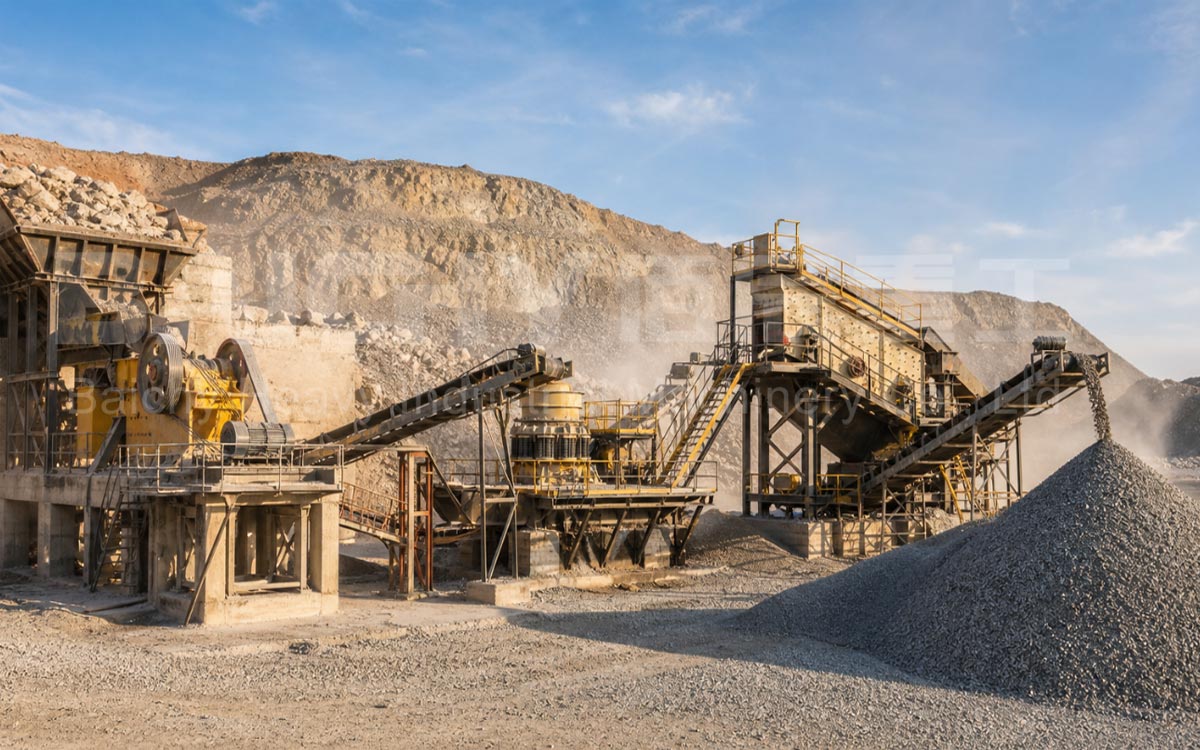
Mining Crushing Solutions
A proper mining crushing solution is not merely a random assortment of crushers; rather, it is a system engineered—starting with ore characteristics and target particle sizes—to integrate feeding, crushing, screening, grinding, and beneficiation into a production line that minimizes cost-per-ton and accelerates time-to-production. Baichy (Baichen Heavy Industry) has specialized in this field for over a decade, offering end-to-end solutions with capacities ranging from 50 to 800 t/h. Our key differentiator is a data-driven approach: nominal vs. actual capacity, power consumption per ton, and wear-part lifespan are all transparent, making the return on investment both calculable and verifiable.
I. What is a mining crushing solution?
A comprehensive solution refers to a systems engineering project—rather than the sale of inpidual machines—that involves the integrated design and equipment configuration of crushing, screening, grinding, beneficiation, and auxiliary conveying systems tailored to specific ore types (e.g., iron, gold, copper, limestone, granite) and production goals (e.g., aggregates, fine powders, concentrates). A complete production line comprises at least four stages:
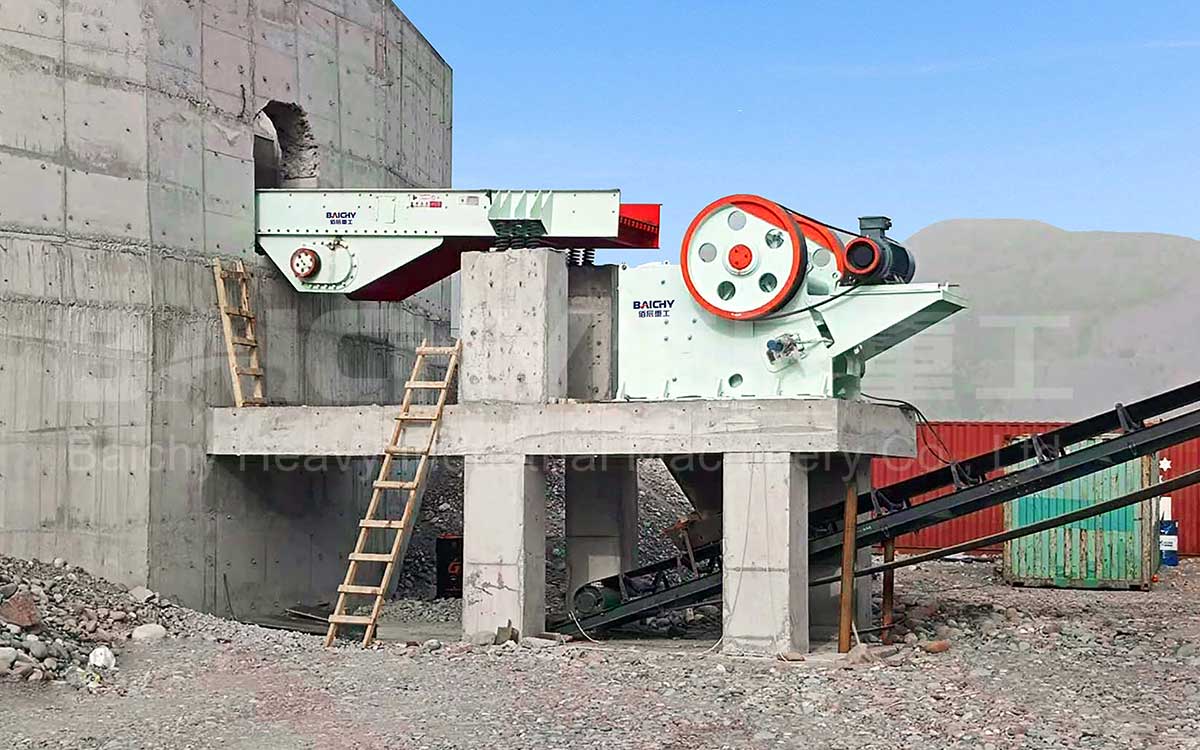
• Primary Crushing Stage: Jaw crusher or gyratory crusher, handling the initial reduction of run-of-mine ore (500mm+);
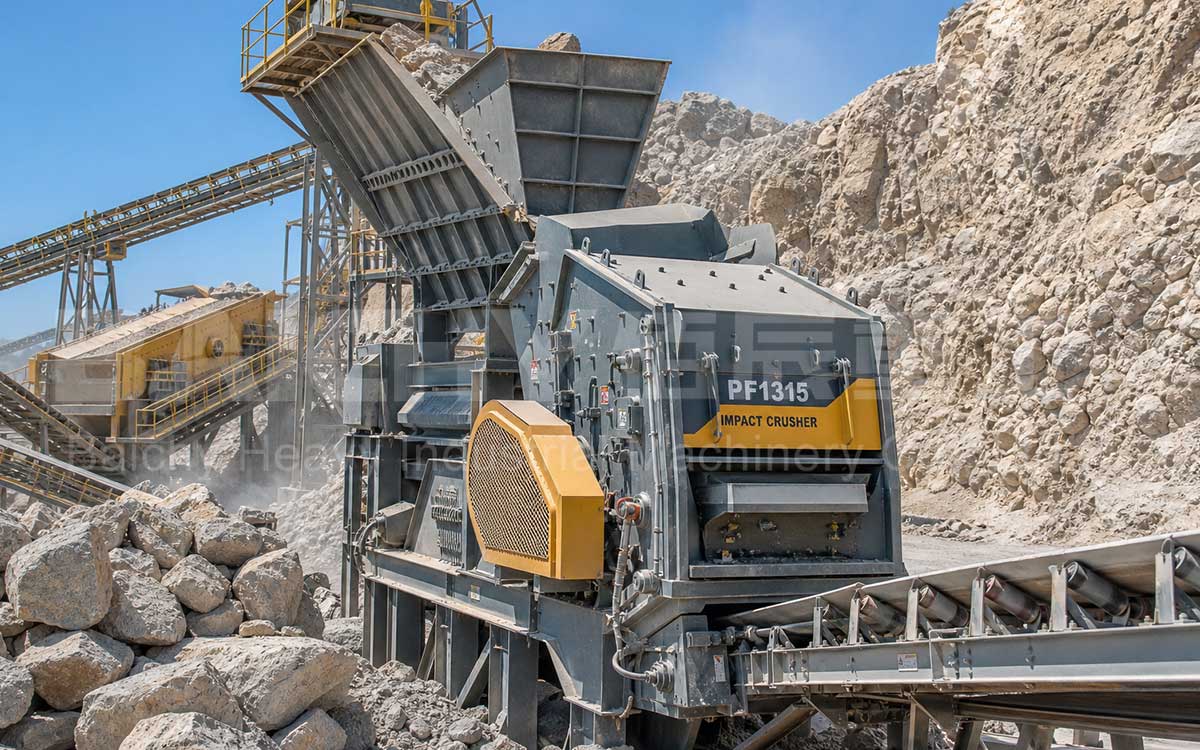
• Secondary/Tertiary Crushing Stage: Cone crusher (for hard rock) or impact crusher (for medium-to-soft rock) to control the shape of the finished product;
• Screening & Sand Making Stage: Vibrating screens for classification combined with a VSI sand-making machine for shaping, producing multiple grades of compliant aggregate;
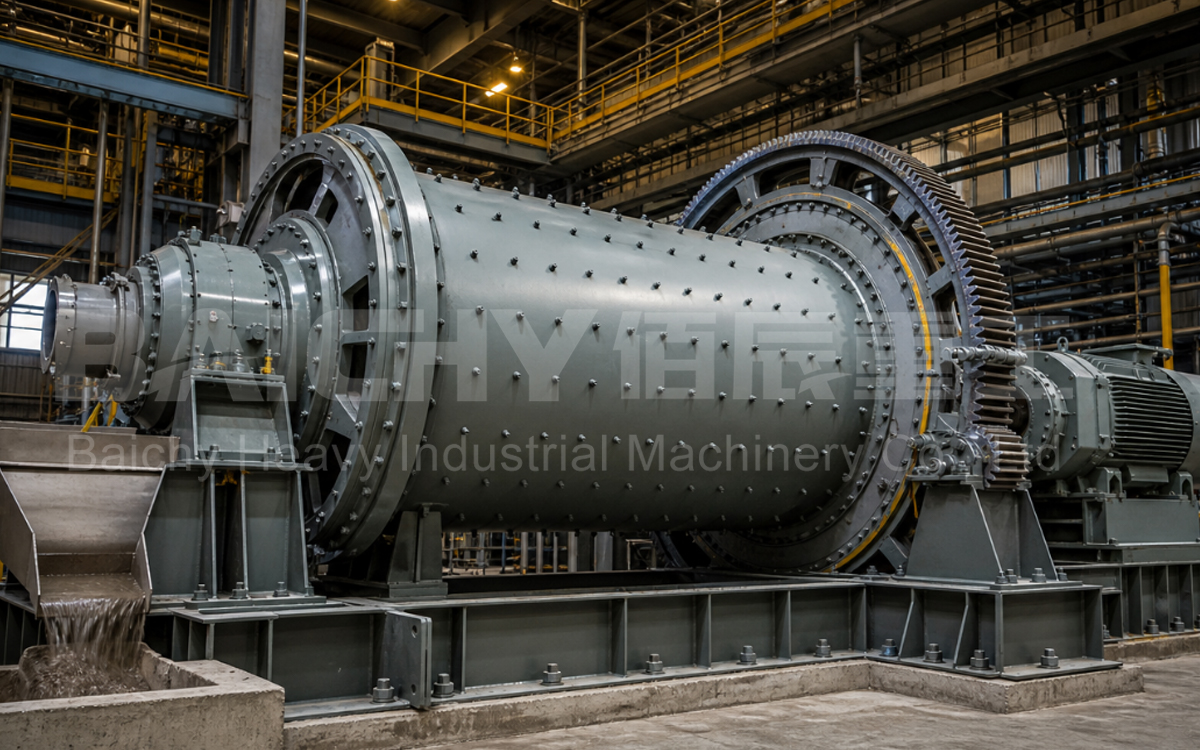
• Grinding & Beneficiation Stage: Ball mill, classifier, and flotation/magnetic separator to grind material to the required separation fineness and concentrate the ore.
Compared to purchasing inpidual machines, an integrated solution offers three key advantages: precise capacity matching across stages to eliminate wasted capital or bottlenecks; unified spare parts, electrical controls, and after-sales support for faster downtime response; and pre-commissioned process parameters, allowing for immediate operation upon arrival at the site.
II. Typical Application Scenarios
2.1 Metal Ores: Crushing and Grinding for Iron, Gold, and Copper
Metal ores are characterized by high hardness and strict requirements regarding particle fineness. The mainstream process flow is: "Jaw crushing (primary) → Cone crushing (secondary/tertiary) → Closed-circuit screening → Ball mill grinding → Beneficiation." Taking the gold CIL (Carbon-in-Leach) process as an example, the grinding fineness requires over 85% of the material to pass through a 200-mesh screen; a capacity mismatch between the two grinding stages would directly reduce the mineral recovery rate.
2.2 Non-metallic minerals: Limestone, gypsum, and dolomite
These materials have low hardness but require high production capacity. A combination of "jaw crusher + impact crusher + Raymond mill/vertical mill" is commonly used; a single production line yields both aggregate and powder products, thereby diluting the cost per ton.
2.3 Construction aggregates and manufactured sand
For sand production from granite, basalt, or river pebbles, a closed-loop process—"jaw crusher + cone crusher/impact crusher + VSI shaping + sand washing and dewatering"—is employed, consistently keeping the content of flaky and elongated particles in the finished product below 8%.
2.4 Mobile and semi-mobile applications
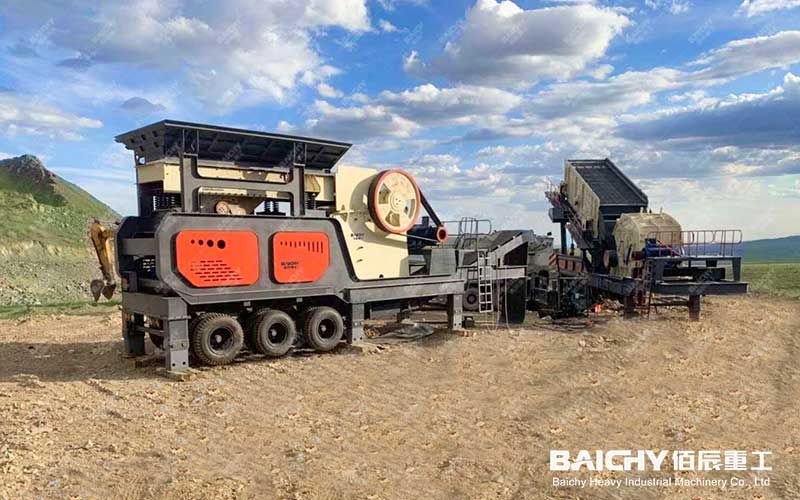
Mobile Crushing Station – Customer Site
For scenarios involving advancing mining faces or temporary stockpiles with short lifecycles, tracked or wheeled mobile crushing stations are selected. This reduces relocation time from the weeks required for fixed lines to just two hours, significantly cutting secondary material handling costs.
III. Core Equipment Advantages and Selection Logic
3.1 Crushing stage: Hard rock processing capability and product particle shape
The PE series jaw crusher features a deep crushing chamber design, accommodating a maximum feed size of over 500mm. The CS series cone crusher utilizes inter-particle (lamination) crushing, resulting in low flaky/elongated particle content and minimal fines; when processing highly abrasive materials, the service life of wear parts can exceed 3,000 hours (depending on operating conditions).
3.2 Grinding stage: Superior energy efficiency and fineness control
An overflow-type wet ball mill paired with a classifier forms a closed-circuit grinding system. Compared to open-circuit grinding, this reduces specific energy consumption by 15–20% and minimizes fluctuations in fineness, directly boosting mineral recovery rates—a mere 1% increase in recovery can boost the annual revenue of a gold mining client by tens to hundreds of thousands of yuan.
3.3 Solution-Level Advantages: Rapid Commissioning and Localization
Modular design reduces the installation period by approximately 30%; the entire production line can be customized to local power standards (e.g., 400V/50Hz, 380V/60Hz), eliminating the need for electrical retrofitting costs; and detailed CAPEX/OPEX estimates—including civil engineering guidance—are provided.
Main Equipment Selection Parameters
| Equipment Type | Representative Model | Feed Size | Processing Capacity | Main Motor Power | Application Stage |
| Jaw Crusher | PE600×900 | ≤500mm | 90–180 t/h | 55–75kW | Primary Crushing |
| Cone Crusher | CS160 | ≤230mm | 100–200 t/h | 160kW | Secondary/Fine Crushing (Hard Rock) |
| Impact Crusher | PF1214 | ≤350mm | 80–160 t/h | 132kW | Secondary/Fine Crushing (Medium-Soft Rock) |
| VSI Sand Maker | VSI-9526 | ≤45mm | 120–380 t/h | 2×160–200kW | Shaping & Sand Making |
| Overflow Wet Ball Mill | MQY1500×3000 | ≤25mm | 2–8 t/h | 90kW | Grinding |
*Note: Capacity figures are based on limestone (bulk density 1.6 t/m³); for hard materials such as iron ore or basalt, a conversion factor of 0.7–0.85 should be applied when assessing production line compatibility.*
3.4 Three Perspectives for Evaluating Solution Cost-Effectiveness
First, the cost-per-ton perspective: factoring depreciation, power consumption, wear parts, and labor into the cost of each ton of finished product to compare the total lifecycle cost over 3–5 years. Second, the actual capacity perspective: distinguishing between nominal and operational capacity to avoid inflated equipment selection. Third, the downtime risk perspective: local availability of critical spare parts and response times often impact actual profitability more significantly than the unit price itself. IV. Relevant Case Studies
Southeast Asia Granite 150 t/h Stationary Line: PE600×900 + PF1214 combination producing four aggregate sizes; achieved design capacity within six months of commissioning, with electricity consumption per ton approximately 12% lower than similar lines in the region.
Chile Mobile Jaw Crushing Station: Frequent site relocations; the YDPZ tracked mobile station enables relocation within two hours, reducing secondary transport costs by approximately 30%.
Philippines River Stone C90 Stationary Line: Closed-circuit processing of highly abrasive river pebbles using a jaw crusher and cone crusher; wear part replacement intervals were extended by 20% beyond expectations.
V. Recommended Equipment Combinations
| Application Scenario | Recommended Combination |
| 50–150 t/h Hard Rock Crushing Line | PE Jaw Crusher + CS Cone Crusher + Vibrating Screen |
| 100–200 t/h Aggregate Line | PE Jaw Crusher + PF Impact Crusher + VSI (Shaping) |
| Gold Mine CIL Processing Plant | PE Jaw Crusher + Cone Crusher + Ball Mill + Classifier + Flotation Machine/CIL System |
| Mobile Stockyards & Infrastructure Projects | YDPZ Wheeled/Tracked Mobile Crushing Station |
VI. Frequently Asked Questions (FAQ)
Q1: What is the approximate investment required for a mining crushing production line?
It depends on the ore type, production capacity, and civil engineering conditions. Taking a 100 t/h granite stationary line as an example, the investment for core equipment typically ranges from RMB 800,000 to 2,000,000. Baichy can provide detailed CAPEX/OPEX estimates—including guidance on civil works—to help you make data-driven decisions regarding whether to purchase inpidual machines or a complete production line.
Q2: How do I select crushing equipment based on ore hardness?
For materials with a Mohs hardness of ≥7 (e.g., granite, basalt, iron ore), a "jaw crusher + cone crusher" setup is preferred to minimize wear-part costs; for a Mohs hardness of 3–6 (e.g., limestone, gypsum, dolomite), a "jaw crusher + impact crusher" combination is a viable option, offering high product yield and excellent particle shape; for brittle materials (e.g., coal, coke), hammer crushers or double-roll crushers are more economical.
Q3: How do I choose between a mobile crushing station and a stationary production line?
Choose a mobile station if mineral sources are scattered or frequent site relocation is required; choose a stationary line for fixed mineral sources and long-term, stable production, as this offers a lower cost per ton. A hybrid approach—combining mobile primary crushing with stationary secondary and tertiary crushing—is also an option.