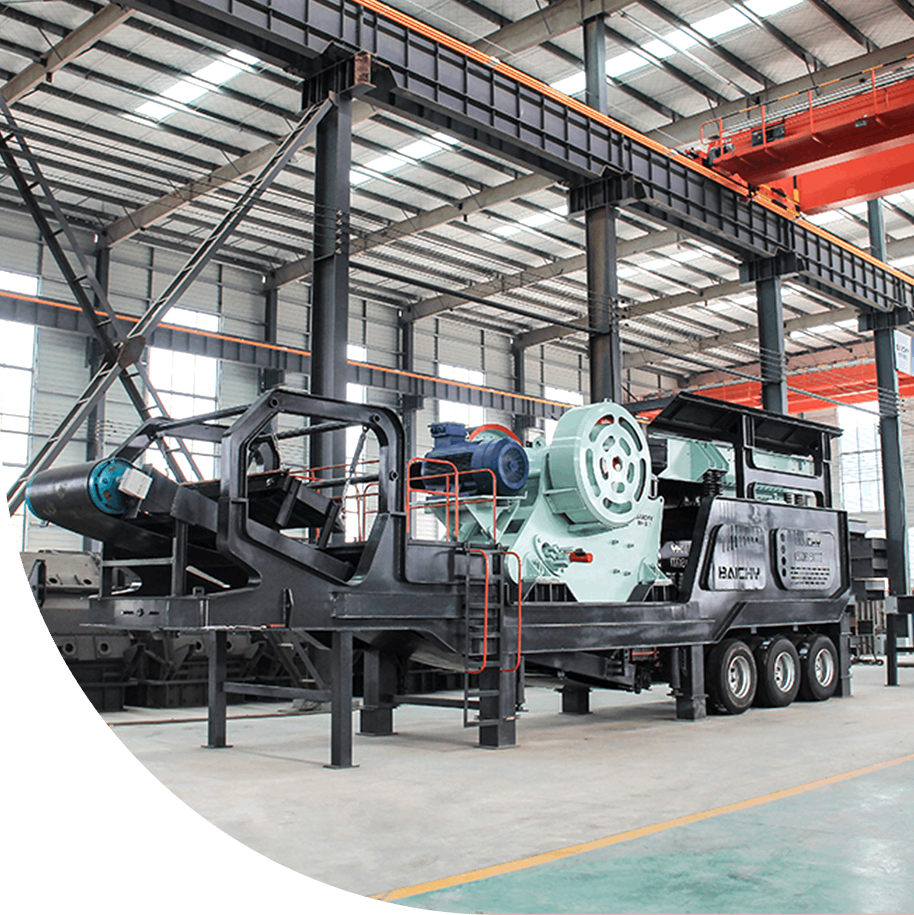


Hammer Crusher for Gold Mining
While the hammer crusher is not a universal solution for all gold ores, it represents the most cost-effective crushing choice for small-scale gold mining (ASGM) operations and processing lines handling oxidized ore. A single PC-series hammer crusher can reduce run-of-mine ore (100–120 mm) to ≤15 mm in one pass, producing feed material suitable for immediate processing in ball mills or wet pan mills; this eliminates the need for secondary crushing and screening stages, with a capital cost for the main unit that is roughly one-third of a two-stage "jaw crusher plus cone crusher" setup. This configuration is being widely adopted in markets such as Sudan, Zimbabwe, and Mongolia—not because the hammer crusher is inherently superior in raw power, but because it excels across three key dimensions: low investment, rapid commissioning, and ease of maintenance. The sole exception is high-silica quartz vein gold ore; such high-hardness ore causes rapid hammer wear that erodes profits, making a jaw crusher and cone crusher combination the better choice. Assessing ore hardness before selecting equipment is the fundamental rule of gold ore crushing.
1. Overview: The Role of Hammer Crushers in the Gold Processing Workflow
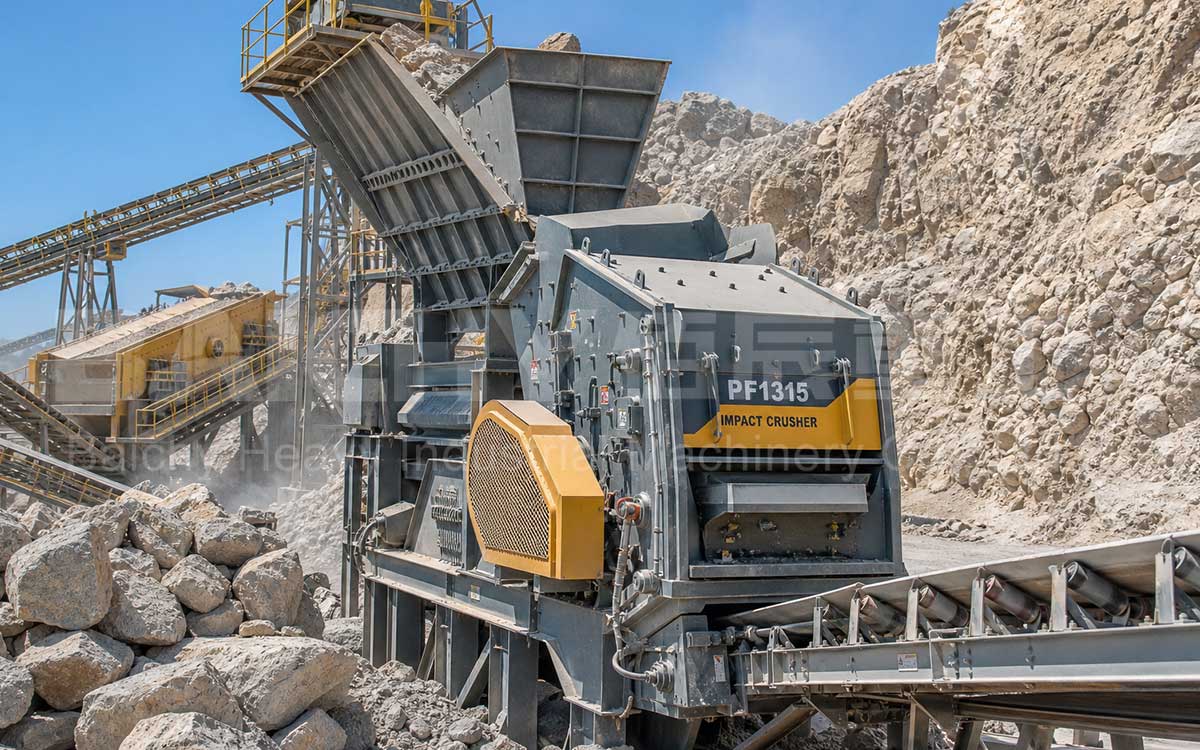
The standard gold beneficiation process follows the sequence of "crushing → grinding → separation": run-of-mine ore is first crushed to the required feed size, then ground in a ball mill or wet pan mill to liberate gold particles, and finally recovered through gravity separation, amalgamation, or cyanidation. In this processing chain, the hammer crusher handles the medium-to-fine crushing stage. It utilizes high-speed rotating hammers to deliver impact force to the ore; once shattered, the material is discharged through bottom grate bars. This single-stage impact crushing replaces the traditional two-stage equipment setup:
• Crushing ratio of 10–25: It can reduce the output from a jaw crusher (≤100–120 mm) directly to ≤15 mm, eliminating the need for a secondary crusher or intermediate screening equipment;
• Adjustable output size: By adjusting the gap between the bottom grate bars, the output size can be controlled within the 5–15 mm range, flexibly meeting the feed requirements of various downstream grinding units;
• Simple structure: It requires no hydraulic systems or lubrication stations, consisting primarily of three main components—the rotor, hammers, and grate bars. A single worker can handle daily maintenance even in remote mining areas, and spare parts procurement is straightforward.
For mining sites processing 5–50 tons per day, the value of the hammer crusher in gold mining lies in its "two-in-one" capability: it minimizes investment and footprint in the crushing stage, allowing more capital to be allocated to grinding and gold extraction—the stages that generate direct output. Equipment selection requires answering only three questions—ore hardness, target fineness, and daily throughput—leaving the rest to the technical specifications.
Compared to a "jaw crusher plus impact crusher" two-stage setup, the single-unit hammer crusher falls short only in terms of wear-related cost-efficiency when processing very hard materials; however, when processing oxidized ores, it actually delivers superior output uniformity and better compatibility with grinding mill feed requirements. This explains why hammer crushers dominate the crushing stage in the global Artisanal and Small-Scale Gold Mining (ASGM) market—equipment selection is driven by cost-per-ton rather than equipment "class." For mining sites with a budget under $30,000, the hammer crusher solution is virtually the only option that simultaneously satisfies requirements regarding investment cost, speed of deployment, and ease of maintenance.
In terms of operating principles, the crushing efficiency of a hammer crusher depends on three variables: rotor tip speed, the number of hammers, and the grate bar gap. Higher rotor tip speeds result in greater impact energy but also accelerate wear; for gold mining applications, the rotor tip speed is ideally controlled within the 25–35 m/s range to strike a balance between crushing efficiency and hammer lifespan. The grate bar gap serves as the most direct control for adjusting discharge particle size and is key to balancing production capacity against product fineness. Furthermore, hammer crushers offer greater tolerance for feed size variations compared to cone crushers: they can handle maximum feed sizes up to 60%–80% of the rotor diameter. Even if the preceding jaw crusher allows oversized rocks to pass through, the hammer crusher avoids chamber jamming or stalling—providing a crucial safety net for small-scale operations with less rigorous management.
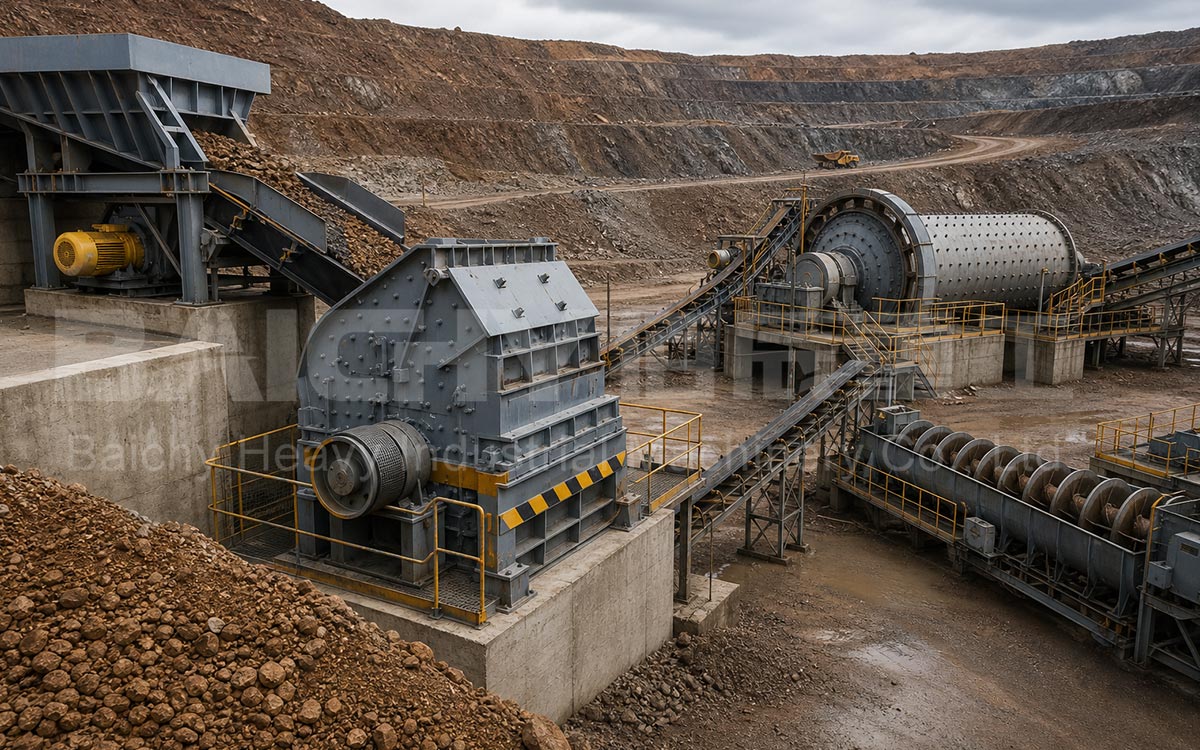
Hammer Crusher for Gold Mining
2. Application Scenarios: Four Typical Gold Mining Conditions
2.1 ASGM (Artisanal and Small-Scale Gold Mining) Sites (Africa, Central Asia, South America)
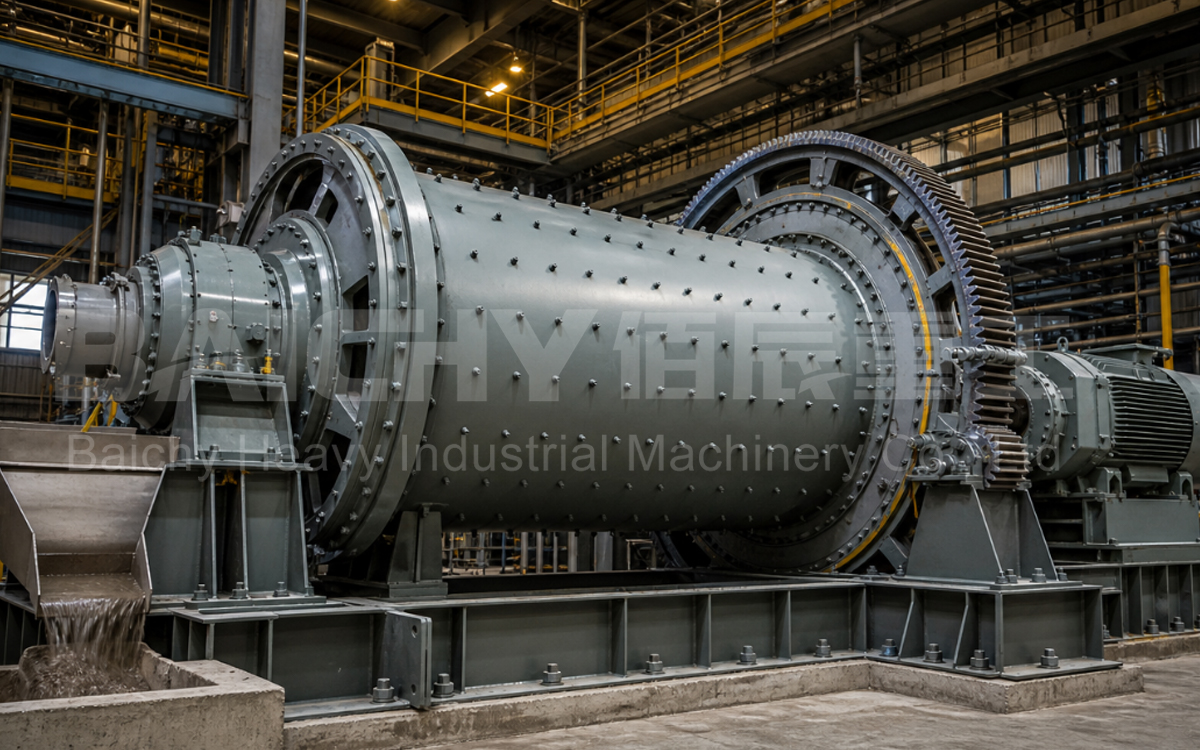
ASGM sites in regions such as Sudan, Zimbabwe, Ghana, and Tanzania commonly employ a classic three-stage configuration: jaw crusher, hammer crusher, and wet gold grinding mill. These sites often lack grid power, operate on limited budgets, and require rapid commissioning; consequently, the advantages of hammer crushers—specifically low investment costs and minimal maintenance—are fully leveraged. Sudan’s gold production reached 70 tonnes in 2025, with ASGM contributing approximately 91.5%, making it one of the world's most concentrated markets for hammer crusher applications; similarly, crushing lines in Zimbabwe typically feature a "jaw crusher + hammer crusher + ball mill" setup. For African mine owners, a 22 kW PC600×400 hammer crusher—which can be powered by a diesel generator—offers the fastest route to operation: delivery and installation on day one, with production commencing within three days. Such sites typically start with a capacity of 8–10 tonnes per day using the PC600×400 model; when expanding, a second unit of the same model can simply be installed in parallel to double capacity without the need to replace the main equipment or rebuild foundations. Similar mining sites are prevalent in Central Asian countries like Kyrgyzstan and Tajikistan, as well as in South American nations such as Colombia and Peru. These sites typically feature arid climates and ore bodies dominated by oxidized ore; the "hammer crusher plus ball mill" configuration has been repeatedly proven effective in these regions. A common challenge at these sites is the limited skill level of operators; the "simple-in, simple-out" (plug-and-play) logic of hammer crushers makes them more popular among mine owners than cone crushers.
2.2 Oxidized and Weathered Ores
Weathered-crust gold deposits and oxidized gold ores—characterized by low hardness (Mohs scale 3–5) and high clay content—represent the ideal operating conditions for hammer crushers. These machines offer high reduction ratios and high fines generation rates while maintaining minimal hammer wear; a single set of hammers can operate for 800–1,200 hours, keeping wear-part costs to $0.02–0.05 per ton. Many lateritic gold deposits in Southeast Asia, West Africa, and Latin America fall into this category, making hammer crushers the almost undisputed choice for the crushing stage. During the rainy season, moisture content is a critical factor; high clay content in oxidized ore can lead to moisture levels of 10%–15%. To prevent machine clogging caused by fine material sticking to the grate bars, it is advisable to install a pre-screening unit at the feed end or use a configuration with wider grate bar spacing. Increasing the grate bar gap by 2–3 mm before the rainy season to accommodate wet material—and reverting to the original setting afterward—is the most cost-effective seasonal maintenance strategy.
2.3 Tailings Retreatment
Projects involving the recovery of fine gold from old tailings ponds often utilize material that is already close to the required mill feed size. Small hammer crushers (e.g., PC400×300 or PC600×400 models) are used to break up agglomerates and adjust particle size before the material enters the mill; this approach requires low investment and yields quick results. Such projects are commonly found near older mining areas in South Africa and Ghana, where the recovery of fine gold generates stable cash flow, and the equipment payback period is typically less than three months. Another value proposition of tailings reprocessing lies in the cost structure: since the material has already undergone primary crushing, hammer wear is minimal, and electricity consumption is approximately 0.5–0.8 kWh per tonne—representing one of the lowest processing costs per tonne across the entire mining operation.
2.4 Secondary Fine Crushing of Hard-Rock Gold Ore (Scenarios Requiring Caution)
Standard hammer crushers are not recommended for dense quartz veins or silicified gold ores (Mohs hardness of 6.5–7); the cost of hammer wear parts can exceed $0.15 per tonne, and fine gold particles are prone to loss due to over-pulverization. For such materials, a "jaw crusher plus cone crusher" combination is preferable. Alternatively, a PCK reversible hammer crusher equipped with high-chromium alloy hammers could be selected, provided the cost per tonne is recalculated with a focus on wear-part economics. If a hammer crusher is used for these materials despite the drawbacks, high-chromium alloy hammers, thickened liners, and closely spaced grate bars should be specified as standard; furthermore, a cap on wear-part costs per tonne should be stipulated in the contract to mitigate risks during the equipment selection phase.
IV. Core Specifications: PC Series Hammer Crusher (Gold Ore Application)
| Model | Rotor Diameter × Length | Feed Size | Output Size (Adjustable) | Processing Capacity (Limestone Basis) | Gold Ore Application Conversion | Motor Power | Total Weight |
|---|---|---|---|---|---|---|---|
| PC400×300 | φ400×300 | ≤100 mm | 5–15 mm | 5–10 t/h | 3–6 t/h | 11 kW | 0.8 t |
| PC600×400 | φ600×400 | ≤120 mm | 5–15 mm | 10–22 t/h | 6–14 t/h | 22 kW | 1.5 t |
| PC800×600 | φ800×600 | ≤120 mm | 5–15 mm | 20–45 t/h | 12–30 t/h | 55 kW | 4.2 t |
| PC1000×800 | φ1000×800 | ≤150 mm | 10–20 mm | 40–80 t/h | 25–55 t/h | 110 kW | 7.0 t |
| PC1000×1000 | φ1000×1000 | ≤150 mm | 10–20 mm | 50–90 t/h | 30–60 t/h | 132 kW | 9.0 t |
| PC1250×1250 | φ1250×1250 | ≤200 mm | 10–20 mm | 90–130 t/h | 55–90 t/h | 220 kW | 15 t |
Capacity Conversion Note: Listed capacities are based on limestone (density approx. 1.6 t/m³). Gold ore has a density of 2.6–2.7 t/m³ and relatively high hardness; actual processing capacity is calculated by applying a factor of 0.5–0.7 (using the upper limit for oxidized ore and the lower limit for quartz vein ore). Please provide the ore's Mohs hardness and maximum feed particle size when inquiring to ensure accurate estimates of capacity and hammer lifespan.
Quick selection based on throughput: 8–10 tons/day → PC600×400; 20–30 tons/day → PC800×600; over 50 tons/day → PC1000×800 or PC1000×1000. It is advisable to allow a 20% capacity margin to avoid downstream processing bottlenecks after commissioning.
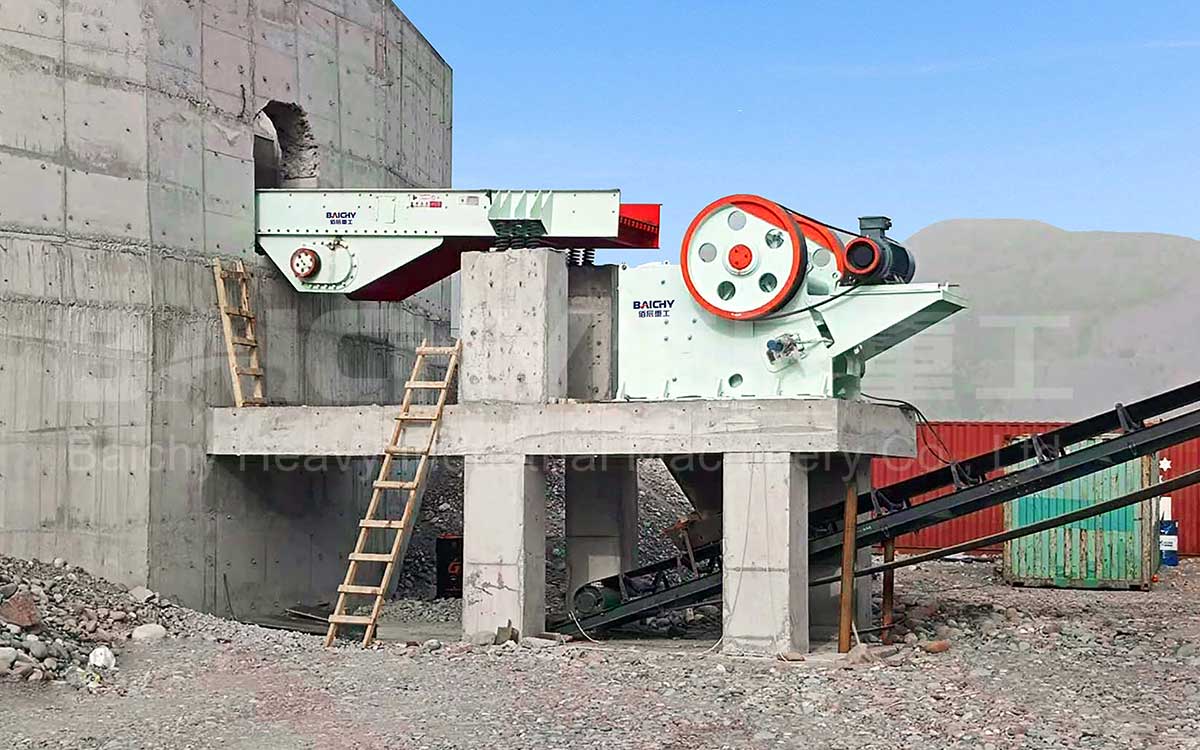
Equipment tips: Install a ZSW vibrating feeder at the inlet to ensure uniform feeding, which significantly reduces uneven hammer wear; if the material contains iron, a suspended magnetic separator is recommended upstream to prevent iron objects from entering the crushing chamber and damaging the grate bars; ensure sufficient maintenance space beneath the discharge conveyor, as replacing the grate bars takes approximately 40 minutes per operation.
V. Equipment Advantages and Benefits
| Advantage | Specifications/Facts | Benefit to Mine Owner |
|---|---|---|
| Single-stage medium & fine crushing | Crushing ratio: 10–25; output size ≤15mm | Eliminates the need for a secondary crusher and screen; reduces production line footprint by ~40% |
| Low investment threshold | PC600×400 ex-factory price: ~$6,000–9,000 | Saves ~2/3 of the cost compared to a ~$25,000 two-stage setup (jaw crusher + impact crusher) |
| Direct mill feed | Adjustable output size: 5–15mm | No extra pre-screening needed for ball mills or wet gold grinding mills; shortens the process chain |
| Double-sided hammers | Hammers are reversible | Doubles the lifespan of a single set of hammers; reduces annual wear-part costs by ~40% |
| Minimal maintenance | No hydraulic system; consists of three main components: rotor, hammers, and grate bars | Maintainable by on-site general mechanics; no need to hire external engineers |
| Power compatibility | Options for 380V/50Hz or 440V/60Hz | Compatible with power grids in target markets like Sudan, Zimbabwe, and Mongolia |
VI. Real-world Case Study
Case 1: ASGM Mine Site in Sudan — PC600×400 + 1100 Wet Gold Grinding Mill
An oxidized gold mine site in River Nile State; ore grade: 2–4 g/t; daily processing capacity: 8–10 tons. Configuration: ZSW vibrating feeder → PE250×400 jaw crusher (primary crushing to ≤50mm) → PC600×400 hammer crusher (output ≤15mm) → 1100 wet gold grinding mill for gold extraction. The investment for the complete set of main machinery is approximately 12,000–18,000; the total installed power of 22kW + 5.5kW is supplied by a diesel generator. Based on a gold price of 80/g and a daily recovery of 15–25g of raw gold, the equipment investment can be recouped within approximately 6–8 weeks of the site commencing production. With Sudan's 2025 gold output exceeding 70 tonnes—of which ASGM (Artisanal and Small-Scale Gold Mining) accounts for 91.5%—the "jaw crusher + hammer crusher + grinding mill" setup is a mainstream combination proven in the local market. The site later purchased an additional hammer crusher of the same model for parallel expansion, demonstrating the flexibility of the hammer crusher solution for "on-demand capacity scaling": production capacity was directly doubled without altering foundations or replacing existing main machinery. Based on an amalgamation recovery rate of 60%–80%, adding a shaking table to recover fine gold from tailings could further boost the total recovery rate by 5–8 percentage points—a common method used by Sudanese mine owners to enhance gold recovery efficiency.
Case Study 2: Small-scale gold mine in Mongolia—PC1000×800 large-scale production line
A small-scale gold mine in Mongolia with a daily processing capacity of 50 tonnes utilizes a PC1000×800 hammer crusher in conjunction with an 1830×4500 ball mill and a spiral classifier. To address local operating conditions involving extreme cold (down to -30°C), the motors are equipped with heating belts for thermal insulation, and low-temperature grease is used for drive components; continuous winter production has been achieved with no recorded instances of equipment freezing. This case study demonstrates that hammer crushers are not limited to small-scale mining operations; provided that wear-resistant components are properly selected and cold-weather adaptability is fully addressed, they are equally suitable for large-scale gold mines. The mine maintains two sets of spare hammers and grate bars, scheduling replacements during the off-season to keep annual planned downtime under 15 days. To prevent damage from low-temperature impact loads during extreme winter cold, the startup procedure involves idling the machine for 10 minutes to warm it up before feeding material. Annual inspection data indicates that the cost of wear parts—such as hammers and grate bars—accounts for only about 3% of total annual operating costs, far lower than the 6%–8% range associated with cone crusher setups of similar capacity.
VII. Selection Boundaries
When Not to Choose a Hammer CrusherObjective equipment selection advice must include "exclusion criteria" to avoid costly rework after the plant goes into operation:
High-silica quartz vein gold ore (Mohs hardness ≥6.5): Hammer wear is excessive, pushing wear-part costs above $0.15 per ton; a jaw crusher combined with a cone crusher should be selected instead.
Clayey gold ore with >15% moisture content: Wet material causes clogging of the grate bars; a PCK reversible hammer crusher should be used, or the ore must be dried first.
Coarse crushing scenarios requiring a product size ≥50mm: Hammer crushers are designed for fine crushing; coarse crushing should be handled by jaw crushers.
Gold ore sensitive to over-crushing: Impact crushing by hammer crushers generates significant fines; if the downstream gravity separation process relies on recovering coarse gold particles, the risk of fine gold loss must be assessed first, and compression-type crushing equipment should be used if necessary.
Regardless of the chosen solution, it is recommended to submit 5–10 kg of representative ore samples for crushing tests prior to signing a contract, replacing empirical estimates with actual measured data—this is the most cost-effective way to avoid selection errors. Once the equipment is selected, request three key technical parameters from the manufacturer—installed power, foundation load, and transport dimensions—for use in site foundation construction and container logistics planning; for small-scale mining operations, the most common rework issues arise during the foundation and logistics stages, rather than with the equipment itself.
VIII. Recommended Equipment
A gold-mining hammer crusher is not a standalone unit; it only delivers value when integrated into the complete "crushing–grinding–gold extraction" process chain. The following is the standard equipment configuration for a gold processing line:
| Ore Type | Mohs Hardness | Lifespan (Single Set) | Wear-part Cost per Ton |
|---|---|---|---|
| Oxidized/Weathered Ore | 3–5 | 800–1,200 hours | $0.02–0.05 |
| Medium-hardness Altered Rock | 5–6 | 400–600 hours | $0.05–0.10 |
| Quartz Vein/Silicified Rock | 6.5–7 | 150–250 hours | >$0.15 |
IX. FAQ
Q1: How do I choose between a hammer crusher and a jaw crusher for gold mining? Can gold-bearing quartzite be processed directly in a hammer crusher?
A: The decision hinges primarily on hardness and silica content. For oxidized ore, weathered ore, and altered rock (Mohs hardness < 5), choose a hammer crusher; it offers lower investment costs and good product granularity. For quartz veins and hard, high-silica rock (Mohs hardness 6.5–7), do not use a standard hammer crusher—hammer head wear costs can exceed $0.15 per ton; instead, opt for a two-stage "Jaw Crusher + Cone Crusher" configuration. There are only two main factors guiding the selection of gold ore crushing equipment: ore silica content and the target feed size for the grinding mill. When in doubt, sending a 5kg ore sample for hardness and crushing tests is the most cost-effective way to verify the choice.
Q2: How is the capacity of a hammer crusher calculated for gold mining applications? What parameters should be provided when inquiring with the manufacturer?
A: The rated capacity is based on limestone (density: 1.6 t/m³); since gold ore is denser (2.6–2.7 t/m³) and harder, the actual capacity should be calculated by applying a factor of 0.5–0.7. For example, the PC800×600 model processes 20–45 t/h of limestone but approximately 12–30 t/h of gold ore. To receive an accurate model recommendation and quotation, please provide the following five details: ore type and Mohs hardness, maximum feed size, target output size, daily/hourly processing capacity, and local voltage/frequency (e.g., 380V/50Hz or 440V/60Hz). If the ore has a high clay content, please also provide the moisture content so the manufacturer can assess whether to add a pre-screening unit or upgrade to a PCK reversible hammer crusher; additionally, please specify if a ZSW feeder and iron remover are required to ensure a comprehensive initial quote.
Q3: Can the hammer crusher's output go directly into a ball mill or wet gold grinding mill? How should the equipment be configured?
A: Yes, it can. Ball mills typically require a feed size of ≤15–25 mm, and wet gold grinding mills require ≤30 mm; the hammer crusher produces an output of 5–15 mm (adjustable via grate bars), which is suitable for direct feeding without intermediate screening. The standard configuration sequence is: ZSW feeder → Jaw crusher (primary crushing) → Hammer crusher (secondary/fine crushing) → Ball mill/wet gold grinding mill → Classification and gold recovery. The investment for the main equipment of an ASGM (Artisanal and Small-scale Gold Mining) line processing 8–10 tons per day is approximately $12,000–18,000. If capacity needs to expand to over 50 tons/day in the future, the hammer crusher can be upgraded to a PC1000×800 and the ball mill upsized accordingly, without needing to overhaul the entire process layout. If the mine site is at a high altitude, motor selection must account for altitude-related power derating; for an altitude of 4,000 meters, it is recommended to select the next higher power rating—please specify the altitude when making an inquiry.
Baichy Heavy Industry
Baichy Heavy Industry is a high-tech mining equipment company integrating R&D, manufacturing, sales, and after-sales service. Focusing on crushing, grinding, and mineral processing equipment, we provide professional solutions to our customers. We are ISO9001:2015 、certified, and our products include mobile crushing palnts, crawler crushing plant, construction waste crushing plants, jaw crushers, sand making machines, cone crushers, fine crushers, grinding mills, ball mills, etc., all with reliable performance to meet diverse project needs.
Baichy Heavy Industry – Your Trusted Partner
To ensure optimal performance of your equipment, Baichy Heavy Industry offers:
- Professional on-site installation guidance
- Comprehensive operator training
- 24/7 technical support & maintenance services
Our complete after-sales service system guarantees long-term, stable operation of your machinery with minimal downtime.
Protect Your Rights – Only Use Official Channels
To avoid scams and ensure authentic support, contact us exclusively through:
• Official Website: www.baichychina.com
• WhatsApp: +8615093222637
• Email: [email protected]
Your satisfaction is our priority – expect prompt, professional service every time.
(Note: Beware of unauthorized third parties claiming to represent Baichy. Always verify through official contacts.)