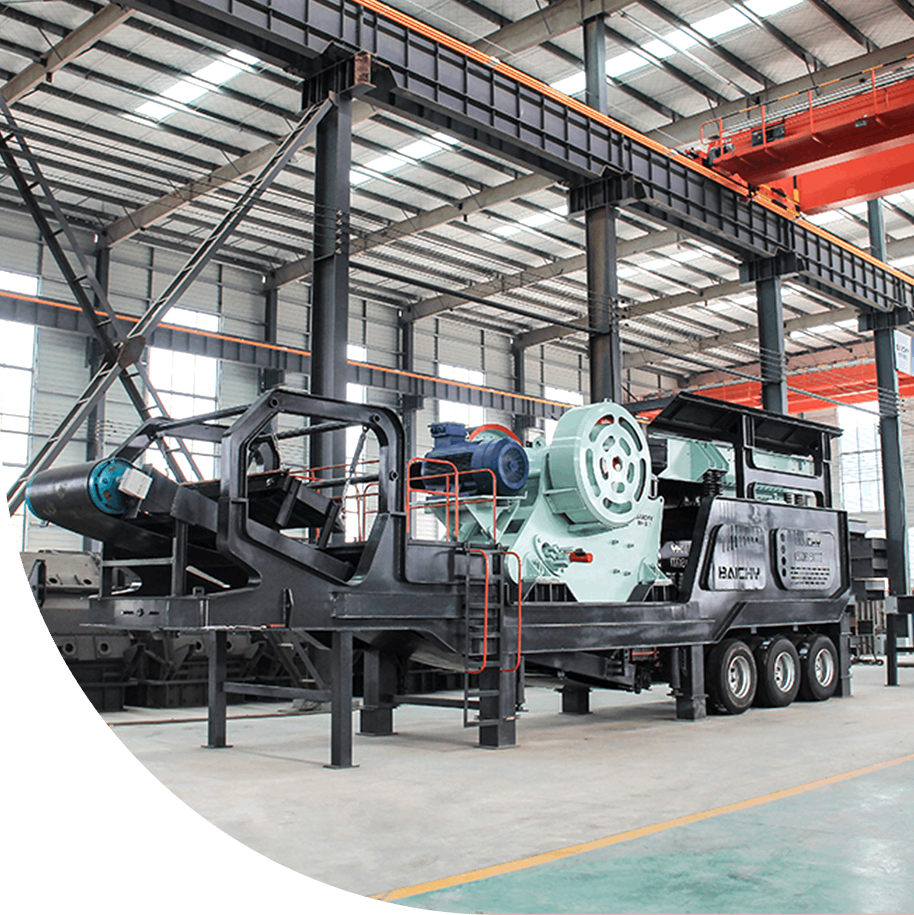

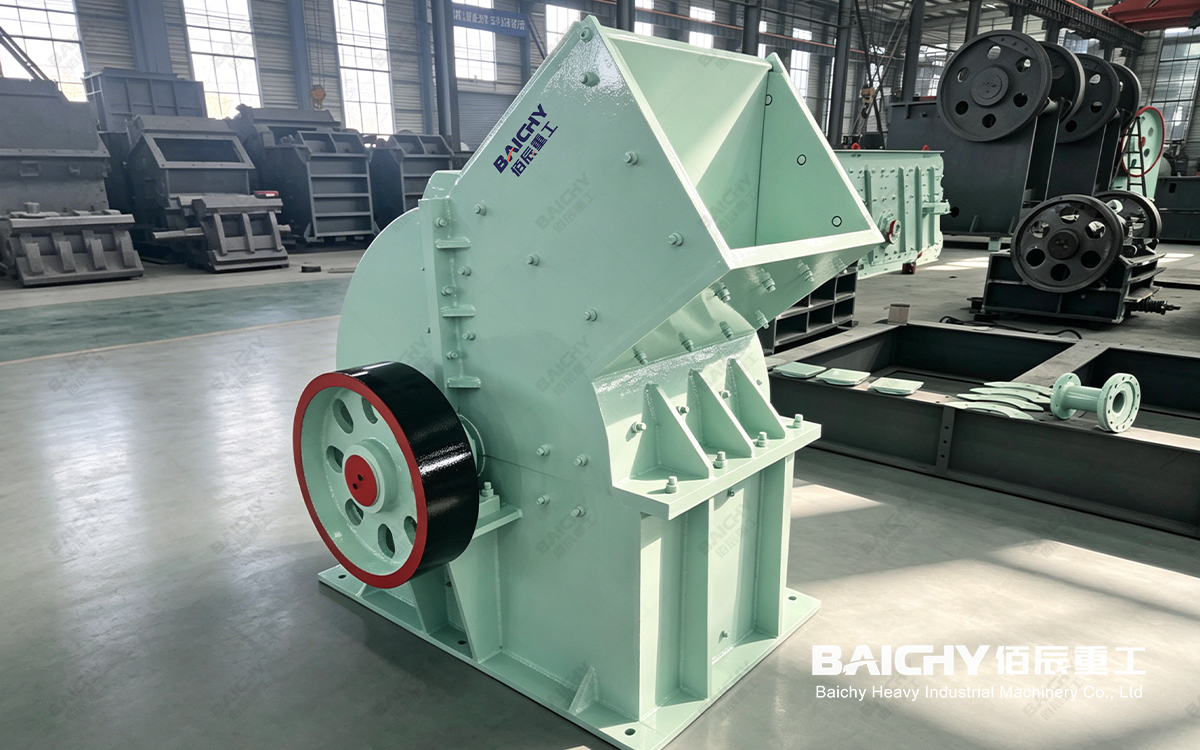
Gold Ore Hammer Crusher
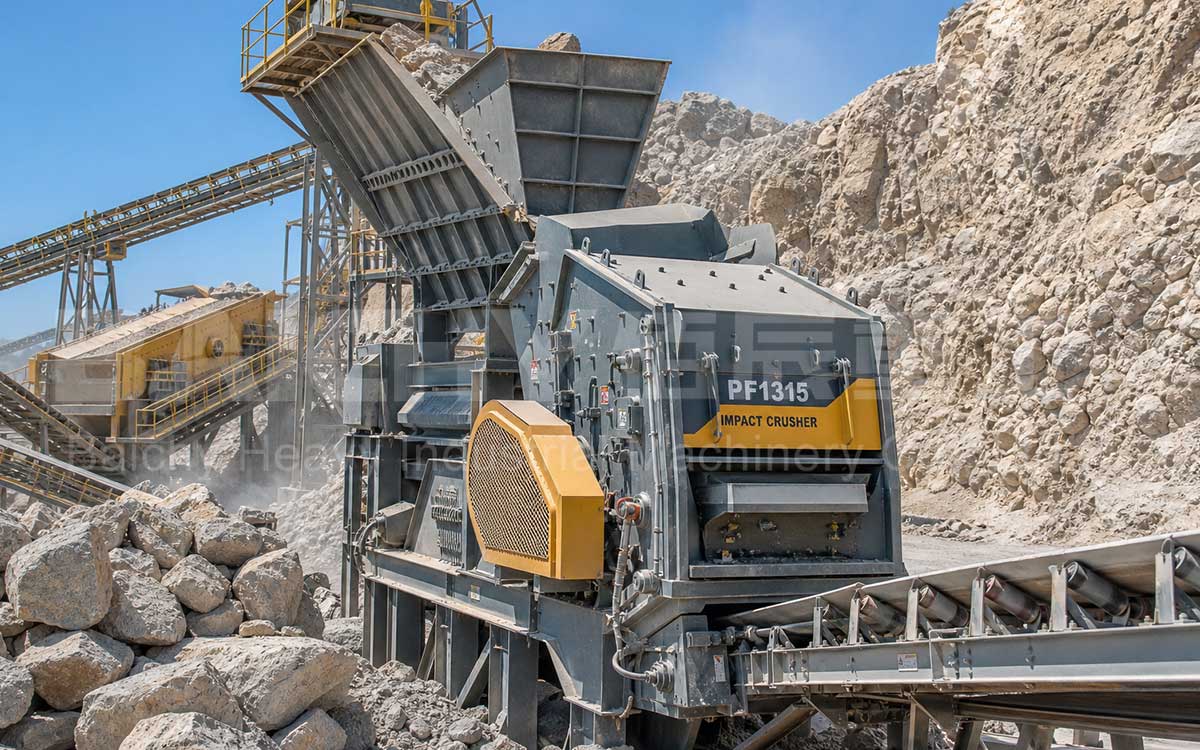
The gold ore hammer crusher is the medium-to-fine crushing equipment offering the lowest investment cost per ton and the fastest time-to-production for gold processing plants. A single unit can reduce coarse material (50–120 mm) discharged from a jaw crusher to ≤25 mm in one pass, making the product directly suitable for feeding into ball mills and wet gold grinding mills; this boosts grinding capacity by 25–35% and reduces electricity consumption per ton by approximately 30%. Baichy Heavy Industry is a specialized manufacturer of mining crushing, ore grinding, and mineral processing equipment; its PC series gold ore hammer crushers offer capacities ranging from 5 to 80 t/h and are operating reliably in gold mining projects across more than 80 countries.
I. Application Scenarios: Four Typical Gold Mining Conditions
1. Classic Production Lines for Small-Scale and Artisanal Gold Mining (ASGM)
ASGM sites in markets such as Sudan, Ghana, and Tanzania commonly employ a three-stage configuration: Jaw Crusher + Gold Ore Hammer Crusher + Wet Gold Grinding Mill. These sites often lack grid power and operate on limited budgets: the PC600×400 model requires only 22 kW and can be powered by a single 25–40 kVA diesel generator; the unit ships in a 1.5-ton wooden crate and can be commissioned within three days, featuring a simple "one-in, one-out" operation that allows for maintenance by general workers.
2. Oxidized Ore and Weathered Crust Gold Deposits
Weathered crust and oxidized gold ores—characterized by a Mohs hardness of 3–5 and high clay content—represent the ideal operating conditions for gold ore hammer crushers. Hammer wear is minimal, with a lifespan of 800–1,200 hours per set and wear-part costs of only $0.02–0.05 per ton. During the rainy season, when moisture content is high, pre-screening can be added at the feed end, or the grate bar gap can be widened by 2–3 mm to prevent clogging.
3. Feed Size Optimization for Small-Scale Ball Mill Processing Plants
This is the scenario offering the greatest potential for capacity expansion. When the 50–80mm output from a jaw crusher is fed directly into a ball mill, the mill's actual capacity is only 60–70% of its design value; however, after installing a gold ore hammer crusher as an intermediate step, the feed size drops to ≤20mm, capacity recovers to over 95%, and steel ball consumption decreases by 0.5–0.8 kg/t.
4. Retreatment of old tailings
In a fine gold recovery project from tailings ponds, the material is already close to the required mill feed size; a small gold ore hammer crusher is used to break up agglomerates before direct feeding into the mill. Since the material has already been crushed, hammer wear is extremely low, electricity consumption is approximately 0.5–0.8 kWh per tonne, and the investment payback period is under three months.
II. Core Advantages: Translating Parameters into Profit
1. High reduction ratio and single-stage shaping. The gold ore hammer crusher offers a reduction ratio of up to 10–25, with over 85% of the output measuring ≤25mm. A single unit replaces the traditional two-stage "medium crushing + fine crushing" process; for a 50 t/h production line, this reduces the initial investment in the crushing section by approximately 25–30%.
2. Adjustable output size; one machine, multiple specifications. By simply changing screen plates with different aperture sizes, the product output can be switched within the 5–30mm range: φ15–20mm for ball mills, and φ20–25mm for wet gold grinding mills.
3. Low unit electricity consumption. Fine crushing prior to milling reduces the ball mill's electricity consumption from 18–22 kWh/t to 12–15 kWh/t, resulting in annual electricity cost savings of several thousand dollars.
4. Hammer material matched to operating conditions. Mn13Cr2 high-manganese steel hammers are used for oxidized ore, while Cr20 high-chromium cast iron hammers are used for quartz vein ore, extending service life by 30–50%; the modular design allows for inpidual hammer replacement, taking approximately 30 minutes per operation.
5. Low maintenance requirements. Features no hydraulic system or lubrication station; consists of three main components—rotor, hammer, and grate bar; the housing is equipped with a hydraulic opening mechanism; maintenance can be performed by general mechanics, making it ideal for overseas mining sites lacking highly skilled maintenance teams.
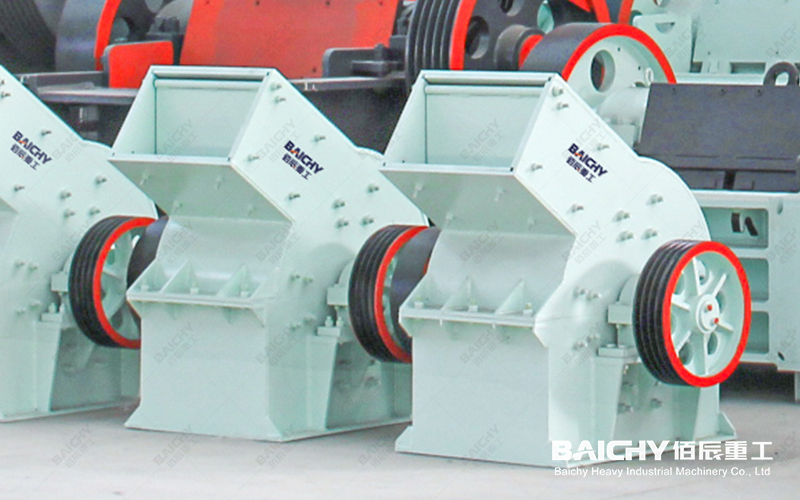
gold mining hammer crusher
III. Core Specifications: PC Series Gold Ore Hammer Crusher
Capacity figures are based on limestone (approx. 1.6 t/m³); gold ore has a higher density (2.6–2.7 t/m³) and greater hardness, so actual capacity should be calculated using a 0.5–0.7 multiplier (use the upper limit for oxidized ore and the lower limit for quartz veins).
| Model | Rotor Dimensions | Feed Size | Discharge Size (Adjustable) | Capacity (Limestone Basis) | Adjusted Capacity (Gold Ore) | Motor Power | Total Weight |
|---|---|---|---|---|---|---|---|
| PC400×300 | φ400×300 | ≤100 mm | 5–15 mm | 5–10 t/h | 3–6 t/h | 11 kW | 0.8 t |
| PC600×400 | φ600×400 | ≤120 mm | 5–15 mm | 10–22 t/h | 6–14 t/h | 22 kW | 1.5 t |
| PC800×600 | φ800×600 | ≤120 mm | 5–15 mm | 20–45 t/h | 12–30 t/h | 55 kW | 4.2 t |
| PC1000×800 | φ1000×800 | ≤150 mm | 10–20 mm | 40–80 t/h | 25–55 t/h | 110 kW | 7.0 t |
Capacity values refer to limestone conditions (density ≈ 1.6 t/m³). Gold ore has a density of 2.6–2.7 t/m³ with higher hardness, so actual capacity is converted at ×0.5–0.7; oxidized ore takes the upper limit, quartz vein ore the lower limit. Please provide ore Mohs hardness and maximum feed size when inquiring for accurate capacity and hammer life estimates.
Quick Selection Guide for Gold Ore Hammer Crushers: Choose PC600×400 for a daily throughput of 8–10 tons; PC800×600 for 20–30 tons; and PC1000×800 for over 50 tons (includes a 20% capacity margin). Providing the ore's Mohs hardness and feed particle size when inquiring allows for accurate estimates of production capacity and hammer service life.
IV. Application Cases: Data-Driven Results
Case 1: ASGM (Artisanal and Small-Scale Gold Mining) Site in Sudan (10 tpd, diesel-powered)
Configuration: PE250×400 Jaw Crusher → PC600×400 Gold Ore Hammer Crusher → Model 1100 Gold Grinding Mill → 6-S Shaking Table
Operational Performance: Discharge size ≤20mm; gold grinding mill capacity increased from 3–5 t/d to 7–9 t/d (an increase of approx. 80%).
Benefits: Equipment investment of approx. $9,000; payback achieved in about 3 weeks through reduced diesel consumption and increased gold output.
Case 2: Small-scale Processing Plant Upgrade in Tanzania (50 tpd)
Configuration: PE400×600 Jaw Crusher → PC800×600 Hammer Crusher → φ1200×2400 Ball Mill + Classifier → Flotation/Gravity Separation
Operational Performance: Mill feed size reduced from 50–80mm to ≤20mm; ball mill hourly throughput increased by approx. 30%; electricity consumption per ton dropped from 20 kWh to approx. 14 kWh.
Benefits: Annual electricity savings of approx. 4,000–6,000; annual steel ball consumption savings of 3,000–5,000; equipment investment payback period of 1–2 years.
V. Recommended Related Equipment
The gold ore hammer crusher requires the following equipment to form a complete production line:
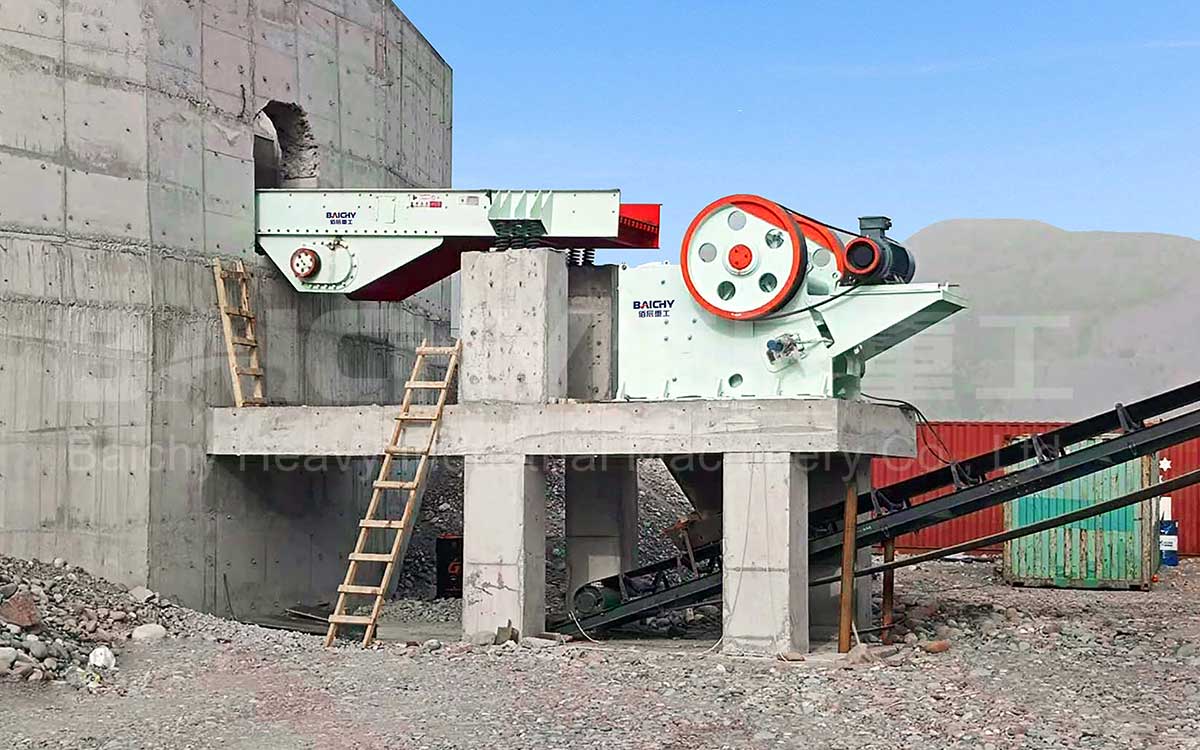
• ZSW Vibrating Feeder: Ensures uniform feeding, prevents impact damage to the rotor, and extends hammer lifespan.
• PE Jaw Crusher: Performs primary crushing on large run-of-mine ore (>300mm) before it enters the hammer crusher.
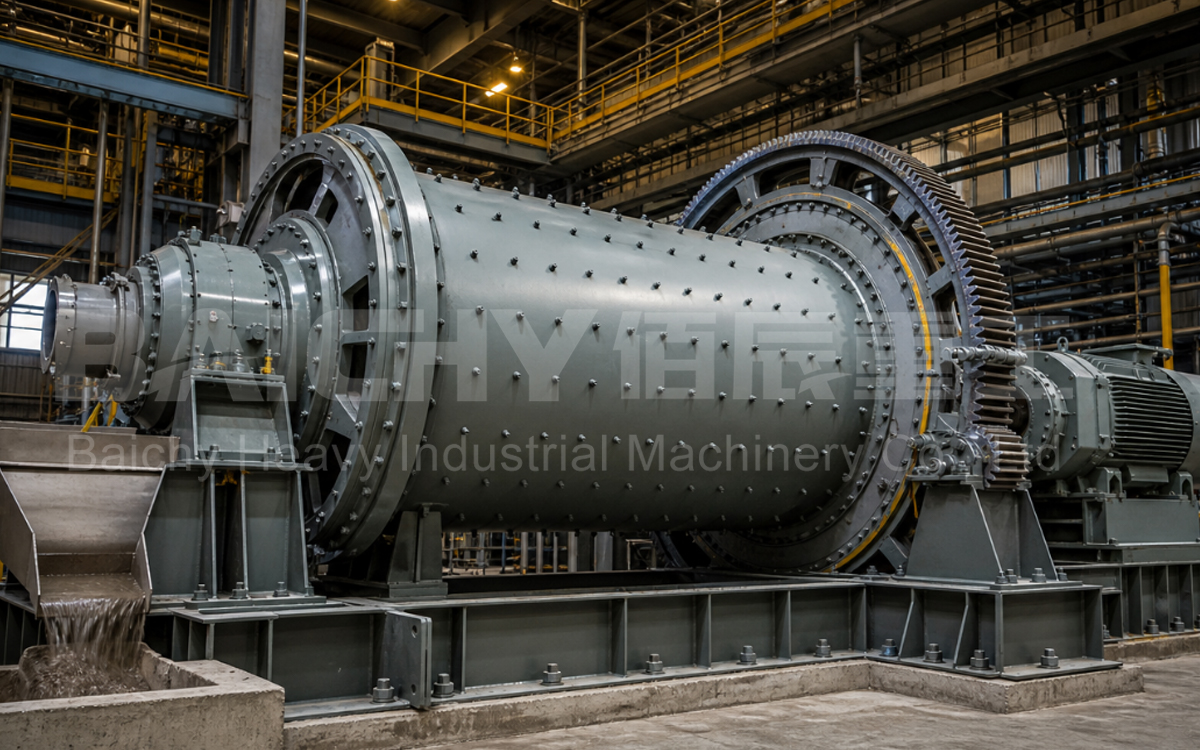
• Wet Gold Grinding Mill / Ball Mill: Processes the hammer crusher's discharge (≤25mm) to complete grinding and mineral liberation.
• YK Vibrating Screen: Handles discharge classification and closed-circuit circulation to improve the proportion of properly sized feed entering the mill.
• Spiral Classifier / Hydrocyclone: Classifies material within the grinding circuit to stabilize the particle size of the feed entering the leaching stage.
• Suspended magnetic separator: Captures iron debris to protect hammerheads and grate bars.
• CIL leaching system / Flotation machine: Receives material from the gold extraction stage; recovery rate of 85–92%.
VI. Frequently Asked Questions (FAQ)
Q1: Can the gold ore hammer crusher directly process run-of-mine (ROM) blasted ore?
A: No. The PC series has a maximum feed size of 100–200mm, whereas blasted ROM ore often reaches 300–500mm in size; therefore, a jaw crusher is required upstream for primary crushing. If single-stage processing of large ROM ore is required, the Baichy PCZ heavy-duty hammer crusher (max. feed 1200mm) is an option, though the economics of wear parts consumption must be evaluated.
Q2: Will the hammerheads wear out in just a few days when processing hard quartz-vein gold ore?
A: Quartz-vein gold ore (Mohs hardness 6–7) does accelerate wear, but it is manageable: by using Cr20 high-chromium hammerheads, a single set lasts approximately 200–350 hours. The hammer crusher is positioned here for "transitional fine crushing" to boost the overall efficiency of the grinding stage. If the silica content exceeds 70% and the unit serves as the primary medium-to-fine crusher, a CS/PYZ cone crusher is recommended instead.
Q3: Can the gold ore hammer crusher be driven by a diesel engine in mining areas without a power grid?
A: Yes. The PC400×300 and PC600×400 models require only 11–22kW and can be powered by a 25–40kVA diesel generator—a standard configuration in the ASGM (Artisanal and Small-Scale Gold Mining) market. Models PC800×600 (55kW) and larger require 80–120kVA generator sets; Baichy provides standard pulley configurations matched for 1500–1800rpm speeds.
Baichy Heavy Industry
Baichy Heavy Industry is a high-tech mining equipment company integrating R&D, manufacturing, sales, and after-sales service. Focusing on crushing, grinding, and mineral processing equipment, we provide professional solutions to our customers. We are ISO9001:2015 、certified, and our products include mobile crushing palnts, crawler crushing plant, construction waste crushing plants, jaw crushers, sand making machines, cone crushers, fine crushers, grinding mills, ball mills, etc., all with reliable performance to meet diverse project needs.
Baichy Heavy Industry – Your Trusted Partner
To ensure optimal performance of your equipment, Baichy Heavy Industry offers:
- Professional on-site installation guidance
- Comprehensive operator training
- 24/7 technical support & maintenance services
Our complete after-sales service system guarantees long-term, stable operation of your machinery with minimal downtime.
Protect Your Rights – Only Use Official Channels
To avoid scams and ensure authentic support, contact us exclusively through:
• Official Website: www.baichychina.com
• WhatsApp: +8615093222637
• Email: [email protected]
Your satisfaction is our priority – expect prompt, professional service every time.
(Note: Beware of unauthorized third parties claiming to represent Baichy. Always verify through official contacts.)