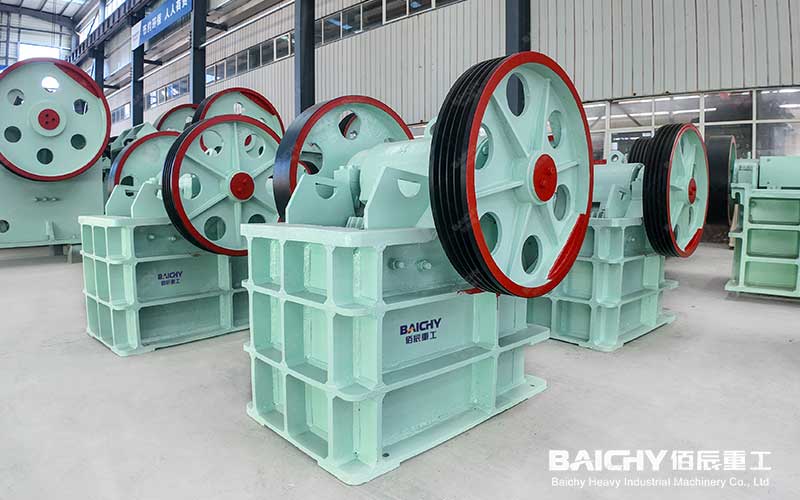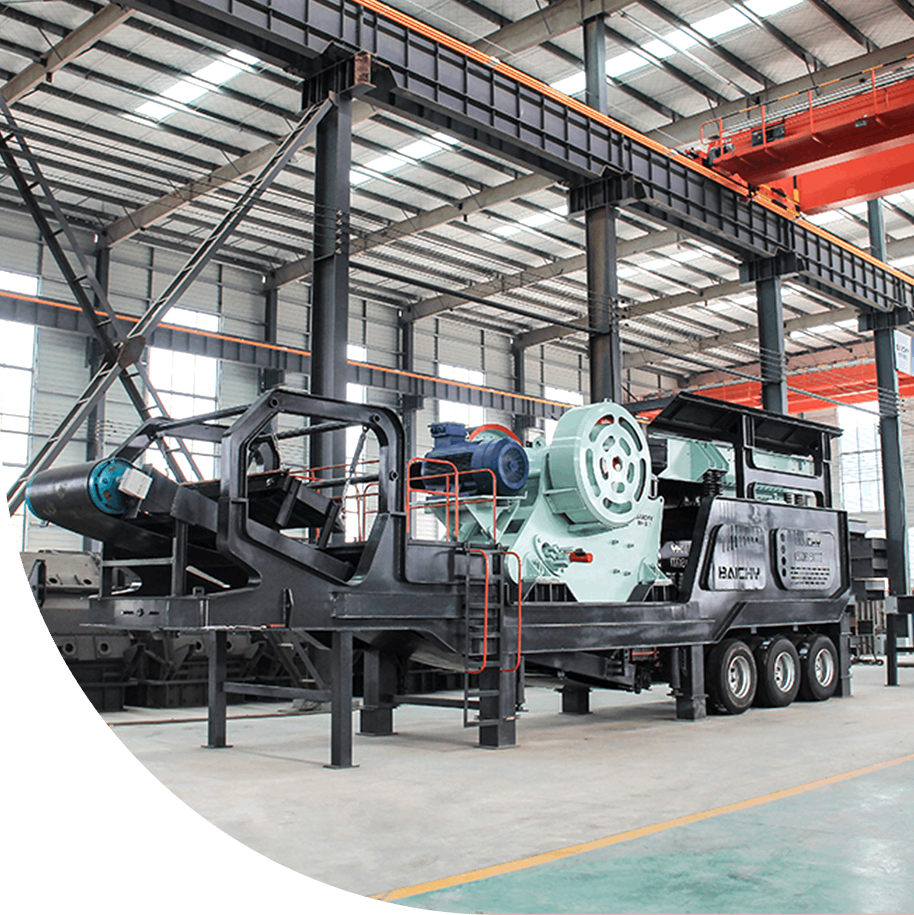

Primary JAW: 1 Unit Jaw Crusher (750 x 1060) + Motor; 1 Unit
Cone Crusher (PYB 1750) with a capacity of 80–100 TPH;
Vibrating Screen: 1 Unit (1800 x 6000); Main Conveyor 1;
Main Conveyor 2; Soil Conveyor; 4 Lines of Finished Product Conveyors.
The equipment configuration listed by this Indonesian client appears to form the fundamental core of a small-to-medium-scale sand and aggregate crushing production line—a very classic setup. Based on this equipment list, we can outline a typical production workflow and analyze its potential production capacity and application scenarios.

Baichy E-Catalog PDF,Download ↓↓↓
Equipment Configuration Analysis and Production Workflow Deduction
This represents a typical "two-stage, closed-circuit" crushing and screening process, which is particularly well-suited for processing materials of medium hardness (such as limestone or granite).
1. First-Stage Crushing: Coarse Crushing
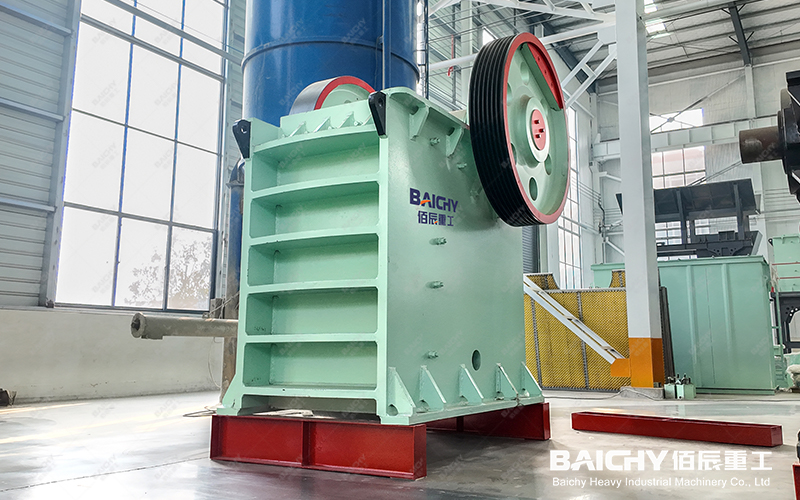
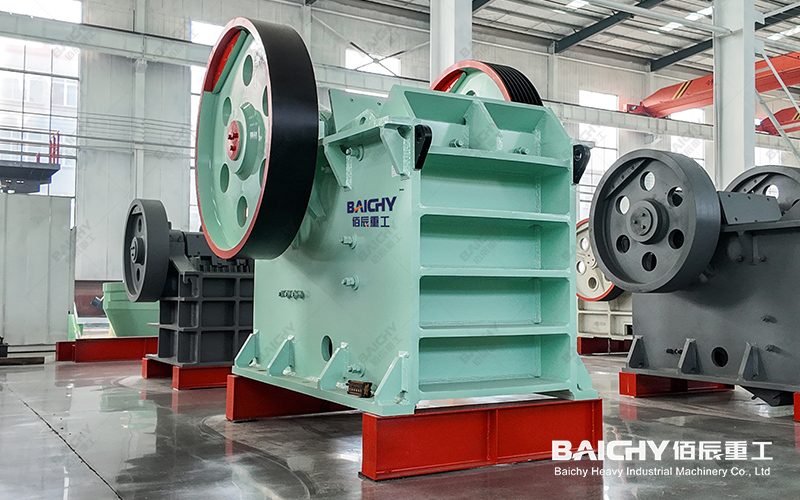
750x1060 Jaw Crusher
• Equipment: 750 x 1060 Jaw Crusher
• Function: This serves as the "head" of the production line. It is responsible for crushing large raw materials (run-of-mine ore, with particle sizes potentially reaching 500–600 mm) fed from the stockpile into medium-sized particles (typically yielding an output size of around 150–300 mm). Its key characteristics include a large feed opening, a robust structure, and high processing capacity, ensuring that suitable material is prepared for subsequent processing stages.
2. Second-Stage Crushing: Medium-to-Fine Crushing
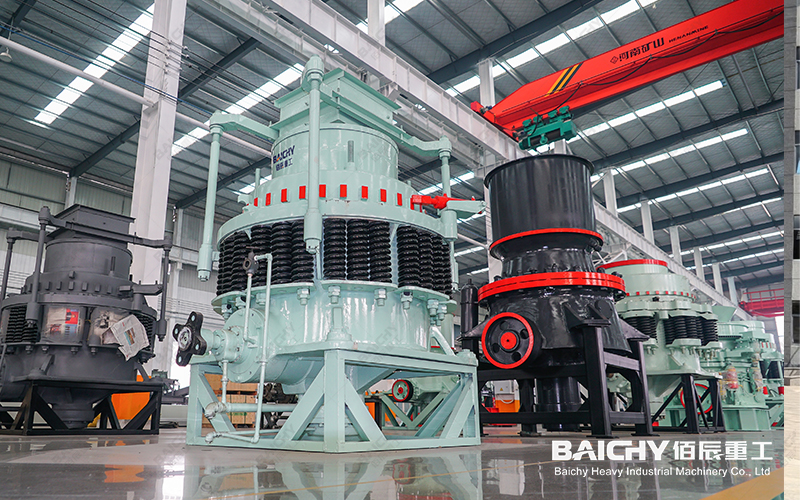
PYB 1750 Cone Crusher
• Equipment: PYB 1750 Cone Crusher
• Function: This acts as the core secondary crushing device. It receives the material processed by the jaw crusher and further crushes it into smaller stone aggregates. The cone crusher is characterized by a high crushing ratio, stable output, and excellent product shape (typically cubic). The capacity you noted—80–100 t/h —represents the theoretical core production capacity of the entire production line.
3. Screening and Grading
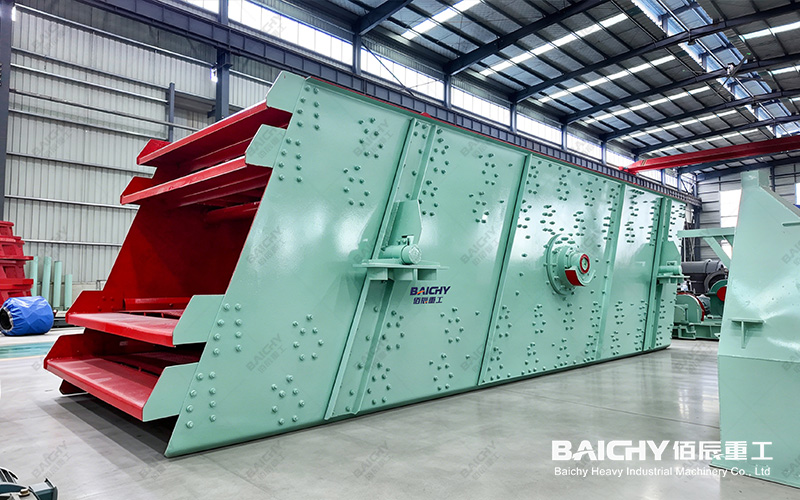
1800 x 6000 Vibrating Screen
• Equipment: 1800 x 6000 Vibrating Screen
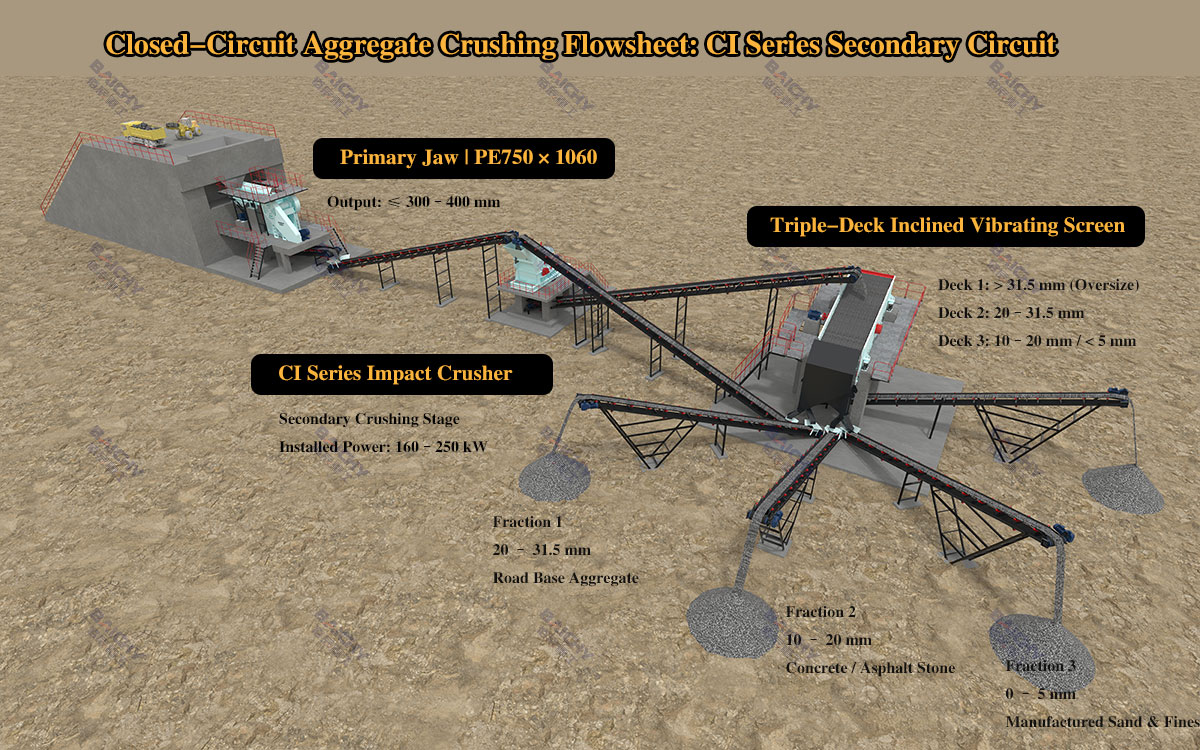
• Function: This serves as the "brain" for controlling the finished product's particle size. The mixed material resulting from the crushing stages is transported via Main Conveyor 1 to the vibrating screen for separation and grading. The vibrating screen is typically equipped with 2 to 3 layers of screen decks to separate the material into various size fractions.
4. Closed-Circuit Circulation and Finished Product Output
• Process Flow:
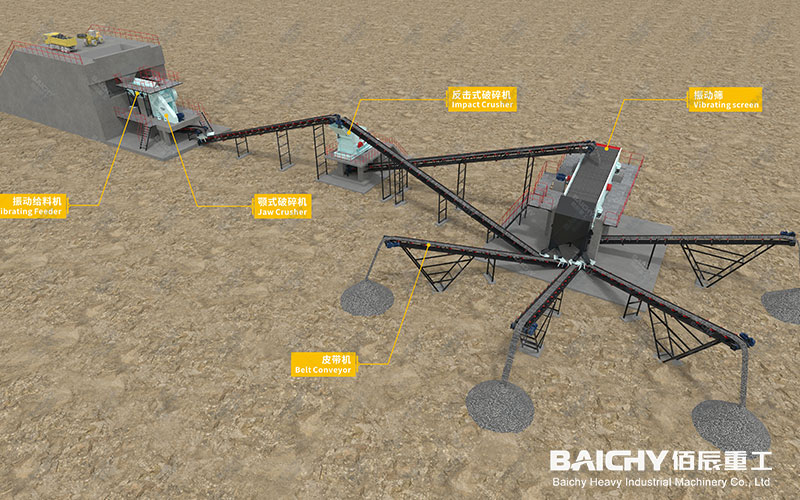
◦ Oversize material (particles larger than the specified size) is returned via Main Conveyor Belt No. 2 to the cone crusher for secondary crushing, establishing a "closed-circuit circulation." This ensures that all material is crushed to the required size while simultaneously enhancing operational efficiency and product yield.
◦ Undersize material (finished products meeting the required specifications) is transported via four dedicated finished-product conveyor belts located underneath, delivering the material to separate stockpiles (e.g., 0–5 mm stone dust/sand, 5–10 mm, 10–20 mm, 20–31.5 mm, etc.).
◦ A dedicated soil conveyor belt is typically used to transport topsoil, impurities, or extremely fine particles that were pre-screened from the raw feed. By perting these materials away from the main crushing system, the purity of the finished product is preserved, and the crushers are protected from potential damage.
Core Data and Capacity Assessment
• Theoretical Design Capacity: 80–150 tons per hour (t/h). Using the cone crusher's capacity of 80–100 t/h as a baseline, the jaw crusher must be selected to match or slightly exceed this capacity. Actual output is influenced by factors such as material hardness, particle size distribution, and moisture content.
• Finished Product Specifications: Typically, the system can produce 4 to 5 different aggregate sizes and stone dust, such as:
◦ 0–5 mm (Manufactured Sand / Stone Dust)
◦ 5–10 mm
◦ 10–20 mm
◦ 20–31.5 mm (or 16–31.5 mm)
• Total Power Consumption: The total power requirement for the main equipment in the entire production line (including two crushers, the vibrating screen, and multiple conveyor belts) is estimated to be between 350 and 450 kW. Accordingly, a matching transformer and power distribution system are required.
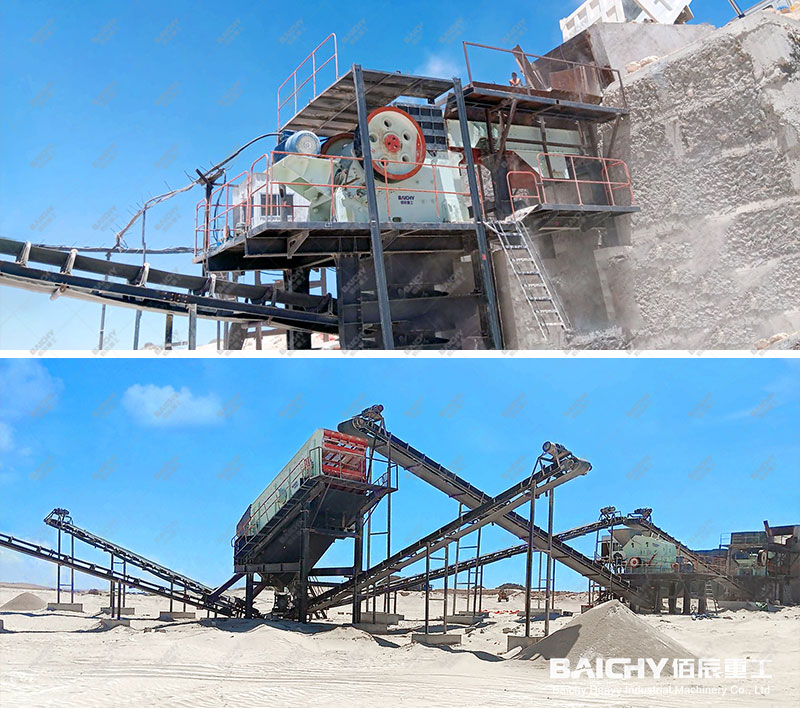
Stationary-crushing-production-line
Application Scenarios and Recommendations
This configuration is highly practical and widely applicable, making it suitable for the following scenarios:
• Commercial Concrete Batching Plants: Providing self-produced aggregate supplies for use in concrete mixing operations.
• Small to Medium-Sized Sand and Aggregate Plants: Producing commercial-grade sand and aggregate products for external sale.
• Road, railway, and other engineering construction projects: Establish a temporary mixing plant on-site to produce aggregates for self-consumption.
If a complete production line is required, the following auxiliary equipment should also be considered:
1. Feeding System: ZSW series vibrating feeder—positioned upstream of the jaw crusher—ensures uniform and continuous feeding while preliminarily screening out soil and fines.
2. Raw Material Bin / Receiving Hopper: Typically equipped with a grizzly screen to prevent oversized materials from entering the feeder and to protect the feeder from direct impact by loaders.
3. Dust Removal System: Pulse bag filters are installed at the crushers, vibrating screens, and various transfer points to ensure compliance with environmental protection regulations.
4. Electrical Control System: A centralized electrical control cabinet enables sequential start-up and shut-down, as well as localized interlocking controls, to ensure operational safety.
5. Finished Product Bins: Multiple finished product conveyor belts lead to corresponding storage bins, facilitating convenient loading onto trucks.
Summary:
The equipment list you provided constitutes the core of a highly efficient and classic small-to-medium-scale sand and aggregate production line. Its "Jaw Crusher + Cone Crusher + Vibrating Screen" closed-circuit process is mature and reliable; it produces aggregates with excellent particle shape and controllable gradation, capable of consistently yielding the specific aggregate sizes in highest demand by the market. This represents a sound and prudent investment choice within the aggregate industry.
If you can provide additional information—such as material properties (hardness, moisture content, clay content), target product specifications, or site conditions—we can conduct an even more precise and tailored assessment.
Frequently Asked Questions (FAQ)
1. What is the production capacity of this crushing equipment setup?
◦ Answer: In this "Jaw Crusher + Cone Crusher" configuration, the core production capacity is determined by the PYB1750 cone crusher, which has a theoretical design capacity of 80–150 tons per hour. Actual output will fluctuate based on factors such as material hardness (e.g., granite vs. limestone), feed size, and moisture content; typically, the line operates stably within the range of 80–100 tons per hour. This represents a very standard configuration for a small-to-medium-scale aggregate production line.
2. What aggregate sizes (stone specifications) can this production line produce?
◦ Answer: Thanks to the "two-stage, one-closed-circuit" process and the use of a multi-layer vibrating screen, this production line can simultaneously produce 4–5 different specifications of high-quality sand and gravel aggregates. Typical product gradations include: 0–5 mm (manufactured sand/stone fines), 5–10 mm, 10–20 mm, and 20–31.5 mm. By adjusting the screen mesh sizes, the finished product specifications can be flexibly altered to meet the specific requirements of commercial concrete plants, dry-mix mortar facilities, and various engineering construction projects.
3. In addition to the main processing unit, what auxiliary equipment is required to commence production?
◦ Answer: To establish a complete, eco-friendly, and standardized production line, the following systems must be installed:
▪ Feeding System: A vibrating feeder, used for uniform material feeding and pre-screening.
▪ Dust Removal System: Pulse bag filters installed at multiple dust-generating points; this is a mandatory requirement for environmental compliance.
▪ Electrical Control System: A centralized control cabinet to manage the sequential start-up and shut-down of equipment, as well as safety interlocks.
▪ Steel Structure: Includes raw material hoppers, finished product bins, and fully enclosed conveyor belt galleries.
▪ Summary: While the main processing unit serves as the core component, the feeding, dust removal, electrical control, and civil engineering systems are the critical elements that ensure the continuous, stable, and legally compliant operation of the entire production line.
About of Baichy Heavy Industry
Baichy Heavy Industry is a high-tech mining equipment company integrating R&D, manufacturing, sales, and after-sales service. Focusing on crushing, grinding, and mineral processing equipment, we provide professional solutions to our customers. We are ISO9001:2015 、certified, and our products include mobile crushing palnts, crawler crushing plant, construction waste crushing plants, jaw crushers, sand making machines, cone crushers, fine crushers, grinding mills, ball mills, etc., all with reliable performance to meet diverse project needs.
Our advantages:
• Professional pre-sales support: Free project design and comprehensive solutions to help you accurately select the right equipment;
• Comprehensive on-site service: Providing installation guidance and worker training to ensure smooth equipment commissioning;
• Reliable after-sales guarantee: A complete after-sales system, timely response to technical inquiries and equipment maintenance, ensuring long-term stable operation.
To protect your rights, please contact us through the following official channels for professional service:
Official Website Customer Service
https://wa.me/+8615093222637
Email: [email protected]
We are committed to providing high-quality equipment and full-cycle services to deliver comprehensive intelligent solutions for the global mining industry!