For small to medium-sized mining investors or mining startups, a processing capacity of 10–20 TPH (tons per hour) represents a classic and highly economical scale of operation. When dealing with hard rock gold deposits, designing a production line that is efficient, stable, and offers a reasonable return on investment is the key to success. As a professional manufacturer of mining equipment, we provide a comprehensive breakdown of the hard rock gold beneficiation processes suitable for this specific scale—covering every step from raw ore to finished gold ingots—along with a detailed guide on selecting the core equipment required.
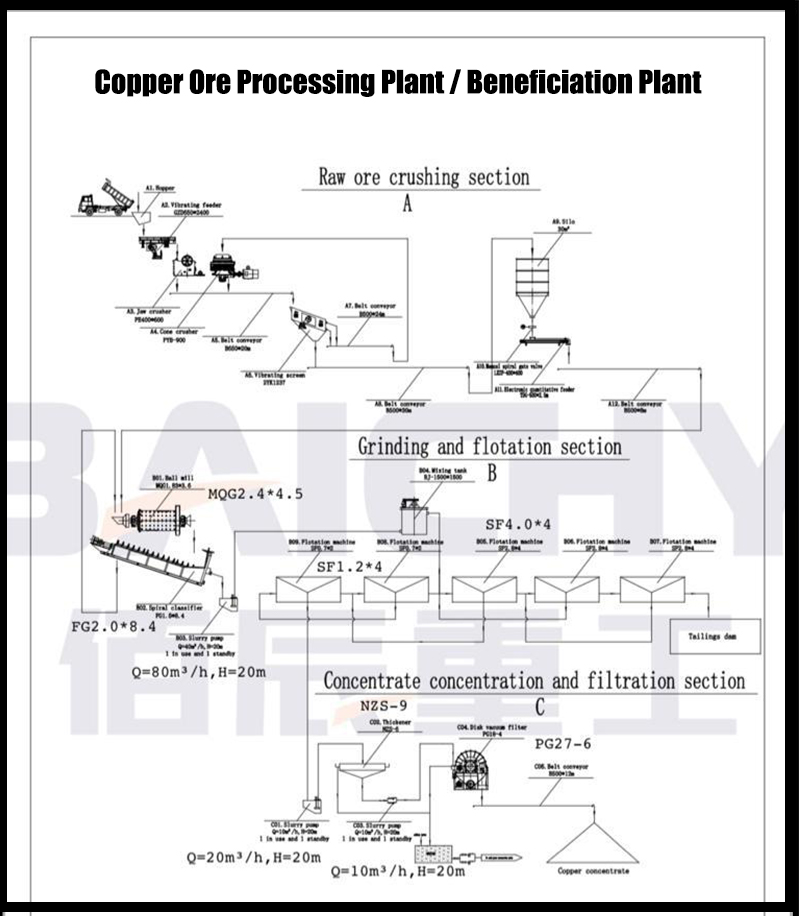
10–20 TPH Hard Rock Gold Ore Processing Plant
I. Process Overview: The Journey from Rock to Gold
A complete hard rock gold beneficiation process typically comprises four core stages: Crushing, Grinding, Beneficiation (Concentration), and Refining. For a scale of 10–20 TPH, the equipment selected must strike an optimal balance between operational efficiency, energy consumption, and physical footprint.
1. Crushing Stage: Employing the principle of "multi-stage crushing," large blocks of raw ore are progressively reduced in size to a granularity suitable for grinding (typically below 10–15 mm). This stage serves as the cornerstone of the entire gold ore crushing workflow, directly influencing the energy consumption and efficiency of subsequent operations.
2. Grinding Stage: Using grinding equipment (such as ball mills), the crushed material is ground to a fineness that facilitates mineral liberation (typically with 70%–90% passing through a -200 mesh screen). This process ensures that the gold particles are fully exposed, thereby creating the necessary conditions for the subsequent beneficiation stage.
3. Beneficiation Stage: Depending on the specific characteristics of the ore (e.g., the association between gold and sulfide minerals), methods such as gravity separation, flotation, or direct cyanidation are employed to separate and concentrate the gold from the bulk of the gangue (waste rock), yielding high-grade gold concentrates or gold-loaded activated carbon.
4. Refining Stage: The gold concentrates or gold-loaded carbon undergo smelting and electrolysis processes to ultimately produce gold ingots meeting national purity standards (typically 99.9% purity or higher).
II. Detailed Analysis of Core Process Stages and Equipment Selection
2.1 Crushing Stage: Efficient Primary Crushing and Fine Secondary Crushing
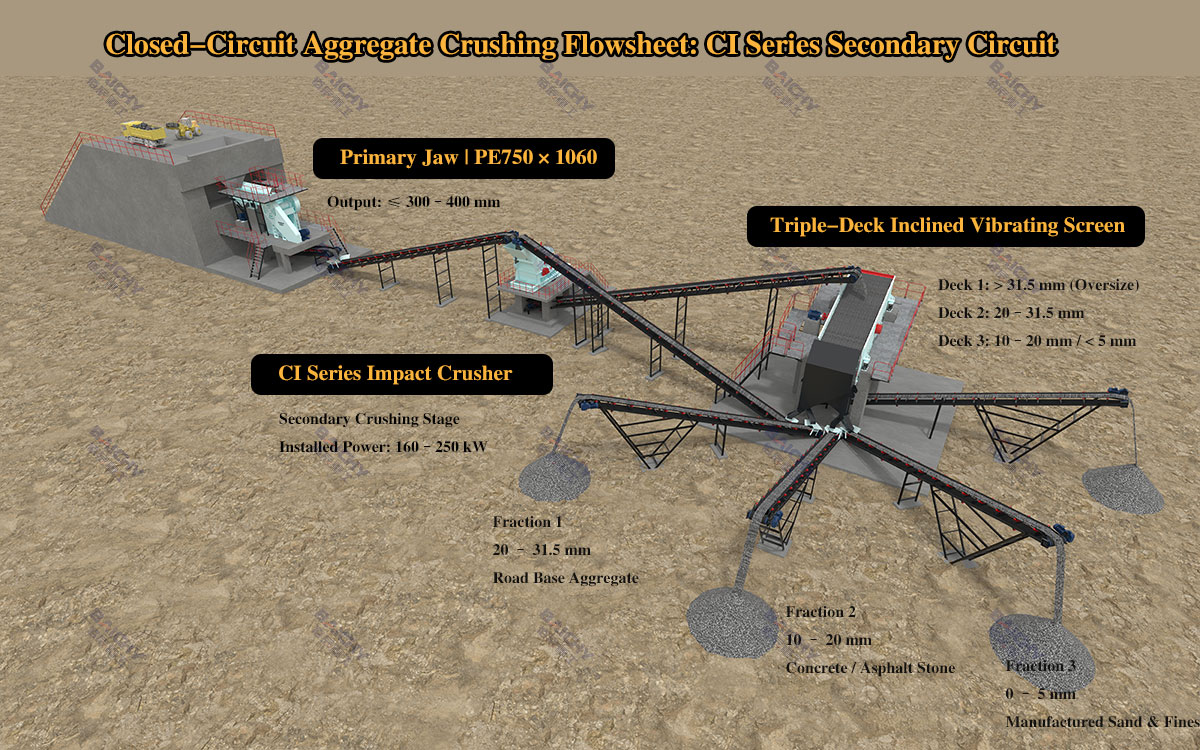
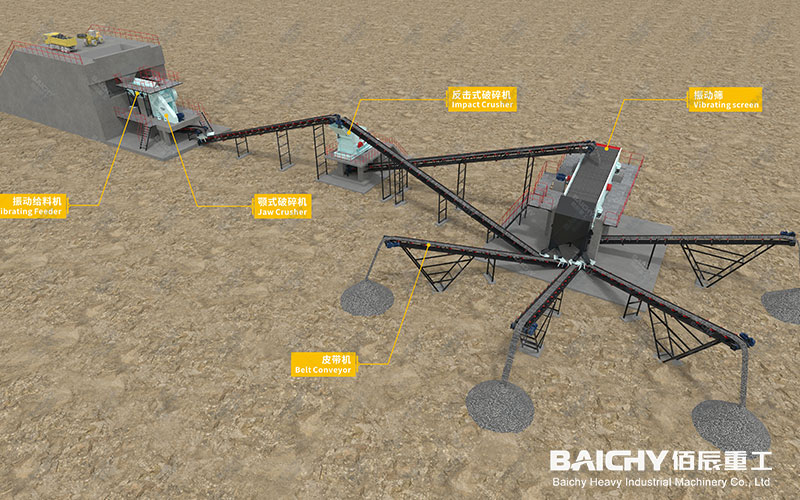
For hard rock gold deposits, the inherent high hardness of the ore presents significant challenges regarding the wear resistance and operational stability required of the crushing equipment. We recommend a "Jaw Crusher + Cone Crusher" two-stage, closed-circuit process; this configuration represents the optimal combination for a 10–20 t/h gold ore crushing line.
• Stage 1: Coarse Crushing — Jaw Crusher
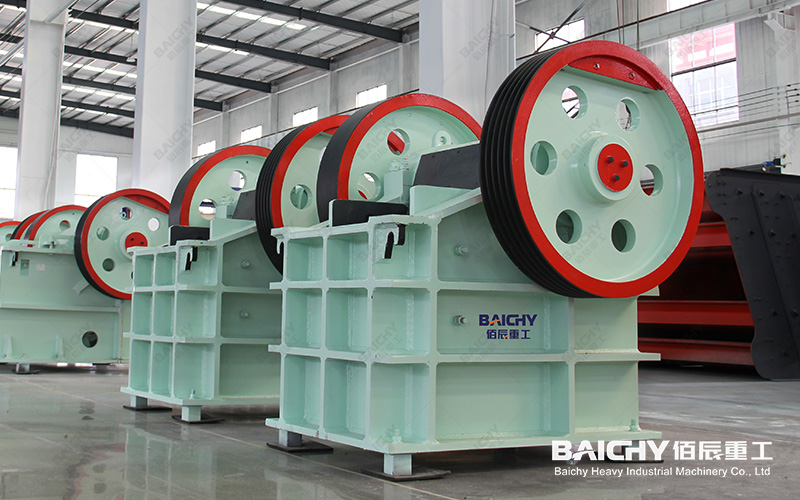
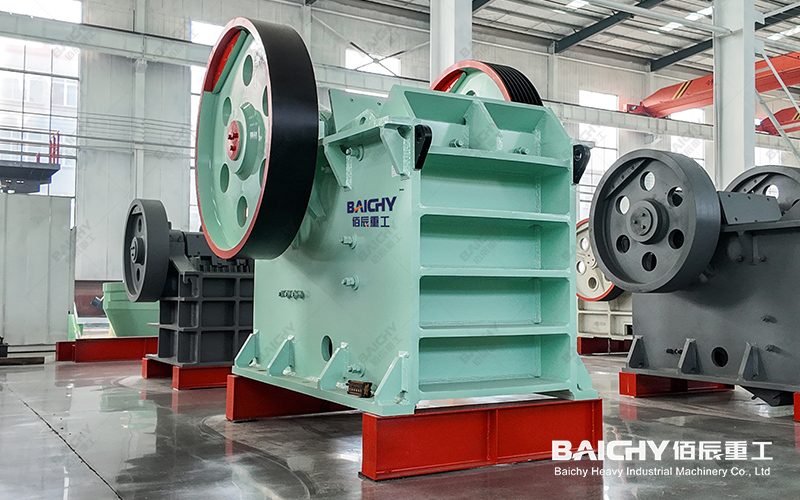
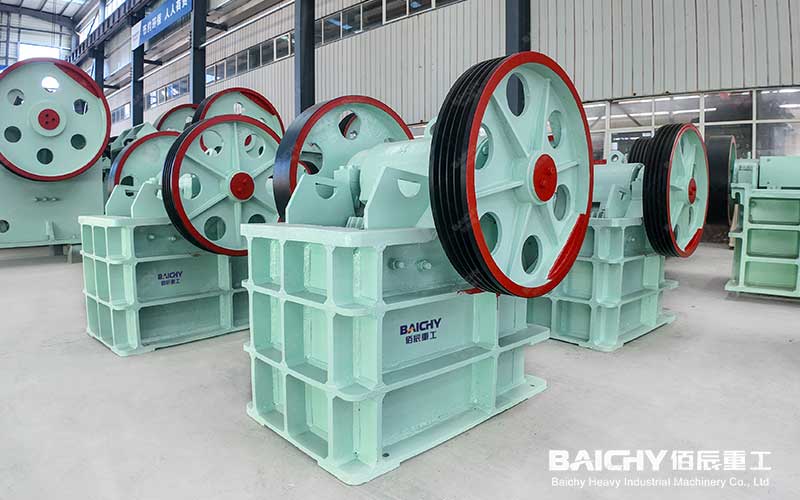
PE400x600 Jaw Crusher
◦ Application: Receives run-of-mine (ROM) ore directly from the mine (with maximum lump sizes reaching several hundred millimeters) and performs the initial, high-force crushing. Characterized by a high crushing ratio, it serves as the "throat" or critical entry point of the entire production line.
◦ Equipment Advantages: Features a simple structure, reliable operation, convenient maintenance, and strong adaptability, capable of processing ores of varying hardness levels. For a 10–20 t/h scale, we recommend models with feed opening dimensions ranging from 250×400 mm to 400×600 mm.
• Stage 2: Medium & Fine Crushing — Cone Crusher
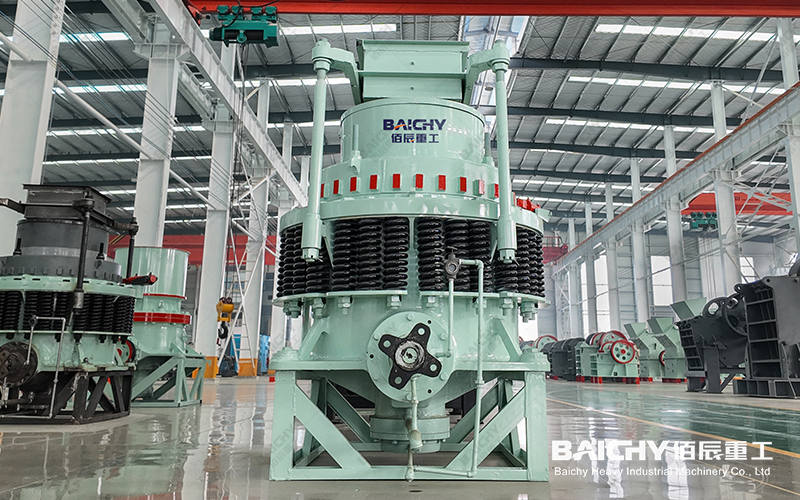
Spring Cone Crusher
◦ Application: Receives the output from the jaw crusher and performs secondary crushing to produce a finer, more uniform final crushed product. It operates within a closed-circuit loop alongside a vibrating screen to ensure that the feed size entering the grinding stage meets the required specifications.
◦ Equipment Advantages: Utilizes a laminated crushing principle, resulting in excellent product particle shape and low content of needle-like or flaky particles; offers high production efficiency and extended service life for wear parts; features hydraulic adjustment of the discharge opening and hydraulic cavity clearing, ensuring a high degree of automation. We recommend the use of single-cylinder or multi-cylinder hydraulic cone crushers.
Example of Recommended Equipment Parameters:
| Process Stage | Recommended Equipment | Recommended Model | Max. Feed Size | Discharge Opening Range | Processing Capacity (TPH) |
| Coarse Crushing | Jaw Crusher | PE-400×600 | 340 mm | 40–100 mm | 15–50 |
| Medium/Fine Crushing | Hydraulic Cone Crusher | HP-200 | 185 mm | 10–25 mm | 12-90 |
| Screening | Circular Vibrating Screen | 3YK-1860 | ≤400 mm | Screen Mesh Customizable | 20–150 |
2.2 Grinding & Classification: Achieving Mineral Liberation
Grinding is the most energy-intensive stage of the process; therefore, selecting efficient and energy-saving equipment for the grinding circuit in small-scale gold mining operations is of paramount importance.
• Ball Mill: This serves as the core equipment in the grinding stage of the hard-rock gold ore beneficiation process. We recommend utilizing a grate-type ball mill; its rapid discharge rate minimizes over-grinding and makes it particularly well-suited for integration into a closed-circuit system alongside hydrocyclones.
• Classification Equipment: Typically, a cluster of hydrocyclones is employed to form a closed circuit with the ball mill. This system classifies the ground product into material of acceptable fineness (overflow) and coarse, oversized particles (underflow). The coarse particles are returned to the ball mill for further grinding, thereby ensuring both grinding efficiency and the stability of the final product's particle size.
Advantages: This integrated system features a high degree of automation and robust continuous-operation capabilities. It allows for precise control over grinding fineness, thereby establishing ideal conditions for subsequent gold ore flotation and cyanidation operations.
2.3 Beneficiation and Enrichment: Technological Choices
This stage is pivotal in determining the overall recovery rate. The selection of a specific process depends primarily on the mode of occurrence of the gold within the ore.
• Scenario A: Gold is intimately associated with sulfides (e.g., pyrite).
◦ Process: Flotation. Flotation machines (such as the SF-type mechanically agitated flotation cell) are utilized to selectively recover gold-bearing sulfides, yielding a gold concentrate. This gold ore flotation process is well-established and delivers relatively high recovery rates.
◦ Advantages: It allows for the direct production of a high-grade gold concentrate suitable for sale, thereby avoiding the environmental compliance pressures associated with on-site cyanidation; furthermore, it is highly effective for recovering finely disseminated gold particles.
• Scenario B: Predominantly free gold or easily leachable gold.
◦ Process: Whole-pulp Cyanidation Carbon-in-Pulp (CIP). The ground ore pulp is fed directly into leaching tanks, where a sodium cyanide solution is added to dissolve the gold. Activated carbon is then introduced to adsorb the dissolved gold, resulting in gold-loaded carbon.
◦ Advantages: Gold recovery rates are typically higher than those achieved via flotation (often exceeding 90%), making this method particularly effective for recovering ultra-fine gold particles; additionally, the overall process flow is relatively simple.
2.4 Refining: Final Purification
• For Flotation Gold Concentrates: These concentrates typically require off-site shipment or processing in a dedicated small-scale smelter. Through a sequential process of roasting, smelting, and electrolysis, the final product—gold ingots—is produced.
• For Gold-Loaded Carbon: We utilize a high-temperature, high-pressure desorption and electrolysis unit to desorb gold from activated carbon into an electrolyte solution. Subsequently, the gold is electrodeposited using specialized refining equipment (electrolytic cells) to produce gold slime, which then undergoes acid washing, smelting, and ingot casting.
III. Core Advantages of Our Equipment Solutions
1. Modular and Compact Design: Specifically engineered for small-to-medium scale operations, our equipment features a compact layout that minimizes plant construction and site footprint costs. We can even provide mobile or modular station solutions.
2. High Energy Efficiency and Low Consumables: Our core crushing and grinding equipment incorporates energy-saving designs and utilizes high-quality, wear-resistant materials—such as the gyratory crushing mechanism in our cone crushers and the heavy-duty rolling bearings in our ball mills—significantly reducing energy and steel consumption per ton of ore processed.
3. Intelligent Control and Stability: Key process stages (e.g., the hydraulic system of the cone crusher and the grinding-flotation circuit) can be equipped with PLC-based automatic control systems. These systems monitor operating parameters in real-time to ensure process stability, minimize manual intervention, and enhance overall gold recovery rates.
4. Comprehensive One-Stop Solutions: Beyond supplying a complete suite of mineral processing equipment for hard-rock gold mines, we offer end-to-end support—including process flow design, equipment layout planning, installation guidance, and commissioning services—to ensure the project successfully reaches its full production capacity.
IV. Successful Case Study Reference
• Project Location: A gold mine in Ghana, West Africa.
• Ore Characteristics: Quartz-vein type hard-rock gold ore; the gold primarily exists as fine-grained free gold, accompanied by a small amount of associated sulfides.
• Processing Capacity: 15 tons per hour (TPH).
• Adopted Process: Two-stage, one-closed-circuit crushing (Jaw Crusher + Cone Crusher) + One-stage closed-circuit ball milling + Whole-pulp carbon-in-pulp (CIP) cyanidation.
• Core Equipment Supplied: PE400 Jaw Crusher, HPT200 Cone Crusher, MQG1530 Grid-type Ball Mill, Φ250 Hydrocyclone Cluster, 20m³ Leaching Tanks, and a Desorption-Electrolysis System.
• Operational Results: The facility reached full production capacity within three months of commissioning. The total gold recovery rate achieved 91.5%, equipment operation remained stable, the service life of wear parts exceeded the client's expectations, and the investment payback period proved highly favorable.
V. Recommended List of Core Equipment
Based on a 10–20 TPH hard rock gold ore beneficiation process, we recommend the following combination of core equipment:
1. Crushing and Screening Section:
◦ PE-400×600 Jaw Crusher
◦ HPT-200 / HPT-300 Multi-cylinder Hydraulic Cone Crusher
◦ 3YA-1848 / 3YA-1860 Circular Vibrating Screen
2. Grinding and Classification Section:
◦ MQG-1530 / MQG-1545 Grid-type Ball Mill
◦ Φ250 / Φ350 Hydrocyclone Cluster
3. Beneficiation and Enrichment Section (Choose one based on the specific process):
◦ Flotation Route: SF-4 / SF-6 Mechanically Agitated Flotation Machine (for roughing, scavenging, and cleaning)
◦ Cyanidation Route: BJ-20m³ Dual-Impeller Leaching Tank, Activated Carbon Adsorption Tank
4. Refining Section:
◦ YD-100 High-Temperature, High-Pressure Desorption and Electrolysis Unit
◦ JD-500 Gold Electrolytic Cell
VI. Frequently Asked Questions (FAQ)
Q1: For a hard rock gold ore deposit with a processing capacity of 10–20 TPH, is the flotation process or the carbon-in-pulp (CIP) cyanidation process the better choice?
A1: This primarily depends on the mode of occurrence of gold within the ore. If the gold is closely associated with sulfides (particularly pyrite and arsenopyrite), flotation is an economically efficient choice that directly yields a gold concentrate. If the gold exists in a free or semi-free state—especially if the ore exhibits a high degree of oxidation—the recovery rate achieved by the carbon-in-pulp (CIP) cyanidation method is typically higher. It is strongly recommended to conduct detailed ore beneficiation tests to determine the optimal process.
Q2: What is the level of automation for this production line? How many operators are required?
A2: Modern small-to-medium-scale production lines are fully capable of achieving a high level of automation. We can configure a centralized PLC control system to enable the automatic monitoring and regulation of critical parameters—such as crusher feed rates, cone crusher discharge settings, grinding pulp density, and flotation reagent dosages. Typically, for a complete 10–20 TPH production line, only 3 to 5 operators per shift are required to monitor the entire production process, thereby significantly reducing labor costs and minimizing the risk of human error.
Q3: Regarding environmental protection—particularly when sodium cyanide is utilized—what considerations are incorporated into your solutions?
A3: Safety and environmental protection are our top priorities. For projects employing cyanide-based processes, we strongly recommend—and can specifically design—the following accompanying measures:
◦ Closed-Circuit Circulation: Process water is recycled internally to achieve zero discharge.
◦ Containment Measures: Equipment, piping, and drainage trenches are designed with anti-seepage features to prevent leaks.
◦ Cyanide Destruction Systems: Tailings slurry or wastewater streams are equipped with cyanide destruction facilities—such as alkaline chlorination or hydrogen peroxide oxidation systems—to ensure that effluent meets regulatory discharge standards.
◦ Safety Training: We provide comprehensive guidance on operating procedures and emergency response protocols.
Summary
Designing a successful 10–20 TPH gold ore crushing and beneficiation production line hinges on a deep understanding of the specific ore characteristics, coupled with the selection of efficient, reliable, and cost-effective processes and equipment. From the robust primary jaw crusher to the sophisticated gold refining and electrolysis equipment, every stage of the process directly impacts the final profitability of the operation. Choosing an experienced equipment supplier ensures that you receive not only high-quality machinery but also a comprehensive, holistic solution designed to guarantee the success of your project.