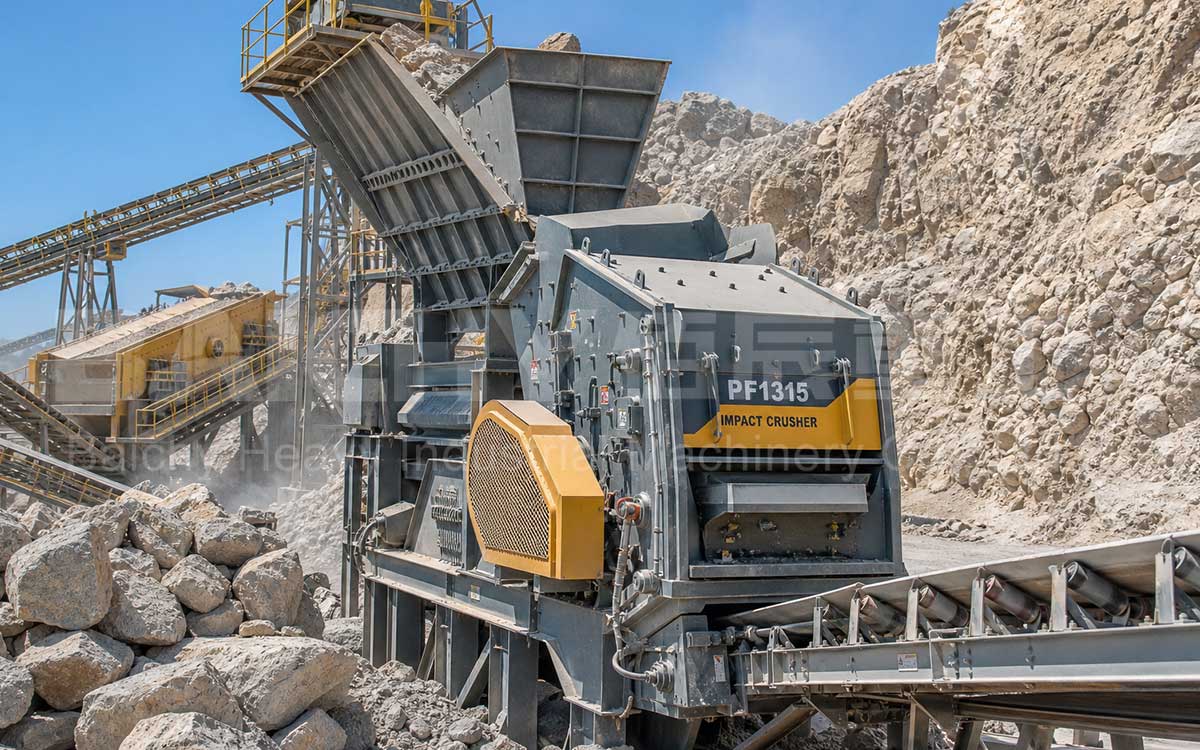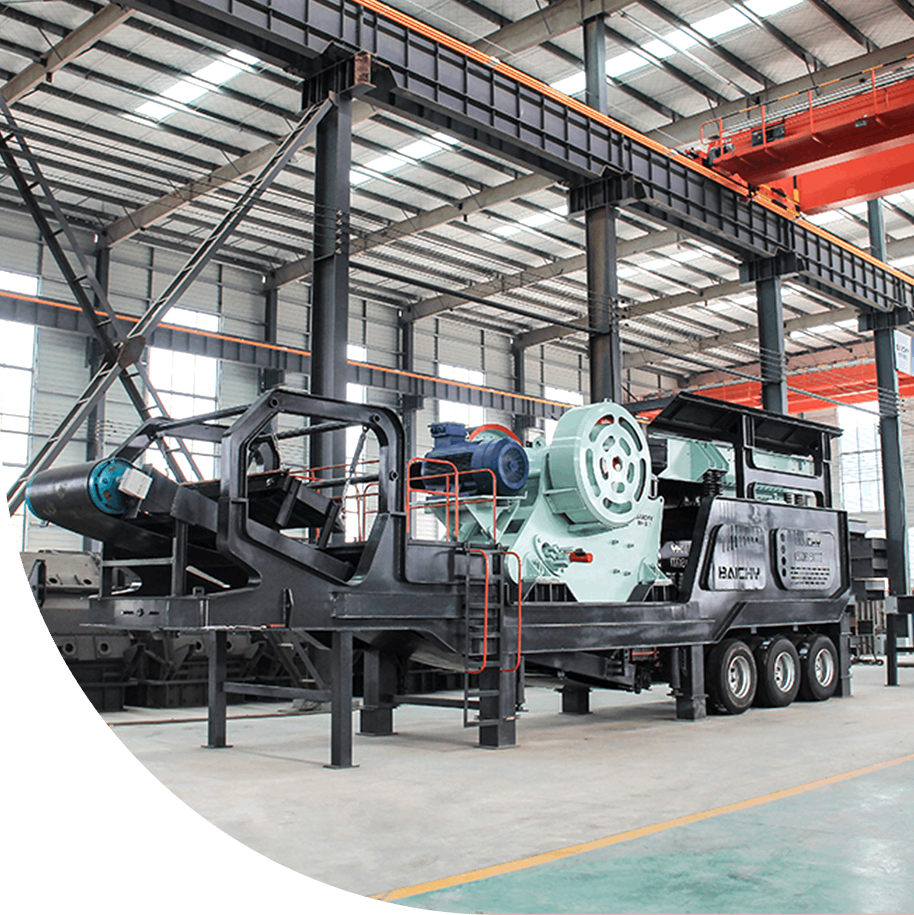


Gypsum grinding production line
When establishing a gypsum powder production line in Bolivia with an hourly output of 5 tons and a finished product fineness of 200 mesh (75μm), the equipment selection logic can be summarized in one sentence: Gypsum has a Mohs hardness of only about 2—making it an "easy-to-grind, low-abrasivity" material—so a single Raymond mill can stably handle the 5 t/h capacity requirement without the need for a ball mill, which would be overkill. The line is configured with a jaw crusher (primary crushing), a bucket elevator for silo feeding, a Raymond mill (with a built-in classifier), and a pulse-jet bag dust collector; this setup enables the processing of natural or desulfurized gypsum into the 200-mesh fine powder required for cement retarders, gypsum plaster, and paper-faced gypsum board. The following sections outline the market dynamics in Bolivia, key operational considerations, a full-line parameter table, a cost-per-ton analysis, and three tips for avoiding common pitfalls.
I. Demand Side: Where the Gap in Bolivia's Gypsum Powder Supply Lies
Bolivia possesses widespread gypsum deposits; research on non-metallic minerals indicates that these resources have long supported the production of basic building materials such as gypsum plaster and gypsum board. Demand is equally clear: local cement plants require the addition of approximately 3%–5% gypsum as a retarder during the clinker grinding stage, while residential and infrastructure projects continue to drive consumption of plaster, joint compound (putty), and gypsum board. With the global gypsum board market projected to expand at a compound annual growth rate (CAGR) of 6.04% between 2026 and 2035 (according to a NextMSC market report), Bolivia's ongoing urbanization continues to fuel this demand curve.
Geographically, the demand for gypsum powder in Bolivia is highly concentrated in urban clusters: Santa Cruz, Cochabamba, and La Paz–El Alto are the most active regions for residential and commercial construction, and market penetration for paper-faced gypsum board and ready-mixed plaster materials is steadily rising in these areas. For investors, building a plant close to consumption centers minimizes both the finished product delivery radius and the sales-to-payment cycle—factors just as critical as proximity to the raw material source when selecting a site. However, there are significant shortcomings on the supply side: gypsum powder incurs high shipping costs per ton and demands strict storage conditions. Long-term reliance on importing finished powder from neighboring countries means that both pricing and delivery schedules are controlled by external parties. For local mine owners and building material suppliers, grinding raw ore locally into 200-mesh powder allows the processing profits to remain within Bolivia—this is the fundamental economic rationale behind establishing this gypsum grinding line with a 5-ton-per-hour capacity.
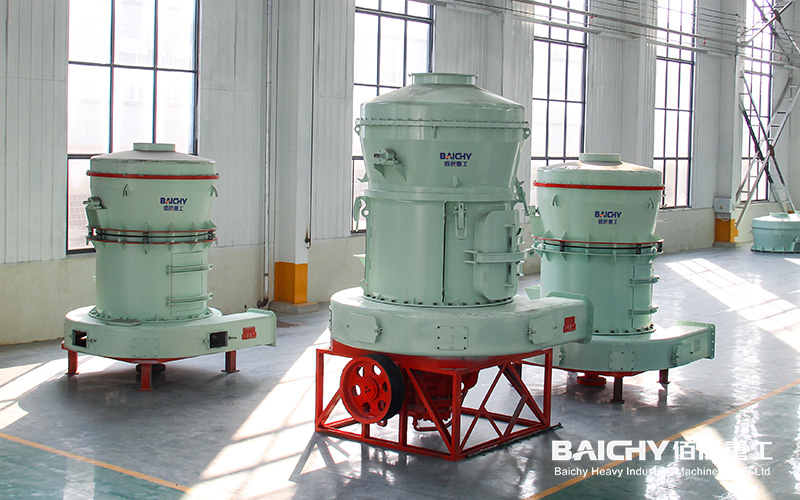
Gypsum grinding equipment for Bolivia
II. Material and Operating Conditions: Three Key Considerations Before Equipment Selection
1. Distinguish material phases. Natural gypsum is calcium sulfate dihydrate (CaSO₄·2H₂O). If the client requires construction gypsum (hemihydrate, which sets upon contact with water), a calcination step must be added either before or after grinding; conversely, if the product is intended solely as a cement retarder or filler-grade powder, direct grinding suffices. This is a critical decision point often overlooked in the project's preliminary stages.
2. Match the power grid frequency. Bolivia’s standard voltage is 230V/50Hz; the mill’s main motor, induced draft fan, and electrical control system must all be customized for 50Hz operation, strictly distinguishing them from configurations used in 60Hz markets like Brazil.
3. Altitude determines correction factors. Bolivia spans both highlands and lowlands. If the plant is located in areas like La Paz (over 3,000 meters above sea level), the thin air causes a simultaneous drop in induced draft fan airflow and mill processing capacity (estimated at 5%–15%); consequently, fan impellers and motors require high-altitude derating adjustments. In contrast, low-altitude regions like Santa Cruz can utilize standard designs for plains. Additionally, raw ore moisture content rises during the rainy season; moisture entering the mill must be kept below 2%. Materials exceeding this limit require simple drying or open-air stockpiling to prevent mill clogging or classifier blockages.
III. Process Route Comparison: Why a Single-Line Raymond Mill is the Preferred Choice for 5 t/h at 200 Mesh
| Process Route | 200-Mesh Economic Capacity | Fineness Adjustment | Suitability for 5 t/h Scale |
|---|---|---|---|
| Raymond Mill (YGM/4R/5R) Single Line | Approx. 1–8 t/h | Built-in classifier with VFD speed control; adjustable between 80–325 mesh without stopping | ✅ Primary Recommendation |
| Dry Ball Mill (Closed-Circuit + External Classification) | >8 t/h | Requires a complete external classification system; long control chain | ⚠️ Option for future capacity expansion |
| HGM Ultrafine Mill | >600 mesh | High upper limit for fineness; low single-unit capacity | ❌ Exceeds requirements for this scale |
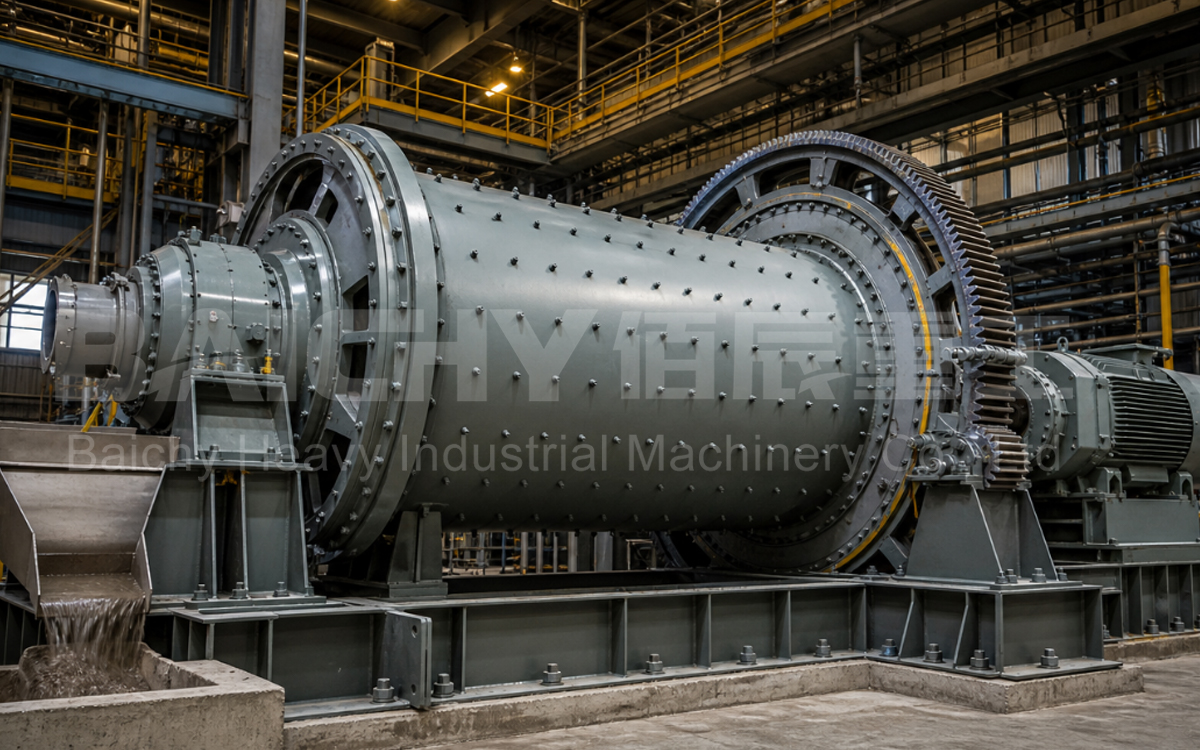
The 5 t/h output falls squarely within the optimal economic capacity range for a single Raymond mill: the main unit features a simple structure, requires low investment in civil works and infrastructure, and allows for easy replacement of grinding rollers and rings. The built-in classifier enables fine-tuning of particle size without altering the system flow, meeting a single customer's needs for switching between cement retarder powder and plastering powder. While a ball mill is capable of achieving 5 t/h, it represents a case of "using a sledgehammer to crack a nut"—the investment, footprint, and power consumption are not cost-effective.
Fineness control is the critical factor for quality in this production line: the Raymond mill’s built-in classifier determines the finished particle size by adjusting the classification speed via a variable frequency drive (VFD). Switching the same batch of material between 200 mesh and 180 mesh requires only parameter adjustments rather than a system shutdown. When combined with quantitative feeding to stabilize the mill's input flow, fluctuations in the finished product's sieve residue can be kept within a very narrow range. This is particularly important for cement plant clients who conduct batch-based acceptance testing; inconsistent powder fineness leads to fluctuations in their clinker setting times, which could result in the supplier losing their qualification at any moment.
IV. Standard Configuration and Core Parameter Table for the Complete Line
The following is the recommended configuration provided by Baichy for a project in Bolivia with an hourly output of 5 tons and a product fineness of 200 mesh (designed for 230V/50Hz; specific specifications are subject to the process sheet issued after material testing):
| Equipment Unit | Recommended Model | Quantity | Power (kW) | Key Parameters & Function |
|---|---|---|---|---|
| Vibrating Feeder | ZSW Series | 1 | 2.2–5.5 | Uniform feeding of gypsum ore; serves as a pre-screening unit |
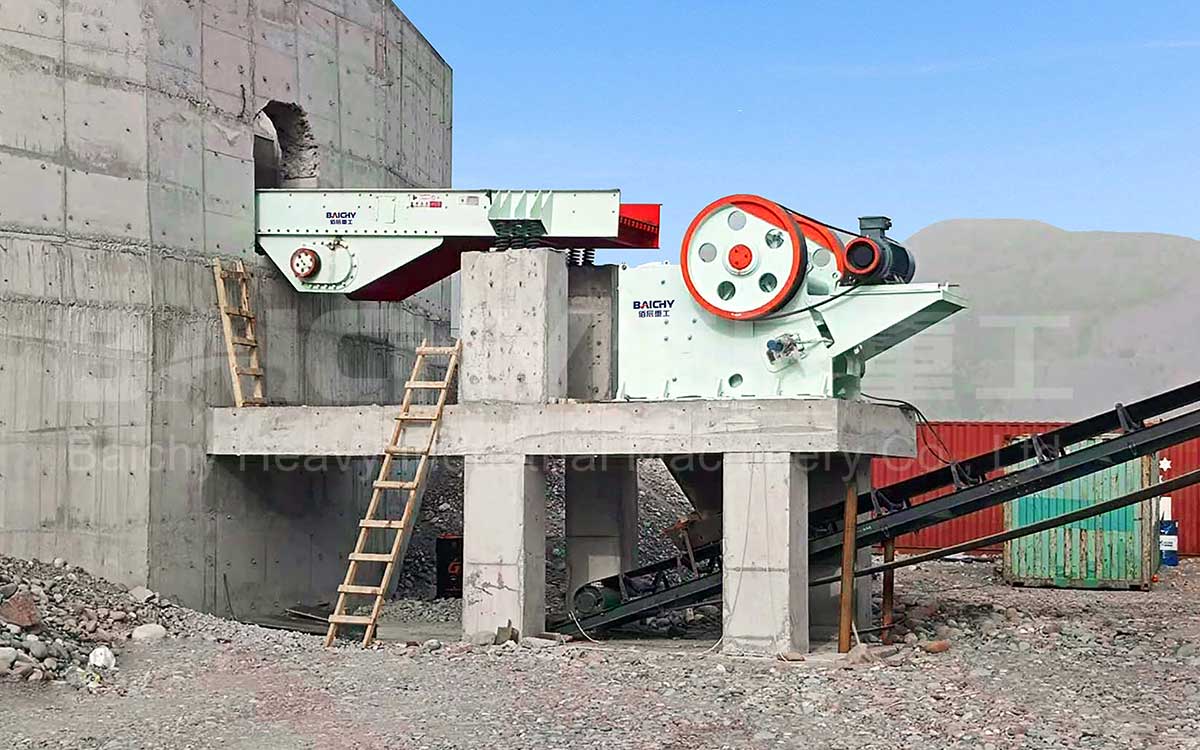
| Jaw Crusher (Primary Crushing) | PE250×400 | 1 | 15–18.5 | Raw ore blocks ≤210mm → ≤30mm |
| Bucket Elevator + Storage Hopper | Customized | 1 Set | 5.5–7.5 | Stable material supply; prevents mill idling |
| Quantitative Feeder | Electromagnetic/VFD Type | 1 | 1–3 | Controls feed rate and fineness fluctuations |
| Raymond Mill (with Built-in Classifier) | YGM/4R or 5R Series (rated for 5t/h) | 1 | 75–110 (Main Motor) | Feed size ≤30mm, moisture ≤2%; 5t/h capacity at 200 mesh; adjustable range 80–325 mesh |
| Pulse Bag Dust Collector | DMC Series | 1 Set | 15–30 (incl. draft fan) | Full-process negative pressure dust collection; product recovery; ensures compliance with site standards |
| Finished Product Conveying & Packaging System | Bulk/Ton-bag | 1 Set | 3–10 | Moisture-proof storage; meets delivery requirements for cement plants and building material suppliers |
| Total for Complete Line | — | — | Installed Power: ~120–190 kW | Nominal Capacity: 5t/h (200 mesh, sieve residue ≤5%; adjustable per contract) |
V. Production Capacity and Revenue Estimation (Basis for Calculation)
Based on 20 hours of daily operation and 300 operating days per year, the theoretical annual output of this gypsum grinding line is approximately 30,000 tons. Factoring in maintenance and raw material fluctuations—and assuming an 85% production efficiency rate—the actual annual output is estimated at approximately 25,000 tons. Gypsum is easy to grind and causes minimal wear on equipment. The electricity consumption for the entire production line is approximately 25–35 kWh per tonne (an estimate that varies based on fineness and moisture content). By applying local industrial electricity rates, one can calculate the electricity cost per tonne—for instance, at a rate of $0.08/kWh, the cost is roughly $2.0–2.8 per tonne.
When modeling costs, do not focus solely on the processing stage; the grade of the raw gypsum ore and the transportation radius are equally critical in determining the cost per tonne. In Bolivia, gypsum deposits are scattered, and road conditions in some areas are mediocre; consequently, the cost of transporting raw ore may exceed the actual grinding and processing fees. If the mine site is far from cement plants and building material markets, it is essential to carefully calculate transportation costs before deciding whether to locate the grinding plant at the mine site or near the consumption market.
Revenue projections should focus on price differentials rather than absolute values. The investment payback period (estimated by the ratio of equipment investment to profit per tonne; typically 1.5–3 years) is determined by the gap between the comprehensive cost of locally produced 200-mesh gypsum powder and the landed cost of imported finished powder. It is recommended to build the model based on actual price quotes from at least three local buyers before finalizing equipment selection and production capacity, thereby avoiding investment calculations based on hypothetical prices.
VI. FAQ (Frequently Asked Questions)
Q1: Why is a Raymond mill recommended over a ball mill for a gypsum grinding line with an hourly output of 5 tonnes and a fineness of 200 mesh?
Gypsum has a Mohs hardness of approximately 2, making it an easy-to-grind material with low abrasiveness. A single 4R or 5R Raymond mill can economically meet the 5 t/h capacity requirement at the 200-mesh level; it requires minimal civil engineering work, consumes less electricity, and features an internal classifier that allows for fineness adjustments without stopping the machine. Ball mills are better suited for high-capacity scenarios (exceeding 8 t/h) or for processing hard materials; using one for a 5 t/h output would unnecessarily increase investment costs and the required footprint. If the production of ultrafine powder (finer than 600 mesh) is targeted for the future, one could then consider adding an HGM ultrafine mill.
Q2: Will Bolivia’s 230V/50Hz power grid and high-altitude environment affect the production capacity of this gypsum grinding line?
Yes, they will. All motors must be customized for 50Hz operation. If the plant site is located at an altitude exceeding 3,000 meters, the thin air will reduce fan airflow and mill production capacity (estimated at a 5%–15% reduction); consequently, derating adjustments for high-altitude operation are required for both the fans and motors. Please provide the site altitude and power grid specifications before signing the contract; Baichy will then generate a process specification based on actual operating conditions and include the guaranteed production capacity in the contract.
Q3: Can both natural gypsum and desulfurization gypsum be processed? What are the applications for the resulting 200-mesh gypsum powder?
Yes, both can be processed. Natural gypsum lumps are crushed in a jaw crusher before entering the mill; power plant desulfurization gypsum has high free moisture content and must first be dried or air-cured to meet required specifications. The primary applications for 200-mesh gypsum powder include cement retarders (dosage of approximately 3%–5%), plastering gypsum and putty fillers, and core material for paper-faced gypsum boards. If the customer requires hemihydrate construction gypsum (which sets upon contact with water), additional calcination equipment is needed, which can also be customized as part of the package.
Baichy Heavy Industry
Baichy Heavy Industry is a high-tech mining equipment company integrating R&D, manufacturing, sales, and after-sales service. Focusing on crushing, grinding, and mineral processing equipment, we provide professional solutions to our customers. We are ISO9001:2015 、certified, and our products include mobile crushing palnts, crawler crushing plant, construction waste crushing plants, jaw crushers, sand making machines, cone crushers, fine crushers, grinding mills, ball mills, etc., all with reliable performance to meet diverse project needs.
Baichy Heavy Industry – Your Trusted Partner
To ensure optimal performance of your equipment, Baichy Heavy Industry offers:
- Professional on-site installation guidance
- Comprehensive operator training
- 24/7 technical support & maintenance services
Our complete after-sales service system guarantees long-term, stable operation of your machinery with minimal downtime.
Protect Your Rights – Only Use Official Channels
To avoid scams and ensure authentic support, contact us exclusively through:
• Official Website: www.baichychina.com
• WhatsApp: +8615093222637
• Email: [email protected]
Your satisfaction is our priority – expect prompt, professional service every time.
(Note: Beware of unauthorized third parties claiming to represent Baichy. Always verify through official contacts.)