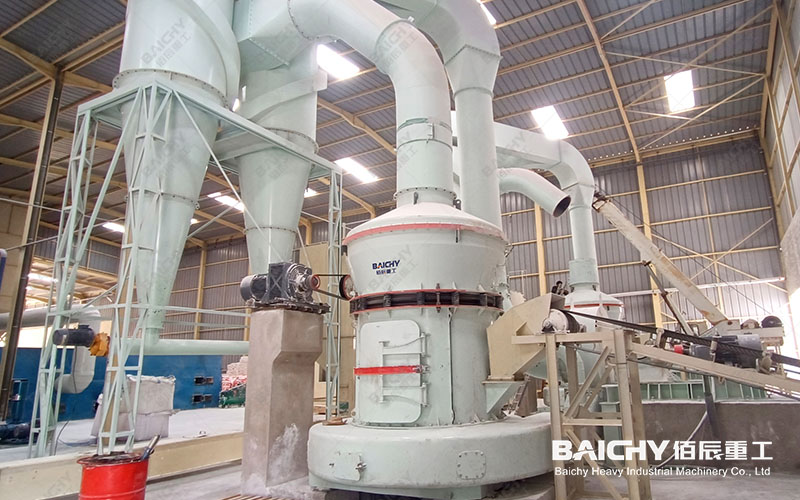
38 t/h grinding line
To successfully establish a barite grinding production line in Uzbekistan, both market and process logic must align. On the demand side, barite powder used as a weighting agent in drilling muds—consumed during oil and gas drilling and well workover operations—represents the largest global market for barite; according to the U.S. Geological Survey (USGS), approximately 85%–90% of barite is utilized in the oil and gas drilling sector. On the supply side, a capacity of 38 tons per hour (t/h) is considered medium-to-large scale; a business model relying merely on reselling purchased finished powder is unlikely to succeed. Instead, grinding local ore into API 13A grade, 200-mesh barite powder offers a stable, profitable path to upgrade from "selling ore" to "selling powder." This article outlines the standard configuration and core specifications for a 38 t/h line, provides a cost-per-ton analysis, and offers three tips to avoid common pitfalls.
I. Why Uzbekistan Needs This Production Line
Uzbekistan is a long-standing oil and gas producer in Central Asia. With ongoing drilling and workover operations in regions such as Bukhara-Khiva and Fergana, there is sustained demand for barite powder as a weighting agent in drilling mud systems. Simultaneously, the expansion of the domestic mining sector (gold, uranium, copper) and infrastructure investment creates steady demand for barite as a filler in coatings, rubber, and barium-based chemicals.
However, the supply chain for barite powder faces two key challenges: first, high transportation costs—shipping powder is more expensive per ton than shipping ore, and it requires significant storage space; second, strict quality acceptance standards—drilling-grade powder must pass batch inspections based on API 13A/ISO 13500 specifications, meaning reliance on imports leaves buyers vulnerable regarding pricing and delivery schedules. For mine owners and oilfield service contractors planning to build a local barite grinding line, the economic rationale is clear: retain the value of the raw ore domestically. A single production line can serve both the drilling-grade market (characterized by high unit prices and high volume) and the filler-grade market (focused on fineness and margin supplementation), making this a classic "one product, multiple markets" business opportunity in Uzbekistan.
II. Material Profile: Analyze Barite Properties Before Selecting Equipment
• True density of 4.2–4.5 g/cm³ and Mohs hardness of 3–3.5: Characterized by low hardness and high brittleness, it is classified as an "easy-to-grind, low-abrasivity" material. Consumption of grinding media and liners is significantly lower than for quartz-based materials, providing the physical basis for controllable milling costs;
• Raw ore grade and associated minerals determine the need for pre-purification: Common associated minerals include quartz, calcite, clay, and certain iron-bearing minerals. If BaSO₄ grade is insufficient or iron content is high, gravity separation (jigging/shaking tables) and wet magnetic separation (for iron removal) should be implemented—either before crushing or after milling—to ensure the finished product meets density and whiteness standards simultaneously;
• Moisture sensitivity: Feed moisture should be controlled at approximately 1%; excessive moisture causes mill clogging and classifier blockages. Stockpiles require covering or simple drying systems during the rainy season.
III. Process Route: Why "Closed-Circuit Ball Milling" is Recommended for 38 t/h
| Route | Suitable Fineness | 38 t/h Applicability | Assessment |
|---|---|---|---|
| Closed-circuit dry ball mill + dynamic classifier | 80–325 mesh; stable D97 | Single line meets capacity; most stable fineness | ✅ Highly Recommended |
| Parallel YGM/5R Raymond mills | 200–425 mesh | Requires multiple units in parallel; increased footprint and electrical control complexity | ⚠️ Budget-sensitive alternative |
| HGM ultrafine mill | >800 mesh | Ultrafine production at 38 t/h is not cost-effective | ❌ Only for Phase II ultrafine supplementation |
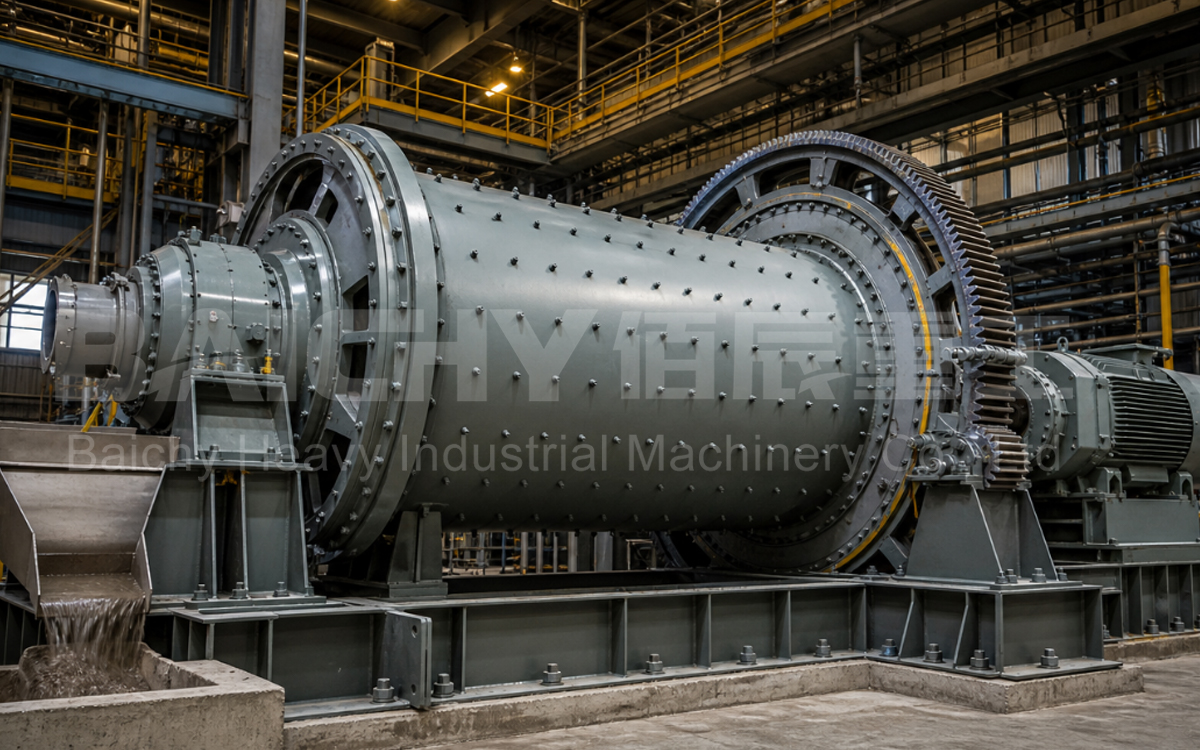
A capacity of 38 t/h exceeds the economic range of a single Raymond mill; closed-circuit dry ball milling is the industry-proven solution for high-capacity production. Grinding media ensure stable particle size control at the 200-mesh level, and when paired with a variable-frequency dynamic classifier, the system allows for switching between drilling-grade and filler-grade fineness without stopping the mill.
IV. Standard Configuration and Core Specifications
The following is the recommended configuration delivered by Baichy for an operating capacity of 38 t/h (producing 200-mesh drilling-grade product), designed for the Uzbekistan 380V/50Hz power grid:
| Equipment Unit | Model/Specification | Qty | Power (kW) | Key Parameters |
|---|---|---|---|---|
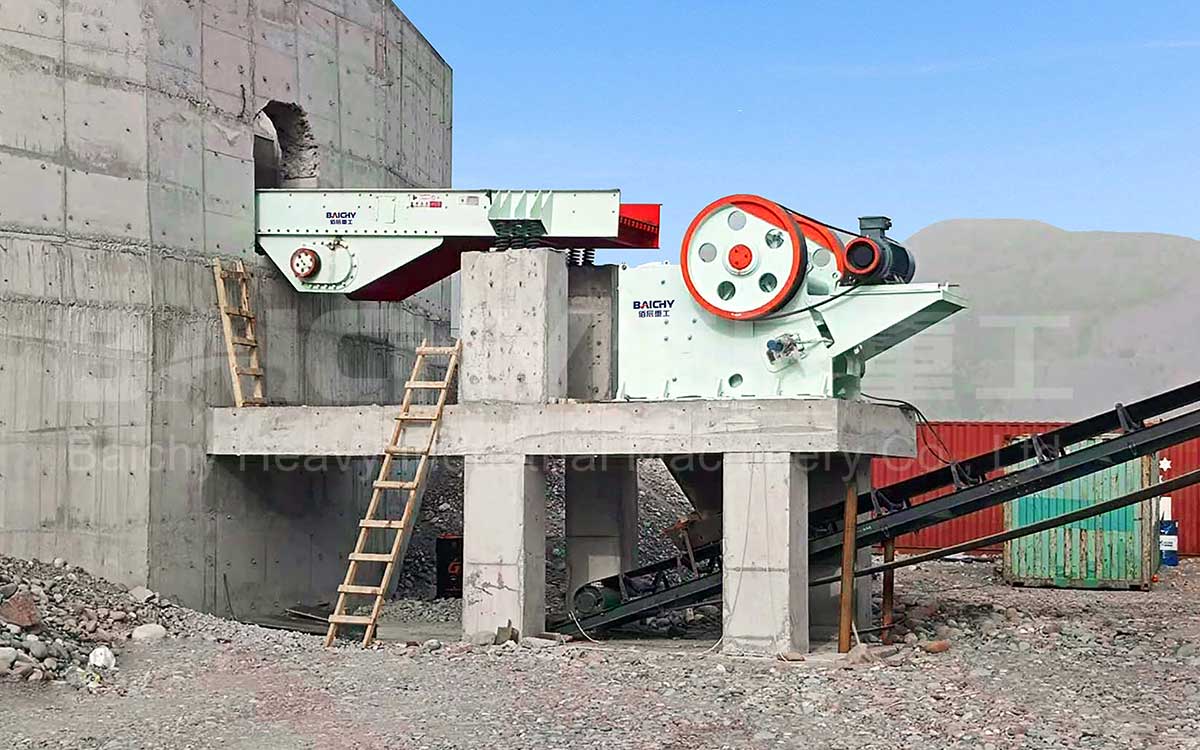
| Vibrating Feeder | ZSW Series (with grizzly screen) | 1 | 15–22 | Raw ore ≤500mm; pre-screening/impurity removal; uniform feeding |
| Jaw Crusher (Primary) | PE500×750 | 1 | 55–75 | ≤425mm → ≤80mm |
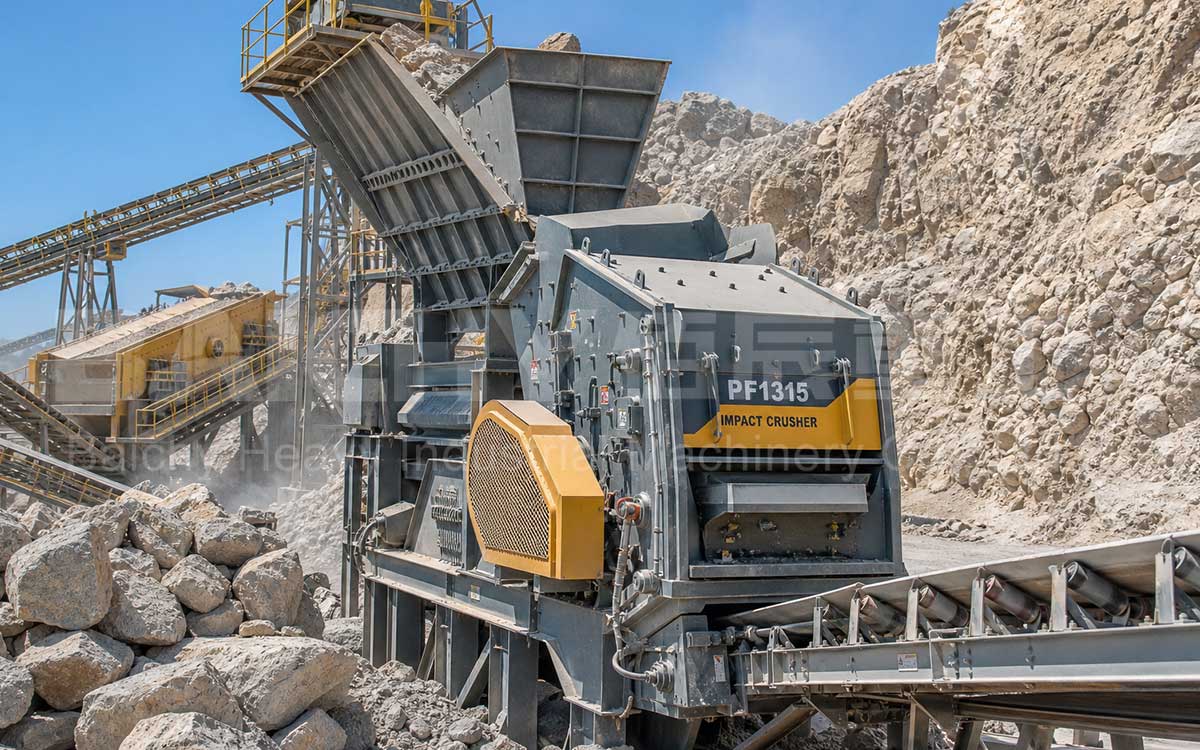
| Hammer Crusher (Fine) | PCH Series | 1 | 110–132 | ≤80mm → ≤20mm (mill feed) |
| Bucket Elevator + Buffer Bin | Customized | 1 Set | 15–30 | Steady flow feeding; prevents mill idling |
| Dry Ball Mill (Closed-circuit) | Large-scale Ball Mill (customized by capacity) | 1 | Main motor ~900–1000 | Feed ≤20mm → 200-mesh (D97) |
| Dynamic Classifier | Variable Frequency Drive (VFD) | 1 | 45–75 | Adjustable (80–600 mesh) without stopping |
| Pulse Bag Dust Collector | DMC Series | 1 Set | 110–160 | Full-process negative pressure dust collection; compliant emissions |
| Finished Product Storage & Transport | Bulk/Ton-bag | 1 Set | 20–40 | Moisture-proof packaging; meets export & oilfield service requirements |
| Total Line | — | — | Installed power ~1,400–1,600 | Nominal capacity 38 t/h (200-mesh) |
Capacity Basis: Capacities in the table above are nominal values based on dry basis, BaSO₄ ≥90%, mill feed moisture ≤1%, and finished product at 200-mesh (75μm sieve residue ≤3%). Barite has a high true density; when calculated by volume, the load inside the mill is heavier than that of calcium carbonate materials, and actual production capacity fluctuates by approximately ±10–15% depending on ore grade, grindability, and moisture content. Baichy provides a free grinding test report and a guaranteed capacity figure based on ore samples provided before the contract is signed, eliminating the discrepancy often seen where "nominal capacity is 38 t/h but actual output is only 30 t/h."
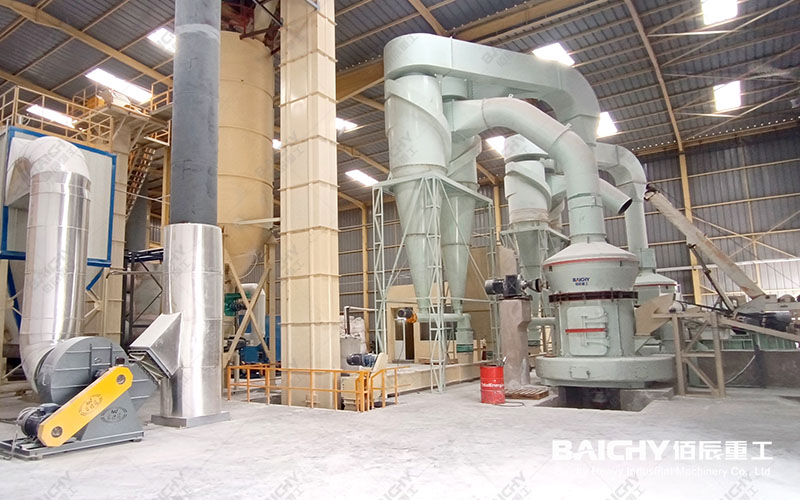
barite grinding equipment (Uzbekistan)
V. Core Advantages: Turning Parameters into Profit
• Nominal Capacity ≈ Actual Capacity — Achieved through a buffer bin for steady flow and a closed-loop variable-frequency classifier; the closed-circuit ball mill system operates continuously at design values without requiring frequent manual adjustments.
• Low Wear and Energy Consumption — Barite has a Mohs hardness of 3–3.5, resulting in a long service life for grinding media and liners; compared to quartz or feldspar, the cost of wear parts per ton can be an order of magnitude lower.
• Dual-Product Capability — Variable-frequency classification allows for rapid switching between 200-mesh drilling-grade barite and 325/425-mesh filler-grade barite; production can adapt to market demand, preventing line shutdowns caused by reliance on a single customer.
• Environmental Compliance — Features a fully enclosed negative-pressure system and pulse-jet bag dust collection, ensuring dust emissions meet local environmental standards; with Uzbekistan’s tightening environmental regulations, dust control is a mandatory entry requirement rather than an optional feature.
• Localized Delivery — Electrical controls (380V/50Hz) require no modification; equipment and spare parts can be shipped directly via Central Asian land routes (China-Europe Railway Express – Kazakhstan – Uzbekistan); commissioning and after-sales support cover Tashkent and major industrial zones.
VI. Key Operational Points and Common Pitfalls
• Feed continuity is the golden rule: In a closed-circuit ball milling system, fluctuating feed rates are detrimental; the buffer bin level and the feeder's variable frequency drive (VFD) must be interlocked to prevent the mill from running empty or tripping due to overload.
• Moisture threshold: If feed moisture exceeds 2%, addressing the moisture content takes priority; otherwise, screening efficiency drops and product fineness drifts—issues that appear equipment-related but actually stem from the material itself.
• Grinding media management: Regularly replenish grinding media and inspect liner wear based on operating hours; fluctuations in the internal filling rate directly impact production capacity and product fineness.
• Classifier airflow calibration: After changing fineness settings, recalibrate airflow and rotor speed; use sieve residue data for closed-loop control rather than relying on empirical estimates.
VII. Investment and Cost-per-Ton Calculation Framework
Electricity consumption for the grinding stage is approximately 22–30 kWh per ton (an estimate that varies based on fineness and material grindability). Example calculation (not a formal quote): At an electricity rate of 0.06/kWh, the electricity cost is roughly 1.4–1.8 per ton; barite is low-abrasion, so the amortized cost of grinding media and liners per ton is far lower than for hard materials; labor and maintenance are based on a "three-shift, two-operation" schedule. Total line investment varies widely depending on raw ore conditions (e.g., whether pre-purification is required), automation levels, and dust collection standards. The correct approach is to work backward from "target powder price × annual sales volume" to determine the affordable cost per ton, then request a detailed itemized quote from Baichy; once ore samples are obtained, the configuration process for a barite grinding line should prioritize calculating powder price and sales volume before discussing the total price.
VIII. FAQ
Q1: Why not use a Raymond mill to meet the requirement for a barite grinding line with an hourly output of 38 tons?
A: The economic production capacity of a single 5R/YGM Raymond mill is typically under 12 t/h (depending on fineness); achieving 38 t/h requires paralleling three or more units, which drives up total costs due to footprint, electrical control, and maintenance complexity. In contrast, a single-line closed-circuit dry ball mill setup can stably meet production targets, offering superior fineness control (at the 200-mesh level) compared to a parallel Raymond mill configuration. If the budget is tight and the target is 200–325 mesh, a parallel YGM setup remains a viable alternative, provided one accepts the realities of fineness fluctuations and the maintenance demands of multiple units.
Q2: What defines "drilling-grade" barite powder? What specifications must the production line meet?
A: According to API 13A (equivalent to ISO 13500) standards for drilling-grade material: the true density of the powder must be no less than 4.20 g/cm³, and the residue on a 200-mesh (75μm) sieve must be ≤3%. Note that some contracts accept a density of 4.10 g/cm³; this should be confirmed with the oilfield service provider before placing an order. If the raw ore grade is insufficient, the production line requires upstream gravity or magnetic separation for purification. When the line is being accepted against these specifications, it is advisable to stipulate in the contract that "third-party test reports on sieve residue and density shall prevail."
Q3: What is the difference between nominal capacity (38 t/h) and actual output? How can this discrepancy be avoided?
A: Ninety percent of the capacity shortfall stems from the raw material stage: fluctuations in grade, excessive moisture, and intermittent feeding all erode capacity. The capacities listed in the table above are nominal figures based on a dry basis, moisture content ≤1%, and 200-mesh processing conditions; actual output typically fluctuates by ±10–15%. Three safeguards to prevent this shortfall include: conducting free grinding tests on the material before signing the contract and incorporating a guaranteed capacity clause; using a buffer bin and variable-frequency feeder to ensure continuous feeding; and performing fineness-versus-capacity calibration during the first two weeks of operation. Baichy always calculates quotes based on actual measured data, avoiding "nominal capacity" word games.
Baichy Heavy Industry
Baichy Heavy Industry is a high-tech mining equipment company integrating R&D, manufacturing, sales, and after-sales service. Focusing on crushing, grinding, and mineral processing equipment, we provide professional solutions to our customers. We are ISO9001:2015 、certified, and our products include mobile crushing palnts, crawler crushing plant, construction waste crushing plants, jaw crushers, sand making machines, cone crushers, fine crushers, grinding mills, ball mills, etc., all with reliable performance to meet diverse project needs.
Baichy Heavy Industry – Your Trusted Partner
To ensure optimal performance of your equipment, Baichy Heavy Industry offers:
- Professional on-site installation guidance
- Comprehensive operator training
- 24/7 technical support & maintenance services
Our complete after-sales service system guarantees long-term, stable operation of your machinery with minimal downtime.
Protect Your Rights – Only Use Official Channels
To avoid scams and ensure authentic support, contact us exclusively through:
• Official Website: www.baichychina.com
• WhatsApp: +8615093222637
• Email: [email protected]
Your satisfaction is our priority – expect prompt, professional service every time.
(Note: Beware of unauthorized third parties claiming to represent Baichy. Always verify through official contacts.)