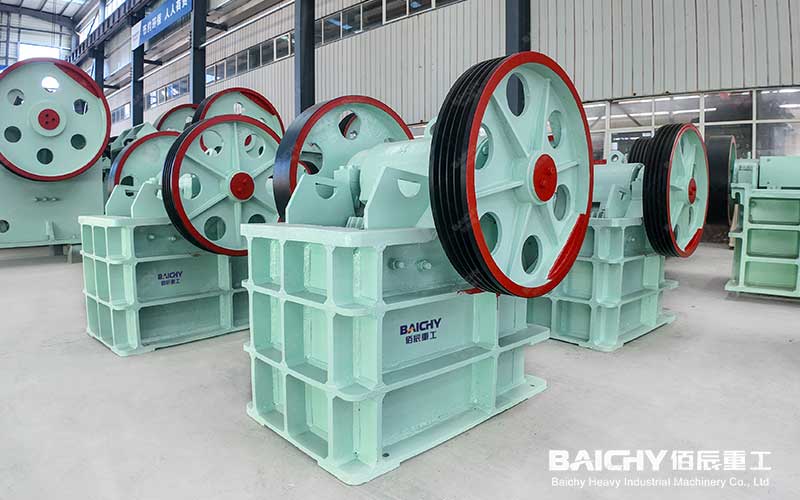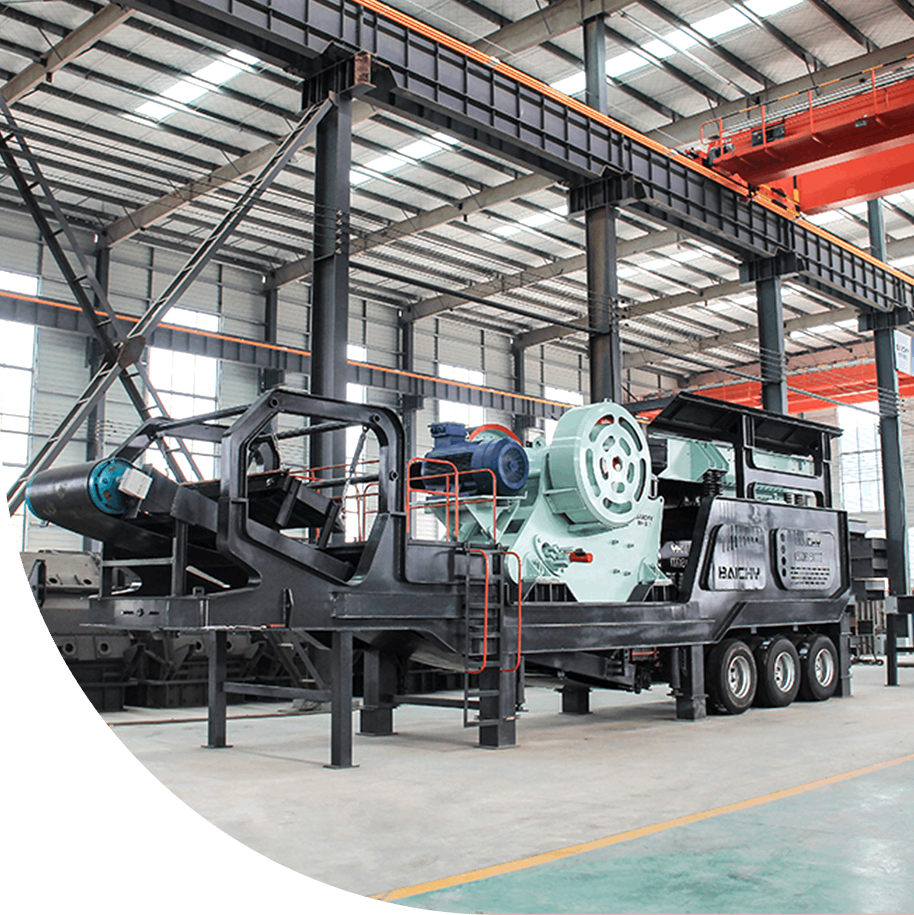

The success or failure of a rock crushing and screening production line depends largely on the configuration design itself. A well-configured line can transform natural rock or run-of-mine ore into qualified construction aggregates and manufactured sand at a lower cost per ton and with consistent product grading; conversely, an unbalanced line often suffers from issues such as under-utilization of the primary crusher, material blockages in secondary and tertiary stages, and screening overload—leading to inflated capacity claims, frequent breakdowns, and uncontrolled operating costs. This article systematically breaks down the key logic behind production line configuration across four dimensions—application scenarios, configuration schemes, core parameters, and real-world case studies—to help you make the right choice the first time and avoid costly rework.
I. What is a rock crushing and screening production line?
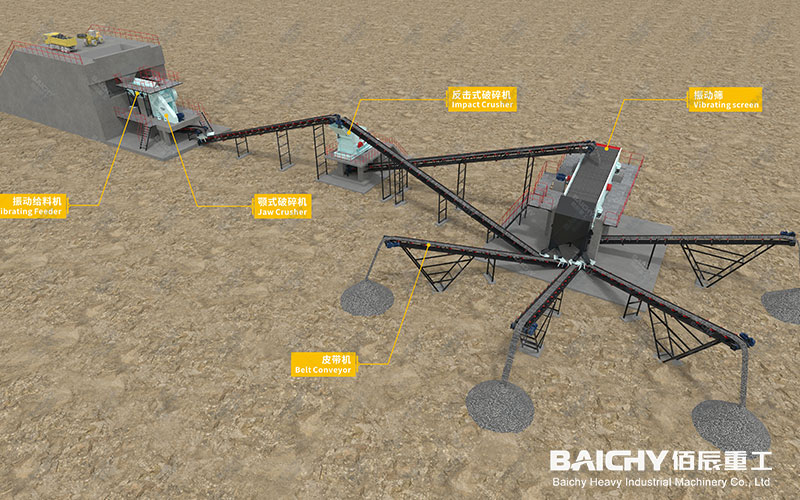
A rock crushing and screening production line is an integrated system that continuously processes natural rocks (such as granite, basalt, limestone, and river pebbles) or run-of-mine ore into finished products of specific sizes through stages including feeding, crushing, screening, and conveying. It serves as essential infrastructure for industries such as construction aggregates, manufactured sand production, and mineral processing pre-treatment. A complete crushing and screening line typically consists of five major subsystems:
1.1 Feeding System
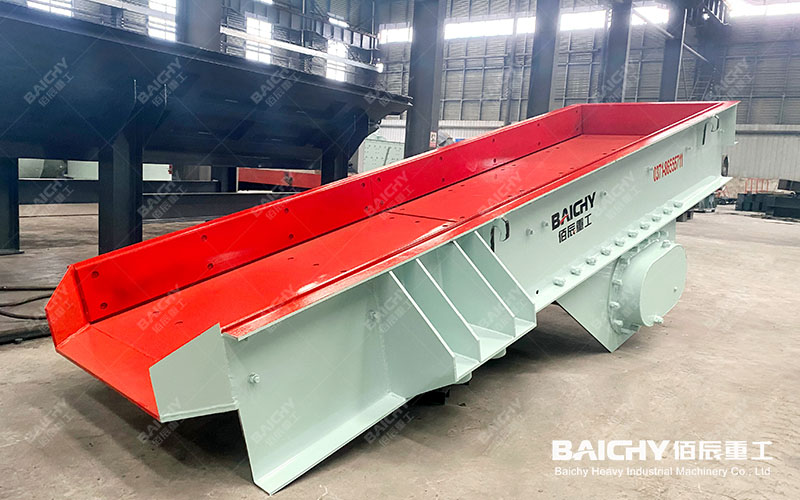
ZSW series vibrating feeder
Centered on the ZSW series vibrating feeder, this system performs the dual tasks of uniform material feeding and buffering for the primary crusher. Its grizzly bar section allows fine material (under 80mm) to be screened out early and merged directly into the downstream flow; this effectively provides a "free" pre-screening stage, significantly reducing the unproductive crushing load on the primary crusher.
1.2 Crushing System
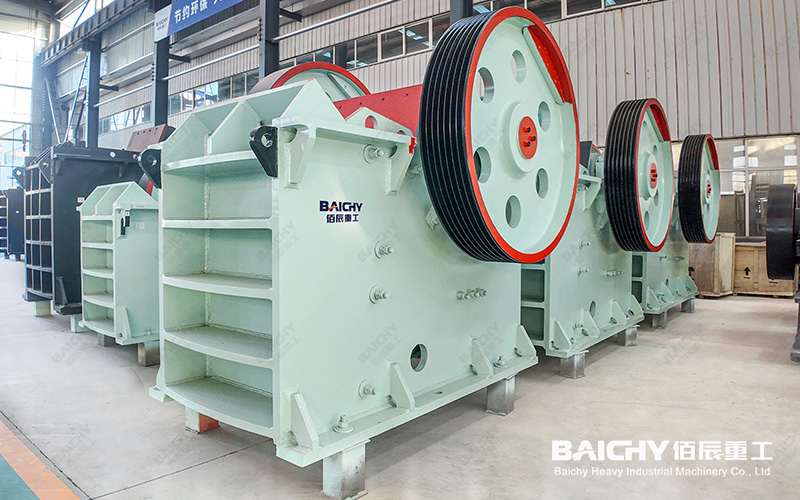
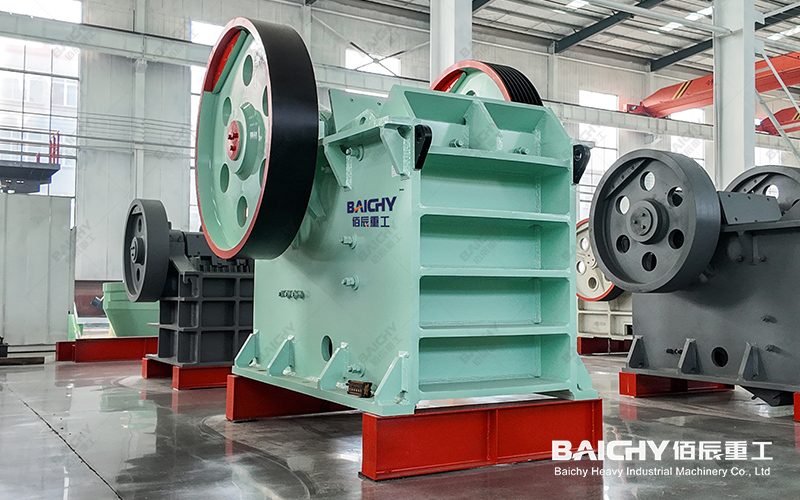
crushing system - jaw crusher
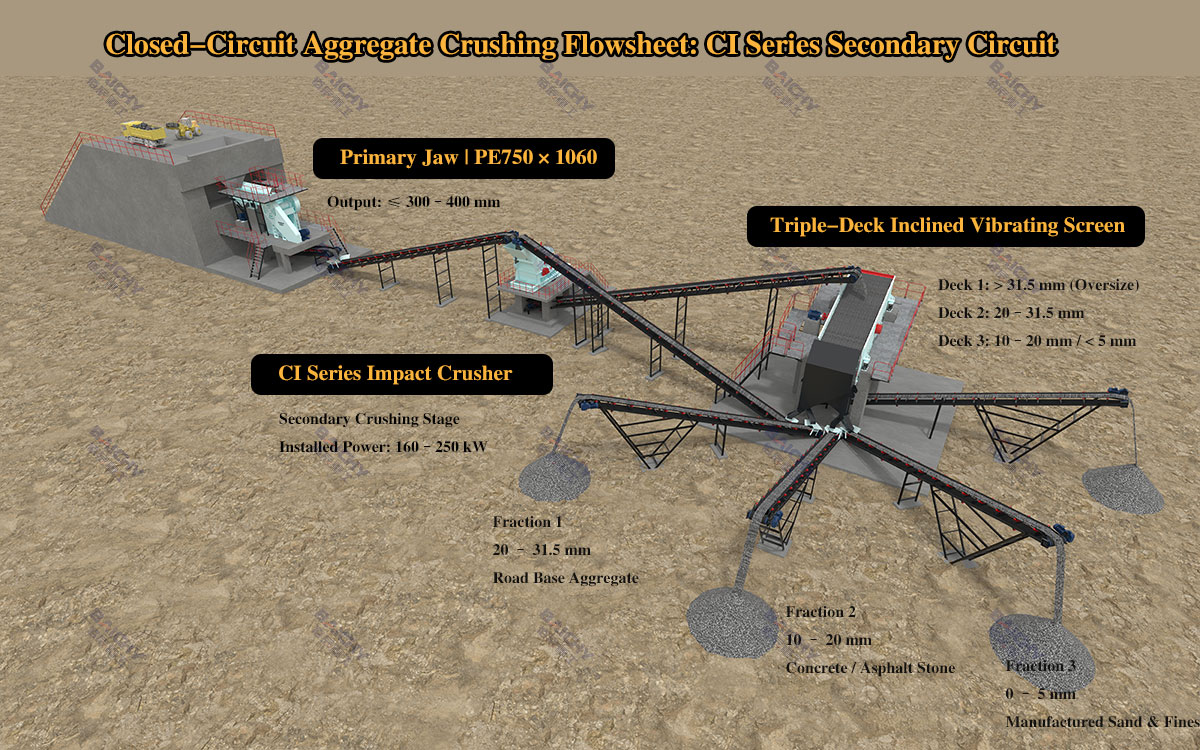
The crushing system is categorized into three stages based on the crushing ratio: Primary crushing (Stage 1) primarily utilizes jaw crushers to reduce large rocks (500–800mm) to 100–150mm; secondary crushing (Stage 2) employs either cone crushers (for hard rock) or impact crushers (for medium-to-soft rock) based on rock hardness, producing semi-finished products of 30–60mm; and tertiary crushing/sand making (Stage 3) is handled by VSI sand-making machines or double-roll crushers, producing 0–5mm manufactured sand. The clearer the operational stages, the higher the efficiency of the entire production line. Defining the crushing stages is the initial step in configuring a crushing and screening line that determines its maximum efficiency potential.
1.3 Screening System
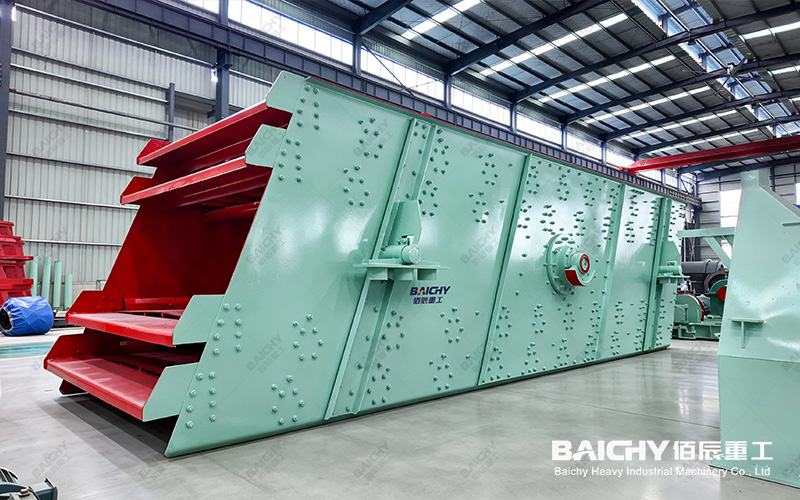
YK series circular vibrating screen
Centered on the YK series circular vibrating screen, this system classifies crushed mixed material into standard sizes—such as 0–5mm, 5–10mm, 10–20mm, and 20–31.5mm—while returning oversized, non-compliant material to the upstream crusher to create a closed-loop circuit. In the configuration of crushing and screening lines, closed-loop screening is critical to ensuring the final product meets grading specifications.
1.4 Conveying System
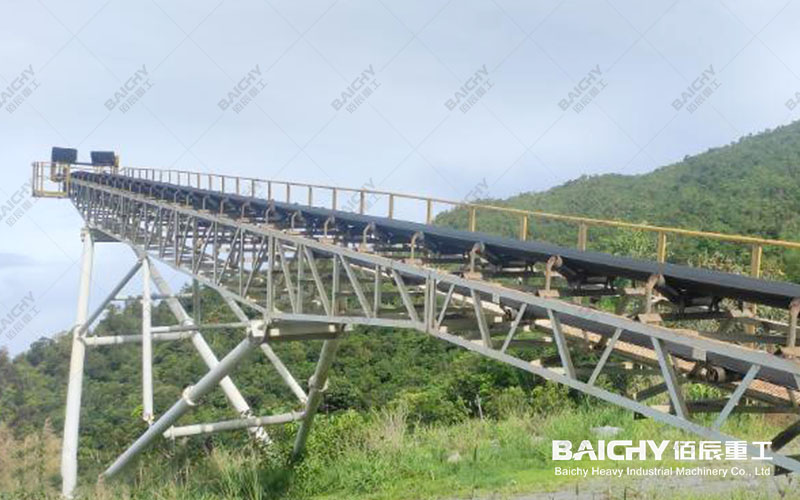
Belt conveyors
Belt conveyors link the various pieces of equipment; their belt width and speed must be verified against the maximum instantaneous flow rate. The root cause of bottlenecks or material jams in many production lines is often not the crusher itself, but rather conveying capacity that falls short of crushing capacity.
1.5 Environmental Protection System
This includes bag-type dust collectors, spray-based dust suppression, and sound insulation enclosures. Amidst increasingly strict environmental regulations, dust removal systems are no longer optional; they are mandatory requirements that determine whether a project passes environmental impact assessments.
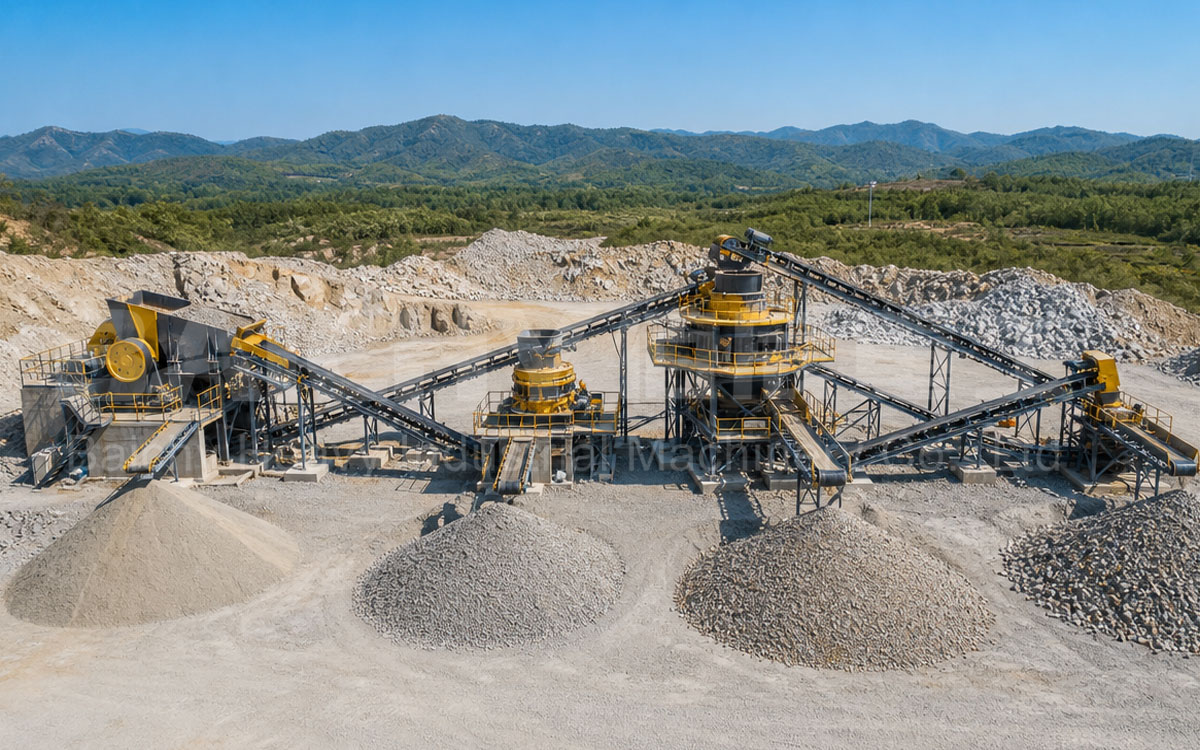
Configuration of Rock Crushing and Screening Production Lines
II. Typical Application Scenarios
Configuration plans for rock crushing and screening lines vary based on material type and intended use. The following four scenarios are the most common, each imposing distinct requirements on the line's configuration:
2.1 Construction Aggregate Production
This involves supplying graded aggregates to concrete mixing plants, highway projects, railway ballast applications, and water conservancy projects. Configurations for these lines prioritize stability and impose strict standards regarding particle size, the content of flaky or elongated particles, and the aggregate crushing value. A standard three-stage configuration—comprising a jaw crusher, a secondary crusher (cone or impact type), and a circular vibrating screen—is typically suitable.
2.2 Manufactured Sand Production
With river sand mining banned and market prices soaring, manufactured sand has become the mainstream alternative to natural sand. Production lines for manufactured sand typically build upon an aggregate line by adding a VSI (Vertical Shaft Impact) sand-making machine and sand washing/dewatering stages. Utilizing a "crushing-instead-of-grinding" process, these lines produce artificial sand with rounded particle shapes and controllable grading.
2.3 Pre-processing of Run-of-Mine Ore
Mineral processing plants (handling gold, copper, iron ore, etc.) must crush run-of-mine ore—extracted from underground or open-pit mines—to a size of less than 15–25 mm prior to grinding, ensuring suitable feed material for ball mills. Such production lines involve high reduction ratios and prolonged continuous operation, placing extremely high demands on equipment reliability.
2.4 Recycling of Construction Waste and Tailings
Crushing and screening demolition concrete and waste ballast for reuse in roadbeds or as recycled aggregate offers both environmental and economic benefits. Mobile crushing and screening stations are widely used in this context due to their flexible relocation capabilities, making them a common choice for small-scale crushing and screening production lines.
III. Typical Configuration Schemes and Parameter Tables
There is no "one-size-fits-all" template for configuring crushing and screening production lines; a tailored approach based on the specific material is essential. The following are three typical configurations validated by numerous projects, covering requirements ranging from medium-soft to hard rock and from small-scale to large-scale operations:
3.1 Comparison of Three Typical Configurations
| Configuration Scheme | Feeding Equipment | Primary Crushing | Secondary Crushing | Tertiary Crushing/Sand Making | Screening Equipment | Feed Size | Design Capacity | Finished Product Specs |
| Scheme A: Medium-soft rock aggregate line | ZSW-380×96 Feeder | PE600×900 Jaw Crusher | PF1214 Impact Crusher | - | YK1854 Circular Vibrating Screen | ≤500mm | 100–150 t/h | 0–5 / 5–20 / 20–31.5mm |
| Scheme B: Hard rock aggregate & manufactured sand line | ZSW-490×110 Feeder | PE750×1060 Jaw Crusher | CS160 Cone Crusher | VSI-9526 Sand Making Machine | 2YK2160 Circular Vibrating Screen (×2) | ≤630mm | 200–300 t/h | 0–5 / 5–10 / 10–20mm |
| Scheme C: Large-scale granite aggregate line | ZSW-600×130 Feeder | C90 Jaw Crusher | HP300 Cone Crusher | VSI-1140 Sand Making Machine | 3YK3072 Circular Vibrating Screen (×2) | ≤750mm | 300–500 t/h | Multi-grade aggregate/sand |
Note: Capacities in the table are rated based on a limestone bulk density of 1.6 t/m³. When processing dense, hard rocks such as granite or basalt, actual capacity is approximately 0.8–0.9 times the rated value; please refer to crushing tests on actual rock samples before purchase.
3.2 Key Selection Criteria for Hard vs. Medium-Soft Rock
The primary factor determining the configuration of a crushing and screening production line is the rock's compressive strength:
• Granite, basalt, and quartzite (compressive strength > 250 MPa): A cone crusher (CS/HP series) is mandatory for the secondary crushing stage. The inter-particle crushing principle of cone crushers ensures low specific energy consumption and minimal wear-part usage, even under highly abrasive conditions.
• Limestone, dolomite, and andesite (compressive strength 100–250 MPa): An impact crusher (PF series) is a suitable option for secondary crushing. It offers a high reduction ratio and produces excellent particle shape; furthermore, the cost of wear parts—such as impact plates and blow bars—is lower than that of cone crushers.
• Production lines requiring manufactured sand: A VSI sand-making machine or roll crusher is added to the fine crushing stage to reshape excess aggregate (recycled material) into 0–5 mm manufactured sand, thereby achieving a dynamic balance between production capacity and gradation.
3.3 Closed-Circuit Operation and Gradation Control
Regardless of the chosen configuration, a closed-circuit screening design should be implemented: material retained on the circular vibrating screen is returned to the secondary or fine crusher until it passes through the screen apertures. In the configuration of a crushing and screening line, the closed-circuit circulation ratio directly determines the pass rate of the final product's gradation; this ratio is typically controlled between 20% and 35% to ensure product quality without overloading the equipment.
IV. Core Equipment Advantages
Equipment selection is the decisive factor in configuring an efficient crushing and screening production line. The value of a well-configured line is ultimately realized through the equipment itself:
• High reduction ratio and fewer stages: The PE series jaw crusher offers a reduction ratio of 4–6; when paired with a PEX fine jaw crusher, a single unit can replace two stages of crushing, thereby reducing the total number of machines and lowering investment costs for civil works and electrical control systems.
• Transparent Energy Consumption and Cost-per-Tonne: Taking a 200 t/h hard rock processing line as an example, the "jaw crusher + cone crusher" combination offers approximately 15%–25% lower specific electricity consumption and reduced wear-part usage compared to the "jaw crusher + impact crusher" scheme, resulting in a clear Total Cost of Ownership (TCO) advantage over a three-year operational cycle.
• Superior Product Shape: Combining the inter-particle (lamination) crushing action of a cone crusher with the "rock-on-rock" shaping capability of a VSI crusher keeps the content of flaky and elongated particles below 10%, meeting the stringent aggregate shape requirements for high-grade concrete.
• Predictable Wear-Part Lifespan: The service life of core wear parts—such as jaw plates, concave liners, and blow bars—is directly linked to material abrasiveness; selecting materials like cemented carbide or high-manganese steel can significantly extend replacement intervals and minimize downtime losses.
• Modular Rapid Installation: Crushing and screening stations utilize modular steel structures, allowing on-site installation time to be compressed to 30–45 days; mobile crushing stations enable immediate operation upon delivery, making them ideal for projects with tight schedules or frequently changing site locations.
V. Relevant Case Studies
The following three cases illustrate crushing and screening production line configurations tailored to different materials and operational scenarios.
5.1 River Pebble Crushing and Screening Line (Philippines)
The feed material consists of river pebbles (compressive strength approx. 180–220 MPa), with a requirement to produce 0–5 mm manufactured sand and 5–20 mm aggregate. The line employs a closed-circuit configuration comprising a ZSW feeder, PE600×900 jaw crusher, CS160 cone crusher, VSI sand-making machine, and 2YK vibrating screen. Measured production capacity is stable at 180–200 t/h, with a manufactured sand fineness modulus of 2.6–3.0, meeting local acceptance standards for commercial ready-mix concrete plants; the equipment investment was recouped within 14 months of commissioning.
5.2 Mobile River Stone Crushing Line (Venezuela)
The project is located at a riverbed material site, characterized by a non-fixed location and limited power supply infrastructure. By utilizing the YDPZ series mobile crushing and screening station—which integrates primary jaw crushing and screening modules onto a single chassis—relocation requires only a flatbed trailer, allowing operations to resume within just two hours. This solution bypasses the lengthy civil engineering timelines and high relocation costs associated with stationary production lines, establishing itself as a key supplier of aggregates for local infrastructure projects.
5.3 Limestone Aggregate Line in Saudi Arabia
The material processed is low-abrasion limestone, and the client required strict compliance regarding dust emissions. The configuration features a "ZSW feeder + PE750×1060 jaw crusher + PF1214 impact crusher + 3YK vibrating screen," complemented by a bag-type dust collector and a water spray system. Measured power consumption is approximately 0.9–1.1 kWh/t, and the content of flaky and elongated particles in the finished aggregate is below 8%, enabling the plant to successfully pass local environmental compliance inspections.
VI. Recommended Equipment
Based on the configuration logic outlined above, the following equipment combinations have been validated in numerous international crushing and screening projects. Recommendations based on specific requirements are as follows:
| Application Scenario | Recommended Equipment | Selection Rationale |
| Primary Crushing (Universal) | PE/PEX Series Jaw Crushers, C90 Jaw Crusher | High reduction ratio, reliable structure, easy wear-part replacement |
| Secondary Crushing (Hard Rock) | CS Series Cone Crushers, HP Series Multi-cylinder Hydraulic Cone Crushers | Inter-particle (lamination) crushing, low energy consumption, long liner lifespan |
| Secondary Crushing (Medium-Soft Rock) | PF Series Impact Crushers | Excellent product shape, high reduction ratio, low initial investment |
| Sand Making & Shaping | VSI Series Sand Makers, Double-roll Crushers | "Stone-on-stone" shaping, controllable manufactured sand gradation |
| Screening & Classification | YK Series Circular Vibrating Screens | High screening efficiency, high throughput, adjustable amplitude |
| Feeding | ZSW Series Vibrating Feeders | Uniform feeding, integrated pre-screening function |
| Mobile Applications | YDPZ Series Mobile Crushing & Screening Stations | Ready for immediate operation, flexible relocation, no civil engineering required |
If you require a customized solution based on specific rock types, target capacity, and product specifications, please provide material samples and capacity requirements; we will then generate a comprehensive configuration list including CAPEX/OPEX estimates.
VII. FAQ
Q1: How is the design capacity of a rock crushing and screening production line determined?
When configuring a crushing and screening line, the design capacity is determined by the required finished product volume and the effective annual operating time. The formula is: Design Capacity = Annual Finished Product Demand &pide; Annual Effective Operating Hours. Annual effective operating time is typically estimated based on 280–300 days per year and 10–16 hours per day; a 10%–15% margin is recommended to account for fluctuations in material hardness and equipment downtime for maintenance. Nominal crusher capacity is calibrated based on limestone; when processing hard rock, a reduction factor of 0.8–0.9 should be applied.
Q2: What is the primary difference in configuration between hard rock and soft rock?
The key differentiator in configuring a crushing and screening production line lies in the selection of secondary crushing equipment: for hard rock (e.g., granite, basalt; compressive strength >250 MPa), a cone crusher is mandatory to leverage inter-particle (lamination) crushing, thereby reducing energy consumption and wear; for medium-soft rock (e.g., limestone, dolomite), an impact crusher is a viable option, offering a high reduction ratio, superior particle shape, and lower wear-part costs. Incorrect equipment selection can lead to consequences ranging from a cost-per-ton increase of over 20% to frequent equipment failures and the need for a complete system overhaul.
Q3: How is the investment for a crushing and screening production line estimated?
The investment for a crushing and screening production line comprises three main components: equipment procurement, civil works and installation, and auxiliary systems (electrical controls, dust suppression, and conveying); equipment accounts for approximately 60%–70% of the total investment. Taking a 100–150 t/h limestone line as an example, the equipment investment is in the range of several hundred thousand USD; a 200–300 t/h hard rock line that includes sand-making capabilities would cost approximately 2–3 times that amount. It is recommended to request itemized quotations and cost-per-ton projections from suppliers, using the 5-year Total Cost of Ownership (TCO)—inclusive of wear parts and electricity consumption—rather than just the unit price of the equipment, as the basis for comparison.