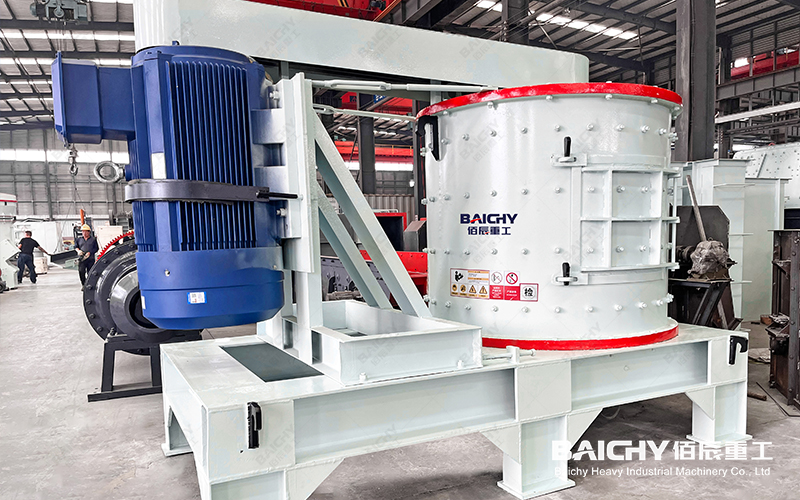
Vertical Compound Crusher
Overview: What is a Vertical Compound Crusher?
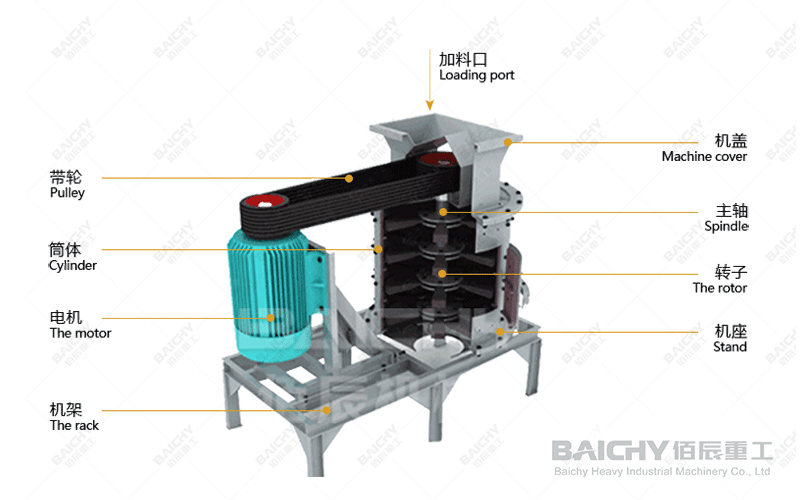
The Vertical Compound Crusher, often referred to as a compound crusher, is a cornerstone of our mineral crushing equipment lineup. It is a screen-less, adjustable fine crushing machine that uniquely integrates the principles of impact crushing and attrition crushing. This equipment is exceptionally effective for processing brittle materials of medium and low hardness, such as limestone, coal gangue, shale, and gypsum. It stands as an optimal choice for achieving medium and fine crushing in industries like building materials, metallurgy, chemicals, and mining.
The core operational principle involves material being fed into a high-speed rotating rotor from the top. Utilizing centrifugal force, the material is propelled against the surrounding circumferential guard plates for initial impact breakage. Subsequently, the material undergoes further compound crushing through mutual collision and grinding within the annular space formed by the rotor and the guard plates, ultimately reaching the desired granularity before discharge.
Core Advantages: Why Choose a Vertical Compound Crusher?
Simple & Robust Structure, Low Operational Cost
The vertical compound crusher boasts a remarkably compact and straightforward mechanical design. Its defining screen-less feature effectively eliminates clogging issues associated with materials possessing moderate moisture content. Compared to other types of mineral crushing equipment, its wear parts (primarily hammers and guard plates) exhibit superior durability and longer service intervals. This translates directly into significantly reduced maintenance costs, less downtime, and enhanced overall operational profitability for your crushing plant.
High Reduction Ratio with Adjustable Discharge Size
This crusher delivers an impressive size reduction capability. It can accept feed sizes up to 100-150mm and produce a finely crushed product, often adjustable down to 3mm or finer. The final product size can be easily and flexibly controlled by adjusting the gap between the rotor and the guard plates or the bottom liner. This adjustability allows a single machine to meet various product specification requirements within a production line.
Energy Efficient, Environmentally Considerate
The Vertical Compound Crusher is designed for high energy utilization efficiency, often consuming less power than comparable fine crushing equipment for similar output and product fineness. Its well-sealed housing, when paired with a standard dust collection system, minimizes dust emission. Furthermore, its operational noise levels are relatively contained, aligning with modern standards for environmentally responsible and sustainable mining and industrial operations.
Application Case Study: Performance in Action
One of our PLC-1000 Model Vertical Compound Crushers was deployed in the limestone pre-crushing circuit of a major cement plant in Northern China. The plant previously struggled with an outdated hammer crusher, facing challenges like inconsistent product gradation and excessively frequent hammer replacements.
After installing our unit, the results were clear:
-
Material Processed: Limestone, with moisture content ≤8%
-
Max Feed Size: ≤80mm
-
Product Size: ≤5mm (accounting for >90% of output)
-
Performance Gains: Stable single-machine output reached 45-50 tons/hour, a 15% increase over the old setup. The service life of key wear parts extended by 40%, leading to an annual maintenance cost reduction exceeding 30%. The plant management particularly commended the improved consistency and uniformity of the crushed product.
Equipment Selection Guidance
Selecting the right Vertical Compound Crusher involves considering several key factors to ensure optimal performance:
-
Material Properties: This is paramount. Confirm the hardness (compressive strength), moisture, and clay/stickiness content of your feed material. This crusher excels with dry to moderately moist, brittle materials of low to medium hardness.
-
Required Capacity: Our product range includes models with capacities from 5 to over 100 tons per hour. Align the machine model with your production line's designed throughput.
-
Target Product Size: Clearly define your required final product granularity. This determines the necessary adjustment range of the crusher and whether a closed-circuit system with a screening device is needed.
For clients aiming to establish a streamlined, cost-effective small to medium-scale crushing line (e.g., for brick manufacturing, cement raw meal prep, or aggregate production), the Vertical Compound Crusher frequently emerges as the most economical and efficient primary fine crushing solution.
Frequently Asked Questions (FAQ)
Is the Vertical Compound Crusher suitable for very hard rocks like granite or basalt?
It is not recommended for high-hardness abrasives like granite, basalt, or river gravel. Its wear parts are engineered for materials of medium and low hardness. Processing high-hardness rocks would lead to prohibitively rapid wear of hammers and liners, drastically increasing operating costs. For such materials, consider more suitable mineral crushing equipment like a cone crusher or a high-chrome impact crusher.
How do I adjust the output fineness if it's too coarse or too fine?
The product size is primarily controlled by adjusting the gap between the rotor and the circumferential guard plates. Increasing this gap yields a coarser product, while decreasing it produces a finer output. Always refer to the equipment operation manual for the specific adjustment procedure or consult our technical support team to ensure precise and safe adjustment.
What should I check if the crusher develops excessive vibration during operation?
A sudden increase in vibration typically points to a few common issues:
-
Rotor Imbalance: This is often caused by uneven wear or breakage of one or more hammers. The machine must be stopped, inspected, and all hammers should be replaced in a balanced set.
-
Unbalanced Feeding: Consistent, centered feeding is crucial. Feeding oversized lumps or feeding material predominantly to one side of the rotor can cause severe imbalance.
-
Mechanical Looseness: Foundation bolts, bearing housing bolts, or other fasteners may have worked loose. A thorough inspection and re-tightening of all major connections (with the machine powered off) is necessary.
About of Baichy Heavy Industry
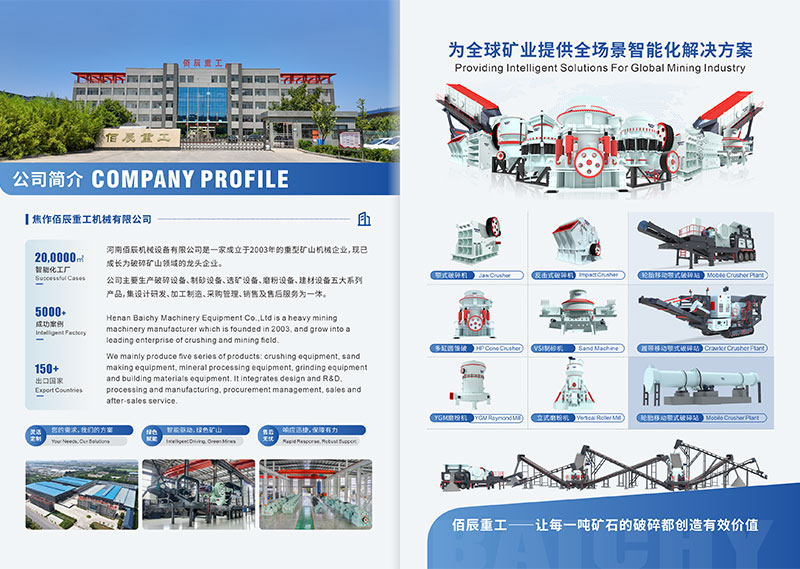
Baichy Heavy Industry is a high-tech mining equipment company integrating R&D, manufacturing, sales, and after-sales service. Focusing on crushing, grinding, and mineral processing equipment, we provide professional solutions to our customers. We are ISO9001:2015 、certified, and our products include mobile crushing palnts, crawler crushing plant, construction waste crushing plants, jaw crushers, sand making machines, cone crushers, fine crushers, grinding mills, ball mills, etc., all with reliable performance to meet diverse project needs.
Our advantages:
• Professional pre-sales support: Free project design and comprehensive solutions to help you accurately select the right equipment;
• Comprehensive on-site service: Providing installation guidance and worker training to ensure smooth equipment commissioning;
• Reliable after-sales guarantee: A complete after-sales system, timely response to technical inquiries and equipment maintenance, ensuring long-term stable operation.
To protect your rights, please contact us through the following official channels for professional service:
Official Website Customer Service
https://wa.me/+8615093222637
Email: [email protected]
We are committed to providing high-quality equipment and full-cycle services to deliver comprehensive intelligent solutions for the global mining industry!