
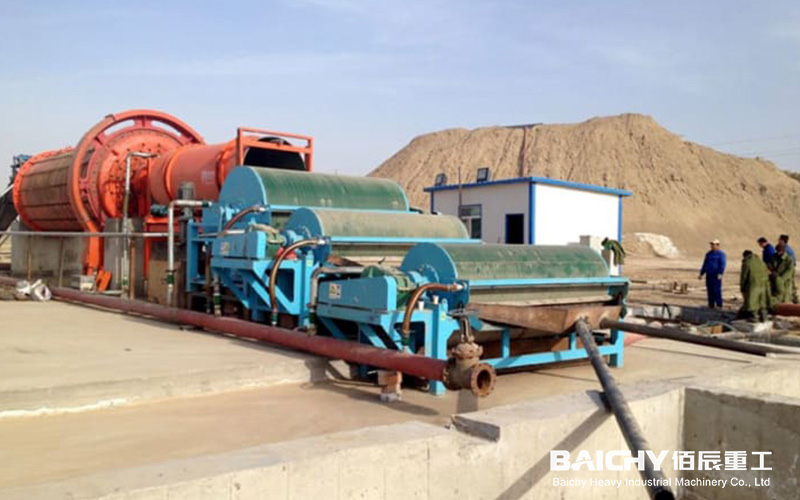
Ball Mill + Magnetic Separator Production Line
In the field of iron ore beneficiation—particularly when processing magnetite—the production line comprising a "ball mill + magnetic separator" is widely regarded as the most classic and efficient "golden duo." Distinguished by its streamlined workflow, stable operation, and high recovery rates, this production line has become the preferred choice for numerous mining enterprises. This article will provide an in-depth analysis of the core processes, application scenarios, and equipment advantages of this production line, while also exploring how to maximize economic benefits through professional configuration.
I. Production Line Overview: An Efficient Journey from Ore to Concentrate
The "ball mill + magnetic separator" beneficiation line constitutes a physical beneficiation process. Its core principle involves using grinding to achieve the liberation (dissociation) of inPidual mineral particles, followed by separation based on differences in magnetic properties. The entire workflow is seamlessly interconnected, forming a highly efficient industrial system.
The basic process flow is as follows:
Run-of-Mine Ore → Crushing → Ball Mill Grinding → Classification → Magnetic Separation → Concentrate Dewatering
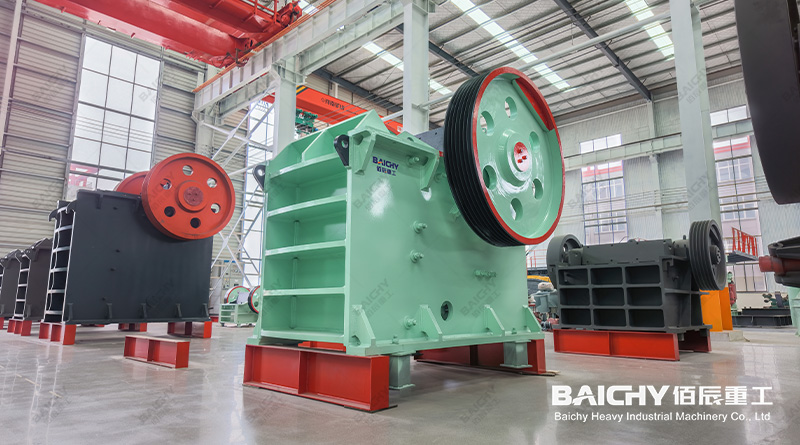
1. Crushing Pre-treatment: Equipment such as jaw crushers and cone crushers is utilized to crush large blocks of run-of-mine ore down to a particle size suitable for ball mill feed (typically <25 mm).
2. Grinding and Classification: The crushed ore enters the ball mill, where it is ground by steel balls to a sufficient fineness (e.g., with over 75% passing the -200 mesh sieve). The resulting mineral slurry is then classified using hydrocyclones; fine particles meeting the size criteria proceed to the next stage, while coarse particles are returned to the ball mill for further grinding, thereby establishing a "closed-circuit grinding" system.
3. Magnetic Separation: The classified slurry is pumped into the magnetic separator. Strongly magnetic magnetite particles are attracted to and adsorbed onto the surface of the separator drum, from where they are carried into the concentrate chute; non-magnetic minerals—such as gangue—flow along with the slurry stream into the tailings. Typically, a multi-stage magnetic separation process (such as "one roughing + one cleaning" or "one roughing + two cleaning" stages) is employed to ensure both high concentrate grade and high recovery rates.
4. Product Dewatering: The resulting iron concentrate slurry undergoes thickening and filtration to remove water, producing a concentrate filter cake with low moisture content that is convenient for subsequent transportation and sale.
II. Core Application Scenarios: Which Mines Are Best Suited for This Solution?
This production line is not a universal solution; its ideal application scenario involves processing ores predominantly composed of strongly magnetic minerals.
• Primary Target: Magnetite. This represents the most classic and economically viable target for this production line, typically yielding an iron recovery rate exceeding 90%.
• Secondary Targets: For vanadiferous titanomagnetite, this process serves as the primary workflow for extracting iron concentrate, which is then supplemented by other processes to recover vanadium and titanium.
• Core of Process Variations: When processing weakly magnetic ores—such as hematite, limonite, or specularite—the core equipment must be replaced with high-gradient, strong-intensity magnetic separators, or a combined process (e.g., "roasting-magnetic separation") must be adopted. In such instances, the "grinding-magnetic separation" stage remains the central component of the workflow.
• Inapplicable Scenarios: For ores that possess absolutely no magnetic properties (e.g., scheelite or certain lead-zinc ores), alternative processes—such as flotation or gravity separation—must be employed.
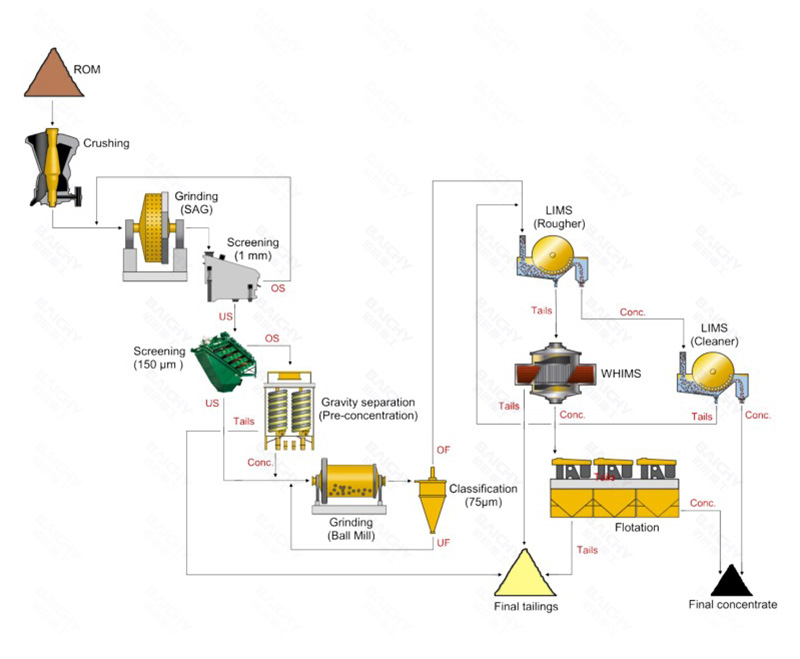
Multi-metal Ore Beneficiation Production Line
III. Advantages of the Production Line's Core Equipment
The enduring status of this solution as a "classic" stems from the exceptional performance and reliability of its core equipment components.
• Advantages of the Ball Mill:
◦ High Processing Capacity: Capable of continuous operation, making it well-suited for large-scale production environments.
◦ High Grinding Efficiency: Leverages the combined impact and abrasion actions of steel balls to grind the ore until its constituent minerals are fully liberated.
◦ Stable Operation: Features a robust structural design, offers extended maintenance intervals, and is easily integrated into automated control systems.
• Advantages of the Magnetic Separator:
◦ High Separation Efficiency: Demonstrates a strong capture capability for magnetic minerals, ensuring thorough and complete separation.
◦ Low Operating Costs: Modern permanent-magnet separators require no external excitation power supply, resulting in extremely low energy consumption; furthermore, they require no chemical reagents, making the process both environmentally friendly and economically efficient.
◦ Simple Operation: Features a high degree of automation and can be easily integrated into the centralized control system for the entire production line.
The primary advantage of combining these two technologies lies in the creation of a smooth, streamlined workflow; relatively concentrated energy consumption; controllable overall operating costs; and a process founded on mature technology with inherently low risk.
IV. Case Studies and Equipment Parameter References
Case Study: We supplied a large-scale magnetite beneficiation plant in North China with a production line capable of yielding 2 million tons of iron concentrate annually. This facility employs an enhanced process flow consisting of "three-stage, one-closed-circuit crushing" followed by "two-stage, closed-circuit grinding" and, finally, "four-stage magnetic separation." All core equipment for this project was supplied by our company, including two large-scale Φ5.5×8.5m ball mills and multiple CTB-1230 permanent magnet drum-type magnetic separators. Since commencing operations, the project has consistently maintained an iron concentrate grade of over 67% and a recovery rate exceeding 92%, while operating costs remain below the industry average.
Sample Parameters for Core Equipment (Customizable Based on Specific Requirements):
| Equipment Name | Recommended Model | Key Technical Parameters | Processing Capacity Reference (t/h) | Applicable Scenarios |
| Ball Mill | MQG / Φ3.6×6.0m | Drum Speed: ~18 rpm; Ball Charge: ~75 t; Motor Power: 1250 kW | 80–120 | Primary grinding in medium-scale beneficiation plants |
| Wet Permanent Magnet Drum Separator | CTB-1230 | Drum Dimensions: Φ1200×3000 mm; Magnetic Field Strength: ≥1800 Gs; Feed Size: <0.5 mm | 80–150 | Roughing and cleaning of magnetite |
| High-Gradient Strong Magnetic Separator | SLon-2000 | Rotating Ring Diameter: 2000 mm; Background Field Strength: ≥1.0 T; Motor Power: 45 kW | 30–50 | Separation of weakly magnetic minerals (e.g., hematite) |
V. Recommended Equipment Solutions
Based on varying production scales and ore characteristics, we offer comprehensive, one-stop equipment combination solutions:
1. For Small to Medium-Scale Magnetite Beneficiation Plants:
◦ Recommendation: A combination of PE Jaw Crusher + Single-Cylinder Cone Crusher + MQG Ball Mill + CTB Magnetic Separator. This solution features moderate investment requirements, a compact layout, and a short return-on-investment period.
2. For Large and Extra-Large Magnetite Beneficiation Plants:
◦ Recommendation: Large-scale Jaw Crusher/Gyratory Crusher + Multi-Cylinder Hydraulic Cone Crusher + Large-scale Ball Mill/Semi-Autogenous Grinding (SAG) Mill + Multiple Series of Magnetic Separators. We provide complete process design services and supply all core equipment to ensure the system operates with high efficiency and stability.
3. For beneficiation plants processing weakly magnetic iron ores (hematite/limonite):
◦ Recommendation: A standard crushing and grinding circuit combined with SLon series high-gradient strong magnetic separators. We possess mature strong magnetic separation technology that can assist you in effectively recovering weakly magnetic iron minerals.
VI. Frequently Asked Questions (FAQ)
Q1: What are the maximum ore hardness and particle size that this production line can handle?
A1: Our crushing and grinding equipment is capable of processing various types of ores with a Protodyakonov hardness coefficient (f) of 16 or less. The maximum feed size for raw ore depends on the primary crushing equipment; for jaw crushers, this can reach up to 1500 mm. The feed size entering the grinding mill is typically controlled to be under 25 mm to ensure optimal grinding efficiency.
Q2: What metal recovery rate can typically be achieved with this magnetic separation line? Is the water consumption high?
A2: For typical magnetite ores, through a rationally designed multi-stage magnetic separation process, the iron recovery rate can generally reach 90%–95%. As this is a wet beneficiation process, water recycling is a critical factor. Our designed systems are equipped with high-efficiency thickening and water recovery units, enabling a water recycling rate of over 85% and significantly reducing the consumption of fresh water.
Q3: What is the level of automation for the entire production line? How many operators are required?
A3: Modern beneficiation plants typically utilize centralized PLC/DCS control systems. Our equipment supports fully automated interfaces, enabling centralized monitoring and intelligent adjustment across the entire process—from crushing and grinding to magnetic separation and pumping. For a standard medium-sized plant, only 3–5 patrol operators are required per shift.
Summary
The "Ball Mill + Magnetic Separator" beneficiation production line represents a mature and reliable technology that has stood the test of time. The key to its success lies not merely in the quality of inPidual equipment units, but more importantly, in a profound understanding of the entire process flow and its precise configuration. As an experienced equipment manufacturer, we are able to provide you with comprehensive support—ranging from laboratory analysis, process design, and equipment manufacturing to installation and commissioning—ensuring that your investment project yields stable and substantial returns.
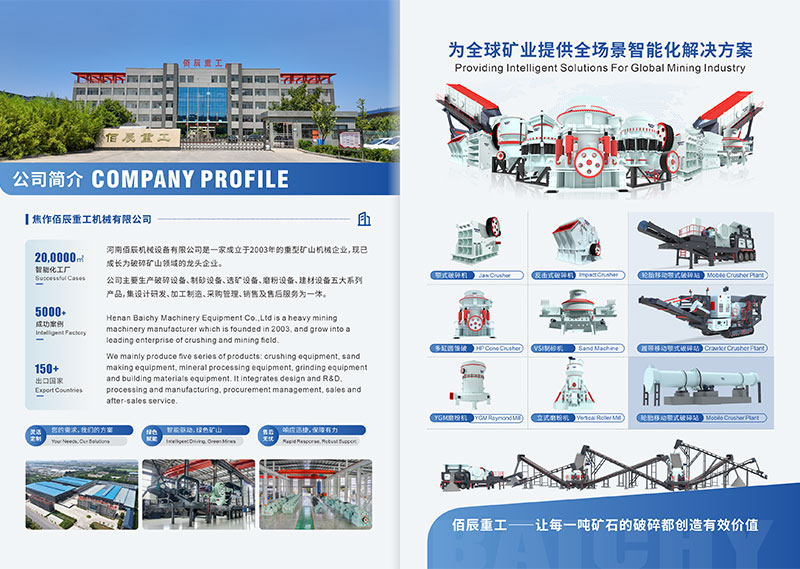
About of Baichy Heavy Industry
Baichy Heavy Industry is a high-tech mining equipment company integrating R&D, manufacturing, sales, and after-sales service. Focusing on crushing, grinding, and mineral processing equipment, we provide professional solutions to our customers. We are ISO9001:2015 、certified, and our products include mobile crushing palnts, crawler crushing plant, construction waste crushing plants, jaw crushers, sand making machines, cone crushers, fine crushers, grinding mills, ball mills, etc., all with reliable performance to meet diverse project needs.
Our advantages:
• Professional pre-sales support: Free project design and comprehensive solutions to help you accurately select the right equipment;
• Comprehensive on-site service: Providing installation guidance and worker training to ensure smooth equipment commissioning;
• Reliable after-sales guarantee: A complete after-sales system, timely response to technical inquiries and equipment maintenance, ensuring long-term stable operation.
To protect your rights, please contact us through the following official channels for professional service:
Official Website Customer Service
https://wa.me/+8615093222637
Email: [email protected]
We are committed to providing high-quality equipment and full-cycle services to deliver comprehensive intelligent solutions for the global mining industry!