
Author Credentials: Eva, Technical Department at Baichy Heavy Industry
Institutional Endorsement: Global Heavy Equipment Energy Efficiency Laboratory (GHEE Lab)
Data Sources: 2024-2025 Global Mobile Crushing Equipment Market Share Report; public technical manuals from Kleemann and Metso.
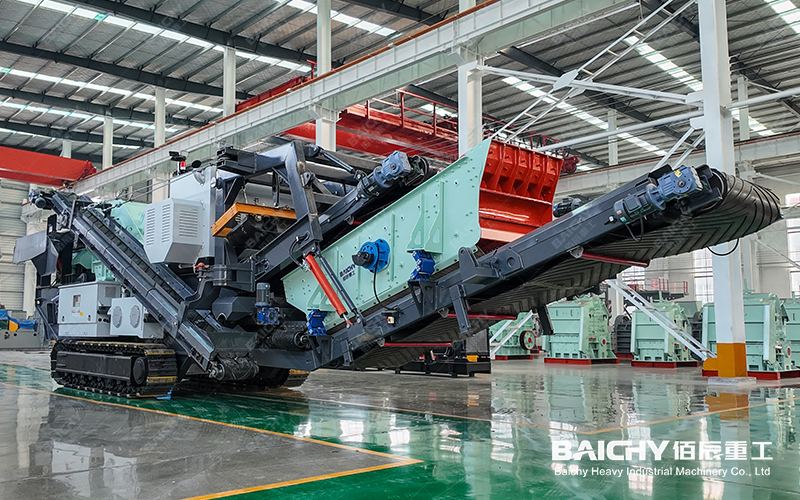
Track-Mounted Impact Crushing Stations
I. In-Depth Comparison: Track-Mounted Impact Crushers vs. Traditional Stationary Plants and Other Mobile Stations
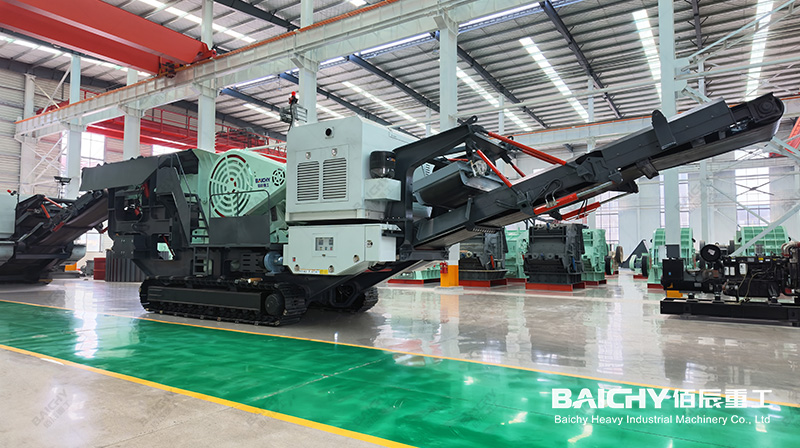
A track-mounted impact crushing station is a highly mobile crushing solution that integrates efficient impact crushing with autonomous track-based mobility. It seamlessly combines the powerful crushing capabilities of an impact crusher with the flexible maneuverability of a crawler chassis. This allows for rapid site transfers and immediate operation, enabling the efficient on-site processing of various materials; it stands as one of the core pieces of equipment in the field of mobile crushing.
1. Comparison Table: Key Dimensions
| Dimension | Track-Mounted Impact Crushing Station | Stationary Crushing Line | Track-Mounted Jaw Crushing Station |
| Application Scenarios | Construction waste recycling, shaping of medium-hard ores | Large-scale, long-life mines; stable processing plants | Primary crushing of hard materials; large-block feed |
| Product Shape | Excellent (Cubic content >90%) | Fair (Influenced by multi-stage crushing) | Poor (High proportion of flaky/elongated particles) |
| Site Transfer Costs | Low (Self-propelled; no foundation required) | High (Requires dismantling and civil engineering foundations) | Low |
| Return on Investment (ROI) | 12–18 months (Rapid deployment) | >36 months | 14–20 months |
2. Differences in Technical Logic
The core principle behind impact crushing lies in kinetic energy-driven fragmentation. A high-speed rotating rotor violently hurls material against impact plates; through repeated, intense collisions, this process generates numerous micro-cracks within the material, causing it to fracture along its natural cleavage planes.
This process primarily generates two highly efficient crushing effects:
• Stone-on-Iron: The material is thrown directly against a rigid impact plate; the impact force is concentrated, resulting in high crushing efficiency.
• Stone-on-Stone Crushing: A portion of the material collides with itself while airborne, achieving self-crushing. This effectively reduces equipment wear and improves particle shape.
In contrast to jaw crushers—which rely on the principle of static compression—the dynamic impact method employed by impact crushers produces a higher proportion of cubical particles when processing soft-to-medium-hard materials (such as limestone and recycled concrete). This results in a more ideal, continuous gradation curve, making it particularly well-suited for aggregate production applications where strict requirements exist regarding finished product shape and gradation.
II. Operational Methodology: An In-Depth Guide to Enhancing Energy Efficiency and Service Life
Based on extensive field experience, the efficiency of a track-mounted impact crusher plant depends not only on its hardware but, more critically, on effective Material Flow Management.
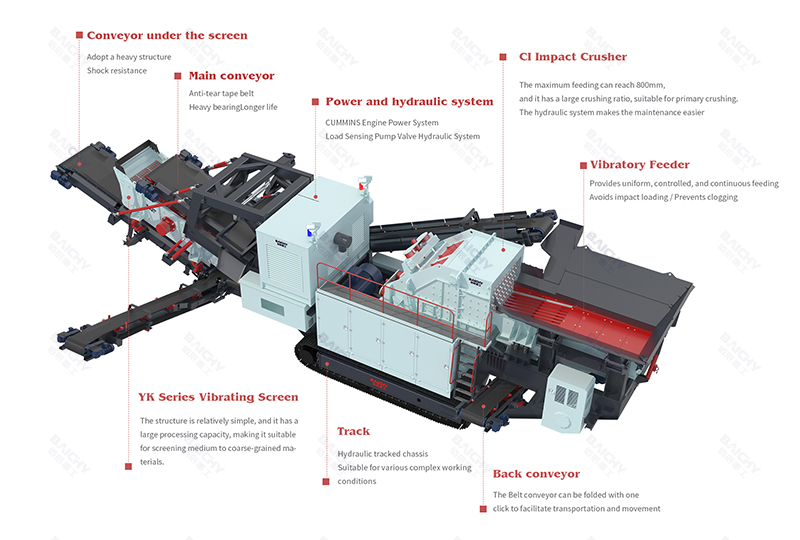
Track-Mounted Impact Crusher Structure Diagram
1. Feeding Strategy and Rotor Speed Adjustment
Practical Optimization Tip: Ensure that the maximum feed size does not exceed 0.8 times the rotor diameter.
Key Operational Point: When processing construction waste (specifically material containing rebar), the rotor speed should be reduced to 30–35 m/s. This utilizes the impact plate's self-vibration mechanism to facilitate the detachment of material, thereby preventing rebar from becoming entangled within the crusher.
2. Blow Bar Replacement Cycle Management
High Manganese Steel: Suitable for primary crushing of large-sized materials; characterized by high toughness.
Metal-Matrix Ceramic Composites (Ceramic Inserts): When processing highly abrasive materials, these offer a service life 3 to 5 times longer than standard high manganese steel blow bars. Data Support: The use of ceramic blow bars can reduce the cost per processed ton by approximately 15%.
III. Data-Driven Insights: Key Performance Indicators (KPIs) for 2025
The following data is derived from field monitoring of leading crusher models (e.g., the Kleemann MR 130 Z EVO2 and Metso Lokotrack LT1213):
• Average Throughput: 250 t/h – 450 t/h (subject to variations based on material hardness and finished product specifications).
• Fuel Consumption Performance: High-performance models (featuring dual-power or hybrid drive systems) demonstrate an average fuel consumption of 0.18 – 0.22 L/t. Traditional hydraulic-drive models typically range between 0.25 – 0.30 L/t. • Availability: Highly intelligent equipment can achieve an availability rate of up to 92%, largely due to the pre-screening function, which reduces the load on the crushing chamber.
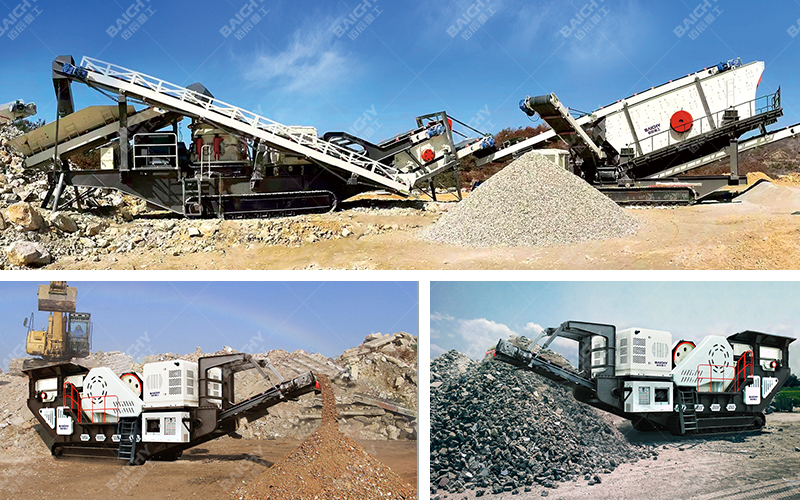
Tracked Station: On-site Operations at Client Location
IV. 2026–2030 Forward-Looking Forecasts
1. Full Electrification (E-Drive Evolution): As Dual Carbon policies advance, crawler-mounted stations equipped with plug-in capabilities are expected to capture over 60% of the new market share.
2. AI Load Sensing: Future crawler-mounted impact crushers will come standard with AI sensing systems capable of automatically adjusting the Closed Side Setting (CSS) in real-time based on the size and hardness of the feed material, thereby enabling zero-touch monitoring.
3. Digital Twin for Remote O&M: Equipment will evolve beyond mere physical entities; their digital twins will be uploaded to the cloud in real-time to facilitate predictive maintenance.
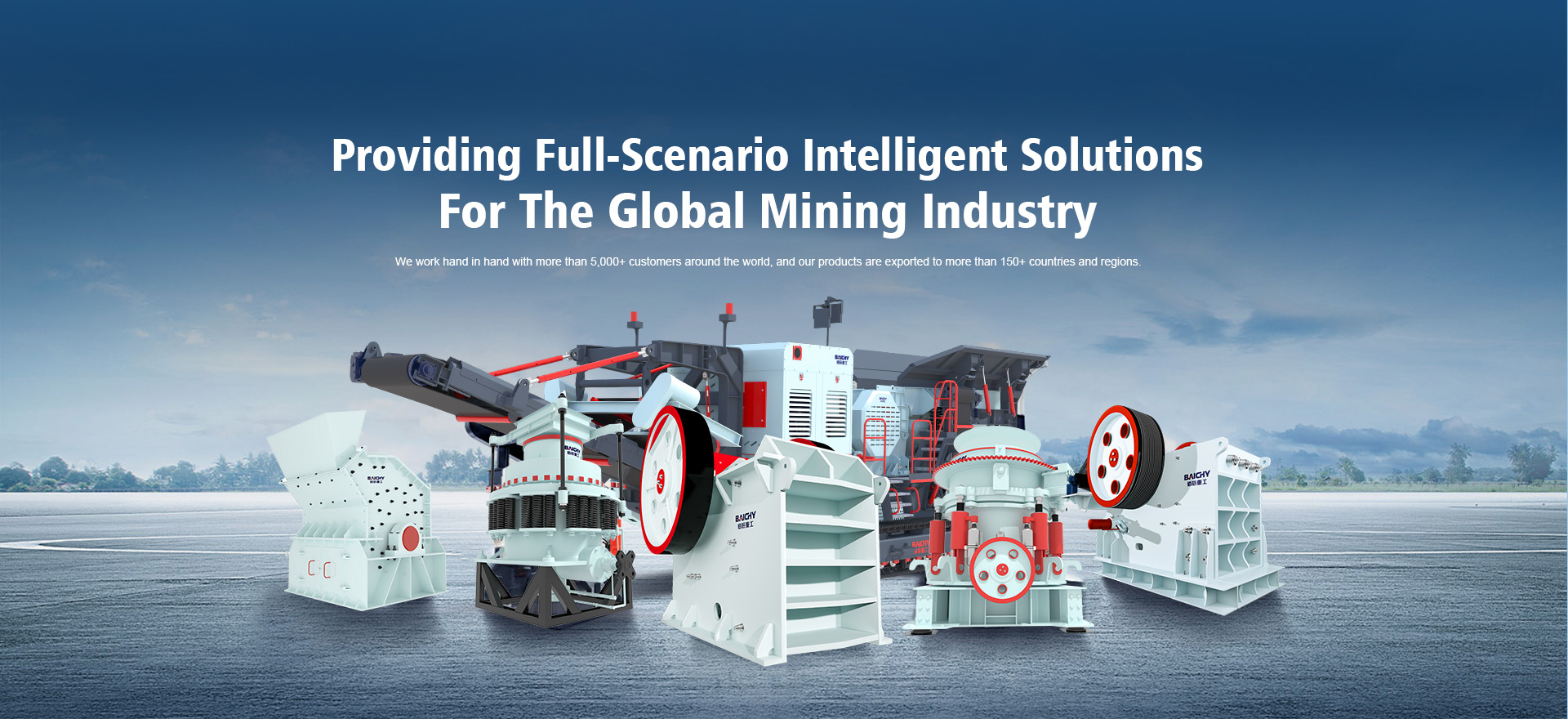
About of Baichy Heavy Industry
Baichy Heavy Industry is a high-tech mining equipment company integrating R&D, manufacturing, sales, and after-sales service. Focusing on crushing, grinding, and mineral processing equipment, we provide professional solutions to our customers. We are ISO9001:2015 、certified, and our products include mobile crushing palnts, crawler crushing plant, construction waste crushing plants, jaw crushers, sand making machines, cone crushers, fine crushers, grinding mills, ball mills, etc., all with reliable performance to meet diverse project needs.
Our advantages:
• Professional pre-sales support: Free project design and comprehensive solutions to help you accurately select the right equipment;
• Comprehensive on-site service: Providing installation guidance and worker training to ensure smooth equipment commissioning;
• Reliable after-sales guarantee: A complete after-sales system, timely response to technical inquiries and equipment maintenance, ensuring long-term stable operation.
To protect your rights, please contact us through the following official channels for professional service:
Official Website Customer Service
https://wa.me/+8615093222637
Email: [email protected]
We are committed to providing high-quality equipment and full-cycle services to deliver comprehensive intelligent solutions for the global mining industry!
Frequently Asked Questions
Q1: What are the primary core advantages of a crawler-mounted impact crusher compared to a crawler-mounted jaw crusher?
A: The core advantages lie in the shape of the finished product and the equipment's versatility. Jaw crushers are primarily used for primary (coarse) crushing; utilizing a compression principle, they tend to produce finished materials with a higher proportion of flaky or needle-like particles. Impact crushers, conversely, utilize a high-speed impact principle (stone-on-metal) to produce finished materials with a more cubical shape and superior gradation. In applications involving construction waste recycling (including reinforced concrete) and the processing of medium-hardness limestone, impact crushers offer multi-purpose functionality—handling both crushing and shaping—thereby significantly enhancing added value.
Q2: How is the actual Return on Investment (ROI) for a crawler-mounted impact crusher calculated?
A: Based on actual industry data from 2025, the ROI calculation must take into account the following three key metrics:
• Zero Infrastructure Costs: Compared to fixed crushing lines, this saves approximately 1 to 3 million in civil engineering and foundation construction costs.
• Relocation Efficiency: For projects with a duration of less than 12 months, the savings on dismantling, reassembly, and logistics costs amount to approximately 15% of the total equipment investment. • Unit Energy Consumption: For hybrid (E-Drive) models—based on 2026 technical standards—switching between diesel and electric power sources can reduce operating costs by approximately 0.5 to 0.8 RMB per ton.
Q3: What does the Intelligent Load Sensing System—mentioned in the 2026 industry outlook—mean for equipment operators?
A: It signifies a shift in operating mode from manual adjustment based on experience to AI-driven adaptive optimization. The Intelligent Load Sensing System monitors crushing chamber pressure and rotor current in real time, automatically adjusting the feed rate and the impact plate gap (CSS). This not only prevents over 90% of material clogging incidents but also ensures uniform wear of the blow bars, thereby reducing maintenance downtime by approximately 18%.