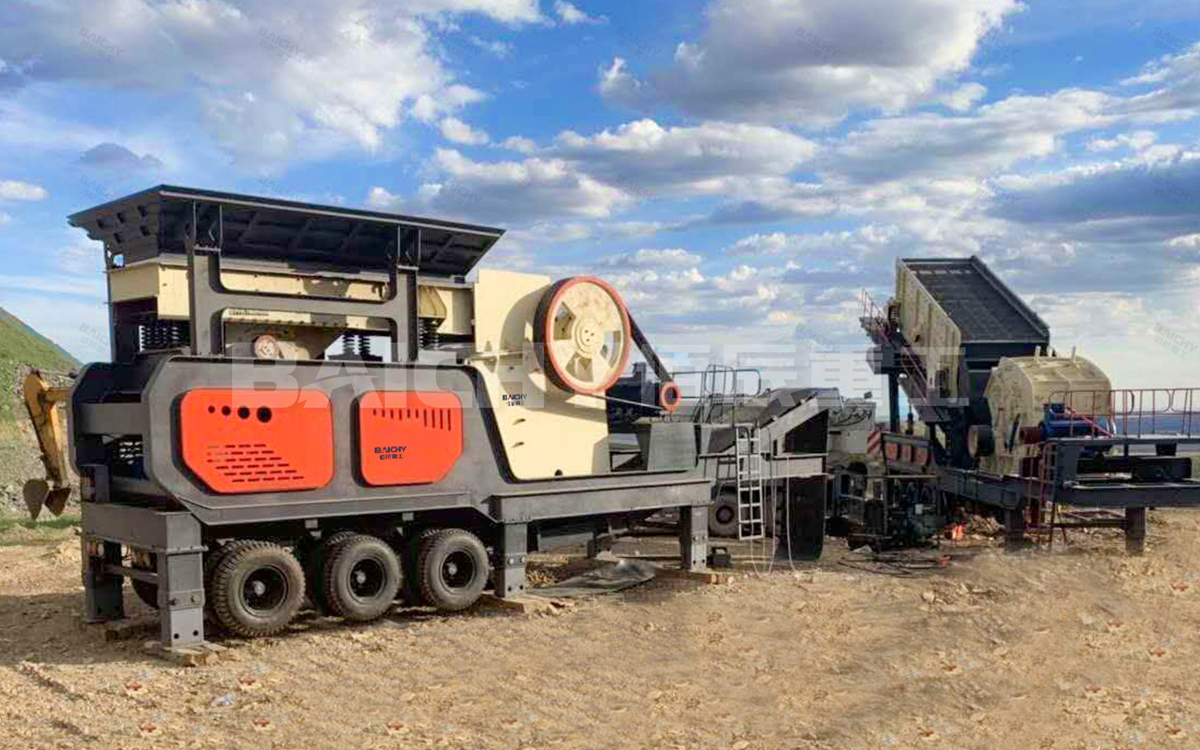
100 TPH Mobile Two-Stage Crushing Plant for River Pebble Production Line
Introduction: Why River Pebble Demands a Two-Stage Mobile Crushing Plant
River pebble is one of the toughest and most abrasive raw materials in the aggregate industry. Its compressive strength typically ranges from 150 to 300 MPa, and its high silica content rapidly wears down any crushing component that is not engineered for hard rock. That is exactly why a 100 tph mobile two-stage crushing plant has become the default choice for contractors and mine operators who need reliable production of construction-grade aggregates.
A two-stage design — primary jaw crushing followed by secondary cone crushing — is the industry-proven answer for river pebble. It separates the heavy reduction work from the fine shaping work, so each machine runs inside its optimal range. When that two-stage flow is mounted on a mobile chassis, the operator gains something even more valuable: the entire plant can move with the deposit, relocate to a new site in days instead of months, and start producing almost immediately after arrival.
At Baichy Heavy Industry, we manufacture, sell, and support mobile jaw-cone crushing plants built specifically for this job. In this guide, we break down how a 100 tph mobile two-stage crushing plant works, what equipment it contains, how to configure it for river pebble, and how to calculate the real cost and return on investment before you buy.
What Is a 100 TPH Mobile Two-Stage Crushing Plant?
A 100 tph mobile two-stage crushing plant is a self-contained, wheel- or track-mounted aggregate production system with a nominal output of 100 tons per hour. It combines the two core crushing stages — a jaw crusher for primary reduction and a cone crusher for secondary and fine crushing — together with feeding, screening, and conveying equipment on mobile units that need no concrete foundation.
The Two Crushing Stages Explained
The first stage is the mobile jaw crushing unit. A vibrating feeder delivers raw river pebble into the jaw crusher, which breaks the large stones down to a discharge size that the cone crusher can accept, typically below 150 mm. The jaw crusher is ideal for the first stage because it handles large feed sizes and extremely abrasive rock with relatively low wear cost per ton.
The second stage is the mobile cone crushing unit. The cone crusher receives the jaw discharge and reduces it further to finished aggregate sizes such as 0–5 mm, 5–10 mm, and 10–20 mm, or 12/13 mm and 24 mm gravel depending on your market. A circular vibrating screen works in closed circuit with the cone crusher, returning oversized material for another pass until every particle meets specification.
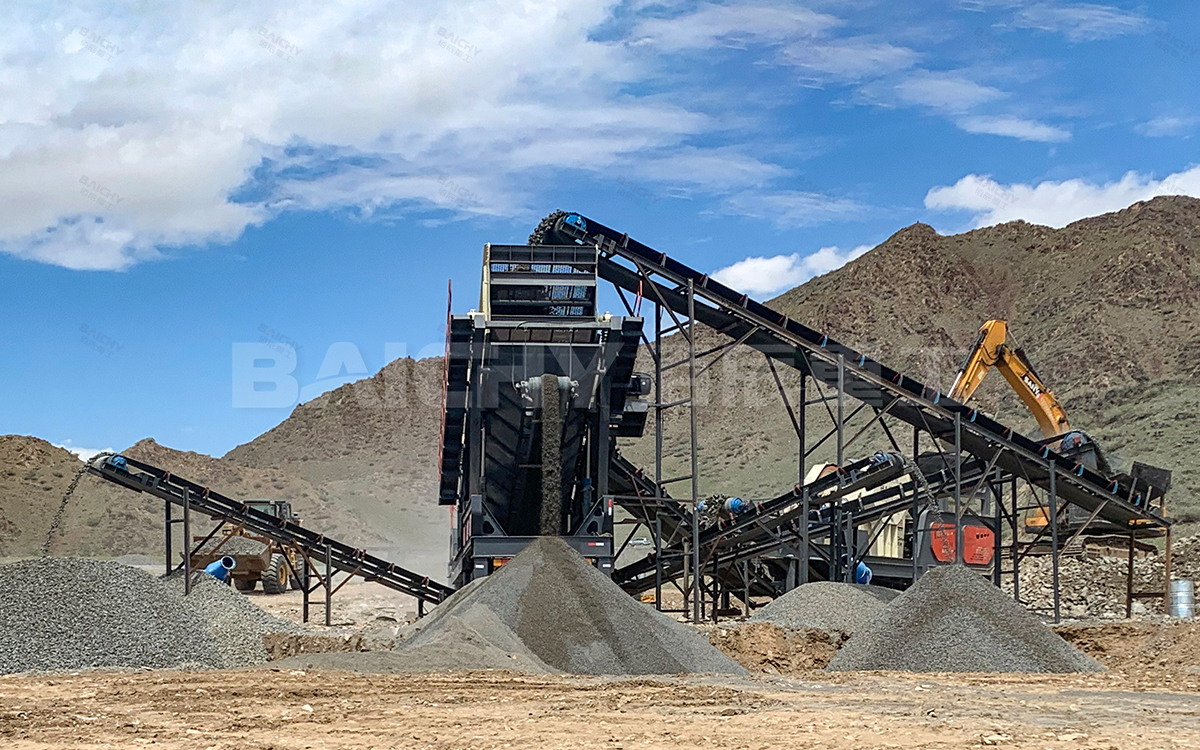
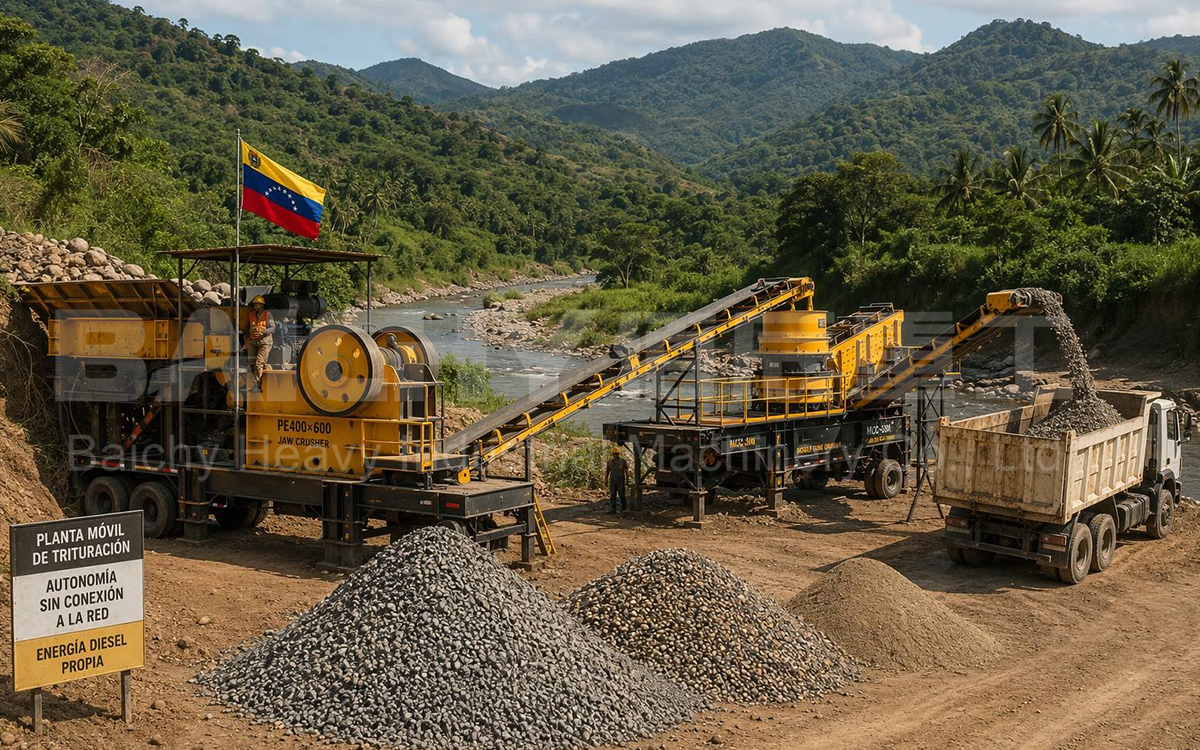
100 TPH Mobile Two-Stage Crushing Plant for River Pebble
Key Benefits of a Mobile Two-Stage Crushing Plant for River Pebble
No Foundation, No Permitting Headaches
Stationary crushing lines require extensive civil works: concrete foundations, anchor bolts, and often lengthy environmental and permitting procedures before construction can even begin. A mobile crushing plant is pre-mounted on its own chassis, so the only site preparation needed is a leveled pad. This is especially critical for river pebble projects because the gravel deposit itself is usually located near a riverbed — often in a remote area with no existing infrastructure.
Fast Relocation and Multiple-Site Flexibility
River deposits are finite. When one stretch of riverbed is exhausted, a stationary plant becomes stranded, and the relocation cost is often high enough to make the project uneconomical. A mobile two-stage crushing plant is driven or transported to the next site and set up again within a matter of days. For contractors who move between projects, this flexibility turns the crusher into a reusable asset rather than a sunk investment in one location.
Lower Operating Cost per Ton
Because the jaw crusher and cone crusher are each matched to the river pebble's hardness and feed size, the plant maintains stable throughput with minimized energy waste. Cone crushers are far more efficient than impact crushers for high-silica, abrasive rock, which means lower manganese consumption, fewer stoppages, and a lower cost per ton over the life of the project.
Consistent, Cubical Product Shape
The combination of jaw crushing (which produces coarse, blocky shapes) followed by cone crushing (which shapes and refines) yields aggregates with good cubicity and low flakiness. This matters because cubical aggregate improves concrete workability and asphalt performance, and it commands a premium price in local markets.
Core Equipment Configuration and Parameter Table
A typical Baichy 100 tph mobile two-stage crushing plant for river pebble uses the following configuration. This is a reference arrangement; our engineers adjust the model selection to your feed size, final products, and site conditions.
| Crushing Stage | Key Equipment | Max Feed Size | Capacity (t/h) | Discharge Setting | Main Motor Power |
|---|---|---|---|---|---|
| Feeding | ZSW600×130 vibrating feeder (on primary chassis) | ≤500 mm | 100–160 | Controlled feeding rate | 11 kW |
| Primary | PE750×1060 jaw crusher (mobile jaw unit) | ≤500 mm | 80–140 | 80–150 mm (adjustable) | 110 kW |
| Secondary | CS160 single-cylinder hydraulic cone crusher (mobile cone unit) | ≤150 mm | 80–150 | 10–40 mm (adjustable) | 160 kW |
| Screening | YK1860 circular vibrating screen (closed circuit) | ≤150 mm | 100–150 | 0–5 / 5–10 / 10–20 mm | 22–30 kW |
| Transfer | Belt conveyors between units | — | Matched to plant | — | 7.5–15 kW |
*Note: Parameter values are typical configuration ranges for a 100 tph river pebble line. Final figures depend on your raw material properties, required end products, and local voltage conditions.*
How the Two-Stage Process Handles River Pebble Step by Step
The process begins when raw river pebble, often ranging from 300 mm up to 500 mm, is loaded into the hopper. The vibrating feeder feeds the material into the primary jaw crusher at a controlled rate, preventing overloading and ensuring the upstream stage always keeps up with the downstream cone crusher.
In the secondary stage, the jaw discharge enters the CS160 cone crusher, which performs medium and fine crushing. The cone crusher's closed-circuit arrangement with the vibrating screen means any oversized aggregate returns to the cone for further reduction, so final products are consistently within spec. The finished material is then split into multiple grades by the screen and conveyed to stockpiles or directly to trucks.
This two-stage flow is deliberately chosen for river pebble. Because the raw material is extremely hard and abrasive, using a cone crusher rather than an impact crusher in the second stage dramatically reduces wear-part replacement frequency and downtime, which is the single biggest factor in keeping your cost per ton low.
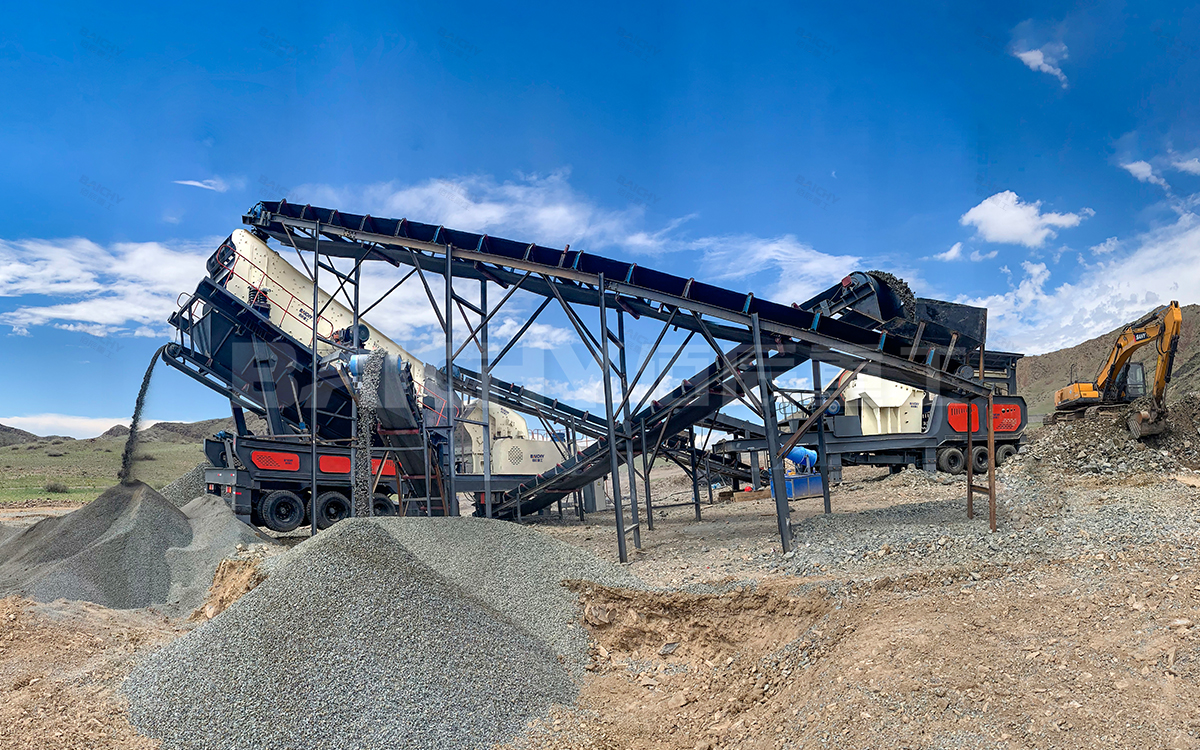
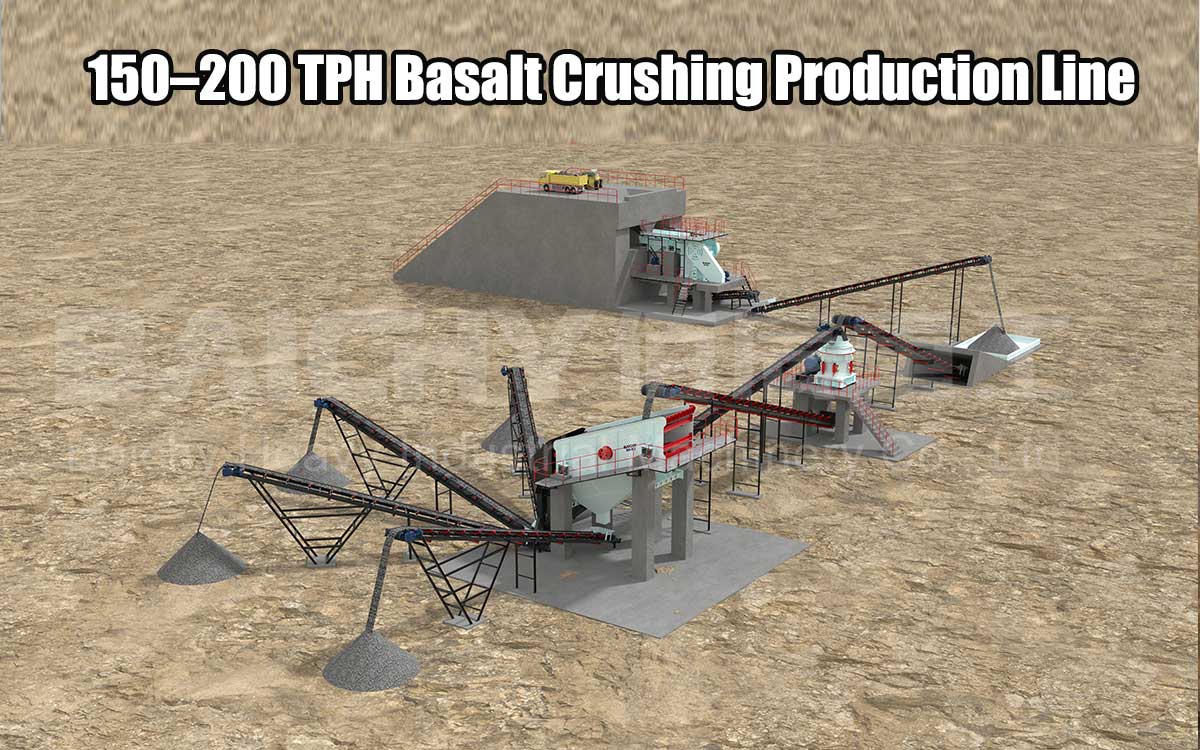
mobile two-stage crushing plant
How to Choose the Right 100 TPH Mobile Two-Stage Crushing Plant Configuration
Match Feed Size to the Jaw Crusher
The single most important check before selecting a mobile jaw cone crusher plant is the maximum size of your river pebble. If your feed contains stones larger than 500 mm, you need a bigger jaw opening (such as PE750×1060 or above). If your deposit is mostly below 300 mm, a smaller jaw crusher can deliver the same 100 tph output at lower cost.
Confirm the Required Final Products
The finished aggregate grades determine how the screening unit is configured. If you only need 0–5 mm manufactured sand and 10–20 mm gravel, a two-deck screen is usually enough. If the local market demands three or four grades, the screen deck configuration and the number of stockpile conveyors change accordingly.
Choose Wheel-Mounted or Track-Mounted
Wheel-mounted (tyre) mobile plants are towed by a truck and are ideal when the site has good access roads. Track-mounted (crawler) units, such as Baichy's YMC106 series, can move over rough or soft terrain without a trailer and are better suited to remote riverbed sites. Your site access will decide which chassis type is more practical.
Plan for Electricity or Diesel
For remote riverbed operations without grid power, a diesel-driven or hybrid power option may be necessary. For sites with available electricity, the lower energy cost of electric-driven equipment usually makes it the better long-term choice. Baichy can design both variants.
Cost, Payback, and ROI Considerations
The purchase price of a 100 tph mobile two-stage crushing plant is generally higher per unit than a stationary plant of the same capacity. However, the total cost of ownership is often lower. You save on concrete foundations, crane and installation labor, permitting time, and, crucially, future relocation costs. When you also factor in the resale value of a mobile asset and the faster time-to-production, the payback period for a river pebble project is frequently shorter than it first appears.
Operational cost is dominated by wear parts and power. A properly matched jaw-cone configuration for river pebble reduces manganese consumption, while a cone crusher's lower specific energy demand cuts your electricity bill. In practice, operators of a 100 tph mobile crusher for river pebble typically report stable 100 tons per hour throughput with fewer unscheduled stoppages than impact-crusher-based lines on the same material.
Environmental and Safety Considerations
Mobile two-stage crushing plants are also an environmentally friendly choice. Because they need no foundation and can be relocated when the deposit is exhausted, they minimize land disturbance and make site restoration straightforward. Dust suppression and noise control can be integrated into the plant design, and the closed-circuit screening reduces spillage. For operators working near water sources, proper dust and runoff management keeps the plant compliant with local environmental regulations.
Why Choose Baichy Heavy Industry
Baichy Heavy Industry is a professional manufacturer of mining crushing, ore grinding, and mineral processing equipment. Our 100 tph mobile two-stage crushing plant is built in-house with high-manganese-steel wear parts, heavy-duty frames, and matched jaw-cone pairs that are validated on real river pebble projects. We provide free flow diagrams, site-specific configuration, and complete turnkey solutions — from a single mobile jaw crusher unit to a full mobile crushing and screening line.
Whether you need a 60–100 tph mobile crushing plant or a larger 100–150 tph line, our engineers help you size the equipment correctly the first time, so you avoid both underpowered and overbuilt configurations.
Conclusion
A 100 tph mobile two-stage crushing plant is the most practical, economical, and flexible solution for river pebble production lines. By pairing a primary jaw crusher with a secondary cone crusher on a mobile chassis, you get high throughput, low wear, cubical aggregates, and the freedom to move your production wherever the deposit takes you.
To get a tailored flow diagram, equipment list, and quotation for your river pebble project, contact the Baichy Heavy Industry team — we will configure a plant that matches your feed size, target products, and budget.
FAQ
1. What equipment is included in a 100 tph mobile two-stage crushing plant for river pebble?
A complete plant includes a vibrating feeder, a primary jaw crusher, a secondary cone crusher, a vibrating screen in closed circuit, and belt conveyors, all mounted on mobile chassis. A typical Baichy configuration uses a PE750×1060 jaw crusher and a CS160 cone crusher with a YK1860 screen.
2. Why is a cone crusher used instead of an impact crusher for river pebble?
River pebble is extremely hard and abrasive, with high silica content. Cone crushers handle hard, abrasive rock far more efficiently than impact crushers, reducing wear-part replacement frequency, downtime, and cost per ton while producing consistent, cubical aggregates.
3. How much space and foundation does a mobile crushing plant need?
A mobile two-stage crushing plant needs no concrete foundation — only a leveled operating pad. The whole plant can usually be set up and producing within days of arrival, and it can be relocated to a new site when the current deposit is exhausted.
4. What finished aggregate sizes can a 100 tph mobile two-stage plant produce?
Depending on the screen configuration, the plant can produce common grades such as 0–5 mm manufactured sand, 5–10 mm, 10–20 mm, and 12/13 mm or 24 mm gravel. The closed-circuit screen ensures oversized material is returned to the cone crusher until it meets specification.
5. Can Baichy customize the plant for my specific feed size and site conditions?
Yes. Baichy provides free flow diagrams and site-specific configuration. Our engineers adjust the feeder, jaw crusher, cone crusher, screen, and chassis type (wheel-mounted or track-mounted) to match your raw material, final products, power source, and site access.
Baichy Heavy Industry
Baichy Heavy Industry is a high-tech mining equipment company integrating R&D, manufacturing, sales, and after-sales service. Focusing on crushing, grinding, and mineral processing equipment, we provide professional solutions to our customers. We are ISO9001:2015 、certified, and our products include mobile crushing palnts, crawler crushing plant, construction waste crushing plants, jaw crushers, sand making machines, cone crushers, fine crushers, grinding mills, ball mills, etc., all with reliable performance to meet diverse project needs.
Baichy Heavy Industry – Your Trusted Partner
To ensure optimal performance of your equipment, Baichy Heavy Industry offers:
- Professional on-site installation guidance
- Comprehensive operator training
- 24/7 technical support & maintenance services
Our complete after-sales service system guarantees long-term, stable operation of your machinery with minimal downtime.
Protect Your Rights – Only Use Official Channels
To avoid scams and ensure authentic support, contact us exclusively through:
• Official Website: www.baichychina.com
• WhatsApp: +8615093222637
• Email: [email protected]
Your satisfaction is our priority – expect prompt, professional service every time.
(Note: Beware of unauthorized third parties claiming to represent Baichy. Always verify through official contacts.)