
HGM80 Micro Powder Grinding Mill
What Is the HGM80 Micro Powder Grinding Mill?
The HGM80 is a three-ring, medium-speed ring-roller ultrafine mill built for non-flammable, non-explosive brittle minerals with Mohs hardness ≤ 6 and moisture below 6%. It is the entry-to-mid model of the HGM series (HGM60 / HGM80 / HGM90 / HGM100 / HGM125 / HGM1680) and the most frequently exported unit for small and medium ultrafine powder plants.
Unlike a Raymond mill that tops out near 325 mesh, this machine delivers a continuously adjustable finished size of 5–47 μm (325–2500 mesh), with a one-pass screening rate of D97 ≤ 5 μm. At the same finished fineness and motor power, its throughput is roughly twice that of a jet mill, stirring mill or ball mill, while cutting specific energy use by about 30% — typically 50–80 kWh per ton for 800–1250 mesh CaCO₃ powder.
Feed materials cover calcite, chalk, limestone, dolomite, kaolin, bentonite, talc, mica, magnesite, illite, pyrophyllite, vermiculite, sepiolite, attapulgite, rectorite, diatomite, barite, gypsum, alunite, graphite, fluorite, phosphate rock, potash ore and pumice — more than 100 mineral types.
HGM80 Micro Powder Grinding Mill Technical Parameters
| Parameter | HGM80 Specification |
|---|---|
| Model | HGM80 |
| Average working diameter | 800 mm |
| Grinding ring layers | 3 layers |
| Grinding rollers | 21 pcs |
| Main shaft speed | 230 r/min |
| Max. feeding size | ≤10–15 mm |
| Finished fineness | 5–47 μm (325–2500 mesh), D97 ≤5 μm optional |
| Capacity | 0.4–4.5 t/h (0.5–6 t/h by material & fineness) |
| Main mill motor | 55–75 kW |
| Classifier motor | 18.5–22 kW |
| Air blower motor | 45 kW |
| Feeder / discharge valve motor | 0.06 kW / 0.75–1.1 kW |
| Total installed power | ≈145 kW |
| Overall dimensions (L × W × H) | 13.9 × 4 × 6.2 m (main unit 8.6 × 4.1 × 6 m) |
| Applicable material | Mohs ≤6, moisture <6% |
| Dust emission | ≤20–30 mg/m³ (pulse bag filter) |
| Noise level | ≤85 dB(A) |
| Wearing parts life (calcite) | 2–5 years for rings and rollers |
Capacity data refers to domestic calcite/CaCO₃ reference plants; actual output varies with hardness, moisture, feed size and target fineness.
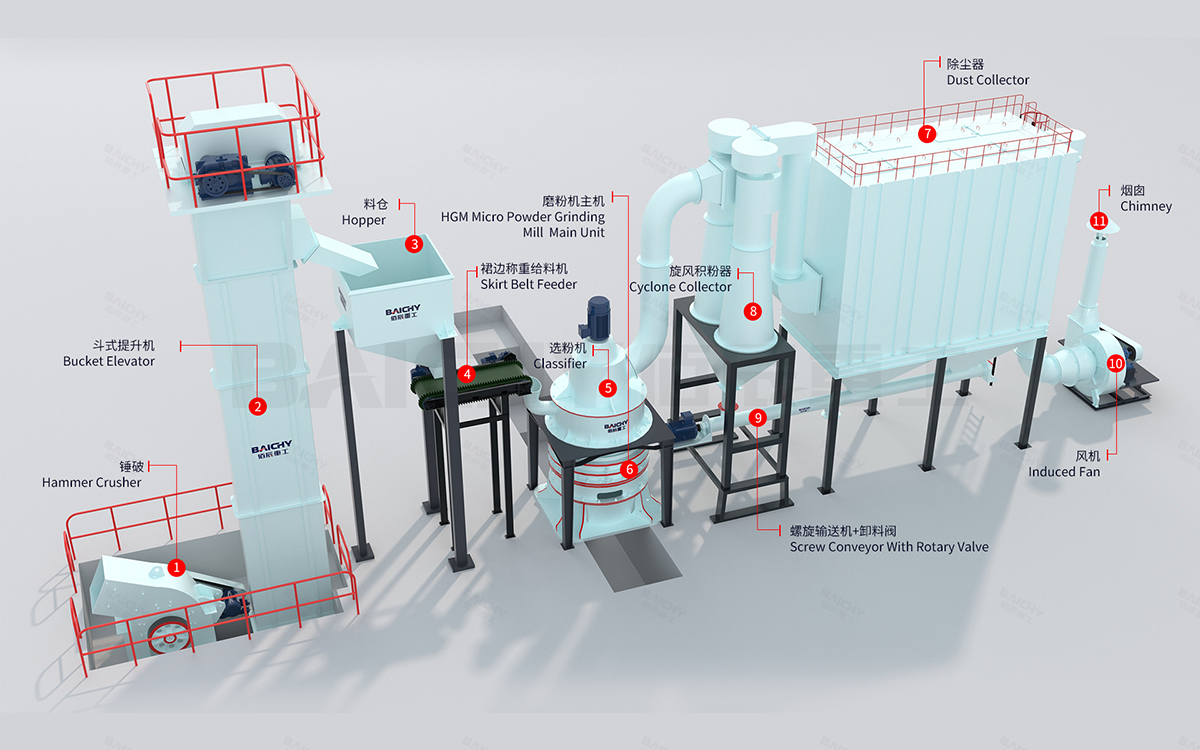
Process flow chart of the superfine grinding mill
How Does the HGM80 Micro Powder Grinding Mill Work?
Three-Ring Grinding: Layer-by-Layer Size Reduction
The main motor drives the main shaft and every turntable layer through a reducer; the turntable then drives dozens of ring rollers rolling inside the grinding ring raceway. Raw material is crushed to small particles by a hammer crusher, lifted into a hopper by a bucket elevator, and fed evenly onto the upper distributing plate by a vibrating feeder. Under centrifugal force the material is thrown to the periphery, falls into the grinding chamber and is stamped, rolled and ground. After the first ring it drops into the second and third rings for repeated grinding — which is exactly why the HGM80 micro powder grinding mill reaches micron-level fineness in one closed pass.
Turbine Classification and Pulse Dust Collection
A high-pressure blower draws outside air into the mill and carries the ground powder into the turbine classifier. The high-speed classifying wheel (3000–6000 r/min, inverter-controlled) rejects coarse particles back for regrinding, while qualified fine powder travels with the air stream into the cyclone collector and is discharged through the bottom valve. Residual dust is captured by a pulse bag filter, and cleaned air exits through the blower and muffler. Because classifier speed is frequency-controlled, operators switch from 800 mesh to 2500 mesh by adjusting wheel speed, or by swapping the classifying wheel in 30–60 minutes — no change to the grinding host.
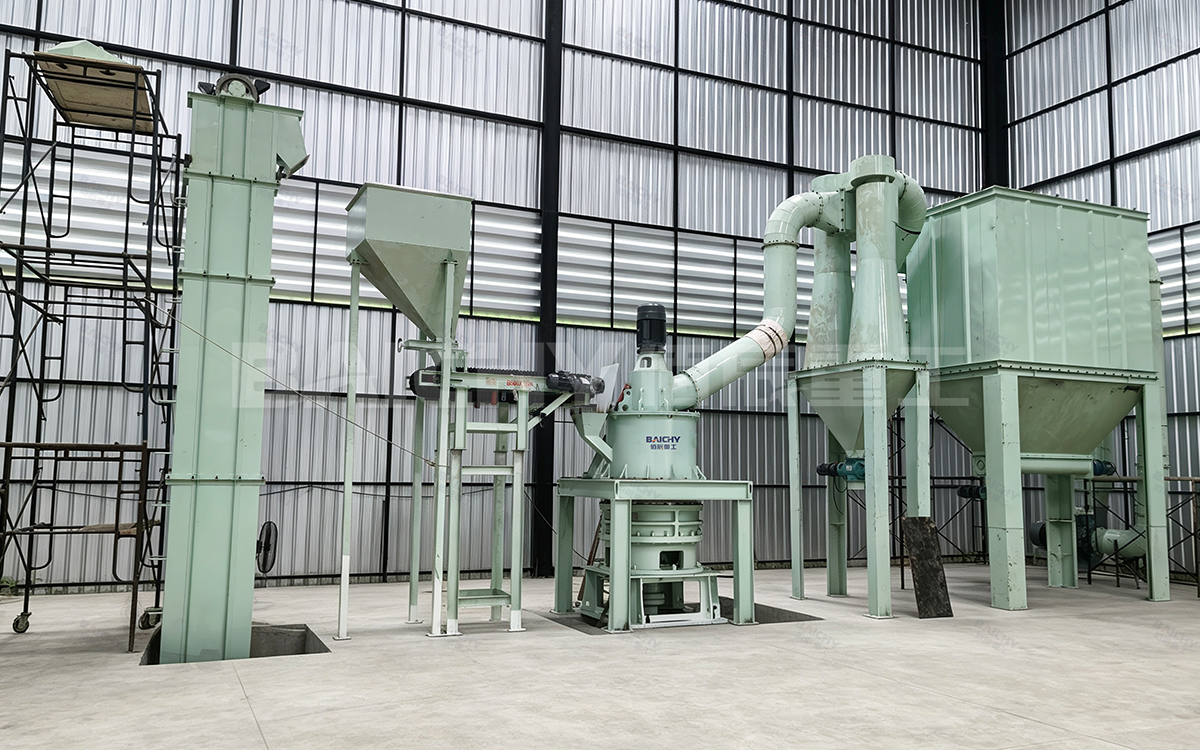
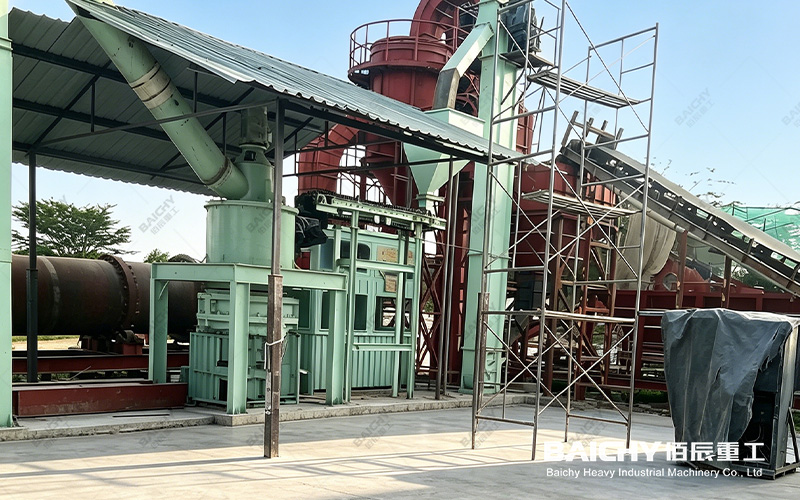
Micropowder grinding client site in Thailand
Key Advantages of the HGM80 Micro Powder Grinding Mill
1. Higher Capacity, Lower Energy Consumption
At identical fineness and power, output is more than double that of air jet, stirring and ball mills, with energy consumption about 30% lower — a decisive number when calculating payback for a 3,000–10,000 t/a plant.
2. Fineness Adjustable from 325 to 2500 Mesh
One machine covers construction putty filler and flue-gas desulfurization powder at 325 mesh through coating, cosmetics and pharmaceutical-grade filler at 2500 mesh, so plants serving several market segments avoid buying multiple mills.
3. Long Service Life of Wearing Parts
Rollers and rings are forged from special wear-resistant alloy, lasting 2–3 times longer than impact or turbo mill parts and 2–5 years when grinding calcite/calcium carbonate. Fewer shutdowns mean higher annual operating hours.
4. Safe, Clean and Environmentally Compliant
There are no rolling bearings and no bolts inside the grinding cavity, eliminating bolt loosening, bearing wear and seal damage. External spindle lubrication allows servicing without stopping, supporting 24-hour continuous production. The enclosed dry process produces no wastewater; dust stays below 20–30 mg/m³ and noise below 85 dB(A), helping plants pass EIA requirements across Southeast Asia, the Middle East, Africa and South America.
Materials and Industry Applications
• Carbonate minerals: calcite, limestone, chalk, dolomite, marble
• Clay minerals: kaolin, bentonite, attapulgite, rectorite, diatomite, sepiolite
• Soft industrial minerals: talc, mica, pyrophyllite, vermiculite, gypsum, barite, fluorite, graphite, alunite
• Others: phosphate rock, potash ore, pumice, illite, magnesite — over 100 grindable materials
| Industry | Typical fineness | End use |
|---|---|---|
| Plastics & rubber | 800–2500 mesh | Active CaCO₃ filler, masterbatch |
| Paints & coatings | 1250–2500 mesh | Viscosity control, opacity |
| Paper making | 325–1250 mesh | Coating pigment, filler |
| Construction chemicals | 325–800 mesh | Putty powder, dry-mix mortar |
| Power & environment | 325 mesh | Flue-gas desulfurization powder |
| Cosmetics & pharma | 2000–2500 mesh | Toothpaste, cosmetics, excipients |
Output vs. Fineness: What Capacity Can You Expect?
Capacity is a function of target fineness — the finer the powder, the longer material stays in the circuit. Figures below come from calcite/CaCO₃ plants running an HGM80 micro powder grinding mill; treat them as planning values, not guarantees.
| Target fineness | Approx. D97 | Typical output | Main application |
|---|---|---|---|
| 325 mesh (45 μm) | 45 μm | 4,000–4,500 kg/h | FGD powder, putty, construction filler |
| 800 mesh (15 μm) | 15 μm | 2,200–2,800 kg/h | Paper coating, PVC filler |
| 1250 mesh (10 μm) | 10 μm | 1,500–2,000 kg/h | Paints, rubber, plastic masterbatch |
| 2000 mesh (6.5 μm) | 6.5 μm | #ddd;">800–1,200 kg/h |
Rule of thumb: for a plant selling mostly 800–1250 mesh CaCO₃, one HGM80 covers 1.5–2.5 t/h on a 24-hour basis; if your core product is 2500 mesh, plan two or three HGM80 units in parallel or step up to an HGM100 / HGM125.
HGM80 vs. Other Mill Types
| Item | HGM80 micro powder grinding mill | Raymond mill | Ball mill | Jet mill |
|---|---|---|---|---|
| Finished fineness | 325–2500 mesh | 80–325 mesh | 200–600 mesh | 1–10 μm |
| Capacity at equal power | High (baseline ×2) | Medium | Low | Very low |
| Specific energy use | ≈30% lower | Medium | High | Very high |
| Footprint | Compact vertical | Medium | Large | Medium |
| Wearing-part life (calcite) | 2–5 years | 6–12 months | Frequent media change | No media, high air cost |
| Investment level | Medium | Low | High | High |
Configuring a Complete HGM80 Ultrafine Grinding Line
A standard line runs: jaw crusher → hammer crusher (≤ 10 mm) → bucket elevator → vibrating feeder → HGM80 micro powder grinding mill → turbine classifier → cyclone collector → pulse bag filter → screw conveyor and packing, plus air compressor, PLC cabinet and muffler.
Selection tips
• Check moisture first. Above 6%, add a dryer or the HGM80 micro powder grinding mill loses capacity and risks blinding the classifier.
• Match the crusher to feed size. Holding feed at ≤ 10 mm rather than 15 mm noticeably improves throughput and ring/roller life.
• Reserve headroom. If you plan to move from 800 mesh to 2000 mesh within two years, size blower, dust collector and packing system for the finer product from day one.
• Plan layout early. Allow roughly 13.9 × 4 m floor space and 6.2 m height clearance.
• Stock critical spares. A ring and roller set plus classifier blades on site saves weeks of downtime for overseas plants.
Maintenance, Operating Cost and Service
Routine work is straightforward: check reducer oil and the external lubrication system weekly, inspect roller and ring wear monthly, and clean or replace filter bags by differential pressure. Baichy Heavy Industry supplies wearing parts from stock, provides installation supervision, commissioning and operator training, and supports remote troubleshooting for exported units — including recent HGM80 micro powder grinding mill deliveries to Algeria, India, Vietnam, the Middle East and East Africa.
Conclusion: Is the HGM80 Micro Powder Grinding Mill Right for You?
| Your requirement | Recommended Baichy solution |
|---|---|
| 80–325 mesh, budget-focused | Raymond / pendulum mill |
| 325–2500 mesh, 0.4–4.5 t/h | HGM80 micro powder grinding mill |
| 325–2500 mesh, 1–9 t/h | HGM100 / HGM100A series |
| 325–2500 mesh, 8–20 t/h | HGM125 ultrafine grinding mill |
| >20 t/h continuous plant | HGM1680 or parallel multi-mill system |
Recommended H1 for this page:
HGM80 Micro Powder Grinding Mill – 325–2500 Mesh Ultrafine Grinding Machine Manufacturer & Supplier | Baichy Heavy IndustryFAQ About the HGM80 Micro Powder Grinding Mill
1. What fineness can the HGM80 micro powder grinding mill achieve?
Finished powder is adjustable between 325 mesh (47 μm) and 2500 mesh (5 μm), reaching D97 ≤ 5 μm in a single pass. Fineness is controlled by the variable-frequency turbine classifier: higher wheel speed gives finer powder; coarser products come from lowering the speed or swapping the classifying wheel.
2. What is the real capacity of the HGM80 micro powder grinding mill?
On calcite/calcium carbonate expect roughly 0.4–4.5 t/h — about 4000–4500 kg/h at 325 mesh, 1500–2000 kg/h at 1250 mesh and 500–800 kg/h at 2500 mesh. Harder minerals, higher moisture or finer targets reduce output, so always size a plant with fineness-specific data rather than the maximum figure.
3. Which materials can the HGM80 process?
More than 100 non-flammable, non-explosive brittle minerals with Mohs hardness ≤ 6 and moisture below 6%: calcite, limestone, chalk, dolomite, kaolin, bentonite, talc, mica, barite, gypsum, graphite, fluorite, diatomite, sepiolite, phosphate rock and pumice.
4. How much does the HGM80 micro powder grinding mill cost?
There is no fixed list price: the quotation depends on motor configuration (55 kW or 75 kW main unit), whether you need a complete line (crusher, elevator, feeder, dust collector, packing machine), surface modification system, voltage/frequency standard and shipping destination. Baichy Heavy Industry issues a tailored quote plus plant layout drawing after confirming your raw material, capacity and fineness targets.
5. How long do the wearing parts last?
Rollers and rings are forged from special wear-resistant alloy, lasting 2–3 times longer than impact or turbo mill parts — generally over one year, and 2–5 years when grinding calcite/calcium carbonate. With no rolling bearings or bolts inside the grinding cavity, the bearing and seal failures common in other mill designs are essentially eliminated.
Baichy Heavy Industry
Baichy Heavy Industry is a high-tech mining equipment company integrating R&D, manufacturing, sales, and after-sales service. Focusing on crushing, grinding, and mineral processing equipment, we provide professional solutions to our customers. We are ISO9001:2015 、certified, and our products include mobile crushing palnts, crawler crushing plant, construction waste crushing plants, jaw crushers, sand making machines, cone crushers, fine crushers, grinding mills, ball mills, etc., all with reliable performance to meet diverse project needs.
Baichy Heavy Industry – Your Trusted Partner
To ensure optimal performance of your equipment, Baichy Heavy Industry offers:
- Professional on-site installation guidance
- Comprehensive operator training
- 24/7 technical support & maintenance services
Our complete after-sales service system guarantees long-term, stable operation of your machinery with minimal downtime.
Protect Your Rights – Only Use Official Channels
To avoid scams and ensure authentic support, contact us exclusively through:
• Official Website: www.baichychina.com
• WhatsApp: +8615093222637
• Email: [email protected]
Your satisfaction is our priority – expect prompt, professional service every time.
(Note: Beware of unauthorized third parties claiming to represent Baichy. Always verify through official contacts.)