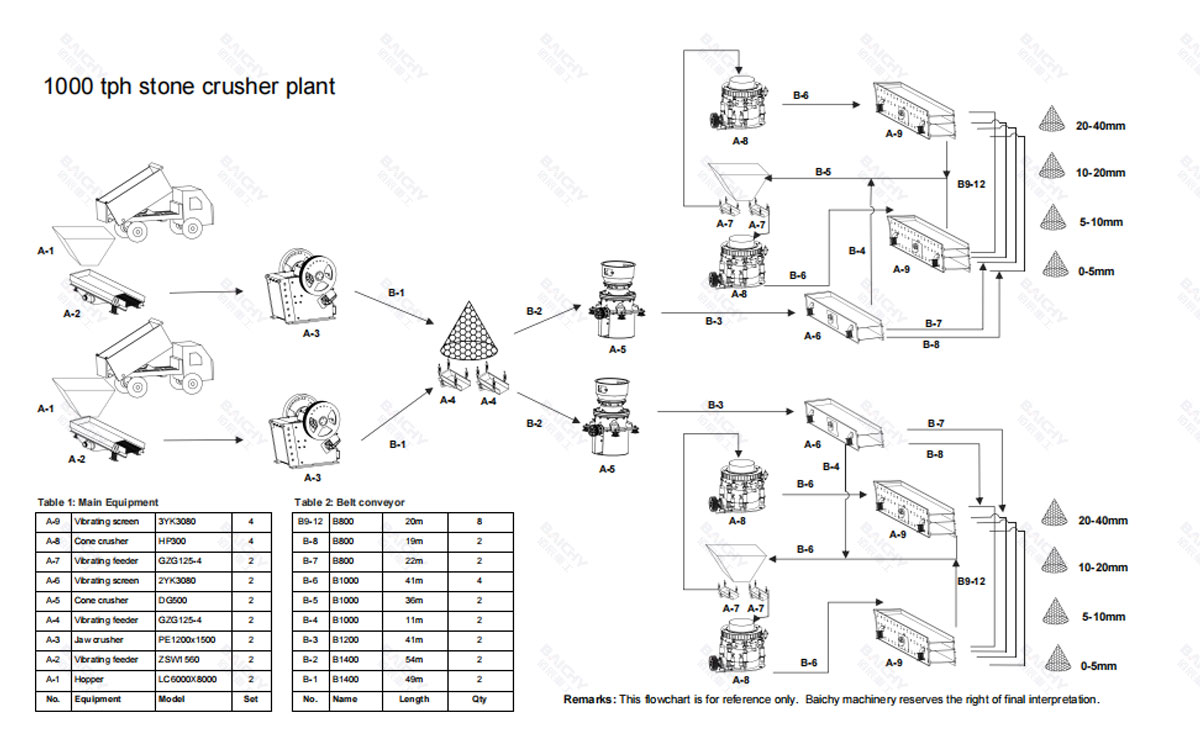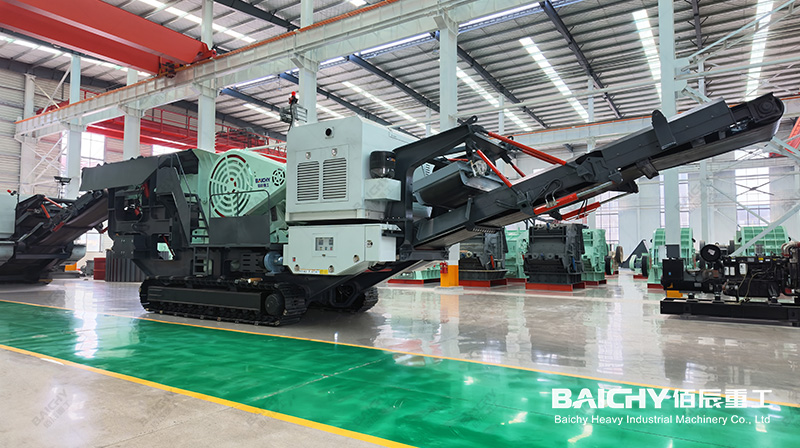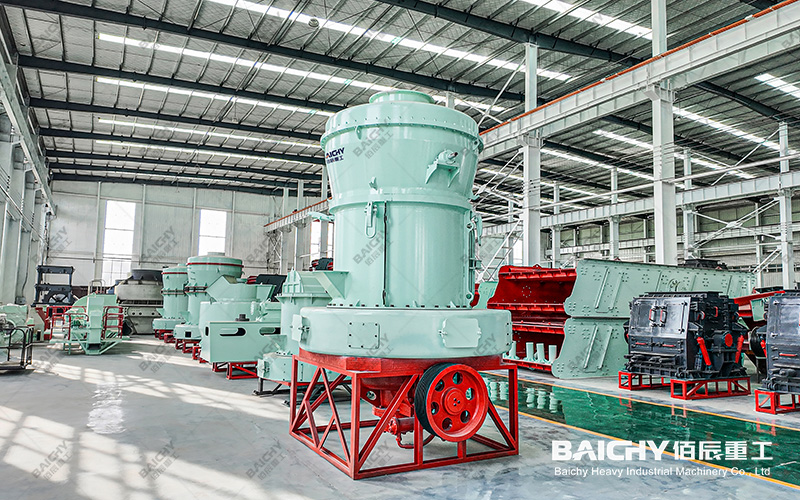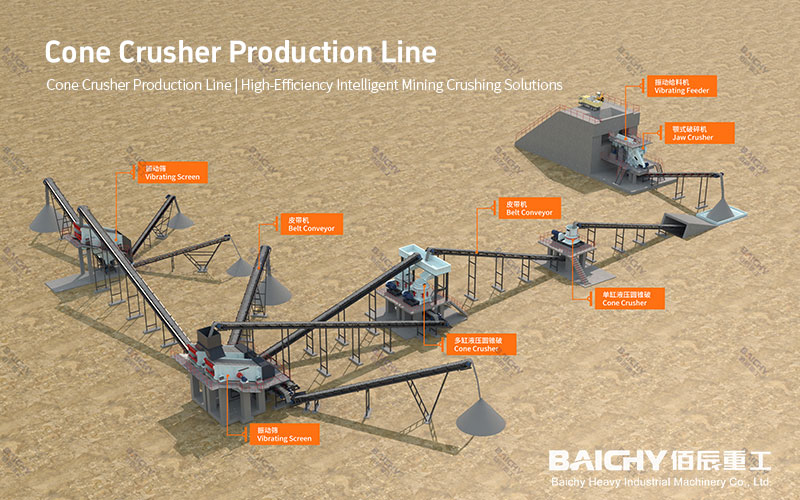
Tertiary Crushing plant
In modern, large-scale stone production lines, mining operations, and solid waste treatment projects, the three-stage crushing system serves as the pivotal link for ensuring superior final product shape, optimal gradation, and maximized production efficiency. Faced with a vast array of equipment options on the market, how does one cut through the confusion to precisely invest in a three-stage crusher that is efficient, durable, and offers a high return on investment? As a professional manufacturer with years of deep expertise in this industry, we have compiled a list of seven key characteristics you must prioritize when making a purchase decision, helping you make a truly informed choice.
I. Overview of the Three-Stage Crushing Process: Why Is It the Key to Success?
"Three-stage crushing" does not refer to a single piece of equipment, but rather to a systematic crushing solution comprising a series of coarse, medium, and fine crushing machines connected in sequence. Its core objective is "segmented optimization and progressive refinement"—by combining crushers with varying operating principles and specifications, large raw stones are gradually processed down to the required final product size, thereby achieving maximum crushing efficiency and minimum wear costs at every stage.
A typical, highly efficient three-stage crushing workflow generally proceeds as follows:
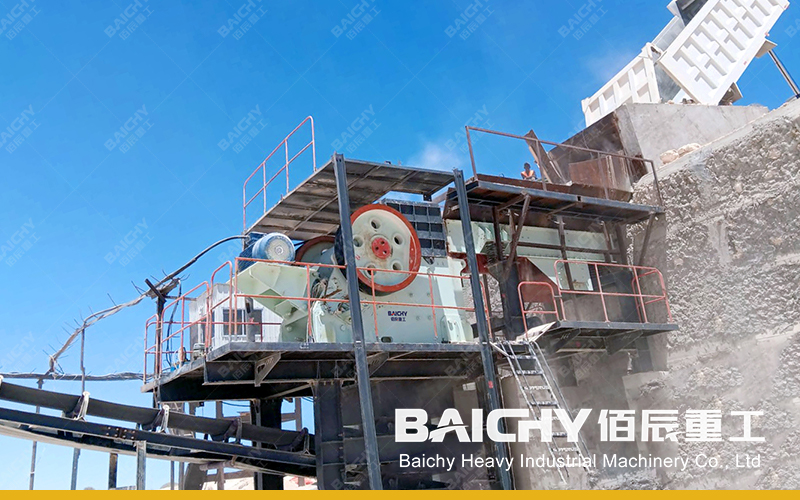
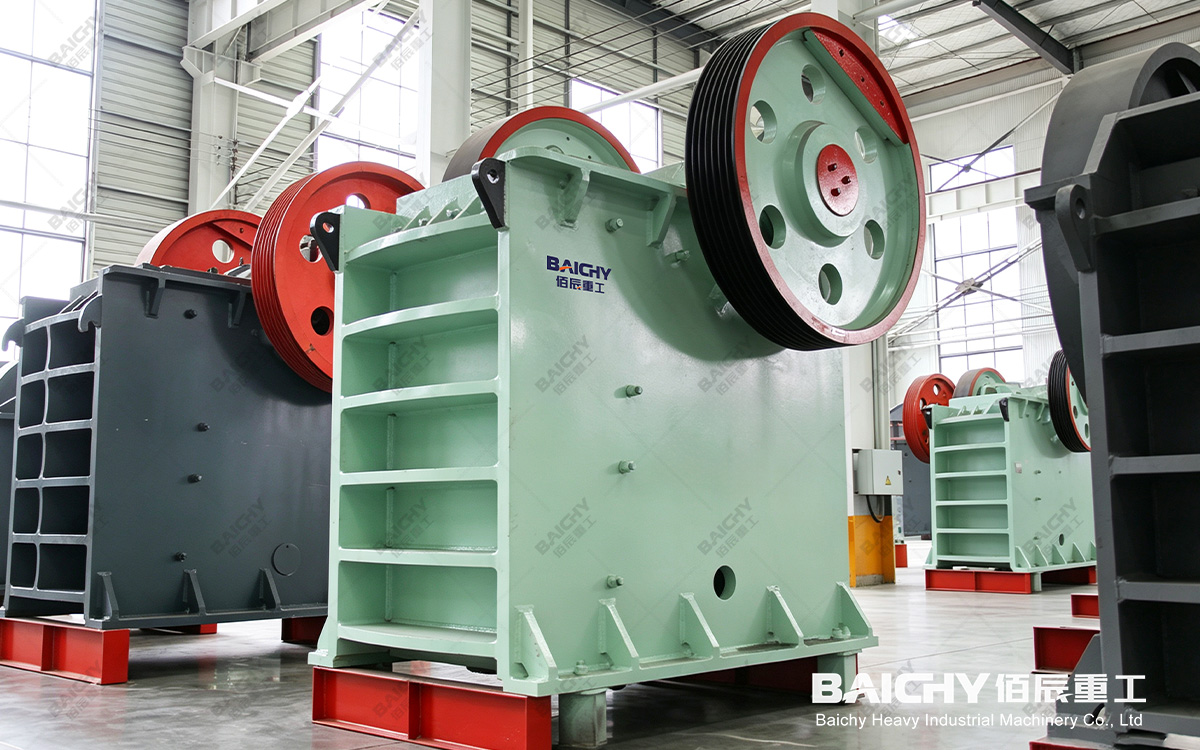
Jaw Crusher Operation Site
• First Stage (Coarse Crushing): The Jaw Crusher acts as the "pioneer," breaking down oversized raw materials into sizes of 250–300 mm or less.
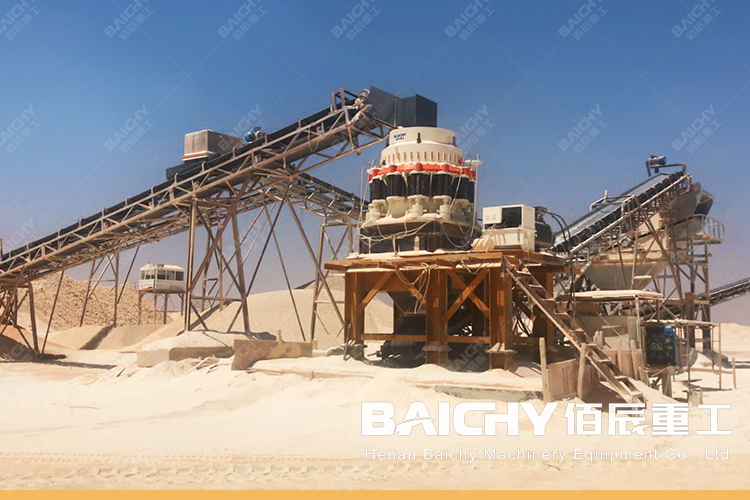
Cone Crusher Operation Site
• Second Stage (Medium Crushing): The Cone Crusher or Impact Crusher serves as the "backbone," performing intermediate-stage crushing.
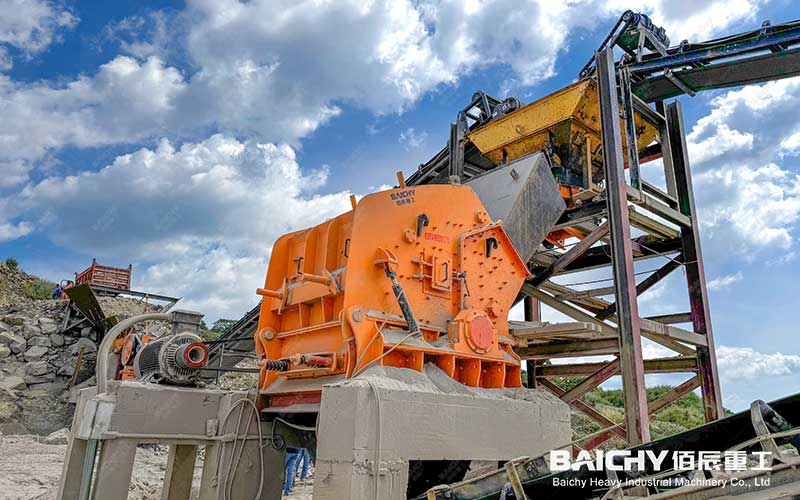
Impact Crusher Operation Site
• Third Stage (Fine Crushing): The High-Efficiency Centrifugal Impact Crusher (Vertical Shaft Impact Crusher) or Fine Cone Crusher plays the role of the "sculptor," responsible for particle shaping and sand making to produce a final product with superior particle shape.
II. Core Application Scenarios: Which Fields Are in Urgent Need of Three-Stage Crushing?
1. Crushing of High-Hardness Ores: Materials such as granite, basalt, and river pebbles—which possess high hardness and strong abrasiveness—require multi-stage, buffered crushing to protect downstream equipment and ensure the quality of the output material.
2. Production of High-Quality Aggregates and Manufactured Sand: Used in major national infrastructure projects—such as expressways, high-speed railways, and hydroelectric dams—that impose rigorous requirements on aggregate particle shape and limit the content of needle-like or flaky particles. Tertiary crushing—particularly through the introduction of the "Vertical Shaft Impact (VSI) crusher"—is the key to producing high-quality aggregates with a cubical or polyhedral shape.
3. Large-scale Sand and Aggregate Production Lines: For large and ultra-large production lines with an hourly output exceeding 500 tons, where the goals are high stability, high automation, and low energy consumption per ton, a tertiary crushing system represents the optimal configuration.
4. Construction Waste Resource Utilization: Construction waste, with its complex composition, requires multi-stage crushing, sorting, and impurity removal to yield pure recycled aggregates; the tertiary crushing process is indispensable in this context.
III. An In-Depth Analysis of Seven Key Selection Criteria
1. Equipment Matching and System Flow Efficiency
The processing capacities of crushers at each stage must be perfectly matched to avoid scenarios where a "large machine is paired with a small load" (overkill) or where "bottlenecks" cause blockages. Particular attention must be paid to matching the discharge size of the upstream crusher with the feed opening size of the downstream crusher, as well as to the scientific calculation of conveyor belt transport capacities. A superior system design scheme is far more critical than any single piece of top-tier equipment.
2. Core Crushing Chamber Design and the Principle of Inter-particle Crushing
Especially for cone crushers used in the secondary and tertiary (fine) crushing stages, the design of the crushing chamber—such as standard, medium, or short-head configurations—directly determines the processing capacity, maximum feed size, and product particle size distribution. Equipment that utilizes the principle of "inter-particle crushing" (also known as laminated crushing) achieves a perfect synergy between "stone-on-stone" and "stone-on-metal" crushing actions, thereby significantly reducing wear part consumption while simultaneously boosting output.
3. Wear Part Materials and Service Life
Wear parts—such as jaw plates, bowl liners, mantle liners, blow bars, and impact heads—constitute the "heart" of the equipment. It is essential to scrutinize their material composition—for instance, the use of novel high-chromium cast iron, multi-element alloy steel, or ceramic composite materials—and to evaluate their expected service life (measured in operating hours or total processed tonnage). A longer service life translates directly into lower downtime costs for part replacement and a more stable, consistent output.
Reference Table for Wear-Resistant Materials and Expected Lifespan of Key Components
| Component Name | Recommended Material | Applicable Equipment | Expected Lifespan (Processing Granite) |
| Jaw Crusher: Movable/Fixed Jaw Plates | High Manganese Steel (Mn13, Mn18) or Bimetallic Composite | Primary Jaw Crusher | 3000–5000 hours |
| Cone Crusher: Bowl Liner/Mantle | High Manganese Steel (Modified) or Ultra-High Manganese Steel | Secondary/Tertiary Cone Crusher | 2000–3500 hours |
| Vertical Shaft Impact Crusher: Thrower Head/Liner Plate | High Chrome Cast Iron (Cr26, Cr28) or Tungsten Carbide | Tertiary Sand Maker | | 120–180 hours (Thrower Head) |
| Impact Crusher: Blow Bar | High Chrome Cast Iron (Cr20–Cr26) | Secondary Impact Crusher | 600–1000 hours |
4. Intelligent Control Systems and Adjustment Capabilities
Modern, high-quality tertiary crushing systems come standard with a PLC intelligent control system. Key features include:
• Automatic Cavity Clearing Function: The cone crusher automatically discharges material when tramp iron or uncrushable objects are encountered, thereby protecting the main machine.
• Hydraulic Discharge Opening Adjustment: Remote, one-touch adjustment of the discharge opening size allows for rapid changes in product particle size.
• Real-time Monitoring and Early Warning: Online monitoring of parameters such as bearing temperature, oil pressure, and vibration levels provides early warnings for potential faults.
5. Energy Consumption Metrics and Environmental Performance
The electricity consumption per ton of finished product is a core economic indicator for measuring the overall efficiency of equipment. High-efficiency equipment can produce a greater volume of qualified products at the same power input. Furthermore, a fully enclosed system design—combined with high-efficiency dust removal devices (such as pulse bag filters)—is an essential prerequisite for meeting environmental protection standards.
6. Control Capabilities for Product Particle Shape and Gradation
The market value of the final product is determined by its particle shape and gradation. For tertiary fine-crushing equipment (particularly Vertical Shaft Impact Crushers), the adjustability between "stone-on-stone" and "stone-on-iron" crushing modes is critical; it directly determines the roundness, fineness modulus, and stone powder content of the manufactured sand. 7. Manufacturer Services and Case Studies
It is essential to evaluate whether the equipment manufacturer possesses extensive experience in delivering three-stage crushing systems and whether they can provide full lifecycle services—ranging from site surveys, process design, installation, and commissioning to after-sales support. Successful client case studies serve as the most compelling proof of competence.
IV. Our Solutions and Success Stories
Based on the key characteristics outlined above, we recommend a "star" equipment configuration for three-stage crushing that has been validated across numerous projects worldwide:
Recommended Equipment Combination:
1. Primary Crushing (Coarse): HD Series Heavy-Duty Jaw Crusher. Featuring a heavy-duty design and a deeper crushing chamber, this unit accommodates larger feed sizes, offers a higher crushing ratio, and boosts output by over 20%.
2. Secondary Crushing (Medium): HPY Series Multi-Cylinder Hydraulic Cone Crusher. With fully hydraulic adjustment and a selection of chamber profiles, it delivers excellent laminated crushing effects. The finished product features low needle-and-flaky content, making it particularly suitable for crushing high-hardness materials.
3. Tertiary Crushing / Sand Making (Fine): VSI Series High-Efficiency Vertical Shaft Impact Crusher. Driven by dual motors for high energy efficiency, it allows for seamless switching between "stone-on-stone" and "stone-on-iron" crushing modes. Combining high crushing efficiency with superior particle shaping capabilities, it is the ideal choice for producing Class I manufactured sand.
Classic Case Study: A Granite Aggregate Project in East China (Annual Output: 8 Million Tons)
• Challenge: The raw material consisted of high-hardness granite. The project required the production of four high-standard aggregate specifications—0–5mm, 5–10mm, 10–20mm, and 20–31.5mm—with a strict requirement that the needle-and-flaky content remain below 10%.
• Solution: We implemented our core three-stage crushing process featuring the "HD110 Jaw Crusher + HPY500 Cone Crusher + VSI1140 Vertical Shaft Impact Crusher" configuration.
• Results: The entire production line operated stably. The finished products exhibited a cubic particle shape with needle-and-flaky content remaining below 8%, while the manufactured sand's gradation met or exceeded Class II standards. The system's energy consumption per ton was 15% lower than the industry average, significantly shortening the client's return-on-investment period.
V. Frequently Asked Questions (FAQ)
Q1: For secondary crushing, is a cone crusher or an impact crusher the better choice?
A1: This depends on the properties of the material and the specific product requirements. Cone crushers are better suited for crushing high-hardness, highly abrasive materials (such as granite and basalt); they feature long-lasting wear parts and relatively low power consumption, though their maintenance is slightly more complex, and the resulting product shape is marginally inferior. Impact crushers offer a high crushing ratio and produce excellent product shapes; they are suitable for materials of medium to low hardness (such as limestone) and are easy to maintain. For tertiary crushing systems involving high-hardness materials, it is generally recommended to utilize a cone crusher for the secondary crushing stage to ensure overall system reliability.
Q2: Is the investment cost for a tertiary crushing system very high?
A2: In terms of upfront acquisition costs, it is indeed higher than that of single-stage or two-stage crushing systems. However, when analyzed based on Total Cost of Ownership (TCO) and Return on Investment (ROI) over the entire lifecycle, a tertiary crushing system offers significant advantages. Through refined processing, it produces high-value, premium-quality aggregates and manufactured sand, which command higher market prices. Simultaneously, the system boasts high operational efficiency, low energy consumption, and minimal wear-part depletion, resulting in lower long-term operating costs. For production lines of medium to large scale, the comprehensive economic benefits of such a system are highly evident.
Q3: How can one determine whether the equipment configuration recommended by a manufacturer is reasonable?
A3: You should request that the manufacturer provide a detailed "Material Balance Sheet" and a "Process Flow Diagram." The balance sheet will clearly list key data points for each crushing stage—including expected feed size, discharge size, throughput capacity, and equipment load rate. In a professionally designed solution, the load rate for each piece of equipment should ideally fall between 75% and 95%, ensuring a smooth transition in the particle size distribution curve between stages. Furthermore, it is essential to request case studies involving the successful processing of materials similar to yours and to conduct on-site inspections of these reference projects.
Summary
Selecting a high-quality tertiary crushing system is a strategic decision that directly impacts long-term production efficiency. It should not be viewed merely as a simple aggregation of equipment, but rather as a highly integrated, intelligent, efficient, and durable "crushing team." Only by conducting a rigorous examination across four core dimensions—system matching, core materials, intelligent control, and finished product quality—and by partnering with entities possessing deep technical expertise and extensive practical experience, can you ensure that your production line remains invincible amidst fierce market competition, thereby maximizing both production capacity and economic efficiency.
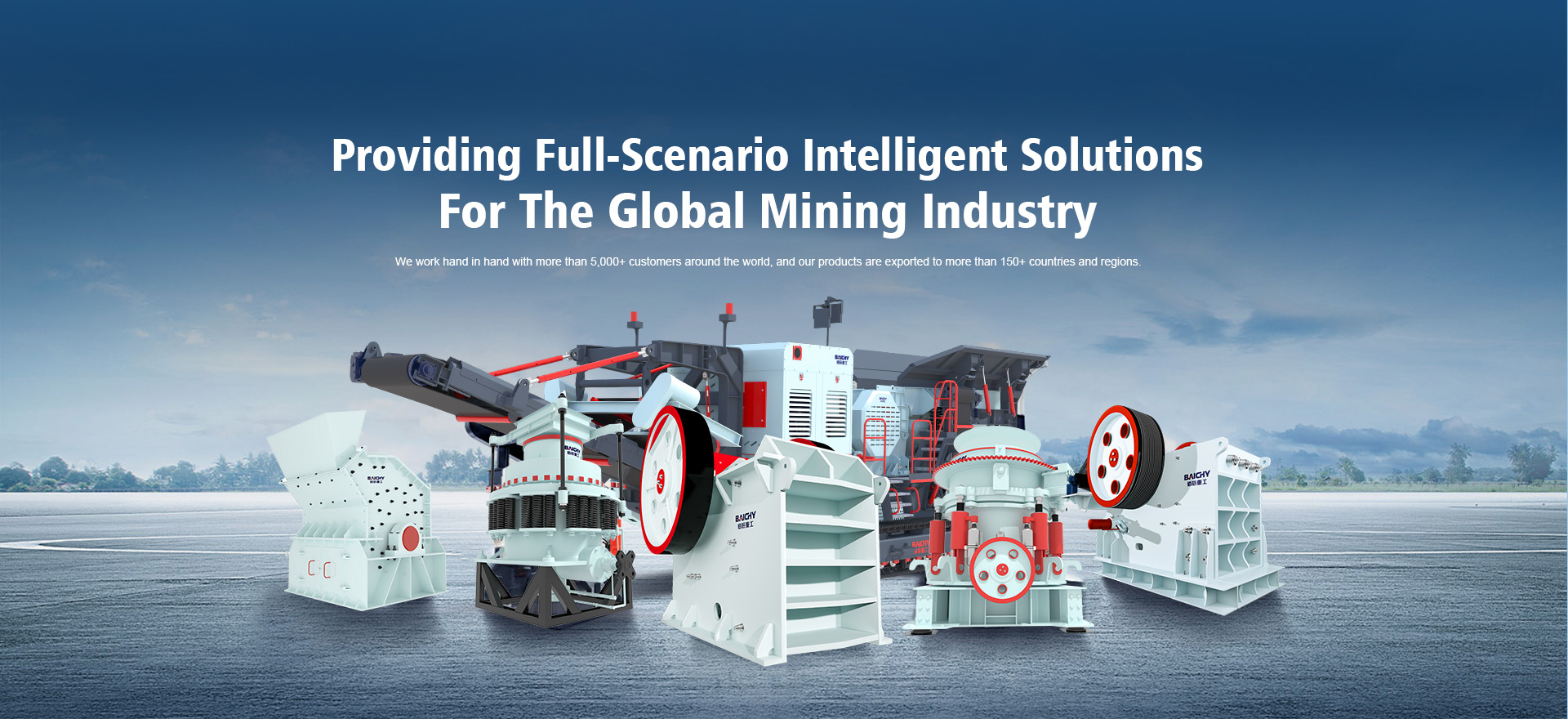
About of Baichy Heavy Industry
Baichy Heavy Industry is a high-tech mining equipment company integrating R&D, manufacturing, sales, and after-sales service. Focusing on crushing, grinding, and mineral processing equipment, we provide professional solutions to our customers. We are ISO9001:2015 、certified, and our products include mobile crushing palnts, crawler crushing plant, construction waste crushing plants, jaw crushers, sand making machines, cone crushers, fine crushers, grinding mills, ball mills, etc., all with reliable performance to meet diverse project needs.
Our advantages:
• Professional pre-sales support: Free project design and comprehensive solutions to help you accurately select the right equipment;
• Comprehensive on-site service: Providing installation guidance and worker training to ensure smooth equipment commissioning;
• Reliable after-sales guarantee: A complete after-sales system, timely response to technical inquiries and equipment maintenance, ensuring long-term stable operation.
To protect your rights, please contact us through the following official channels for professional service:
Official Website Customer Service
https://wa.me/+8615093222637
Email: [email protected]
We are committed to providing high-quality equipment and full-cycle services to deliver comprehensive intelligent solutions for the global mining industry!