
Indonesian-Copper-Gold-Processing-Plant
An Indonesian mining customer may have a clear commercial objective: recover copper and gold from sulfide ore and produce a copper product with a copper content of 99.9% or higher. However, this target cannot be achieved by selecting a flotation machine alone. The project must connect ore characterization, mineral processing, copper metallurgy, gold recovery, environmental controls and final product standards.
For Baichy Heavy Industry, the most important first step is to define exactly what the customer means by “99.9% copper.” A flotation plant normally produces copper concentrate, not refined metallic copper. If the required product is 99.9% cathode copper, the project must include an appropriate downstream metallurgical route, such as smelting and electrorefining or a technically proven leaching, solvent extraction and electrowinning process.
The recommended planning principle is simple: first prove the copper-gold flotation performance, then select and verify the downstream copper and gold recovery route.
1. Define the final product before selecting equipment
The words “copper product” can describe several very different products. A customer may be referring to copper concentrate, blister copper, anode copper or cathode copper. These products have different chemical specifications, processing requirements, equipment packages and commercial values.
Ore-and-Flotation-Laboratory-Image
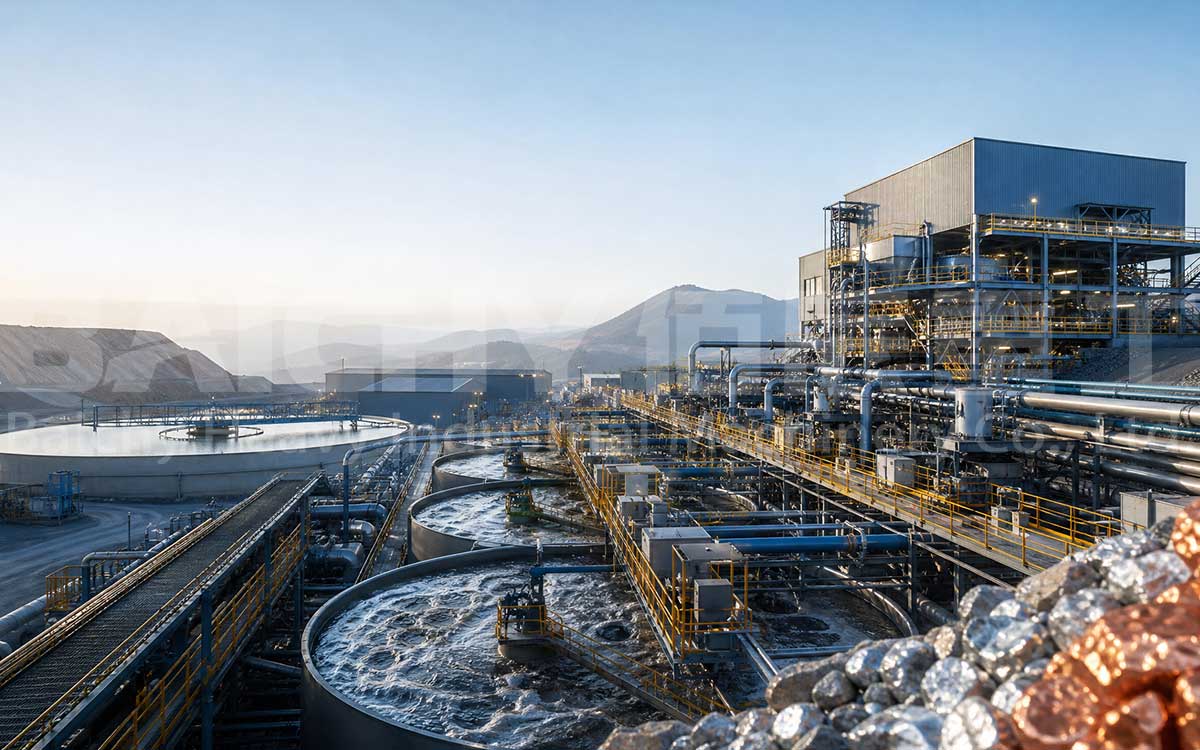
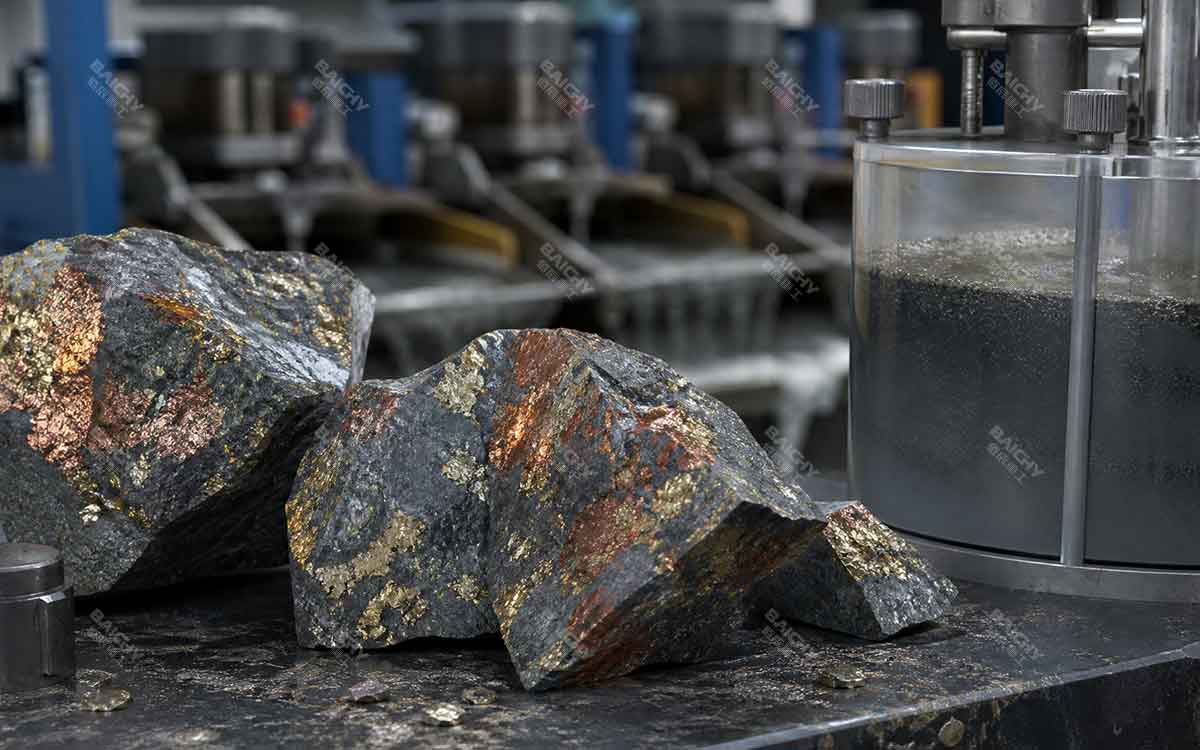
Copper concentrate is produced by mineral processing. It contains copper minerals together with sulfur, iron, gangue and potentially valuable gold and silver. Cathode copper is a refined metal product that requires additional metallurgical treatment and quality control.
Before preparing a quotation, Baichy Heavy Industry should confirm:
• Whether the customer wants saleable copper concentrate or cathode copper;
• Whether 99.9% refers only to copper content or also to specific impurity limits;
• Whether gold should be recovered as a separate product or paid as a by-product in copper concentrate;
• The target daily throughput and annual operating schedule;
• The customer’s existing smelter, refinery or designated downstream partner;
• The required product inspection, sampling and acceptance standards.
This clarification prevents a common project error: treating a copper flotation concentrate as if it were 99.9% refined copper.
2. Recommended process route for sulfide copper ore
For a typical sulfide copper ore, the first process route to evaluate is:
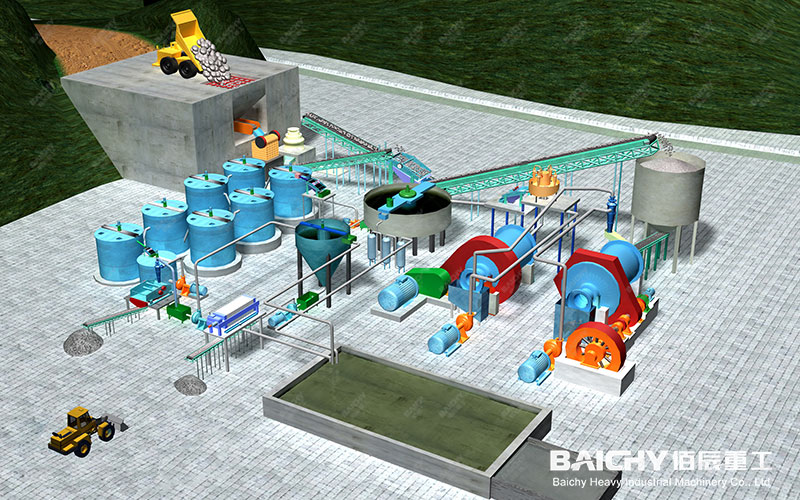
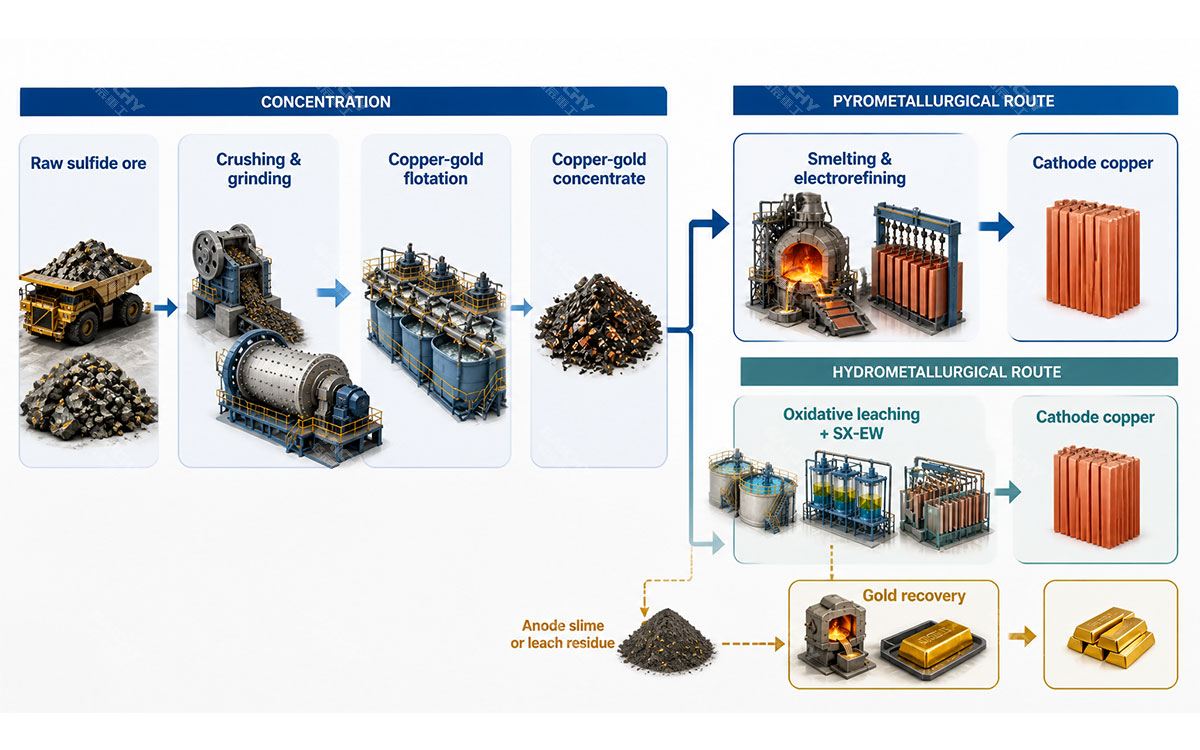
Crushing → grinding and classification → copper-gold flotation → concentrate thickening and filtration → downstream metallurgy
The flotation stage may include roughing, scavenging, cleaning, concentrate regrinding and additional cleaning. The exact flowsheet depends on copper mineralogy, liberation size, pyrite content, clay minerals, gold occurrence and the presence of penalty elements.
The main objective of flotation is to recover copper minerals and associated gold into a manageable concentrate while limiting gangue, pyrite and harmful impurities. A high concentrate grade is not the only performance target. Copper recovery, gold recovery, concentrate quality, filtration performance and tailings losses must be evaluated together.
Copper-Gold-Recovery-Process-Illustration
Route A: Flotation, smelting and electrorefining
When the ore can produce a suitable copper concentrate and the project has sufficient scale or access to a smelter, the conventional downstream route is:
Copper-gold concentrate → drying → smelting → converting → anode copper → electrorefining → cathode copper
Gold and silver may be concentrated in anode slime during electrorefining and then recovered through a separate precious-metal refining process. This route is widely used for copper concentrates, but its feasibility depends on concentrate quality, production scale, power supply, fuel, oxygen, sulfur management, environmental controls and the commercial terms offered by the receiving smelter.
Arsenic, lead, zinc, mercury, fluorine, chlorine, antimony and bismuth must be analyzed before a smelting route is selected. These elements can affect concentrate acceptance, treatment charges, gas cleaning, slag treatment, anode quality and environmental permitting.
Route B: Oxidative leaching, SX-EW and separate gold recovery
A second route is:
Copper-gold concentrate → oxidative leaching → solid-liquid separation → solution purification → solvent extraction → electrowinning
This route may produce cathode copper without a conventional smelting and converting section. However, sulfide copper minerals are not automatically suitable for simple leaching. The project may require atmospheric oxidation, pressure oxidation or another intensification method. The correct option must be determined by metallurgical testing.
Gold may remain in the leach residue or report to another intermediate product. A separate gold recovery circuit may involve gravity concentration, flotation, oxidation pretreatment or leaching, depending on whether the gold is free, coarse, locked in sulfide minerals or associated with other minerals.
Initial route comparison
| Evaluation item | Flotation + smelting + electrorefining | Flotation + oxidative leaching + SX-EW |
|---|---|---|
| Main copper product | Cathode copper after electrorefining | Cathode copper after electrowinning |
| Gold recovery location | Often associated with anode slime or metallurgical by-products | Often evaluated from leach residue or a separate circuit |
| Main technical strength | Established route for suitable copper concentrates | May reduce dependence on a conventional smelter |
| Main technical risk | Impurities, gas treatment and project scale | Sulfide oxidation rate, acid/oxygen use and solution impurities |
| Required verification | Smelter acceptance and anode slime behavior | Leach kinetics, residue filtration and electrowinning quality |
| Recommended project status | Baseline route for comparison | Alternative route after test confirmation |
3. Mineralogical information required before design
A reliable flowsheet cannot be designed from the description “sulfide copper ore” alone. The following information is essential.
Copper mineralogy
The laboratory program should identify chalcopyrite, bornite, chalcocite, covellite, tetrahedrite-tennantite, oxide copper minerals and other copper-bearing phases. Primary sulfides, secondary sulfides and oxide minerals can respond very differently during grinding, flotation and leaching.
Gold occurrence
Gold recovery depends heavily on its occurrence. The project should determine whether gold is:
• Free and coarse enough for gravity recovery;
• Associated with chalcopyrite or other copper sulfides;
• Locked in pyrite or arsenopyrite;
• Fine-grained and disseminated in gangue;
• Associated with telluride or carbonaceous minerals;
• Distributed between concentrate, middlings, tailings and leach residue.
Gold recovery should not be estimated simply by applying the copper recovery rate. Copper and gold may follow different paths in the process.
Liberation and grinding behavior
The design must establish the required liberation size, the risk of overgrinding, the effect of sliming and the potential need for concentrate regrinding. Bond-type grinding data, abrasion characteristics, pulp density, settling behavior and filtration performance are important inputs for equipment selection.
Penalty elements and process water
Arsenic, mercury, lead, zinc, antimony, bismuth, fluorine and chlorine may influence concentrate sales and downstream metallurgy. Clay, talc, serpentine, carbonaceous material and high pyrite content may affect flotation selectivity and froth stability. Process water quality and recycled water chemistry should also be tested because dissolved ions can change reagent performance.
4. Testwork program recommended for the Indonesian project
Baichy Heavy Industry should propose a staged testwork program instead of offering a fixed recovery guarantee at the beginning of the project.
Stage 1: Representative sampling and characterization
Samples should represent different mining areas, ore types, elevations, oxidation states and expected production periods. The program should include multi-element assays, copper phase analysis, gold and silver assays, mineralogical examination, particle-size analysis, hardness, abrasion and moisture testing.
A single high-grade sample should not be used as the only basis for a full-scale plant design.
Stage 2: Grinding and flotation tests
The flotation program should compare grinding sizes, pH conditions, pulp density, collectors, frothers, modifiers, flotation time and rougher-scavenger-cleaner configurations. Locked-cycle testing is particularly important because open-circuit results can overstate the performance of a commercial circuit.
The test report should provide copper concentrate grade, copper recovery, gold recovery, concentrate yield, tailings copper and gold, reagent consumption, grinding size and concentrate filtration data.
Stage 3: Downstream metallurgy
For the smelting route, the project should assess concentrate acceptance, impurity distribution, slag behavior, sulfur management and the likely recovery of gold and silver in anode slime.
For the leaching route, the project should evaluate oxidation conditions, copper extraction, acid and oxygen consumption, iron and arsenic behavior, residue filtration, solution purification, solvent extraction, electrowinning current efficiency and cathode quality.
Stage 4: Variability and continuous testing
Where the ore is variable, continuous or pilot-scale testing should use several ore blends rather than one composite sample. This helps confirm process stability, water recycling, concentrate filtration, tailings settling, equipment wear and the effect of changing ore mineralogy.
5. Baichy Heavy Industry’s recommended project scope
Baichy Heavy Industry can position itself as the core engineering and equipment partner for the mineral processing section. The recommended scope may include crushing, screening, conveying, grinding, classification, copper-gold flotation, concentrate regrinding, thickening, filtration, reagent preparation, tailings thickening, pumps, process-water interfaces, automation, commissioning and operator training.
The following items should be clearly defined as external, specialist or joint-supply scope unless Baichy has a qualified partner and proven project experience:
• Copper concentrate smelting and converting;
• Sulfur dioxide gas handling and acid production;
• Anode casting and electrorefining;
• Anode slime treatment and precious-metal refining;
• Pressure oxidation and high-pressure oxygen systems;
• Cyanide-based gold recovery and cyanide wastewater treatment;
• Tailings storage facility construction;
• Mine development, blasting and ore haulage;
• Indonesian permitting, environmental approval and local legal services.
This boundary allows Baichy to offer a credible solution without promising that a flotation plant alone will produce refined copper and gold.
6. Indonesian site factors to include in the feasibility study
The project should assess power reliability, industrial water, rainfall, flood control, drainage, road access, port logistics, heavy lifting, fuel supply, reagent availability, spare parts, local labor and corrosion protection. A remote island or mountainous site may require a different equipment layout and inventory strategy from a conventional inland plant.
The engineering study should also review tailings management, acid-generating potential, process-water recycling, chemical storage, emergency response and local environmental requirements. If the project includes high-temperature, high-pressure, acidic or cyanide-related operations, safety and permitting must be designed together with the process.
Conclusion
For an Indonesian sulfide copper-gold project, the correct approach is not to start with a generic equipment list. Start by defining the final product, collecting representative samples, confirming copper and gold mineralogy, completing closed-cycle flotation tests and evaluating the downstream metallurgical route.
The practical base case is copper-gold flotation followed by smelting and electrorefining when concentrate quality, scale and commercial conditions support it. Oxidative leaching followed by SX-EW can be evaluated as an alternative, but only after sulfide oxidation, impurity control and gold recovery have been demonstrated by testwork.
Baichy Heavy Industry should make the first project milestone a technically verified copper-gold concentrate flowsheet and a clear supply boundary. Only after these results are available should the project fix equipment capacity, performance guarantees, investment estimates and the final route to 99.9% cathode copper.
Frequently Asked Questions
1. Can flotation directly produce 99.9% copper?
No. Flotation normally produces copper concentrate, not refined metal. A 99.9% copper target generally requires electrorefining or a proven leaching, solvent extraction and electrowinning route after the flotation stage.
2. Will all the gold report to the copper concentrate?
Not necessarily. Gold may report to copper concentrate, gravity concentrate, middlings, tailings, leach residue or anode slime. Its distribution depends on particle size, mineral association and liberation, so mineralogical and metallurgical tests are required.
3. Which route is better: smelting or SX-EW?
There is no universal answer. Smelting and electrorefining are the baseline route for many suitable sulfide copper concentrates. SX-EW may be attractive when the concentrate is suitable for oxidative leaching or when a conventional smelter is not practical, but it requires specific leaching and electrowinning verification.
4. What information should the Indonesian customer provide first?
The customer should provide the target throughput, representative ore samples, copper and gold assays, copper mineral phases, gold occurrence, impurity analysis, ore hardness, oxidation-state distribution, site infrastructure and the exact copper and gold product standards.
5. What can Baichy Heavy Industry guarantee at the quotation stage?
Before representative testwork, Baichy should avoid unconditional guarantees for copper recovery, gold recovery, concentrate grade, cathode purity, capital cost, operating cost or commissioning date. Guarantees should be based on tested ore conditions, defined interfaces and an agreed performance test method.
Baichy Heavy Industry
Baichy Heavy Industry is a high-tech mining equipment company integrating R&D, manufacturing, sales, and after-sales service. Focusing on crushing, grinding, and mineral processing equipment, we provide professional solutions to our customers. We are ISO9001:2015 Certified, and our products include mobile crushing palnts, crawler crushing plant, construction waste crushing plants, jaw crushers, sand making machines, cone crushers, fine crushers, grinding mills, ball mills, etc., all with reliable performance to meet diverse project needs.
Baichy Heavy Industry – Your Trusted Partner
To ensure optimal performance of your equipment, Baichy Heavy Industry offers:
- Professional on-site installation guidance
- Comprehensive operator training
- 24/7 technical support & maintenance services
Our complete after-sales service system guarantees long-term, stable operation of your machinery with minimal downtime.
Protect Your Rights – Only Use Official Channels
To avoid scams and ensure authentic support, contact us exclusively through:
• Official Website: www.baichychina.com
• WhatsApp: +8615093222637
• Email: [email protected]
Your satisfaction is our priority – expect prompt, professional service every time.
(Note: Beware of unauthorized third parties claiming to represent Baichy. Always verify through official contacts.)