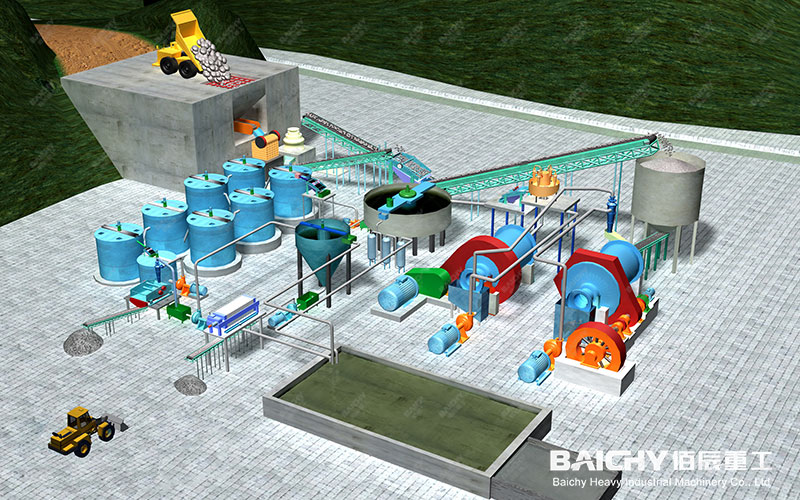

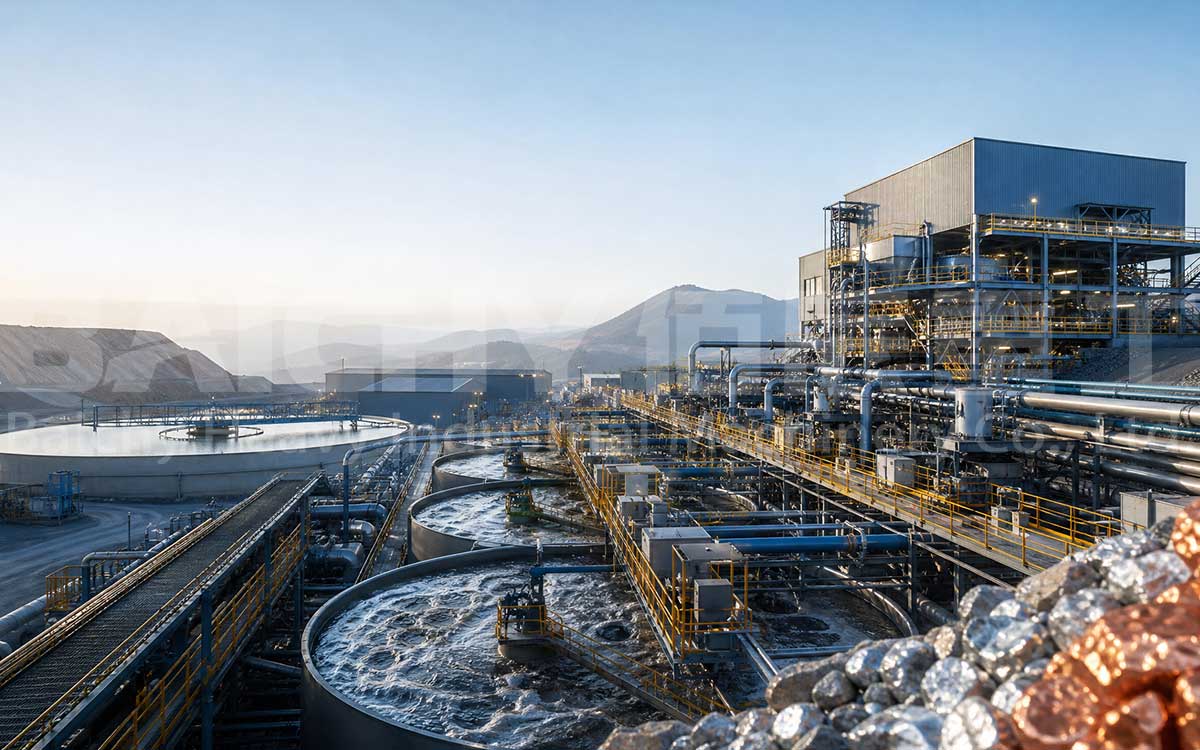
Copper-Silver-Flotation-Reagents-and-Recovery-Optimization
Flotation reagents have a direct influence on copper recovery, silver recovery, concentrate grade, and operating cost. However, adding more reagent does not always improve plant performance. The best results come from matching the reagent scheme with the ore mineralogy, liberation size, pulp chemistry, water quality, and flotation circuit.
For a copper-silver plant, the optimization target is usually a practical balance: recover as much valuable metal as possible while producing a concentrate with acceptable grade, moisture, and impurity levels. This requires coordinated control of grinding, conditioning, reagent addition, air flow, froth depth, pulp density, and cleaning stages.
The final reagent type and dosage should be established through representative laboratory and closed-circuit tests. Parameters from another mine should not be copied without verification.
1. Main Reagent Groups
A copper-silver flotation circuit may use several reagent groups. Each one performs a different function, and the dosage must be adjusted according to the ore response.
| Reagent group | Main function | Typical optimization question |
|---|---|---|
| Collector | Makes target minerals hydrophobic | Is recovery improved without excessive gangue flotation? |
| Frother | Produces and stabilizes flotation froth | Is the froth stable but not overly persistent? |
| pH modifier | Controls pulp chemistry | Does the selected pH improve selectivity and recovery? |
| Activator | Improves the response of selected minerals | Is activation needed for oxidized or less-responsive minerals? |
| Depressant | Suppresses unwanted minerals | Can impurities be reduced without losing copper or silver? |
| Dispersant | Reduces slime coating and particle aggregation | Does dispersion improve mineral contact and froth behavior? |
The actual products, addition points, and dosages depend on mineralogy and test results. A successful reagent program should improve the whole circuit rather than one isolated flotation stage.
2. Collectors for Copper and Silver Recovery
Collectors interact with mineral surfaces and increase their ability to attach to air bubbles. In many copper-silver sulfide ores, the collector scheme is selected to float copper minerals and the silver minerals associated with them. If silver occurs independently, a different response may require a separate or staged reagent strategy.
Collector optimization should examine:
• Recovery of copper and silver;
• Concentrate grade and impurity content;
• Selectivity against pyrite and gangue;
• Conditioning time and addition location;
• Performance at different grind sizes;
• Reagent consumption per ton of ore.
A stronger collector may increase rougher recovery but also bring more pyrite or gangue into the concentrate. A more selective collector may produce a cleaner product but lose some valuable metal. The right choice depends on the economic value of recovery versus concentrate quality.
3. Frothers and Froth Control
Frothers help produce bubbles with suitable size and stability. A stable froth is needed to carry mineral particles to the launder, but an excessively persistent froth can increase water and gangue entrainment.
Operators should monitor froth appearance, bubble size, mobility, depth, and water recovery. Froth observations are useful operating signals, but they should be checked against copper and silver assays. A froth that looks strong may still produce a low-grade concentrate if too much gangue is entrained.
Frother dosage should be coordinated with air rate, pulp level, cell volume, slurry density, and collector dosage. Changing several variables at the same time makes it difficult to identify the real cause of a recovery change.
4. pH Modifiers, Depressants, and Activators
Pulp pH affects mineral surface chemistry, collector performance, pyrite flotation, and selectivity. Lime or another pH modifier may be used to create conditions that favor copper flotation while suppressing unwanted sulfide minerals.
Depressants can reduce the flotation of pyrite, silicate, carbonate, or other unwanted components. Activators may improve the response of minerals that are oxidized, weathered, or naturally difficult to float. These reagents must be tested carefully because excessive depression or activation can reduce the recovery of valuable minerals.
Reagent performance is also influenced by water chemistry. Dissolved ions, recycled water, high suspended solids, and residual reagents may change pulp conditions. A water-balance study and recycled-water testing can prevent unexpected changes during plant operation.
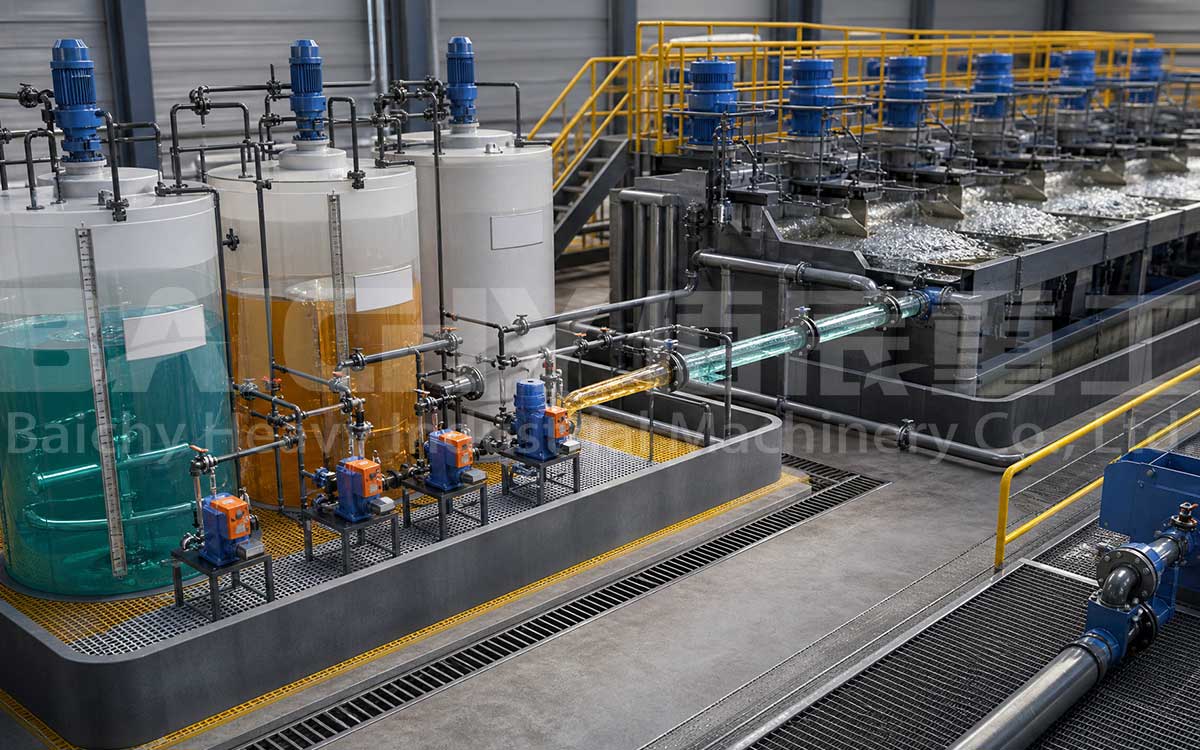
Flotation-Reagent-Preparation-and-Dosing-System
5. The Relationship Between Grinding and Reagent Consumption
Reagent optimization cannot be separated from grinding. If copper and silver minerals are not liberated, collectors cannot contact enough valuable surface. If the ore is over-ground, excessive slimes may coat mineral surfaces, consume reagents, and make froth separation less selective.
Important grinding variables include feed size, mill product size, pulp density, circulating load, cyclone pressure, and classification efficiency. The target grind should be determined from liberation analysis and flotation tests.
A finer grind is not automatically better. The best result is the coarsest size that provides sufficient liberation and acceptable recovery. This can reduce energy consumption and may lower reagent demand.
6. A Practical Optimization Strategy
A structured optimization program should change one major variable at a time and measure its effect through assays and mass balance.
Recommended steps include:
1. Confirm representative feed grades and mineralogy;
2. Establish the baseline grind size and reagent scheme;
3. Test collector type and dosage;
4. Optimize pH and conditioning time;
5. Evaluate frother dosage and air rate;
6. Test depressants or activators where required;
7. Compare rougher, scavenger, and cleaner performance;
8. Verify results through locked-cycle testing;
9. Monitor concentrate quality, tailings losses, and reagent cost;
10. Confirm the selected conditions during plant commissioning.
The testwork should report copper recovery, silver recovery, concentrate grade, mass pull, impurity levels, reagent consumption, and final tailings assays. Recovery should never be reviewed without checking the quality and value of the concentrate.
7. Common Recovery Problems and Solutions
• Low copper recovery: Check mineral liberation, grind size, collector dosage, pulp density, pH, air rate, and flotation residence time. Coarse locked particles and excessive slimes can both reduce recovery.
• Low silver recovery: Identify the silver-bearing mineral and its host. Silver may be lost because its host mineral is not floating, because it is too fine, or because it reports to an intermediate stream.
• Low concentrate grade: Review over-dosing, excessive froth stability, high air rate, entrainment, pyrite flotation, and insufficient cleaning.
• High reagent consumption: Check ore oxidation, water chemistry, slime content, conditioning efficiency, and reagent addition points before simply increasing dosage.
• Unstable plant results: Review feed variability, mill classification, pulp density, reagent preparation, pump performance, froth depth, and sampling frequency.
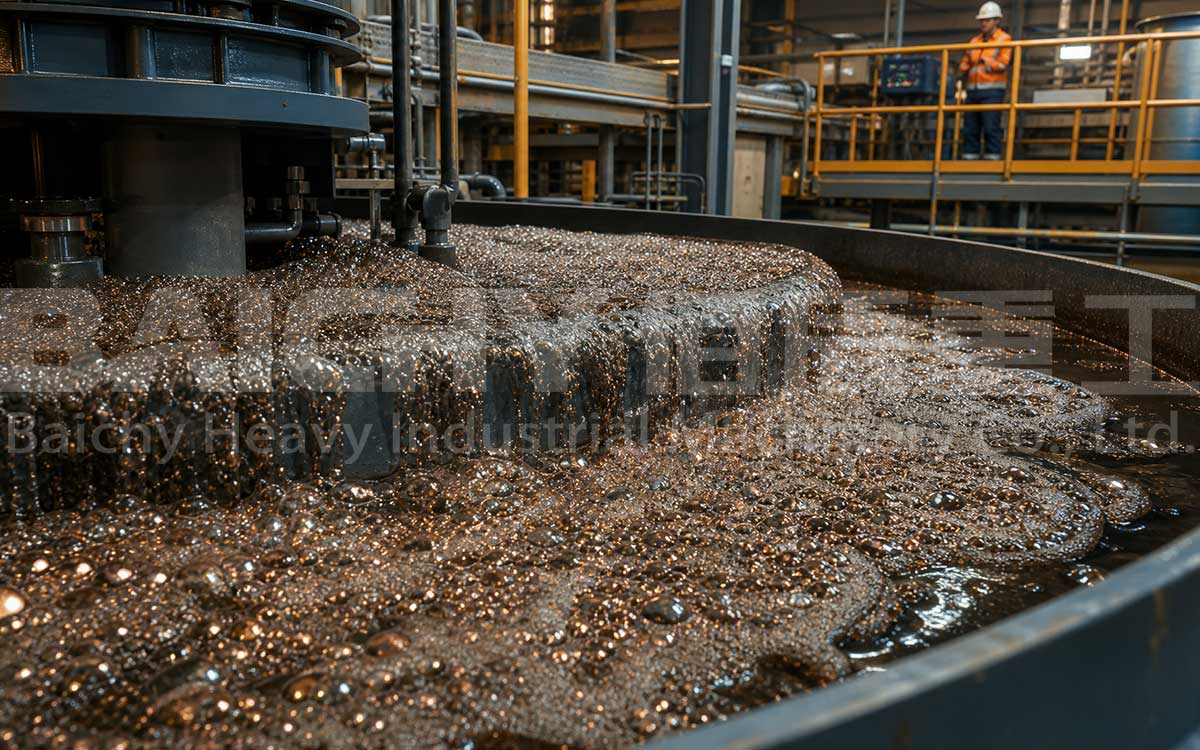
Copper-Silver-Flotation-Froth-and-Recovery-Process
8. Process Control and Performance Indicators
Consistent flotation requires both automatic control and regular laboratory analysis. Useful measurements include feed grade, particle size, pulp density, pH, reagent flow, air rate, cell level, froth depth, concentrate grade, and final tailings grade.
Key performance indicators include:
• Copper recovery;
• Silver recovery;
• Copper and silver concentrate grades;
• Mass pull;
• Tailings metal losses;
• Reagent consumption per ton;
• Power and water consumption;
• Concentrate moisture;
• Variability between shifts or ore zones.
A recovery increase is valuable only when it does not create unacceptable impurity penalties or excessive operating costs. Daily trends are often more useful than a single assay because they show whether the circuit is stable.
9. From Laboratory Test to Plant Operation
Laboratory conditions do not transfer automatically to an industrial plant. Differences in residence time, mixing, air dispersion, water chemistry, circulating load, feed variability, and equipment geometry can affect the result.
Before full-scale implementation, the selected reagent program should be checked through closed-circuit or pilot testing where appropriate. During commissioning, dosage should be increased gradually while operators monitor recovery, concentrate quality, froth behavior, and tailings losses.
The plant should also maintain clear procedures for reagent preparation, calibration of dosing pumps, sampling, storage, spill response, and safe handling. Good operating discipline is essential for maintaining the metallurgical result.
Frequently Asked Questions
1. Does using more collector always increase copper and silver recovery?
No. More collector may improve recovery up to a certain point, but excessive dosage can increase pyrite or gangue flotation, reduce concentrate grade, and raise operating cost.
2. How does pH affect copper-silver flotation?
pH influences mineral surface chemistry, collector action, pyrite suppression, and froth selectivity. The optimum value depends on the ore and should be established through flotation tests.
3. Why can silver recovery remain low when copper recovery is acceptable?
Silver may occur in a separate mineral, a non-floating host, or very fine particles. The process should identify silver deportment and check whether silver is lost with a specific intermediate or tailings stream.
4. How can reagent costs be reduced without lowering recovery?
Start by stabilizing grinding, classification, pulp density, pH, and conditioning. Better liberation and more accurate dosing may reduce reagent use more effectively than simply changing products.
5. What data should be monitored during reagent optimization?
Monitor copper and silver recovery, concentrate grade, tailings grade, mass pull, impurity levels, reagent consumption, pH, grind size, pulp density, froth depth, and water chemistry.
Baichy Heavy Industry
Baichy Heavy Industry is a high-tech mining equipment company integrating R&D, manufacturing, sales, and after-sales service. Focusing on crushing, grinding, and mineral processing equipment, we provide professional solutions to our customers. We are ISO9001:2015 Certified, and our products include mobile crushing palnts, crawler crushing plant, construction waste crushing plants, jaw crushers, sand making machines, cone crushers, fine crushers, grinding mills, ball mills, etc., all with reliable performance to meet diverse project needs.
Baichy Heavy Industry – Your Trusted Partner
To ensure optimal performance of your equipment, Baichy Heavy Industry offers:
- Professional on-site installation guidance
- Comprehensive operator training
- 24/7 technical support & maintenance services
Our complete after-sales service system guarantees long-term, stable operation of your machinery with minimal downtime.
Protect Your Rights – Only Use Official Channels
To avoid scams and ensure authentic support, contact us exclusively through:
• Official Website: www.baichychina.com
• WhatsApp: +8615093222637
• Email: [email protected]
Your satisfaction is our priority – expect prompt, professional service every time.
(Note: Beware of unauthorized third parties claiming to represent Baichy. Always verify through official contacts.)