
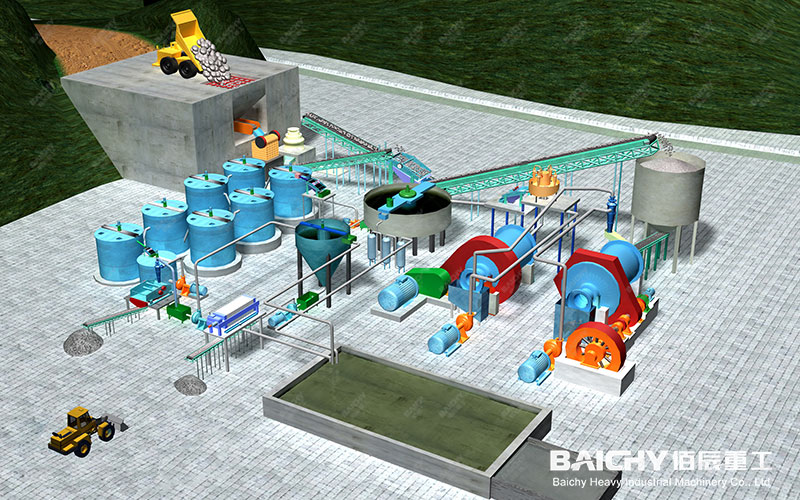
Mineral Processing Flowsheet
A well-designed copper-silver flotation process can recover valuable metals from finely disseminated ore while producing a concentrate suitable for further treatment. However, flotation performance does not depend on the flotation cells alone. Crushing, grinding, classification, reagent addition, pulp density, water quality, and tailings management all influence the final result.
For many copper-silver projects, the process starts with three questions: How are the copper and silver minerals associated? At what size are they liberated from gangue? And can they be recovered together in a bulk concentrate, or should they be separated? The answers should come from representative sampling, mineralogical analysis, and flotation testwork.
This guide explains a typical copper-silver flotation flowsheet and the main design points for a stable processing plant.
1. Typical Copper-Silver Flotation Flowsheet
A conventional sulfide ore process may follow this sequence:
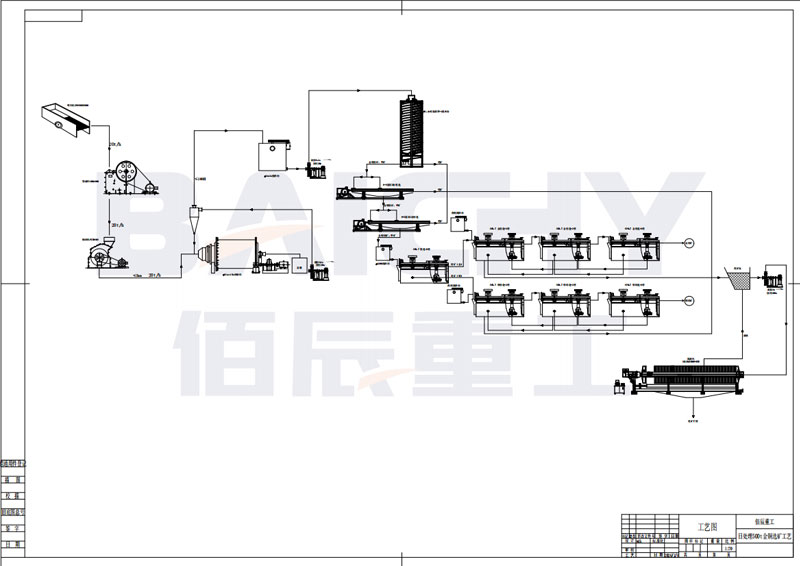
Beneficiation Process for 500 t/d of Low-Grade Gold-Copper Ore
The exact circuit changes according to ore hardness, mineral liberation, oxidation, clay content, copper minerals, silver deportment, and concentrate requirements. Some ores may need pre-treatment, desliming, selective flotation, or additional cleaning stages.
2. Crushing and Screening: Preparing a Stable Feed
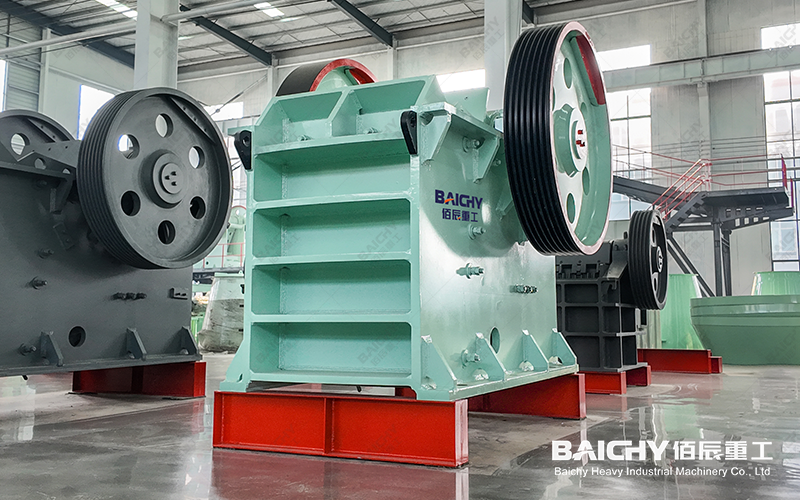
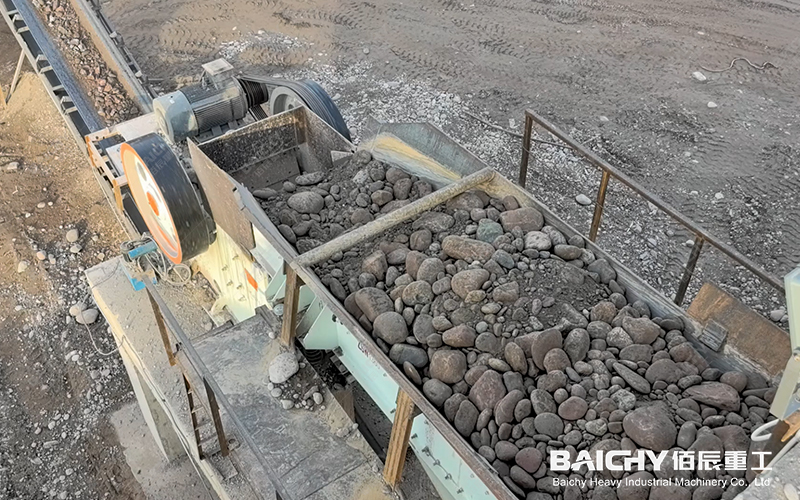
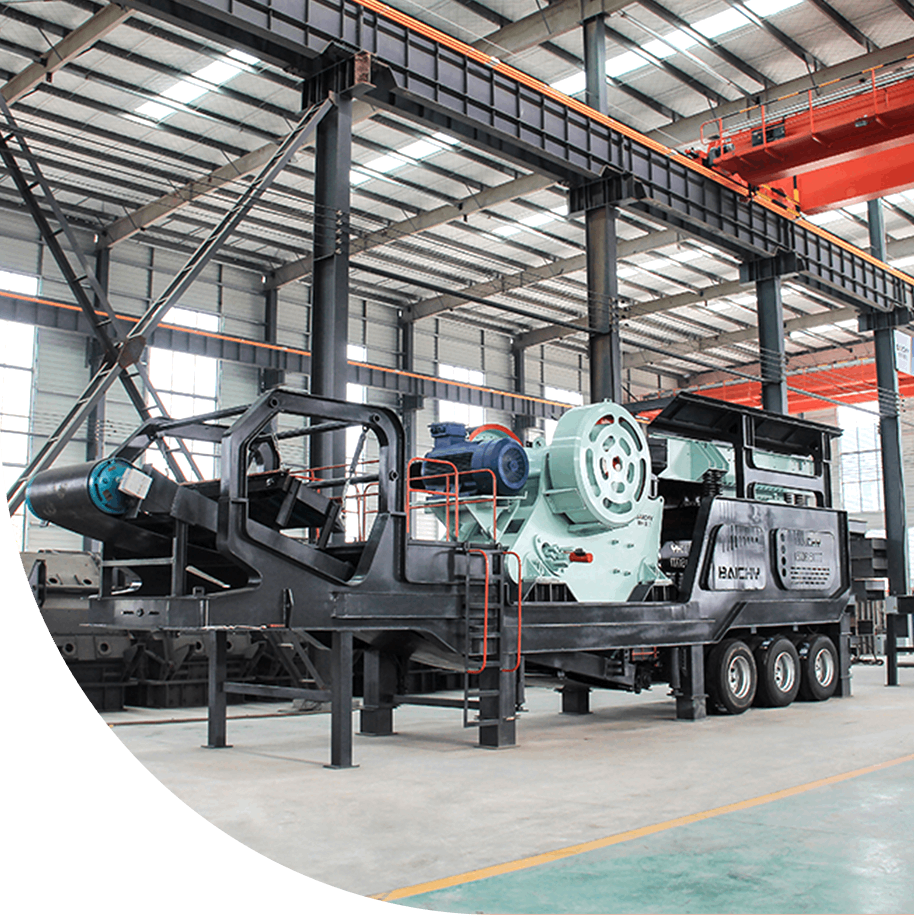
PE Jaw Crusher
The crushing circuit reduces run-of-mine ore to a size that can be efficiently ground. It commonly includes an ore bin or receiving hopper, vibrating feeder, jaw crusher, secondary crusher, vibrating screen, conveyors, and tramp-metal protection.
The objective is not simply to achieve a smaller particle size. The crushing system should produce a consistent feed for the grinding circuit and avoid unnecessary fines. A fine-ore stockpile or bin can provide buffer capacity between mining and processing, helping the mill operate continuously when truck deliveries fluctuate.
Dust collection or water suppression may be required at transfer points. The plant layout should also provide safe access for liner replacement, crusher maintenance, belt inspection, and removal of blocked material.
3. Grinding and Classification: Releasing Copper and Silver Minerals
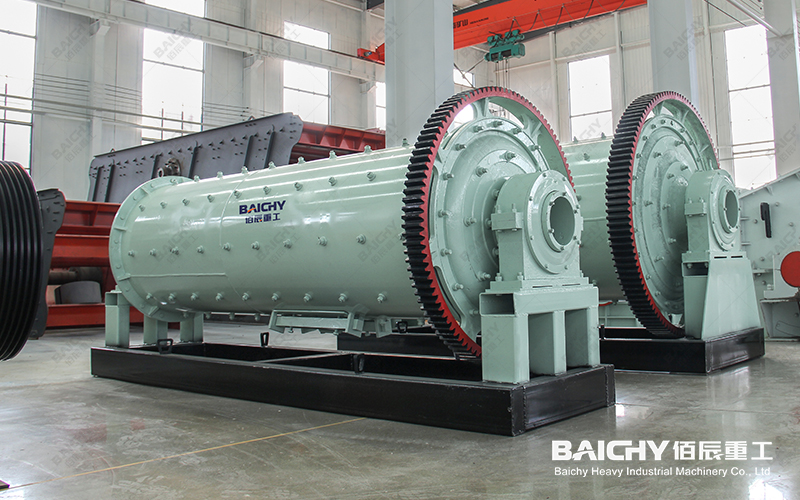
wet ball mill
Grinding is one of the most important stages in the flotation process. The goal is to liberate copper- and silver-bearing minerals from gangue without creating excessive slimes. A typical grinding circuit uses a ball mill, slurry pump, and hydrocyclone cluster. Coarse cyclone underflow returns to the mill, while fine overflow proceeds to flotation.
The optimum grind size must be established through laboratory tests. If the ore is under-ground, valuable minerals may remain locked with pyrite or silicate gangue. If it is over-ground, the circuit may consume excess energy and generate slimes that interfere with reagent contact and froth stability.
Grinding control should include mill feed rate, mill power, pulp density, cyclone pressure, overflow particle size, and circulating load. Stable classification is essential because large changes in flotation feed size can produce unstable recovery and concentrate grade.
4. Rougher and Scavenger Flotation
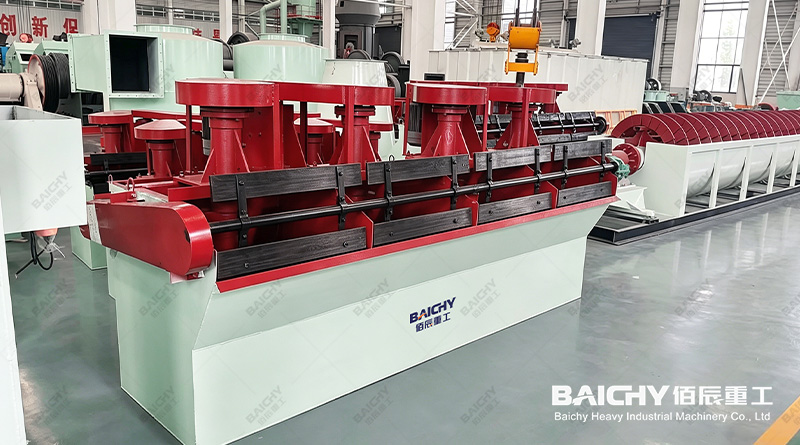
Flotation machine
The ground slurry enters the rougher flotation circuit after the required reagents have been added. Collectors make selected mineral surfaces hydrophobic, while frothers help form a stable froth. Air bubbles carry the hydrophobic particles to the surface, where the mineralized froth is collected as concentrate.
Rougher flotation is designed to recover as much copper and silver as practical, even if the initial concentrate contains some gangue. The rougher concentrate is normally sent to cleaning, while rougher tailings move to scavenger flotation.
Scavenger cells recover valuable minerals that remain in the rougher tailings. Scavenger concentrate may return to the rougher feed or join an intermediate stream, depending on the flowsheet. Scavenger tailings become final flotation tailings after sampling confirms that metal losses are within the design target.
5. Regrinding and Cleaner Flotation
Rougher concentrate may contain locked particles, pyrite, or entrained gangue. Regrinding can improve liberation before cleaner flotation, but it should only be added when testwork demonstrates a benefit. Regrinding also increases energy use and may create fine particles, so the circuit should be carefully controlled.
Cleaner flotation upgrades the rougher concentrate by removing unwanted gangue and iron sulfide minerals. A plant may use one or more cleaner stages, with cleaner scavenger flotation added when necessary. The final number of stages depends on the required copper grade, silver recovery, impurity limits, and concentrate marketability.
The process team should evaluate both recovery and concentrate quality. A high recovery rate is not necessarily beneficial if the resulting product contains excessive impurities or moisture.
6. Bulk Copper-Silver Flotation or Separation?
The correct flotation strategy depends on the way silver occurs in the ore. If silver is closely associated with copper sulfide minerals, it may be recovered efficiently into a bulk copper-silver concentrate. This approach generally uses a simpler flowsheet and can be easier to operate.
If silver occurs as a separate mineral, or if copper and silver have different flotation responses, the plant may require selective flotation or an additional separation stage. The decision should consider mineralogy, recovery, concentrate grade, smelter terms, reagent consumption, and operating cost.
| Process route | When it may be suitable | Main advantage | Main risk |
|---|---|---|---|
| Bulk copper-silver flotation | Silver is associated with copper minerals | Simple circuit and combined recovery | Mixed concentrate may require tighter impurity control |
| Selective flotation | Copper and silver minerals behave differently | Greater control over products | More stages and more complex operation |
| Copper flotation with silver by-product | Silver follows copper minerals | Uses the main copper circuit | Silver recovery depends on copper recovery |
No route should be selected only from the names of the minerals. Mineralogical analysis and locked-cycle flotation testing are important before the final design is approved.
7. Reagent Addition and Process Control
A typical reagent program may include a collector, frother, pH modifier, activator, depressant, or dispersant. The correct dosage and addition point depend on mineralogy and water chemistry. Reagent addition can be distributed between grinding, conditioning, rougher flotation, and cleaner stages.
Important operating variables include:
• Grind size and pulp density;
• pH and oxidation-reduction conditions;
• Reagent dosage and conditioning time;
• Air rate and froth depth;
• Flotation residence time;
• Cell level and slurry flow;
Concentrate and tailings sampling frequency.
Process control should combine automatic instruments with regular laboratory analysis. Operators can use changes in froth color, texture, mobility, and stability as operating signals, but these observations should be confirmed by assays. Excessive froth stability may increase entrainment, while weak froth can reduce recovery.
8. Concentrate and Tailings Treatment
Flotation concentrate usually passes through a thickener before filtration. Thickening removes part of the water and improves filter performance. A pressure filter, vacuum filter, or other suitable filter can then reduce moisture to a level appropriate for storage and transport.
Final tailings are pumped to a thickener, tailings storage facility, or filtration system. The choice depends on settling behavior, water availability, terrain, environmental requirements, and long-term storage conditions. A water-recovery system can return clarified water to the process, reducing fresh-water demand.
Recycled water should be tested because dissolved salts, residual reagents, and fine particles can affect flotation selectivity. A reliable water balance should include normal operation, start-up, rainfall, evaporation, and emergency storage conditions.
9. Common Problems and Practical Solutions
Unstable mill feed: Check the crushed-ore bin level, feeder performance, belt loading, and ore moisture. Variations in feed rate can quickly affect grind size and flotation performance.
Low copper or silver recovery: Review liberation, grind size, pulp density, reagent dosage, pH, air rate, and residence time. Also check whether valuable minerals are being lost to coarse particles or slimes.
Low concentrate grade: Investigate over-grinding, excessive entrainment, high froth depth, poor cleaning, and unwanted pyrite or gangue flotation.
High reagent consumption: Check ore oxidation, water chemistry, slurry conditions, and reagent addition points. Better conditioning may be more effective than simply increasing dosage.
High moisture in concentrate: Review thickener operation, filter feed density, filter cloth condition, vacuum or pressure, and concentrate particle size.
10. Recommended Development Procedure
A reliable copper-silver flotation project normally follows these steps:
1. Collect representative samples from different ore zones;
2. Complete chemical and mineralogical analysis;
3. Conduct crushing, grinding, and flotation tests;
4. Compare bulk and selective flotation options;
5. Prepare a mass balance and water balance;
6. Confirm equipment duties and plant layout;
7. Carry out pilot or locked-cycle testing when needed;
8. Commission the plant and optimize operating conditions.
This sequence helps reduce the risk of selecting a flowsheet that performs well in a single laboratory test but becomes unstable at industrial scale.
Frequently Asked Questions
1. What is the main purpose of copper-silver flotation?
The purpose is to separate copper- and silver-bearing minerals from gangue by using differences in surface properties. The valuable minerals are collected in a froth concentrate, while most unwanted material reports to tailings.
2. Can copper and silver be recovered in the same flotation circuit?
Yes, when silver is closely associated with copper minerals or has a compatible flotation response. If their mineralogy and flotation behavior differ significantly, selective separation may be required.
3. What grind size is used for copper-silver flotation?
There is no universal grind size. It must be determined by mineral liberation, ore hardness, and flotation testing. The target should be fine enough to release valuable minerals but not so fine that excessive slimes are produced.
4. Why is regrinding sometimes added after rougher flotation?
Regrinding can liberate valuable minerals locked in rougher concentrate and improve cleaner performance. It is not required for every ore and should be justified by mineralogical and metallurgical test results.
5. How can flotation recovery and concentrate grade be improved?
Start by stabilizing feed size, grind size, pulp density, pH, reagent dosage, air rate, and froth depth. Then review mineral liberation and cleaning performance. Improvements should be based on sampling and assay data rather than visual froth appearance alone.
Baichy Heavy Industry
Baichy Heavy Industry is a high-tech mining equipment company integrating R&D, manufacturing, sales, and after-sales service. Focusing on crushing, grinding, and mineral processing equipment, we provide professional solutions to our customers. We are ISO9001:2015 Certified, and our products include mobile crushing palnts, crawler crushing plant, construction waste crushing plants, jaw crushers, sand making machines, cone crushers, fine crushers, grinding mills, ball mills, etc., all with reliable performance to meet diverse project needs.
Baichy Heavy Industry – Your Trusted Partner
To ensure optimal performance of your equipment, Baichy Heavy Industry offers:
- Professional on-site installation guidance
- Comprehensive operator training
- 24/7 technical support & maintenance services
Our complete after-sales service system guarantees long-term, stable operation of your machinery with minimal downtime.
Protect Your Rights – Only Use Official Channels
To avoid scams and ensure authentic support, contact us exclusively through:
• Official Website: www.baichychina.com
• WhatsApp: +8615093222637
• Email: [email protected]
Your satisfaction is our priority – expect prompt, professional service every time.
(Note: Beware of unauthorized third parties claiming to represent Baichy. Always verify through official contacts.)