
Granite Crushing and Screening Production Line
A granite crushing and screening production line turns blasted boulders of 600–1,000 mm into certified cubical aggregates of 0–5, 5–10, 10–20 and 20–31.5 mm for ready-mix concrete, highways and railway ballast. Because granite sits at Mohs 6–7 with silica content above 65%, the circuit cannot simply copy a limestone plant — every crusher, screen and conveyor must be selected around abrasion, laminated crushing and closed-circuit classification. This Baichy guide covers the process, real equipment parameters, capacity-based configurations, cost structure and the five questions buyers ask most.
What Is a Granite Crushing and Screening Production Line?
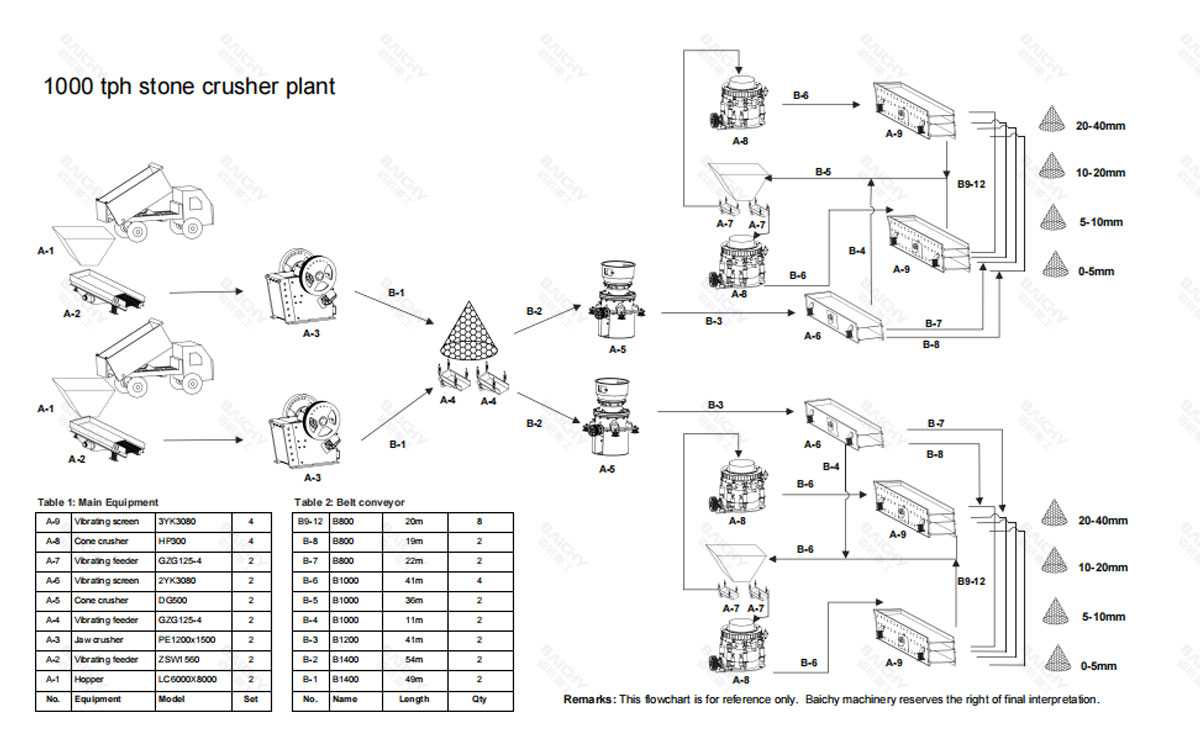
In practice, a granite crushing and screening production line is defined by its closed circuit rather than by any single machine. It is an integrated system combining feeding, primary crushing, secondary crushing, tertiary shaping, vibrating screening, conveying, dust collection and PLC control into one balanced flow. The goal is not size reduction alone: it is stable tonnage, controlled gradation, cubical shape and the lowest cost per ton. The value lies in matching — an oversized jaw starves the cone, an undersized screen bottlenecks the plant, and a badly placed transfer point adds power demand and dust. Correctly balanced, a granite crushing plant runs 10–16 hours a day at over 90% availability.
Why Granite Needs a Purpose-Built Circuit
Hardness, Silica and Abrasive Wear
Granite compressive strength ranges from 100 to 250 MPa, and its quartz-rich mineralogy is highly abrasive, making wear parts the largest variable cost. In Baichy field data, impact crusher blow bars on granite may last only 3–7 days, while cone crusher liners in laminated (inter-particle) crushing run 6–10 weeks. That is why we specify jaw + cone + VSI for every granite crushing and screening production line we design, never jaw + impact.
Shape and Gradation Standards
Market specification drives the rest of a granite crushing and screening production line. High-grade concrete and asphalt require low flakiness. A three-stage closed circuit with a VSI shaper holds flaky and elongated particles below 10–15%, meeting most EN and ASTM classes. A 3- or 4-deck inclined screen with correctly specified mesh keeps each fraction in tolerance and stops oversize reaching the stockpile.

Granite Crushing and Screening Production Line
Fixed, Mobile or Hybrid?
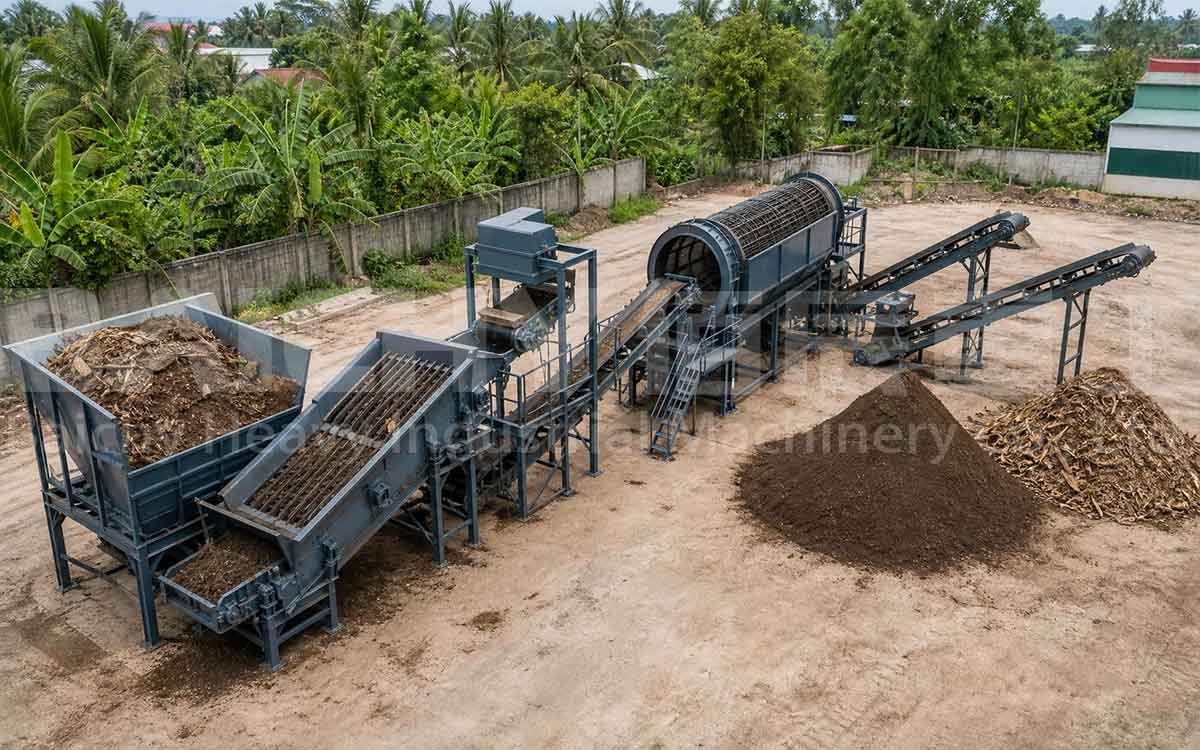
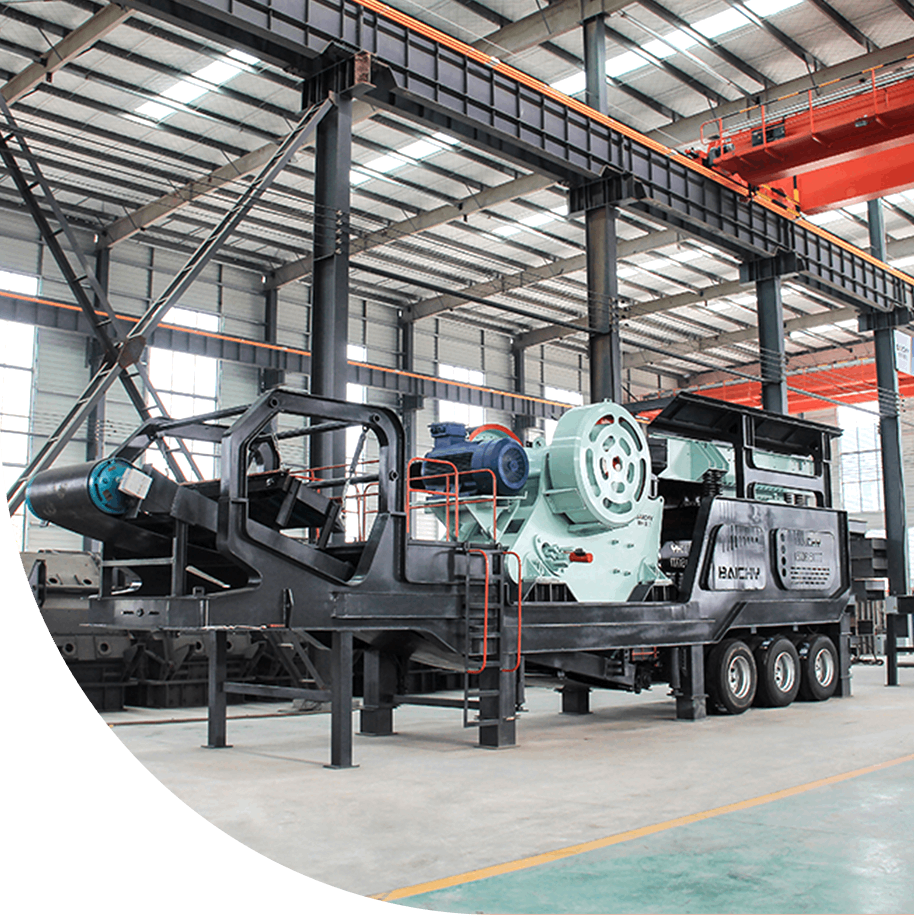
A stationary granite crushing and screening production line gives the lowest cost per ton for a long quarry licence on stable ground. Mobile jaw + mobile cone units suit phased licences and remote benches, needing no concrete foundation. Many investors now run a fixed primary station with mobile secondary units.
Process Flow: From Boulders to Certified Aggregate
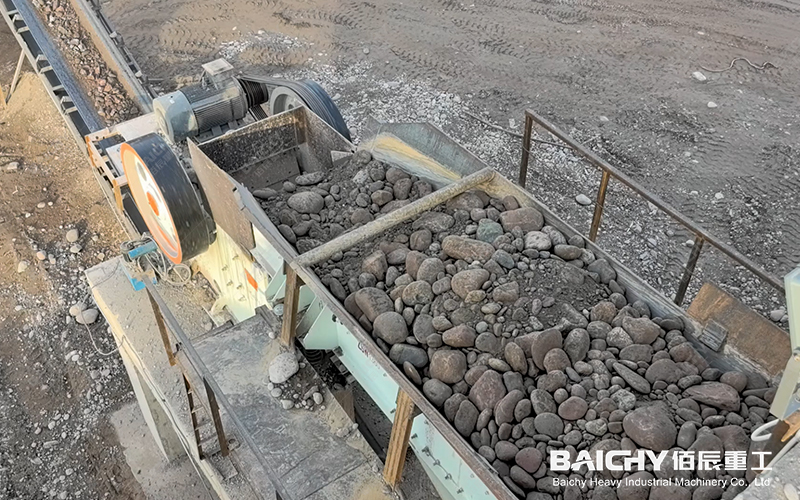
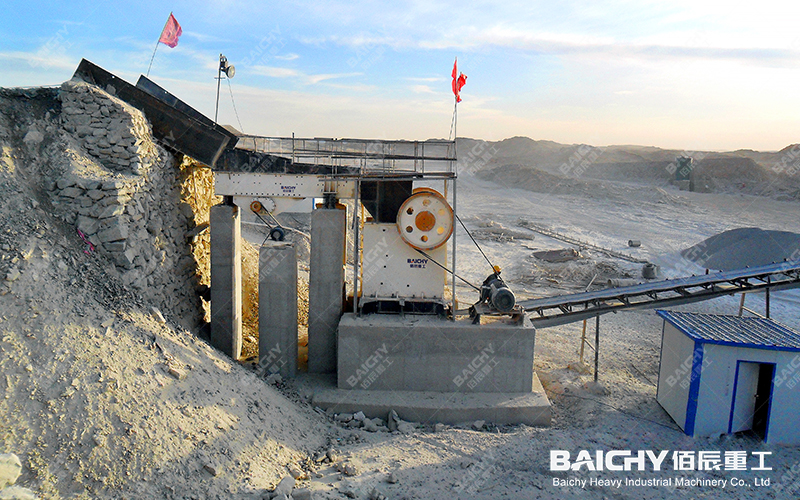
Stage 1 — Primary crushing. A grizzly feeder (ZSW or GZD series) draws from the hopper, removes soil and fines, and choke-feeds a deep-cavity PE jaw crusher that reduces 600–850 mm rock to under 150–200 mm at a 4–6:1 reduction ratio.
Stage 2 — Secondary crushing. A single-cylinder hydraulic cone crusher (HST or DG series) is the heart of the granite crushing and screening production line. Laminated crushing, hydraulic CSS adjustment and automatic overload release produce 0–50 mm material with CSS set at 25–45 mm.
Stage 3 — Tertiary crushing and shaping. A multi-cylinder hydraulic cone (HPT or HPC series) handles fine crushing, while a VSI sand maker (VSI6X series) shapes the product. In "stone-on-stone" mode it converts needle-like particles into cubical manufactured sand with a fineness modulus of 2.6–3.0, lifting the value of the 0–5 mm fraction by 20–30% when paired with a sand washer.
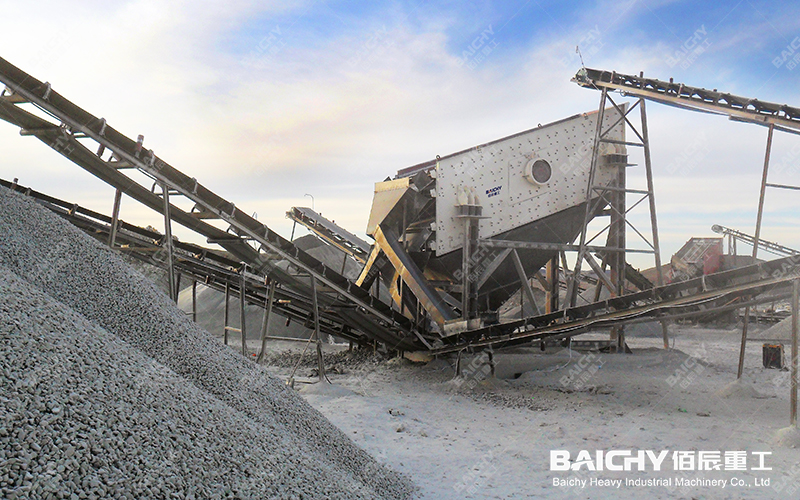
Screening and closed circuit. No granite crushing and screening production line holds its gradation without correct screen area. Multi-deck circular vibrating screens (3YK / 4YK) split the stream into saleable fractions; oversize returns to the cone, stabilising gradation as the quarry face changes. Above 300 TPH, Baichy installs two or more screens in parallel to avoid blinding and hold screening efficiency above 85%.
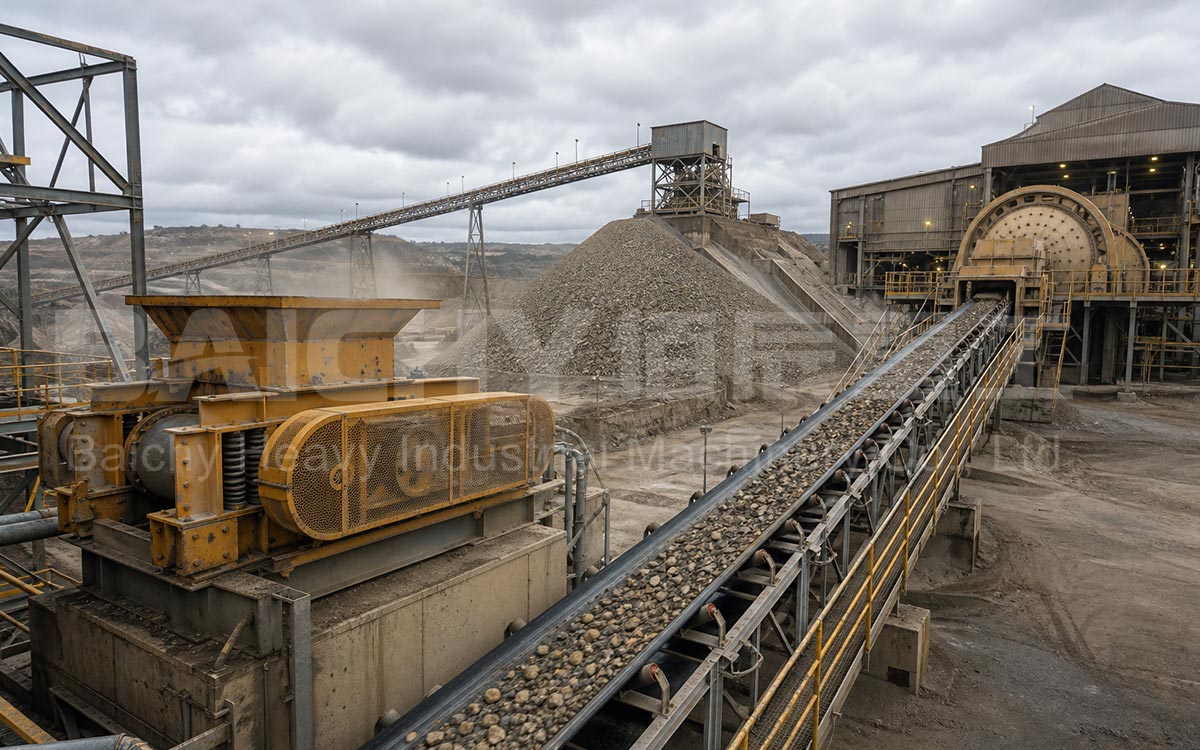
Conveying and dust control. B800–B1200 belt conveyors, an interlocked control cabinet and a 20,000–40,000 m³/h pulse-jet baghouse complete the system. Enclosed transfer points and spray suppression keep emissions and boundary noise inside permit limits.
Core Equipment and Technical Parameters
The table below lists the Baichy models most commonly specified in a granite crushing and screening production line, with typical hard-rock duty figures.
| Stage | Baichy Model | Max Feed (mm) | Capacity (t/h) | Power (kW) | Key Role |
|---|---|---|---|---|---|
| Feeding | ZSW-380×95 vibrating feeder | 500 | 60–120 | 11 | Uniform feed + grizzly pre-screening |
| Feeding | GZD-1100×4200 vibrating feeder | 580 | 120–240 | 15 | Heavy-duty hopper discharge |
| Primary | PE-750×1060 jaw crusher | 630 | 150–220 | 110 | Coarse reduction to ≤180 mm |
| Primary | PE-1000×1200 jaw crusher | 850 | 250–400 | 132 | Large boulders, deep cavity |
| Secondary | HST-315 single-cylinder hydraulic cone | 300 | 200–430 | 250 | Laminated crushing, hydraulic CSS |
| Secondary | DG-500 single-cylinder hydraulic cone | 250 | 180–320 | 220 | Stable medium crushing |
| Tertiary | HPT-300 multi-cylinder hydraulic cone | 150 | 120–260 | 250 | Fine crushing, overload protection |
| Shaping | VSI6X1263 vertical shaft impactor | 60 | 150–280 | 2 × 160 | Cubical shaping, manufactured sand |
| Screening | 3YK-1548 circular vibrating screen | 200 | 50–120 | 15 | 3-deck grading, small plants |
| Screening | 3YK-2460 circular vibrating screen | 200 | 200–300 | 30 | 3–4 fractions, closed circuit |
| Conveying | B800–B1200 belt conveyor | — | 200–800 | 7.5–30 | Inter-stage transfer, stockpiling |
| Environment | Pulse bag dust collector | — | 20,000–40,000 m³/h | 22–37 | Emission compliance |
Typical figures for granite at 1.6–1.8 t/m³ bulk density; final selection depends on feed analysis, moisture and target gradation.
Matching Configuration to Capacity
| Capacity | Primary | Secondary / Tertiary | Screening | Output Sizes | Power | Investment (USD) | Footprint |
|---|---|---|---|---|---|---|---|
| 50–80 TPH | PE-500×750 | PYB-900 cone | 3YK-1548 | 4 fractions | ~230 kW | 90,000–180,000 | ~30 × 15 m |
| 100–150 TPH | PE-750×1060 | HST-315 + HPT-300 | 3YK-1860 | 4 fractions | ~480 kW | 150,000–280,000 | ~45 × 25 m |
| 200–250 TPH | PE-900×1200 | HST-315 + HPT-300 + VSI6X1263 | 3YK-2460 | 4 fractions + m-sand | ~780 kW | 280,000–520,000 | ~60 × 35 m |
| 300–350 TPH | PE-1000×1200 | 2 × DG-500 + HPC-300 | 2 × 3YK-2460 | 4 fractions + m-sand | ~1,100 kW | 450,000–800,000 | ~80 × 45 m |
| 500 TPH | 2 × PE-1000×1200 | 2 × DG-500 + HPC-300 + VSI | 3 × 3YK-2460 | 4 fractions + washed sand | ~1,800 kW | 800,000–1,500,000 | ~120 × 60 m |
Baichy's 500 TPH granite plant in Uzbekistan uses a parallel dual-line layout: when one train is serviced, the plant still delivers roughly 250 TPH — a key design principle above 300 TPH.
Five Factors That Decide Real Output
Nameplate tonnage and delivered tonnage are two different numbers. Five variables decide the real output of a granite crushing and screening production line:
• Feed size and clay content. Grizzly pre-screening protects liners and adds 5–8% effective capacity.
• Chamber and CSS selection. A wrong cavity is the most common reason a granite crushing plant delivers only 70–80% of nameplate capacity.
• Closed-circuit screening. Undersized screens recirculate material endlessly, burning power and wear parts for no extra tonnage.
• Wear-part metallurgy. Mn18Cr2 liners matched to silica content last 30%+ longer than standard high-manganese steel in granite.
• Automation. PLC monitoring of current, temperature and vibration holds output error within about 3% and cuts unplanned downtime.
Granite Crushing and Screening Production Line
Cost Structure and ROI
Every granite crushing and screening production line should be judged on total cost of ownership, not purchase price. Equipment is typically 60–70% of CAPEX; civil works, steel structure, electrical installation and commissioning make up the rest. On the OPEX side, the three dominant items are power (1.2–2.0 kWh per ton for a three-stage granite circuit), wear parts and labour. Most investors in expanding markets report payback within 12–24 months, and the biggest lever is total cost of ownership rather than purchase price — a cone-based layout typically cuts annual maintenance spend by 15–20%.
Why Work with Baichy Heavy Industry?
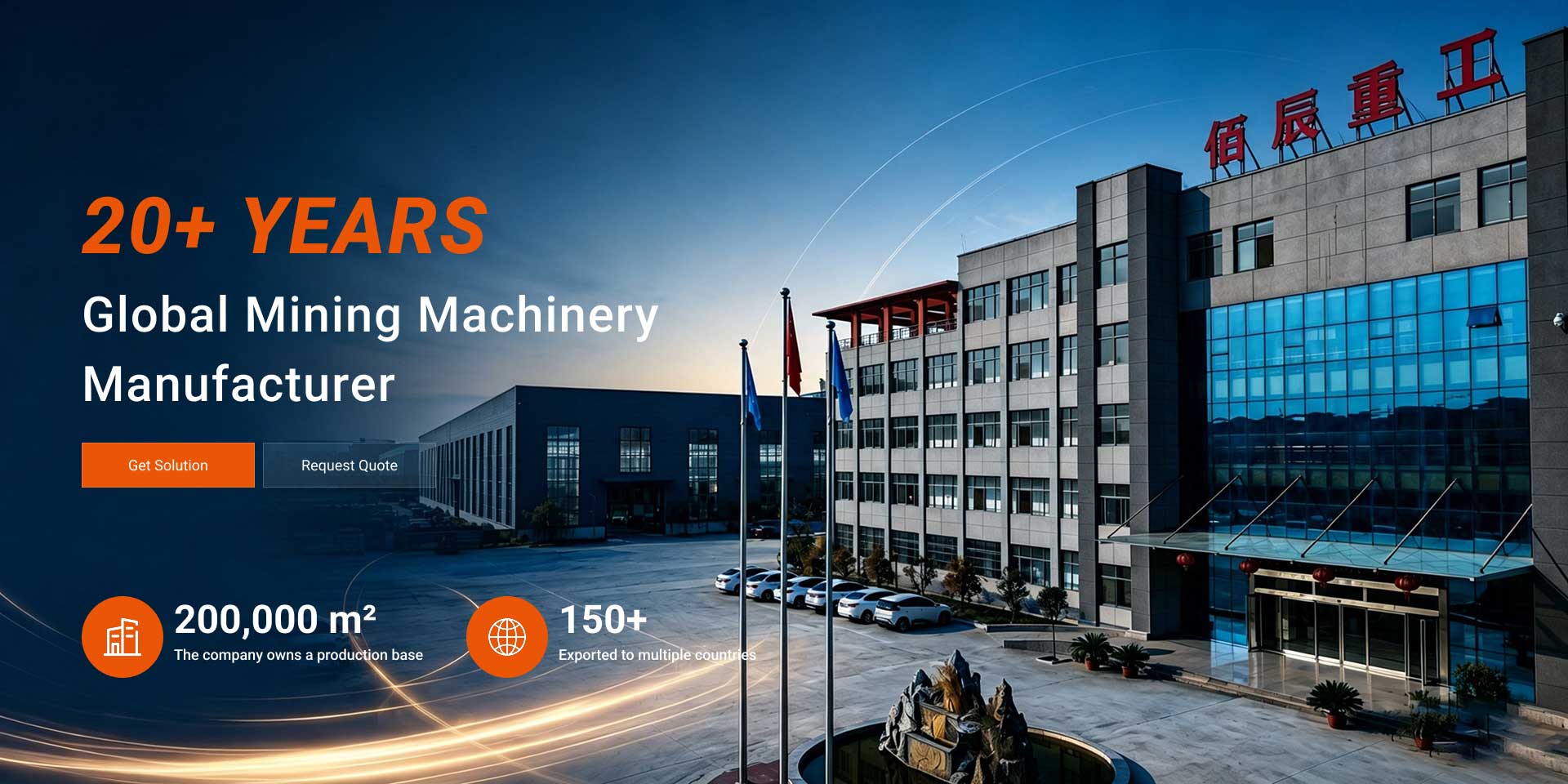
Baichy has delivered a granite crushing and screening production line on four continents. We manufacture crushing, grinding and mineral processing equipment and export to more than 150 countries from a 200,000 m² base. For granite projects we provide free process design and selection, EPC turnkey execution from layout drawings to commissioning, installation guidance and operator training, original wear-part supply and 24/7 remote support — adapted to local power standards (50/60 Hz, 220/380/440 V), cold-climate hydraulic packages and environmental permit requirements.
Frequently Asked Questions
1. Why jaw + cone instead of jaw + impact for granite?
Granite's silica content wears blow bars three to five times faster than cone liners. Cones use compression and laminated crushing, giving longer liner life, better shape and a far lower wear cost per ton. Impact crushers suit limestone and other soft rock.
2. What is the gap between nominal and actual capacity?
Capacity tables are usually based on limestone at about 1.6 t/m³; granite runs 2.6–2.8 t/m³. Expect real output around 70–85% of the nominal figure and size the circuit accordingly.
3. How much does a 200 TPH granite crushing plant cost?
A complete 200 TPH granite crushing and screening production line — machines, screens, conveyors, steel structure, electrical control, dust collection and installation — typically ranges from USD 280,000 to 520,000, depending on automation and wear-part specification.
4. Can the line also produce manufactured sand?
Yes. Adding a VSI sand maker, plus a wheel or spiral sand washer and fine-sand recovery unit where washed sand is required, raises recovery above 90% and produces 0–5 mm manufactured sand with a controlled fineness modulus.
5. How long until commissioning?
Manufacturing takes 45–60 days. Including shipping, civil works, installation and commissioning, most granite crushing plants reach commercial production within 3–5 months of contract signature.
Baichy Heavy Industry
Baichy Heavy Industry is a high-tech mining equipment company integrating R&D, manufacturing, sales, and after-sales service. Focusing on crushing, grinding, and mineral processing equipment, we provide professional solutions to our customers. We are ISO9001:2015 、certified, and our products include mobile crushing palnts, crawler crushing plant, construction waste crushing plants, jaw crushers, sand making machines, cone crushers, fine crushers, grinding mills, ball mills, etc., all with reliable performance to meet diverse project needs.
Baichy Heavy Industry – Your Trusted Partner
To ensure optimal performance of your equipment, Baichy Heavy Industry offers:
- Professional on-site installation guidance
- Comprehensive operator training
- 24/7 technical support & maintenance services
Our complete after-sales service system guarantees long-term, stable operation of your machinery with minimal downtime.
Protect Your Rights – Only Use Official Channels
To avoid scams and ensure authentic support, contact us exclusively through:
• Official Website: www.baichychina.com
• WhatsApp: +8615093222637
• Email: [email protected]
Your satisfaction is our priority – expect prompt, professional service every time.
(Note: Beware of unauthorized third parties claiming to represent Baichy. Always verify through official contacts.)