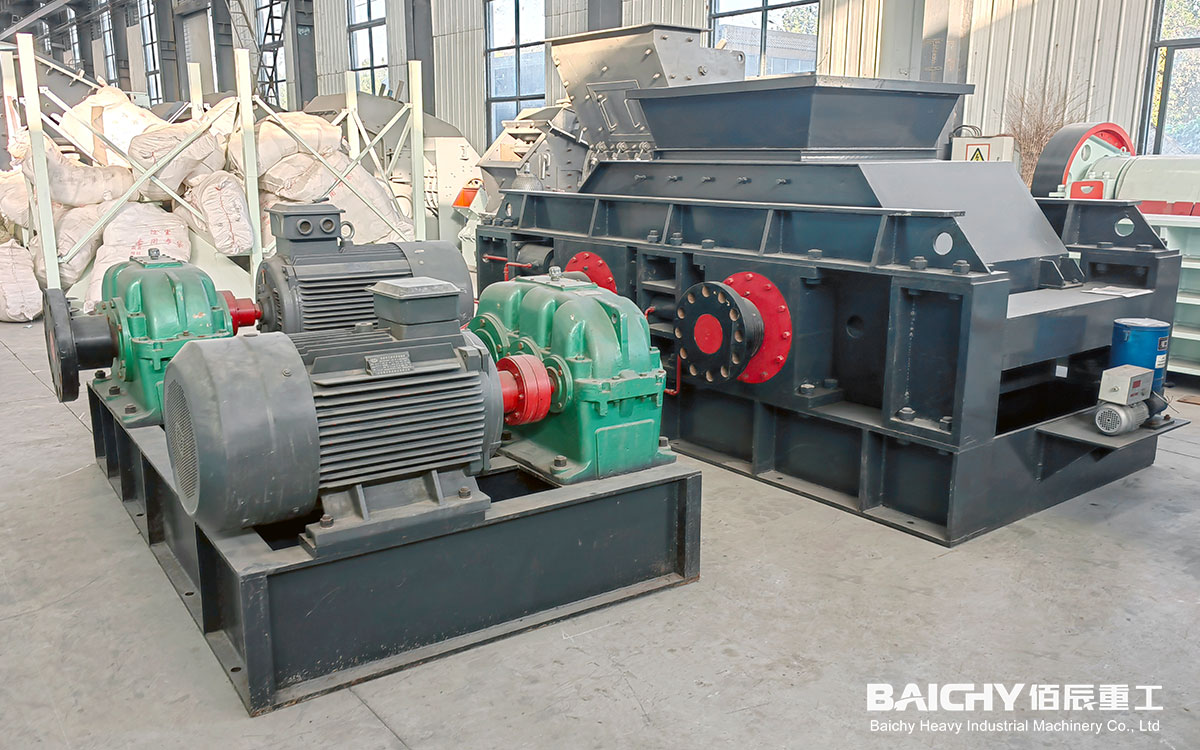
2PGY1200x1200 Double Roller Crusher
The 2PGY1200x1200 hydraulic double-roll crusher is the optimal solution for the final crushing stage of medium-sized sand and aggregate production lines in Vietnam. Following primary crushing by a jaw crusher and secondary crushing by a cone crusher, this hydraulic double-roll crusher—featuring 1200mm diameter rolls and a processing capacity of 80–150 tph—takes over the final crushing phase. It processes medium-to-fine feed material (under 50mm) in a single pass, producing high-quality aggregates or manufactured sand sized between 3mm and 20mm. Its core value lies not merely in its crushing capability, but in its efficiency and cost-effectiveness: for the same finished particle size, it consumes 30%–40% less electricity per ton than a cone crusher and incurs wear-part costs more than 50% lower than an impact crusher.
1. Tailored for the Vietnamese Market: Why does this equipment address your pain points?
Vietnam's infrastructure market is undergoing rapid expansion—with highway networks, airport expansions, and industrial park foundations driving a massive demand for concrete aggregates and manufactured sand with uniform particle sizes. However, many aggregate business owners in Vietnam face the same dilemma:
Pain Point 1: Impact crushers work well for limestone but cannot withstand granite or river pebbles.
• Impact crushers rely on high-speed impact for size reduction; consequently, blow bar wear accelerates exponentially when processing hard rock. A blow bar may need replacement in less than two months, and the financial losses caused by downtime for replacements far outweigh the initial price difference of the equipment.
• The Solution: Double-roll crushers operate on the principle of compression; the linear speed of the roll shells is low, resulting in uniform wear. When processing hard rocks like granite, basalt, or river pebbles, Mn18Cr2 roll shells offer a stable service life of 6–8 months, and wear does not compromise the shape of the output particles.
Pain Point 2: Using cone crushers for final crushing results in high energy consumption, slow adjustment speeds, and a high percentage of flaky or elongated particles.
• While cone crushers excel in secondary crushing, using them for final crushing (below 20mm) results in a compression chamber stroke that is too short; this leads to a higher content of flaky and elongated particles and a significant increase in electricity consumption per ton.
• Breaking the Mold: The hydraulic double-roll crusher is specifically designed for final-stage crushing. The gap between the rolls can be precisely adjusted to as little as 3mm, resulting in rounded product particles with low flake and elongation content; this improves concrete workability and commands a higher market price.
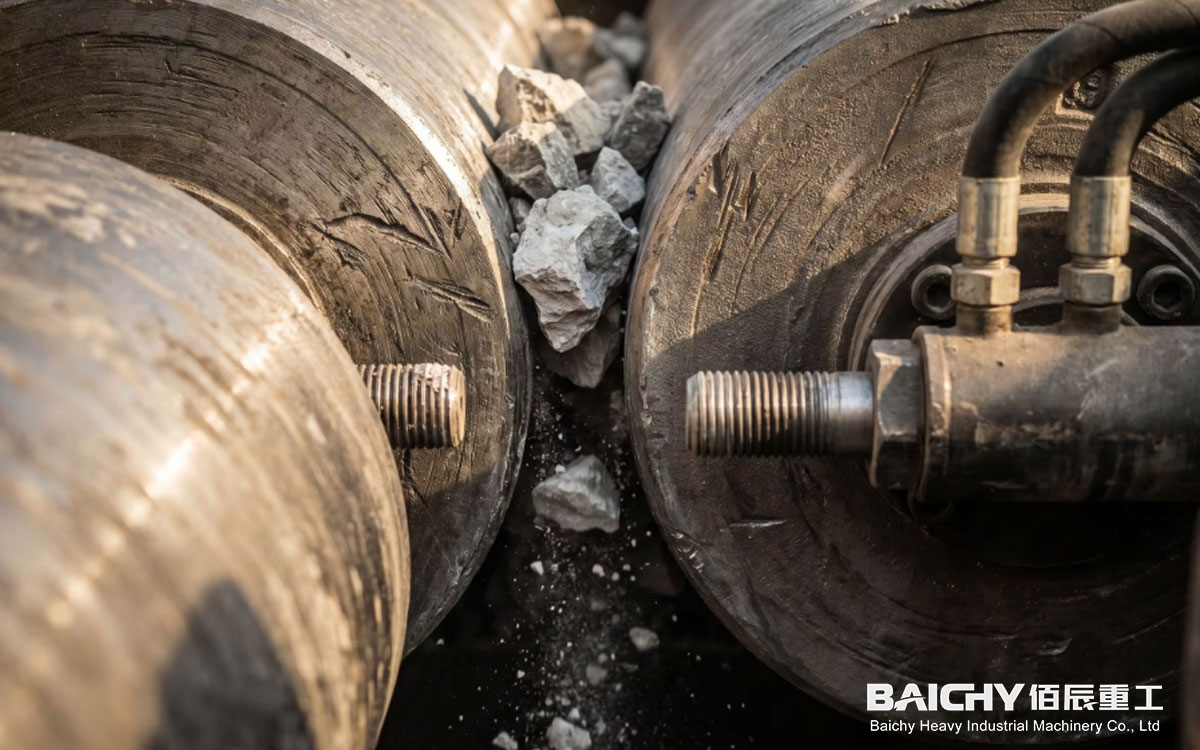
Close-up view of the Mn18Cr2 high-manganese steel roll surface
2. Key Parameter Comparison: The Real-World Performance of the 2PGY1200x1200
| Parameter Category | Specifications | Significance for Vietnamese Quarry Owners |
| Roll Diameter × Width | 1200 × 1200 mm | Large roll diameter ensures a superior nip angle; handles ≤50mm feed without clogging; single-pass reduction ratio of 4–6 |
| Feed Size | ≤ 50 mm | Compatible with direct discharge from jaw or cone crushers; no intermediate screening required |
| Processing Capacity | 80–150 t/h | Meets the core capacity requirements of medium-sized aggregate plants in Vietnam |
| Output Size | 3–20 mm (adjustable) | One machine serves dual purposes: concrete aggregate (10–20mm) and manufactured sand (3–5mm) |
| Dual Motor Power | 2 × 45 kW | Total installed power of only 90kW; cone crushers with similar capacity typically require 132–160kW |
| Roll Shell Material | Mn18Cr2 High-Manganese Steel | Rockwell hardness HRC 55–58; service life of 6–8 months in hard rock applications |
| Adjustment Method | Automatic hydraulic adjustment + overload protection | The "Y" series' distinct advantage: one-touch roll gap adjustment, automatic retraction upon encountering tramp iron, and instant reset |
3. The Hydraulic Advantage of the "Y" Series: Why Choose the 2PGY Over the Standard 2PG?
The "Y" stands for the hydraulic system, marking the watershed moment that transforms the double-roll crusher from a merely "functional" tool into a "high-performance" asset.
| Comparison Dimension | Standard 2PG (Spring-loaded) | 2PGY (Hydraulic) |
| Roll Gap Adjustment | Manual screw adjustment; requires 15–30 min downtime | One-touch hydraulic adjustment; no downtime; ±1mm precision |
| Overload Protection | Spring compression/recoil; manual reset | Automatic hydraulic recoil + accumulator for instant reset |
| Protection Against Uncrushable Objects | Relies on spring response; significant lag | Hydraulic sensor detects overload; rolls retract within 0.2s to protect gearbox |
| Roll Shell Replacement Ease | Requires bearing housing disassembly; takes 4–6 hours | Hydraulic-assisted disassembly; reduced to 2–3 hours |
| Annual Maintenance Downtime | Approx. 12–15 days | Approx. 5–7 days |
Conclusion: The 2PGY model allows for 7–10 more days of production per year than the standard 2PG; based on a daily output of 1,200 tons, this results in an additional 8,400–12,000 tons of finished product annually.
4. Applicable Materials and Operating Scenarios
Ideally suited materials:
• Limestone (Bluestone): Widely distributed in north-central Vietnam; roll crushing as the final stage yields rounded particle shapes suitable for C30–C50 concrete.
• Granite/Basalt: Hard rock applications in southern and central Vietnam; configured as a three-stage crushing line using a PE600x900 jaw crusher and a PYB1200 cone crusher.
• River Pebbles/Cobblestones: Found in the Mekong and Red River basins of Vietnam; the compression principle of roll crushing naturally avoids over-crushing, resulting in a high sand yield.
• Iron Ore/Gold Ore: Pre-crushing before milling in beneficiation plants; with the roll gap adjusted to 5–8 mm, it can directly replace some functions of the primary ball mill stage, saving 40% in energy.
Typical production line configuration (100–150 tph sand making):
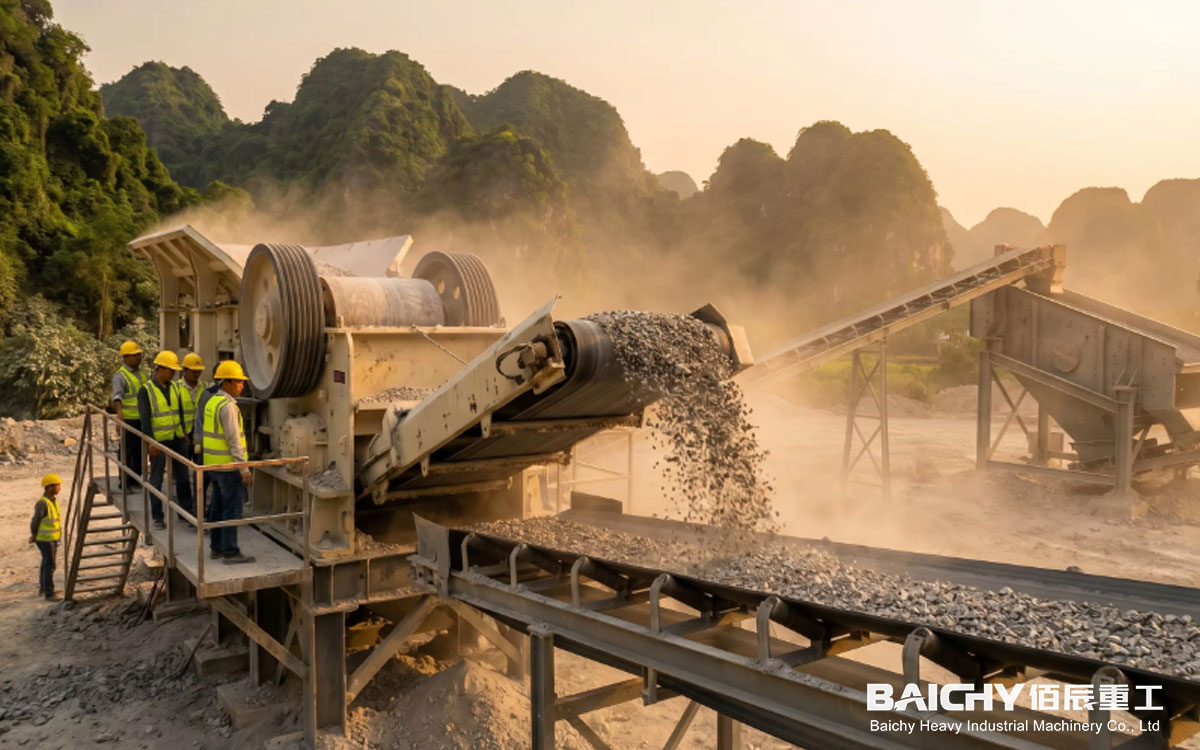
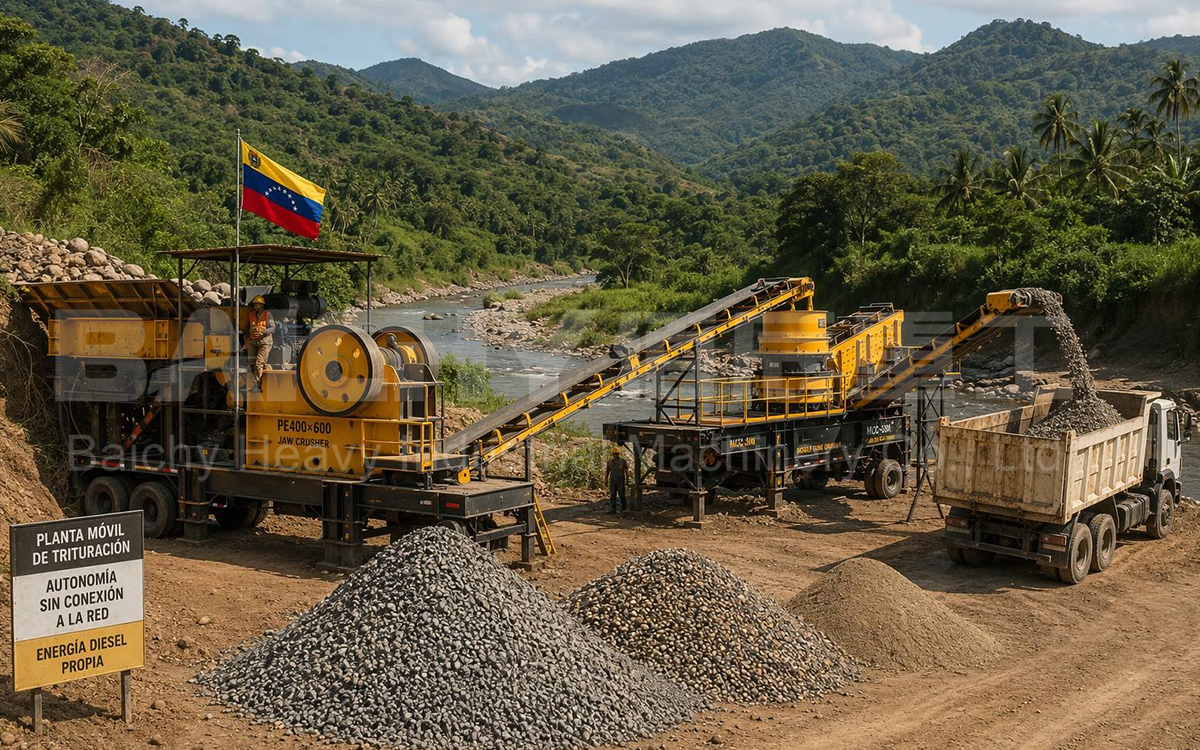
On-site view of a production line featuring a jaw crusher and a double-roll crusher.
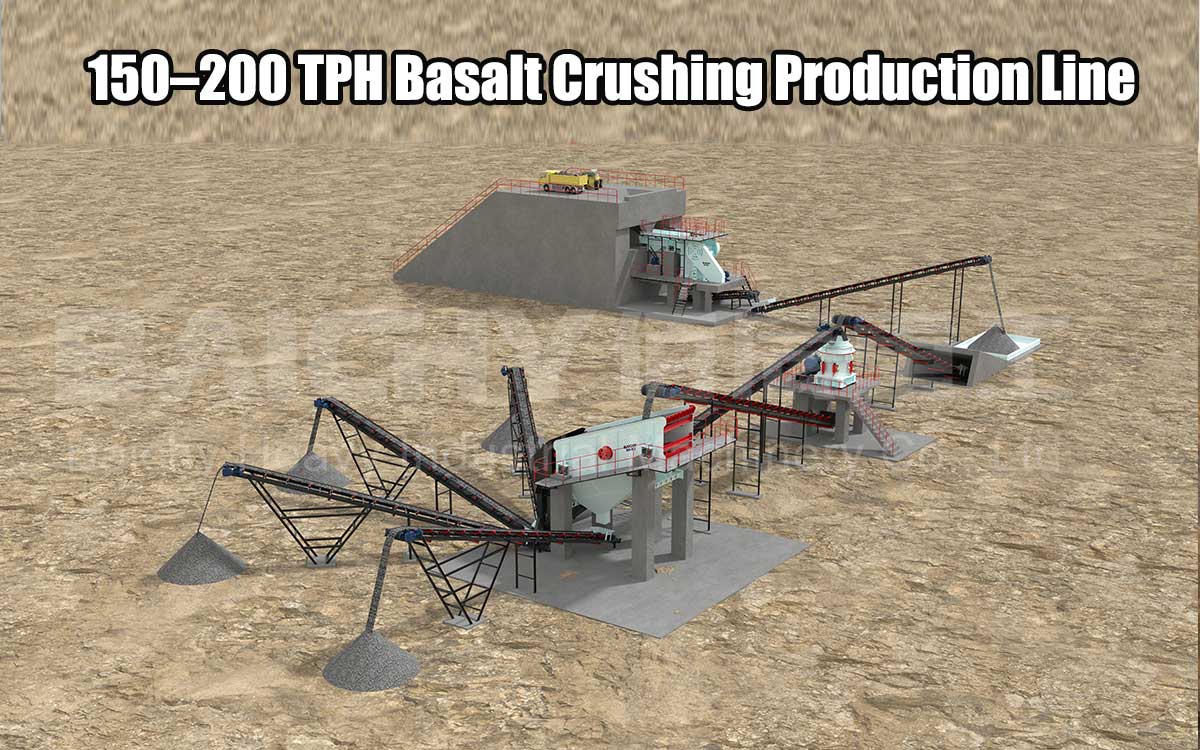
Vibrating Feeder → PE600x900 Jaw Crusher (Primary Crushing) → PYB1200 Cone Crusher (Secondary Crushing) → 2PGY1200x1200 Double-Roll Crusher (Final Crushing/Sand Making) → Vibrating Screen → Finished Sand
The total installed power for this configuration is approximately 350 kW, with an electricity consumption of about 2.3–2.6 kWh per ton of sand; based on industrial electricity rates in Vietnam, the pure electricity cost is only about 15,000–20,000 VND per ton.
5. Value Proposition: Every technical detail saves you money
| Technical Feature | Direct Benefit to Vietnamese Mine Owners |
| 90kW dual-motor direct drive (no belt transmission) | Transmission efficiency >95%; eliminates downtime losses from monthly belt replacements; saves 40+ hours of maintenance labor annually |
| Large 1200mm roll diameter + low rotation speed | Uniform roll surface wear allows for complete replacement rather than spot repairs; single roll shell replacement costs are predictable and controllable |
| Hydraulic relief accumulator system | Automatically retracts to protect the gearbox if tramp iron (e.g., excavator teeth or drill bits) enters; a single instance of protection saves tens of thousands in repair costs |
| Enclosed housing + dedicated dust extraction port | Complies with Vietnam's increasingly strict environmental regulations; allows for direct connection to pulse dust collectors |
| Modular base design | No need for massive embedded concrete foundations; operational within 2 days of delivery; reduces infrastructure construction costs |
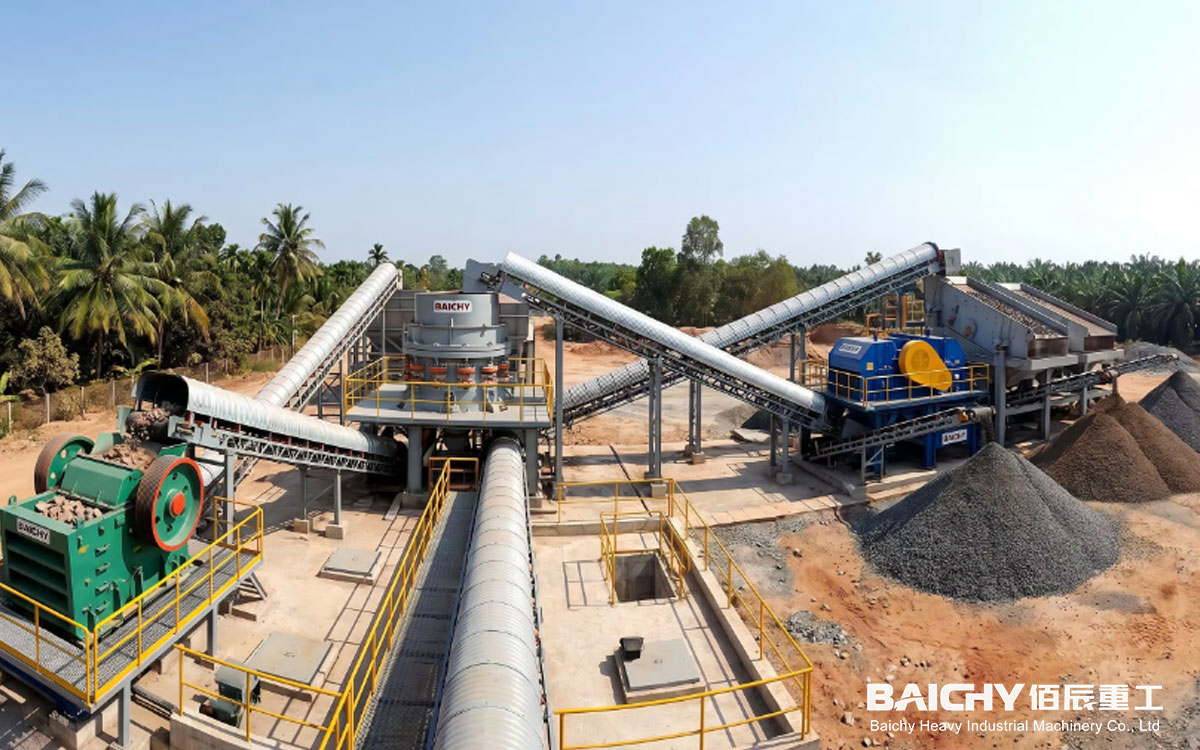
On-site view of a double-roll crusher production line for a client in Vietnam.
6. Competitive Benchmarking: Why do Vietnamese customers switch from other brands to Baichy?
Key competitors in the Vietnamese market include low-cost Chinese manufacturers and select Indian brands. The core differences are:
• Roll shell lifespan: Low-cost manufacturers typically use Mn13 or standard cast steel shells, which last only 2–3 months in hard rock applications. Baichy standardizes on Mn18Cr2 material with hard-facing repair technology, effectively doubling the service life.
• Gearbox reliability: The transmission gearbox is the heart of the roll crusher. Baichy utilizes a hardened, ground-gear process (ISO Class 6 precision) rather than the standard hobbing process used by low-cost manufacturers. Under Vietnam's typical 20-hour/day operating conditions, the gearbox overhaul interval extends from 1 year to over 3 years.
• After-sales response: Baichy maintains a spare parts warehouse in Ho Chi Minh City; common items like roll shells, bearings, and hydraulic seals can be delivered to any province within 72 hours.
Contact: WhatsApp: +86-15093222637
Email: [email protected]
Website: www.baichychina.com
Vietnamese Language Support: Our local engineers in Vietnam can communicate technical details directly in Vietnamese, eliminating the need to wait for a translator during on-site installation guidance and after-sales maintenance.
FAQ:
Q1: Is the 2PGY1200x1200 roll crusher suitable for crushing granite? What is the production capacity?
A1: It is perfectly suitable. When processing granite (compressive strength: 200–250 MPa) with a feed size of ≤50 mm and a discharge setting of 5–10 mm, the actual production capacity is approximately 80–110 t/h. The service life of the roll shells is about 6 months (based on a 16-hour workday). For extended service life, roll shells with a hard-faced wear-resistant layer are available as an option, extending the lifespan to 8–10 months.
Q2: Which is more cost-effective for final crushing: a hydraulic double-roll crusher or a cone crusher?
A2: For final crushing to ≤20 mm, the total cost of a double-roll crusher is significantly lower than that of a cone crusher. Taking a 100 t/h capacity as an example: the double-roll crusher has a total installed power of 90 kW compared to 132–160 kW for the cone crusher, resulting in an annual electricity cost saving of approximately 30,000–50,000 RMB. Additionally, roll shell replacement costs are around 20,000–30,000 RMB, whereas replacing the mantle and concave (liner) on a cone crusher costs about 50,000–80,000 RMB. The only trade-off to consider is material suitability: cone crushers handle high clay content better, whereas double-roll crushers require a pre-processing ore-washing stage for such materials.
Q3: Is the hydraulic system reliable in Vietnam's hot and humid climate?
A3: Yes, it is reliable. The hydraulic station on the Baichy 2PGY series comes standard with an air-cooled radiator and an IP65-rated motor; its performance has been proven through over three years of operation in Vietnam's environment (40°C temperatures and 90% humidity). We recommend using ISO VG 46 anti-wear hydraulic oil, with changes every 2,000 hours during the summer season.
Q4: What are the delivery and installation timelines for this equipment in Vietnam?
A4: The standard delivery period is 25–30 days after contract signing (including sea freight to Ho Chi Minh City or Hai Phong port). The equipment features an integrated frame structure; upon arrival, it can be positioned in a single lift using a 30-ton crane and connected to the power supply for testing. The entire process from port arrival to commissioning typically takes only 5–7 working days.
Q5: When producing manufactured sand with a 3–5mm output size, what is the controllable fines content?
A5: The compression-based crushing principle of the roll crusher naturally results in a low rate of fines generation. When processing limestone, the fines content (<0.075mm) in the 3–5mm output is typically controlled between 8% and 12%—significantly lower than the 18%–25% range associated with impact crushers. To further reduce fines content, we recommend installing a vibrating screen downstream for air separation or water washing.
Q6: Can the roller shells be repaired after wearing down, or must they be replaced?
A6: They can be repaired. Baichy roller shells support surface hard-facing repair; this can be performed either on-site or off-site once wear reaches 30%–50%. The cost of a single repair is approximately 20%–30% of a new shell, and the service life after repair reaches 70%–80% of a new one. A single set of shells can typically be repaired 2–3 times, significantly lowering the total lifecycle cost.
Q7: Can a single 2PGY1200x1200 unit directly produce manufactured sand? What equipment is needed upstream?
A7: Yes, it can. However, the feed material must be controlled to ≤50mm with no oversized chunks. Recommended upstream configuration: vibrating feeder + jaw crusher (e.g., PE600x900) + intermediate hopper + belt conveyor feeding directly into the roll crusher. When the roll gap is set to 3–5mm, a single pass through the machine yields qualified manufactured sand. If there are strict grading requirements (such as for high-speed rail sand), we recommend adding a screening unit downstream for classification.
Q8: Are there any operational 2PGY1200x1200 units in Vietnam available for a site visit?
A8: Yes. Baichy has 2PGY series roll crushers operating in Vietnam’s Dong Nai, Binh Duong, and Quang Ninh provinces, covering both limestone sand-making lines and granite aggregate lines. We can arrange visits to nearby project sites so you can personally verify the output particle shape and operational stability. Specific project locations and contact persons can be obtained from the sales engineer.