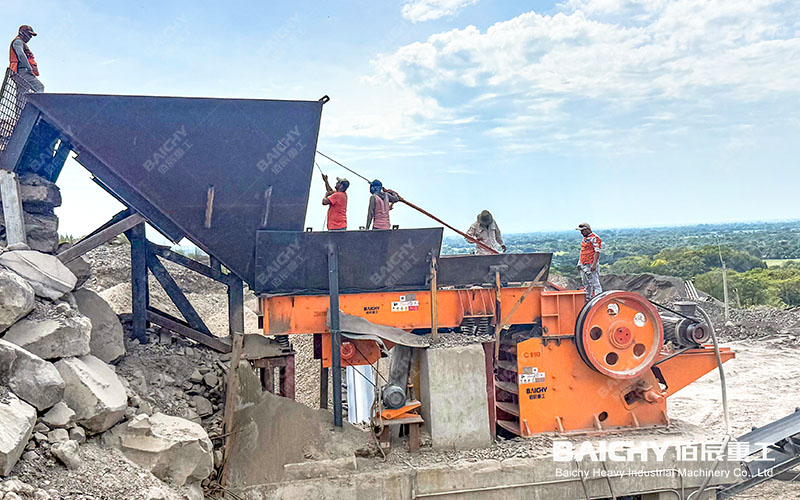
Application of a 250 t/h Stationary Crushing Production Line
Against the backdrop of continuously growing global demand for fossil fuels and infrastructure development, Algeria—leveraging its abundant mineral resources—is emerging as a pivotal market for the mining and construction sectors within North Africa. For large-scale mining operations and stone processing projects, an efficient, stable, and capacity-matched crushing production line is the cornerstone for ensuring a return on investment. The 250 t/h (tons per hour) stationary crushing production line, distinguished by its exceptional processing capacity and reliability, has become the ideal choice for numerous medium-to-large-scale projects across Algeria. This article will delve into the specific advantages of this configuration within the Algerian context and provide you with comprehensive guidance for equipment selection.
Overview of the Core Configuration for a 250 t/h Stationary Production Line
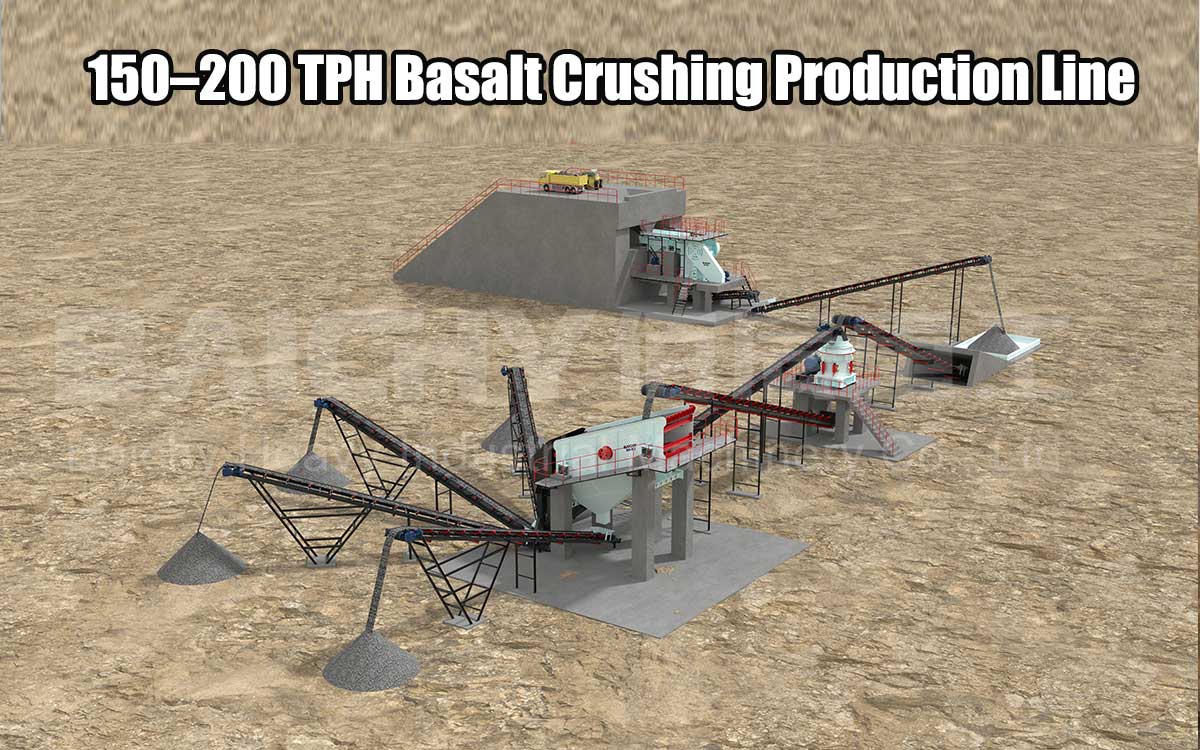
A standard 250 t/h stationary crushing production line is designed to perform primary, secondary, and tertiary crushing—followed by screening—on medium-to-high-hardness ores such as granite, basalt, and limestone. The ultimate goal is to produce various aggregate specifications that meet the stringent requirements of infrastructure construction projects. The core workflow typically follows this sequence: Feeding → Primary Crushing → Secondary Crushing → Screening → Tertiary Crushing (Optional) → Screening.
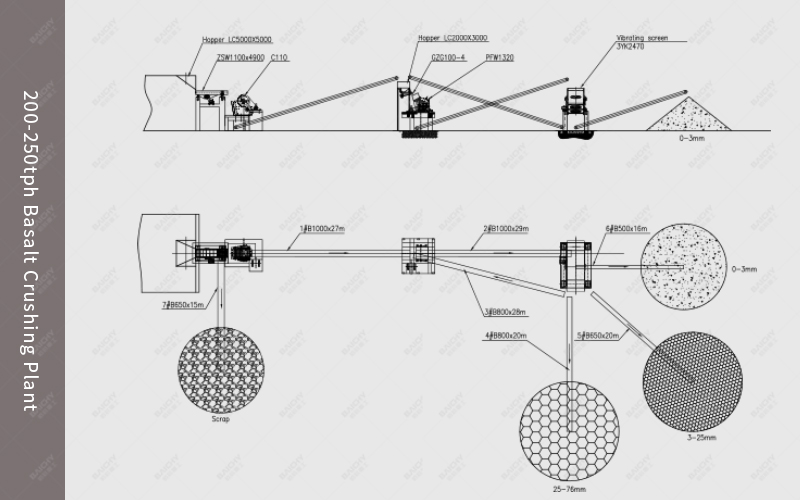
250 t/h Stationary Crushing Line Process Flow Diagram
Typical Process Flow and Equipment Components
A stationary production line of this capacity is not merely a collection of isolated machines, but rather a synergistic system where all components work in concert. Its layout must be meticulously designed based on the specific characteristics of the raw materials, the required output specifications, and the physical conditions of the project site.
• Feeding System: Typically employs a heavy-duty plate feeder to ensure that large-sized raw materials are fed into the crusher uniformly and continuously.
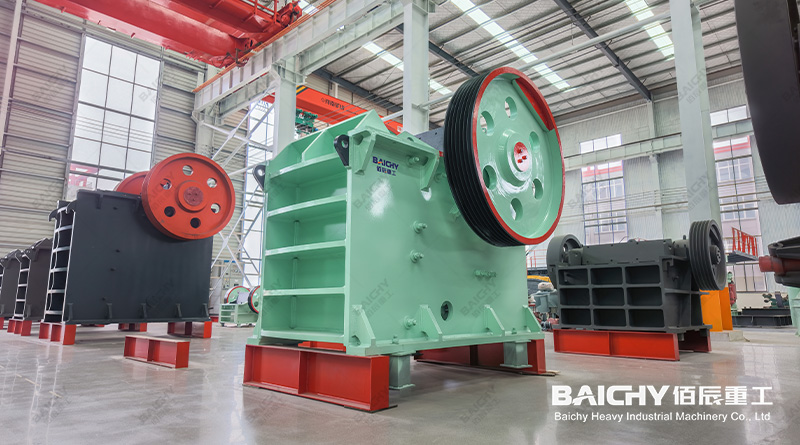
• Primary Crushing Unit: Usually utilizes a jaw crusher, responsible for reducing the raw ore to a size of 150–300 mm or less. As the "first gateway" of the production line, its operational stability is of paramount importance.
• Secondary Crushing Unit: Commonly features a cone crusher or an impact crusher. Given the prevalence of hard rock formations in Algeria, a highly wear-resistant hydraulic cone crusher is often the preferred choice, as it better guarantees sustained production capacity and superior product particle shape.
• Screening and Conveying System: Multi-layer vibrating screens are used to separate the crushed materials by size. Finished products meeting the required specifications are transported via conveyor belts to stockpiles, while oversized particles are returned to the crusher for further processing (forming a closed-circuit loop).
• Tertiary Crushing and Sand Making Unit (Optional): If the production of high-quality manufactured sand is required, a Vertical Shaft Impact Crusher (VSI)—commonly referred to as a "sand maker"—can be integrated into the system. Recommended Equipment Selection Table for Key Machinery
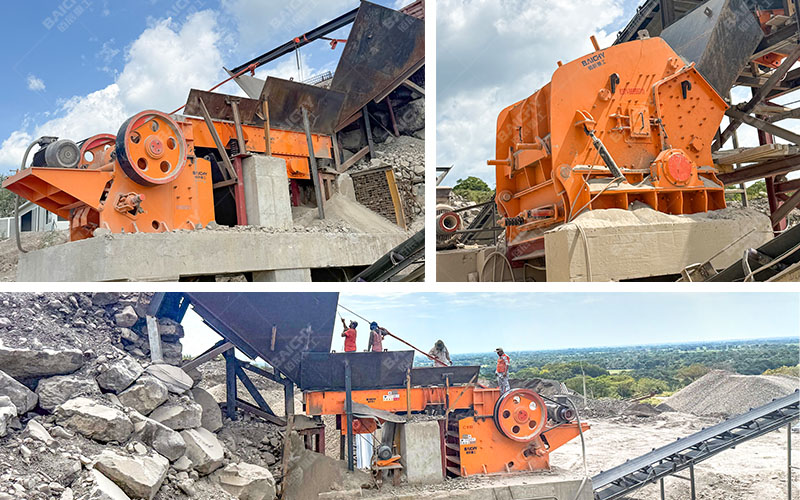
Application of a 250 t/h Stationary Crushing Production Line in Algeria
The table below presents a common configuration scheme for a 250 t/h production line designed specifically for hard rock materials (such as granite):
| Process Stage | Recommended Equipment Type | Reference Model Example | Key Functions & Features |
| Feeding | Heavy-duty Apron Feeder | GZT Series | Pre-screening, uniform feeding, protects the primary crusher |
| Primary Crushing | Deep-cavity Jaw Crusher | PE750*1060 | High crushing ratio, robust structure, capable of processing large ore blocks |
| Secondary Crushing | Single-cylinder Hydraulic Cone Crusher | CH250 | Laminated crushing principle, high efficiency, excellent product shape, long service life for wear parts |
| Screening | Three-axis Elliptical Vibrating Screen | 3YZS2460 | High screening efficiency, large processing capacity, capable of precise classification |
| Tertiary Crushing / Sand Making | Vertical Shaft Impact Crusher (VSI) | VSI1140 | Used for shaping or sand making; produces excellent cubic-shaped particles |
Why Choose a Stationary Production Line in Algeria?
For mining investors in Algeria, the decision to select a 250 t/h stationary crushing production line is primarily driven by the following significant advantages:
1. Exceptional Production Capacity and Cost-Effectiveness
A production capacity of 250 t/h perfectly meets the aggregate demands of medium-sized stone quarries, ancillary mining processing operations, and large-scale infrastructure projects in Algeria. Once constructed, a stationary production line can operate continuously and stably, 24/7. It offers a low cost per ton of production, enabling the rapid fulfillment of massive, high-quality aggregate requirements for national-level projects—such as highway construction and housing development.
2. Extremely High Reliability and Stability
Stationary production lines feature solid equipment foundations and compact inter-unit connections, resulting in minimal vibration and exceptionally smooth operation. This is crucial for processing the hard, abrasive ore materials commonly found in Algeria. Core equipment—such as hydraulic cone crushers—incorporates features like tramp iron protection and automatic cavity-clearing systems, which minimize unexpected downtime and ensure production continuity.
3. Ease of Maintenance and Localized Support
Although installed as a stationary system, the modern modular design facilitates convenient maintenance and servicing of key components. As equipment manufacturers, we provide our Algerian clients with detailed installation guidance and operational training. Furthermore, we have established a local spare parts inventory to ensure rapid response times for after-sales service—a critical factor for inland mining projects located far from major ports.
4. Algerian Project Case Study
One of our 250 t/h stationary granite crushing production lines has been successfully operating in the Oran region of Algeria for over three years. The primary objective of this project is the production of construction aggregates and manufactured sand.
• Raw Material: Local granite with a compressive strength exceeding 150 MPa.
• Core Configuration: PE900*1200 Jaw Crusher + CH315 Single-Cylinder Cone Crusher (two units) + VSI1140 Sand Making Machine + Multi-layer Vibrating Screens.
• Operational Results: The actual average throughput has consistently exceeded 260 t/h. The finished aggregates feature excellent particle shape, with a flakiness and elongation index of less than 8%, fully meeting the rigorous standards required for local infrastructure projects. The production line boasts a high degree of automation, and its energy consumption per unit of output remains below the industry average, thereby generating substantial and sustainable economic benefits for our client.
Extended Recommendations and Customized Solutions
In addition to our standard configurations, we offer customized solutions tailored to the specific requirements of our Algerian clients:
• For Highly Abrasive Ores: We recommend utilizing our full-hydraulic cone crusher series, equipped with specially engineered wear-resistant alloy liners to extend replacement intervals.
• For Strict Environmental Compliance: We can integrate dry dust removal systems, water-spray dust suppression devices, and fully enclosed conveyor galleries to ensure compliance with increasingly stringent environmental regulations.
• For Enhanced Automation: We offer solutions featuring intelligent control systems (PLC) that enable remote monitoring, fault diagnostics, and automated production data collection.
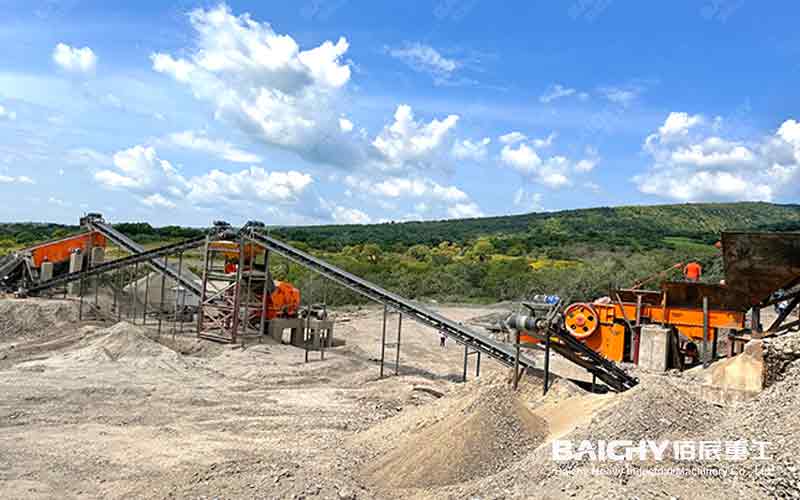
250 t/h Stationary Crushing Line
Frequently Asked Questions (FAQ)
Q1: What are the primary cost components involved in establishing a 250 t/h stationary production line in Algeria?
A1: The main costs include: equipment procurement (accounting for approximately 50%–60% of the total investment), international shipping and local customs clearance fees, civil engineering for equipment foundations and steel structural platforms, electrical systems and commissioning costs, and the initial inventory of spare parts. We are able to provide a detailed investment budget analysis upon request.
Q2: How long does it typically take from the signing of the contract to the commissioning of the production line on-site in Algeria?
A2: The entire cycle takes approximately 5 to 7 months. Specifically, this breaks down as follows: equipment manufacturing and inspection (3–4 months), sea freight (approx. 1 month), customs clearance and inland transport (2–3 weeks), and installation and commissioning (1–1.5 months). Completing site leveling and foundation preparation in advance can help shorten the overall timeline.
Q3: What special protective measures are in place to safeguard the equipment against Algeria's dusty environment and high-temperature climate?
A3: We provide climate-adapted configurations for equipment destined for Algeria, including: electrical cabinets with a higher protection rating (IP65), high-temperature-resistant hydraulic and lubricating oils, enhanced sealing and dust-proof designs for critical bearing components, and conveyor belt anti-deviation devices—all designed to ensure stable equipment operation under harsh environmental conditions.
Conclusion
Amidst Algeria's thriving mining and construction sectors, investing in a 250 t/h stationary crushing production line—characterized by its scientific design and superior quality—serves as a solid foundation for securing a long-term competitive advantage. It represents not only robust production capacity but also lower operating costs, higher output quality, and a more reliable return on investment.