
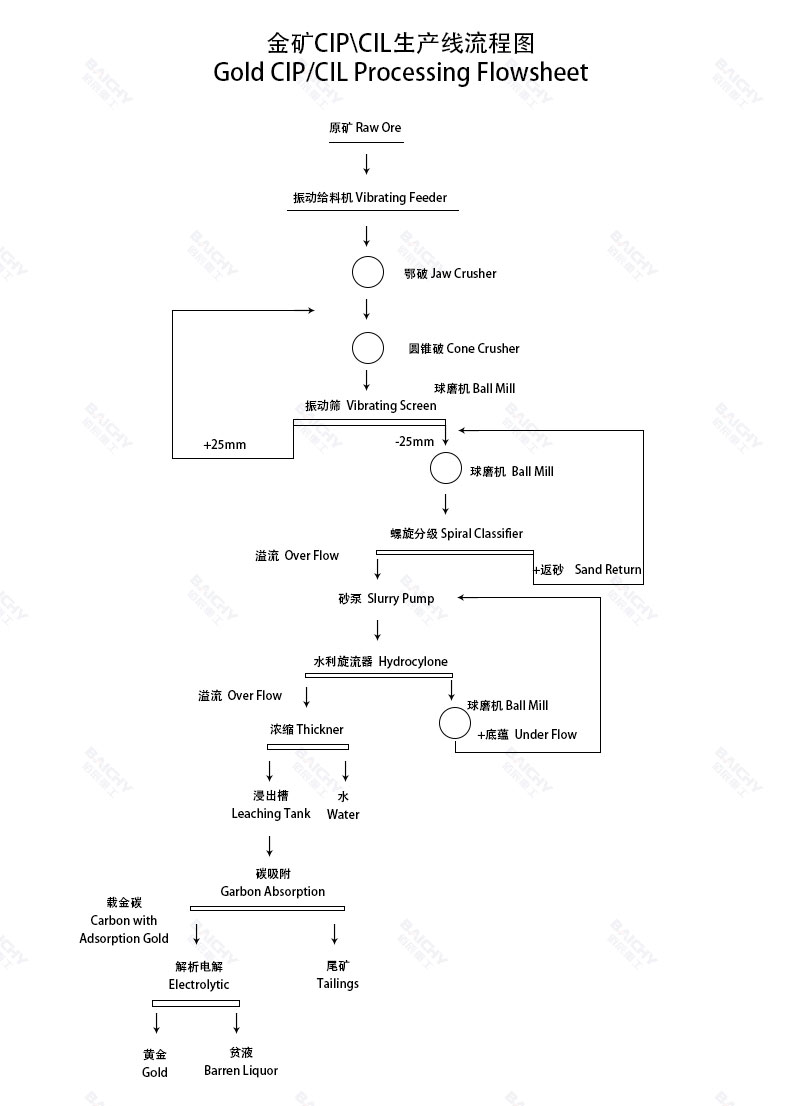
Gold CIP CIL Processing Flowsheet
Gold ore beneficiation constitutes the core stage of gold mining; its primary objective is to economically and efficiently extract gold from complex raw ores. By selecting appropriate beneficiation processes, gold recovery rates can be significantly enhanced, thereby maximizing resource value and boosting overall economic efficiency. Among the myriad gold extraction technologies available, CIP (Carbon-in-Pulp) and CIL (Carbon-in-Leach) are two widely adopted and highly efficient processes. Both ingeniously leverage the strong adsorption capacity of activated carbon for gold; however, they exhibit key procedural differences that directly impact beneficiation efficiency and cost control.
Detailed Explanation of Gold Ore CIP (Carbon-in-Pulp) Technology
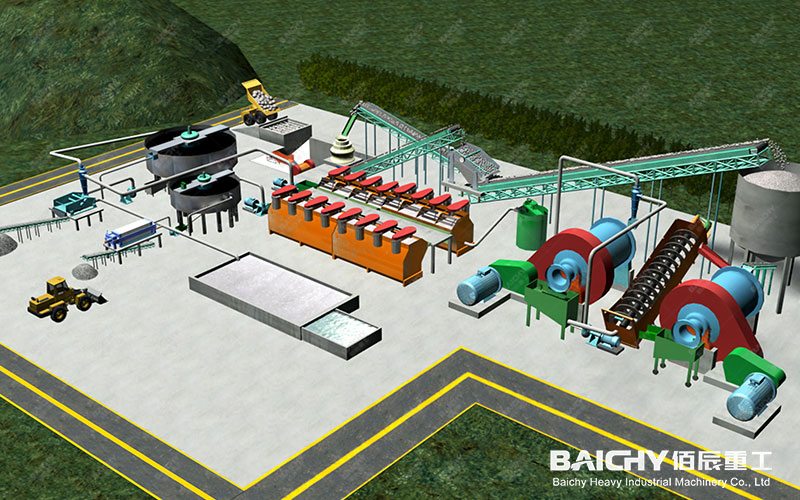
Gold and copper ore flotation lines
The core principle of the CIP process lies in the sequence of "oxidation followed by adsorption." The process begins with a thorough oxidative pretreatment of the gold-bearing pulp to render the gold amenable to adsorption. Subsequently, the pulp is pumped into a series of adsorption tanks containing activated carbon. Within these tanks, the activated carbon comes into intimate contact with the pulp, selectively adsorbing the dissolved gold to form gold-loaded activated carbon. Upon completion of the adsorption phase, the pulp proceeds to a solid-liquid separation stage, where the gold-loaded carbon is separated from the tailings pulp. Finally, through specialized desorption and electrolysis procedures, the gold is recovered from the activated carbon, while the regenerated carbon is returned to the circuit for reuse. This process features distinct steps, with the leaching and adsorption stages remaining relatively independent of one another.
Detailed Explanation of Gold Ore CIL (Carbon-in-Leach) Technology
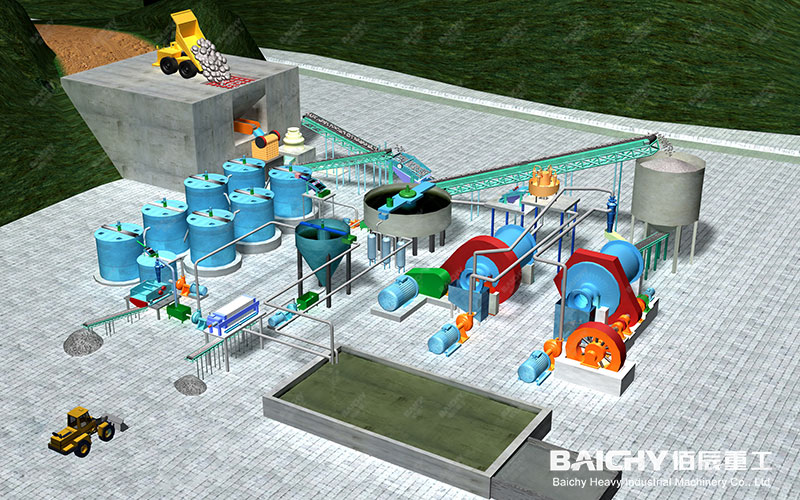
Gold Ore Processing
The CIL process can be summarized as "simultaneous leaching and adsorption." It shares a similarity with CIP in its utilization of activated carbon for adsorption. However, the critical distinction lies in the fact that CIL integrates both the leaching and adsorption processes within the same series of tanks. As the carbon-bearing pulp is agitated, leaching agents—such as cyanide solutions—are introduced; the moment gold dissolves (leaches) from the ore particles, it is immediately adsorbed and captured by the surrounding activated carbon. This synchronized operation minimizes gold losses due to reprecipitation and results in a more compact process flow. The subsequent steps mirror those of CIP: solid-liquid separation is performed to recover the gold-loaded activated carbon, followed by desorption to extract the gold. Core Comparison: Differences Between CIP and CIL Technologies
Although both technologies share the same objective, they exhibit significant differences, primarily reflected in their degree of process integration and operational sequence:
1. Process Sequence: The CIP process follows the sequence: "Oxidative Pretreatment → Activated Carbon Adsorption → Solid-Liquid Separation → Gold-Loaded Carbon Desorption." The CIL process, conversely, follows: "Mixing of Activated Carbon with Pulp → Simultaneous Leaching and Adsorption → Solid-Liquid Separation → Gold-Loaded Carbon Desorption." Essentially, CIL integrates the leaching and adsorption units into a single stage.
2. Process Characteristics: In the CIP process, leaching and adsorption are conducted in separate stages, allowing for more independent and flexible control. In the CIL process, leaching and adsorption occur simultaneously within the same tank; this approach is effective for treating ores containing natural "gold-robbing" substances, minimizes the loss of dissolved gold, and results in a more streamlined process flow.
3. Applicability: The choice of process depends on specific ore characteristics—such as the mode of gold occurrence, ore grade, and the presence or absence of interfering elements—and must be determined through detailed beneficiation tests.
How to Enhance the Recovery Efficiency of CIP and CIL Processes?
To boost the gold recovery rates and economic benefits of these two major processes, precise control and optimization of several key stages are required:
1. Optimize Pulp Conditions: Ensuring appropriate pulp density, fineness, and pH levels—combined with thorough agitation to facilitate uniform contact between gold particles and activated carbon—forms the foundation for efficient adsorption.
2. Select High-Quality Activated Carbon: It is crucial to select activated carbon with high adsorption capacity, high mechanical strength, and an appropriate particle size distribution. High-quality activated carbon maximizes gold adsorption while minimizing attrition losses during processing.
3. Strictly Control Leaching Parameters: For the CIL process—as well as the pretreatment stage of the CIP process—the concentration of the leaching agent, pH value, temperature, and leaching duration must be precisely controlled to strike an optimal balance between leaching kinetics, operational costs, and safety.
4. Ensure Efficient Solid-Liquid Separation: Whether separating the post-adsorption pulp from the gold-loaded carbon, or performing liquid-solid separation after desorption, efficient solid-liquid separation equipment (such as thickeners or filters) is essential to guarantee high gold recovery rates and facilitate the recycling of process solutions.
5. Activated Carbon Regeneration and Management: Establishing a scientifically sound activated carbon regeneration system (such as high-temperature roasting) to restore its adsorption activity—combined with a well-planned counter-current flow path for the carbon across the various adsorption tanks—is a critical factor in reducing mineral processing costs.
6. Continuous Process Optimization: Given the inherent variability in ore characteristics, continuous process evaluation and data monitoring—followed by the adjustment of operational parameters at each stage through process optimization—serve as the guarantee for maintaining consistently high mineral processing efficiency over the long term.
Summary: Both CIP and CIL are mature mineral processing technologies for gold extraction; their efficient operation relies on a profound understanding of the activated carbon adsorption mechanism, as well as the meticulous management of the entire process chain—encompassing slurry handling, leaching, and separation. A successful gold mineral processing project begins with a precise analysis of the ore characteristics, based on which the most suitable process flowsheet and complete suite of processing equipment are selected or customized. Professional equipment suppliers can provide comprehensive support—ranging from laboratory testing and process design to equipment supply and optimization—thereby empowering clients to achieve simultaneous improvements in both gold recovery rates and economic returns.