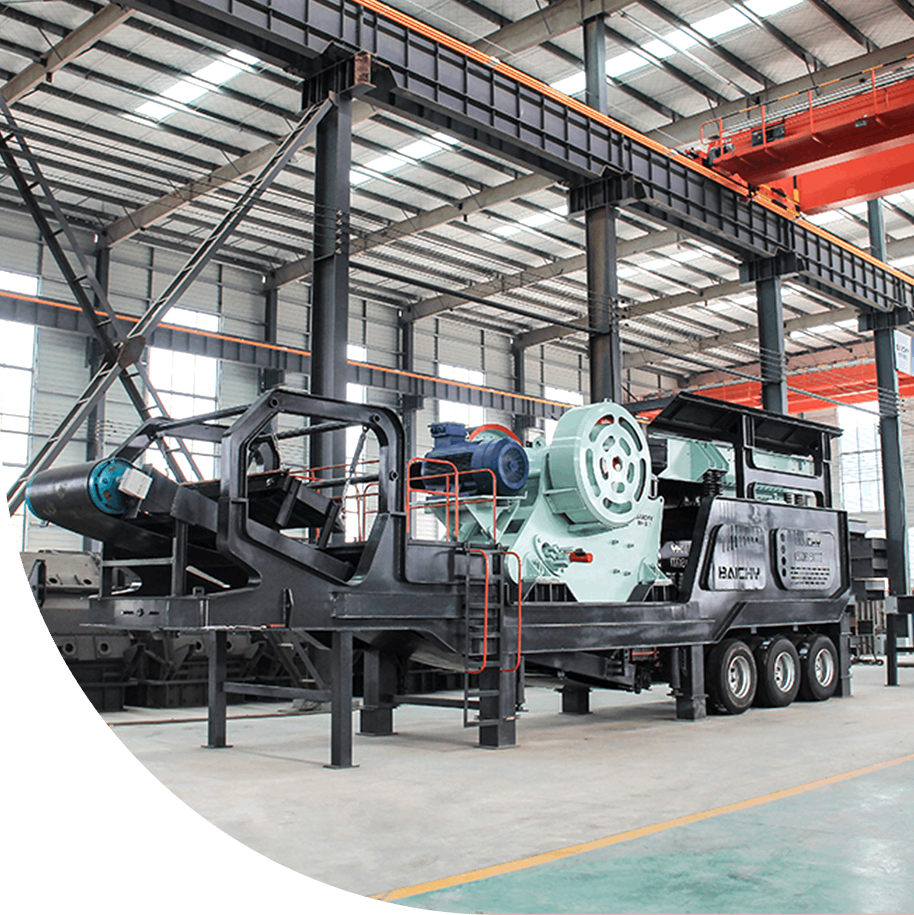

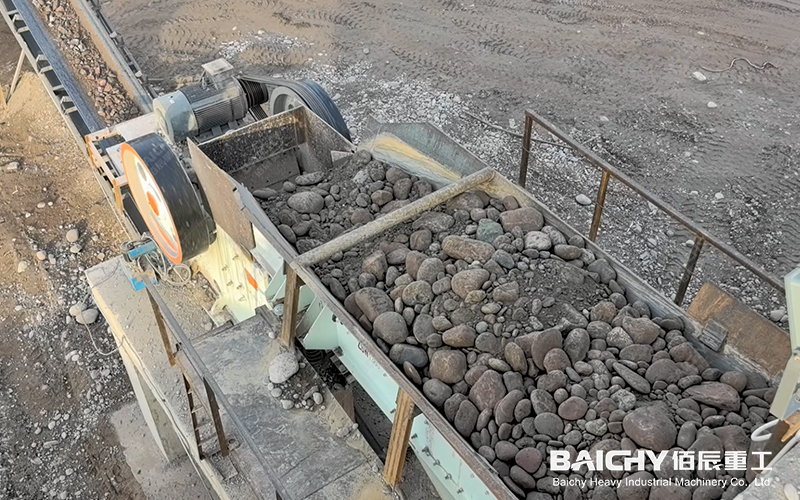
Stone crushing production line
In a stone crushing production line, each of the three stages determines a specific outcome: the crushing stage determines "feasibility" (can it be produced?), the screening stage determines "accuracy" (is the product correct?), and the sand washing stage determines "market value" (can it command a high price?). However, the allocation of budgets and attention in most projects is inverted: 70% goes to the crusher, screens are selected from the lowest tier, and sand washing is treated as an afterthought—"doing only what the remaining budget allows." This order of priorities is precisely wrong.
The correct sequence is: first, determine the number of screen decks and screen loads based on the desired product gradation; next, select the sand washing method based on sand volume and silt content; and finally, work backward from throughput and abrasiveness to select the crusher model. The cost of reworking a stone crushing line far exceeds the price difference between equipment models: if the screen is undersized, the system cannot handle the recirculating oversize material; if the wrong sand washing method is chosen, the finished sand's fineness modulus may cause ready-mix concrete plants to reject the shipment—and both of these costly issues arise only after production has begun.
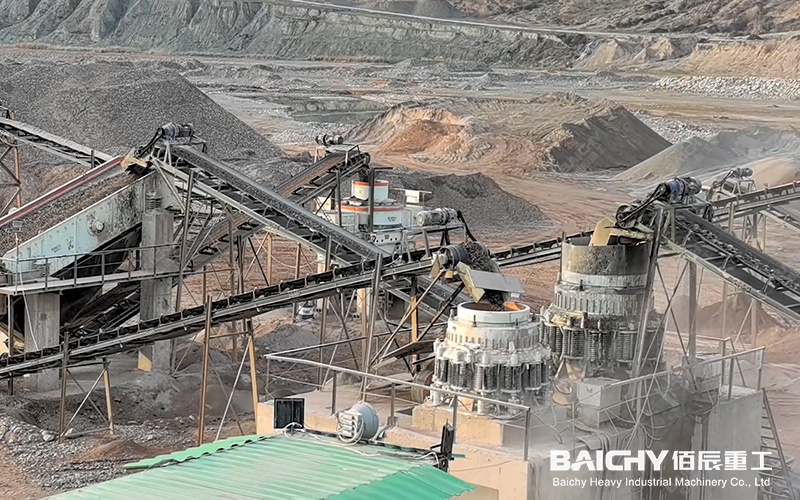
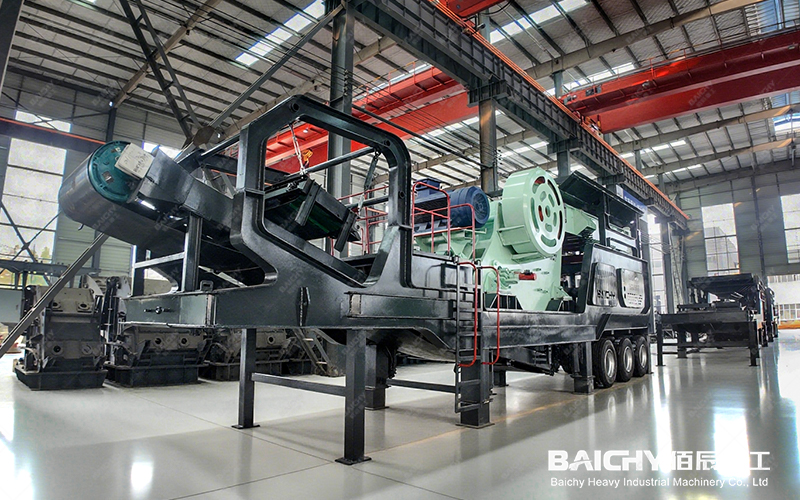
equipment list for stone crushing production line
I. Crushing Stage: Model Selection is Driven by Abrasiveness, Not Hardness
The first question in an inquiry is usually, "Is the stone hard?" While hardness matters, abrasiveness is the true determinant of the crusher model and the cost per ton: Mohs hardness dictates how crushing ratios are staged (keeping each stage within a 4:1 to 6:1 range), whereas abrasiveness determines the lifespan of wear parts and the frequency of downtime—and the latter is the critical variable affecting cash flow.
For the primary crusher in a stone crushing line, the model should be determined by the ratio of feed opening width to maximum raw ore size (aiming for a ratio ≥ 1.2), rather than by the target output alone. For raw ore ≤500mm, the PE600×900 jaw crusher serves as the benchmark for this class; even after applying a 0.8 multiplier for hard rock, it yields 38–144 t/h. Only when the target output falls within this range can the system realistically run continuously for a full shift.
There is no middle ground for the secondary crushing stage: using an impact crusher for granite results in "savings on procurement but losses due to downtime." For limestone, dolomite, and river pebbles, choose the PF1214 impact crusher; it yields good particle shapes and requires 30%–40% less investment. For granite, basalt, and iron ore, the PYB1200 cone crusher is mandatory; the wear parts utilize inter-particle (lamination) crushing, offering a lifespan several times longer than that of impact crusher blow bars—which last only 120–200 hours when processing granite, requiring 8–16 hours of downtime for each replacement. The initial cost savings would quickly be lost to these operational expenses.
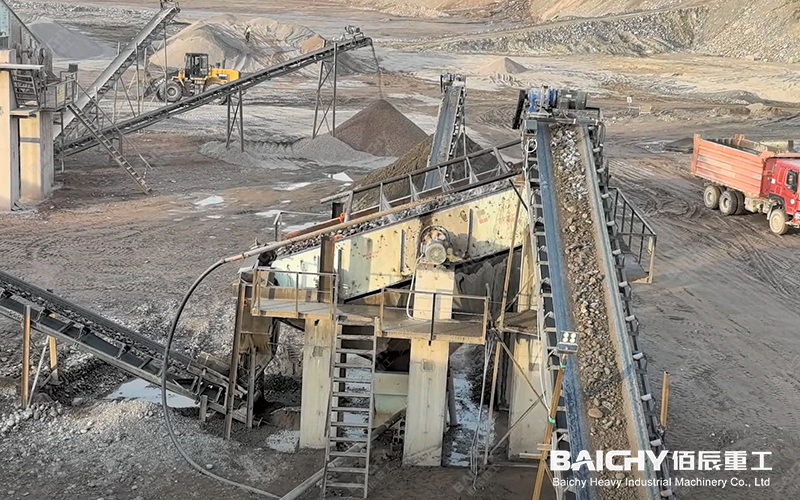
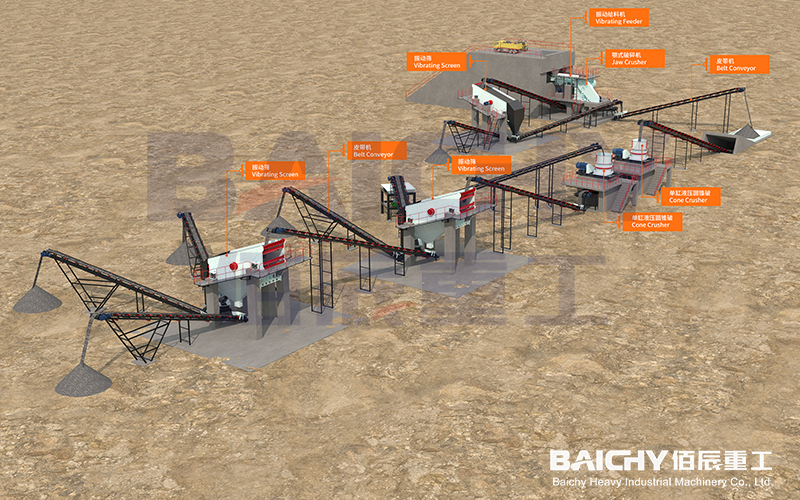
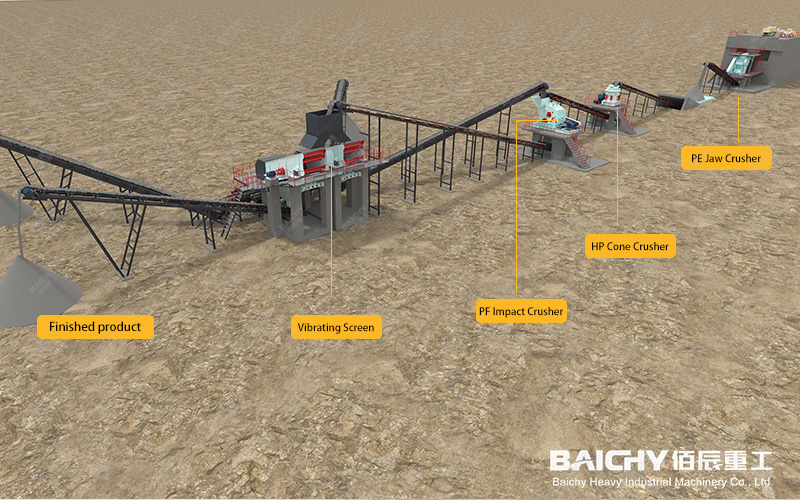
process flow of stone crushing production line
II. Screening Section: The Arbiter of the Entire Line
Screening is the most underrated stage in an aggregate crushing line: while it does not produce material itself, it dictates the output of each size fraction, the volume of recirculated material, and the actual load handled by the secondary crushing and sand-washing stages. Three key parameters must be included in the configuration specifications:
First, configure based on throughput rather than finished product output. In a closed-circuit screening setup, oversize material is returned to the secondary crusher for further processing; thus, Throughput = Target Output &pide; (1 − Oversize Rate). For a target of 100 t/h and an oversize rate of 15%, the secondary crusher and screen must handle 118 t/h. Configuring for only 100 t/h leads to fluctuating product quality and drastically reduced screen mesh lifespan once operations begin.
Second, the number of decks determines the number of product fractions. A three-deck screen yields four output streams (0–5 mm, 5–10 mm, and 10–20 mm finished products, plus >20 mm recirculated material); to add a 20–31.5 mm fraction, a four-deck screen is required—simply changing the mesh size will not suffice. The 3YK1860 (with a screening surface of 1800×6000 mm) is the standard starting point for this capacity range.
Third, verify the load for each deck inpidually. A common engineering rule of thumb is 0.8–1.2 m² of screen surface area per 10 t/h of feed; thus, a throughput of 118 t/h requires 9.4–14.2 m². Calculations must account for each deck inpidually rather than focusing solely on the top deck, as the lower decks are often the actual bottlenecks limiting capacity.
III. Sand Washing Stage
In the context of aggregate crushing, screening, and washing equipment, treating the sand washing stage merely as an expense incurred to pass environmental inspections is a common misjudgment in the industry. The washing process determines the finished sand's silt content, fineness modulus, and moisture content—three metrics that directly dictate whether the product meets the acceptance standards of concrete mixing plants and, consequently, its selling price.
Equipment selection essentially involves a trade-off: one cannot simultaneously maximize cleanliness and perfectly preserve particle size gradation. Spiral sand washers keep material in the tank for a longer duration with significant friction, achieving cleanliness levels exceeding 95%; however, the counter-current flow tends to carry away fine particles (0.075 mm fraction), resulting in a fine sand loss rate of approximately 5%–8%. In contrast, wheel-bucket sand washers use a slow-rotating bucket wheel (1–2 rpm) to scoop material; this results in a shorter retention time for fine sand—limiting loss to about 1%–3%—while achieving a cleanliness level of roughly 85%–90%. The selection criteria are therefore clear: choose a spiral washer (or two in series, if necessary) if the raw sand has a silt content exceeding 8% or contains clay lumps; for standard manufactured sand with a silt content below 8%, a wheel-bucket washer suffices and offers the advantage of lower energy and water consumption.
There are two sources of "hidden" financial loss. The first is fine sand loss: every percentage point reduction in loss translates into a measurable increase in finished product yield—which explains why fine sand recovery units (combining hydrocyclones and high-frequency dewatering screens, with capacities of 30–250 t/h and recovery rates ≥90%) typically pay for themselves within 3 to 6 months. The second involves the water system: while water consumption is roughly 1–2 m³ per ton of sand—and makeup water accounts for only 5%–10% of the total circulating volume—the costs associated with desilting sedimentation tanks and sand loss via overflow represent a significant secondary expense. Finally, there is the dewatering stage—a step often skipped to cut costs. Washed sand typically has a moisture content of 20%–30%; without dewatering, it must air-dry in the stockpile yard for 2–3 days. A dewatering screen, however, can immediately reduce moisture to below 15% (or 5%–8% with a high-frequency model), enabling immediate transport—making this the only step in the sand-washing process that directly converts material into sellable product.
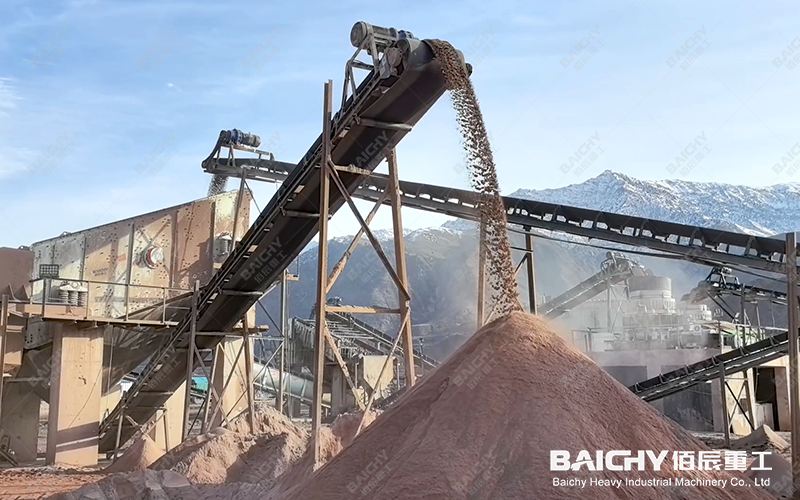
Crushing, Screening & Sand Washing Equipment
IV. Budgeting Logic for the Three Stages and the Full-Line Configuration Table
If you remember only one thing, let it be this: screening is a matter of design, sand washing is a matter of calculation, and crushing is a matter of equipment selection. First, determine the finished product gradation (number of screen decks, mesh aperture, and closed-circuit recirculation); next, calculate the required scale for washing and recovery based on sand volume and silt content; finally, use throughput requirements and material abrasiveness to determine the appropriate crusher model. Budget allocation for the crushing, screening, and washing line should be addressed at this stage, rather than attempting to revise the budget after receiving the initial price quote. The table below outlines the three main stages, seven process steps, and key parameters of this stone crushing production line (calibrated for limestone with a bulk density of approx. 1.6 t/m³; actual operational capacity requires adjustment by a factor of 0.85–0.95 for medium-soft rock and 0.75–0.85 for hard rock):
| Stage | Process Step | Equipment Model | Key Parameters (Limestone Calibration) | Power |
|---|---|---|---|---|
| Crushing | Feeding | ZSW380×96 Vibrating Grizzly Feeder | Trough 3800×960mm; Max feed size ≤500mm; 100–160 t/h | 11 kW |
| Crushing | Primary Crushing | PE600×900 Jaw Crusher | Feed opening 600×900mm; Discharge opening 65–160mm; 48–180 t/h | 55–75 kW |
| Crushing | Secondary/Fine Crushing (Medium-soft rock) | PF1214 Impact Crusher | Feed opening 400×1430mm; Max feed size ≤350mm; 100–180 t/h | 132 kW |
| Crushing | Secondary/Fine Crushing (Hard rock) | PYB1200 Spring Cone Crusher | Max feed size ≤145mm; Discharge opening 20–50mm; 110–168 t/h | 110 kW |
| Screening | Grading | 3YK1860 Triple-deck Circular Vibrating Screen | Screen surface 1800×6000mm; Equipped with 5 / 10 / 20 (31.5) mm mesh | 22–30 kW |
| Sand Washing | Washing | XSD2610 / XSD3016 Wheel Sand Washer | Feed size ≤10mm; Sand capacity 30–80 t/h (select XSD2610), 80–160 t/h (select XSD3016) | 7.5 / 15 kW |
| Sand Washing | Dewatering / Recovery | Fine sand recovery unit (cyclone + high-frequency dewatering screen) | Single unit capacity: 30–250 t/h; fine sand recovery rate ≥90%; discharge moisture content <15% | Approx. 15 kW |
V. FAQ
Q1: For a stone crushing production line, should the crusher or the screening equipment be selected first?
A1: Select the screening equipment first. The number of screen decks determines the product size fractions, and the screen load determines the throughput—throughput is the key input parameter for selecting equipment for the secondary crushing and sand washing stages. Buying the crusher before the screen effectively allows the final piece of equipment to dictate the production line's maximum capacity; modifying this later would require costly civil engineering changes.
Q2: How should one choose between an impact crusher and a cone crusher?
A2: Base the decision on abrasiveness, not the purchase price. For limestone, dolomite, and river pebbles, use the PF1214 impact crusher; it yields good particle shape and a high cubicity rate, with an investment cost 30%–40% lower. For granite, basalt, and iron ore, use the PYB1200 cone crusher; it utilizes inter-particle (lamination) crushing, and the wear parts last several times longer than impact crusher blow bars. If an impact crusher is used for hard rock, blow bar life is only 120–200 hours, and the cost of downtime losses will quickly exceed the initial purchase price savings.
Q3: Should I choose a wheel-bucket or a spiral sand washer?
A3: Choose a spiral sand washer if the silt content exceeds 8% or if clay lumps are present (cleaning efficiency >95%, though fine sand loss is 5%–8%; pairing with a fine sand recovery unit is recommended). Choose a wheel-bucket sand washer for manufactured sand with <8% silt content (loss rate 1%–3%, cleaning efficiency 85%–90%, and lower energy and water consumption). The choice isn't about "which one cleans better," but "which one preserves the particle size distribution."
Q4: Are fine sand recovery units and dewatering screens optional equipment in a stone crushing, screening, and washing line?
A4: They are not optional; it is best to include them in the initial setup. A single fine sand recovery unit offers a capacity of 30–250 t/h and a recovery rate of ≥90%, typically allowing for a return on investment within 3–6 months; the dewatering screen reduces the moisture content of washed sand from 20%–30% to below 15%, enabling the finished sand to be loaded directly onto trucks without the need for air-drying. The combined operation of these two units preserves aggregate gradation and market value, serving as essential production components rather than mere "environmental add-ons."
Q5: How can I obtain the equipment list and price quote for a stone crushing production line?
A5: Simply provide four pieces of information: a test report on the raw ore (compressive strength, abrasivity index, and clay content), the maximum feed size of the raw ore, the target gradation for the finished product (including whether 0–5mm manufactured sand is required and its fineness modulus specifications), and local voltage/frequency standards (e.g., 380/400/440V, 50/60Hz). Based on this data, Baili Heavy Industry will generate a process flow chart, an equipment list, and an itemized quote, clearly outlining the conversion relationship between nominal capacity and actual operational capacity.
Baichy Heavy Industry
Baichy Heavy Industry is a high-tech mining equipment company integrating R&D, manufacturing, sales, and after-sales service. Focusing on crushing, grinding, and mineral processing equipment, we provide professional solutions to our customers. We are ISO9001:2015 、certified, and our products include mobile crushing palnts, crawler crushing plant, construction waste crushing plants, jaw crushers, sand making machines, cone crushers, fine crushers, grinding mills, ball mills, etc., all with reliable performance to meet diverse project needs.
Baichy Heavy Industry – Your Trusted Partner
To ensure optimal performance of your equipment, Baichy Heavy Industry offers:
- Professional on-site installation guidance
- Comprehensive operator training
- 24/7 technical support & maintenance services
Our complete after-sales service system guarantees long-term, stable operation of your machinery with minimal downtime.
Protect Your Rights – Only Use Official Channels
To avoid scams and ensure authentic support, contact us exclusively through:
• Official Website: www.baichychina.com
• WhatsApp: +8615093222637
• Email: [email protected]
Your satisfaction is our priority – expect prompt, professional service every time.
(Note: Beware of unauthorized third parties claiming to represent Baichy. Always verify through official contacts.)