
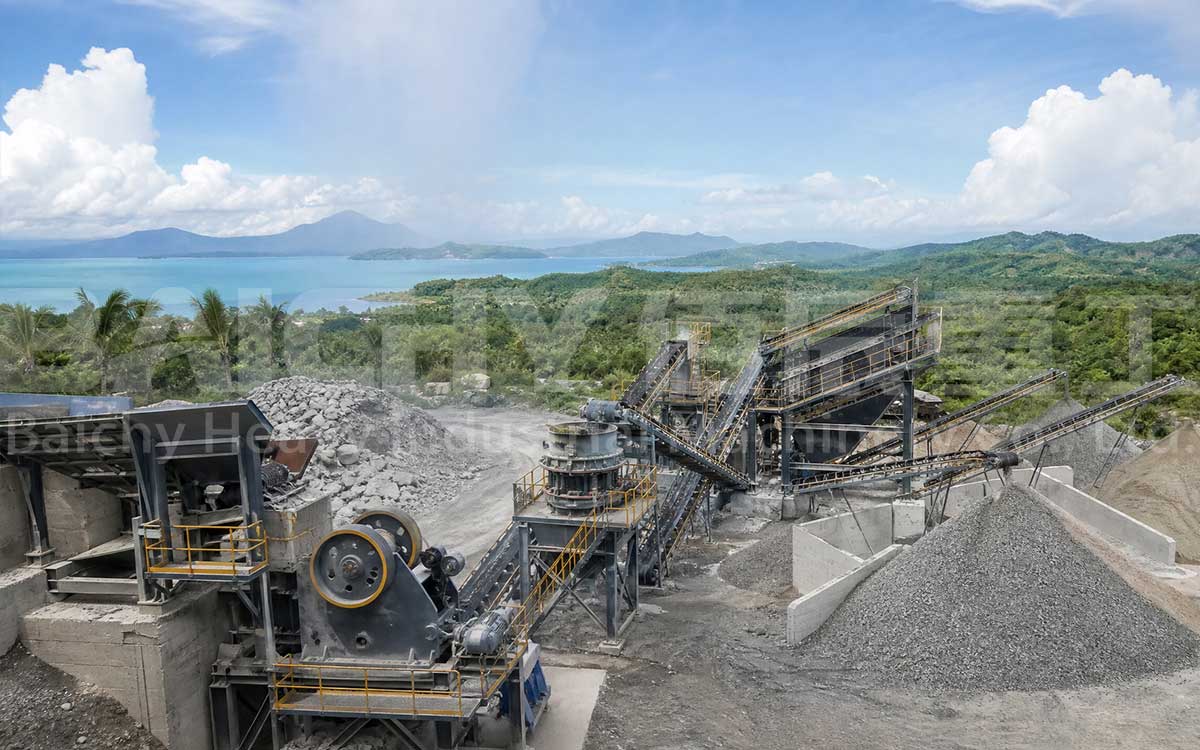
Get 3/4 to Fine Sand from One Philippine Plant
A Philippine aggregate customer may not need only one type of stone. A road project can require 3/4-inch aggregate, while concrete batching may call for 1/2-inch and 3/8-inch material. Drainage work may need 1-inch or 1 1/2-inch stone, and block production, bedding, or plastering can create demand for fine sand. When all of these products must come from one quarry, the real challenge is not simply crushing rock. It is controlling the entire process so that each finished size is separated, stored, and delivered consistently.
A properly configured crushing and screening plant can turn one feedstock into a planned range of saleable products. Instead of treating the requested sizes as separate jobs, the plant should be designed around the complete product mix: feed size, rock hardness, required capacity, moisture, end use, and the proportion of each product that the market can absorb.
For this project, the notation “11/2” is understood as 1 1/2 inches. The final sizing arrangement should still be confirmed against the customer’s local specification before equipment is selected.
Why a Multi-Product Layout Is Better Than a Single-Size Setup?
A single-output crushing line can be easy to operate, but it may leave a large part of the crushed material with limited commercial value. A multi-product line uses controlled reduction and screening to direct different fractions to the right stockpile. This improves flexibility when orders change and helps the operator adjust production to local demand.
The key is to avoid producing all sizes by chance. The crusher reduces the material; the vibrating screen makes the separation. If the screen deck arrangement, aperture sizes, recirculation path, and feed distribution are not matched, the plant may generate excessive oversize, unstable gradation, or too much unwanted dust. A product-focused design begins with the required outputs and works backward to the process stages.
Suggested Process Flow for the Requested Products
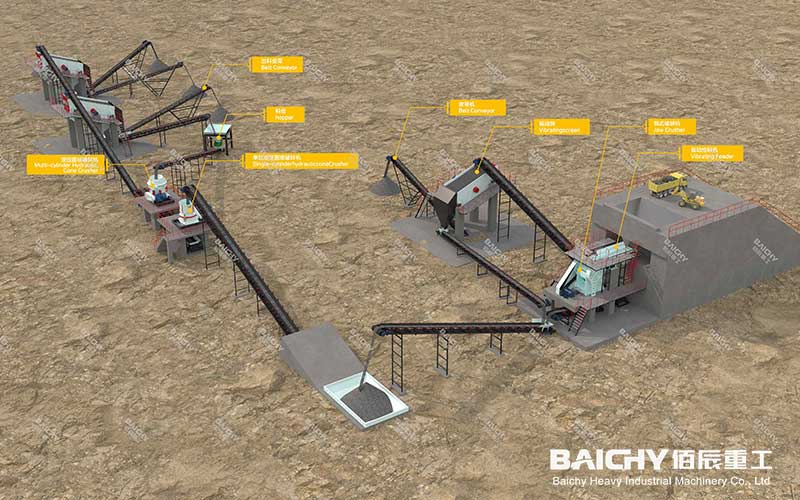
Crushing Production Line
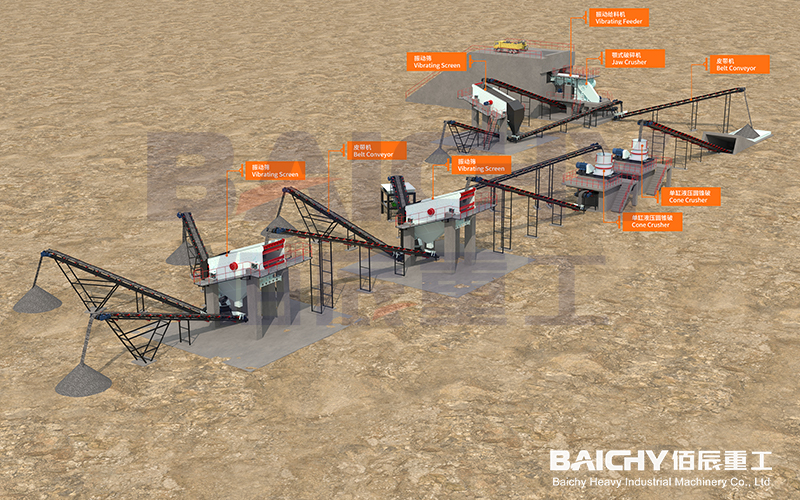
A typical hard-rock flow may include the following stages:
1. Feeding: A vibrating feeder delivers a controlled quantity of blasted rock to the primary crusher and removes part of the natural fines when suitable.
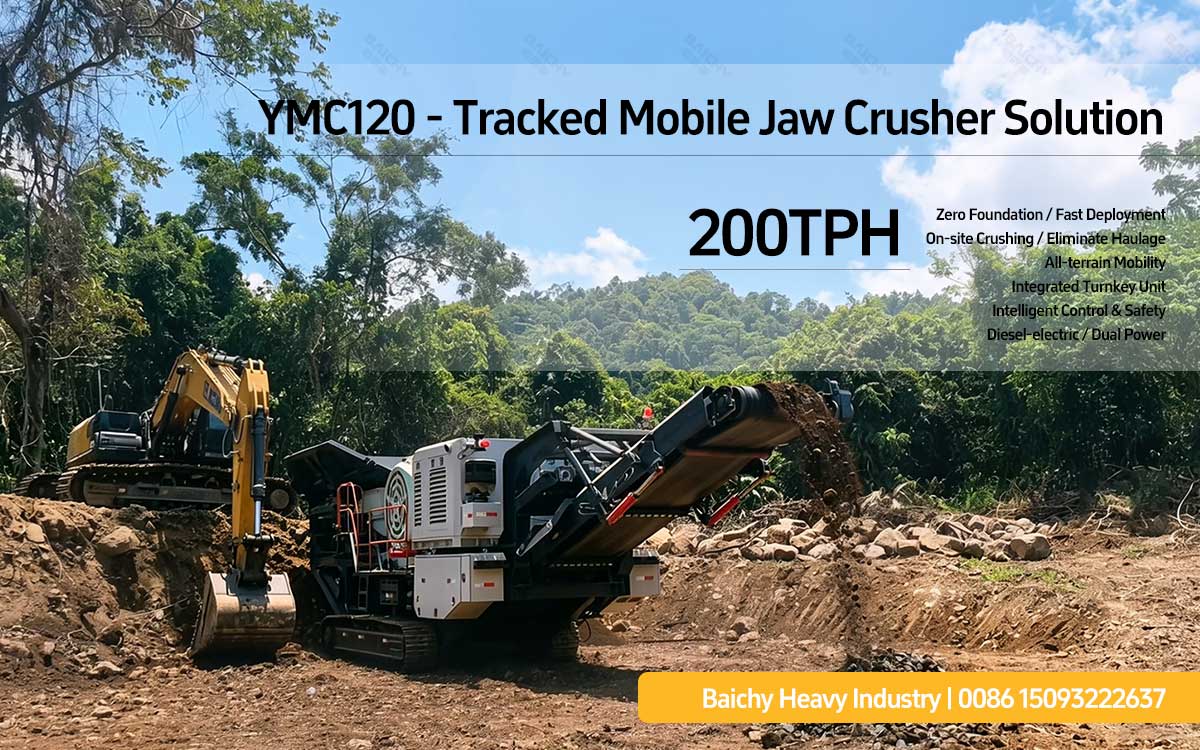
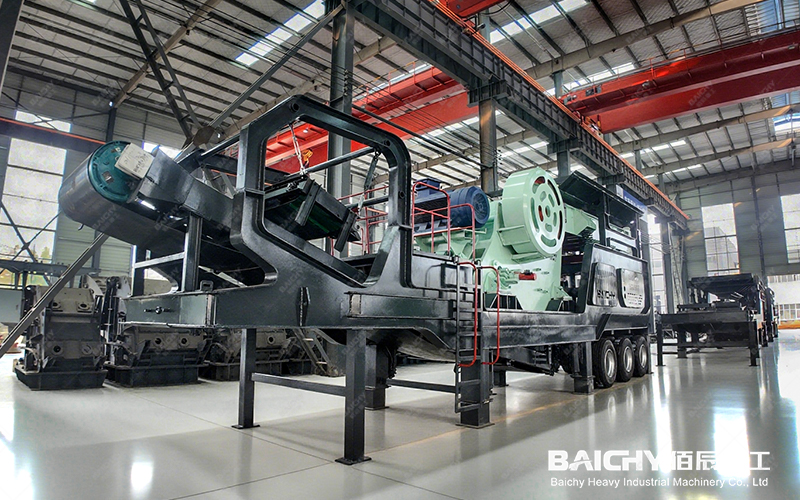
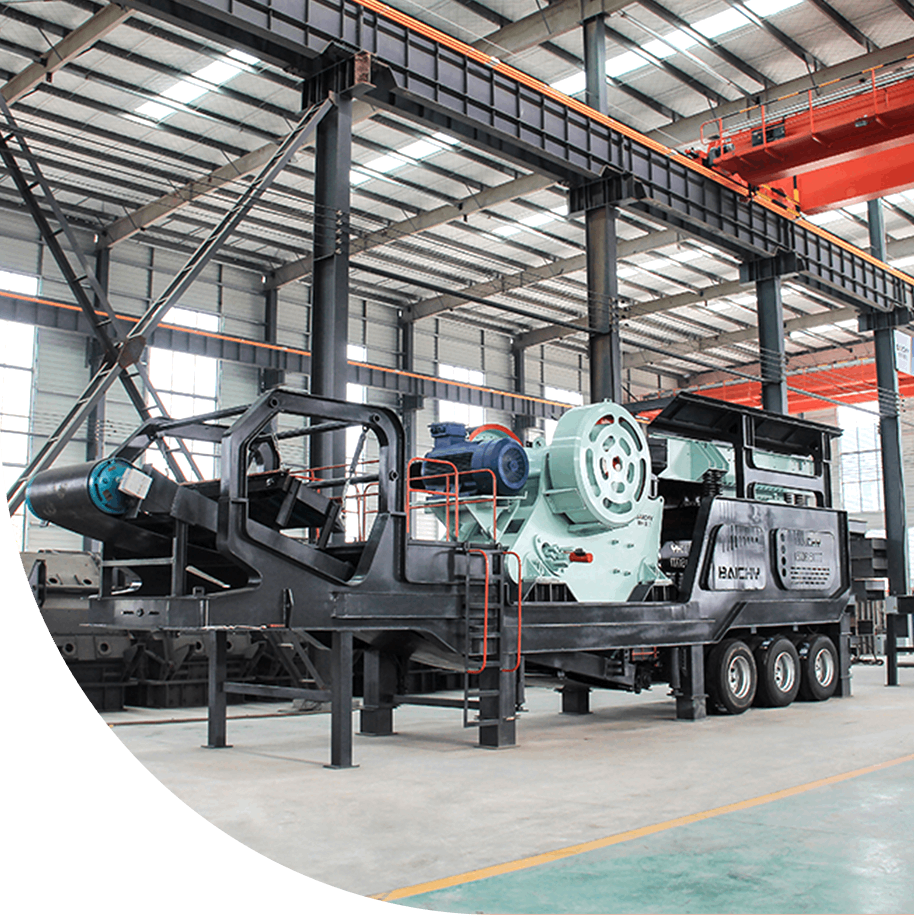
2. Primary crushing: A jaw crusher reduces large rock to a manageable intermediate size while handling variable feed conditions.
3. Secondary crushing: A cone crusher or impact crusher produces a more uniform, smaller feed for final classification. The choice depends on rock hardness, shape requirements, and the desired amount of manufactured sand.
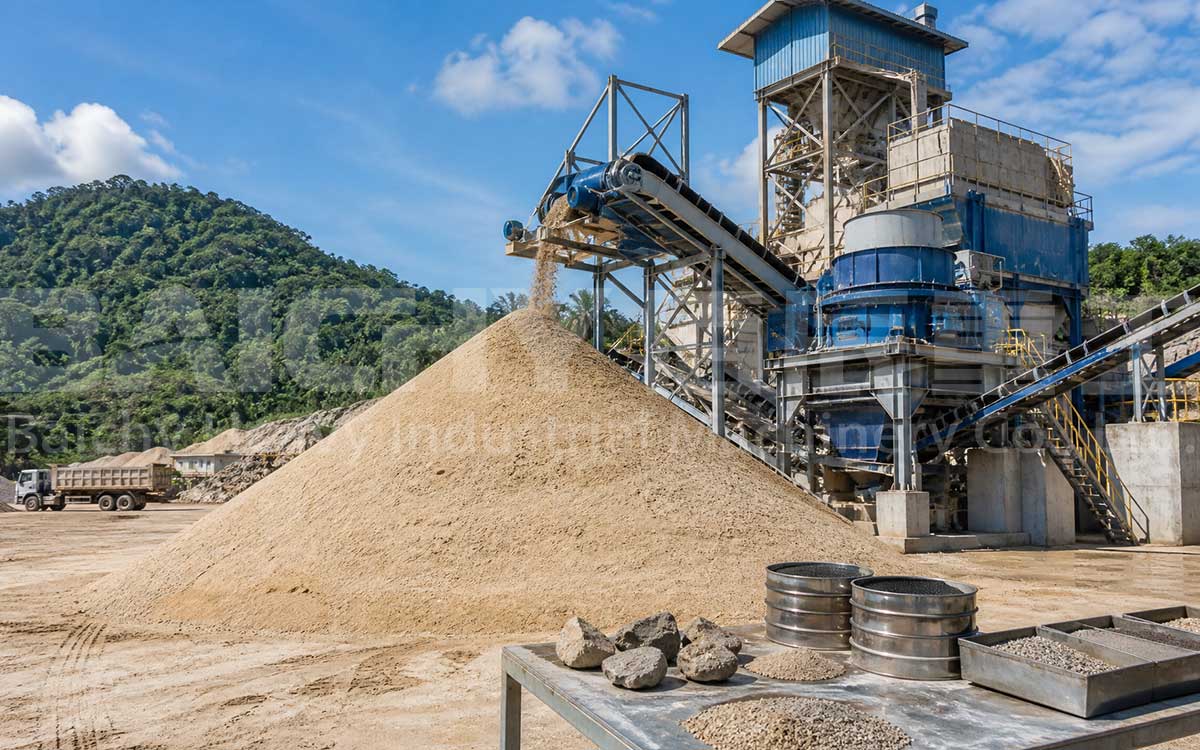
4. Fine reduction: A vertical shaft impact crusher or other tertiary stage can improve particle shape and produce additional fine material when the feed and market justify it.
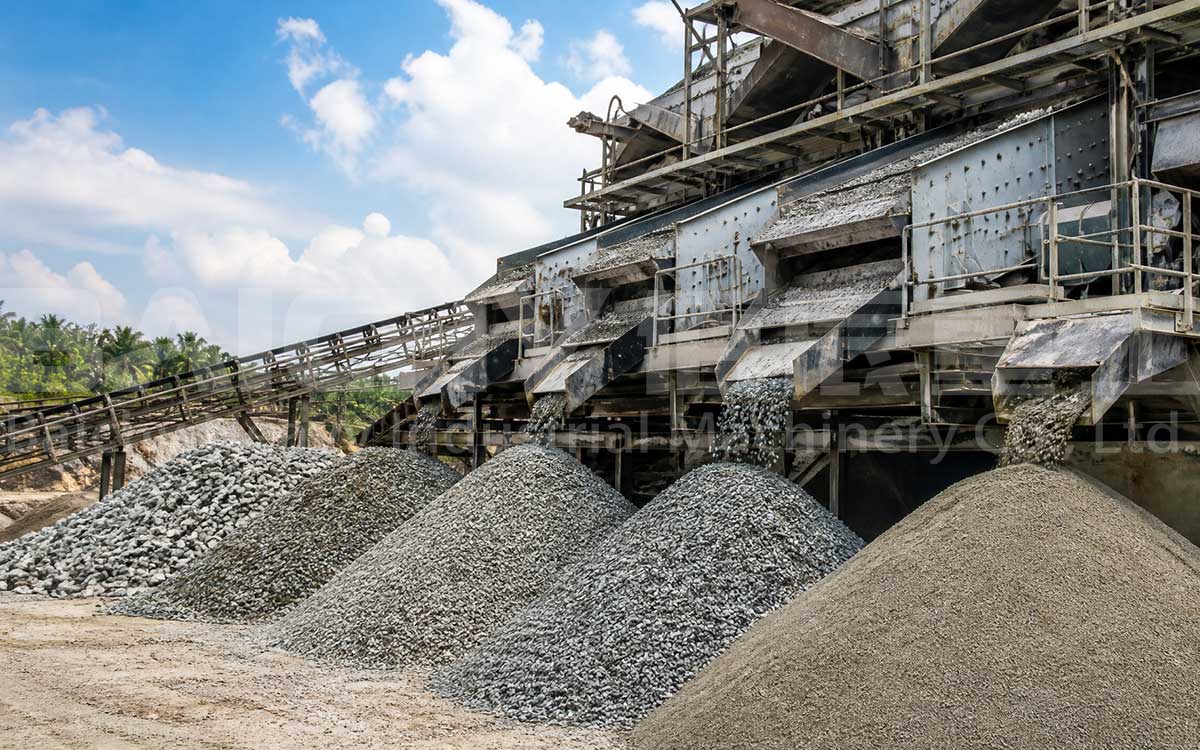
5. Final screening: A multi-deck vibrating screen separates the material into the required saleable fractions.
6. Return circulation: Oversize from the final screen is returned to the appropriate crusher instead of being sent directly to the stockpile.
7. Stockpiling: Inpidual conveyors transfer each finished product to a dedicated stockpile, bin, or loading point.
This arrangement gives the operator several adjustment points. Screen media can be changed when a different grading is needed, while crusher settings can be modified to balance reduction ratio, particle shape, and fines generation. A bypass or blending option may also be useful when the customer wants to make a coarser product without passing all material through the fine stage.
How the Product Sizes Can Be Assigned?
The exact screen apertures depend on the customer’s standard, the actual rock characteristics, and local test results. As a planning reference, the requested products can be managed as follows:
| Requested product | Typical application | Process control focus |
|---|---|---|
| 1 1/2 inch | Drainage, sub-base, larger construction fill | Primary and secondary reduction; prevent excess fines |
| 1 inch | Base material, drainage, general construction | Screen separation and stable feed distribution |
| 3/4 inch | Concrete aggregate, road and infrastructure work | Final screen cut point and particle shape |
| 1/2 inch | Concrete blends, asphalt and general aggregate use | Accurate deck separation and recirculation control |
| 3/8 inch | Concrete mixes, asphalt, smaller aggregate applications | Screen efficiency and reduction of misplaced particles |
| Fine sand | Bedding, blocks, mortar or manufactured-sand blends | Tertiary shaping, fines classification and moisture control |
These product names describe target categories rather than a universal grading specification. Before production begins, the buyer and plant supplier should confirm the allowable passing percentage, maximum oversize, moisture range, flakiness limits, and whether the fine sand must meet a particular concrete or construction standard.
Get 3/4 to Fine Sand from One Philippine Plant
Designing for Philippine Operating Conditions
A crushing plant for the Philippines should be practical for the quarry site, not just technically capable on paper. Space, power supply, rainfall, road access, spare-parts logistics, and operator experience all influence long-term output.
Moisture management matters. Wet feed can reduce screening efficiency and cause material to build up on screen media, especially when fine particles contain clay. A grizzly or scalping section may remove sticky fines before primary crushing. Where washing is required, the layout should include water supply, dewatering, fines recovery, and settling arrangements rather than adding these items after installation.
The foundation and access plan should be considered early. The location of the primary crusher, conveyors, screen, electrical cabinet, and stockpiles affects civil-work cost and maintenance time. A clear walkway, lifting point, inspection platform, and safe access to screen media can reduce downtime during routine service.
The plant should tolerate changing feed. Philippine quarries may encounter variations in rock type, weathered zones, and feed gradation. A controlled feeder, overload protection, and a sensible recirculation path help the operator respond without stopping the whole line whenever the raw material changes.
Dust and noise controls should be included in the layout. Enclosures at transfer points, water sprays where appropriate, adequate drainage, and sensible stockpile placement can help the operation meet site requirements. Dust suppression should be balanced with screening performance so that excessive water does not create blockages or muddy material.
Capacity Should Follow the Product Mix
The required hourly capacity cannot be determined from the product sizes alone. A line making mostly 1 1/2-inch stone will have a different configuration from a line making a high proportion of 3/8-inch aggregate and fine sand. More fine reduction and additional screening generally increase circulating load and energy demand.
A reliable capacity calculation should include:
• Maximum feed size and average feed size
• Rock compressive strength and abrasiveness
• Target hourly throughput
• Required percentage of each finished product
• Moisture and clay content
• Operating hours per day and expected availability
• Stockpile, truck-loading, and material-handling limits
For example, if the market mainly orders 3/4-inch and 1/2-inch aggregate, the final screen and recirculation circuit should be sized for those products. If fine sand is a major revenue stream, the design may need a dedicated shaping or classification stage instead of relying on uncontrolled crusher dust. The best configuration is therefore based on a material test and a production balance, not on crusher model numbers alone.
Get 3/4 to Fine Sand from One Philippine Plant
Quality Checks That Protect the Customer’s Sales
Producing several sizes is only useful when the grading remains stable. The operator should establish a sampling routine at the final conveyor or stockpile and record results by shift. Useful checks include sieve analysis, moisture content, particle shape, visible contamination, and the percentage of material outside the target range.
Stockpile management is equally important. Separate conveyors or clearly pided stockpile zones help prevent cross-contamination between 3/8-inch, 1/2-inch, 3/4-inch, 1-inch, 1 1/2-inch, and fine-sand products. Loading equipment should avoid driving through the toe of an adjacent pile, where mixing can occur. If products are blended for a specific concrete or asphalt recipe, blending should be done according to a repeatable ratio rather than by visual estimation.
The plant team should also compare actual production against the planned product split. A change in quarry face, screen wear, crusher setting, or moisture can shift the balance between coarse aggregate and fines. Early detection allows the operator to adjust the process before a truckload fails a customer’s grading check.
A More Flexible Way to Expand the Plant
A phased design can reduce initial risk for a customer who is still developing the local market. The first stage may focus on the most frequently requested coarse and intermediate sizes, while the civil layout reserves space for a tertiary crusher, additional screen deck, washing unit, or sand-recovery system. This allows future expansion without rebuilding the complete plant.
Modular conveyors, accessible electrical controls, replaceable screen media, and standard wear parts can also make maintenance easier. The goal is not to add equipment unnecessarily. It is to preserve practical upgrade paths when demand for fine sand or a particular aggregate size increases.
Conclusion
The request for 3/4, 1/2, 3/8, 1 inch, 1 1/2 inch, fine sand, and related products calls for a complete aggregate-production strategy rather than a single crusher. A balanced feeder, staged crushing circuit, multi-deck screening system, controlled recirculation, and separated stockpiles can give a Philippine quarry the flexibility to serve road, concrete, asphalt, drainage, and block-making customers from one raw-material source.
The next step is to verify the feed material, target capacity, product percentages, moisture conditions, and local grading requirements. With those inputs, the plant can be configured around products that customers can actually buy—not simply around a machine that can crush rock.
Frequently Asked Questions
1. Can one plant produce 3/4, 1/2, 3/8, 1 inch, 1 1/2 inch, and fine sand?
Yes, a properly designed crushing and screening circuit can produce these product categories from one feedstock. The final result depends on the raw rock, crusher configuration, screen deck arrangement, recirculation route, and the required grading tolerances.
2. Is “11/2” the same as 1 1/2 inches?
In most project notes, “11/2” is intended to mean 1 1/2 inches. It should be written clearly as “1 1/2 in” in the final quotation and technical documents so that the equipment and screen specifications are not misunderstood.
3. Which crusher is best for producing fine sand?
There is no single answer for every quarry. A cone crusher can provide controlled fine reduction for hard rock, while a vertical shaft impact crusher may be considered when better particle shape or manufactured-sand production is required. Feed properties and the required sand grading should be tested first.
4. How can the plant reduce mixing between different sizes?
Use correctly selected multi-deck screens, dedicated discharge conveyors, sufficient separation between stockpiles, and regular sampling. Screen media wear and conveyor loading should be checked because both can increase contamination between adjacent products.
5. What information is needed for a plant quotation?
The supplier should receive the rock type, maximum feed size, expected capacity, working hours, target percentages for each product, moisture and clay conditions, site power information, available space, and any Philippine project or end-user grading standard. Photos, laboratory tests, and a sample can further improve the design.

Baichy Heavy Industry
Baichy Heavy Industry is a high-tech mining equipment company integrating R&D, manufacturing, sales, and after-sales service. Focusing on crushing, grinding, and mineral processing equipment, we provide professional solutions to our customers. We are ISO9001:2015 Certified, and our products include mobile crushing palnts, crawler crushing plant, construction waste crushing plants, jaw crushers, sand making machines, cone crushers, fine crushers, grinding mills, ball mills, etc., all with reliable performance to meet diverse project needs.
Baichy Heavy Industry – Your Trusted Partner
To ensure optimal performance of your equipment, Baichy Heavy Industry offers:
- Professional on-site installation guidance
- Comprehensive operator training
- 24/7 technical support & maintenance services
Our complete after-sales service system guarantees long-term, stable operation of your machinery with minimal downtime.
Protect Your Rights – Only Use Official Channels
To avoid scams and ensure authentic support, contact us exclusively through:
• Official Website: www.baichychina.com
• WhatsApp: +8615093222637
• Email: [email protected]
Your satisfaction is our priority – expect prompt, professional service every time.
(Note: Beware of unauthorized third parties claiming to represent Baichy. Always verify through official contacts.)