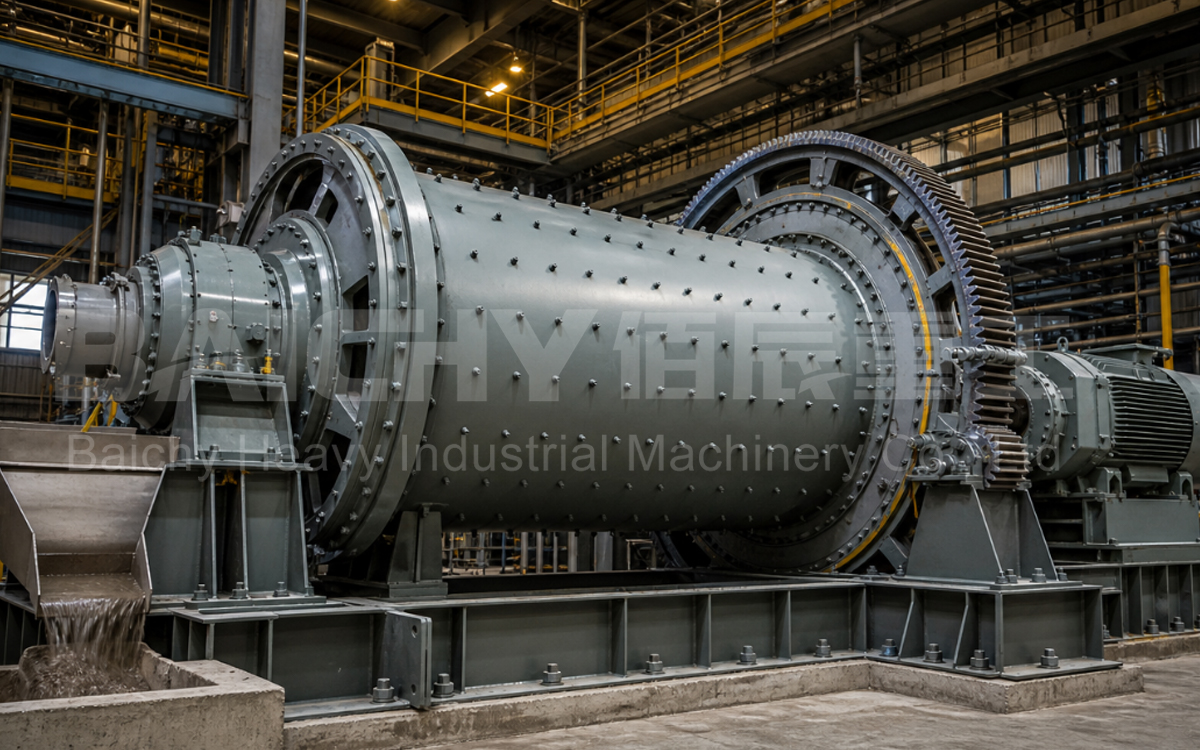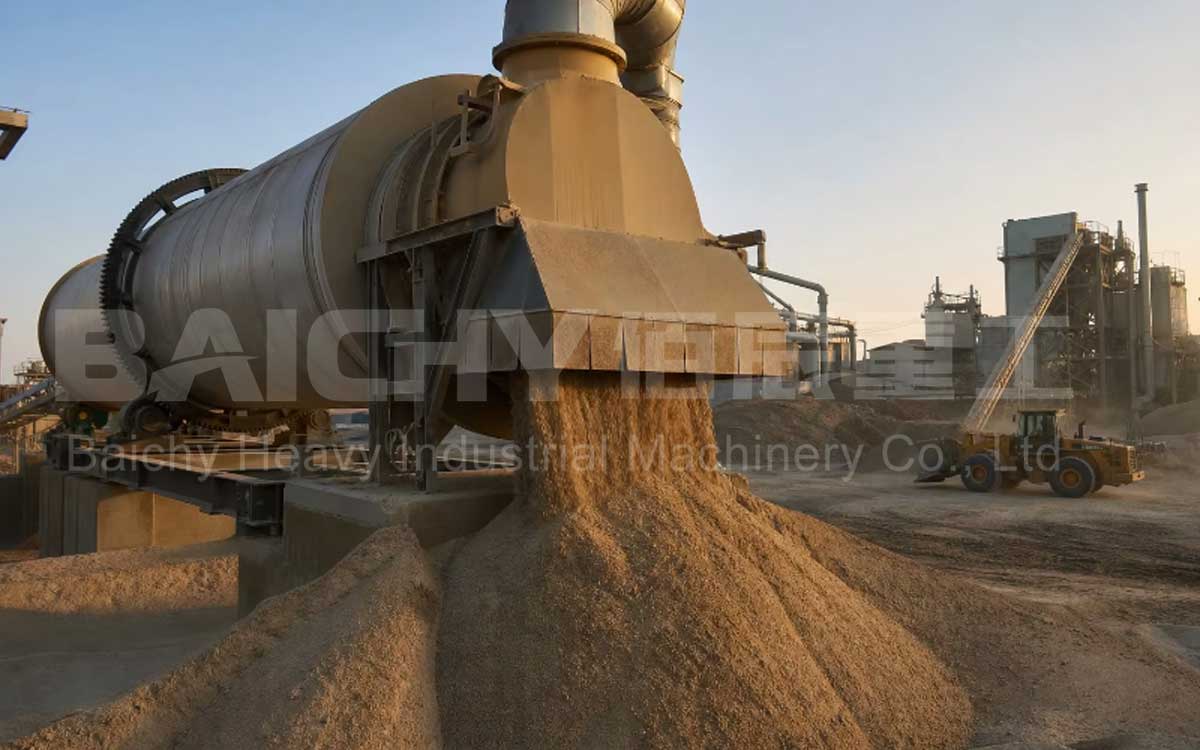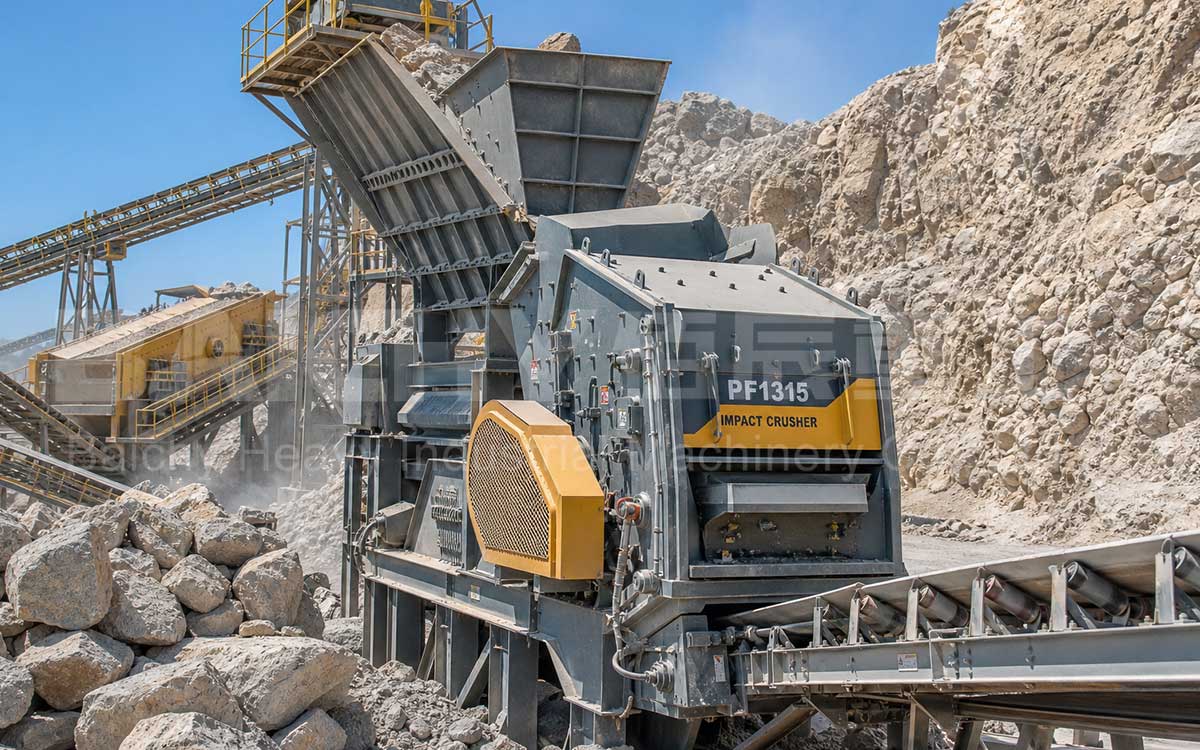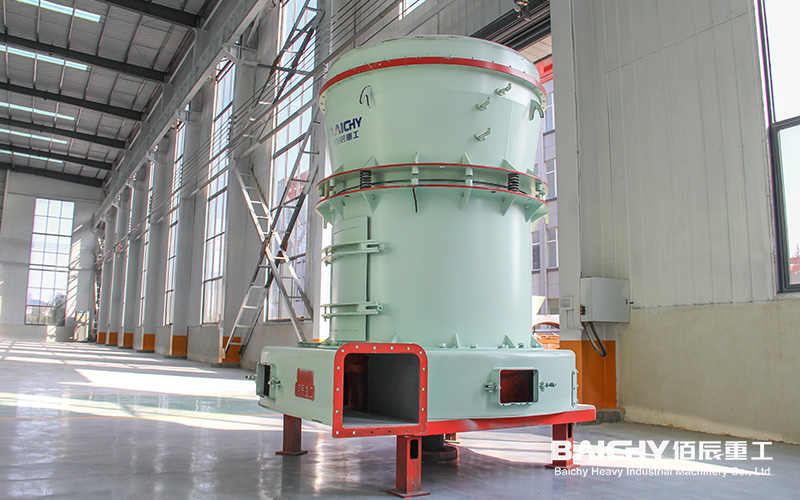
YGM Grinding Mill, Calcium Carbonate Grinding Mill
Calcium carbonate (calcite) has a Mohs hardness of approximately 3, low moisture content, and good grindability, making it a natural fit for the operating parameters of the YGM high-pressure suspension roller mill (which handles hardness ≤7 and moisture <6%). A single YGM mill can cover a production capacity range of 0.4–36 t/h and a finished product fineness of 30–425 mesh; when paired with a bucket elevator, feeder, and pulse dust collector, it forms a complete calcium carbonate processing line. For investors planning projects involving 80–400 mesh ground calcium carbonate (GCC) powder, this model offers one of the most balanced choices in terms of the ratio between investment and operating costs.
From an industry perspective, calcium carbonate (GCC) is one of the most widely used inorganic mineral fillers globally. Sustained demand from four major downstream sectors—papermaking, plastics, coatings, and construction materials—has made powder processing a value-adding step widely recognized by mineral rights holders and traders alike. Milling the material to produce fine powder and selling a value-added product offers a more stable return than simply selling raw ore—and this article aims to break down the economics of this approach for you.
I. Why the YGM Mill is the Preferred Choice for Calcium Carbonate Processing
1. High-pressure springs deliver 1.2 times the grinding pressure
The YGM high-pressure suspension roller mill is an upgraded version of the traditional R-series Raymond mill. It features built-in high-pressure springs (1,000–1,500 kg) that apply pressure directly to the grinding roller suspension arms. For the same power input, the grinding pressure exerted on the material layer is approximately 1.2 times that of a standard Raymond mill. For medium-hardness materials like calcium carbonate, higher grinding pressure results in finer powder and higher hourly output; this is the primary reason why YGM mill production lines are so widely adopted in the GCC processing sector.
2. Precise Matching with Material Characteristics
Calcium carbonate (derived from calcite, marble, or purified limestone) has a Mohs hardness of approximately 3 and a moisture content typically below 2%, placing it squarely within the operating range of the YGM grinding mill (suitable for materials with Mohs hardness ≤7, moisture <6%, and non-flammable/non-explosive properties). The material is easy to grind, resulting in low wear on grinding rollers and rings; consequently, both wear-related costs and power consumption are among the lowest for this class of equipment. Downstream applications for heavy calcium carbonate powder are sensitive to whiteness and particle size uniformity; by adjusting the speed of the classifier, this model consistently produces powders ranging from 80 mesh to 400 mesh, meeting the specific particle size requirements of perse customers.
3. Negative-Pressure Circulation: Balancing Consistent Fineness with Environmental Compliance
The entire production line utilizes a closed-loop, negative-pressure circulation system comprising the main mill, classifier, blower, cyclone collector, and pulse dust collector. Qualified powder is carried by the airflow into the cyclone collector to settle as the finished product, while trace amounts of exhaust gas are purified by the pulse dust collector before discharge. As the powder remains contained throughout the grinding process without settling or escaping, workshop dust levels are easily controlled, facilitating compliance with local environmental regulations and minimizing product loss—a crucial factor in the white powder business, where every recovered kilogram translates directly into profit.
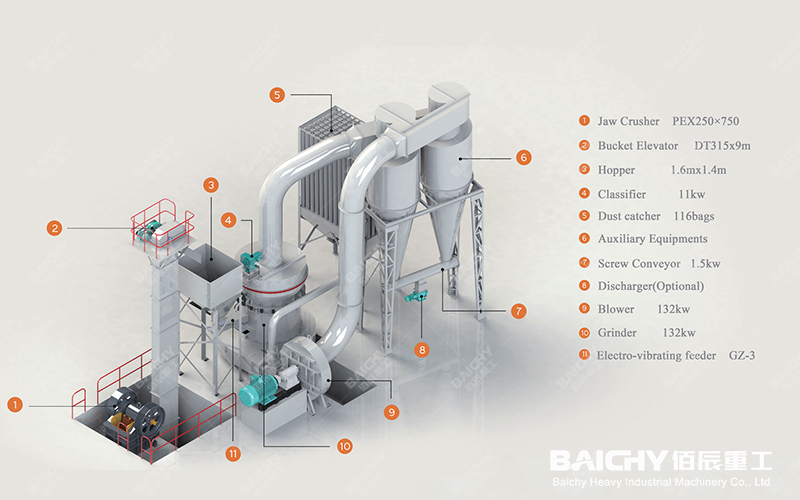
Calcium Carbonate Processing Line
II. YGM Grinding Mill Production Line: Complete Process and Equipment Configuration
A typical YGM grinding mill production line for calcium carbonate processing consists of the following process stages arranged in sequence:
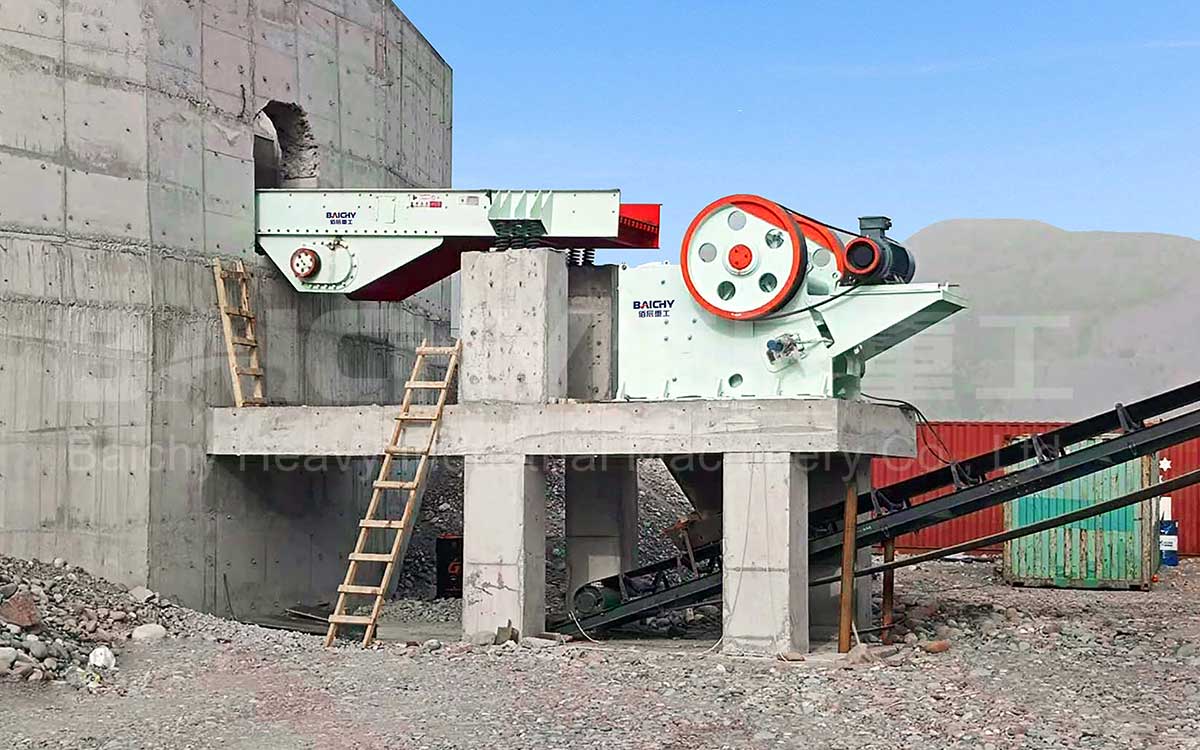
Raw Material Silo → Jaw Crusher (Coarse Crushing, Optional) → Bucket Elevator → Electromagnetic Vibrating Feeder → YGM Main Grinding Unit → Classifier (Grading) → Cyclone Collector → Pulse Dust Collector → Screw Conveyor → Finished Product Silo/Packaging
| Finished Product Fineness | Corresponding Particle Size | Typical Applications |
|---|---|---|
| 80 mesh | ≈0.18 mm | Construction materials, low-end fillers |
| 200 mesh | ≈0.075 mm | Rubber, sealing materials |
| 325 mesh | ≈0.045 mm | Mainstream spec for papermaking, coatings, and plastic fillers |
| 400 mesh | ≈0.038 mm | High-whiteness masterbatch, fine chemicals |
IV. Selection Decision: Production Capacity, Fineness, and Configuration Logic
1. Determine fineness first, then the classification system
Target 80–325 mesh: Standard configurations like YGM75 or YGM85 suffice; setting the classifier speed to the standard range offers the best cost-performance ratio.
Target 325–400 mesh with strict particle uniformity requirements: Models YGM95 and above are recommended; opt for a high-precision classifier with variable frequency speed control and increase spring pressure by 10–15% above the standard value.
2. Distinguish between nominal and actual capacity
Capacities listed in parameter tables are reference values based on typical operating conditions. While calcium carbonate has good grindability, the presence of hard impurities (e.g., dolomite, quartz) in the raw material will significantly reduce output; capacity also drops as feed size approaches the mill's upper limit or as fineness requirements increase. When inquiring, please provide details on raw material mineral composition, feed size, and target mesh size so Baichy engineers can calculate figures based on actual conditions, avoiding the discrepancy between "installing for maximum capacity" and "failing to meet targets during production."
3. Common pitfalls to avoid
Moisture limits: Feed moisture must be below 6%; otherwise, powder adheres to grinding rollers and rings, causing a sharp drop in output or even mill blockage. Raw materials should be air-dried or oven-dried during the rainy season.
Feeding stability: An electromagnetic vibrating feeder is essential for stable output; manual feeding is not recommended.
Dust collection setup: The finer the ground calcium carbonate powder, the more prone it is to becoming airborne; dust removal and collection equipment must be included in the configuration to prevent workshop pollution and product loss. 4. How to Verify the Equipment Manufacturer
Purchasing equipment is not a one-off transaction; the subsequent supply of spare parts and responsiveness regarding commissioning are equally critical to realizing production capacity. It is recommended to conduct an on-site or video-based factory inspection, focusing on three key points: whether wear parts (such as grinding rollers and rings) are kept in stock year-round; whether motors can be customized to local voltage standards (e.g., 380V/400V/440V/60Hz); and whether test runs and operational training are provided. Incorporating these three points into the contract is far more reliable than any verbal promise.
V. Costs and Returns: The Economics of the YGM Grinding Line
Taking a project producing 325-mesh ground calcium carbonate (GCC) as an example (selecting models in the YGM95–YGM130 range, with an hourly output of approximately 3–6 tons):
• Power Consumption: The main unit consumes 45–90 kW. When including the associated blower and auxiliary equipment, the electricity consumption per ton for the entire line is significantly lower than that of ball milling processes—a key cost advantage for continuous production.
• Wear Costs: Calcite has low hardness, resulting in a long service life for grinding rollers and rings; the wear cost per unit of powder produced is among the lowest for this type of equipment.
• Return Logic: As a bulk mineral filler, the price per ton of GCC is determined by fineness and whiteness, with a significant price gap between 325-mesh and 80-mesh products. While the difference in equipment investment is minimal, both the selling price and gross profit rise with each step up in fineness; this is the core economic rationale behind the YGM grinding line’s strategy of "trading fineness for profit."
Cash Flow Perspective: The grinding line offers flexible start-stop capabilities and a short commissioning period, allowing production to be organized according to orders immediately after commissioning. It is suitable for both self-owned mine integration and third-party raw material processing models. Specific investment amounts and payback periods depend on raw material self-sufficiency, electricity costs, and local powder selling prices; you are welcome to provide project parameters so our engineers can prepare a tailored cost analysis and equipment configuration plan.

Calcium Carbonate Processing Line
VI. Calcium Carbonate Processing Production Line FAQ
FAQ 1: What fineness (mesh size) and production capacity can the YGM mill achieve when processing calcium carbonate?
The YGM series offers an output fineness range of 0.613–0.033 mm (approximately 30–425 mesh); for calcium carbonate applications, the output is typically set between 80 and 400 mesh. Single-unit capacities range from 0.4 to 36 t/h: choose YGM65/YGM75 for low output, YGM85/YGM95 for medium-scale operations, and YGM130/YGM160/YGM190 for large-scale production lines. Specific model selection is determined by calculations based on raw material characteristics and target fineness.
FAQ 2: What is the difference between the YGM mill and a standard Raymond mill?
The YGM high-pressure suspension roller mill builds upon the standard Raymond mill design by incorporating 1000–1500 kg high-pressure springs. At the same power level, the grinding pressure is approximately 1.2 times that of a standard Raymond mill, resulting in finer output and higher unit capacity. This makes it ideal for calcium carbonate projects requiring both high output and fine particle size. However, the equipment structure and operation methods remain consistent with the standard Raymond mill, allowing for a smooth transition for maintenance teams.
FAQ 3: What equipment is required for a calcium carbonate YGM milling production line, and how is the price quoted?
The standard configuration includes a jaw crusher (optional depending on raw material feed size), bucket elevator, electromagnetic vibrating feeder, main milling unit, classifier, cyclone collector, pulse dust collector, and screw conveyor. To obtain a quote for the complete line, please provide four key parameters: raw material composition, feed particle size, target mesh size, and hourly production capacity. Contact Baichy engineers to receive a configuration proposal and price quote.
Baichy Heavy Industry
Baichy Heavy Industry is a high-tech mining equipment company integrating R&D, manufacturing, sales, and after-sales service. Focusing on crushing, grinding, and mineral processing equipment, we provide professional solutions to our customers. We are ISO9001:2015 、certified, and our products include mobile crushing palnts, crawler crushing plant, construction waste crushing plants, jaw crushers, sand making machines, cone crushers, fine crushers, grinding mills, ball mills, etc., all with reliable performance to meet diverse project needs.
Baichy Heavy Industry – Your Trusted Partner
To ensure optimal performance of your equipment, Baichy Heavy Industry offers:
- Professional on-site installation guidance
- Comprehensive operator training
- 24/7 technical support & maintenance services
Our complete after-sales service system guarantees long-term, stable operation of your machinery with minimal downtime.
Protect Your Rights – Only Use Official Channels
To avoid scams and ensure authentic support, contact us exclusively through:
• Official Website: www.baichychina.com
• WhatsApp: +8615093222637
• Email: [email protected]
Your satisfaction is our priority – expect prompt, professional service every time.
(Note: Beware of unauthorized third parties claiming to represent Baichy. Always verify through official contacts.)