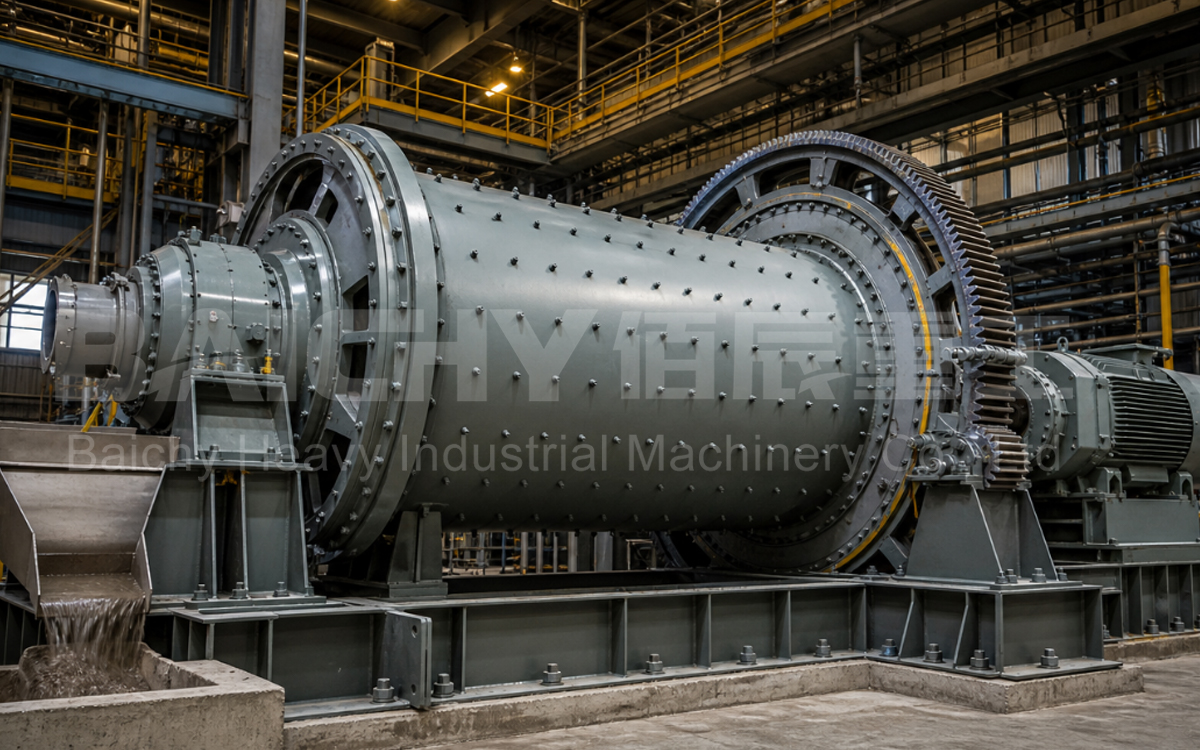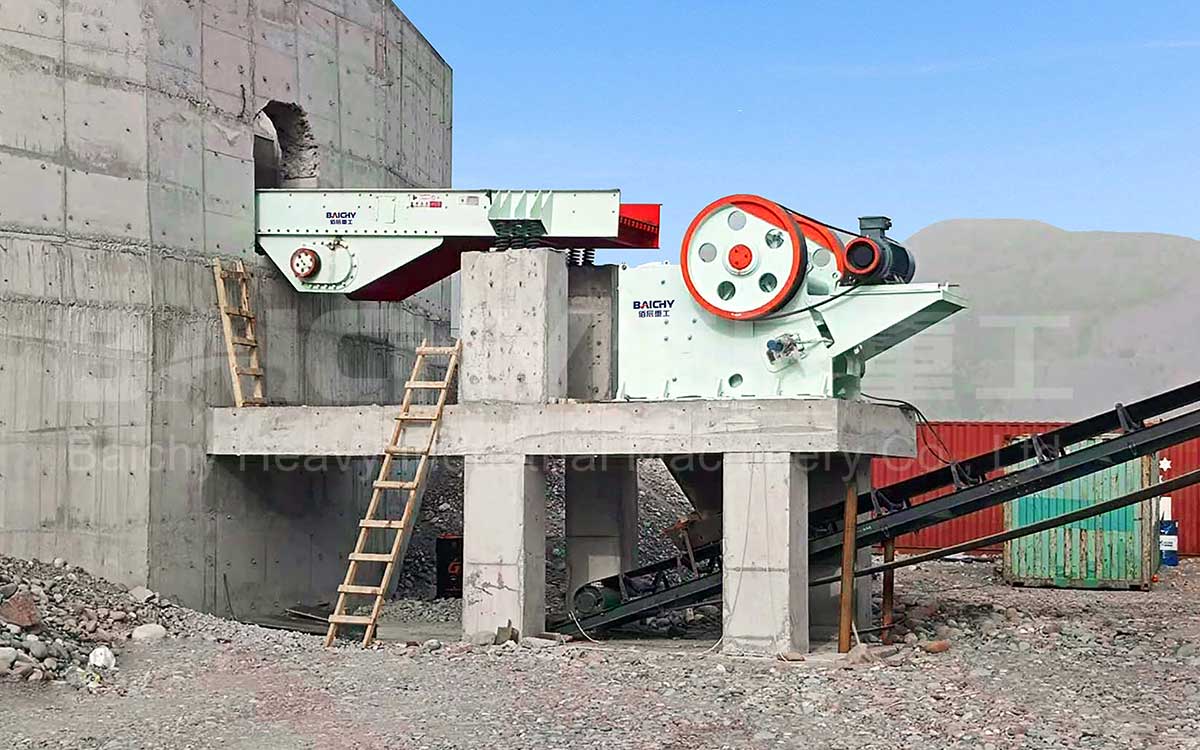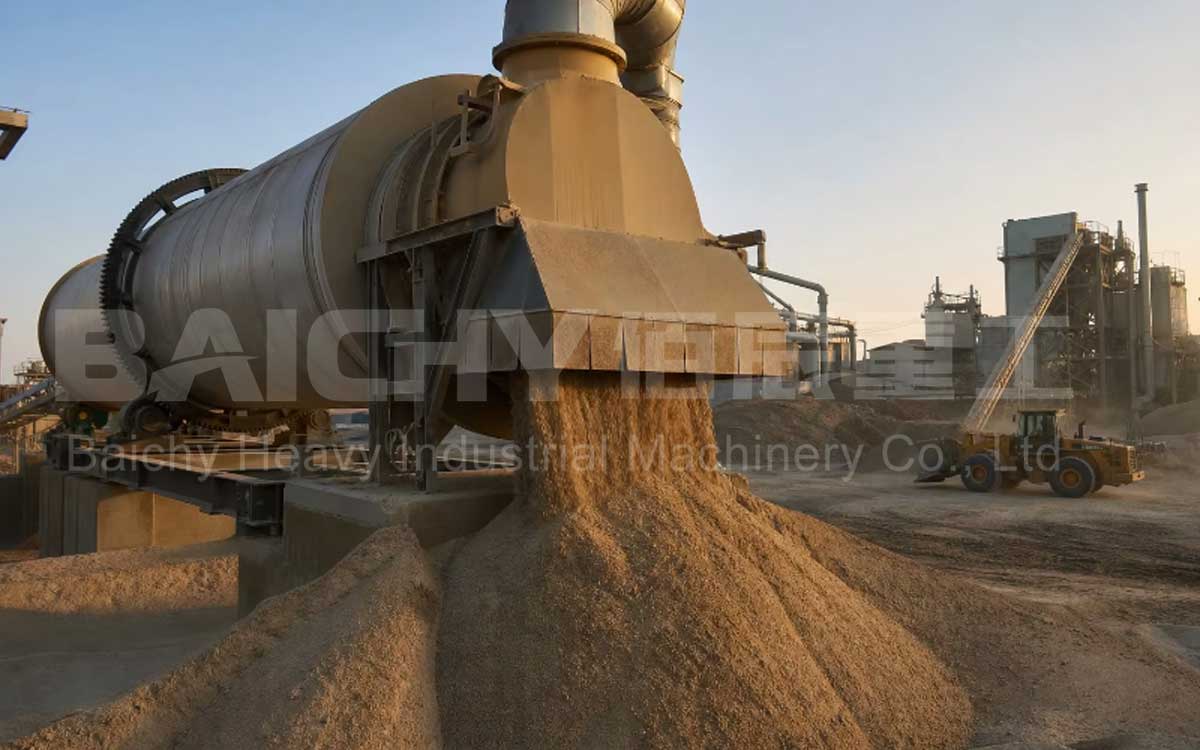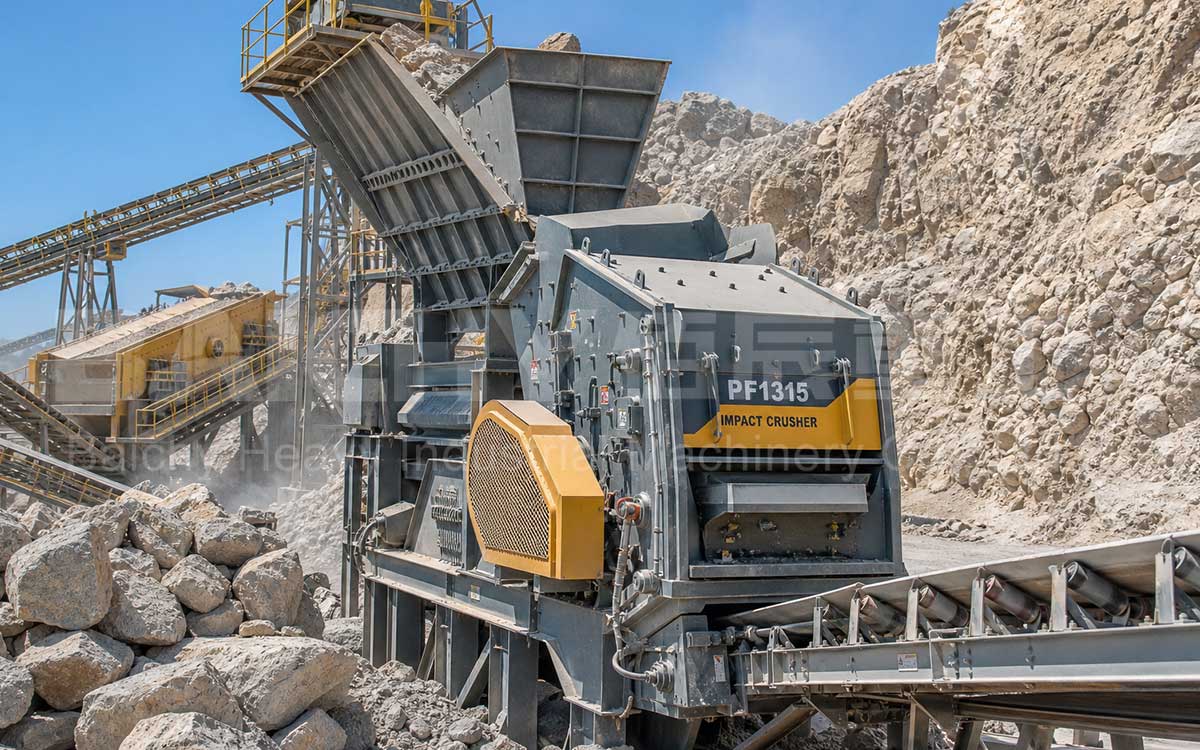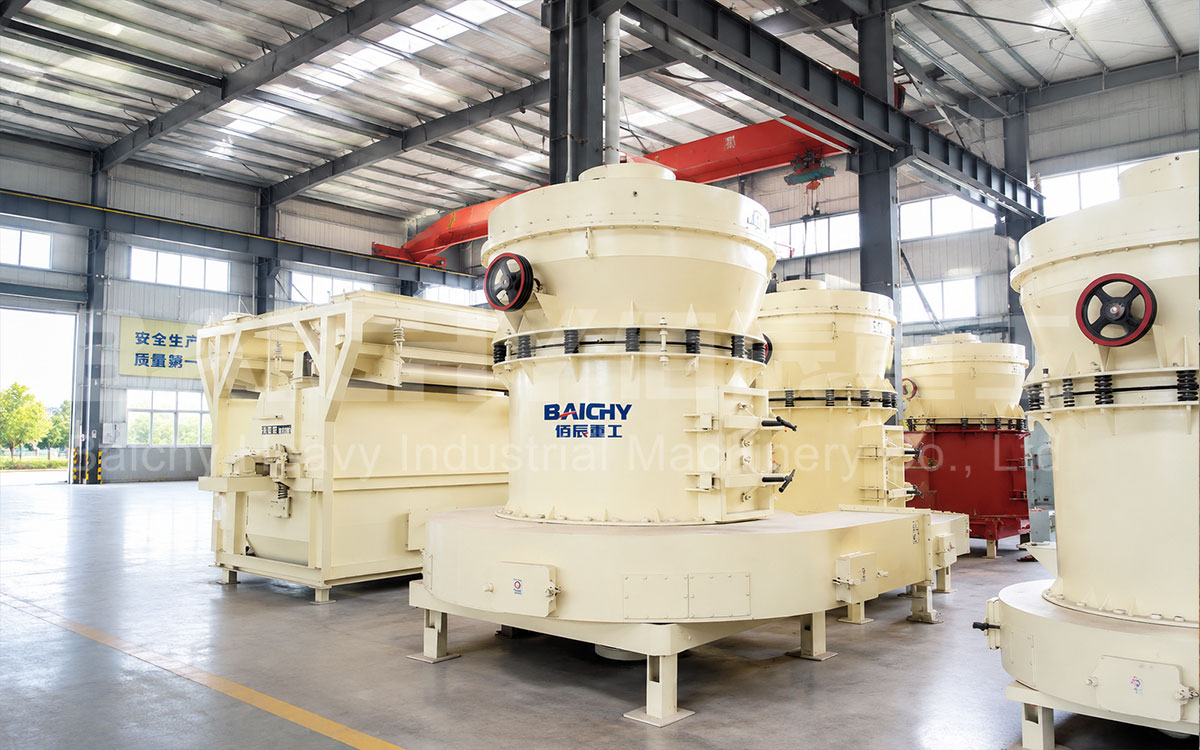
calcium carbonate grinding equipment
The profit curve for calcium powder processing (specifically Ground Calcium Carbonate, or GCC) is dictated by fineness: 325-mesh general-purpose fillers rely on high sales volume, whereas 400–600 mesh micron-grade powders command higher prices. Calcite—characterized by a Mohs hardness of approximately 3, low moisture content, and good grindability—is naturally suited to the operating parameters of Raymond mills (which typically handle materials with Mohs hardness ≤7 and moisture <6%). Crucially, achieving "micron-grade" fineness depends less on the main mill's power and more on the classification system. A calcite Raymond mill (including YGM high-pressure models) equipped with a high-precision, variable-frequency classifier can consistently achieve target outputs within the 325–600 mesh range (particle sizes of approx. 45 to 23 μm). With single-unit capacities ranging from 0.4 to 16 t/h, and when paired with a bucket elevator, feeder, and pulse dust collector, it forms a complete calcium powder production line.
I. Why Focus on "Micron-Grade" Calcium Powder?
The price spread between raw calcite ore and finished calcium powder stems from downstream buyers paying based on fineness. Industries such as plastic masterbatch, papermaking coatings, and PVC profiles purchase micron-grade powders (400–600 mesh) that offer stable particle size distribution and meet specific whiteness standards—rather than settling for vague promises that "finer is better." The industry-standard acceptance criterion is D97—meaning 97% of particles must be smaller than the target size (e.g., 400 mesh corresponds to a D97 of approximately 38 μm). Consequently, the true performance metrics for a calcium powder line are "achievable output and particle size stability at the target mesh size," not the nominal capacity listed on paper. Estimating potential for a 600-mesh order based on 325-mesh capacity figures is a recipe for immediate financial loss.
The most critical factor lies in the pricing tiers: the price per ton for micron-grade calcium powder is typically significantly higher than that of standard 325-mesh powder, yet the increase in grinding costs is far lower than the increase in selling price. Using the same calcite Raymond mill, an operator can produce 325-mesh building material filler in the morning and switch to 600-mesh masterbatch feedstock in the afternoon without shutting down the machine—allowing a single production line to capture two different market price tiers. This efficiency gain stems from the air-classification structure and represents the most direct return on investment for mine owners transitioning from selling raw ore to selling processed powder.
II. Calcite Raymond Mill: A Proven Solution for Micron-Grade Calcium Powder Processing
2.1 Material Compatibility: Low Wear and Low Energy Consumption
Calcite has a Mohs hardness of only about 3 and a moisture content typically below 2%, making it perfectly suited for Raymond mill processing. The material's ease of grinding ensures minimal wear on grinding rollers and rings, keeping unit wear costs manageable. Combined with the low energy consumption characteristic of closed-circuit air classification (consuming 20–30% less electricity per ton than ball mills for the same fineness range), this equipment setup provides the foundation for long-term profitability. If the raw ore contains hard impurities like dolomite or quartz, both wear rates and product whiteness will suffer; such mineral separation and classification should be handled prior to grinding rather than forcing the mill to cope with the hard material.
2.2 Fineness Limits Determined by the Classifier, Not the Main Unit
Raymond mills utilize a "roller-and-ring crushing" mechanism combined with air classification, eliminating the need for screens and avoiding clogging issues. With a standard configuration (using a conventional classifier), the finished product typically ranges from 80 to 325 mesh. However, by upgrading to a high-precision classifier with variable frequency drive (VFD) speed control (or a YGMX cage-type classifier with VFD), the upper fineness limit for calcite can be extended to approximately 600 mesh. This allows the product to enter the higher-value micron-grade powder market, enabling specification changes without stopping the machine and allowing parameter adjustments via the control panel in seconds. It is important to clarify the operational limits: for fineness levels exceeding 600 mesh, the production capacity of Raymond mills drops precipitously and over-grinding intensifies. For fineness levels above 800 mesh (D97 ≤ 15–18 μm), an HGM ultra-fine grinding mill (325–2500 mesh, D97 5–47 μm) should be used instead. This is not an equipment defect, but rather a distinction in process application within the roller milling technology route.
2.3 Closed-loop negative pressure circulation: Simultaneous solution for yield and environmental compliance
The main unit, classifier, blower, cyclone collector, and pulse dust collector form a sealed, negative-pressure circuit. Qualified powder travels with the airflow into the cyclone collector, where it settles as the finished product, while trace amounts of exhaust gas are purified by the pulse dust collector before discharge. Finer calcium powder commands a higher price; the negative-pressure closed-loop system minimizes powder loss and keeps workshop dust concentrations controllable. This facilitates passing environmental inspections on the first attempt and eliminates the need for additional investment in dust control retrofitting.
III. Core Parameter Table (Calcite Application)
The following are the factory specifications for the Baichy R-series Raymond mill and YGM high-pressure model, with an output fineness range of 0.613–0.033 mm (approx. 30–425 mesh). Calcite is an easy-to-grind material, so actual production capacity typically falls toward the upper end of the range. Applications requiring 600-mesh (micron-level) fineness necessitate a configuration featuring a high-precision classifier with variable frequency drive (VFD); final specifications are subject to material analysis and process design.
| Model | Number of Grinding Rollers | Roller Dimensions (mm) | Feed Particle Size (mm) | Output Fineness (mm) | Capacity (t/h) | Main Motor (kW) |
|---|---|---|---|---|---|---|
| 3R2115 | 3 | 210×150 | ≤15 | 0.125–0.044 | 0.4–1 | 15 |
| 4R3016 | 4 | 300×160 | ≤25 | 0.125–0.044 | 1–4 | 30 |
| 5R4119 | 5 | 410×190 | ≤30 | 0.613–0.044 | 2.5–9.5 | 75 |
| YGM95 | 4 | 310×190 | ≤25 | 0.613–0.033 | 2.1–5.6 | 45 |
| YGM130 | 5 | 410×230 | ≤30 | 0.613–0.033 | 2.5–9.5 | 90 |
| YGM160 | 6 | 450×300 | ≤35 | 0.613–0.033 | 8–16 | 132 |
Data source: Baichy official website (R Series and YGM product pages). Capacity varies based on material hardness, feed particle size, and target fineness.
Comparison of Mesh Size and D97 (Micron-grade Calcium Powder Classification)
| Finished Product Spec. | Particle Size Range | Typical Downstream Applications | Recommended Model |
|---|---|---|---|
| 325 Mesh | D97 ≈ 43–45 μm | Construction material admixtures, general-purpose fillers | 3R/4R/5R Standard Configuration |
| 400 Mesh | D97 ≈ 38 μm | Coatings, rubber fillers | 5R4119 / YGM95 (with VFD classification) |
| 600 Mesh | Approx. 23 μm | Plastic masterbatch, papermaking coatings (micron-grade entry level) | YGM130+ / YGMX Ultrafine Configuration |
| 800 Mesh | D97 ≈ 15–18 μm | High-end masterbatch (fineness threshold) | HGM Ultrafine Mill |
| 1250 Mesh | D97 ≤ 10 μm | Functional fillers | HGM Ultrafine Mill |
IV. Calcium Powder Processing Line Configuration and Process Flow
A typical calcium powder production line consists of the following process stages in series: Raw material silo → Jaw crusher (optional, depending on raw material particle size) → Bucket elevator → Electromagnetic vibrating feeder → Raymond mill (main unit) → Classifier → Cyclone collector → Pulse dust collector → Screw conveyor → Finished product silo/packaging.
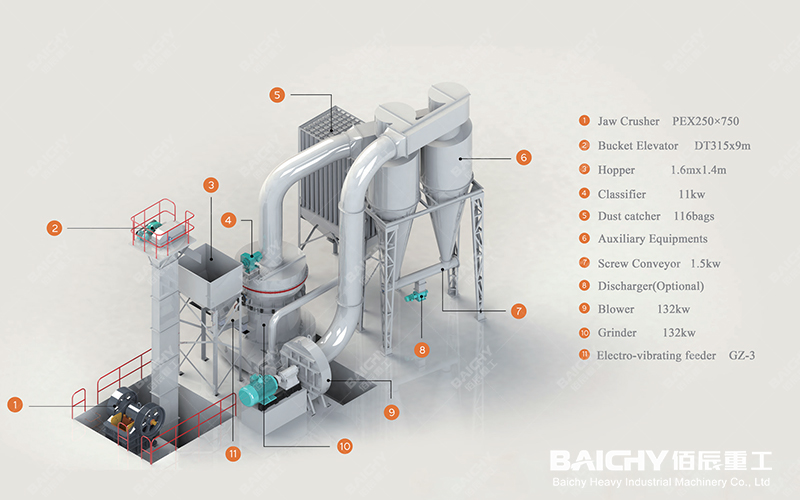
Grinding Production Line Flowchart
Configuration Logic: The jaw crushing stage can be omitted if the feed particle size is already ≤30 mm (e.g., if a secondary crushing system is already in place upstream). When targeting 600-mesh micron-grade powder, the main unit power, classifier frequency conversion range, and dust collection airflow must be verified against 600-mesh specifications rather than 325-mesh specifications; for the same main unit, the achievable production capacity and required power differ depending on the target fineness grade.
V. Avoiding Pitfalls in Equipment Selection: Four Key Points to Ensure Production Targets
Distinguish between nominal and actual capacity: Capacity decreases as fineness increases; quotations must specify capacity based on the target mesh size—reject claims that use 325-mesh capacity figures to market 600-mesh output.
Moisture content is a critical threshold: Feedstock moisture must be below 6%. During the rainy season, raw materials require air-drying or mechanical drying; otherwise, the powder will adhere to the grinding rollers and rings, causing a sharp drop in output or even machine blockage.
Include whiteness and particle size uniformity in the contract: Acceptance should be based on dual metrics—D97 values and laser particle size analyzer reports—rather than just "mesh size." Raw ore whiteness directly determines the pricing tier of the finished product.
Confirm power grid and spare parts requirements in advance: Customize motors to local standards (e.g., 380V/400V/440V, 50/60Hz) and ensure a steady supply of wear parts (rollers, rings) with clear service response terms. Send 2–5 kg of raw material for free grinding tests before signing, and base the technical agreement on measured capacity—this is the only reliable way to convert "estimates" into "guaranteed performance."
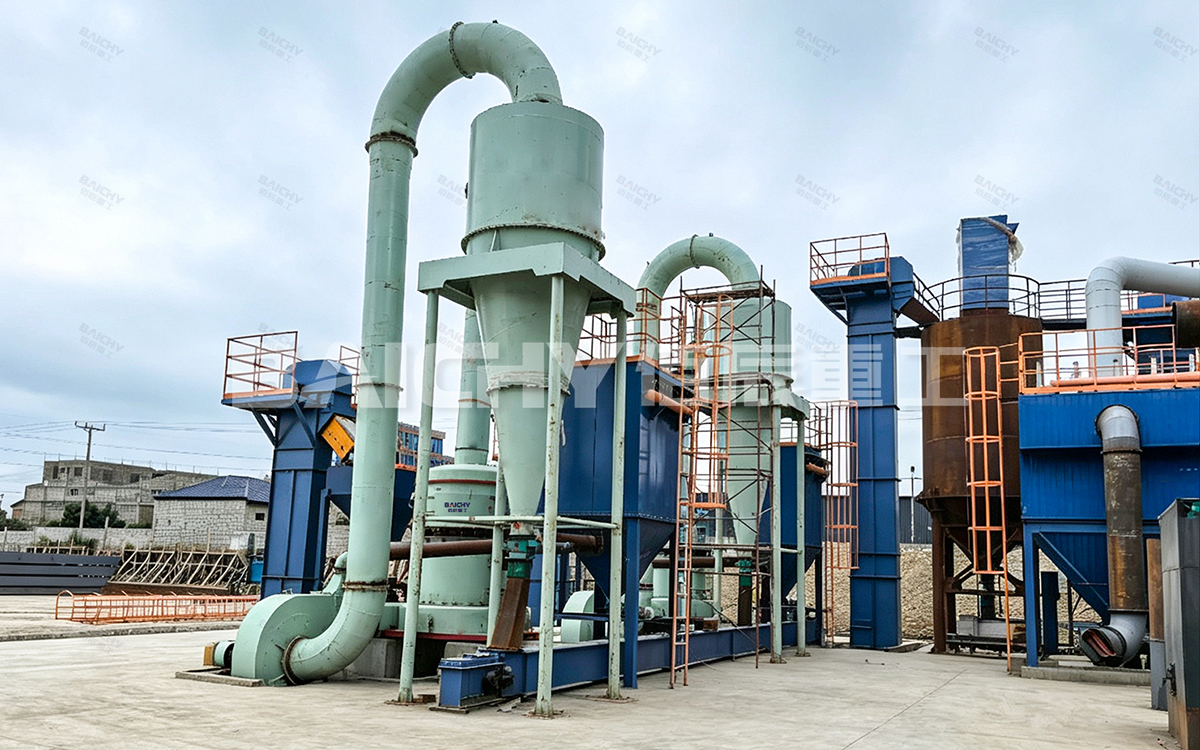
HGM Micro-powder Mill: Customer Site in Kenya
VI. Calcium Powder Processing FAQ
FAQ 1: How fine can a Raymond mill grind calcite? What mesh size corresponds to micron-grade calcium powder?
Standard configurations yield 80–425 mesh (0.613–0.033 mm) output. With an upgraded high-precision classifier (VFD-controlled), the system can stably produce micron-grade powder in the 400–600 mesh range (particle size approx. 38–23 μm), suitable for plastic masterbatch, coatings, and papermaking fillers. For high-end fillers exceeding 800 mesh (D97 ≤ 15–18 μm), the Raymond mill is no longer the most economical choice; an HGM ultrafine mill (325–2500 mesh) is recommended. Capacity decreases as fineness increases; specific figures should be based on Baichy's free material grinding test report.
FAQ 2: How do the roles of the Raymond mill and the HGM ultrafine mill differ when grinding calcite?
Using the 600–800 mesh range as a piding line: For processing calcium powder below 600 mesh, the Raymond mill (including the YGM high-pressure model) is the most pragmatic choice for a quick return on investment, thanks to low initial equipment costs, low electricity consumption per ton, and minimal maintenance requirements. For the ultrafine range above 800 mesh, the HGM mill offers single-pass production, stable D97 particle size distribution, and higher price premiums due to the finer product. Factories supplying both standard and micron-grade powders can adopt a split configuration—using a Raymond mill for base powder and an HGM mill for fine powder—to cover both market segments at the lowest total cost.
FAQ 3: How can I obtain an accurate quote for a micron-grade calcium powder production line?
Simply provide four parameters: raw material specifications (calcite whiteness, impurity content, and moisture content), target fineness (D97 or mesh size), target hourly output, and power grid specifications (voltage/frequency). Baichy engineers will calculate requirements based on both nominal and actual production capacities, then provide a recommendation for the suitable model, a complete equipment list, and a price range. Before signing a contract, we offer free material grinding tests, providing a D97 particle size analysis report and a guaranteed production capacity for the target mesh size.
Baichy Heavy Industry
Baichy Heavy Industry is a high-tech mining equipment company integrating R&D, manufacturing, sales, and after-sales service. Focusing on crushing, grinding, and mineral processing equipment, we provide professional solutions to our customers. We are ISO9001:2015 、certified, and our products include mobile crushing palnts, crawler crushing plant, construction waste crushing plants, jaw crushers, sand making machines, cone crushers, fine crushers, grinding mills, ball mills, etc., all with reliable performance to meet diverse project needs.
Baichy Heavy Industry – Your Trusted Partner
To ensure optimal performance of your equipment, Baichy Heavy Industry offers:
- Professional on-site installation guidance
- Comprehensive operator training
- 24/7 technical support & maintenance services
Our complete after-sales service system guarantees long-term, stable operation of your machinery with minimal downtime.
Protect Your Rights – Only Use Official Channels
To avoid scams and ensure authentic support, contact us exclusively through:
• Official Website: www.baichychina.com
• WhatsApp: +8615093222637
• Email: [email protected]
Your satisfaction is our priority – expect prompt, professional service every time.
(Note: Beware of unauthorized third parties claiming to represent Baichy. Always verify through official contacts.)