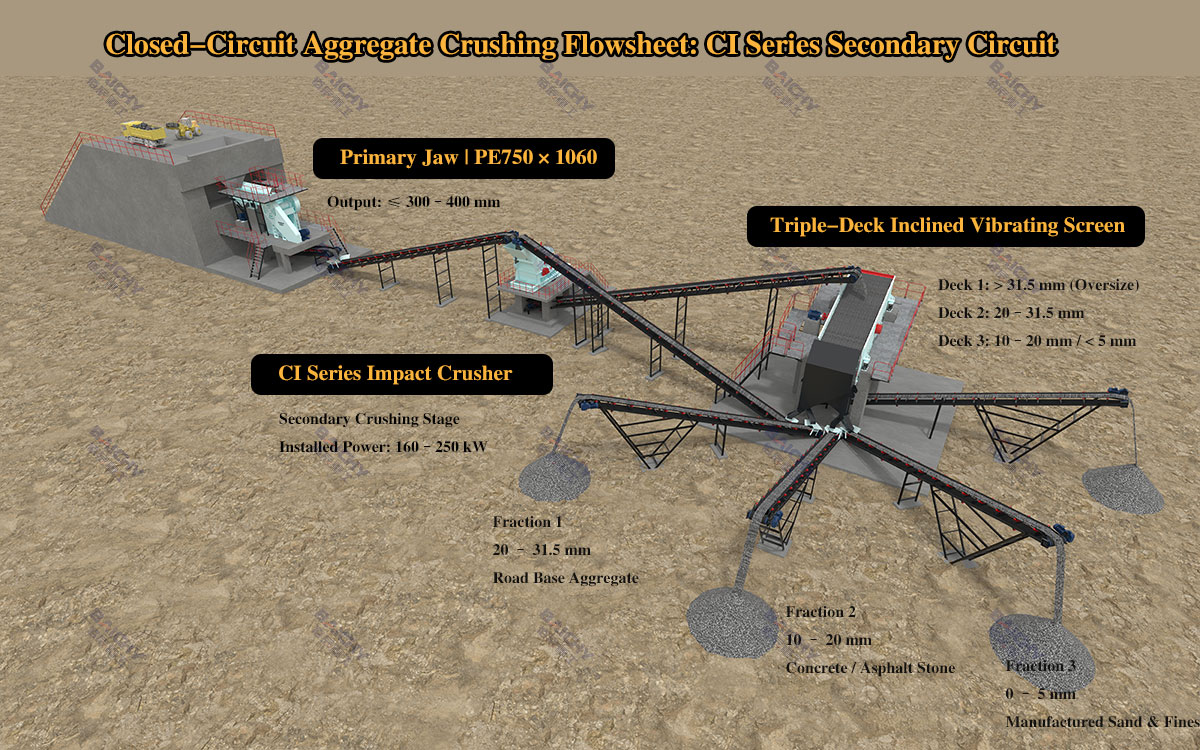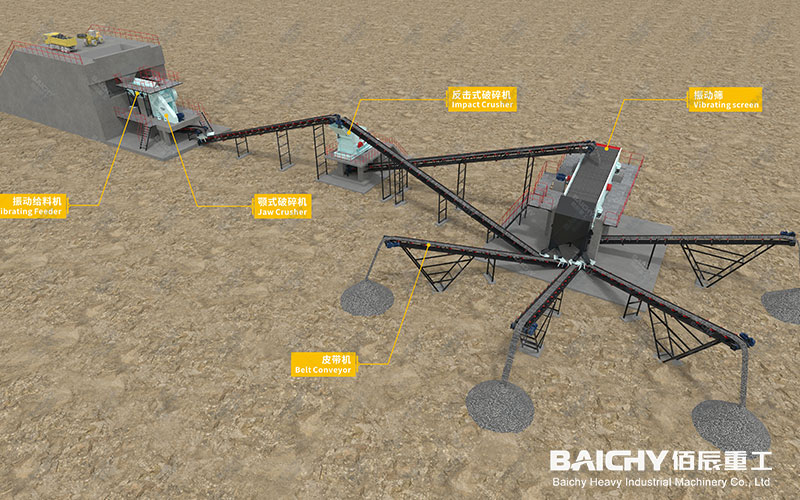

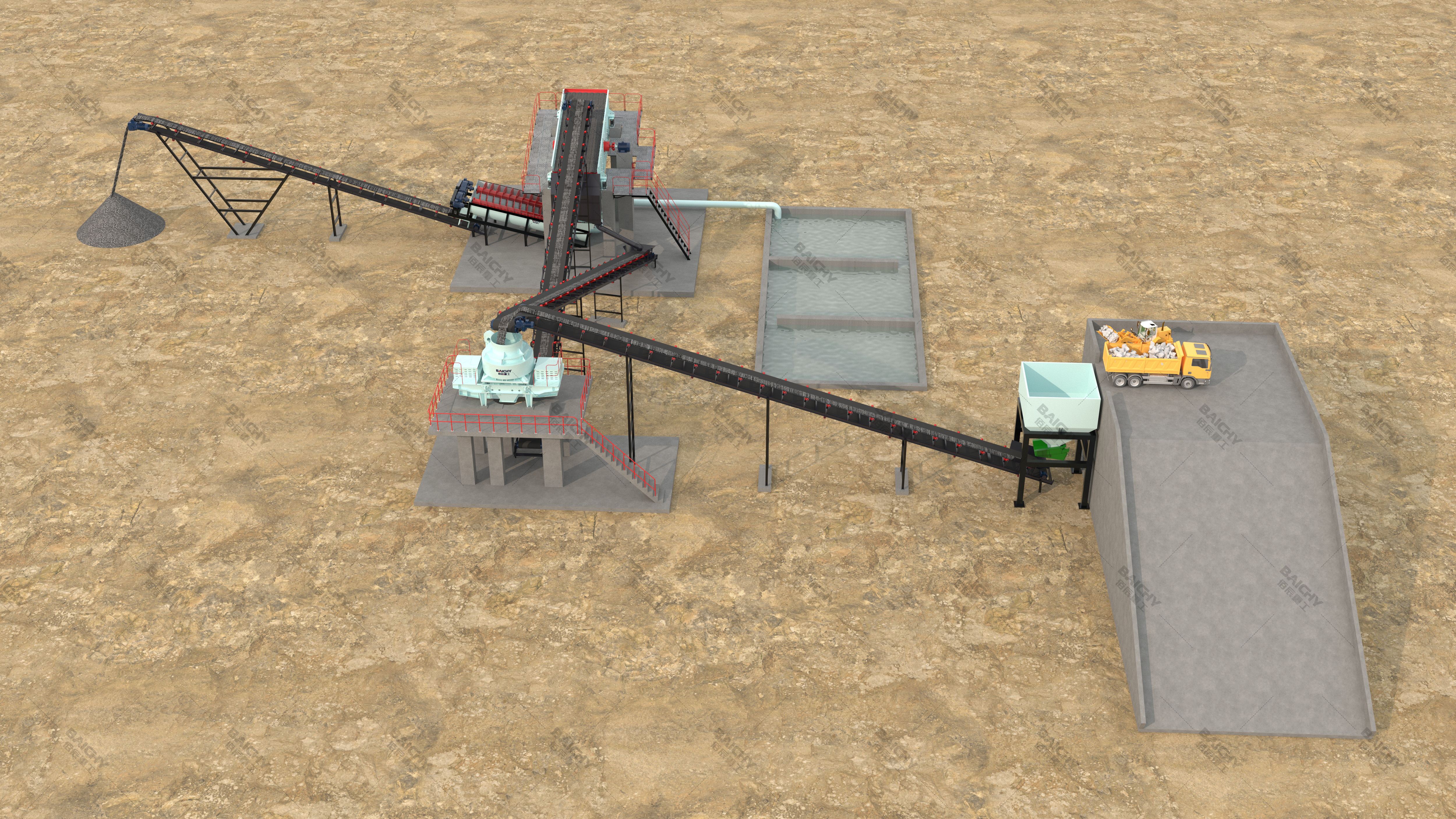
Sand Making Production Line Process Layout Diagram
In today's sand and aggregate industry—where the pursuit of high-quality, high-value-added products is paramount—the tertiary impact crusher has evolved from merely an efficient crushing device into a critical process link for producing premium manufactured sand and shaping high-grade aggregates. Typically serving as the "finishing" unit within a complete crushing and screening production line, it utilizes unique "stone-on-stone" and "stone-on-iron" working principles to further crush and shape medium-sized materials received from secondary crushing stages (such as cone crushers or impact crushers). The core value of this equipment lies in its ability to significantly enhance the particle shape (cubicity) of finished aggregates, fine-tune their gradation, and minimize the content of needle-like and flaky particles—thereby meeting the rigorous aggregate specifications required for high-end construction projects, hydroelectric engineering, and high-strength concrete applications.

Sand Making Machine PDF,Download ↓↓↓
I. Core Working Principles and Technical Advantages of the Tertiary Impact Crusher
1.1 An In-Depth Analysis of the "Stone-on-Stone" and "Stone-on-Iron" Dual Modes
The tertiary impact crusher—often referred to as a sand-making machine or shaping machine—derives its high efficiency from two distinct working modes that can be flexibly switched or combined.
• "Stone-on-Stone" Mode: In this mode, the material forms a self-lining layer within the crushing chamber; high-velocity ejected particles collide violently and undergo friction against the descending material lining, resulting in breakage. This mode is primarily utilized for material shaping, offering the following advantages:
◦ Superior Particle Shape: The resulting finished particles are predominantly cubic in shape, with an extremely low content of needle-like and flaky particles.
◦ Low Wear Costs: Since material interacts primarily with other material, direct impact on wear-resistant components is minimized, significantly reducing the consumption of vulnerable parts.
◦ Suitability: Ideal for processing medium-hard to highly abrasive materials.
• "Stone-on-Iron" Mode: In this mode, material is hurled at high velocity against the peripheral guard plates or impact blocks, undergoing breakage through direct impact. This mode is primarily utilized for sand production, offering the following advantages:
◦ High Crushing Efficiency: Delivers a high overall crushing ratio and a high yield of finished sand.
◦ Adjustable Fineness Modulus: The coarseness or fineness of the finished sand can be conveniently controlled by adjusting parameters such as rotor speed and feed rate.
A superior tertiary impact crusher typically allows users to flexibly select or combine these two modes based on the characteristics of the raw feed and the specific requirements of the final product, thereby enabling a single machine to serve multiple functions.
1.2 Distinct Advantages Over Traditional Sand-Making Equipment
Compared to traditional equipment such as hammer crushers and double-roller crushers, modern tertiary impact crushers offer unparalleled advantages in the fields of sand production and aggregate shaping:
| Advantage Category | Specific Description |
| Product Quality | Finished particles feature a polyhedral-cubic shape, continuous gradation, and high bulk density; this results in concrete and asphalt mixtures with superior strength and workability. |
| Operational Costs | A dual-mode design optimizes the wear distribution of consumable parts, extending their service life; furthermore, a hydraulic lid-opening mechanism makes maintenance and inspection both safe and convenient. |
| Environmental Performance | An advanced internal airflow self-circulation system within the vortex chamber effectively minimizes dust spillage; when paired with a pulse dust collector, the equipment easily meets environmental protection standards. |
| Intelligent Control | Equipped with a PLC automatic control system, the machine monitors parameters—such as vibration, temperature, and flow rate—in real-time, enabling fault pre-warning, remote diagnostics, and automated operation. |
| Strong Adaptability | By simply replacing peripheral liners and adjusting rotor speed and feeding methods, the machine can flexibly process a wide variety of materials, including granite, river pebbles, basalt, and slag. |
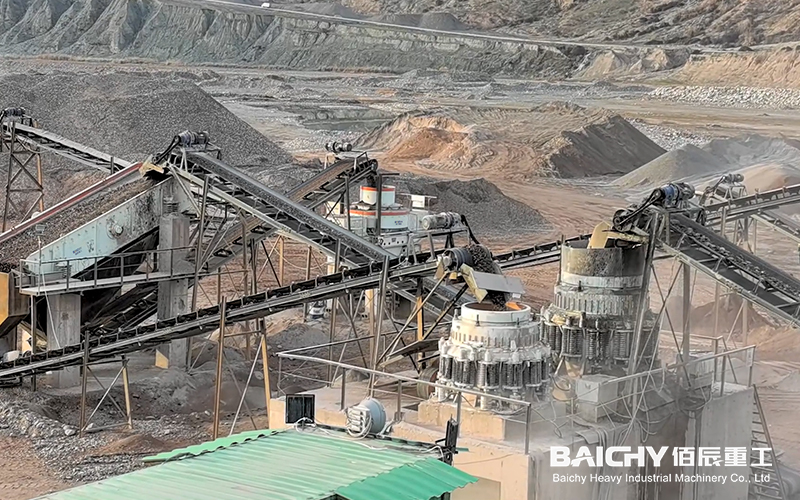
River Pebble Sand-Making Production Line Site
II. In-Depth Analysis of Core Application Scenarios
2.1 High-Quality Manufactured Sand Production
This represents the primary and most prevalent application for tertiary impact crushers. With the depletion of natural sand resources and restrictions on mining, manufactured sand has emerged as the dominant aggregate source for construction purposes. However, manufactured sand produced via conventional crushing processes often suffers from issues such as poor gradation, excessive stone powder content, and irregular particle shapes. Through powerful impact and collision forces, the tertiary impact crusher effectively fractures and removes weak structural points on the surface of the raw material, yielding high-quality manufactured sand characterized by sharp edges and a rough surface texture. The fineness modulus and stone powder content of the output are easily controllable, fully meeting—and often exceeding—the requirements for "Zone II Medium Sand" and above, as stipulated in the GB/T 14684-2022 *Sand for Construction* standard. Consequently, it is the ideal choice for concrete mixing plants and precast component factories.
2.2 High-Value Aggregate Shaping
In the realms of high-end infrastructure projects—such as high-speed railways, airports, and hydroelectric dams—as well as high-strength concrete applications (C50 grade and above), there are exceptionally stringent requirements regarding the particle shape and the content of needle-like and flaky particles within crushed stone aggregates. Excessive levels of needle-like and flaky aggregates can severely compromise the workability and ultimate strength of concrete. As a final-stage shaping unit, the tertiary impact crusher processes intermediate products—received from cone crushers and containing a certain proportion of needle-like and flaky particles—and, through multiple impact collisions, "refines" them into nearly perfect cubical particles. This process significantly enhances the market value and competitiveness of the aggregate products.
2.3 Resource Utilization of Solid Waste
The tertiary impact crusher also demonstrates exceptional performance when processing solid wastes such as construction debris, metallurgical slag, and tailings. It effectively crushes and shapes these materials to produce recycled aggregates or manufactured sand that meet specific quality standards, thereby transforming "waste into treasure" and aligning with the principles of a green, circular economy.
III. Showcase of Successful Application Cases
Case Study 1: A Large-Scale Granite Aggregate Project in East China
◦ Challenge: The finished products from the original production line—specifically the 5–10 mm and 10–20 mm crushed stone fractions—exceeded permissible limits for needle-like and flaky content, resulting in low market selling prices. Additionally, the facility lacked a production line for manufactured sand.
◦ Solution: A VSI-1140 tertiary impact crusher was installed at the end of the existing "jaw crusher + cone crusher" production line. This unit was configured to perform closed-circuit shaping on a portion of the 5–20 mm material stream while simultaneously establishing a dedicated production line for manufacturing sand.
◦ Results: Following the shaping process, the needle-like and flaky content of the aggregates dropped from 12% to less than 5%, upgrading the product to a premium, high-value aggregate. Concurrently, the facility achieved an annual output of 300,000 tons of high-quality manufactured sand, boosting the overall project's return on investment by over 40%.
Case Study 2: A Dedicated Aggregate and Sand System for a Major Hydropower Project in Central China
◦ Requirement: To supply high-quality aggregates and manufactured sand—featuring extremely strict specifications regarding gradation and particle shape—for the construction of a massive dam structure.
◦ Solution: An aggregate processing scheme utilizing a "two-stage crushing + two-stage shaping" process was implemented. The core shaping components consisted of two VSI-1263 tertiary impact crushers operating in parallel, ensuring both production capacity and product quality were absolutely guaranteed.
◦ Results: The fineness modulus of the finished sand remains stable within the range of 2.6–2.9, and the stone powder content is precisely controllable. The particle shape of crushed stone at every grade is nearly perfect, fully meeting the material standards for ultra-high-strength concrete and thereby safeguarding the engineering quality of critical national infrastructure projects.
IV. Recommended Core Equipment
Based on the applications described above, we recommend the following two flagship tertiary impact crushers to meet perse project scales and material processing requirements:
1. VSI Series Vertical Shaft Impact Crusher
◦ Features: Adopts a deep-cavity rotor design for high throughput; features hydraulic lid-opening mechanisms for convenient maintenance; and utilizes a dual-motor drive system for powerful performance. It is particularly well-suited for medium-to-large-scale projects producing premium sand and aggregate, utilizing raw materials such as granite and river pebbles.
2. VUS Series Tower-Type Aggregate Optimization System
◦ Features: A tower-style integrated design that combines tertiary impact crushing, screening, dust removal, humidification mixing, and intelligent control systems. This system not only produces high-quality sand and aggregate but also—through unique dust removal and particle-shape optimization processes—enables precise control over product gradation, particle shape, stone powder content, and moisture levels. It represents the ultimate solution for producing ultra-high-quality manufactured sand and premium aggregates, making it especially suitable for projects located in urban peripheries or major national infrastructure initiatives where environmental protection and product stability requirements are exceptionally stringent.
V. Frequently Asked Questions (FAQ)
Q1: What are the fundamental differences between a tertiary impact crusher and a traditional hammer crusher in terms of sand production?
A1: The fundamental differences lie in the crushing principle and the quality of the finished product. Hammer crushers primarily rely on hammerhead impacts and the extrusion of material against grate bars to achieve crushing; this process tends to generate excessive fines and produce needle-like or flaky particles. In contrast, tertiary impact crushers achieve crushing primarily through high-speed inter-particle collision—known as "material-on-material" crushing. This method effectively improves particle shape; the resulting sand exhibits superior angularity, a more rational gradation, and a fineness modulus that is easier to regulate, resulting in an overall quality far superior to that of sand produced by hammer crushers.
Q2: What are the core wear parts of the equipment? What is their typical service life?
A2: The core wear parts primarily include the throw heads (impellers), peripheral guard plates, flow channel plates, wear-resistant bushings, and similar components. Service life is closely correlated with material hardness, abrasiveness, and equipment operating parameters. Taking granite processing as an example: under normal operating conditions, the throw heads—manufactured from high-performance composite materials—typically achieve a service life of 200 to 400 hours in our equipment. Furthermore, the liner plates can be inverted for use on the reverse side, thereby extending their overall service life. We provide comprehensive solutions for wear-resistant parts as well as rapid supply services.
Q3: How does one configure an optimal production line that incorporates a tertiary impact crusher?
A3: A typical, highly efficient configuration is as follows: "Vibrating Feeder + Jaw Crusher (Primary Crushing) + (Vibrating Screen) + Cone Crusher/Impact Crusher (Secondary Crushing) + (Vibrating Screen) + Tertiary Impact Crusher (Sand Making/Shaping) + (Vibrating Screen/Sand Washer)." Within this configuration, the arrangement of the screening stages (whether open-circuit or closed-circuit) and the feed source for the tertiary impact crusher (whether derived from the screen oversize or undersize) must be precisely designed based on the characteristics of the raw materials and the desired product proportions. We offer our clients professional, complimentary design and optimization services for production line process flows.
About of Baichy Heavy Industry
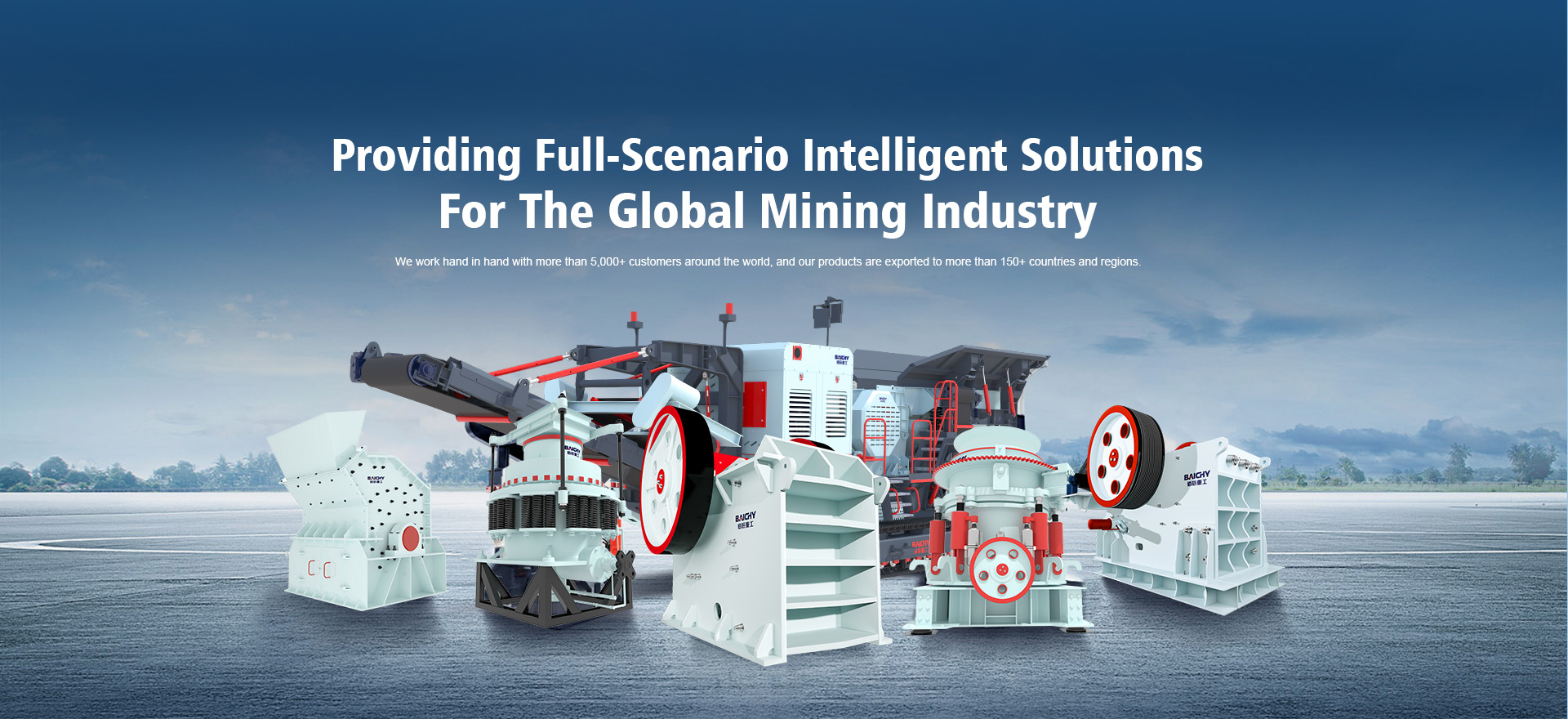
Baichy Heavy Industry is a high-tech mining equipment company integrating R&D, manufacturing, sales, and after-sales service. Focusing on crushing, grinding, and mineral processing equipment, we provide professional solutions to our customers. We are ISO9001:2015 、certified, and our products include mobile crushing palnts, crawler crushing plant, construction waste crushing plants, jaw crushers, sand making machines, cone crushers, fine crushers, grinding mills, ball mills, etc., all with reliable performance to meet diverse project needs.
Our advantages:
• Professional pre-sales support: Free project design and comprehensive solutions to help you accurately select the right equipment;
• Comprehensive on-site service: Providing installation guidance and worker training to ensure smooth equipment commissioning;
• Reliable after-sales guarantee: A complete after-sales system, timely response to technical inquiries and equipment maintenance, ensuring long-term stable operation.
To protect your rights, please contact us through the following official channels for professional service:
Official Website Customer Service
https://wa.me/+8615093222637
Email: [email protected]
We are committed to providing high-quality equipment and full-cycle services to deliver comprehensive intelligent solutions for the global mining industry!