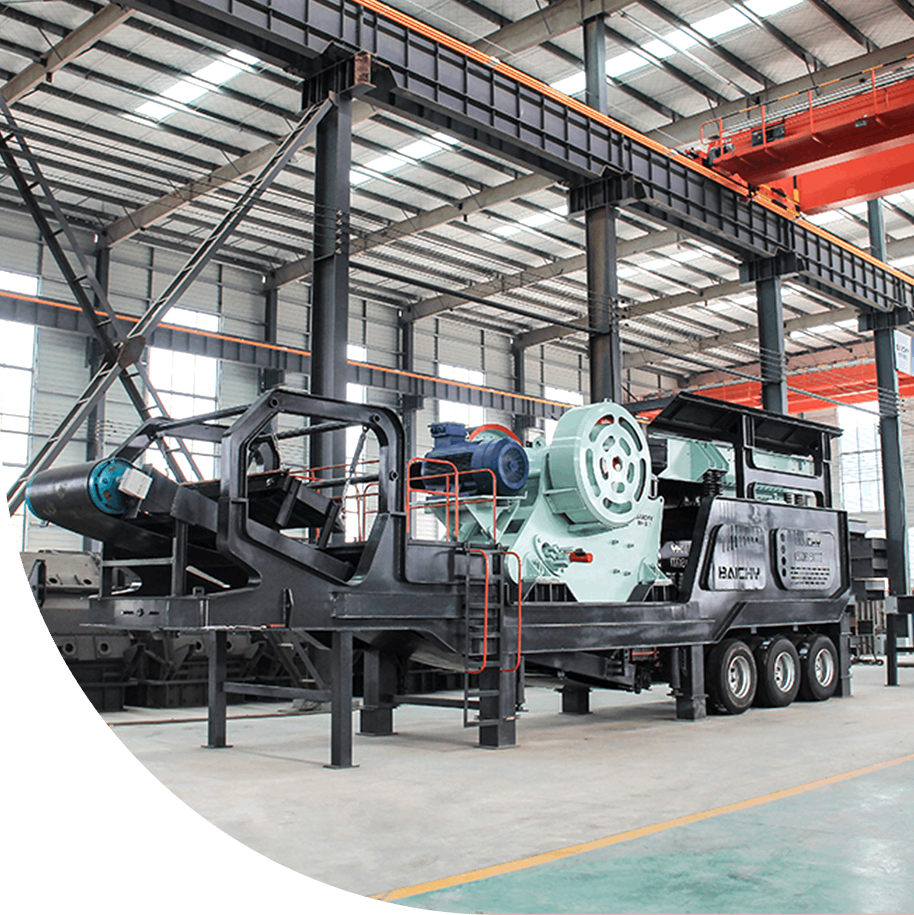

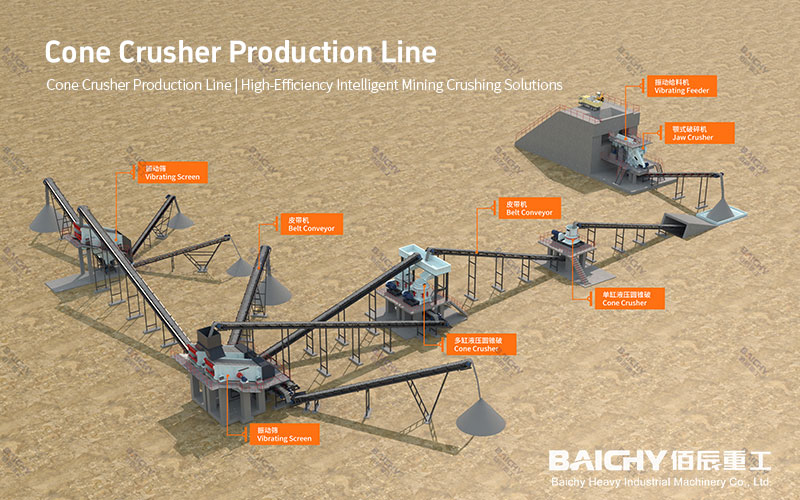
Cone Crusher Production Line — Three-Stage Crushing Production Line
The feed size and discharge size of a tertiary crusher are core parameters in equipment selection and process design. Clearly defining the appropriate feed range and the achievable finished product size effectively prevents issues such as material clogging, crusher stalling, and substandard particle shape, thereby enhancing the overall stability of the entire production line. This article comprehensively compiles the feed and discharge size standards—along with matching recommendations—for mainstream tertiary crushers, helping you optimize your production configuration.
Overview of Tertiary Crusher Particle Size Parameters
In a crushing production line, tertiary crushing typically refers to the "fine crushing" or "shaping" stage. Its primary task is to take material from the secondary crushing stage (usually medium crushing) and further reduce it to a finished particle size that meets final application requirements (e.g., 0–5 mm, 5–10 mm, 10–20 mm, etc.). Consequently, the feed size and discharge size of the tertiary crusher directly determine the gradation, particle shape, and yield of the finished sand and aggregate products.
Comparison of Particle Size Standards for Mainstream Equipment
The table below summarizes the typical parameters for several mainstream tertiary crushers currently available on the market, allowing for quick and easy comparison:
| Equipment Type | Typical Feed Size (mm) | Adjustable Discharge Size Range (mm) | Key Features and Applicable Scenarios |
| Vertical Shaft Impact Crusher (Sand Making Machine) | ≤60 | 0–5 (Sand Making); 5–10 (Stone Crushing) | Utilizes a "stone-on-stone" or "stone-on-iron" crushing principle; combines both crushing and shaping functions; produces finished products with excellent particle shape; the preferred choice for manufactured sand production. |
| Cone Crusher (Short-head Type) | ≤230 | 3–60 | Employs a laminated crushing principle; suitable for the fine crushing of high-hardness materials (e.g., granite, river pebbles); features long service life for wear parts and low operating costs. |
| Fine Jaw Crusher | ≤250 | 20–90 | Simple structure with low initial investment costs; suitable for the fine crushing of medium-hardness materials with a compressive strength not exceeding 320 MPa; the discharged product tends to contain a relatively high proportion of flaky particles |
| High-Efficiency Fine Crusher | ≤190 mm | 0–10 mm | Adjustable. Positioned between an impact crusher and a VSI crusher, this machine is suitable for the fine crushing and sand-making of medium-hardness materials—such as limestone—offering excellent cost-effectiveness. |
Note: The above figures represent general ranges. The specific feed size and discharge size standards for inPidual machines may vary depending on the manufacturer, model, crushing chamber design, and material properties (hardness, moisture content, clay content). Please refer to the official specifications provided by the equipment supplier for precise details.
Common Issues Arising from Improper Particle Size Matching—and How to Resolve Them
Improper particle size matching is the root cause of many production line malfunctions. The following are several typical issues:
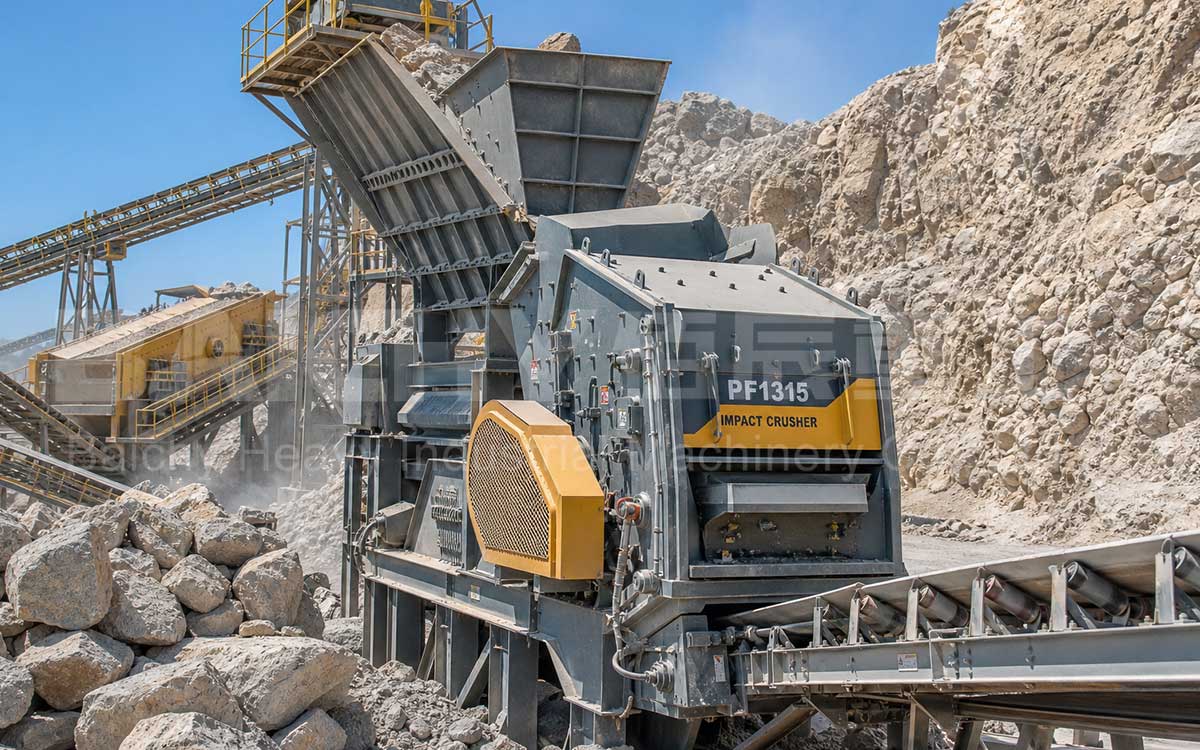
![Vertical Shaft Impact [VSI] crusher](/d/file/Products_Knowledge/2026-04-08/b28bd89d973353a6171a099584e100cf.jpg)
Vertical Shaft Impact [VSI] crusher
1. Material Clogging and Crusher Stalling: This is the most common problem triggered by an inappropriate feed size. If the feed entering the tertiary crusher contains oversized lumps exceeding its design limit—or if the content of fine powder is excessively high, or the material is highly moist—it can easily cause blockages within the crushing chamber or at the discharge port. This leads to the machine stalling (becoming "choked") and shutting down; in severe cases, it can result in damage to the motor or main shaft.
◦ Solution: Strictly control the discharge particle size from the preceding secondary crushing stage to ensure it falls within the permissible feed range of the tertiary crusher. For sticky or moist materials, consider implementing pre-screening, drying, or selecting a crusher model that is less prone to clogging (such as a Vertical Shaft Impact [VSI] crusher).
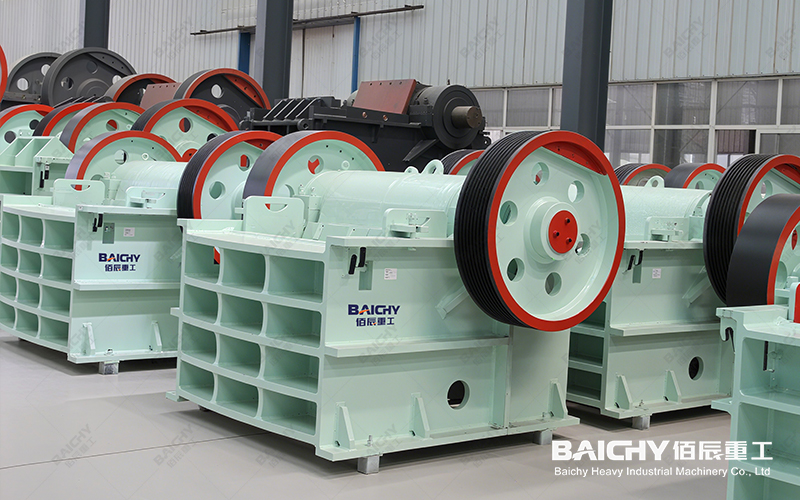
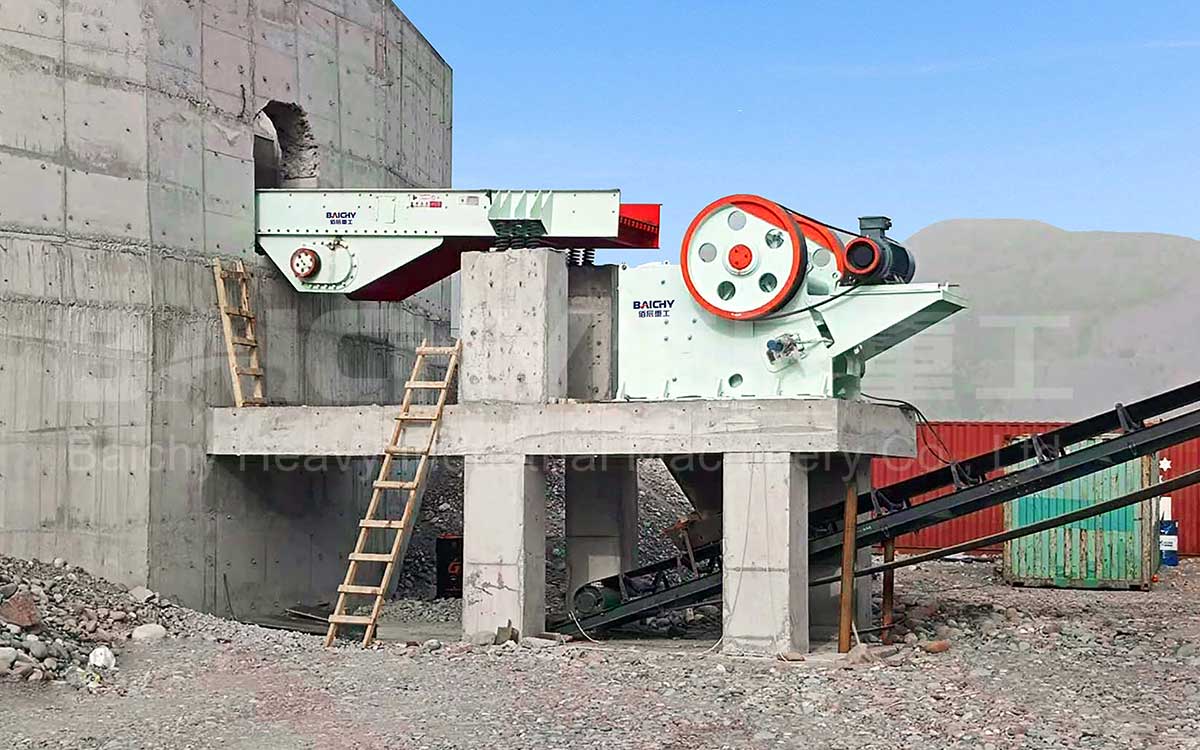
PEX fine jaw crusher
2. Substandard Particle Shape and Poor Product Competitiveness: A poor discharge particle shape (characterized by a high content of needle-like or flaky particles) is a critical flaw in aggregate products. For instance, while using a fine jaw crusher for tertiary crushing offers lower initial costs, the resulting product shape is often inferior to that produced by a Vertical Shaft Impact (VSI) crusher.
◦ Solution: For high-end aggregate or manufactured sand production lines where particle shape is a critical requirement, priority should be given to equipment featuring a "shaping" function—such as a Vertical Shaft Impact (VSI) crusher (sand-making machine).
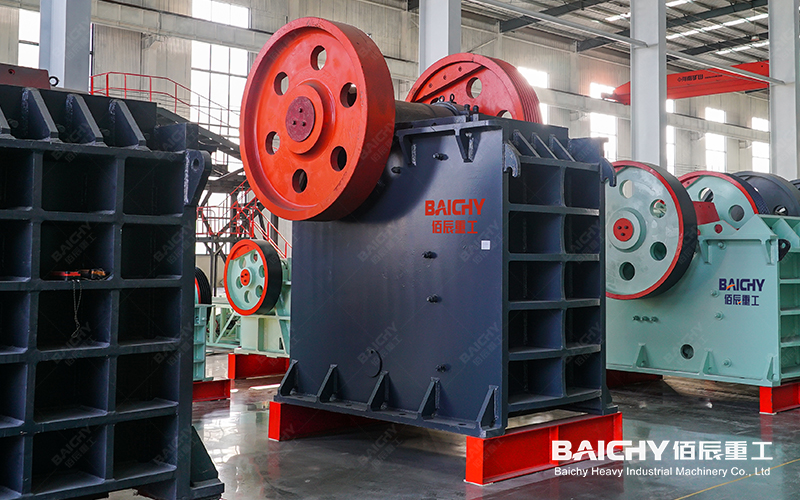
Big Stone Crfusher - PE Jaw Crusher
3. Failure to Meet Output Targets and Low Production Efficiency: If the material supplied by the secondary crusher is excessively fine—while the tertiary crusher possesses an oversized processing capacity—the machine will operate in an "underfed" state, resulting in wasted energy. Conversely, if the supplied material is excessively coarse, the tertiary crusher will be forced to operate under a chronic overload, yet still fail to achieve the required output targets.
◦ Solution Approach: Implement a scientifically sound process design to ensure that the processing capacities of the primary, secondary, and tertiary crushing equipment are precisely matched at each stage. This creates a smooth, "pyramid-shaped" material flow—a critical factor in guaranteeing both the stability and economic efficiency of the production line.
Tertiary Crushing Equipment Recommended by Our Company
To address Perse material types and product specifications, we offer the following selection of high-performance tertiary crushers:
1. VSI Series Vertical Shaft Impact Crusher (Sand Making Machine)
◦ Core Advantages: Features a convertible crushing chamber capable of switching between "stone-on-stone" and "stone-on-iron" crushing modes. The finished product exhibits an excellent cubic shape with a continuous and stable gradation, and the fineness modulus is fully adjustable. It is particularly well-suited for producing high-quality manufactured sand and aggregates for high-standard commercial concrete.
◦ Applicable Materials: Rocks of medium-to-high hardness, such as granite, basalt, river pebbles, etc.
2. HP Series Multi-Cylinder Hydraulic Cone Crusher (Short-Head Type)
◦ Core Advantages: Utilizes the principle of inter-particle lamination crushing. Hydraulic adjustment of the discharge opening—combined with hydraulic overload protection—enables stable, fine crushing operations even at high production volumes. Wear parts are manufactured from high-chromium alloy, ensuring a long service life; this makes the unit ideal for crushing materials of high hardness and high abrasiveness.
◦ Applicable Materials: High-hardness rocks and metal ores (specifically for the fine crushing stage).
3. PCX Series High-Efficiency Single-Stage Fine Crusher
◦ Core Advantages: A single machine performs both medium and fine crushing, thereby simplifying the overall process flow. The gap between the impact plate and the blow bar can be conveniently adjusted, allowing for easy control over the discharge particle size. Offering excellent value for investment, it is an ideal choice for small-to-medium-sized stone quarries and for the fine crushing of raw cement materials.
◦ Applicable Materials: Low-to-medium hardness materials with a compressive strength of ≤150 MPa, such as limestone, marl, shale, etc.
Frequently Asked Questions (FAQ)
Q1: How do I determine which type of tertiary crusher to select based on my specific requirements for the final product's particle size?
A1: First, identify your target product: are you aiming for premium aggregates (e.g., 5–10 mm, 10–20 mm) or manufactured sand (0–5 mm)? If the primary objective is sand production, a Vertical Shaft Impact (VSI) crusher is the preferred choice; if the focus is on producing small-sized crushed stone from extremely hard materials, a short-head cone crusher is more suitable; conversely, if the budget is limited and the material hardness is relatively low, a high-efficiency fine crusher may be considered.
Q2: Why is controlling the feed size considered the key to ensuring the stability of a production line?
A2: Feed size serves as the "first line of defense" for the stable operation of equipment. Feeding material that is uniform in size and falls within the equipment's designed operating range ensures a smooth flow of material within the crushing chamber and a balanced distribution of crushing forces. This prevents a cascade of issues—such as blockages caused by the impact of oversized lumps or clogging by fine dust, abnormal vibrations, and accelerated component wear—thereby serving as the cornerstone for achieving production line stability.
Q3: In addition to particle size, what other factors should be prioritized when selecting a tertiary crusher?
A3: Beyond the specifications for feed and discharge particle sizes, key factors to consider include:
① Material properties (hardness, abrasiveness, moisture content, and clay content);
② Target output capacity (t/h);
③ Requirements for the final product's particle shape;
④ Comprehensive operating costs (energy consumption and the cost of wear parts/consumables); and
⑤ Environmental regulations (dust and noise emissions).
Conclusion
Precisely managing the feed and discharge particle sizes of tertiary crushers—and using this data to guide rational equipment selection and process layout—is a scientific approach that effectively eliminates production hazards at the source, enhances product value, and ensures long-term, stable, and efficient operations. If you have any questions regarding the configuration of crushing production lines, or if you would like to obtain a customized solution tailored to your specific materials, please feel free to contact our technical team at any time.