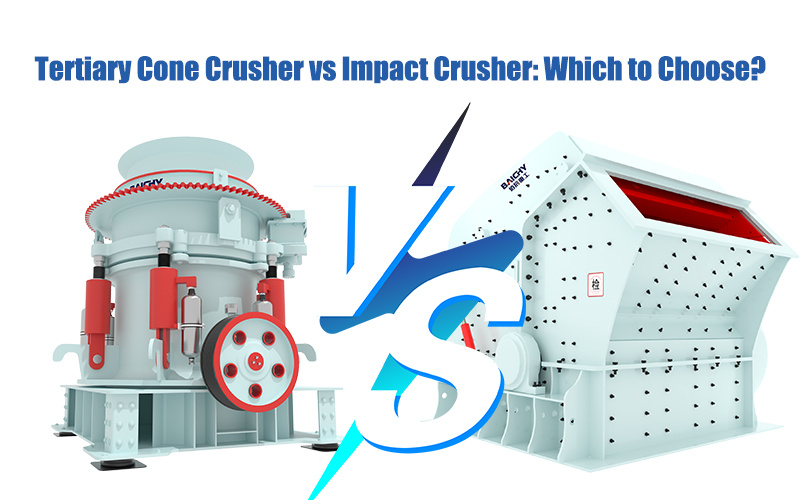
Tertiary Cone Crusher vs Impact Crusher Which to Choose
In the design of tertiary crushing (fine crushing) schemes for modern sand, gravel aggregate, and mineral processing operations, the tertiary cone crusher and the tertiary impact crusher represent the two most central and common equipment choices. Their distinct technical principles give rise to significant differences regarding material adaptability, finished product shape, wear part consumption, and operational costs. A precise equipment selection is not merely a matter of the final product's market competitiveness; it directly determines the long-term Return on Investment (ROI) for the entire production line. This article provides an in-depth analysis of the core distinctions between these two types of crushers, offering a clear selection rationale to help you identify the most suitable "fine crushing expert" for your specific project.
In-Depth Comparison of Core Differences
To make the correct choice, one must first understand the operating principles of these two equipment categories and the performance characteristics derived from them.
Operating Principles and Technical Characteristics
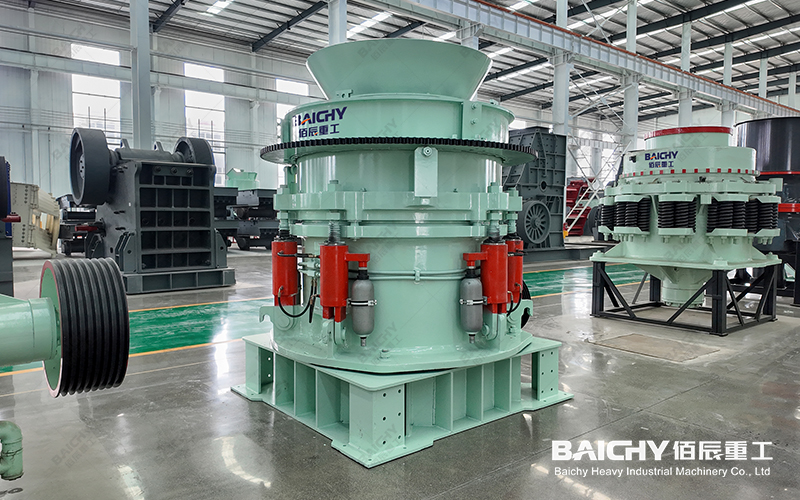
Tertiary cone crusher
• Tertiary Cone Crusher: Employs the principle of laminated crushing (inter-particle crushing). A movable cone executes an eccentric gyratory motion within a crushing chamber formed by a stationary cone, subjecting the material to continuous compression and grinding. Its core characteristic is "crushing by compression rather than impact," resulting in stable operation and immense crushing force.
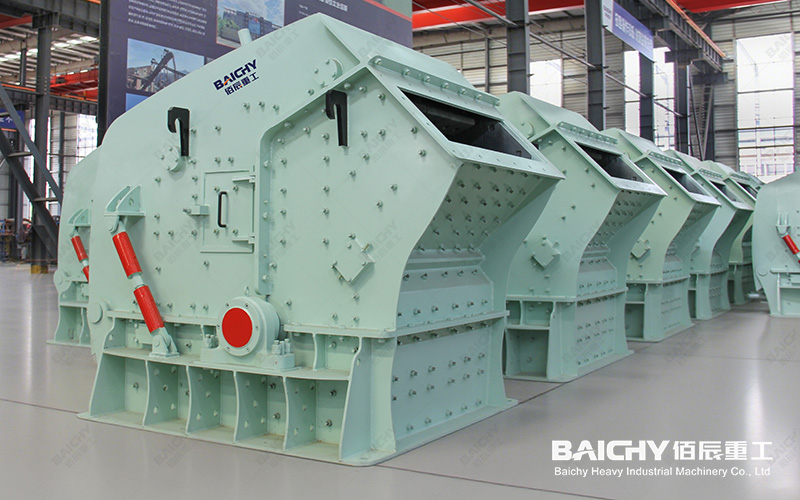
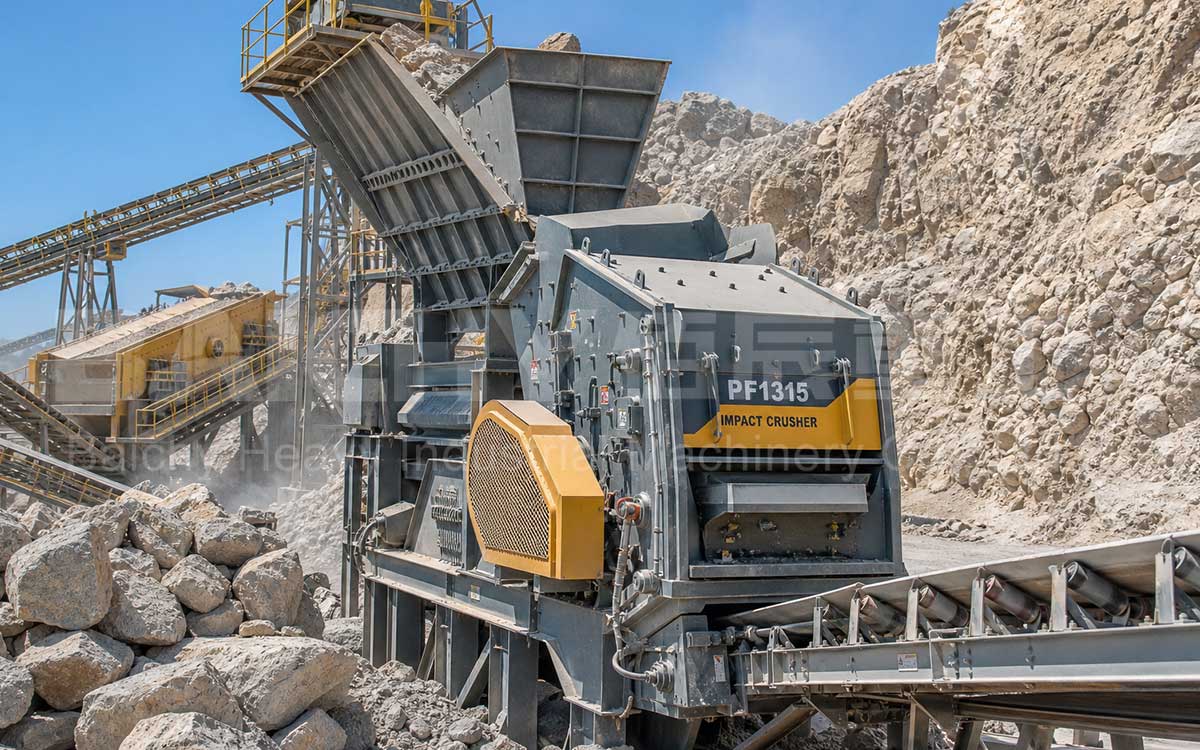
Tertiary impact crusher
• Tertiary Impact Crusher: Employs the principle of impact crushing. A high-speed rotating rotor drives blow bars to strike the material; upon acquiring significant kinetic energy, the material is hurled against impact plates for repeated collision and fragmentation. Its core characteristic is a primary reliance on "impact and collision," which enables selective crushing.
Comparison Table of Key Parameters and Performance
| Comparison Item | Tertiary Cone Crusher | Tertiary Impact Crusher |
| Applicable Materials | High-hardness, highly abrasive materials (e.g., granite, basalt, diabase, quartzite, etc.). | Low-to-medium hardness, low-abrasion materials (e.g., limestone, dolomite, weathered rock, construction waste concrete, etc.). |
| Finished Product Shape | Slightly higher content of needle-like and flaky particles; fewer cubical particles. Predominantly "crushed stone" shaped. | Excellent particle shape; predominantly cubical with a reasonable gradation; stone powder content is controllable. Ideal equipment for aggregate shaping. |
| Wear Part Costs | High-manganese steel liners offer strong wear resistance and a long service life; the wear part cost per ton of processed material is typically lower. | Blow bars and impact plates experience rapid wear, particularly when crushing hard rock. The cost of wear parts per ton of processed material is relatively high. |
| Energy Consumption | Energy consumption is relatively high; however, crushing efficiency is high, resulting in an excellent output-to-energy consumption ratio. | Energy consumption is relatively low; however, when processing high-hardness materials, indirect costs resulting from wear surge significantly. |
| Maintenance & Adjustment | The structure is complex, requiring specialized expertise for maintenance; however, modern models feature a high degree of automation and offer convenient adjustment of the discharge opening. | The structure is relatively simple, making maintenance convenient; product particle size can be flexibly adjusted by altering the rotor speed and the gap between the impact plates. |
| Wet/Muddy Materials | Poor adaptability; prone to clogging. The moisture and mud content of the feed material must be strictly controlled. | Moderate adaptability—superior to cone crushers—though sticky or wet materials may still negatively impact the operating efficiency of the blow bars. |
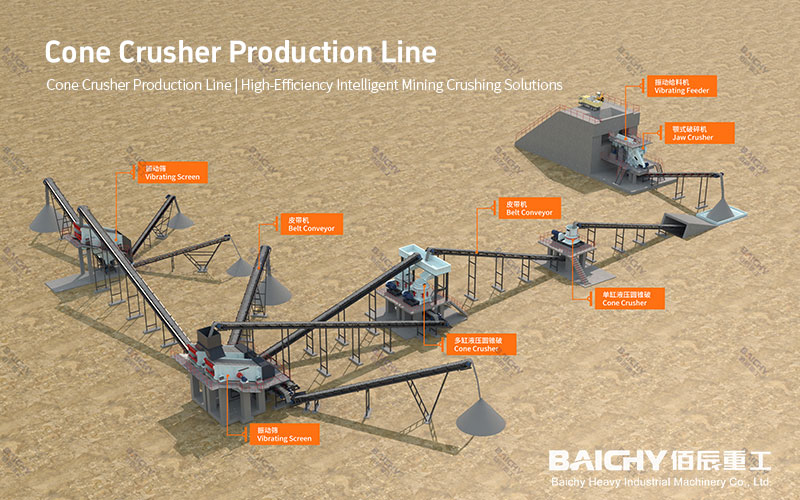
3rd-Stage Cone Crushers
How to Select the Right Model Based on Project Requirements?
Choosing between a tertiary cone crusher and a tertiary impact crusher is not merely a matter of judging general pros and cons; rather, it is a process of matching the equipment to the core conditions and requirements of the specific project.
Scenarios Where a Tertiary Cone Crusher is the Preferred Choice
1. Core Material: High-Hardness Rock: When your raw material consists of hard rocks—such as granite, basalt, or river pebbles—the tertiary cone crusher stands out as the unrivaled choice for achieving efficient, stable, and low-cost fine crushing. This is due to its inter-particle crushing principle (laminated crushing) and its use of highly wear-resistant liners. This is also the reason we recommend our solution specifically designed for [Tertiary Crushing of Hard Rock, Granite, and Basalt].
2. Strict Requirements for Throughput and Operational Stability: Cone crushers operate smoothly and feature robust protection mechanisms against tramp iron (uncrushable objects); they demonstrate superior reliability within continuous, large-scale production lines.
3. Pursuit of Lower Long-Term Comprehensive Costs: Although the initial capital investment for the equipment may be slightly higher, its extremely low wear-part cost per ton—particularly when crushing hard rock—ensures that its long-term operational advantages become clearly evident over time.
Scenarios Where a Tertiary Impact Crusher is the Preferred Choice
1. Core Material Medium-to-Low Hardness Rock: For materials such as limestone and calcite, the tertiary impact crusher allows you to fully capitalize on its dual advantages: producing excellent product particle shape and maintaining low energy consumption.
2. Strict requirements for finished product shape: When your product targets high-end concrete aggregates, asphalt aggregates, or is intended for sand making and aggregate shaping applications, the cubical particles produced by an impact crusher can significantly boost your product's selling price and market competitiveness.
3. Flexible production schemes requiring frequent particle size adjustments: Impact crushers allow for rapid changes in product specifications simply by adjusting the rotor speed and gap settings, making them ideal for production scenarios involving multiple product varieties and small batch sizes.
Recommended Equipment from Our Company
Based on the analysis above, we recommend the following two market-proven flagship products to meet your tertiary crushing requirements across various operational scenarios.
Recommendation 1: HP Series Multi-Cylinder Hydraulic Cone Crusher (Ideal for Fine Crushing of Hard Rock)
• Key Advantages: Employs a combination of inter-particle crushing (laminating effect) and multiple cavity profiles, specifically engineered for crushing hard rock. The hydraulic system provides automated tramp iron protection and cavity clearing capabilities, while the intelligent control system continuously optimizes the discharge opening and load in real-time to ensure operation at peak efficiency. It represents the ultimate solution for hard rock crushing projects that prioritize high throughput and minimal wear.
• Typical Application: A large-scale granite aggregate production line utilized an HP500 as its tertiary crusher. With an input size of ≤100 mm and an output size of ≤25 mm, the system maintained a stable hourly output of 380–420 tons. The finished product exhibited a needle-and-flaky content of less than 8%, and the liner service life exceeded 3,000 hours.
Recommendation 2: CI Series European-Style Impact Crusher (Ideal for Shaping and Sand Making with Medium-Hard Rock)
• Key Advantages: Features a heavy-duty rotor design with a high moment of inertia, ensuring exceptional crushing efficiency. The hydraulically actuated frame opening mechanism facilitates convenient maintenance. The design incorporates a three-stage impact plate system combined with a fine-grinding cavity, guaranteeing the production of polygonal particles with excellent shape characteristics while allowing for precise control over the generation of stone fines.
• Typical Application: In a large-scale project producing limestone-based cement aggregates and manufactured sand, the CI1623 crusher was deployed as the tertiary crushing and shaping unit. With a feed size of ≤80mm, it produces premium manufactured sand (0–5mm) and high-quality aggregates (5–31.5mm). The resulting sand features a rounded grain shape and continuous gradation, fully meeting the standards required for high-performance concrete.
Frequently Asked Questions (FAQ)
Q1: My material is medium-hardness sandstone; which machine should I choose?
A: Sandstone is highly abrasive, though its actual hardness may not be exceptionally high. If you have strict requirements regarding grain shape, priority should be given to heavy-duty impact crushers (such as our CI series). However, if your primary concern is the long-term cost of wear parts and you require massive production output, a multi-cylinder hydraulic cone crusher may be a more robust choice. Ultimately, a comprehensive assessment based on the material's SiO2 content and your project budget is required to determine the best fit.
Q2: Can a tertiary impact crusher be used for sand making? How effective is it?
A: Absolutely. In fact, it is currently one of the mainstream solutions for achieving "crushing-based sand making" (replacing traditional grinding methods) and producing high-quality manufactured sand. By optimizing rotor linear velocity, adjusting the gap between impact plates, and establishing a "stone-on-stone" crushing mode, tertiary impact crushers can effectively control the fineness modulus and stone powder content of the finished sand. This process yields sand products with rounded grain shapes—making them particularly suitable for high-end construction material markets where strict requirements regarding sand particle shape are in place.
Q3: It is often said that cone crushers produce poor grain shapes; is there any way to improve this?
A: Yes, there is. Modern, high-performance cone crushers can significantly reduce the content of needle-like and flaky particles by optimizing the crushing chamber profile (e.g., by incorporating a longer parallel zone), increasing rotational speed, and ensuring adequate—yet properly pre-screened—feed material (thereby avoiding "choke feeding").
For scenarios with extremely stringent requirements, a process combination of "cone crusher + vertical shaft impact crusher (shaping machine)" can be adopted to achieve an optimal balance between production efficiency and grain shape quality.