The short answer up front: a steel slag crushing plant is a purpose-built crushing, screening and magnetic separation line that turns a steel mill's most troublesome by-product — 100-150 kg of slag per tonne of crude steel — into two revenue streams: recoverable scrap metal and a saleable aggregate/cementitious material. It is not a standard rock-crushing plant with a different label. Steel slag's 15-25% iron content, extreme abrasiveness and unpredictable metal lumps demand a dedicated flowsheet of jaw crushers, cone or double-roll crushers, heavy-duty screens and multi-stage magnetic separators. For steel producers, slag processors and cement plants alike, this is no longer an environmental afterthought — it is a compliance measure and a profit centre in one.
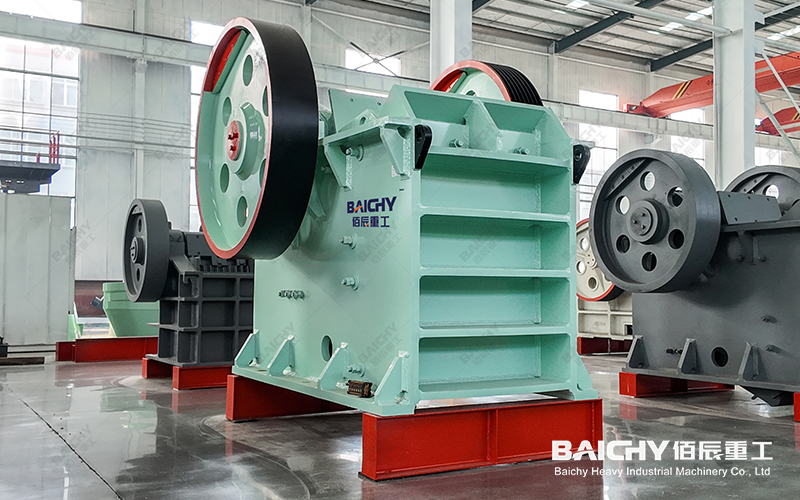
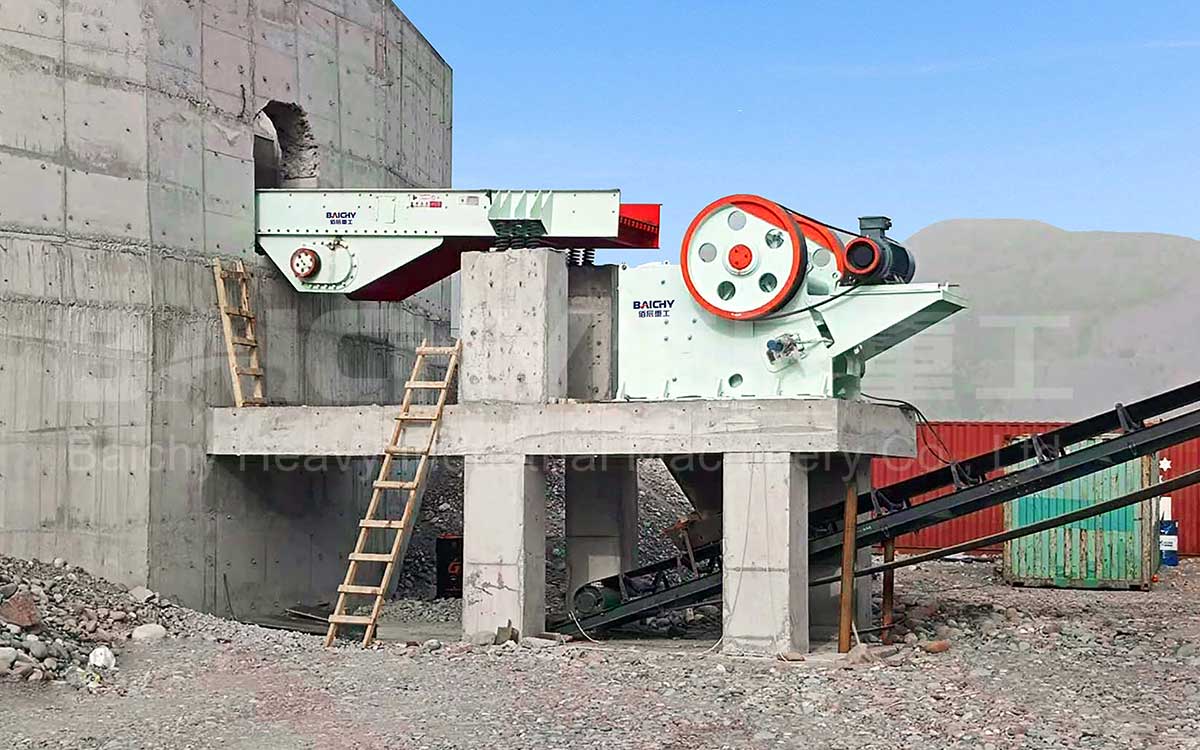
PE Jaw Crusher
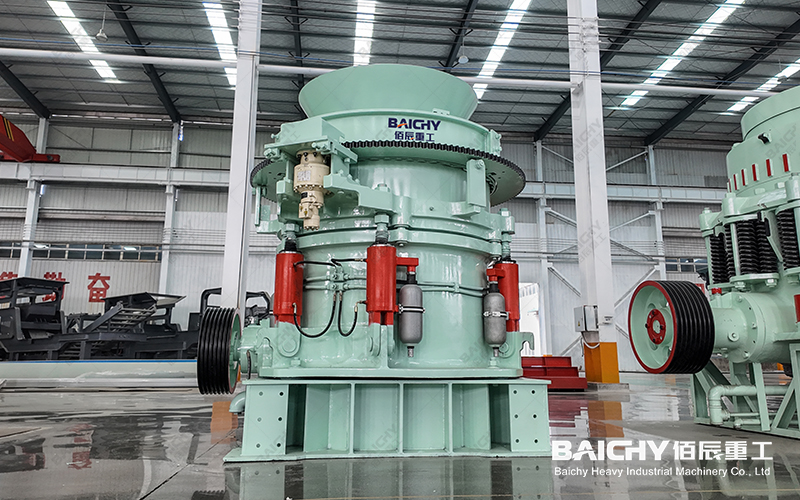
Hydraulic Cone Crusher
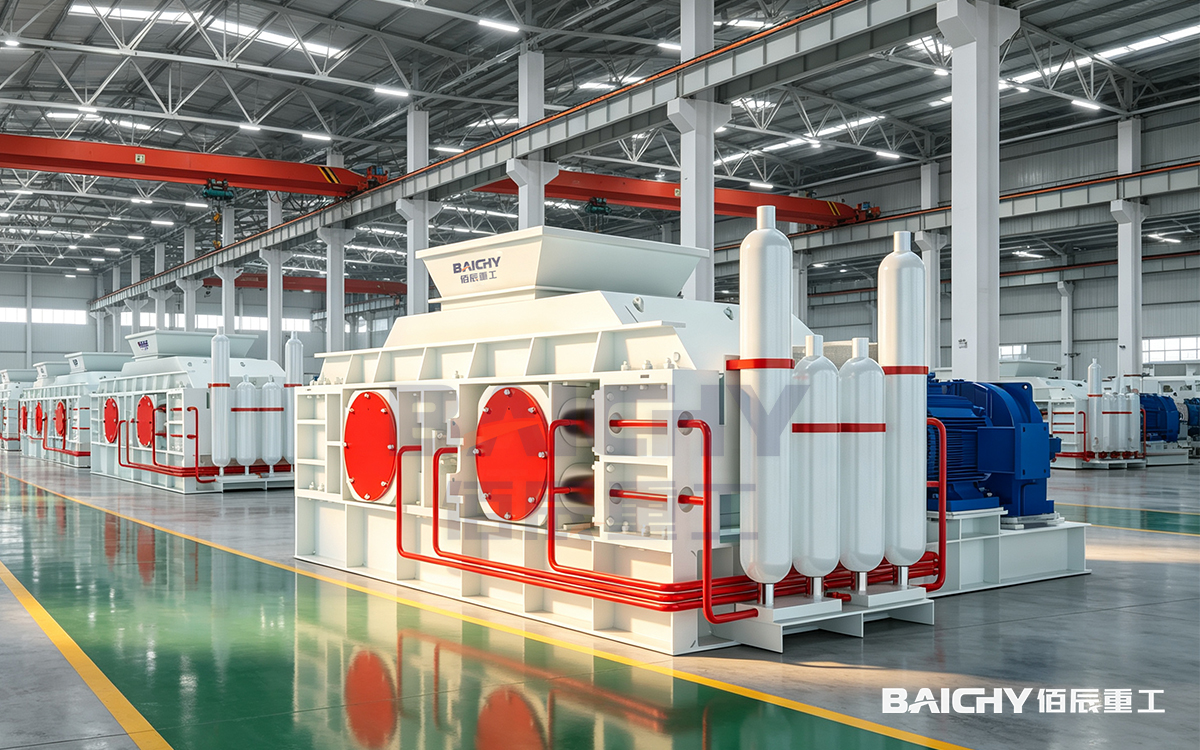
double roller crusher
1. What Is a Steel Slag Crushing Plant?
A steel slag crushing plant is a complete processing system that receives molten-process slag (BOF, EAF or LF slag) after cooling, and delivers:
Scrap steel / ladle skulls — returned to the steelmaking shop as feedstock;
Iron-rich slag fractions — sold to cement plants or sinter plants;
Clean slag aggregate — graded 0-5 mm, 5-15 mm and 15-31.5 mm for road base, asphalt, concrete blocks and embankment fill;
Fine slag powder (optionally) — a pozzolanic SCM after ball-mill grinding.
1.1 Why the world needs slag processing plants
The numbers explain the business case better than any brochure. According to the World Steel Association, global crude steel production reached 1,882.6 million tonnes in 2024. Industry data indicates that every tonne of crude steel generates roughly 100-150 kg of steel slag depending on the furnace route — which puts annual global steel slag output in the range of 190-280 million tonnes. worldsteel's own sustainability reporting shows that 98.15% of steel industry raw materials were converted into steel products or co-products in 2023 — but the co-product conversion rate, i.e. how much of that slag becomes a useful product rather than landfill, still varies dramatically from country to country.
Three forces are pushing slag from the waste pile into the crushing plant:
Regulation. Landfill bans, carbon accounting and extended-producer-responsibility rules in the EU, China and India are making uncontrolled slag dumping legally and financially painful.
Scrap prices. With volatile ferrous scrap markets, the 8-15% of recoverable metallics locked inside typical BOF slag represents real money that mills no longer tolerate losing.
Cement decarbonisation. The cement industry, under pressure to cut clinker factor, is paying for steel slag powder and slag aggregate that was once given away.
The result: a steel slag crushing plant is now a standard fixture at integrated mills, EAF shops, slag-processing contractors and independent recycling parks — typically in the 30-300 tph range.
2. Typical Application Scenarios
Where exactly do steel slag crushing plants earn their keep?
2.1 Integrated steel mills (BOF route)
Blast furnace - BOF mills produce the largest slag volumes. A dedicated on-site slag treatment plant — often run by a contractor under a tolling agreement — processes hot-slag pits and ladle slag to recover skulls and metallics, with the clean fraction sold locally for road construction. Capacities here run from 80 to 300+ tph in multi-stage lines.
2.2 EAF and stainless steel plants
Electric arc furnace slag carries a higher iron content (often 20-35%) and more metallic prills than BOF slag. EAF plants typically need a compact but aggressive flowsheet — jaw crusher + magnetic separation + roll or cone crushing — because stainless steel slag also contains valuable alloying elements (Cr, Ni) that justify careful metal recovery.
2.3 Independent slag processors and scrap recyclers
In markets such as Turkey, India, Vietnam, Brazil and the Middle East, independent operators buy slag from mills or process it under contract. Their plant must be flexible and low-cost per tonne, because margins depend on scrap recovery rates and local aggregate prices, not on mill subsidies.
2.4 Cement plants and building-material producers
Cement plants integrate slag crushing and grinding to produce steel slag powder (a supplementary cementitious material) and slag aggregate for concrete. In this scenario the crushing plant feeds a ball mill or vertical mill, and product quality targets (fineness, free-CaO content, metal residue) are set by cement standards.
2.5 Construction and demolition recycling parks
Mixed-construction recycling facilities increasingly receive steel slag as an input stream. Here the plant doubles as an urban-mining line: recover the metal, sell the aggregate, and avoid the tipping fees that inert-waste landfills now charge.
3. Process Flow of a Steel Slag Crushing Plant
A typical steel slag processing flowsheet looks like this:
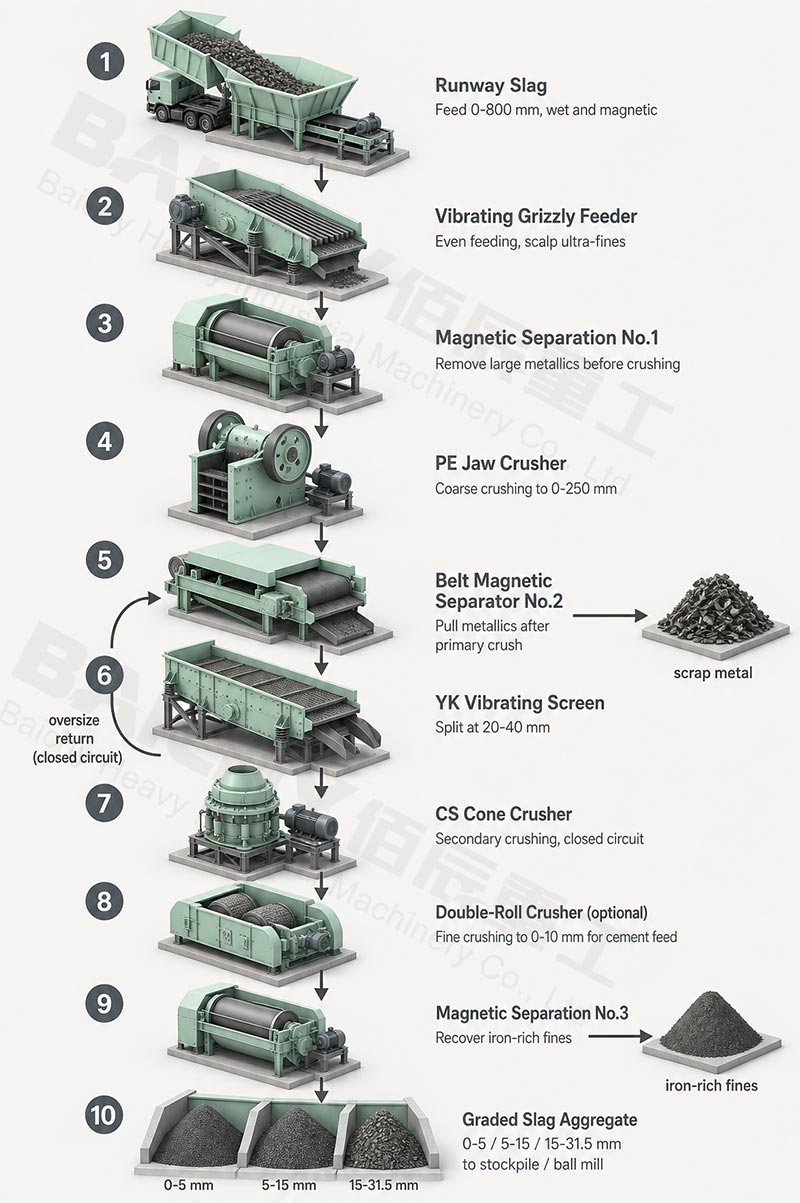
Steel Slag Crushing Plant
Three design rules separate a working steel slag plant from a broken one:
Separate before you crush. A conveyor magnet before the jaw crusher pulls out large skulls and rebar that would otherwise bend jaw plates and jam the chamber.
Crush in stages with metal extraction between them. Steel slag is a composite of hard slag matrix and ductile metal. Crushing liberates the metal, and each magnetic pass extracts what the previous stage exposed. Typical lines run three magnetic separation points.
Plan for dust and moisture. Slag from hot pits carries residual moisture and fines; a wet or semi-wet flowsheet with spray dust suppression beats a dry plant that chokes on sticky fines.
4. Core Equipment and Parameter Table
The table below shows a representative 60-100 tph steel slag crushing plant configuration (single-line, standard 380V/50Hz or 440V/60Hz versions available on request):
| Stage | Equipment (Baichy) | Model reference | Power (kW) | Feed / capacity | Role |
|---|---|---|---|---|---|
| Feeding | Vibrating grizzly feeder | ZSW-380×95 | 11 | ≤700 mm feed | Even feeding, scalp ultra-fines |
| Coarse crushing | Jaw crusher | PE-600×900 | 75 | 90-180 t/h (limestone basis) | Primary reduction to ≤250 mm |
| Metal recovery | Belt magnetic separator | RCDB-10 (dry) | 4 | Belt width 1,000 mm | Pull metallics after primary crush |
| Secondary crushing | Cone crusher | CS-160 / PYB-1750 | 160-180 | 50-120 t/h (slag basis) | Reduce to ≤40 mm, closed circuit |
| Screening | Circular vibrating screen | YK-1860 (2 decks) | 15 | 60-150 t/h | Split 0-5 / 5-15 / 15-40 mm |
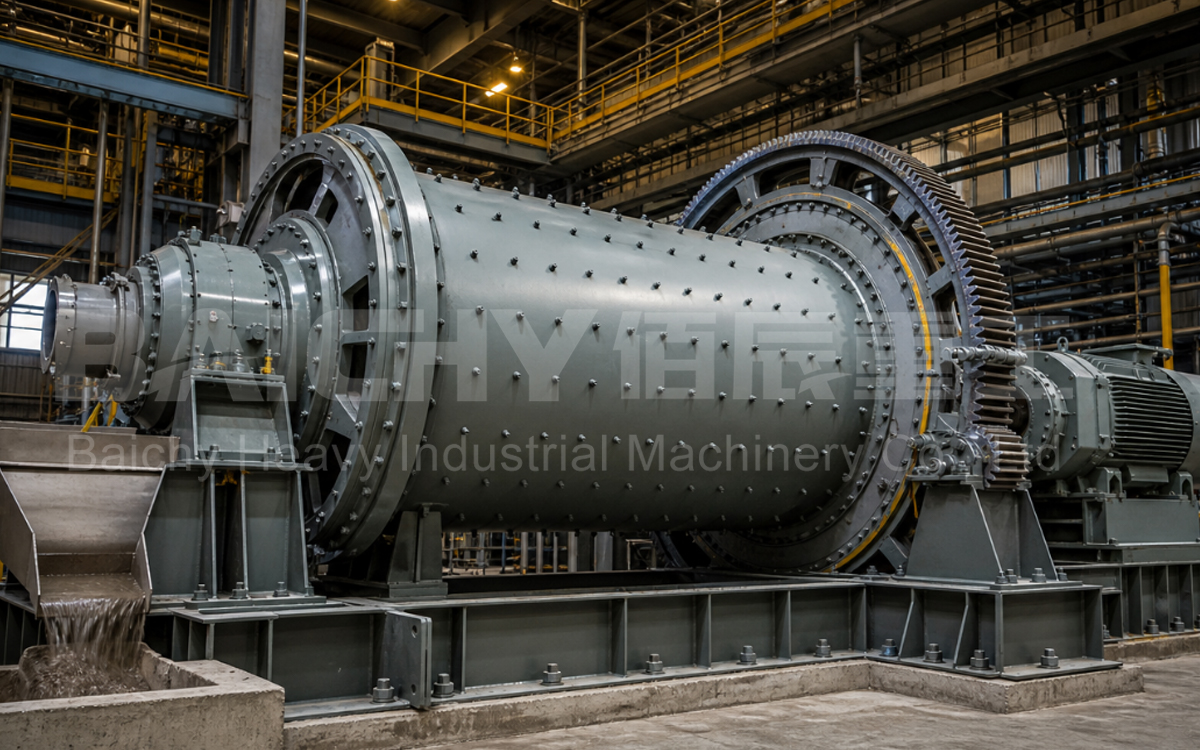
| Fine crushing (optional) | Double-roll crusher | 2PG-750×500 | 2×22 | 0-10 mm output | Fine slag for cement feed |
| Final metal recovery | Wet magnetic separator | CTB-918 / CTB-1024 | 3-5.5 | 40-80 t/h | Recover iron-rich fines to 20-25% Fe concentrate |
| Washing (optional) | Sand washing machine | XSD-2610 | 7.5 | 20-80 t/h | Remove dust for high-value aggregate |
Capacity honesty: crusher nameplate capacities are stated on a limestone basis (1.6 t/m³). Steel slag has a bulk density of roughly 1.8-2.2 t/m³ and higher abrasiveness, so real throughput typically lands at 70-85% of the limestone rating. Baichy quotes nominal and actual capacity separately — ask for a slag-specific calculation, not a brochure number.
5. Advantages of a Baichy Steel Slag Crushing Plant
5.1 Metal-first design saves your crushers
The flowsheet above places magnetic separators at three points — before the jaw crusher, on the jaw discharge belt and at the fine product stage. Less metal in the crusher feed means 50-80% longer wear-part life on jaw plates and cone liners compared with a generic rock line treating the same slag. This is the single largest operating-cost lever in slag processing, where wear parts are typically the No. 1 OPEX item after electricity.
5.2 Two-stage + closed circuit = shape you can sell
Graded steel slag aggregate sells only if it meets local spec (particle shape, gradation, free-CaO aging). The jaw + cone combination with a YK screen in closed circuit delivers cubical, well-graded fractions — the difference between "slag for backfill at 2/t"and"certifiedaggregateat8-12/t".
5.3 Built for the actual material, not the brochure
Baichy supplies slag-duty details as standard: manganese jaw plates with deeper tooth profile, slow-speed conveyor magnets sized for 300 mm lumps, impact-resistant screen decks, and a crushing chamber matched to slag's 6-7 Mohs hardness with low free-silica. Steel structures, chutes and hoppers are lined with wear plates at slag-impact points.
5.4 Turnkey delivery and local utility compliance
Every Baichy steel slag crushing plant can be delivered as a complete system — feeder, crushers, screens, magnetic separators, conveyors, electrical control and dust suppression — engineered for the buyer's local power standard (380V/50Hz, 440V/60Hz, 400V/50Hz) and container-friendly for sea freight. Installation supervision and operator training are included in the EPC scope.
5.5 Total cost of ownership, stated transparently
On a 60-100 tph slag line, the realistic cost structure is roughly:
Electricity: $0.35-0.55 per tonne processed;
Wear parts (jaw plates, cone liners, screen cloths): $0.25-0.45 per tonne with the metal-first flowsheet (substantially higher without pre-separation);
Maintenance and consumables: $0.10-0.20 per tonne.
Against that, recoverable metallics at 6-12% of feed weight can be worth $15-30 per tonne of slag processed at prevailing scrap prices — which is why well-run plants are cash-positive from month one even before aggregate sales are counted.
6. Reference Case: A 60-80 tph Steel Slag Processing Line
Configuration shown as a typical reference design based on real-world BOF slag projects; site names withheld. Economics are illustrative estimates for budgeting, not a guarantee.
| Item | Detail |
|---|---|
| Feed | BOF steel slag, 0-600 mm, aged 3-6 months, moisture ~8% |
| Design capacity | 60-80 t/h (10-hour shift: 600-800 t/day) |
| Main equipment | ZSW-380×95 feeder, PE-600×900 jaw crusher, CS-160 cone crusher, YK-1860 screen, RCDB dry magnet ×2, CTB-918 wet magnet ×1 |
| Outputs | Scrap steel ~6-10% of feed; slag aggregate 0-31.5 mm; iron-rich fines ~8-12% |
| Power standard | 400V/50Hz (customer site) |
| First-year operating logic (illustrative) | Calculation | Result |
|---|---|---|
| Throughput | 700 t/day × 300 days | 210,000 t/year |
| Scrap recovery | 8% of feed ≈ 16,800 t/year, valued at US$250/t | US$4.2M gross |
| Slag aggregate | Sold at US$5-9/t | US$0.8-1.5M gross (additional) |
| Operating cost | Electricity, wear parts, labour, haulage: US$2.5-4.0/t processed | US$0.5-0.8M/year |
* Economics are illustrative estimates for budgeting, not a guarantee.
The gross-vs-opex gap in this arithmetic is precisely why steel mills across Turkey, India and Southeast Asia now insist on processing contracts with metal-recovery guarantees rather than flat "slag removal" fees. Even at a conservative 6% metal yield, the plant economics hold; the differentiator between suppliers is wear-part cost and availability, not the crusher nameplate.
7. Recommended Equipment by Application
Not every buyer needs the full EPC line. Match the machine to your job:
| Your situation | Recommended Baichy equipment | Why |
|---|---|---|
| Small slag lot, batch processing | PE-400×600 / PE-500×750 jaw crusher + conveyor magnet | Simple, low CAPEX, handles lumpy skulls |
| 50-150 tph dedicated slag plant | PE-600×900 + CS cone + YK screen + RCDB/CTB magnetic separators | The balanced standard flowsheet above |
| Very abrasive, high-metallic EAF slag | PE jaw crusher + 2PG double-roll crusher (fine stage) + extra magnetic passes | Double-roll crusher tolerates tramp metal better than impact crushers |
| Cement-grade slag powder production | Jaw + cone line feeding MQY ball mill (overflow type) | 0-10 mm slag feed is the standard ball-mill inlet size |
| Mobile / rental operation near mill site | Baichy mobile crushing station (jaw or cone type) with magnetic head pulley | Re-deployable as slag pits move |
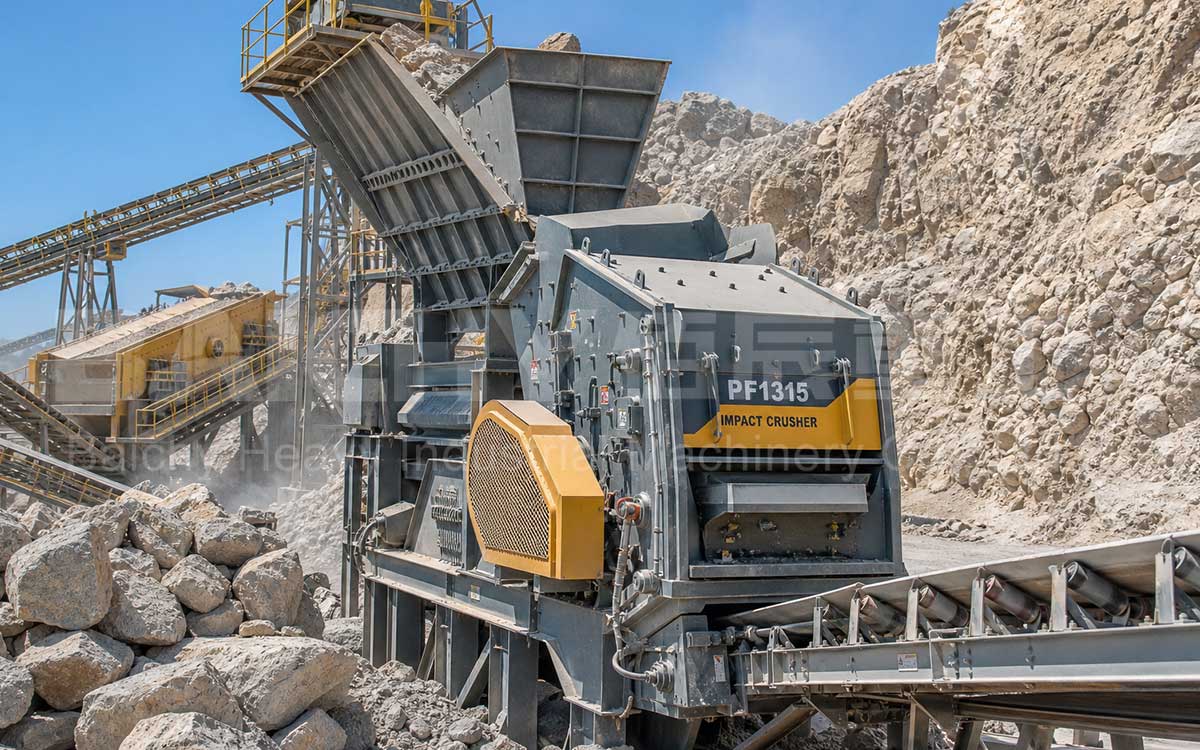
A selection pitfall to avoid: do not let a supplier sell you a hammer crusher or standard impact crusher for the fine stage of slag processing. Impact crushers shed wear parts rapidly on slag's metallic content and create more fines than the market will pay for. Jaw crushers, cone crushers and double-roll crushers are the three workhorses of slag duty — in that order.
8. FAQ
Q1: Can I use an ordinary rock-crushing plant to process steel slag?
Technically the crushers will run — briefly. In practice, a standard aggregate plant lacks the pre-crushing magnetic separation and impact-resistance that slag demands, so it suffers three chronic failures: tramp metal (skulls, rebar) jams the jaw and damages liners; ductile metal wraps around cone mantles and roll surfaces; and abrasive slag shortens wear-part life to a fraction of its rock-crushing service. A purpose-built steel slag crushing plant with magnets at the feeder and at each transfer point is the difference between a profitable line and a maintenance trap.
Q2: How much metal can be recovered from steel slag — and is it worth it?
Typical BOF slag contains 15-25% total iron, of which recoverable metallics and high-grade magnetic fractions amount to roughly 6-12% of slag weight depending on furnace practice and cooling method. At current international scrap price levels (order of US
250−350/tforheavyscrap),thatisUS15-35 of metal value per tonne of slag processed — before aggregate sales. Recovery is carried out with a jaw crusher to liberate the metal, then dry belt magnets and a wet magnetic separator to upgrade the fines. The metal pays for the plant's energy and wear costs several times over in most configurations.
Q3: What is the typical capacity and delivery scope of a steel slag crushing plant?
Standard single-line capacities are 30-300 tph; the most common mid-market configuration is 60-100 tph with a 10-hour shift processing 600-1,000 t/day. A full-scope delivery includes the vibrating feeder, jaw crusher, cone crusher, screens, magnetic separators, belt conveyors, steel structure, electrical control cabinet and dust suppression, engineered to the buyer's local voltage/frequency (380V/50Hz, 400V/50Hz or 440V/60Hz). Baichy provides the plant as fixed installation or as a mobile crushing station, with installation supervision, commissioning and operator training covered in the contract.
Baichy Heavy Industry
Baichy Heavy Industry is a high-tech mining equipment company integrating R&D, manufacturing, sales, and after-sales service. Focusing on crushing, grinding, and mineral processing equipment, we provide professional solutions to our customers. We are ISO9001:2015 、certified, and our products include mobile crushing palnts, crawler crushing plant, construction waste crushing plants, jaw crushers, sand making machines, cone crushers, fine crushers, grinding mills, ball mills, etc., all with reliable performance to meet diverse project needs.
Baichy Heavy Industry – Your Trusted Partner
To ensure optimal performance of your equipment, Baichy Heavy Industry offers:
- Professional on-site installation guidance
- Comprehensive operator training
- 24/7 technical support & maintenance services
Our complete after-sales service system guarantees long-term, stable operation of your machinery with minimal downtime.
Protect Your Rights – Only Use Official Channels
To avoid scams and ensure authentic support, contact us exclusively through:
• Official Website: www.baichychina.com
• WhatsApp: +8615093222637
• Email: [email protected]
Your satisfaction is our priority – expect prompt, professional service every time.
(Note: Beware of unauthorized third parties claiming to represent Baichy. Always verify through official contacts.)