
Mobile construction waste crushing and screening stations
Russia is currently experiencing a peak in urban renewal and industrial zone redevelopment, generating tens of millions of tons of construction waste annually. Mobile construction waste crushing and screening stations can convert concrete and brick-concrete debris directly at demolition sites into marketable recycled aggregate. By eliminating transportation, stockpiling, and landfilling costs, these stations offer one of the fastest returns on investment for solid waste resource recovery in the Russian market.
I. The Real-World Need for Construction Waste Processing in Russia
Urban renewal, road renovation, and the relocation of industrial zones in Moscow, St. Petersburg, and the Far East have led to a steady rise in construction waste generation. Simultaneously, Russian federal waste management regulations have become increasingly stringent; legal landfill capacity is tightening, disposal fees are rising year by year, and illegal dumping carries heavy penalties. The old, inefficient "haul-away-after-demolition" model is no longer sustainable, making on-site crushing and utilization the preferred choice for project owners and contractors alike.
The application scenarios for recycled aggregate in Russia are clearly defined: road sub-base and base layers, excavation backfilling, site leveling, and the production of small precast components—all with stable market demand. The core value of this equipment lies in its ability to simultaneously address two issues: waste disposal costs and aggregate procurement costs.
II. Key Application Scenarios for Mobile Construction Waste Crushing and Screening Stations
1. On-site Processing at Urban Demolition Sites
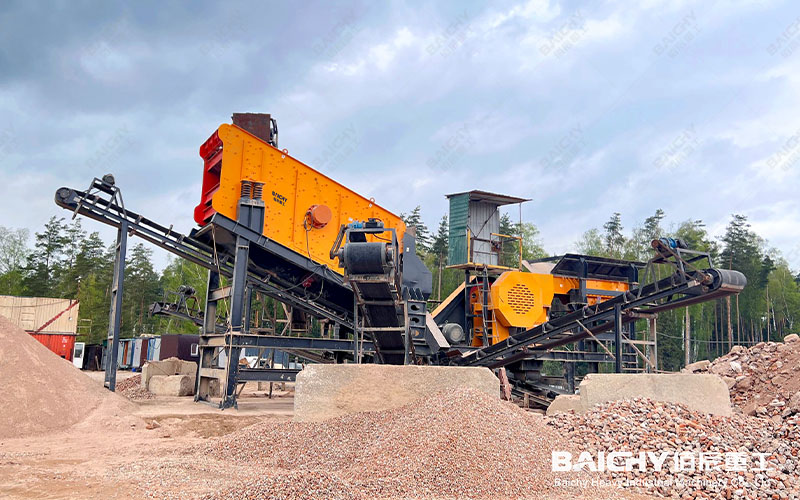
Concrete blocks and brick-concrete debris from demolished buildings take up valuable space and incur high transportation costs. Mobile stations can be deployed directly to the demolition site to perform crushing, screening, and iron removal in a single pass. The resulting aggregate can be used on-site for backfilling or sold externally, creating a closed-loop connection between demolition and construction.
2. Temporary Material Yards for Road and Municipal Projects
Old pavement concrete and base-layer waste generated during road renovations serve as excellent sources of recycled aggregate. Mobile stations move alongside the construction sections, processing materials concurrently with the work. This eliminates the need to secure separate land for waste stockpiling—making them particularly suitable for linear projects involving phased construction and frequently changing work sites.
3. Remote Areas and Large-Scale Infrastructure Projects
Major Russian projects—such as railways and access roads for oil and gas fields—are often located in remote areas where local supplies of sand and gravel are scarce and transportation distances can span hundreds of kilometers. The mobile plant processes waste generated directly at the project site for immediate reuse, drastically cutting costs associated with material procurement and logistics.
Mobile construction waste crushing and screening stations
III. Core Equipment Advantages
1. Rapid Relocation and Immediate Operation
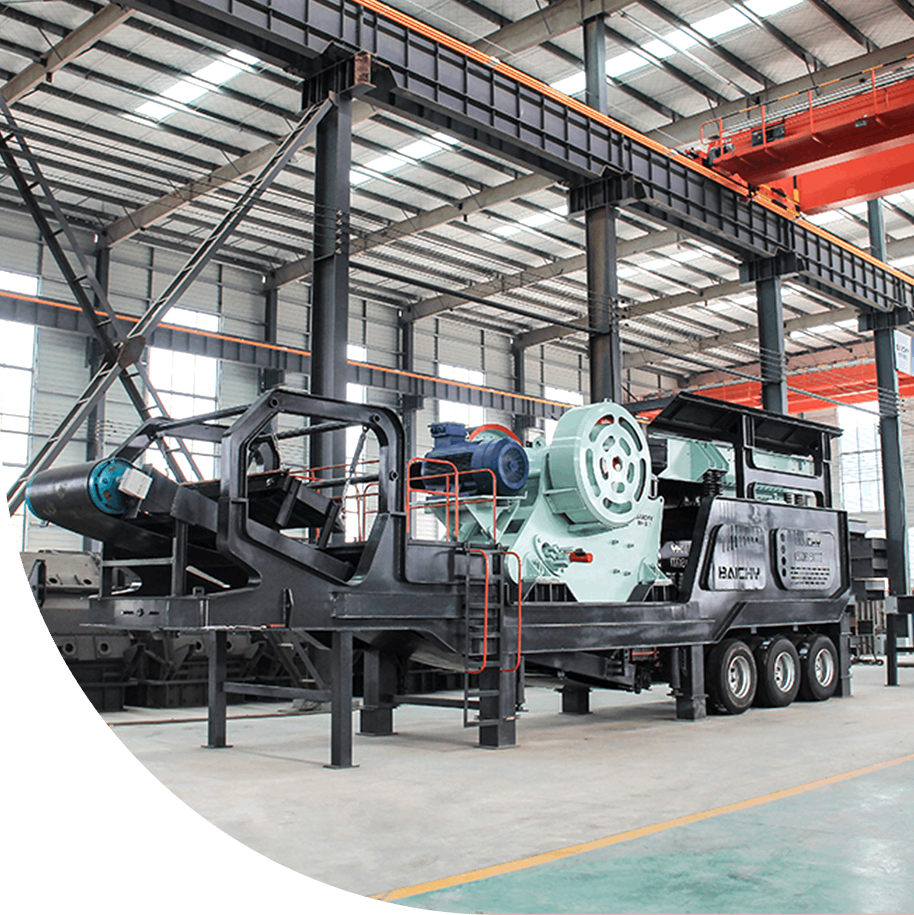
The plant utilizes a semi-trailer or tracked chassis; in transport mode, it fits standard container dimensions and can be shipped via ordinary flatbed trucks. Assembly and commissioning take just hours upon arrival, and the entire unit can be relocated after project completion. With high residual value, it is ideal for rolling use across multiple projects.
2. Integrated Crushing, Screening, and Iron Removal
It integrates primary jaw crushing, secondary impact crushing, a double-deck vibrating screen, and a belt-type iron remover into a single unit, automatically separating and recovering rebar during the process. Unlike fixed lines, it requires no civil foundations, dedicated power substations, or long-distance conveyor systems; the footprint is reduced by over 60%, and manpower requirements can be cut in half.
3. Specially Designed for Russia’s Harsh Cold Climate
Key components feature low-temperature resistant steel and sealed bearings; the hydraulic system uses low-temperature hydraulic oil, and the electrical control cabinet is equipped with heating and dehumidification units, enabling normal startup and operation at -30°C. All pipelines and oil tanks are insulated to prevent freezing and cracking during winter shutdowns.
4. Compatible with Local Russian Power Standards
Standard configuration includes a 380V/50Hz motor, with customizable 660V high-voltage options available for direct connection to Russian industrial power grids, eliminating the need for additional transformers. A diesel-powered version is also available for remote sites lacking grid access.
5. Rapid ROI and Significant TCO Advantages
Taking a 150–200 t/h configuration as an example: processing 2,000 tons of waste daily saves tens of thousands of rubles in disposal costs (transport and landfill fees) alone, while the sale of recycled aggregates generates additional revenue. Most projects recoup the equipment investment within 8–14 months, and the total cost of ownership (TCO) is significantly lower than that of fixed production lines.
IV. Core Parameters and Technical Specifications
The following details the typical configuration for the YDPZ series mobile crushing and screening station; actual specifications depend on material testing and specific project operating conditions:
| Item | YDPZ-150 | YDPZ-200 | YDPZ-300 |
| Processing Capacity (t/h) | 100–150 | 150–220 | 250–320 |
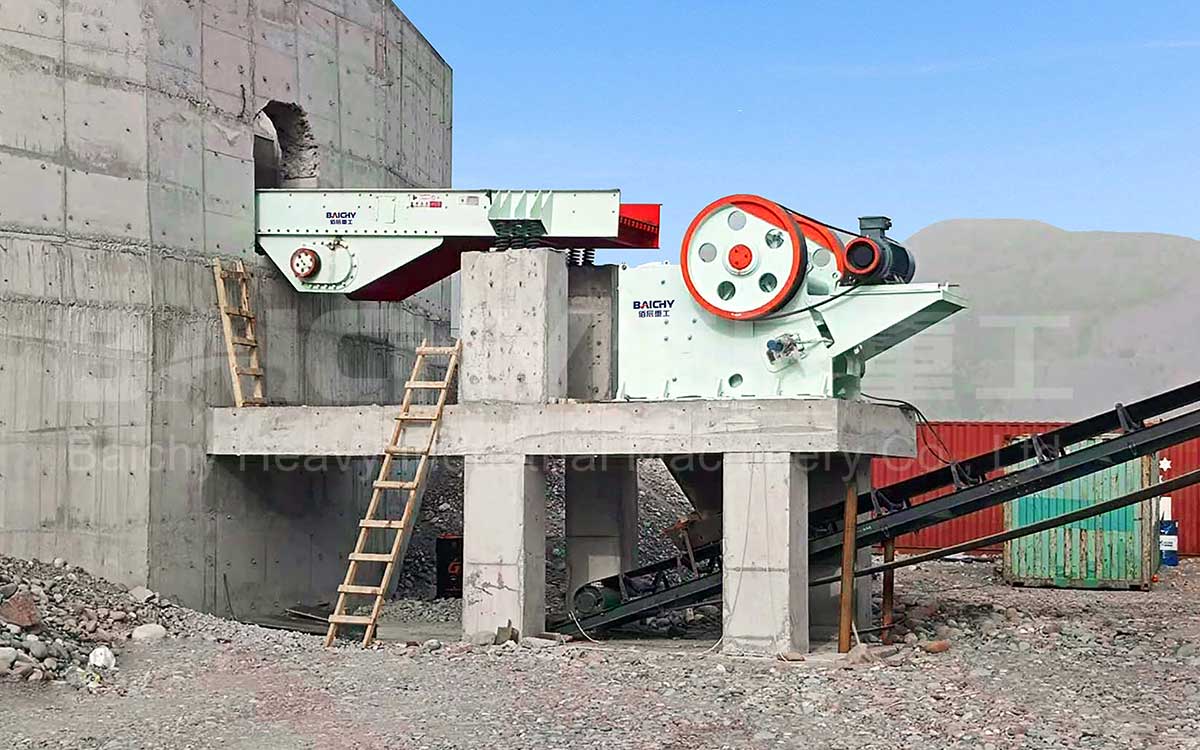
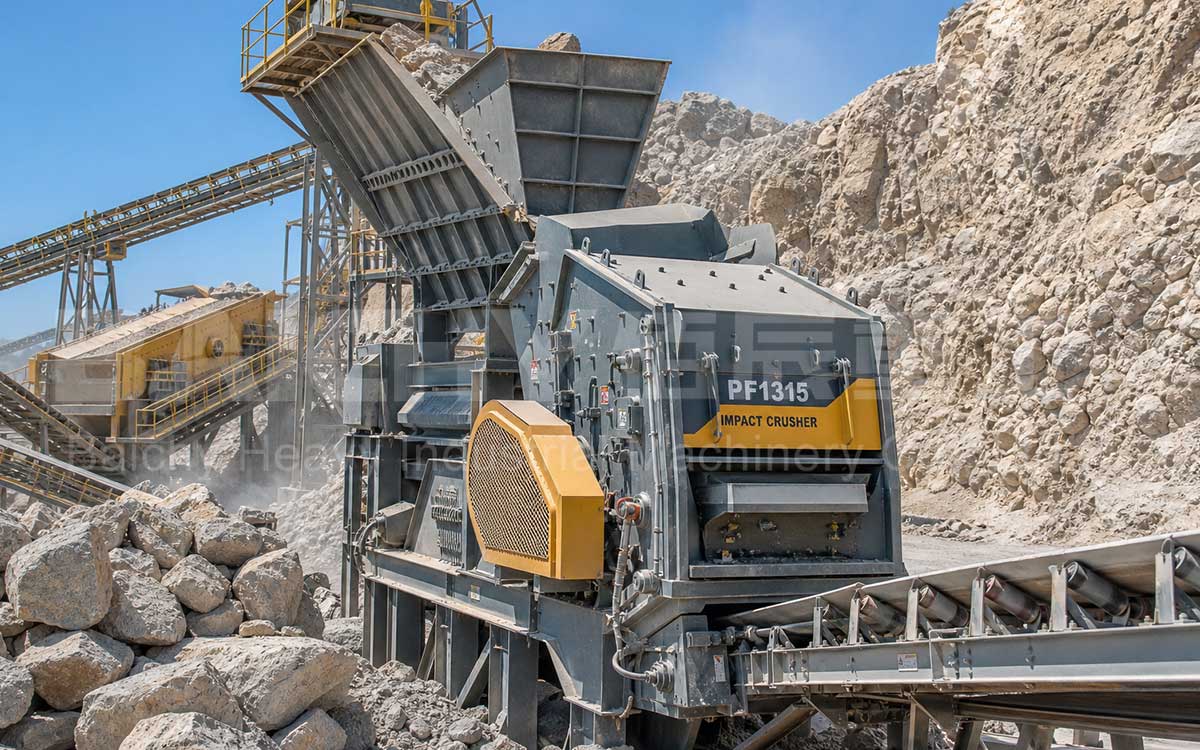
| Primary Crushing Equipment | PE600×900 Jaw Crusher + PF1214 Impact Crusher | PE750×1060 Jaw Crusher + PF1315 Impact Crusher | PE900×1200 Jaw Crusher + PF1520 Impact Crusher |
| Max. Feed Size (mm) | ≤500 | ≤650 | ≤800 |
| Output Size (mm) | 0–10 / 10–31.5 (adjustable) | 0–10 / 10–31.5 (adjustable) | 0–10 / 10–40 (adjustable) |
| Screening Equipment | Double-deck vibrating screen | Double-deck vibrating screen | Triple-deck vibrating screen |
| Iron Removal Equipment | Belt-type electromagnetic separator | Belt-type electromagnetic separator | Belt-type electromagnetic separator + Suspended magnetic separator |
| Installed Power (kW) | Approx. 350 | Approx. 480 | Approx. 650 |
| Power Supply Voltage | 380V/50Hz (660V customizable) | 380V/50Hz (660V customizable) | 380V/50Hz (660V customizable) |
| Low-Temperature Adaptability | Start-up & operation at -30°C | Start-up & operation at -30°C | Start-up & operation at -30°C |
V. Overseas Application Case
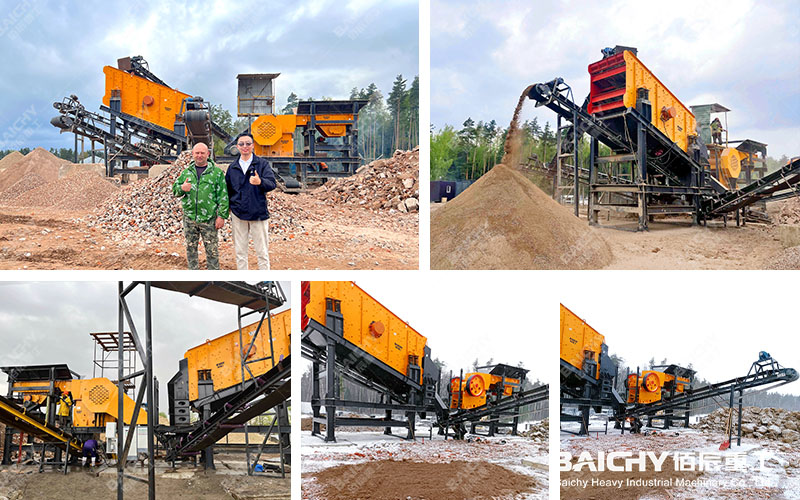
Urban renewal project in a Russian region (operating conditions estimated based on typical configurations from public data)
• Material: Concrete blocks and brick-concrete debris from building demolition; contains 3%–8% rebar
• Configuration: YDPZ-200 mobile crushing and screening station + spiral sand washer
• Capacity: Actual stable processing output Capacity: 180–200 t/h; Output: 0–10 mm recycled sand and 10–31.5 mm recycled aggregate.
• Applications: Recycled aggregate is used for municipal road sub-base layers and foundation pit backfilling; recovered rebar is sold after magnetic separation.
• Benefits: The project owner saves on costs associated with transporting and landfilling waste over a distance of approximately 30 km; surplus recycled aggregate is sold after meeting internal needs; the equipment investment is recouped within 11 months of operation.
Note: The figures above are estimates based on typical operating conditions. Actual capacity and returns depend on material moisture content, impurity levels, and local transportation costs; material testing prior to production is recommended.
VI. Recommended Auxiliary Equipment
| Equipment Type | Recommended Model | Purpose |
| Mobile Crushing & Screening Station | YDPZ-150 / YDPZ-200 / YDPZ-300 | Primary crushing and screening unit |
| Jaw Crusher | PE500×750 / PE600×900 | Stationary primary crushing; processes large concrete blocks |
| Impact Crusher | PF1214 / PF1315 | Shaping and fine crushing of recycled aggregate |
| Spiral Sand Washer | XL Series | Desliming and impurity removal for recycled sand |
| Vibrating Screen | YK / YZ Series | Aggregate grading/sizing |
| Magnetic Separator | RCDB Series | Recovery of rebar and metal debris |
VII. FAQ
1. Can concrete containing rebar be fed directly into the mobile construction waste crushing and screening station?
Yes. The crushing and screening process incorporates an overhead belt magnet; rebar is automatically separated and recovered during conveyance. A small amount of long rebar can be pre-sorted manually or by excavator before primary crushing. Pre-crushing of oversized blocks (exceeding the maximum feed size) is recommended to protect the jaw crusher chamber.
2. Can the equipment start and operate normally during the harsh Russian winter?
Yes. The equipment comes standard with low-temperature resistant steel, low-temperature hydraulic oil, heating and dehumidification systems for electrical control cabinets, and pipeline insulation, allowing for startup and operation in environments as cold as -30°C. If the construction period extends through the harsh winter, we recommend configuring a diesel-powered version or a backup generator set, and implementing proper anti-freeze drainage procedures during periods of inactivity.
3. How do I select the right capacity model based on project scale?
Calculate the required capacity using the formula: "Daily Processing Volume &pide; Effective Working Hours." For a daily capacity of 1,500 tons, choose the YDPZ-150; for 2,000–2,500 tons, choose the YDPZ-200; and for over 3,000 tons, choose the YDPZ-300. Also, consider material hardness and impurity content—crushing concrete blocks consumes more power than crushing pure brick-concrete mixtures. We recommend allowing a 15%–20% capacity margin during selection and providing material samples for crushing tests in advance.
About Baichy
Baichy Heavy Industry is a professional manufacturer of mining crushing, ore grinding, and mineral processing equipment. Our product range covers jaw crushers, impact crushers, cone crushers, sand-making machines, grinding mills, mineral processing equipment, and complete mobile crushing and screening plants. For the Russian market, we offer power configurations compatible with 380V/50Hz and 660V systems, customization for extreme cold conditions, and comprehensive installation and commissioning services. Please contact us for a detailed quote on mobile construction waste crushing and screening stations or to arrange material testing and receive a tailored solution.