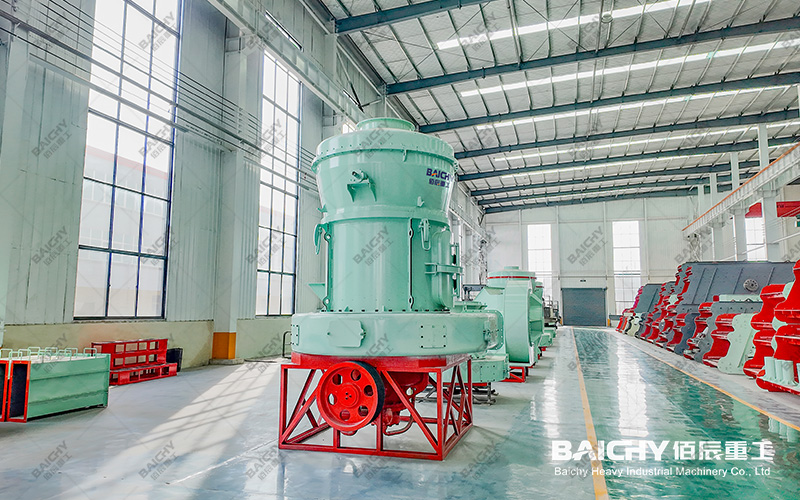
Roller Grinding Production Line (MTW175 Mill)
When evaluating the value of a roller grinding production line, the key benchmark is not the mill's nominal capacity, but rather whether the combination of "target fineness" and "daily production schedule" can be sustained across the entire line to yield a quantifiable cost-per-ton. For a medium-sized roller grinding line centered on the MTW175 mill, the single-unit capacity at 200-mesh fineness is approximately 8–15 t/h. Based on a daily operating schedule of 15–20 hours, this translates to a daily output of 120–300 tons—precisely the threshold where single-line production meets the scale requirements for orders in desulfurization, ground calcium carbonate (GCC), and deep mineral processing. Simply being able to grind the material is not the true measure of capability; stability and cost-efficiency are. If the fineness standards are consistently met, a high batch pass rate translates directly into profit.
I. Roller Grinding Production Lines: Select the Grinding Process First, Then Configure Equipment
The essence of roller grinding lies in the combination of compression and shearing between the grinding rollers and the grinding ring. Material is crushed by the trapezoidal working surfaces and rolls progressively into subsequent stages, forming a thin, uniform material layer, while powder meeting the required fineness is discharged promptly. This process determines two critical factors: first, the scope of application—non-metallic minerals with a Mohs hardness of ≤7 that are neither flammable nor explosive (such as calcite, limestone, gypsum, barite, bentonite, kaolin, talc, potash feldspar, and fluorite) fall within the economically viable range; second, the cost structure—roller grinding offers significantly lower electricity consumption per ton and lower wear-part costs compared to impact grinding or conventional ball milling.
Distinction from Impact Mills and Ball Mills: Target Fineness Determines the Equipment Route
Choosing the wrong process route is far more detrimental than simply overpaying for equipment. For target fineness in the 80–400 mesh range and daily output in the hundreds of tons, the roller grinding route excels in terms of unit power consumption and iron contamination control. If the target fineness exceeds 1250 mesh (ultra-fine), one should switch to ultra-fine grinding and classification solutions. Vertical mills should be evaluated when integrated in-mill drying or high capacity is required, whereas ball mills are the direct choice for wet grinding in mineral processing. The MTW175 mill occupies a specific niche: a medium-to-large-scale roller mill capable of high output and rapid adjustment of product fineness. It serves as an ideal replacement for multiple smaller Raymond mills operating in parallel at medium-sized grinding plants.
MTW175 Production Line Positioning: Achieving target output with a single unit rather than stacking multiple machines.
Traditional Raymond mills often require two or three units running in parallel to achieve capacities exceeding 10 t/h, which doubles the requirements for electrical controls, dust collection systems, and civil engineering, while making it difficult to maintain consistent fineness. The MTW175 consolidates this capacity into a single main unit capable of 8–15 t/h (at 200 mesh). It replaces the traditional spring-pressure mechanism with an integrated bevel gear drive; this eliminates the need to stop the machine to adjust pressure as rollers wear and ensures the fineness curve remains stable despite wear. The benefits of single-unit production are ultimately realized through savings in footprint, electrical control systems, and labor costs.
II. Six-Stage Process: The Standard Framework for Roller Milling Lines
The entire line operates according to a sequence of "particle size control → load stabilization → fineness locking → final recovery"; all six stages are essential.
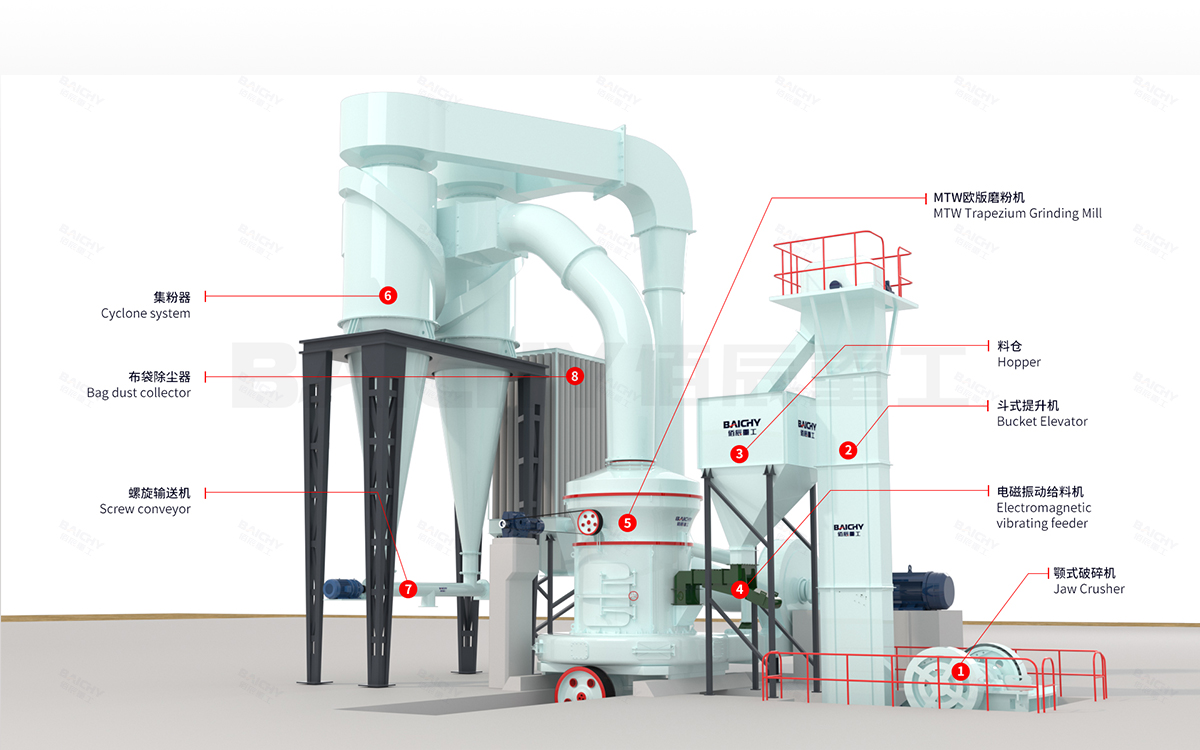
Schematic diagram of the MTW grinding production line process
1. Crushing and Feeding Stage: Translating feed specifications into equipment selection.
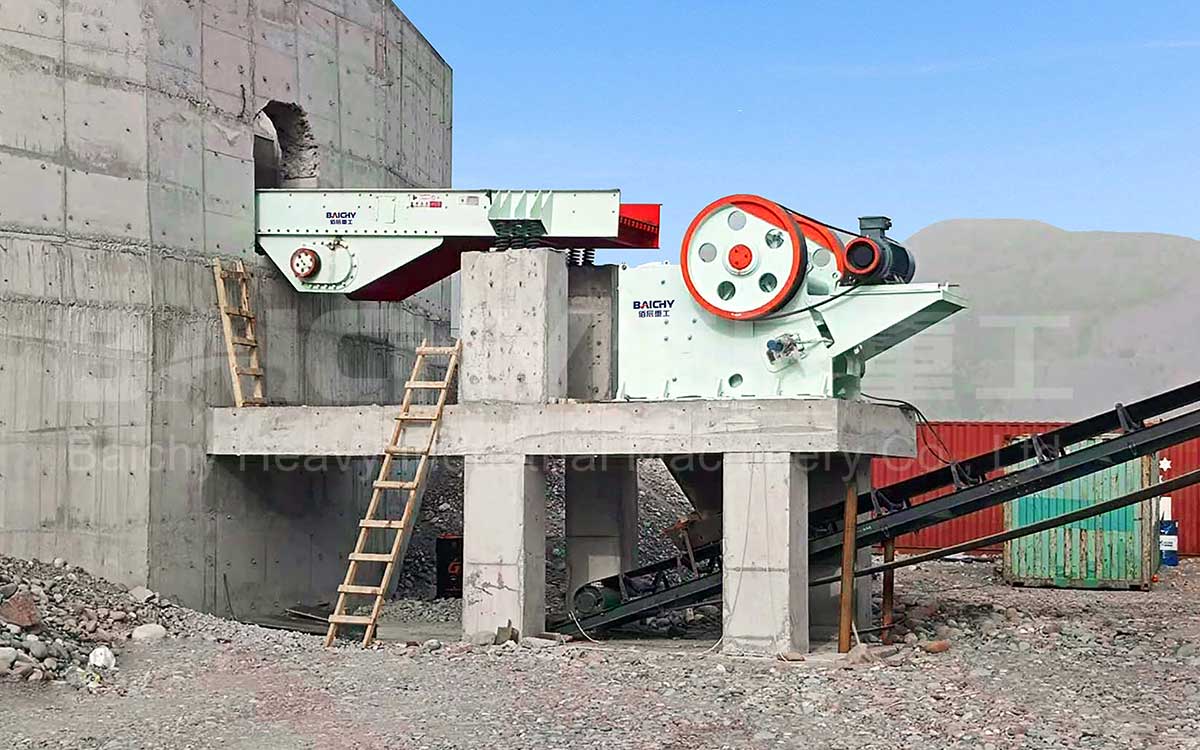
Feed size (≤35 mm) and feed moisture (≤5%) are the two strict operational limits for the MTW175. A jaw crusher (or double-roll crusher) combined with a vibrating screen reduces raw ore to the required size, while a storage hopper equipped with an electromagnetic vibrating feeder ensures continuous, uniform feeding—preventing both "dry running" (due to material gaps) and "choking" (due to material surges). Designing the feeding stage with a capacity 1.2–1.5 times that of the main unit acts as the most cost-effective insurance for the entire line; the cost savings gained by skimping on auxiliary equipment would be wiped out by just one hour of the main unit idling.
2. Main Grinding and Classification Section: Fineness Switching Based on Orders
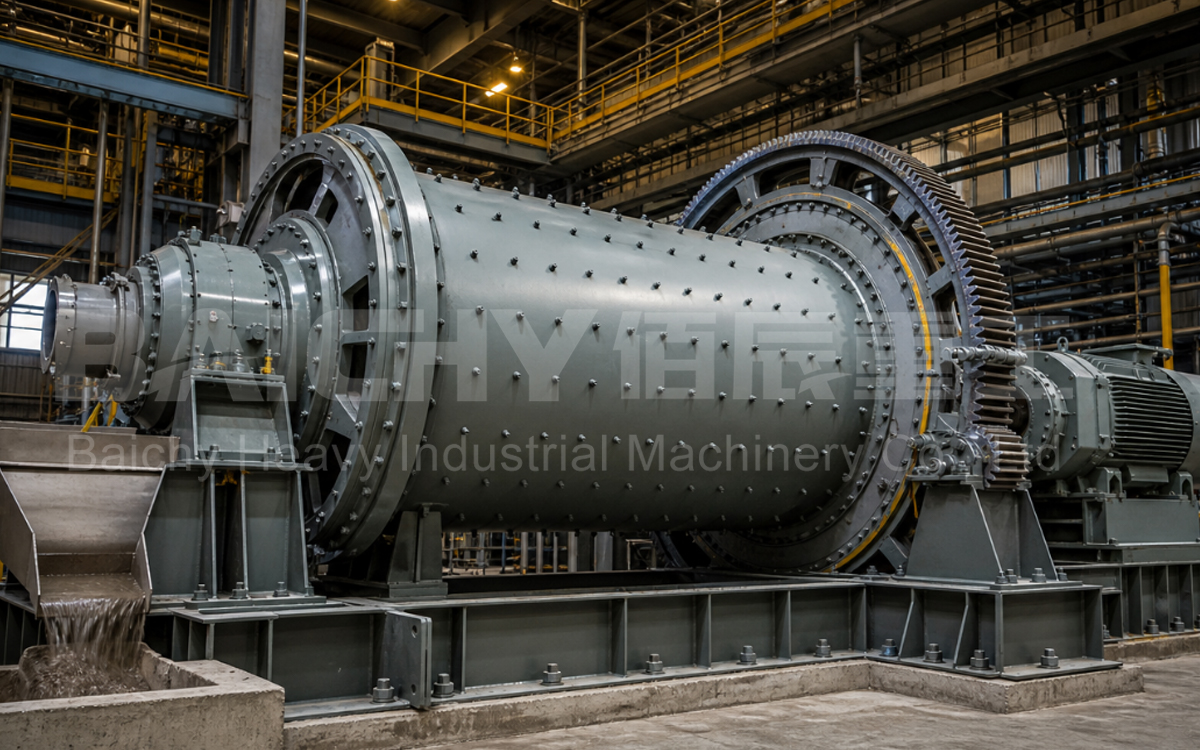
The main grinding section consists of the MTW175 mill unit itself: trapezoidal grinding rollers and rings ensure even wear, while the split-design curved shovel allows for replacing only the tip rather than the entire shovel assembly; a built-in variable-frequency turbine classifier enables switching between 200-mesh and 325-mesh products based on orders without requiring downtime for parts replacement. For specific structural details of the main grinding section, please refer to the "MTW175 Trapezoidal Mill for Limestone Grinding" product page; this section emphasizes only one point: the production capacity rating of the main grinding unit must be designed in alignment with the airflow and dust collection capabilities of the entire production line.
3. Dust Collection, Conveying, and Packaging Section: Negative-Pressure Closed-Loop System Determines Environmental Compliance and Per-Ton Costs
A combination of a cyclone collector and a pulse-jet bag filter creates a negative-pressure closed-loop system, ensuring complete recovery of fine powder and emissions that meet standards—two factors that directly determine whether the grinding plant passes environmental inspections. Finished product silos allow for grade-based persion, and packaging systems accommodate both bulk bags and valve bags, minimizing losses from secondary handling. A centralized forced-circulation thin-oil lubrication station keeps bearing temperature rise under control, transforming reactive emergency repairs into planned maintenance; the capability for long-term, continuous production stems from this feature, not merely from the specifications on the main unit's nameplate.
III. Key Technical Parameters of the MTW175 Mill (Complete System Specifications)
When purchasing a roller mill production line, the first question to ask is not the total price, but rather, "At which fineness specification is the production capacity verified?" The table below outlines typical specifications for the Baichy MTW175 configuration (production capacity based on 200-mesh fineness). Actual configurations vary according to target fineness and material conditions; the final signed technical agreement governs the actual supply.
| Item | Typical Parameters | Design Significance |
|---|---|---|
| Model Positioning | European-style Trapezium Roller Mill (roller–ring grinding) | Belongs to the roller mill family (like Raymond mills) but offers enhanced stability for long-cycle operation. |
| Single-Unit Capacity | Approx. 8–15 t/h (at 200 mesh) | Capacity at 325 mesh is ~25–35% lower than at 200 mesh; model selection is based on the required acceptance fineness. |
| Main Motor Power | Approx. 132–185 kW (configuration-dependent) | Provides power redundancy for continuous production. |
| Product Fineness | Adjustable (80–400 mesh) | Built-in variable-frequency turbine classifier; switch between 200/250/325/400 mesh settings without changing parts. |
| Feed Particle Size | ≤ 35 mm (pre-crushing required) | Protects grinding rollers/rings and ensures stable grinding efficiency. |
| Feed Moisture Content | ≤ 5% (drying or dry material blending required if exceeded) | Prevents mill clogging and blockages in the classifier and air ducts. |
| Suitable Materials | Mohs hardness ≤ 7; non-flammable/non-explosive | Covers calcium carbonate and the vast majority of non-metallic minerals. |
| Drive Mechanism | Integrated bevel gear drive | Fineness remains stable even as wear progresses; ensures consistent batch quality. |
| Lubrication Method | Centralized forced-circulation thin-oil lubrication | Online monitoring of oil temperature and pressure; supports continuous production cycles exceeding 20 hours. |
| Grinding Components | Trapezium rollers/rings + split curved shovels | Uniform wear; shovel tips are replaceable, reducing wear-part costs. |
Specification Note: When inquiring, please confirm the power grid standard (380V/50Hz or 400V/440V/60Hz), altitude, and dust conditions. These factors directly determine motor, electrical control, and explosion-proof specifications, and are key areas where price variations often occur.
IV. Three Key Cost-Benefit Analyses: Turning MTW175 Specifications into Tonnage-Based Profit
Specifications alone do not generate profit; operational results do. Let’s break down the economics using a 200-mesh output standard:
• Electricity Consumption: The trapezoidal material bed design ensures high grinding efficiency, eliminating wasted energy by the main unit. Compared to traditional Raymond mills of the same power rating, the European-style roller mill offers approximately 20% higher capacity and 20%–40% energy savings.
• A rough calculation (185 kW main motor, 6,000 annual operating hours, 85% load factor): Annual consumption is ~940,000 kWh; a 20% saving amounts to ~190,000 kWh, translating to nearly 100,000 RMB in annual savings at an electricity rate of 0.5 RMB/kWh. The higher the local electricity price, the greater the value of this mill.
• Fineness Flexibility: Variable-frequency turbine classification allows for rapid switching between 200-mesh construction powder, 250-mesh coarse desulfurization powder, and 325-mesh desulfurization powder. A single main unit can handle three types of orders, directly boosting equipment utilization. Stability in fineness—unaffected by wear—ensures consistent delivery quality based on D97 standards, eliminating losses from rejected or reprocessed powder.
• Downtime Management: Centralized thin-oil lubrication and PLC-based control systems reduce the staffing required for 24-hour production to just 2–3 people. Reactive emergency repairs are replaced by scheduled maintenance based on cumulative tonnage records—with grinding rollers and rings replaced according to a planned cycle—thereby eliminating costly emergency shutdowns and the need for expensive rush-ordered parts.
V. Avoiding Pitfalls: Four Common Mistakes When Purchasing Roller Mill Production Lines
• Focusing Only on Main Unit Price: Downsizing auxiliary equipment to save ~5% on initial investment can slash production output by 20%. The cost of electricity and labor during just one hour of the main unit idling outweighs the savings gained from cheaper auxiliary equipment.
• Failure to Include Specifications in the Contract: Ensure that specific output fineness, feed material conditions, and target production capacity are explicitly written into the contract, and request defined replacement cycles for grinding rollers and rings.
• Power and airflow configurations for 325-mesh desulfurization powder differ significantly from those for 200-mesh construction material powder; verbal promises are not binding.
• Failure to pre-treat high-moisture or hard, mixed materials: Outdoor stockpiles with moisture consistently above 5% can cause grinding roller clogging and classifier blockages; during the rainy season, raw ore requires drying or blending with dry material. Entrained quartz and flint nodules (Mohs hardness ~7) pose a risk; installing iron removers and screening equipment before the mill is the most cost-effective investment for extending roller lifespan.
• Overlooking power grid specifications and altitude: For 60Hz markets or high-altitude projects, motor and control system customization must be confirmed in advance. Manufacturing the production line to local standards allows for immediate installation and operation upon arrival, saving on on-site trial-and-error costs.
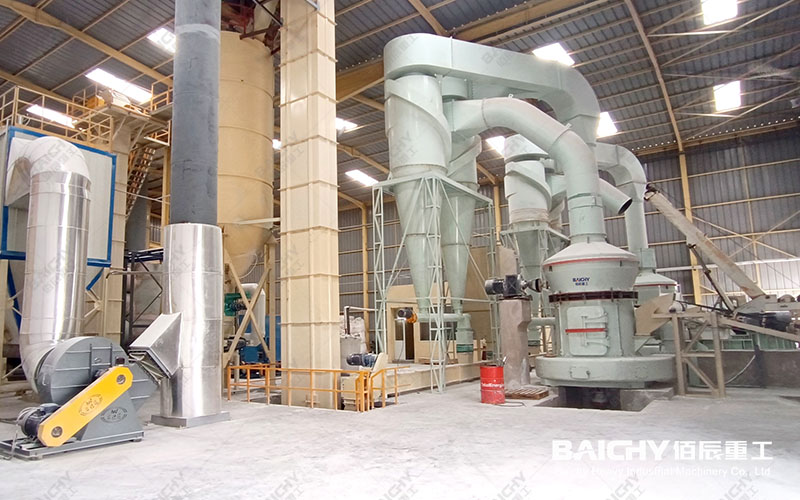
MTW175 European-style Trapezium Mill
VI. FAQ
Q1: What is the hourly output of the MTW175 mill? How is capacity calculated?
A1: Based on limestone, the single-unit capacity at 200 mesh is approximately 8–15 t/h; if the fineness is increased to 325 mesh, capacity drops by about 25%–35% compared to 200 mesh. When inquiring about price, always clarify the specific fineness and feed conditions associated with the quoted capacity and ensure this is stipulated in the contract. Material hardness and moisture content significantly affect actual output; the safest approach is to send samples for free material testing to verify performance using your specific ore and target fineness.
Q2: How do I choose between roller mill, ball mill, and vertical mill production lines?
A2: Make the decision based on three key factors: target fineness, daily production requirements, and material characteristics. For non-metallic minerals with a fineness of 80–400 mesh, a daily output of 100–300 tons, and a Mohs hardness of ≤7, the roller mill route (using European-style trapezium mills like the MTW175) offers advantages in terms of electricity consumption per ton, iron contamination, and investment costs. If ultra-fine powder exceeding 1250 mesh is required, switch to an ultra-fine grinding solution; if high capacity (50 t/h class) and in-mill drying are needed, evaluate vertical mills; and if wet grinding for mineral processing or specific particle size distribution is required, consider ball mills. Determine the technical route before comparing prices to avoid unfairly pitting the weaknesses of a roller mill against the strengths of a different type of mill.
Q3: What is the approximate total investment for a roller mill production line featuring the MTW175, and what is the payback period?
A3: The investment consists of three main components: the main grinding section, auxiliary equipment (crushing and feeding), and civil works/installation, with the main grinding section usually representing the largest single cost. The payback period depends on local powder prices, electricity costs, and the rate of reaching full production capacity; providing figures without considering specific operating conditions is meaningless. Baichy’s approach is to calculate capacity based on your target fineness and daily production schedule, estimate a payback period range based on local powder prices, and then provide an itemized quotation. We also offer free material testing and a written guarantee regarding production capacity; only a proposal that meets all three of these criteria is worth including in your price comparison.
Baichy Heavy Industry
Baichy Heavy Industry is a high-tech mining equipment company integrating R&D, manufacturing, sales, and after-sales service. Focusing on crushing, grinding, and mineral processing equipment, we provide professional solutions to our customers. We are ISO9001:2015 、certified, and our products include mobile crushing palnts, crawler crushing plant, construction waste crushing plants, jaw crushers, sand making machines, cone crushers, fine crushers, grinding mills, ball mills, etc., all with reliable performance to meet diverse project needs.
Baichy Heavy Industry – Your Trusted Partner
To ensure optimal performance of your equipment, Baichy Heavy Industry offers:
- Professional on-site installation guidance
- Comprehensive operator training
- 24/7 technical support & maintenance services
Our complete after-sales service system guarantees long-term, stable operation of your machinery with minimal downtime.
Protect Your Rights – Only Use Official Channels
To avoid scams and ensure authentic support, contact us exclusively through:
• Official Website: www.baichychina.com
• WhatsApp: +8615093222637
• Email: [email protected]
Your satisfaction is our priority – expect prompt, professional service every time.
(Note: Beware of unauthorized third parties claiming to represent Baichy. Always verify through official contacts.)