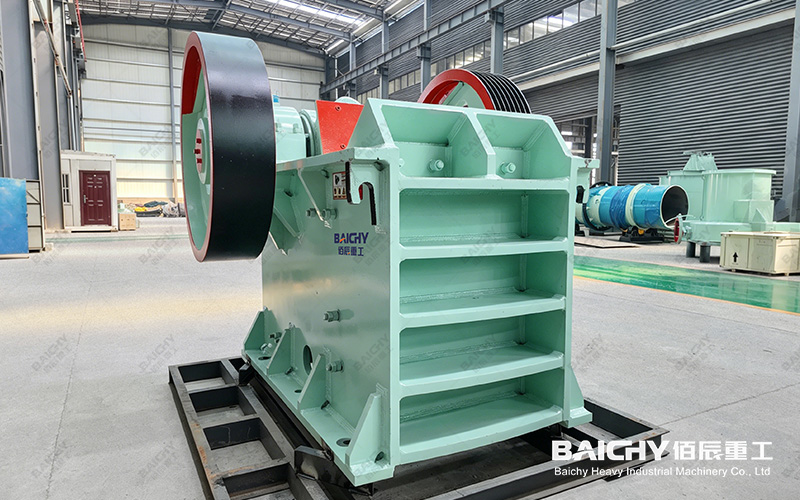
Primary Jaw Crushers
The primary jaw crusher serves as the first stage of the entire crushing production line, undertaking the critical task of crushing blasted run-of-mine ore—ranging from 300–750 mm in size—down to a discharge size of 40–160 mm. Selecting the right primary jaw crusher effectively determines the production line's maximum capacity and minimum cost per ton; characterized by a large feed opening, simple structure, and low maintenance requirements, it is one of the pieces of equipment offering the fastest return on investment for quarries and mineral processing plants.
I. Overview: What is a Primary Jaw Crusher?
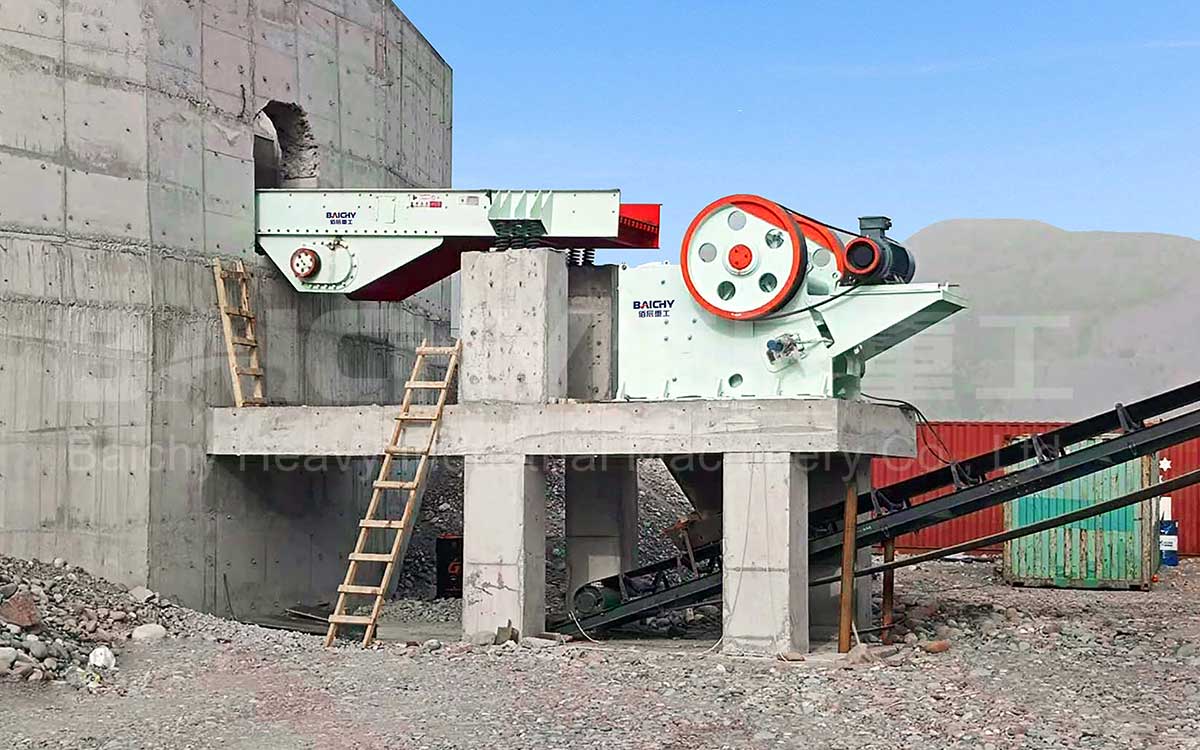
The primary jaw crusher (specifically the PE series coarse-crushing jaw crusher) performs the initial stage of crushing on large ore blocks—obtained through blasting or excavation—by utilizing the periodic compressive action between a moving jaw and a fixed jaw. Its core characteristic is "large-scale intake and coarse-grade output": featuring a wide, short feed opening and jaw plates with large tooth pitch, it is specifically designed to handle 300–750 mm blocks and produce a 40–160 mm output, thereby providing suitable feed material for downstream secondary crushing or grinding operations.
Within the process chain, the primary jaw crusher is positioned after the feeder and conveyor belt, but before the secondary crusher. Its objective is not fine crushing, but rather the ability to "take it in, put it out, and avoid chamber clogging." The ability of the entire production line to achieve stable, target output depends 70% on whether the primary jaw crusher is correctly selected to match the raw ore size and the desired production capacity.
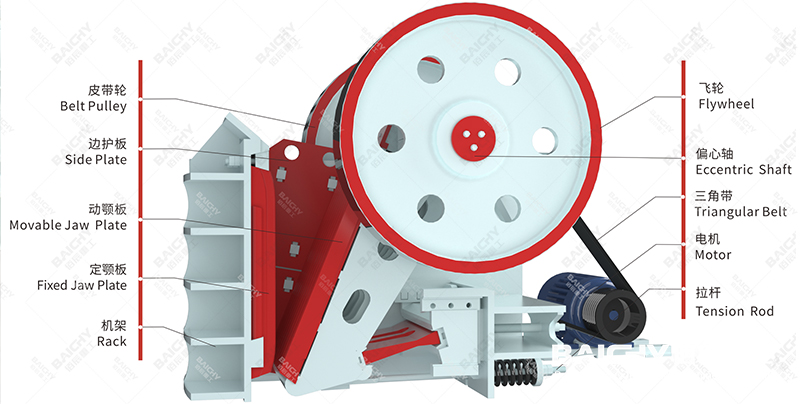
Structure diagram of a primary jaw crusher
II. Key Specifications: PE Series Primary Jaw Crusher
| Model | Feed Opening (mm) | Max. Feed Size (mm) | Discharge Opening (mm) | Capacity (t/h) | Motor (kW) | Total Weight (t) |
|---|---|---|---|---|---|---|
| PE-400×600 | 400×600 | ≤340 | 40–100 | 16–64 | 30 | ≈7 |
| PE-500×750 | 500×750 | ≤425 | 50–100 | 45–100 | 55 | ≈12 |
| PE-600×900 | 600×900 | ≤500 | 65–160 | 50–160 | 75 | ≈17 |
| PE-750×1060 | 750×1060 | ≤630 | 80–140 | 110–320 | 90–110 | ≈29 |
| PE-900×1200 | 900×1200 | ≤750 | 95–165 | 220–450 | 110–132 | ≈50 |
Parameter Interpretation (Value-Added Insight): The capacities listed in the table are nominal ratings. When crushing hard rock such as granite or basalt, you must adjust the figure to 75%–85% of the nominal capacity before selecting a model; it is better to choose a larger unit than one that is too small—this is the most common pitfall in primary jaw crusher selection. Meeting the maximum feed size requirement means that 500mm-class raw stone can be fed directly into the machine without the need for secondary blasting or manual block breaking, thereby saving costs across the entire mining and loading process.
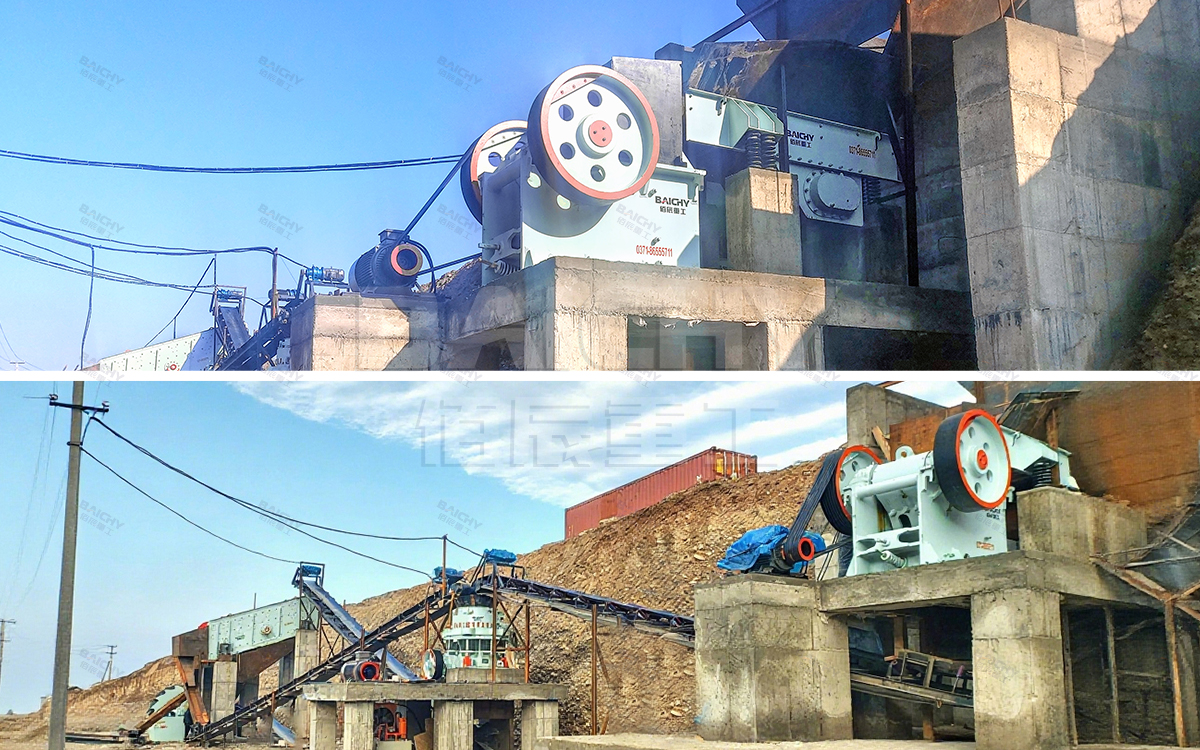
Primary Jaw Crushers
III. Typical Application Scenarios
3.1 Quarries and Aggregate Production Lines
The primary jaw crusher is the standard choice for the first stage of crushing in quarries. It pairs with cone or impact crushers to form two- or three-stage processing circuits, producing graded aggregates (5–31.5 mm) for direct supply to highway, railway, and commercial concrete projects—representing the most common application scenario.
3.2 Primary Crushing in Metal Mine Processing Plants
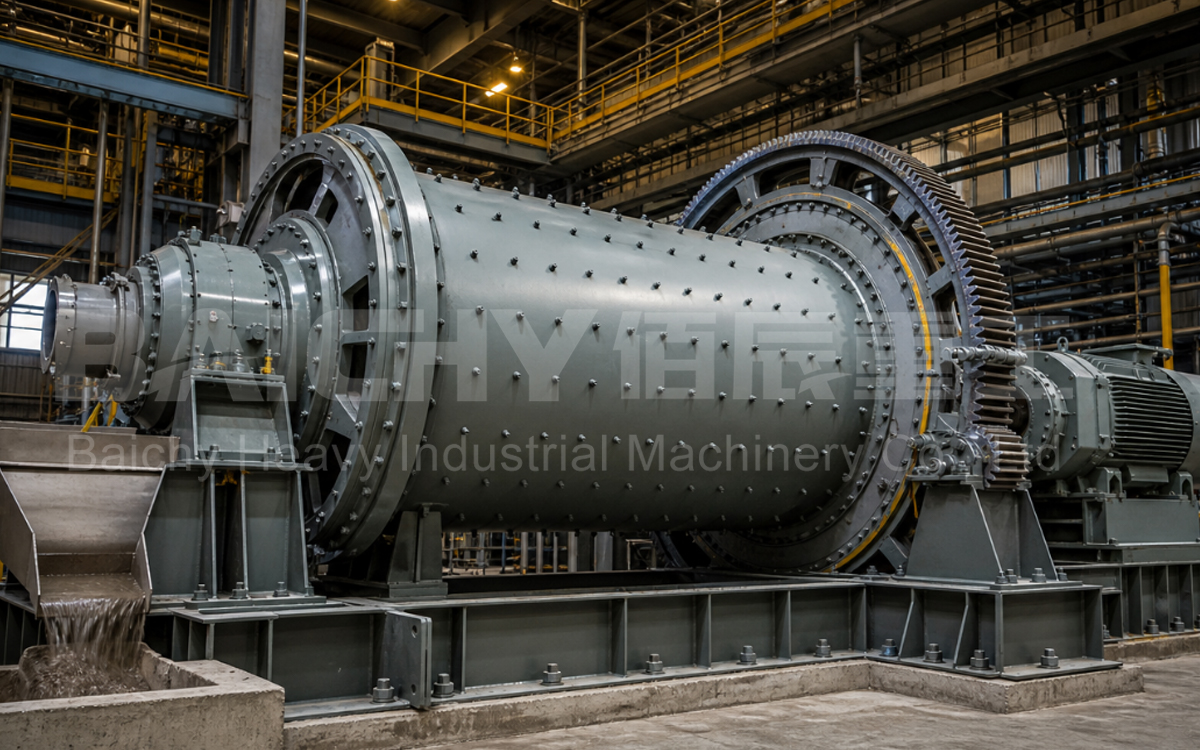
Raw ores such as iron, copper, and manganese are characterized by large lump sizes and high hardness. Featuring a one-piece cast steel frame and a deep crushing chamber, the primary jaw crusher withstands high-frequency impacts to reduce raw ore to under 150 mm. This prepares the material for ball mill feeding, serving as the crucial first step in "crush more, grind less" processing strategies.
3.3 Core Unit for Mobile Crushing Stations
With its compact structure and high reliability, the PE series serves as the core unit for tracked or wheeled mobile crushing stations. Capable of operating directly at the mine face, it is ideal for infrastructure projects, tunnel muck processing, and post-disaster reconstruction efforts that require frequent site relocation.
3.4 Construction Waste and Waste Rock Recycling
These crushers perform primary crushing on concrete blocks and reclaimed pavement materials. When combined with iron removal and secondary crushing stages, they produce recycled aggregates, aligning with trends in construction waste recycling and offering advantages in project approval and green building material certification.
IV. Core Advantages
4.1 High Crushing Ratio, Simple Structure, and Lowest Failure Rate
The primary jaw crusher offers a crushing ratio of 3–6:1. With fewer moving parts and centralized lubrication points, it is the most rugged and durable machine in the product line. It places minimal demands on operator skills, making it well-suited for overseas mining regions with limited maintenance and operational resources.
4.2 Reversible High-Manganese Steel Jaw Plates and Transparent Wear Costs
The Mn13Cr2 high-manganese steel jaw plates feature a symmetrical design, allowing the top and bottom ends to be swapped. In hard-rock applications, a single set lasts 6–12 months. Wear costs can be estimated in advance, eliminating "black-box" after-sales expenses and ensuring more controllable 5-year Total Cost of Ownership (TCO).
4.3 Low electricity consumption per ton; quantifiable operating costs
Taking the PE-600×900 as an example: a 75kW motor consumes approximately 60 kWh per hour at full load, costing about $6/hour (based on a rate of $0.1/kWh). With an hourly output of 120 tons, the electricity consumption is approximately 0.5 kWh per ton—significantly lower than the 0.8–1.2 kWh per ton required by impact-type equipment.
4.4 Full compatibility with power standards and operating conditions
The entire series supports customized voltage configurations (e.g., 380V/50Hz, 400V, 440V/60Hz) and offers optional hydraulic discharge opening adjustment and iron removers, meeting grid requirements across markets such as South Africa, Latin America, and Southeast Asia.
4.5 Optional hydraulic assistance; specification changes in minutes
With the optional hydraulic wedge-style discharge opening adjustment, the time required to switch production specifications is reduced from 2–3 hours (for shim-style systems) to just a few minutes. For customers handling orders with multiple specifications, this adds 40–80 hours of effective annual production time, directly translating into increased output value.
V. Real-world Case Study
Case: 150 t/h fixed granite quarry production line in Southeast Asia
| Project Item | Details |
|---|---|
| Material | Granite; compressive strength: 180–220 MPa |
| Primary Crusher | 1 × PE-600×900 Jaw Crusher |
| Secondary Crushing | 1 × CS Series Cone Crusher |
| Screening | 2 × YK Series Circular Vibrating Screens |
| Finished Products | 0–5 mm, 5–15 mm, 15–25 mm aggregates |
| Measured Capacity | 145–158 t/h (96% achievement rate) |
The primary crushing section of this line operates for an average of 520 hours per month; the initial set of jaw plates lasted 9 months, and electricity consumption was 0.46 kWh per ton. Customer feedback: Compared to previously used imported equipment, the crushing cost per ton decreased by approximately 20%, and the equipment investment was recouped within 16 months. This primary jaw crusher configuration has been deployed in bulk for infrastructure aggregate projects in Africa, iron ore operations in South America, and limestone projects in the Middle East, with its adaptability to various operating conditions repeatedly proven.
VI. Recommended Auxiliary Equipment
| Recommended Equipment | Role | Reason for Selection |
|---|---|---|
| ZSW Series Vibrating Feeder | Feeding | Uniform feeding + pre-screening to remove soil; protects the primary jaw crusher from material impact. |
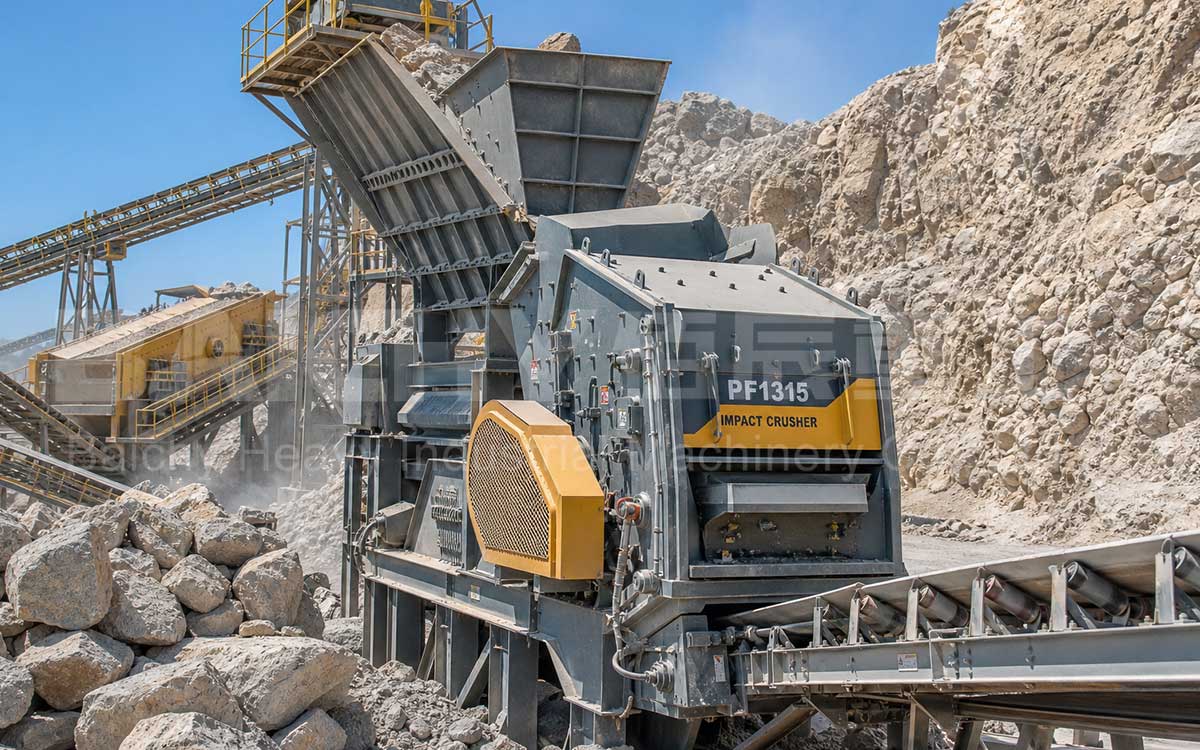
| PF Series Impact Crusher | Secondary Crushing | Classic choice for medium-soft rock; produces good particle shapes at low investment cost. |
| CS/HP Series Cone Crusher | Secondary Crushing | Superior wear resistance and stable output for hard rock applications. |
| VSI Sand Making Machine | Sand Making & Shaping | Produces 0–5mm manufactured sand. |
| YK Series Circular Vibrating Screen | Screening | Simultaneous production of multiple product specifications. |
| YDPZ Mobile Jaw Crushing Station | Mobile Solution | Features an integrated PE primary crusher; ready for immediate operation; ideal for projects requiring frequent relocation. |
VII. FAQ
Q1: What size stones can the primary jaw crusher handle?
It depends on the model's feed opening: PE-400×600 handles a maximum feed size of 340mm; PE-600×900 handles up to 500mm; PE-900×1200 handles up to 750mm. Material exceeding the rated size must be pre-crushed to avoid chamber jamming. If the clay content exceeds 8%, pre-screening with a vibrating screen is recommended. Metal foreign objects (such as drill rods or anchor bolts) must not enter the machine; installing an iron remover is strongly recommended.
Q2: How many tons of material can the primary jaw crusher process per hour?
Under standard operating conditions (medium-hard material, 100mm discharge opening), the PE-600×900 offers a stable capacity of 100–160 t/h, while the PE-750×1060 can reach 180–250 t/h. When crushing hard rock, the nominal capacity should be adjusted by a factor of 0.8. Widening the discharge opening by 40mm can increase capacity by approximately 30%, though the output product becomes coarser, requiring compatibility with the secondary crushing stage's capacity.
Q3: How do I select the right primary jaw crusher?
Follow a three-step process: first, determine the maximum feed size (which dictates the feed opening dimensions); next, establish the target hourly throughput (determining the model and motor power); and finally, account for material hardness (applying a 0.8 multiplier to capacity for hard rock). Providing actual material samples to the manufacturer for specific calibration is more reliable than relying on any empirical formula.
Baichy Heavy Industry
Baichy Heavy Industry is a high-tech mining equipment company integrating R&D, manufacturing, sales, and after-sales service. Focusing on crushing, grinding, and mineral processing equipment, we provide professional solutions to our customers. We are ISO9001:2015 、certified, and our products include mobile crushing palnts, crawler crushing plant, construction waste crushing plants, jaw crushers, sand making machines, cone crushers, fine crushers, grinding mills, ball mills, etc., all with reliable performance to meet diverse project needs.
Baichy Heavy Industry – Your Trusted Partner
To ensure optimal performance of your equipment, Baichy Heavy Industry offers:
- Professional on-site installation guidance
- Comprehensive operator training
- 24/7 technical support & maintenance services
Our complete after-sales service system guarantees long-term, stable operation of your machinery with minimal downtime.
Protect Your Rights – Only Use Official Channels
To avoid scams and ensure authentic support, contact us exclusively through:
• Official Website: www.baichychina.com
• WhatsApp: +8615093222637
• Email: [email protected]
Your satisfaction is our priority – expect prompt, professional service every time.
(Note: Beware of unauthorized third parties claiming to represent Baichy. Always verify through official contacts.)