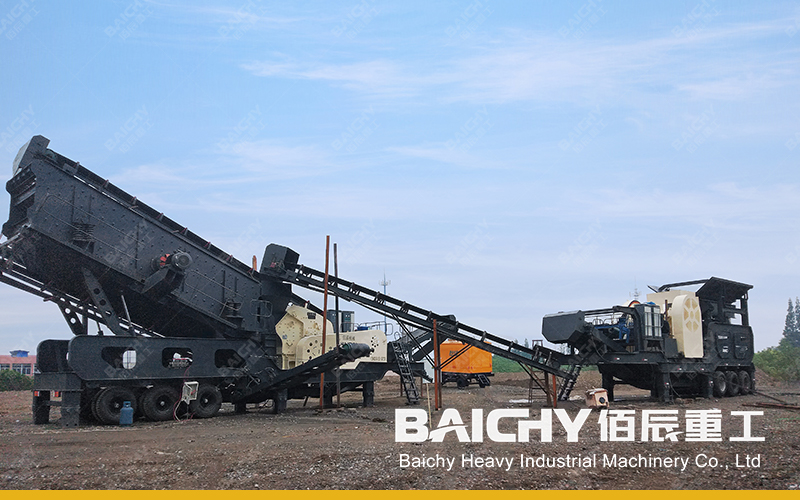
Mobile crushing stations
A mobile crushing station is not a "universal" machine capable of crushing absolutely anything; rather, it is a flexible production line where the primary crusher is matched to the specific material. From limestone (Mohs hardness 3) to basalt (Mohs hardness 7), and from iron ore to construction waste, these stations can handle a wide range of materials—provided the correct primary crusher is selected—achieving throughput rates exceeding 95% of comparable stationary lines. The primary crusher determines crushing capacity, while the mobile chassis determines the speed of deployment; understanding this distinction is key to the logic behind selecting the right mobile crushing station.
I. Overview: Material Capabilities of Mobile Crushing Stations
Mobile crushing stations integrate vibrating feeders, primary crushers, screening units, and conveyor systems onto a tracked or wheeled chassis, functioning as an all-in-one production line that is factory-assembled and ready for immediate on-site operation. The range of materials they can process is determined by the primary crusher: jaw crushers handle the primary crushing of large, hard rock; cone crushers manage secondary and tertiary crushing of hard rock; impact crushers specialize in medium-soft rock and construction waste; and VSI sand-making machines handle shaping and sand production. Based on rock characteristics, mobile crushing stations can process the following four major categories of materials:
1. Hard Rock: Granite, Basalt, Iron Ore
Mohs hardness of 5–7; highly abrasive. For primary crushing, a tracked mobile jaw crushing station (e.g., YDPZ-1060J) is recommended; for secondary and tertiary crushing, a tracked mobile cone crushing station (e.g., YDPZ-220C) is suitable. Capacity must be adjusted based on rock type: using the nominal capacity for limestone as a baseline, the multipliers are 0.75–0.85 for granite, 0.70–0.80 for basalt, and 0.60–0.75 for iron ore.
2. Medium-Soft Rock: Limestone, Dolomite, River Pebbles
Mohs hardness of 3–5; low abrasiveness. Mobile impact crushing stations offer high reduction ratios and produce well-shaped, rounded aggregates. Blow bars can last over 180 hours, and the wear cost per ton is approximately one-third that of granite processing, making this the preferred configuration for aggregate and manufactured sand production lines.
3. Construction Waste and Recycled Aggregates
Concrete blocks, brick rubble, asphalt pavement materials. The standard process flow is "Jaw Crusher (Primary Crushing) → Iron Removal → Screening → Recycled Aggregate." Materials with high rebar content require pre-processing with hydraulic shears or grizzly screens; operations involving high clay content should incorporate wet screening and sand washing stages.
4. Other Special Materials
Shale, gypsum, coal gangue, tailings, etc. Particular attention must be paid to how moisture and clay content affect screening efficiency; vibrating feeders and desliming devices should be selected if necessary.
Golden Rules for Equipment Selection: First determine the material, then the main crusher unit, and finally the chassis. Hardness and abrasiveness dictate the crusher type; feed size determines the feeding mechanism and crushing chamber configuration; site conditions and project duration determine whether a crawler or wheeled chassis is used. Reversing this order often leads to a "triple waste" scenario: purchased equipment, compromised production capacity, and difficult site relocation. This is why Baichy insists on "configuring based on rock properties and quoting capacity based on configuration"—the technical parameters must align with the material characteristics.
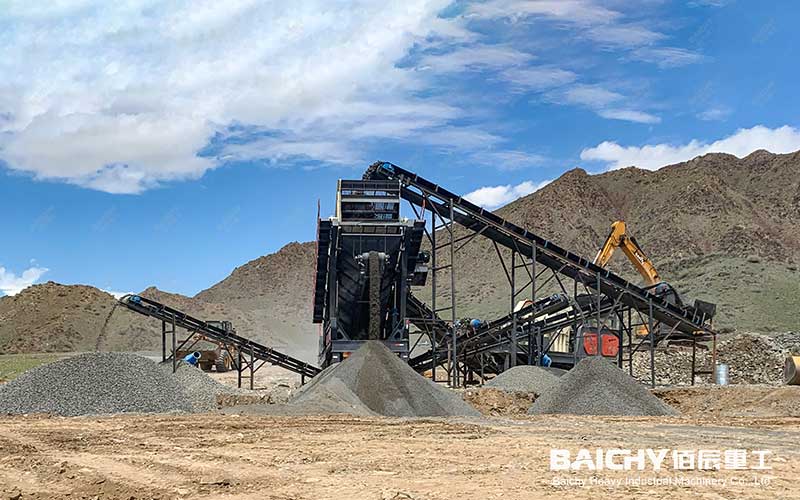
wheeled mobile crushing stations
II. Typical Application Scenarios
| Application Scenario | Typical Materials | Recommended Station Combination |
|---|---|---|
| Mining and Overburden Stripping | Granite, Iron Ore | Crawler-mounted Mobile Jaw Crushing Station (YDPZ-1060J) |
| Aggregate and Manufactured Sand Production | Limestone, River Pebbles | Wheeled Mobile Impact Crushing Station + Mobile Screening Station |
| Construction Waste Recycling | Concrete Blocks, Brick Rubble | Crawler-mounted Mobile Jaw Crushing Station + Iron Removal & Screening |
| Linear Infrastructure (Roads/Railways) | Basalt, Andesite | Mobile Cone Crushing Station + Mobile Screening Station |
| Tailings and Solid Waste Treatment | Low-grade Ore | Mobile Jaw Crushing Station + Mobile Screening Station |
For linear infrastructure projects, materials can be sourced locally along the route, allowing the production line to move in tandem with project progress. Short-term leased-site projects require no concrete foundations and leave no trace upon site clearance, enabling immediate mobilization once approvals are secured.
III. Core Specifications and Parameter Comparison Table
| Mobile Station Type | Main Unit Model | Applicable Material | Max. Feed Size (mm) | Capacity (t/h)* | Output Size (mm) |
|---|---|---|---|---|---|
| Crawler Mobile Jaw Crusher Station | YDPZ-1060J (PE750×1060) | Hard rock primary crushing | ≤630 | 110–180 | 80–140 |
| Crawler Mobile Cone Crusher Station | YDPZ-220C (CS220) | Hard rock secondary/fine crushing | ≤300 | 120–200 | 20–60 (adjustable) |
| Crawler Mobile Screening Station | YDPZ-2160S (3YK2160) | Finished product grading | ≤200 | 80–320 | 3–4 grades |
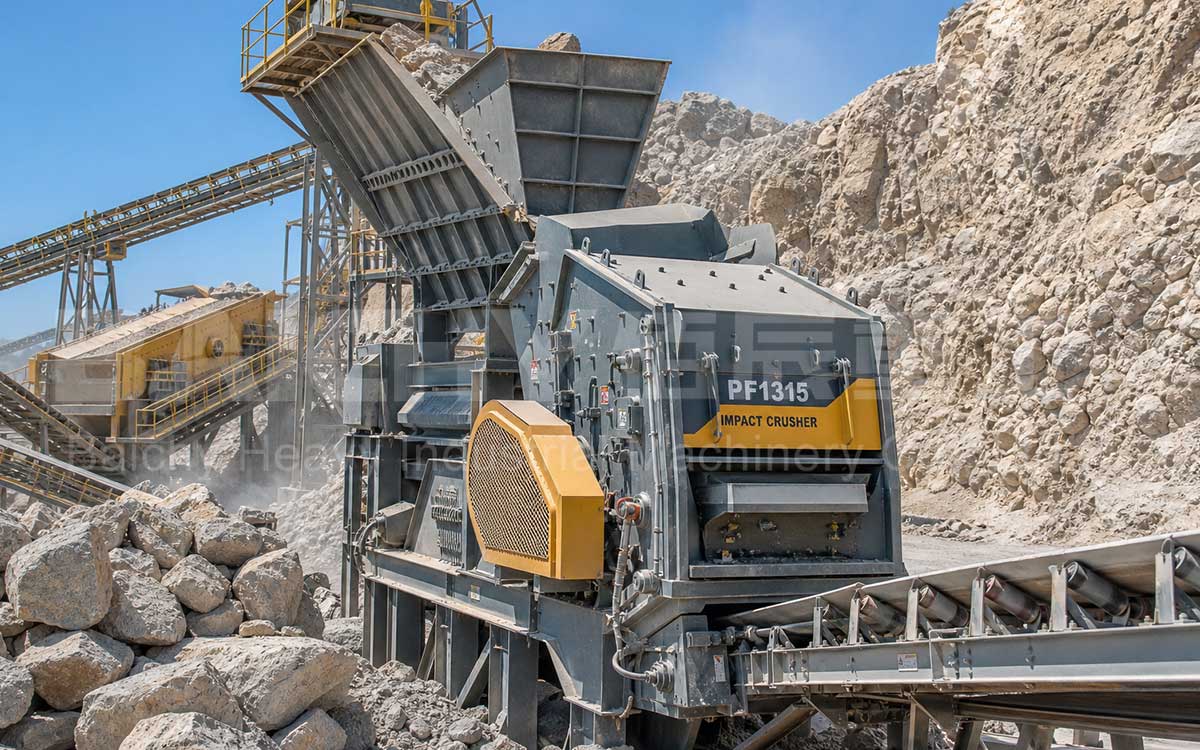
| Tire-mounted Mobile Impact Crusher Station | PF1315 | Medium-soft rock, construction waste | ≤350 | 130–250 | 5–40 (adjustable) |
| Tire-mounted Mobile Sand-making Station | VSI-9526 | Shaping, manufactured sand | ≤50 | 160–380 | 0–5 |
Capacity conversion basis (Limestone = 1.0 baseline): Granite ×0.75–0.85, Basalt ×0.70–0.80, River Pebble ×0.80–0.90, Iron Ore ×0.60–0.75. For example, a configuration with a nominal capacity of 150 tph processing river pebbles yields an actual stable capacity of approximately 120–135 tph; processing basalt yields approximately 105–120 tph. Equipment selection must be based on converted figures for the target material rather than relying solely on nominal values.
IV. Equipment Advantages: Translating Parameters into Profit
The main unit determines capacity; the chassis determines mobility—the same chassis can be fitted with jaw, cone, or impact crusher units, allowing for customization based on material type and eliminating the need for repeated chassis investment for different rock properties.
Transparent capacity ratings — Standardized based on limestone benchmarks and adjusted using lithology coefficients; eliminates the discrepancy between "nominal 200 tph" and "actual 150 tph" ratings, ensuring realistic investment calculations.
Foundation-free, 48-hour startup — Compared to the 15–30 day installation period for fixed lines, production begins 2–4 weeks earlier, directly generating cash flow.
Near-zero relocation costs — Track-mounted units relocate under their own power, while wheeled units are towed; production resumes in 1–2 days, whereas fixed lines require 10–20 days of downtime for a single relocation.
Global power compatibility — Supports 380V/50Hz, 400V/50Hz, and 440V/60Hz; compatible with full-load operation via diesel generator sets, eliminating the need for localization modifications in export projects.
V. Case Study: Mobile River Pebble Sand-Making Project in Southeast Asia (Client information anonymized)
A Southeast Asian client constructed a 150 tph aggregate production line at a riverbed quarry; the site was leased short-term, requiring extraction and site clearance to be completed before the rainy season. A Baichy wheeled mobile combination plant was utilized (comprising mobile jaw crushing, mobile sand-making, and mobile screening units):
• Startup timeline: Material output began on the second day after equipment arrival; no concrete foundation required.
• Actual capacity: Stable at 120–135 tph for river pebble processing (nominal 150 tph for limestone, adjusted by a 0.85 coefficient); performance rate >95%.
• Product mix: 0–5 mm manufactured sand and 5–20 mm aggregate; sand fineness modulus of 2.8–3.2, meeting commercial concrete grading standards.
• Economic analysis: Total site clearance before the rainy season took only 2 days; saved approximately ¥250,000–400,000 in foundation and installation costs compared to a fixed-line solution.
• Key Takeaway: Material lithology determines actual production capacity, but the true value of a mobile station lies in its rapid deployment and relocation flexibility over the project lifecycle—these are the decisive factors for Total Cost of Ownership (TCO).
VI. Recommended Equipment
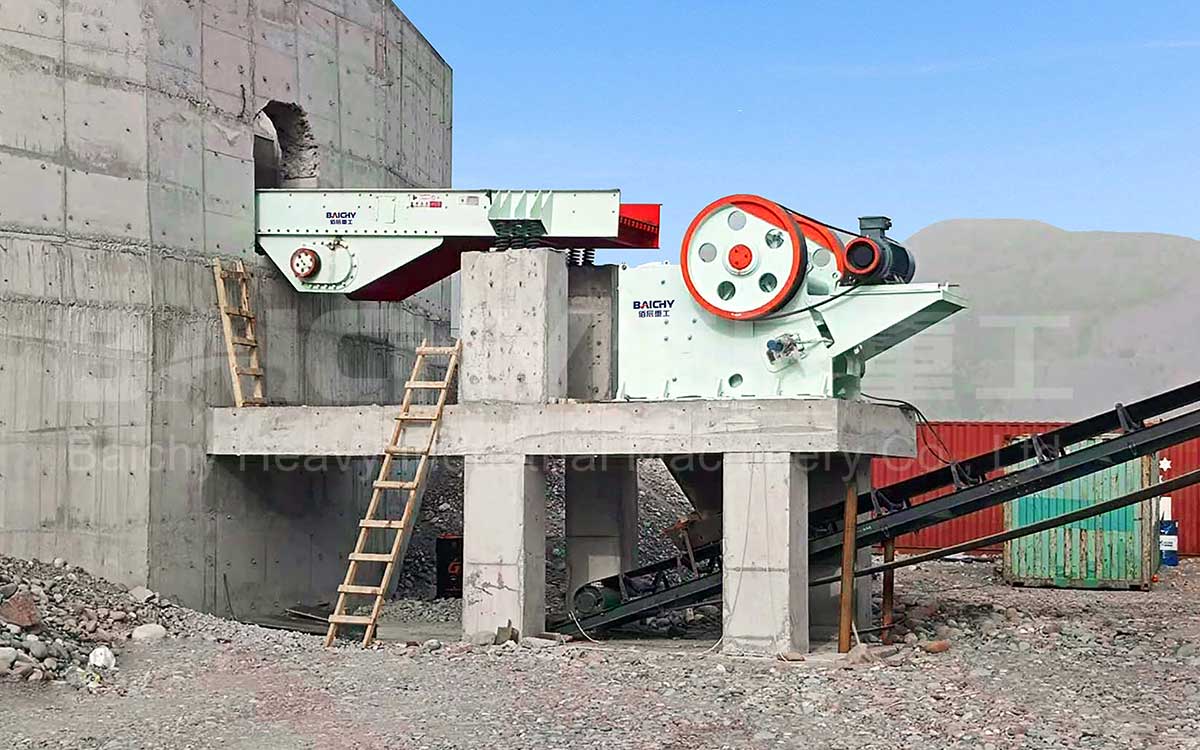
YDPZ-1060J Track-mounted Mobile Jaw Crusher — Ideal for primary crushing of hard rock; feed size ≤630mm; rapid deployment without concrete foundations;
YDPZ-220C Track-mounted Mobile Cone Crusher — For secondary/tertiary crushing of hard rock; adjustable output size; suitable for two-stage crushing processes;
YDPZ-2160S Track-mounted Mobile Screening Station — Produces 3–4 grades of finished product; operates in a production line with crushing stations;
Tire-mounted Mobile Impact Crusher (PF1315) — For medium-soft rock and construction waste; produces high-quality particle shapes;
Tire-mounted Mobile Sand-making Station (VSI-9526) — For manufactured sand and aggregate shaping; feed size ≤50mm.
VII. FAQ
Q1: What is the hardest material a mobile crushing station can process?
A: Quartzite, basalt, and certain iron ores with a Mohs hardness of 6.5–7. A two-stage configuration (primary jaw crushing + secondary/tertiary cone crushing) is required; capacity is calculated by multiplying the nominal limestone capacity by a factor of 0.70–0.80. If the material contains highly abrasive components (e.g., quartz), wear parts like jaw plates must be upgraded to high-manganese steel.
Q2: Can mobile crushing stations process construction waste containing rebar?
A: Yes, but pre-processing is essential: a vibrating feeder with a grizzly screen separates large chunks, and a magnetic separator removes rebar; if rebar content is high, a hydraulic shear is used for pre-crushing. A combination of a track-mounted mobile jaw crusher and a mobile screening station is recommended to produce 0–31.5mm recycled aggregate for use in base courses or brick making.
Q3: How much does the capacity of a mobile crushing station vary based on material hardness?
A: Based on the nominal capacity for limestone, the conversion factors are: granite ×0.75–0.85, basalt ×0.70–0.80, river pebbles ×0.80–0.90, and iron ore ×0.60–0.75. For example, a configuration with a nominal capacity of 150 tph would yield an actual capacity of approximately 105–120 tph when processing basalt. When selecting equipment, be sure to calculate the capacity based on the specific material to be processed rather than relying solely on the nominal value.
Baichy Heavy Industry
Baichy Heavy Industry is a high-tech mining equipment company integrating R&D, manufacturing, sales, and after-sales service. Focusing on crushing, grinding, and mineral processing equipment, we provide professional solutions to our customers. We are ISO9001:2015 、certified, and our products include mobile crushing palnts, crawler crushing plant, construction waste crushing plants, jaw crushers, sand making machines, cone crushers, fine crushers, grinding mills, ball mills, etc., all with reliable performance to meet diverse project needs.
Baichy Heavy Industry – Your Trusted Partner
To ensure optimal performance of your equipment, Baichy Heavy Industry offers:
- Professional on-site installation guidance
- Comprehensive operator training
- 24/7 technical support & maintenance services
Our complete after-sales service system guarantees long-term, stable operation of your machinery with minimal downtime.
Protect Your Rights – Only Use Official Channels
To avoid scams and ensure authentic support, contact us exclusively through:
• Official Website: www.baichychina.com
• WhatsApp: +8615093222637
• Email: [email protected]
Your satisfaction is our priority – expect prompt, professional service every time.
(Note: Beware of unauthorized third parties claiming to represent Baichy. Always verify through official contacts.)