
mobile jaw crushing station
Granite is one of the most common rocks in nature, characterized by high compressive strength and high abrasiveness (Mohs hardness of 6–7, compressive strength of 150–250 MPa, and SiO₂ content generally exceeding 65%). Consequently, granite crushers must meet dual standards: a high reduction ratio and superior wear resistance. To state the conclusion upfront: the most cost-effective solution globally for granite crushing lines involves using a mobile jaw crushing station for primary crushing, followed by a mobile impact crushing station for secondary/tertiary crushing and particle shaping. The following analysis covers application scenarios, equipment advantages, parameter comparisons, and real-world case studies to help you make informed purchasing decisions.
I. Overview: Key Challenges in Granite Crushing
The challenge in selecting granite crushers lies not in whether they *can* crush the material, but in doing so *economically* and *durably*. The combination of high hardness and high abrasiveness creates three practical issues:
1. Incorrect equipment selection leads to a drastic drop in productivity: Using low-spec crushers for granite can result in actual output falling to just 50% of the rated capacity, accompanied by frequent downtime;
2. Spiraling costs for wear parts: Components like jaw plates and blow bars wear out much faster than in limestone applications, potentially doubling the cost of wear parts per ton of material processed;
3. Necessity of a closed-loop process: Granite crushing lines typically employ a three-stage process—primary jaw crushing, secondary/tertiary impact or cone crushing, and closed-loop screening; a failure at any stage drags down the entire line.
The Golden Rule of Selection: Consider two factors—large feed size and high abrasiveness call for a jaw crusher; a need for cubic particle shape and shaping effects calls for an impact crusher; and a goal of minimizing wear costs per ton calls for a cone crusher. Meanwhile, mobile crushing stations address specific project pain points—such as dispersed mining sites, tight schedules, frequent site transfers, and a lack of infrastructure for fixed foundations—which is the fundamental logic behind recommending mobile solutions in this article.
II. Typical Application Scenarios
The combination of granite crushers and mobile crushing stations offers distinct advantages in the following scenarios:
2.1 Highway and Railway Aggregates
Aggregates for highway surface layers require low flakiness and elongation indices (typically ≤15% under national standards) and must meet crushing value specifications. In this granite crushing setup, a mobile jaw crushing station handles primary crushing, while an impact crushing station performs shaping. This produces graded aggregates (0–5, 5–10, 10–20, and 20–31.5 mm) for direct supply to project sections along the route; the mobile units move with the construction site, eliminating the costs and approval times associated with repeatedly setting up new plants.
2.2 Commercial Concrete and Manufactured Sand Production
Buyers of manufactured sand are often located tens of kilometers from the source; mobile stations can be deployed directly into the quarry. After primary crushing, the material undergoes shaping via an impact crusher and processing in a sand-making machine to produce high-quality sand with stable gradation. For concrete mixing plants, owning a mobile crushing line means having control over aggregate costs, insulating the business from fluctuations in sand and gravel prices.
2.3 Water Conservancy, Hydropower, and Airport Projects
Hydropower dam and airport projects involve short construction cycles and concentrated aggregate demand, often in remote mountainous areas. Mobile granite crushing stations can begin production within 2–3 days of arrival and relocate to the next work zone upon project completion, avoiding the asset waste associated with fixed production lines that become obsolete once the project ends.
2.4 Primary Crushing of Run-of-Mine Ore and Co-processing of Construction Waste
Open-pit run-of-mine ore often features large particle sizes (up to 600–800 mm); mobile jaw crushing stations can enter the extraction area directly for primary crushing. Similarly, waste rock stripped from granite quarries can be converted into usable aggregate on-site using mobile stations, effectively turning waste into a valuable resource.
3. Mobile Jaw Crushing Station: Key Equipment for Primary Granite Crushing
3.1 Core Advantages
As the primary equipment for the initial crushing stage of granite processing, the mobile jaw crushing station offers the following core advantages:
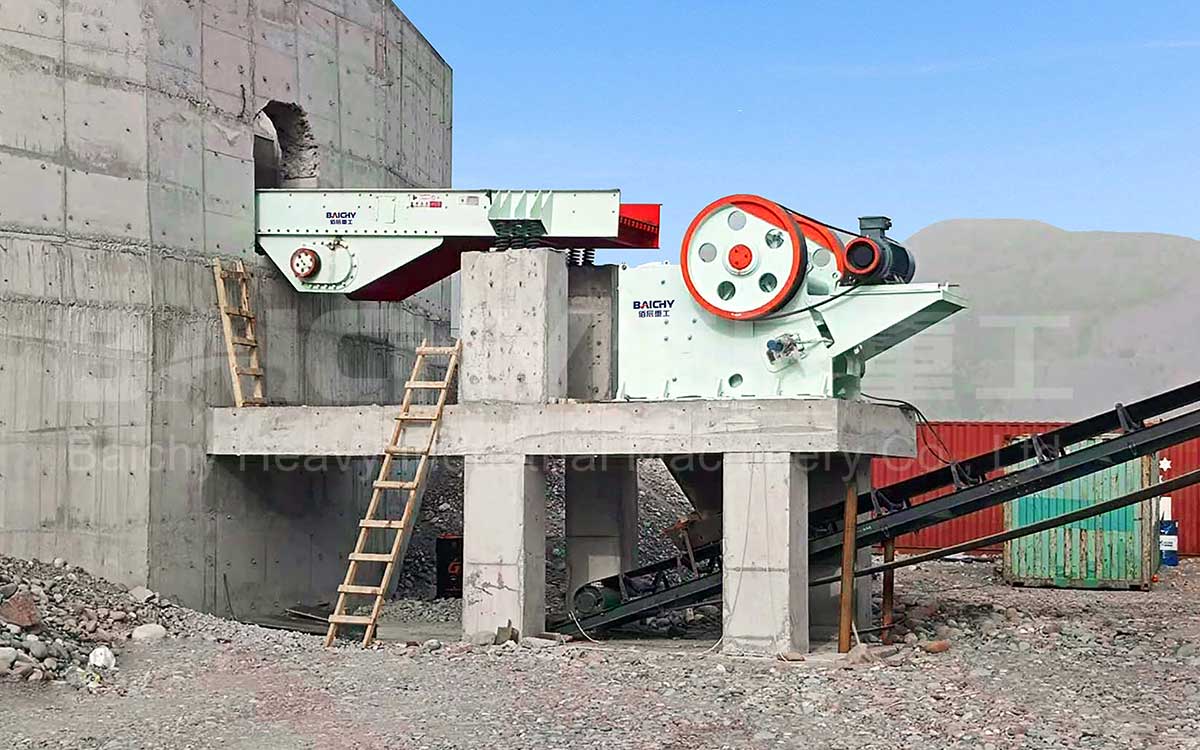
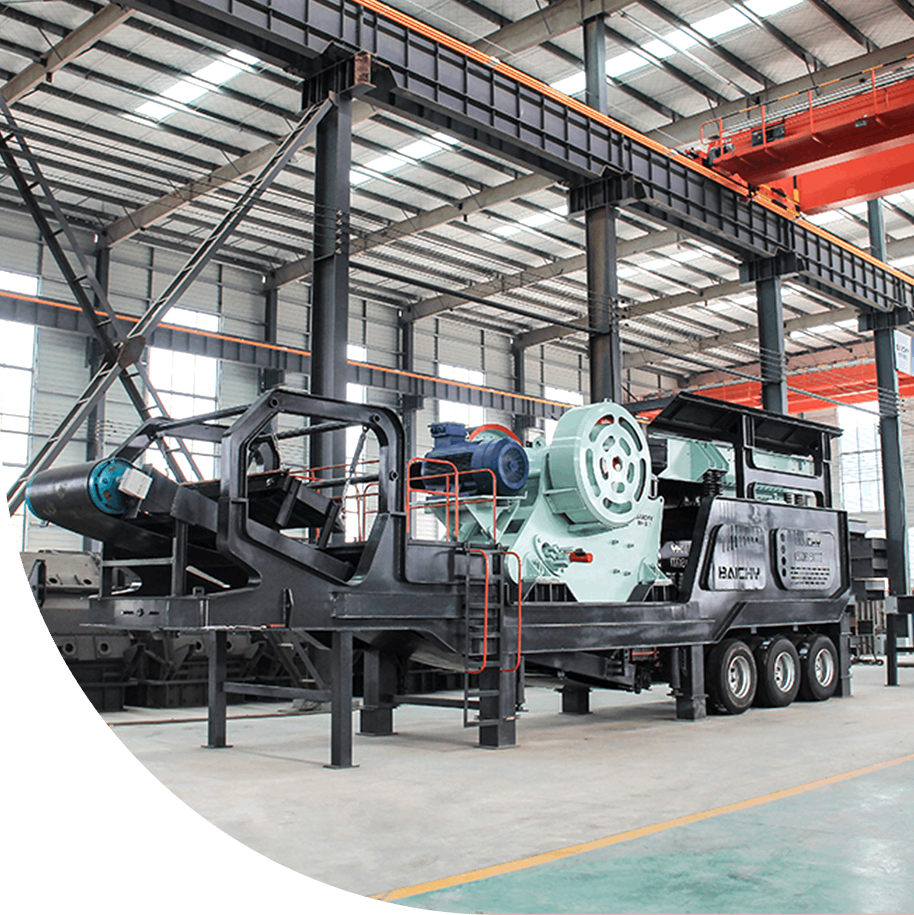
• Integrated, Ready-to-Operate Design: The feeder, jaw crusher, screen, and conveyors are mounted on a single semi-trailer chassis. This eliminates the need for concrete foundation construction and reduces the installation and commissioning period from 2–3 months to just 3–5 days.
• Dual-Mode Electric-Hydraulic Drive: Options include diesel generator power or external grid connection, making it suitable for remote mountainous areas without grid access as well as regions with high electricity costs; energy costs can be optimized by switching modes as needed.
• Large Feed Opening: Capable of handling feed sizes up to 800 mm, allowing run-of-mine ore to be fed directly into the machine without secondary blasting, thereby reducing blasting costs and safety risks.
• Transparent, Real-World Capacity: Baichy clearly distinguishes between nominal capacity (based on limestone standards) and actual capacity under granite processing conditions—the granite processing capacity for a given model is approximately 75–85% of its nominal rating—preventing post-purchase disputes regarding "capacity shortfalls."
3.2 Specifications for Mobile Jaw Crushing Station
| Model | Main Jaw Crusher | Feed Opening (mm) | Max. Feed Size (mm) | Granite Capacity (t/h) | Total Power (kW) | Total Weight (t) |
|---|---|---|---|---|---|---|
| YD-500 | PE400×600 | 400×600 | 350 | 25–55 | 75 | 26 |
| YD-750 | PE500×750 | 500×750 | 425 | 40–85 | 110 | 38 |
| YD-900 | PE600×900 | 600×900 | 500 | 55–120 | 132 | 52 |
| YD-1060 | PE750×1060 | 750×1060 | 630 | 80–180 | 160 | 68 |
Note: Capacity is rated based on granite (density: 2.6–2.8 t/m³; compressive strength: 150–200 MPa); discharge particle size is adjustable within the 0–150 mm range; service life of wear parts is extended by 20–30% when using wear-resistant jaw plates (high-manganese steel ZGMn13).
4. Impact Crushing Station: A Powerful Tool for Granite Secondary/Tertiary Crushing and Particle Shaping
4.1 Key Advantages
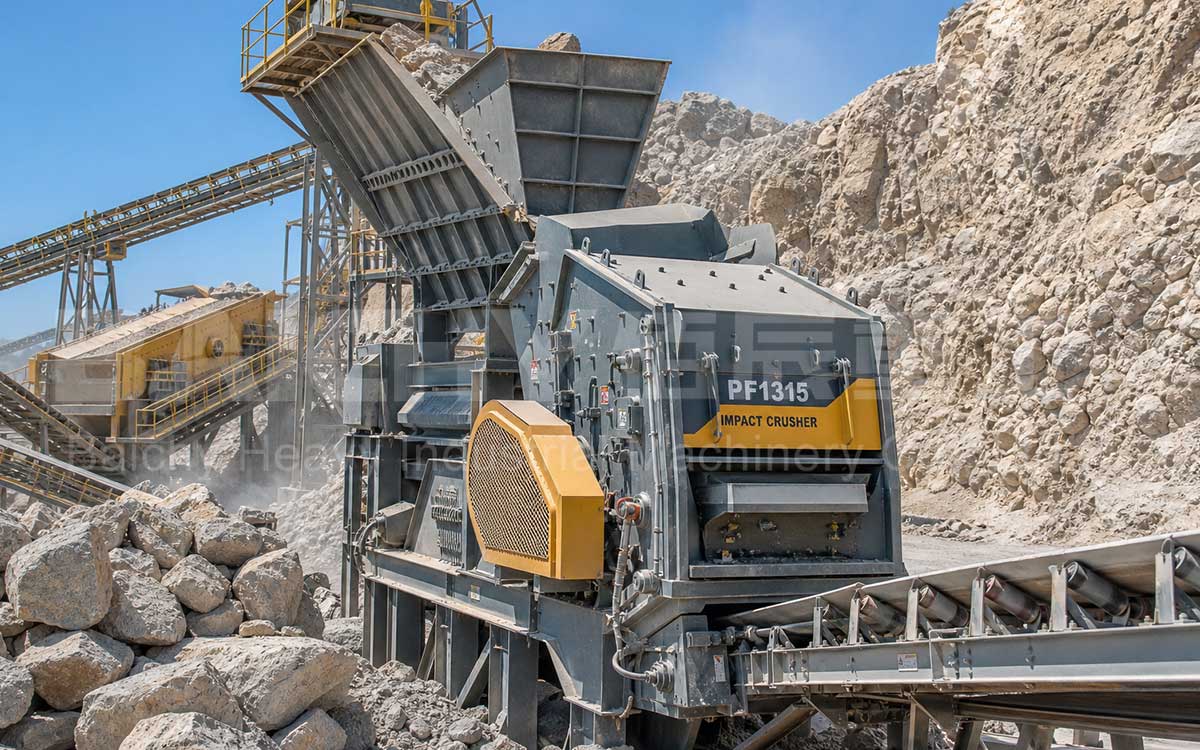
• Cubic Particle Shape: Utilizing "rock-on-rock" action and high-speed impact from blow bars, the impact crusher produces aggregate with a needle-and-flake content 5–10 percentage points lower than that of cone crushers, directly meeting specifications for high-grade concrete and asphalt surface course aggregates;
• High Reduction Ratio and Single-Pass Sand Yield: Offers a single-machine reduction ratio of up to 15–20:1, capable of crushing feed material smaller than 100 mm down to under 40 mm in a single pass, thereby reducing the number of closed-loop cycles;
• Transparent Blow Bar Consumption Management: Blow bar service life in granite applications ranges from approximately 300 to 600 hours; Baichy offers high-chrome alloy blow bars and customizes wear-resistance solutions based on cost-per-ton calculations—a critical factor in controlling OPEX when using impact crushers for granite;
• Flexible Mobile Configuration: Impact crushing stations can be combined with jaw crushing stations and vibrating screen stations to form two- or three-stage mobile processing lines, scalable according to specific project requirements.
4.2 Impact Crushing Station Specifications
| Model | Main Impact Crusher | Rotor Diameter × Width (mm) | Max. Feed Size (mm) | Granite Capacity (t/h) | Total Power (kW) | Total Weight (t) |
|---|---|---|---|---|---|---|
| YD-PF1214 | PF-1214 | 1250×1400 | 350 | 50–100 | 160 | 38 |
| YD-PF1315 | PF-1315 | 1320×1500 | 400 | 70–140 | 250 | 52 |
| YD-PF1520 | PF-1520 | 1500×2000 | 500 | 100–200 | 400 | 75 |
Note: When using an impact crushing station for granite processing, it is recommended to pair it with a double-deck vibrating screen to form a closed-circuit system. Controlling the recirculating load ratio between 15% and 25% significantly reduces blow bar wear and stabilizes the product gradation.
V. Typical Mobile Crushing Station Process Configurations
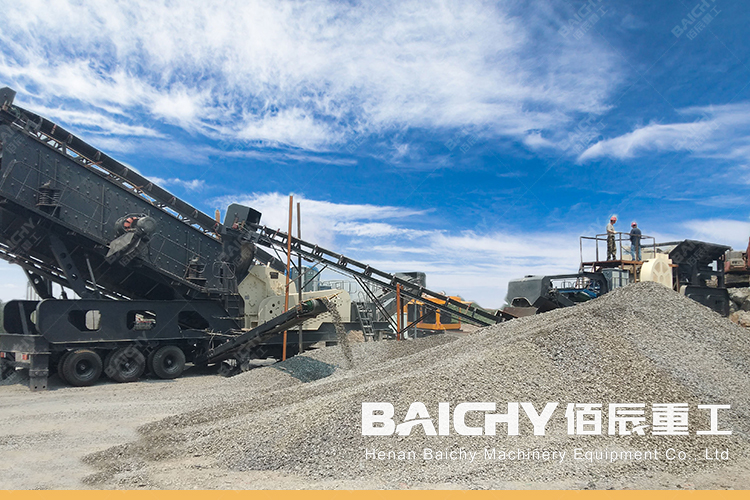
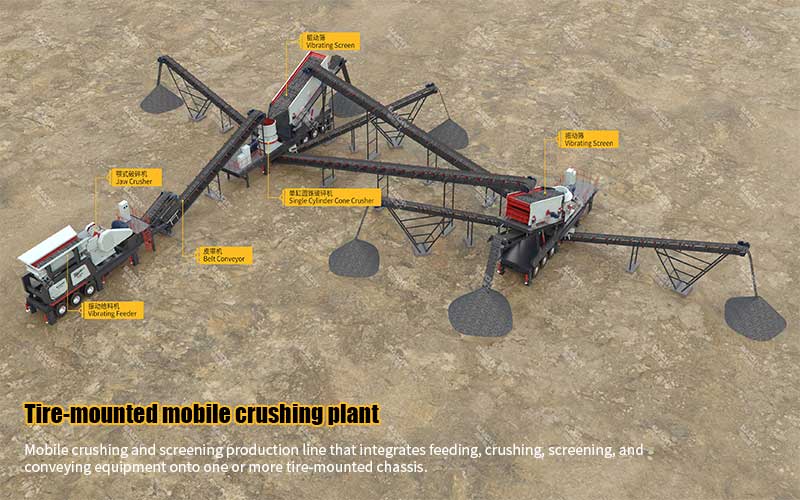
Two-stage mobile line (standard configuration): Mobile jaw crushing station (primary crushing) → Mobile impact crushing station (secondary/fine crushing + shaping) → Finished aggregate. Suitable for small-to-medium projects with an hourly capacity of 50–150 t/h.
Three-stage mobile line (large-scale projects): Jaw crushing station → Cone/Impact crushing station → Sand-making station + Screening station (closed-circuit). Suitable for projects with capacities exceeding 200 t/h that require specific sand-to-stone ratios.
Why recommend the "Jaw Crusher + Impact Crusher" combination? This is the most mature configuration logic for granite crushing lines: the jaw crusher handles primary crushing (offering wear resistance and a stable reduction ratio), while the impact crusher handles shaping (producing superior particle shapes and a high single-pass sand yield), ensuring a clear pision of labor. Compared to the "Jaw Crusher + Cone Crusher" setup, the impact crusher configuration requires 15–20% less equipment investment and yields better particle shapes, making it the preferred choice for small-to-medium capacity granite projects.
6. Real-World Case Studies
6.1 Granite Aggregate Production Line in Southeast Asia (PE600×900 + PF1214)
A granite aggregate project in Vietnam supplying materials for a highway construction section selected Baichy’s complete crushing solution. Although a fixed production line was originally planned, a tight schedule prompted a switch to a semi-mobile configuration: a mobile jaw crushing station (PE600×900) for primary crushing, a PF1214 impact crusher for shaping, and a double-deck vibrating screen operating in a closed circuit. Operational data showed a stable production capacity of 100–130 t/h when processing granite; the content of flaky and elongated particles in the 10–20 mm finished aggregate was below 10%, and the first-pass product qualification rate exceeded 95%. Compared to a fixed-line setup, infrastructure costs were reduced by approximately 40%, and the time from contract signing to commissioning was just 12 days.
6.2 Mobile Jaw Crushing Station in Chile (Granite/River Stone Application)
Operations in the South American market often face challenges such as remote locations and unstable power supplies. The mobile jaw crushing station delivered by Baichy to a Chilean client features a diesel generator drive and a hydraulic discharge opening adjustment system; it is compatible with local 60Hz power grid standards and achieved full-load operation within four days of arrival. Client feedback indicated that the equipment underwent three relocations without any structural failures, and the jaw plates demonstrated a service life exceeding 2,000 hours when processing granite—significantly outperforming the client's previous imported equipment.
VII. Recommended Equipment
Based on the granite crushing process flow described in this article, the following auxiliary equipment is recommended:
| Process Stage | Recommended Equipment | Notes |
|---|---|---|
| Primary Crushing | YD Series Mobile Jaw Crushing Station / PE, PEX, C90 Series Jaw Crushers | High feed size capacity and wear resistance; the top choice for primary granite crushing. |
| Secondary/Fine Crushing | PF Series Impact Crushers / PYB900, CS Series Cone Crushers | Impact crushers prioritize particle shape; cone crushers prioritize cost-efficiency (low energy consumption per ton). |
| Sand Making & Shaping | VSI Series Sand Making Machines | Produces high-quality manufactured sand with stable gradation. |
| Feeding & Screening | ZSW Vibrating Feeders, YA Vibrating Screens | Ensures uniform feeding and a closed-loop circuit. |
| Auxiliary Mobile Stations | Mobile Screening Stations, Mobile Sand Making Stations | Can be flexibly combined with mobile jaw or impact crushing stations. |
Need a complete line design or equipment quote? Contact Baichy engineers to receive a free process flow plan and investment estimate tailored to your specific ore samples.
mobile jaw crushing station
VIII. FAQ
Q1: Why is the "Jaw Crusher + Impact Crusher" combination preferred for granite?
Because the two machines complement each other: Jaw crushers handle large feed sizes and a wide range of compressive strengths (processing materials exceeding 300 MPa), making them ideal for primary crushing. Impact crushers offer high reduction ratios and produce cubical particles, making them suitable for secondary/fine crushing and shaping. Compared to cone crusher configurations, this combination requires 15–20% less investment, yields superior particle shapes, and offers flexible relocation capabilities—making it a cost-effective choice for small-to-medium capacity granite projects.
Q2: Is the capacity of mobile granite crushers reduced when processing granite?
Yes, the capacity must be adjusted downward. Industry standards typically rate nominal capacity based on limestone (density: 1.6 t/m³); since granite is denser and more abrasive, the actual capacity is approximately 75–85% of the nominal value. During the equipment selection phase, Baichy calculates production capacity and wear-part consumption based on specific granite processing conditions. This ensures that post-delivery capacity meets targets and eliminates the discrepancy between "nominal capacity" and "actual operational capacity."
Q3: How often do the blow bars on a granite impact crusher need replacing, and how can costs be controlled?
The high-chrome alloy blow bars used in these granite crushers typically last 300–600 hours (depending on feed size and moisture content). Once worn, they can be flipped over for a second period of use, effectively doubling their service life. We recommend using a closed-circuit screening setup to control the recirculating load (at 15–25%) and selecting high-chrome alloy materials; this allows blow bar costs to be kept within the range of 0.8–1.5 RMB per ton. Baichy can also provide a free annual wear-part budget estimate based on your mineral samples.
Summary
The core logic behind selecting granite crushing equipment is to "match equipment to operating conditions and calculate total costs based on per-ton consumption." Mobile jaw crushing stations address primary crushing and site-relocation challenges, while impact crushing stations handle particle shaping requirements; the combination of the two covers over 80% of granite project needs. Whether you are an aggregate supplier, a mine owner, or a construction contractor, you can avoid common pitfalls by first clarifying material hardness, target capacity, and site conditions, and then selecting the right equipment using the parameter tables provided in this article.
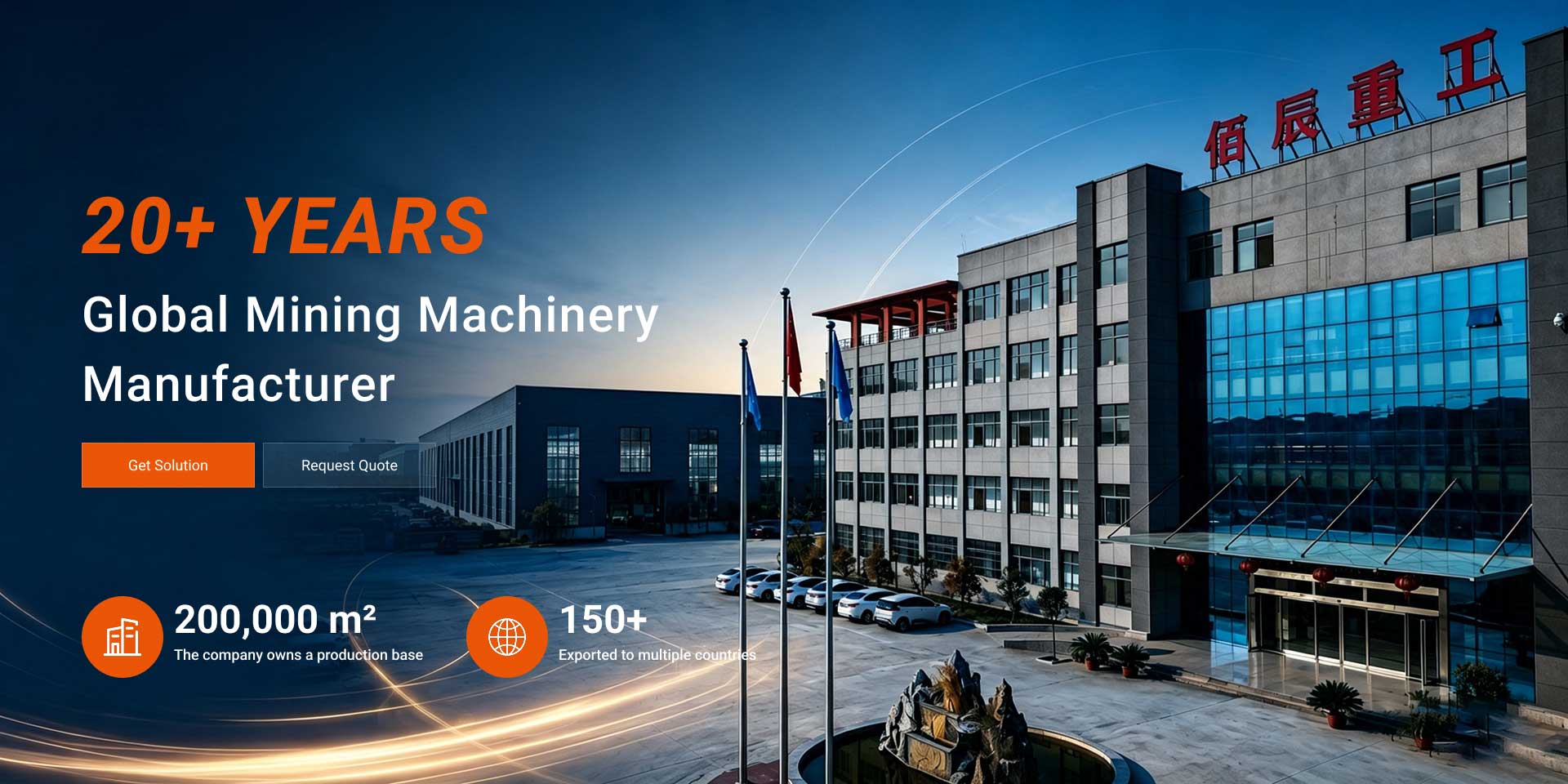
Baichy Heavy Industry
Baichy Heavy Industry is a high-tech mining equipment company integrating R&D, manufacturing, sales, and after-sales service. Focusing on crushing, grinding, and mineral processing equipment, we provide professional solutions to our customers. We are ISO9001:2015 、certified, and our products include mobile crushing palnts, crawler crushing plant, construction waste crushing plants, jaw crushers, sand making machines, cone crushers, fine crushers, grinding mills, ball mills, etc., all with reliable performance to meet diverse project needs.
Baichy Heavy Industry – Your Trusted Partner
To ensure optimal performance of your equipment, Baichy Heavy Industry offers:
- Professional on-site installation guidance
- Comprehensive operator training
- 24/7 technical support & maintenance services
Our complete after-sales service system guarantees long-term, stable operation of your machinery with minimal downtime.
Protect Your Rights – Only Use Official Channels
To avoid scams and ensure authentic support, contact us exclusively through:
• Official Website: www.baichychina.com
• WhatsApp: +8615093222637
• Email: [email protected]
Your satisfaction is our priority – expect prompt, professional service every time.
(Note: Beware of unauthorized third parties claiming to represent Baichy. Always verify through official contacts.)