

MTW European-style mill
An hourly output of 20 tons may not qualify as "high-volume," yet it represents the "sweet spot" for medium-sized production lines. The daily demand for materials such as power plant desulfurization agents, ground calcium carbonate (GCC), and construction-grade powders—totaling approximately 400 tons based on a 20-hour production schedule—aligns perfectly with the capacity range of a single MTW European-style mill. This eliminates the need for complex parallel machine setups or the cost inefficiencies associated with excess single-unit capacity. Limestone and calcite have a Mohs hardness of only 3 and excellent grindability; consequently, the real threats to profitability are not an inability to achieve fine grinding, but rather issues like fineness drift (leading to product downgrading), premature grinding roller wear, and downtime for part replacements that eat into shift output.
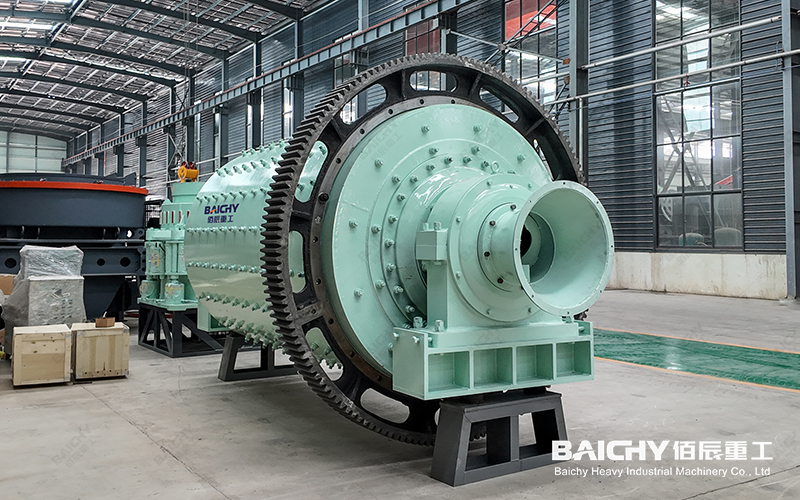
The MTW European-style mill replaces the traditional Raymond mill's suspended pressurization structure with an integrated bevel gear drive system. Combined with centralized thin-oil lubrication and a built-in variable-frequency classifier, it minimizes both fineness fluctuations (within the 200–400 mesh range) and maintenance-related downtime. This is precisely why the MTW European-style mill has become the preferred upgrade solution for 20 t/h limestone grinding operations.
I. Profiling the Real Demand for 20 t/h Limestone Grinding Equipment: Who Buys It and What Is It Used For?
Let’s first address a practical question: Who purchases limestone powder produced at a rate of 20 tons per hour?
• Power Plant Flue Gas Desulfurization (FGD): Wet desulfurization processes utilize 250-mesh (D97 ≈ 90 μm) limestone powder as an absorbent. Large generating units can consume hundreds of tons daily. Powder acceptance is based on "particle size + reactivity," making this a primary market for 20 t/h production lines.
• Calcium Carbonate/GCC Powder: The 200–400 mesh range is used as filler for plastics, coatings, and rubber. These applications are sensitive to whiteness and particle size distribution, and batch consistency directly determines the selling price.
• Construction Materials and Steel Plant Flux: Coarser powders in the 80–200 mesh range account for the highest sales volume, serving as the "foundation" for the equipment's production capacity.
According to USGS data, annual limestone extraction in the U.S. is measured in the hundreds of millions of tons, while global production continues to rise alongside demand in the cement, metallurgical, and environmental protection sectors. The Asia-Pacific region—driven by the dual factors of desulfurization retrofitting for coal-fired power plants and infrastructure development—represents the largest market for both new installations and upgrades of limestone grinding equipment.
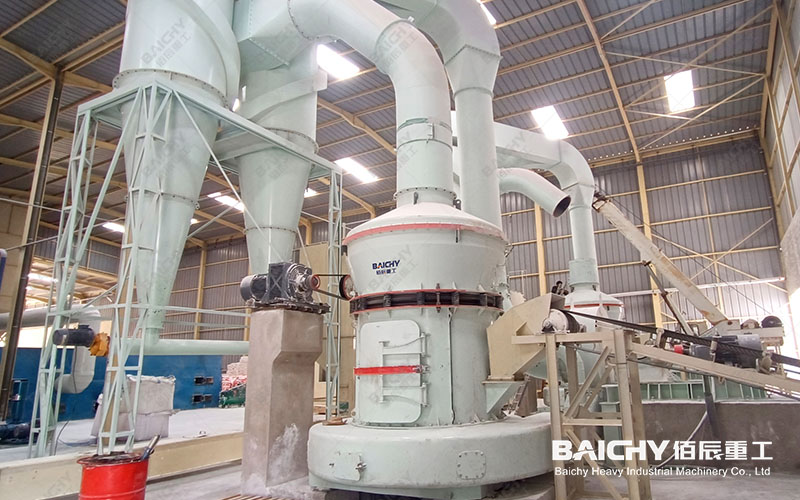
Limestone Grinding Equipment (20 tph)
II. Limestone Grinding Involves Three Key Process Thresholds: Fineness Specifications, Feed Moisture Content, and Hard Impurities
While limestone is generally easy to grind, "easy to grind" does not equate to "easy to grind consistently." Failure to address these three thresholds renders a rated capacity of 20 t/h merely a theoretical figure:
• Fineness specifications dictate capacity. Power plant desulfurization typically requires 250-mesh output (controlled by both sieve residue and D97 values); ground calcium carbonate (GCC) fillers often require ≥95% passing through 325 mesh (or even finer); whereas coarse powder for construction materials only requires 80–200 mesh. For any given piece of equipment, capacity decreases as the fineness requirement increases; therefore, equipment selection must be based on the achievable output for the specific target fineness.
• Feed moisture must be kept below 5%. Limestone from open-pit mines or stockpiles often contains 3%–8% moisture—levels that can rise significantly during the rainy season. Excessive moisture causes material to stick to grinding rollers and clog classifiers and air ducts; forcing operation under these conditions leads to frequent downtime for cleaning. Pre-drying the material or blending in dry material is a prerequisite for achieving rated capacity, not an optional step.
• Hard impurities must be intercepted beforehand. High-quality limestone causes minimal wear on grinding components, but entrained quartz or flint nodules (Mohs hardness of 7) significantly accelerate the wear of grinding rollers and rings. Installing iron removers and screening equipment upstream—and ensuring feed particle size is ≤35 mm (achieved via preliminary crushing with jaw or double-roll crushers)—represents the most cost-effective investment for extending the mill's service life.
III. Core Specifications: MTW Series Configuration for Limestone Processing (20 t/h Capacity)
The table below outlines the typical parameter ranges for Baichy’s MTW series grinding equipment in limestone applications (based on a 200-mesh product). Actual output varies depending on product fineness, feed moisture content, and impurity levels; the technical agreement for the specific model governs the final terms.
| Parameter/Dimension | MTW Series Typical Range | Significance for Limestone Applications |
|---|---|---|
| Product Fineness | 80–400 mesh (D97 continuously adjustable) | One unit covers both 200-mesh construction-grade powder and 250-mesh desulfurization powder; flexible grade switching |
| Single-Unit Capacity | Approx. 3–20 t/h (based on 200-mesh spec; varies by model) | Achieves 20 t/h output with a single unit; eliminates the need for auxiliary equipment and electrical controls associated with parallel multi-unit setups |
| 250-Mesh Desulfurization Capacity | Reduced by approx. 15%–25% compared to 200-mesh | Model selection must be verified against desulfurization fineness requirements to avoid "nominal 20 t/h capacity vs. insufficient actual output" |
| Feed Particle Size | ≤ 35 mm (requires jaw or roll crusher pre-crushing) | Matches standard crushed limestone sizes; protects grinding rollers |
| Feed Moisture Content | ≤ 5% (drying or dry material blending required if exceeded) | Prevents roller coating and classifier clogging; ensures continuous operation |
| Main Motor Power | 90–400 kW (varies by model) | High-power range supports continuous 20 t/h class production |
| Drive Mechanism | Integrated bevel gear drive | Fineness remains stable despite roller wear; consistent batch quality |
| Lubrication Method | Centralized forced-circulation thin-oil system | Oil temperature and pressure monitoring; supports 24-hour continuous production |
| Classification System | Built-in VFD-controlled turbine classifier | Online fineness adjustment; stable batch D97 values; rapid grade switching |
| Dust Collection Loop | Cyclone collector + pulse-jet bag filter | Negative-pressure operation; recovers fines; ensures emissions compliance |
Note: The MTW series is an upgraded replacement for traditional Raymond mills, offering lower specific energy consumption and reduced maintenance hours for the same fineness (exact figures subject to material testing). Baichy provides free material grinding tests and issues model selection reports based on the results.
IV. Translating Features into Value: How the MTW European Mill’s Structural Design Drives Cost-per-Ton Advantages
Specifications are merely the starting point; translating structural design into operational profitability is the key to making the right equipment choice:
• Integrated Bevel Gear Drive → Consistent fineness, maintained product value. Desulfurization agents are accepted based on sieve residue, while heavy calcium carbonate is priced by whiteness and particle size; a batch exceeding fineness limits often requires a price markdown. Stable product quality is the MTW mill's greatest hidden benefit.
• Centralized Thin-Oil Lubrication → High continuous uptime. Milling is a high-volume business; one hour of downtime means losing an entire shift's output. The thin-oil station keeps bearing temperature rise under control, shifting maintenance from reactive emergency repairs to planned servicing.
• Variable-Frequency Integrated Classification → Accessing multiple price tiers with one machine. Grind 250-mesh desulfurization powder in the morning and switch to 200-mesh construction material powder in the afternoon—production adjusts instantly via the control panel. A single line covers both power plant and construction material markets, balancing demand across peak and off-peak seasons.
• High Single-Unit Capacity → Savings on footprint, labor, and electrical controls. Achieving 20 t/h with traditional Raymond mills requires multiple units in parallel, exponentially increasing auxiliary equipment, civil engineering, and staffing needs. The MTW mill achieves this output with a single unit, offering a clear advantage in Total Cost of Ownership (TCO).
• System-Wide Synergy → Transparent investment costs. The main mill represents only half the production line; it connects to upstream crushing/screening and downstream packaging/dust collection. Quoting for the complete line eliminates the risks of equipment mismatch and hidden additional costs associated with piecemeal procurement.
V. Configuring a 20 t/h Production Line: The Complete Process Chain from Crushing to Packaging
Behind a single 20 t/h MTW European-style grinding unit lies a complete process chain; a failure in any single link can hinder the line from reaching its target output:
| Process Stage | Configuration Recommendation | Function |
|---|---|---|
| Crushing | Jaw crusher (or double-roll crusher) + vibrating screen | Crushes raw ore to ≤35 mm; controls feed size for the mill |
| Feeding | Hopper + electromagnetic vibrating feeder + bucket elevator | Ensures continuous, uniform feeding; stabilizes mill load |
| Main Grinding | MTW European-style grinding mill (the core unit here) | Produces 200–400 mesh powder; stable fineness, low maintenance |
| Dust Collection | Cyclone collector + pulse-jet bag filter | Negative-pressure closed-loop dust collection; recovers fines, ensures emissions compliance |
| Packaging | Elevator + finished product silo + packaging machine | Sorts, stores, and ships products based on grade |
Tips for Avoiding Pitfalls in Equipment Selection: When requesting a quote from the manufacturer, be sure to clarify the specific fineness standard associated with the "20 t/h" capacity. A 20 t/h output at a 250-mesh fineness (common for desulfurization) requires a model and power rating significantly higher than one for 200-mesh output. Additionally, confirm the power grid specifications (380V/50Hz or 440V/60Hz), site altitude, and dust explosion-proofing requirements; these parameters directly dictate the motor and electrical control configurations and are often where price discrepancies arise.
VI. Relevant Case Study (Anonymized; based on manufacturer data)
• Desulfurization powder station at a power plant in North China: Originally supplied 250-mesh desulfurization powder using two traditional Raymond mills in parallel. Fineness fluctuated due to wear, leading to claims from the power plant regarding excessive quarterly sieve residue. After switching to a single large-model MTW mill, the 250-mesh output remained consistently within acceptance standards. The change eliminated the need for night-shift staffing and reduced electricity consumption per ton; the facility has since been added to the list of qualified suppliers for regional power plants.
• A calcium carbonate powder enterprise (heavy calcium carbonate, 400-mesh; currently in negotiations): Planning a production line with a capacity of 20 t/h, configured with the MTW model and a closed-loop pulse dust collection system for a 380V/50Hz grid; currently verifying the capacity reduction factor based on the 400-mesh specification and conducting technical clarifications.
Market Context: Demand for limestone powder continues to rise due to desulfurization retrofitting of coal-fired power units and the expansion of prefabricated building materials. Power plants and heavy calcium carbonate enterprises are imposing increasingly strict acceptance criteria regarding "batch-to-batch fineness stability"—the stability of the grinding stage directly determines whether the product can enter these high-premium markets.
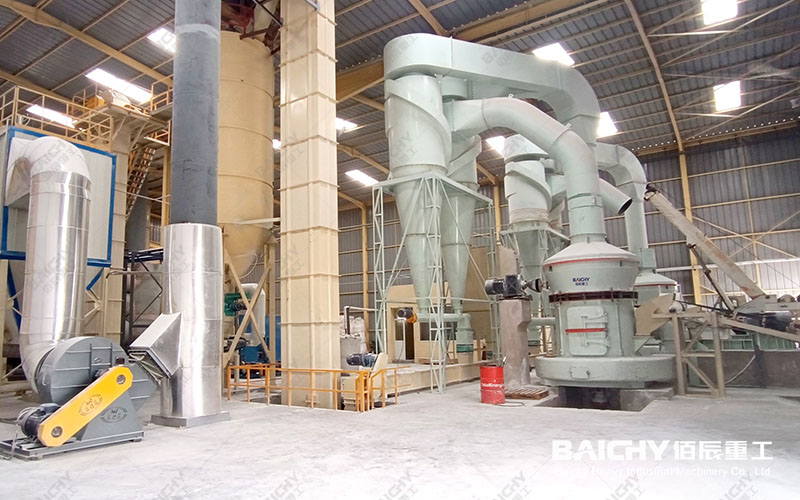
Limestone Grinding Equipment (20 tph)
VII. FAQ
Q1: For a limestone grinding setup with an hourly output of 20 tons, should I choose the MTW European-style mill or a traditional Raymond mill? What are the differences?
A1: The difference lies in structural reliability during long-term operation. Raymond mills rely on spring pressure and grease lubrication; as grinding rollers wear, product fineness coarsens, requiring shutdowns to adjust pressure. In contrast, MTW European-style mills utilize an integrated bevel gear drive and centralized thin-oil lubrication, ensuring fineness remains stable even as wear progresses; a built-in variable-frequency classifier allows for switching between 200-mesh and 400-mesh specifications in seconds. For power plant desulfurization powder and heavy calcium carbonate powder—which are subject to batch-based acceptance—the advantage in pass rates translates directly into a higher price per ton. While the Raymond mill remains a cost-effective choice for capacities under 5 t/h focused on high-volume, coarse-grade construction materials, the MTW model offers a distinct advantage in achieving the target output with a single unit at the 20 t/h scale.
Q2: I need to produce 250-mesh power plant desulfurization powder while maintaining an hourly output of 20 tons; which MTW model should I choose?
A2: First, determine the required acceptance fineness, then work backward to calculate the necessary capacity. When processing at a fineness of 250 mesh (D97 ≈ 90 μm), the main unit's production capacity drops by approximately 15%–25% compared to the 200-mesh rating. Therefore, to achieve an output of 20 t/h at 250 mesh, you should request the appropriate model and power configuration from the manufacturer based on the "250 mesh @ 20 t/h" specification, rather than estimating based on the nominal 200-mesh capacity. Example: For a daily output of 400 tons (based on a 20-hour production schedule), which corresponds to 20 t/h at 250 mesh, it is necessary to verify that the classifier's variable frequency range and the dust collection system's airflow capacity are compatible; Baichy offers free material testing and a production guarantee.
Q3: What happens if limestone containing moisture or small amounts of quartz is fed directly into the MTW European-style mill? How should the complete production line be configured?
A3: Moisture content exceeding 5% will cause material to stick to the grinding rollers and clog the classifier and air ducts; hard impurities such as quartz and flint will significantly accelerate the wear of grinding rollers and rings. The correct approach involves pre-grinding processing: raw material should first pass through a jaw crusher (reducing size to ≤35 mm) and an iron remover to catch metal and hard debris; for high-moisture material during the rainy season, a rotary dryer should be used or dry material blended in before the feed enters the mill. Drying and impurity removal are not optional; they are prerequisites for the MTW European-style mill to achieve a production rate of 20 t/h. Baichy can provide quotations for the complete line, covering crushing, grinding, dust collection, and packaging.
Baichy Heavy Industry
Baichy Heavy Industry is a high-tech mining equipment company integrating R&D, manufacturing, sales, and after-sales service. Focusing on crushing, grinding, and mineral processing equipment, we provide professional solutions to our customers. We are ISO9001:2015 、certified, and our products include mobile crushing palnts, crawler crushing plant, construction waste crushing plants, jaw crushers, sand making machines, cone crushers, fine crushers, grinding mills, ball mills, etc., all with reliable performance to meet diverse project needs.
Baichy Heavy Industry – Your Trusted Partner
To ensure optimal performance of your equipment, Baichy Heavy Industry offers:
- Professional on-site installation guidance
- Comprehensive operator training
- 24/7 technical support & maintenance services
Our complete after-sales service system guarantees long-term, stable operation of your machinery with minimal downtime.
Protect Your Rights – Only Use Official Channels
To avoid scams and ensure authentic support, contact us exclusively through:
• Official Website: www.baichychina.com
• WhatsApp: +8615093222637
• Email: [email protected]
Your satisfaction is our priority – expect prompt, professional service every time.
(Note: Beware of unauthorized third parties claiming to represent Baichy. Always verify through official contacts.)