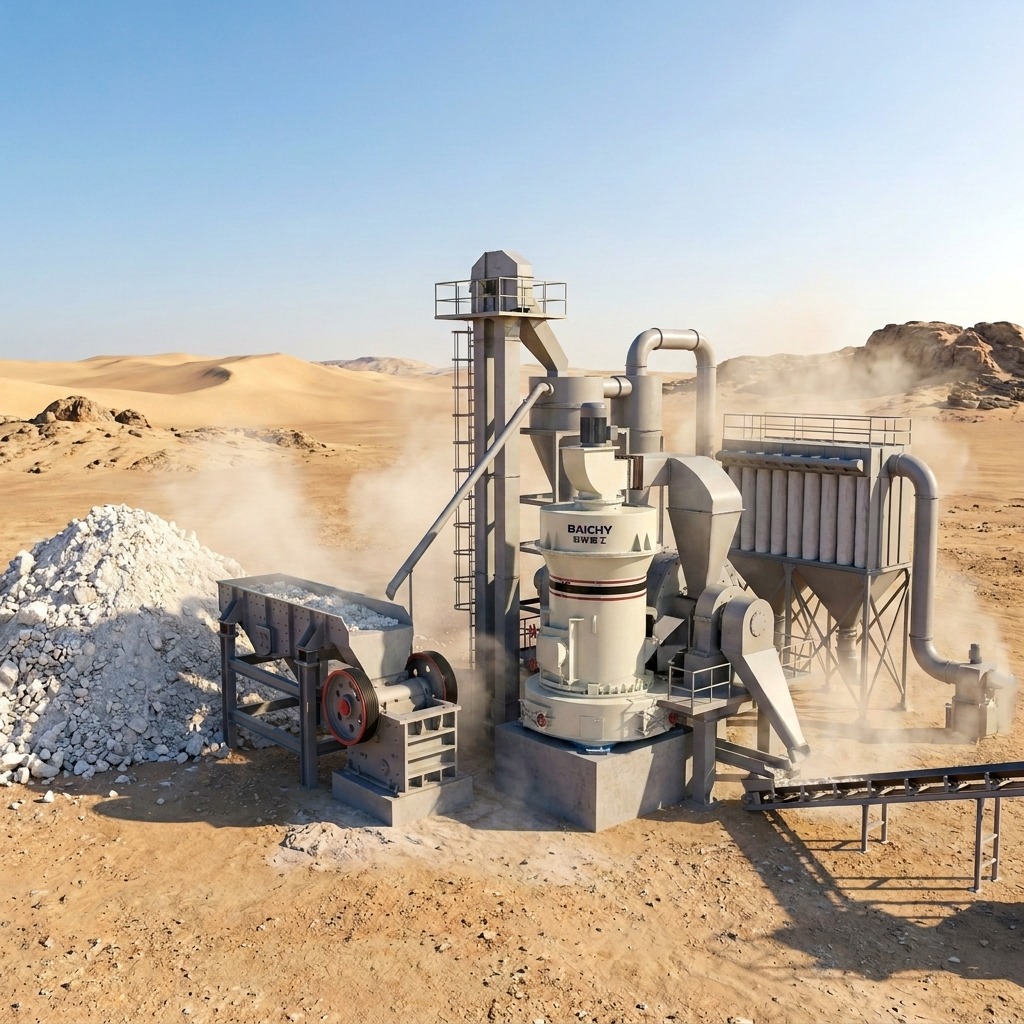
Libya 3–5 t/h Calcium Carbonate Grinding Production Line
Market Background: The "White Gold" Transformation of Libya's Building Materials Market
Localizing the production of calcium carbonate powder (CaCO₃) is essential for Libyan companies to reduce costs. With the ongoing infrastructure reconstruction efforts in Libya, the demand for high-quality calcium carbonate powder in the coatings, plastics, and putty industries has surged. However, long-term reliance on imports not only leads to high raw material costs but also exposes them to supply chain volatility risks.
Industry Pain Points: Three Hidden Costs of Traditional Processing Methods
• High Import Freight: Finished powders are bulky and heavy, and international sea freight often accounts for 30%-40% of the landed price.
• Inadequate Fineness: Ordinary grinding equipment experiences a sharp drop in output when processing ultrafine powders above 400 mesh, and the particle size distribution is uneven, directly affecting the adhesion of downstream coatings.
• High Maintenance Costs: Libya's dry and dusty climate means that if equipment sealing is poor, bearings and reducers are easily damaged by dust intrusion, leading to downtime. Each downtime for maintenance can result in direct losses of thousands of US dollars.
Solution: Baichy 3-5t/h Customized Calcium Carbonate Production Line
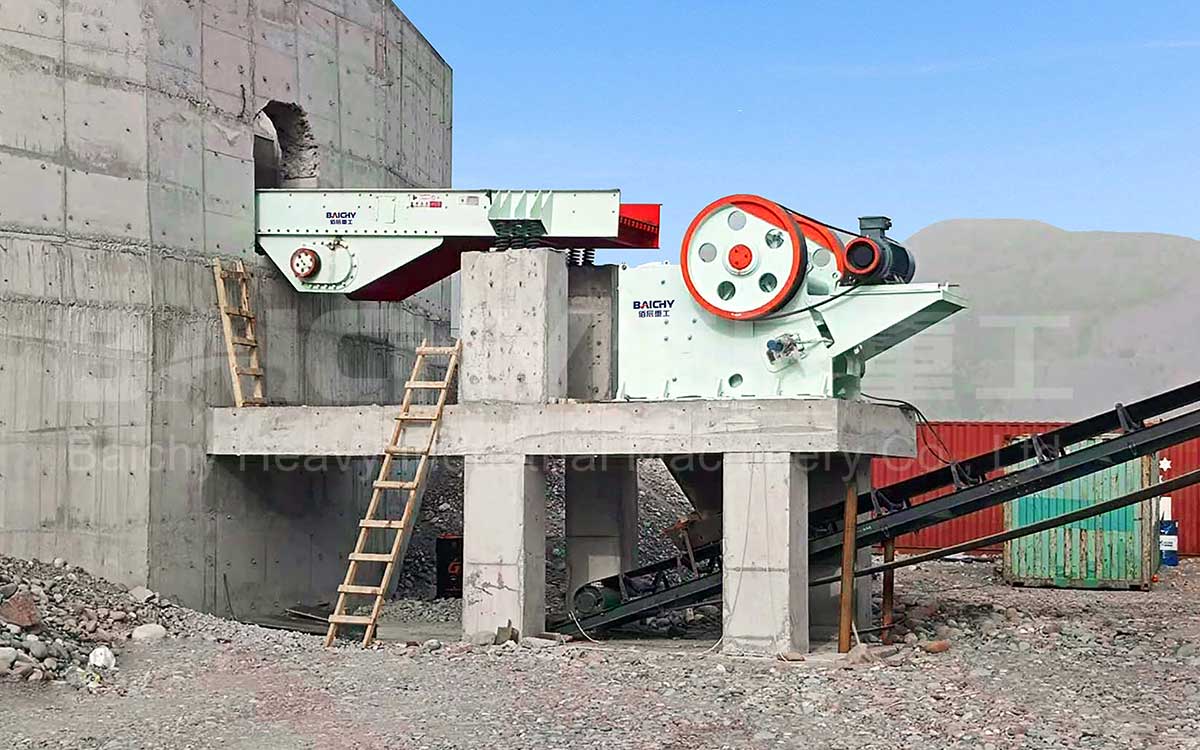
Baichy Heavy Industry configured a complete solution for this project, centered on the YGM series high-pressure suspension roller mill. This solution targets the 200-800 mesh medium-fine powder market, significantly improving the system's dust control capabilities and operational stability while ensuring production capacity.
| Technical Specifications | Configuration Details | Customer Value |
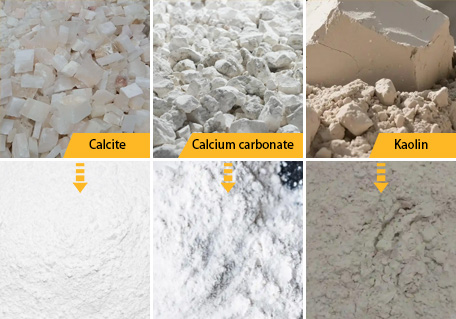
| Raw Material Adaptability | Limestone, Calcite, Marble | Compatible with various local inexpensive ores, ensuring raw material supply |
| Finished Product Fineness | 200–800 mesh (adjustable) | One line covers the market from putty powder (200 mesh) to latex paint (800 mesh) |
| Rated Output | 3–5 tons/hour | Suitable for small and medium-sized enterprises, shortening the investment payback period to 6-8 months |
| Dust Removal System | Pulse dust collector (99% efficiency) | Meets Libyan environmental requirements, protecting the working environment and reducing dust loss |
| Wearing Parts Material | High chromium alloy/manganese steel | Wear-resistant parts lifespan extended by 30%, reducing annual maintenance frequency by 3 times |
Core Advantages: Why do Libyan customers choose Baichy Technology?
The consistency of finished product quality determines the competitiveness of downstream products. Baichy grinding mills use variable frequency control for the classifier, which can accurately control the throughput of 800 mesh powder. This means that the calcium carbonate powder produced by customers can perfectly replace expensive imported chalk powder.
Energy Saving and Consumption Reduction: Lower energy consumption per ton means higher profit margins. Compared to traditional ball mills, this system reduces power consumption by approximately 25% for the same particle size. In Libya's environment of unstable local power supply, smaller installed capacity means lower operating barriers.
Turnkey Project: Seamless integration from planning to powder production. We not only provide equipment but also foundation design drawings, remote installation guidance, and operator training, ensuring customers can start production within 15 days of equipment arrival.
Frequently Asked Questions:
Q1: How much area is needed to invest in a calcium carbonate production line with a capacity of 3-5 tons per hour in Libya?
A1: The complete set of equipment occupies approximately 80-120 square meters. A minimum height of 8 meters is recommended to accommodate the bucket elevator and cyclone collector.
Q2: What is the difference in output between 200 mesh and 800 mesh?
A2: Output is significantly affected by particle size. The processing capacity for 200-mesh limestone can reach 5 tons/hour; when adjusted to 800-mesh ultrafine powder, the output is approximately 2-3 tons/hour.
Q3: How does the equipment cope with the high temperature and sandy environment of Libya?
A3: Baichy equipment adopts a reinforced sealing structure, and the core bearing components are equipped with dedicated dust covers and a forced lubrication system, effectively preventing fine desert sand from entering the grinding chamber.
Q4: How often do the wearing parts need to be replaced?
A4: Taking limestone as an example, the average service life of the grinding rollers and grinding rings is 8-12 months (depending on the hardness of the raw material and the duration of operation). We will provide a set of wearing parts with the equipment for unforeseen circumstances.
Q5: Can Baichy provide local installation services in Libya?
A5: We provide remote video guidance from senior engineers for installation or dispatch technicians for on-site installation (subject to communication based on real-time international travel policies). A complete set of Arabic/English operation manuals is also provided.