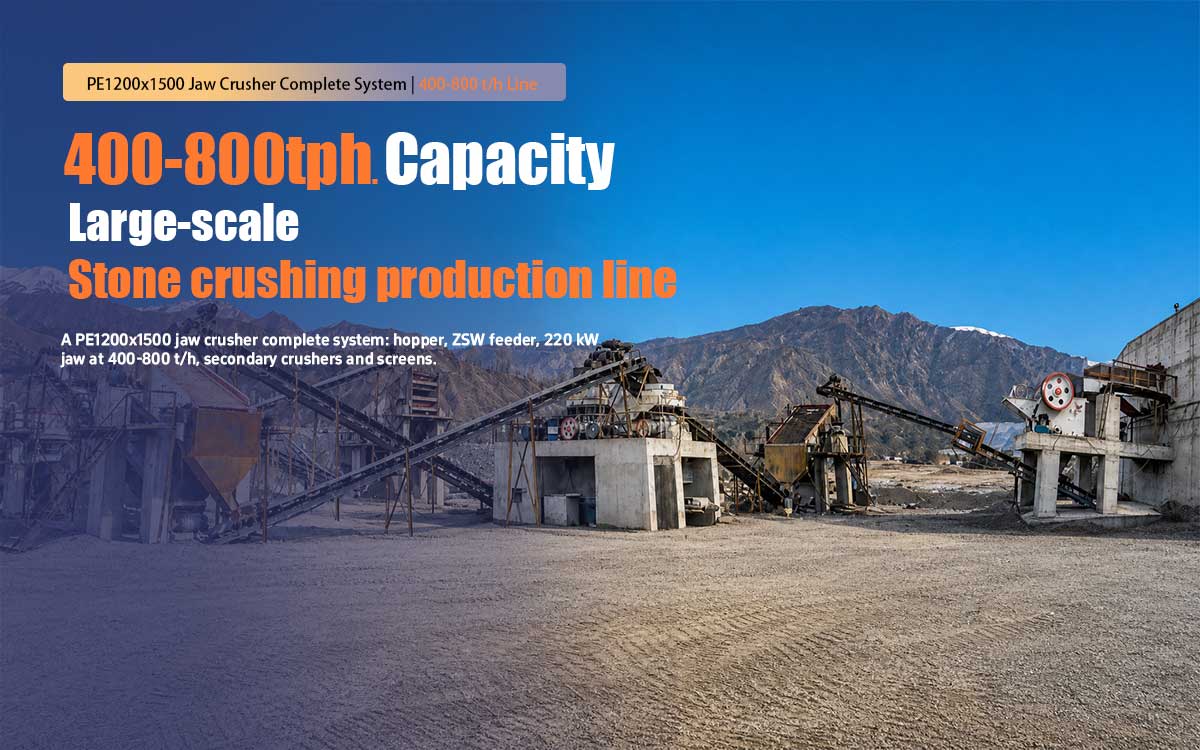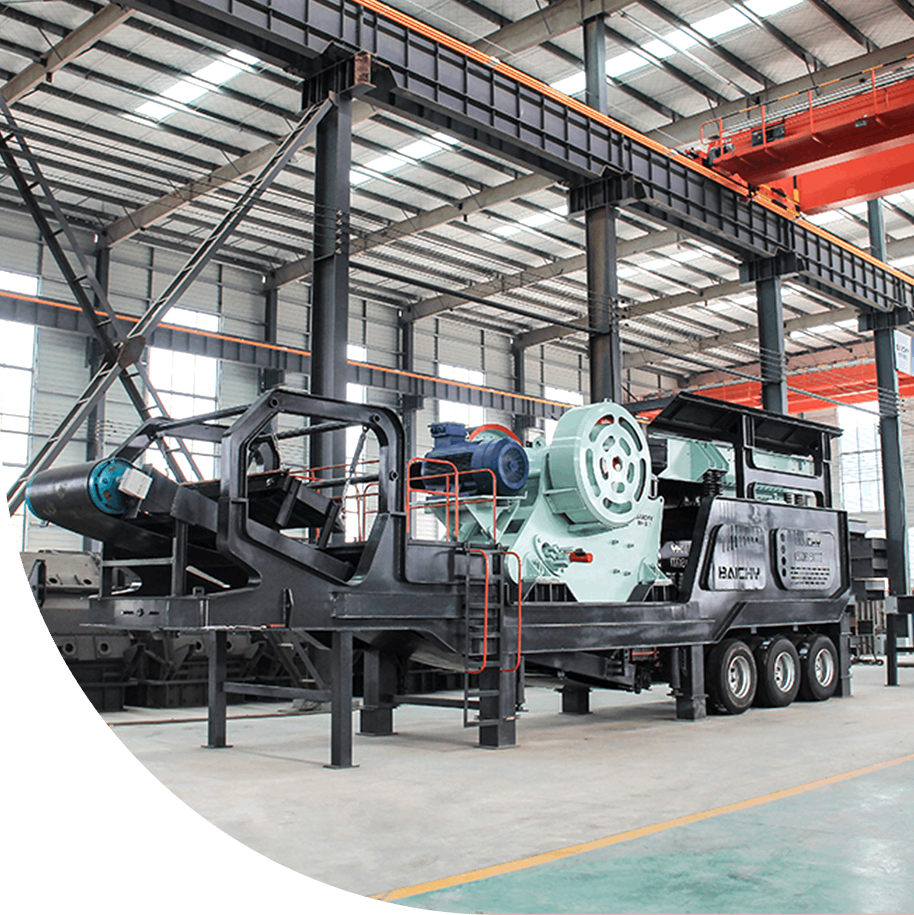

Yes — a jaw crusher is the standard primary crusher for both granite and limestone, but the two materials demand different selection logic. Granite (compressive strength 150–300 MPa) requires a heavy-duty model with wear-resistant jaw plates and a 70–85% capacity correction; limestone (50–150 MPa) can be handled by any standard PE series at close to its rated capacity. Choosing the wrong machine based on nameplate capacity alone typically costs operators 20–40% more in wear parts and energy per ton over five years. This guide gives you the material baselines, model matrix, TCO comparison and a recommendation you can act on today.
1. Material Baseline
All jaw crusher capacity ratings are based on limestone (bulk density ~1.6 t/m³). Granite is denser and harder, so every downstream figure must be corrected.
These are the two materials that matter:
| Parameter | Granite | Limestone |
| Mohs hardness | 6–7 | 3 |
| Compressive strength | 150–300 MPa | 50–150 MPa |
| Bulk density | 2.6–2.8 t/m³ | 1.5–1.7 t/m³ |
| Abrasiveness | High (quartz content) | Low–medium |
| Jaw plate wear rate | High — 200–400 h life | Low — 800+ h life |
| Capacity vs nameplate | 70–85% of rated | 90–100% of rated |
| Energy consumption | ~0.7–0.9 kWh/t | ~0.4–0.6 kWh/t |
| Typical applications | Road base, aggregate, concrete | Cement feed, aggregate, ag-lime |
Benefit translation: a PE500×750 rated at 100 t/h on limestone will deliver roughly 70–85 t/h on granite — budget for this gap before sizing your plant, or you will under-deliver on the contract.
2. Why a Jaw Crusher Fits Both Materials
• Compression crushing principle: the moving jaw presses rock against the fixed jaw, splitting it along natural fracture planes. This works for both brittle limestone and tough granite — no impact-speed sensitivity.
• Feed size tolerance: jaw crushers accept the largest feed of any primary crusher (up to 80–85% of the jaw opening), making them the correct first stage for run-of-mine granite blocks.
• Simplest maintenance: no hammer replacement, no rotor balancing — only jaw plates to reverse or replace. Critical for remote sites in Africa, South America and Southeast Asia.
• The only difference is spec choice: granite pushes you to heavy-duty frames, thicker jaw plates (ZGMn13Cr2+), and possibly a deeper crushing cavity (PEX for secondary duty).
3. Model Comparison
3.1 PE Series — Standard primary crushing (preferred for limestone / entry-level for granite)
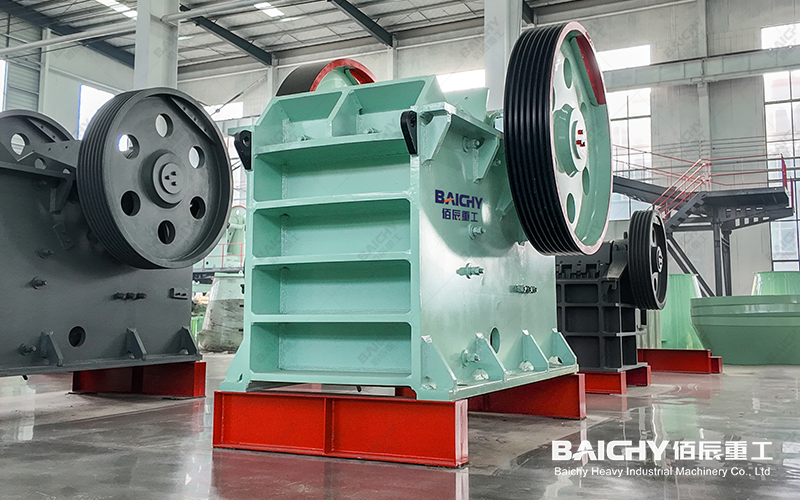
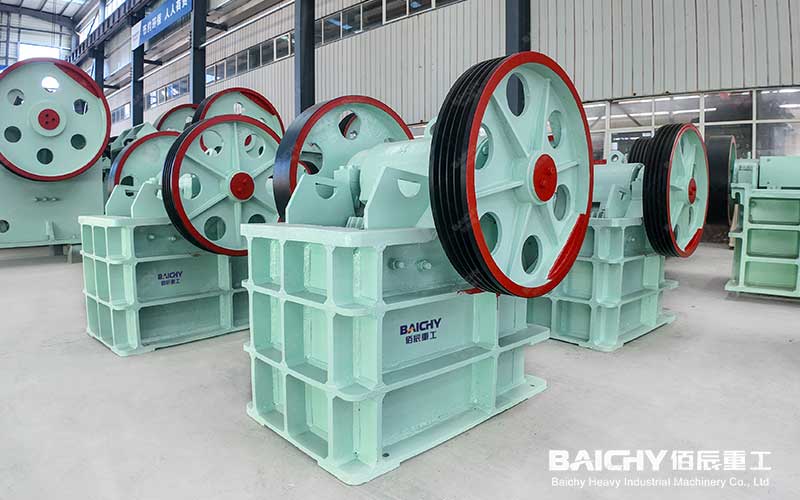
PE series Jaw Crusher
| Model | Feed Opening (mm) | Max Feed (mm) | CSS Range (mm) | Capacity (t/h, limestone) | Motor (kW) |
| PE250×400 | 250×400 | 200 | 20–60 | 5–20 | 15–18.5 |
| PE400×600 | 400×600 | 340 | 40–100 | 16–64 | 30 |
| PE500×750 | 500×750 | 425 | 50–100 | 40–110 | 55 |
| PE600×900 | 600×900 | 500 | 65–160 | 60–160 | 75 |
Advantages: lowest CAPEX, proven reliability, worldwide spare parts availability. Limitations: on granite, expect 70–85% of the rated capacity and faster jaw plate wear; choose the next model up if granite is your only feed.
3.2 PEX Series — Fine Crushing / Secondary Crushing (Granite Secondary Stage)
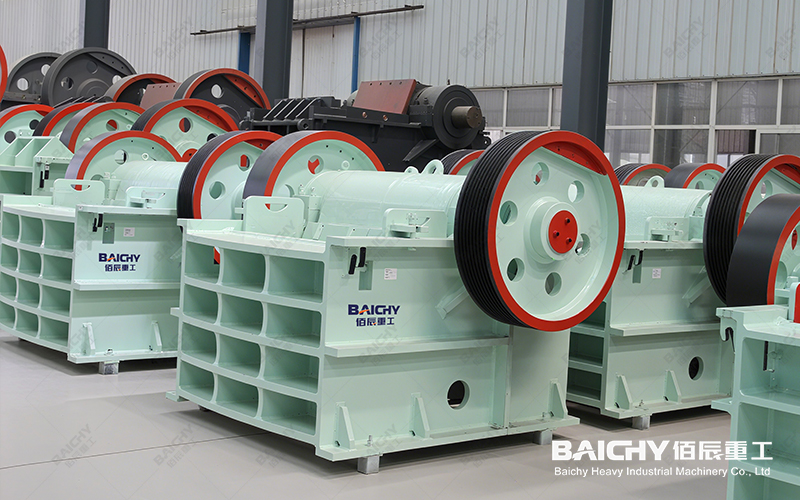
PEX series Jaw Crusher
| Model | Feed Opening (mm) | Max Feed (mm) | CSS Range (mm) | Capacity (t/h, limestone) | Motor (kW) |
| PEX250×1000 | 250×1000 | 210 | 15–50 | 10–40 | 30 |
Advantages: narrow discharge (down to 15 mm) makes it ideal as the secondary stage after a PE primary — the classic granite two-stage circuit. Limitations: not a primary crusher; feeding it run-of-mine rock will damage the cavity.
3.3 C90 Series — Heavy-duty primary crushing (highly recommended for granite)
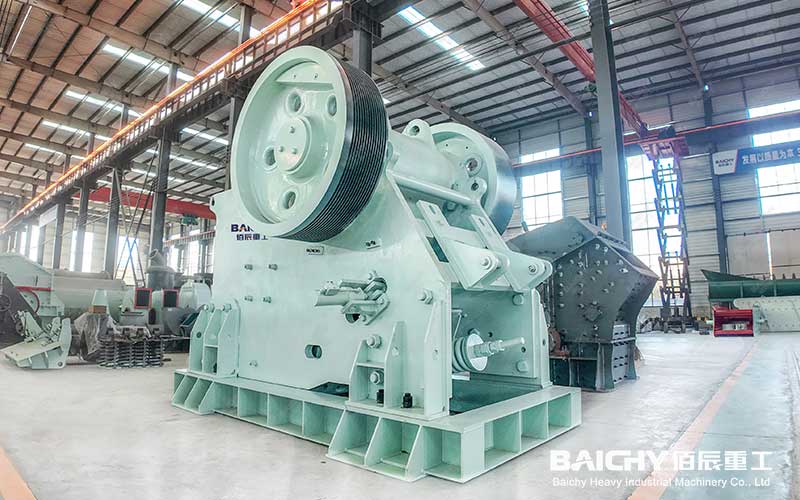
C series Jaw Crusher
| Model | Feed Opening (mm) | Max Feed (mm) | CSS Range (mm) | Capacity (t/h, limestone) | Motor (kW) |
| C90 | 900×750 | 600 | 70–180 | 100–200 | 90–110 |
Advantages: heavy-duty frame and thicker jaw plates designed for hard-rock duty; delivers the full 150–300 MPa range with the smallest capacity penalty; ideal for granite quarries and road aggregate plants. Limitations: higher initial investment — justified when granite is the permanent feed material.
4. Recommendation
| Scenario | Recommended | Backup | Why |
| Granite, 40–110 t/h, quarry | PE500×750 + PEX250×1000 | C90 alone | Two-stage circuit holds discharge ≤ 50 mm with balanced wear |
| Granite, 100+ t/h, large quarry | C90 | PE600×900 + PEX | Heavy-duty frame minimizes the granite capacity penalty |
| Limestone, ≤ 160 t/h | PE600×900 | PE500×750 | Rated capacity nearly achieved; lowest cost per ton |
| Limestone, ≤ 20 t/h, small plant | PE250×400 | PE400×600 Minimum | CAPEX for pilot or small-scale operations |
Selection rule of thumb: feed size must be ≤ 80–85% of the jaw opening; required discharge picks PE (coarse) vs PEX (fine); target capacity after hardness correction picks the frame size.
5. Ancillary Equipment
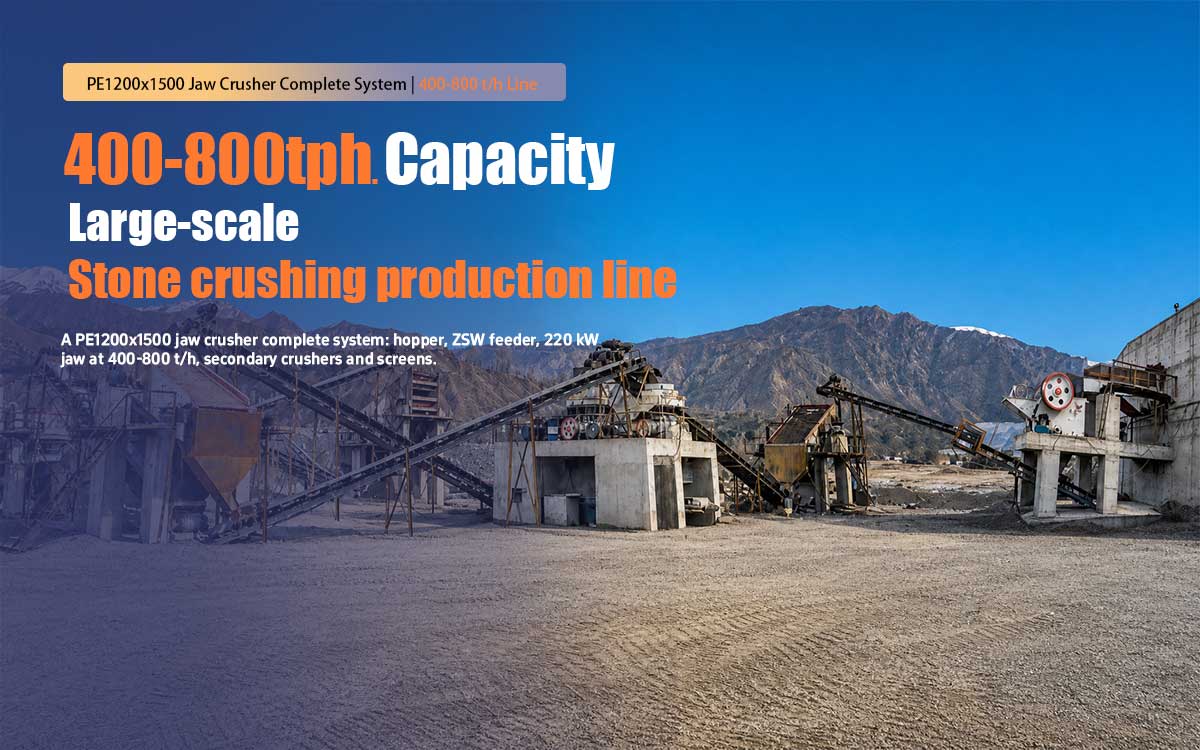
• Vibrating feeder (ZSW series): surge-free feeding, extends jaw plate life by preventing direct impact of oversized blocks.
• Belt conveyor: sized for the corrected capacity, not the nameplate.
• Vibrating screen: closed-circuit return of oversize for granite two-stage plants.
• Dust collection: mandatory for limestone processing sites; reduces health risk and complies with local environmental permits.
6. FAQ
1. Can a jaw crusher crush granite and limestone?
Yes. A jaw crusher is the standard primary crusher for both materials. Granite (compressive strength 150–300 MPa) and limestone (50–150 MPa) both fall inside the jaw crusher's working range — granite needs a heavy-duty model with high-manganese steel jaw plates, while limestone is handled comfortably by any standard jaw crusher.
2. What is the capacity difference when crushing granite vs limestone?
Most jaw crusher ratings are based on limestone conditions. Crushing granite typically reduces actual throughput to 70–85% of the rated capacity due to higher crushing energy and faster jaw plate wear; limestone runs close to the nominal rating. Always apply the material correction factor before sizing your plant.
3. How long do jaw plates last when crushing granite and limestone?
With high-manganese steel plates (ZGMn13Cr2), jaw plate life for granite is typically 200–400 working hours before reversing or replacement, versus 800+ hours for limestone. Feed size, moisture and closed-side setting directly affect wear — softer limestone cuts wear-part cost per ton by up to 60–70%.