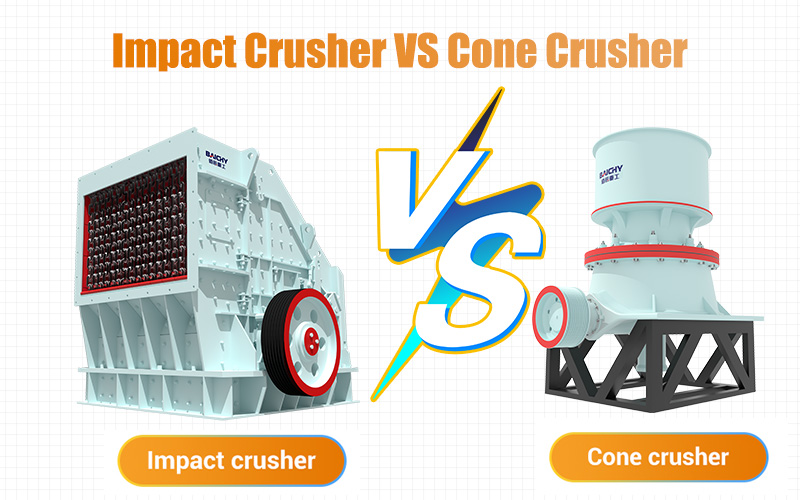
Impact Crusher VS Cone Crusher
In the core processes of sand and aggregate production lines, mining crushing operations, and construction waste recycling, the secondary and tertiary crushing stages serve as the precision finishing workshops. The performance of the equipment used in these stages directly determines the quality, gradation, and economic viability of the final product. Faced with a market offering both impact crushers and cone crushers—machines with similar functional positioning yet fundamentally different internal mechanisms—many clients inevitably find themselves perplexed when selecting equipment: Which one is truly my perfect partner?
As a leading manufacturer of mining machinery in the industry, Baichy Machinery fully understands that there is no such thing as a universal piece of equipment—only the most suitable solution. Today, we will set aside marketing rhetoric and, from a purely technical perspective, provide you with a comprehensive comparison of the six key differences between these two major types of medium-to-fine crushing equipment, empowering you to make a well-informed decision.
I. Crushing Principle: The Vast Difference Between High-Speed Impact and Stable Compression
This constitutes the root cause of all performance differences between the two machines, dictating how each interacts with and processes various types of materials.
Impact Crusher: The Impact Specialist Driven by Kinetic Energy
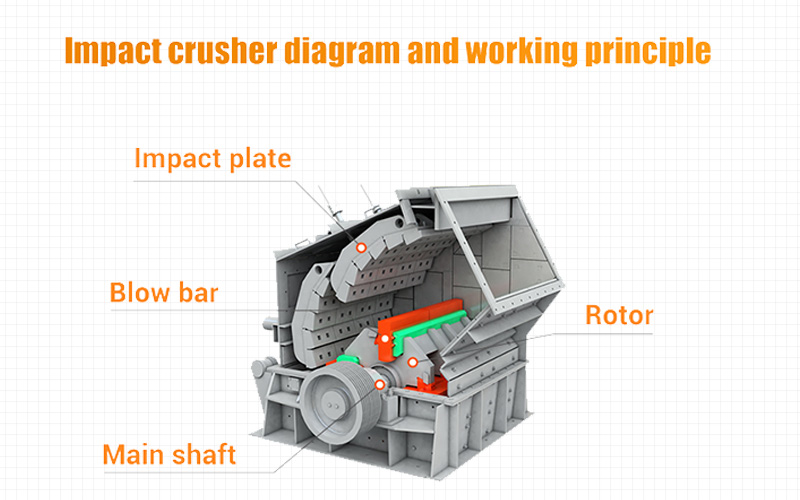
Impact crusher diagram and working principle
Its core principle relies on high-speed impact force. Once material enters the crushing chamber, it is violently struck by wear-resistant blow bars mounted on a high-speed rotating rotor. Imbued with immense kinetic energy, the material is then hurled outward against the surrounding impact plates; it undergoes repeated collisions between the blow bars and the impact plates until it is pulverized. By adjusting the gap between the rotor and the impact plates, the output particle size can be flexibly controlled. The structural core of the machine comprises the blow bars, rotor, impact liners, and main shaft; it operates with rapid motion and achieves a high crushing ratio.
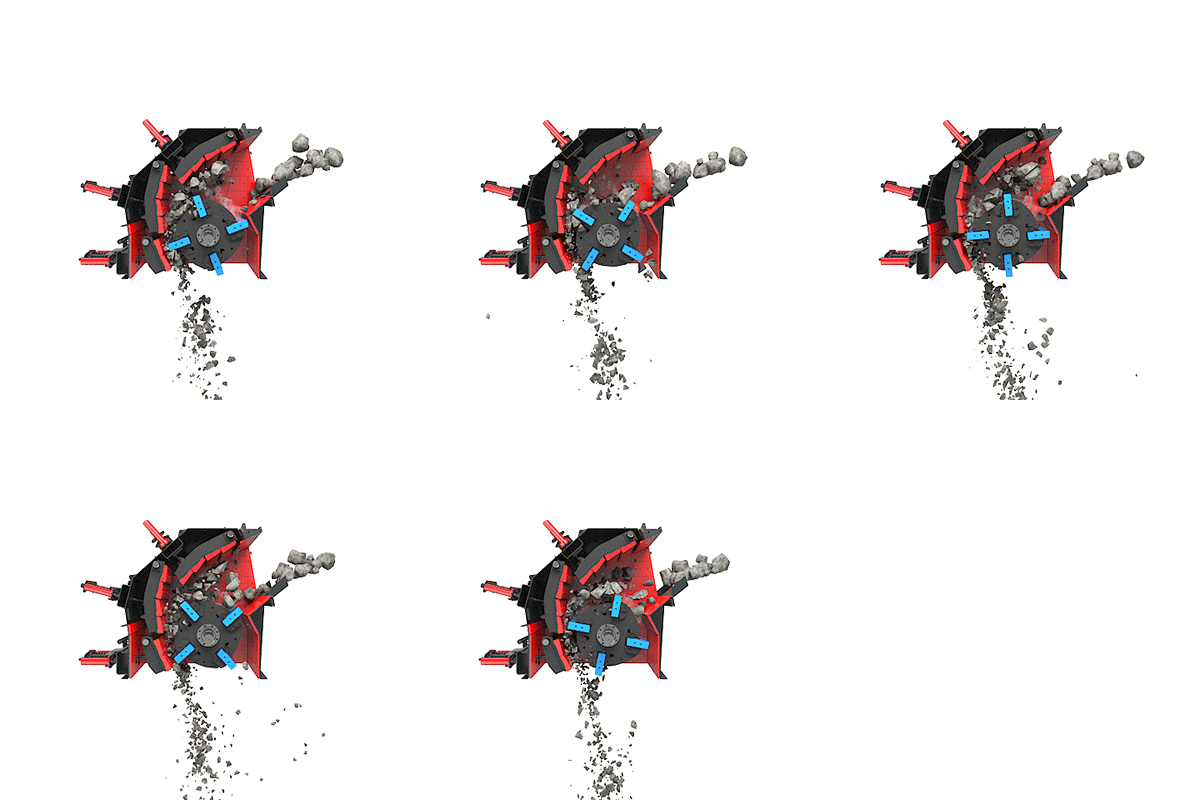
It uses high-speed impact force where material is fed into the crushing chamber and struck by the hammer mounted on the rotor.
The resulting force fractures the rock against the impact plate.
The gap between the rotor and the impact plate can be adjusted to control the output size.
Cone Crusher: The Grinding Master Applying Constant Pressure
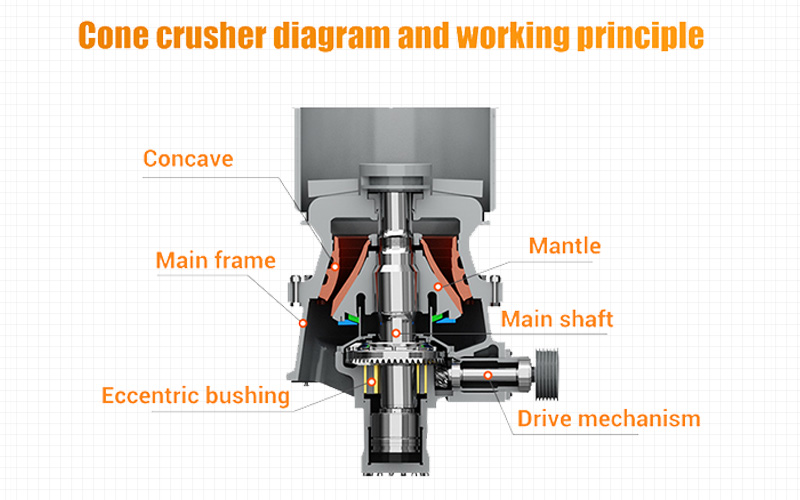
Cone crusher diagram and working principle
Its core principle is based on laminated compression force. The moving cone (mantle) performs an eccentric gyratory motion within the stationary cone (bowl liner); as the space between these two liners periodically changes, it subjects the material falling into the gap to continuous squeezing, shearing, and grinding, thereby crushing it from the inside out. This operating principle ensures smooth running and highly efficient utilization of power. Its key components include the moving cone assembly, bowl liner, eccentric bushing, main shaft, and hydraulic adjustment system.
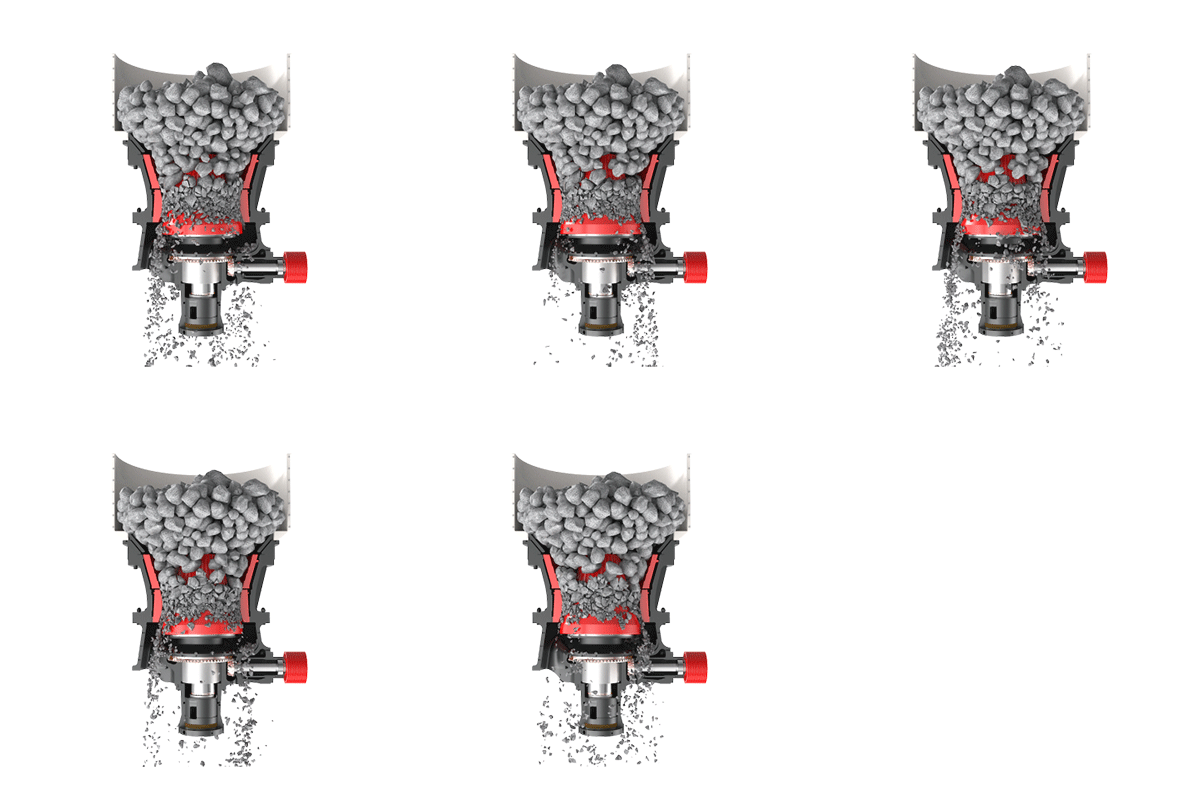
It uses compression force to squeeze, shear and grind rock, and is ideal for tough applications.
The rotating mantle (also called rotating cone) moves within a fixed concave surface (also called bowl liner).
As the material enters the crushing chamber, it is repeatedly compressed between the mantle and the concave surface, gradually breaking into smaller sizes.
II. Applicable Material Hardness: Identifying the Primary Battlefield of Spear vs. Shield
Selecting equipment based on material characteristics is the paramount principle for achieving high-efficiency production and minimizing wear.
• Preferred Scenarios for Impact Crushers:
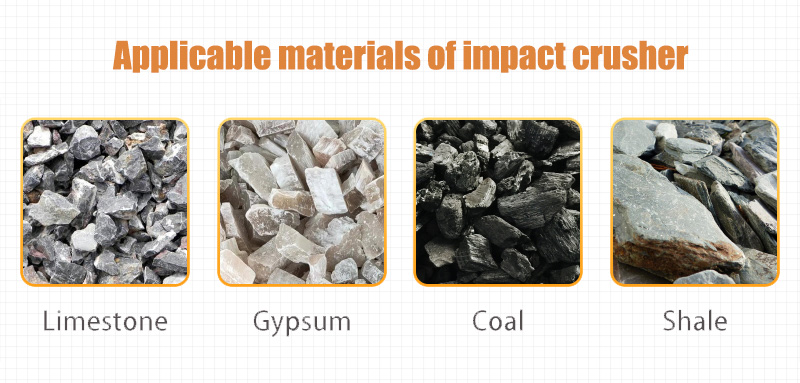
Applicable materials of impact crusher
◦ Medium-to-low hardness materials: Such as limestone, gypsum, coal, marl, etc.
◦ Recycled and reclaimed materials: Including construction demolition waste, concrete blocks, asphalt pavement materials, etc. Their impact-based crushing mechanism is highly effective at stripping away adhering contaminants, thereby producing clean aggregates.
◦ Key Conclusion: When processing soft rock, recycled materials, or complex mixtures, the adaptability and flexibility of impact crushers are superior.
• Preferred Scenarios for Cone Crushers:
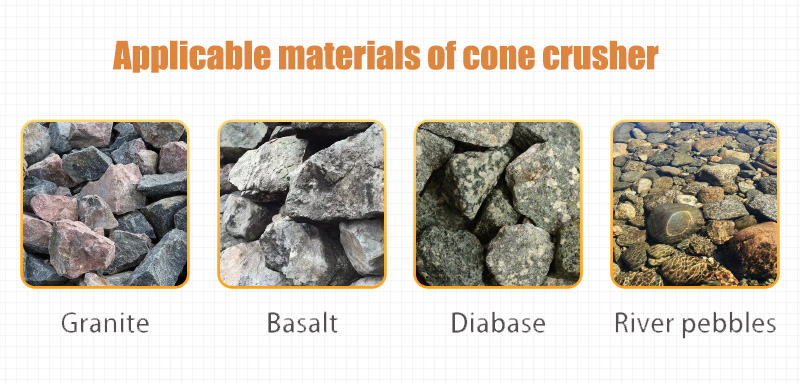
Applicable materials of cone crusher
◦ High-hardness, highly abrasive materials: Such as granite, basalt, quartzite, iron ore, copper ore, etc.
◦ Key Conclusion: When facing extremely hard rocks or metallic ores, the cone crusher—leveraging its inter-particle crushing (lamination) principle—delivers higher crushing efficiency and longer wear part lifespans, making it the undisputed champion.
III. Finished Product Shape and Quality
The Aesthetics of Rounded Aggregates vs. Flaky/Elongated Materials
The shape of the finished particles directly impacts the compressive strength of concrete, the durability of asphalt pavements, and the structural stability of masonry.
• Advantages of Impact Crusher Products:
Thanks to multi-angle impact forces, the resulting aggregate particles are predominantly cubical in shape with rounded edges; they exhibit excellent particle shape characteristics and a low content of flaky or elongated particles. This specific particle shape offers superior compressive strength and improved workability.
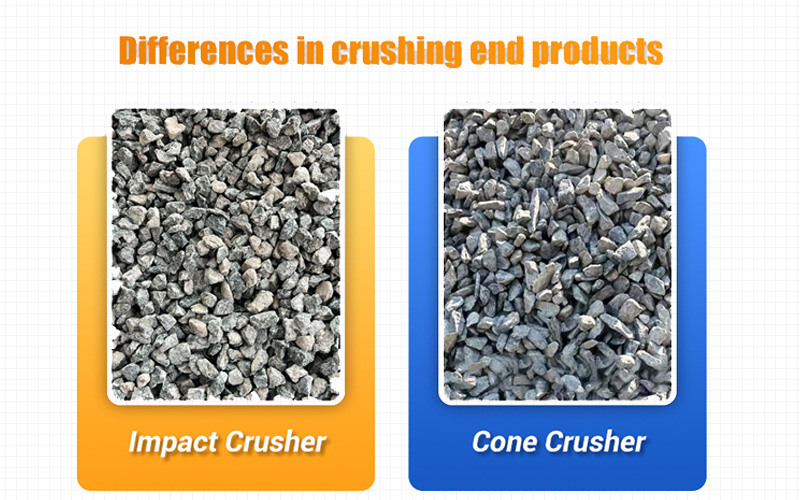
Differences in crushing end products
◦ Ideal Application Scenarios: High-value sectors with strict requirements regarding particle shape, such as base and surface course aggregates for high-grade highways, commercial concrete aggregates, and precast concrete components.
• Characteristics of Cone Crusher Products:
While inter-particle crushing can still produce high-quality products, the finished output may contain a certain proportion of elongated or flaky particles. Although this can be mitigated by optimizing the crushing chamber profile and adjusting operational parameters, it remains a factor that requires attention.
◦ Application Recommendations: Perfectly suitable for use in standard concrete applications or in scenarios where particle shape requirements are not strictly critical. If used for producing ultra-high-grade concrete, post-processing—potentially involving a shaping machine (such as a Baichy Vertical Shaft Impact crusher)—may be required to achieve superior particle shape.
IV. Production Capacity and Comprehensive Costs
A Holistic Assessment of Efficiency, Energy Consumption, and Long-Term Investment
Equipment selection must strike a balance between initial capital investment and long-term operational expenses.
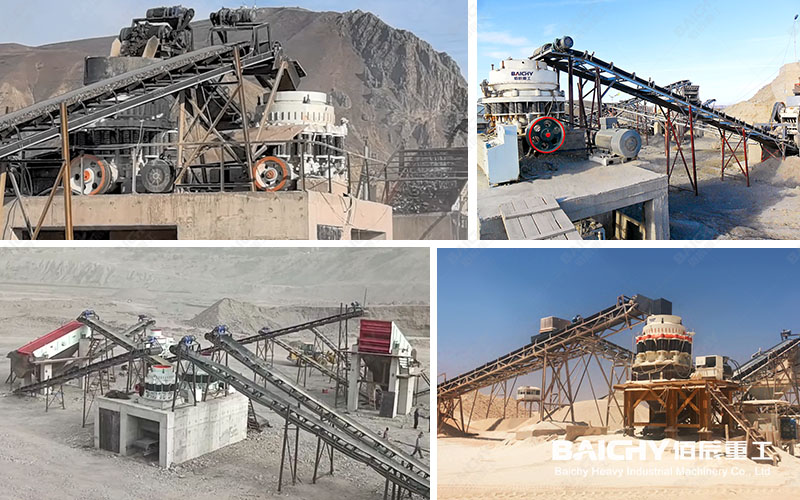
Cone Crusher Customer Site
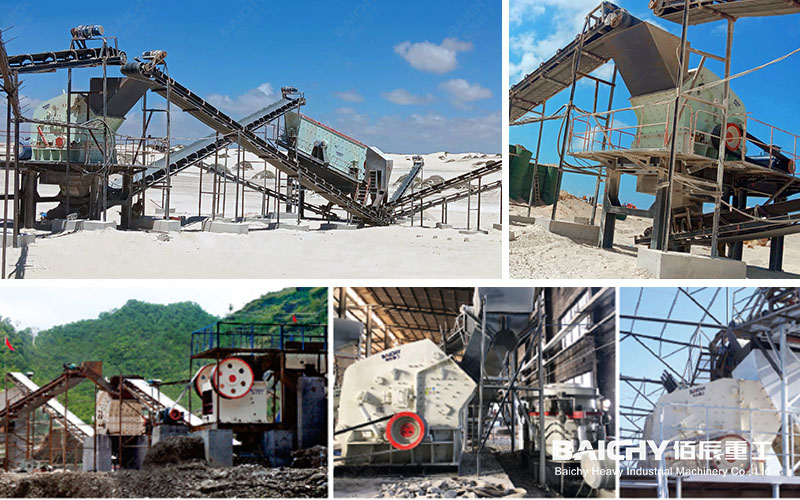
Impact Crusher Customer Site
• Production Capacity and Stability:
◦ Cone Crusher: Given equivalent power ratings and specifications, it offers higher absolute throughput when processing hard rock. It operates with exceptional stability and boasts an excellent energy-to-output ratio. It is particularly well-suited for the secondary crushing stage in large-scale aggregate plants and mines requiring continuous, high-volume production, serving as the cornerstone for ensuring both high and consistent output.
◦ Impact Crusher: It delivers outstanding throughput performance when processing suitable materials (such as soft rock or recycled materials). However, when processing hard rock, both capacity and efficiency tend to decline; furthermore, actual output is significantly influenced by the wear status of consumable parts.
• Acquisition and Maintenance Costs:
◦ Impact Crusher: The initial equipment investment is typically lower than that of a cone crusher with equivalent specifications, and its structural design is relatively simple. However, maintenance costs are higher; since the blow bars and impact liners serve as direct impact components, they experience rapid wear—necessitating frequent replacement, particularly when crushing hard materials.
◦ Cone Crusher: The initial purchase price is higher, reflecting a greater degree of technological integration (e.g., hydraulic cavity clearing and automated control systems). Nevertheless, it offers advantages in terms of long-term operational maintenance costs; its core wear parts (the mantle and concave) boast a longer service life, making the overall cost per ton of crushed material more competitive, particularly in hard-rock crushing applications.
V. Energy Consumption and Environmental Performance: Intrinsic Requirements for Green Production
Energy conservation and environmental protection constitute fundamental performance metrics for modern industrial facilities.
• Energy Consumption Comparison:
◦ When crushing materials of medium-hard consistency or greater, cone crushers typically demonstrate higher energy efficiency, as their compression-based crushing mechanism utilizes energy more directly.
◦ Impact crushers are highly efficient when crushing soft or low-abrasion materials; however, when crushing hard materials, a portion of the energy is dissipated through the wear of consumable parts and through ineffective impact forces.
• Dust and Noise:
◦ Impact Crusher: The high-speed rotation of the rotor results in violent collisions with the material, generating relatively high levels of dust and noise; consequently, the system requires the integration of highly efficient dust suppression and noise reduction measures. ◦ Cone Crusher: The crushing process takes place within a closed chamber, and—equipped with a positive-pressure dust suppression system—it effectively prevents dust leakage. It also operates with lower noise levels, making it easier to achieve clean production standards.
VI. Baichy’s Ultimate Selection Guide for Your Decision-Making
Synthesizing the five dimensions outlined above, your final choice should ultimately return to the core requirements of your specific business operations. Please answer the following questions in order:
1. What is my primary raw material? (What is its hardness? Is it recycled material?)
2. What are my core requirements for the final product? (Is it high throughput? Superior particle shape? Or low operating costs?)
3. Does my budget prioritize initial capital investment, or do I place greater value on total lifecycle costs?
4. Are my environmental protection requirements stringent?
Simplified Decision Pathways:
• Scenario A: Crushing hard rock; prioritizing high and stable output; long-term operational focus -> Recommended Choice: Baichy Multi-Cylinder Hydraulic Cone Crusher.
• Scenario B: Crushing soft rock; recycling construction waste; strict requirements regarding particle shape -> Recommended Choice: Baichy Impact Crusher.
• Scenario C: Complex material types; variable operating conditions; limited budget but a need to accommodate multiple possibilities -> Priority Consideration: Baichy Impact Crusher. By simply replacing the blow bars and adjusting the clearance settings, this machine can adapt to a wider range of material types.
At Baichy Machinery, we offer not only high-quality single-cylinder and multi-cylinder hydraulic cone crushers—as well as heavy-duty and European-style impact crushers—but also customized solutions ranging from standalone machines to complete production lines, backed by expert technical selection support. Contact us today, and let our engineers tailor the most cost-effective crushing solution specifically for you.